
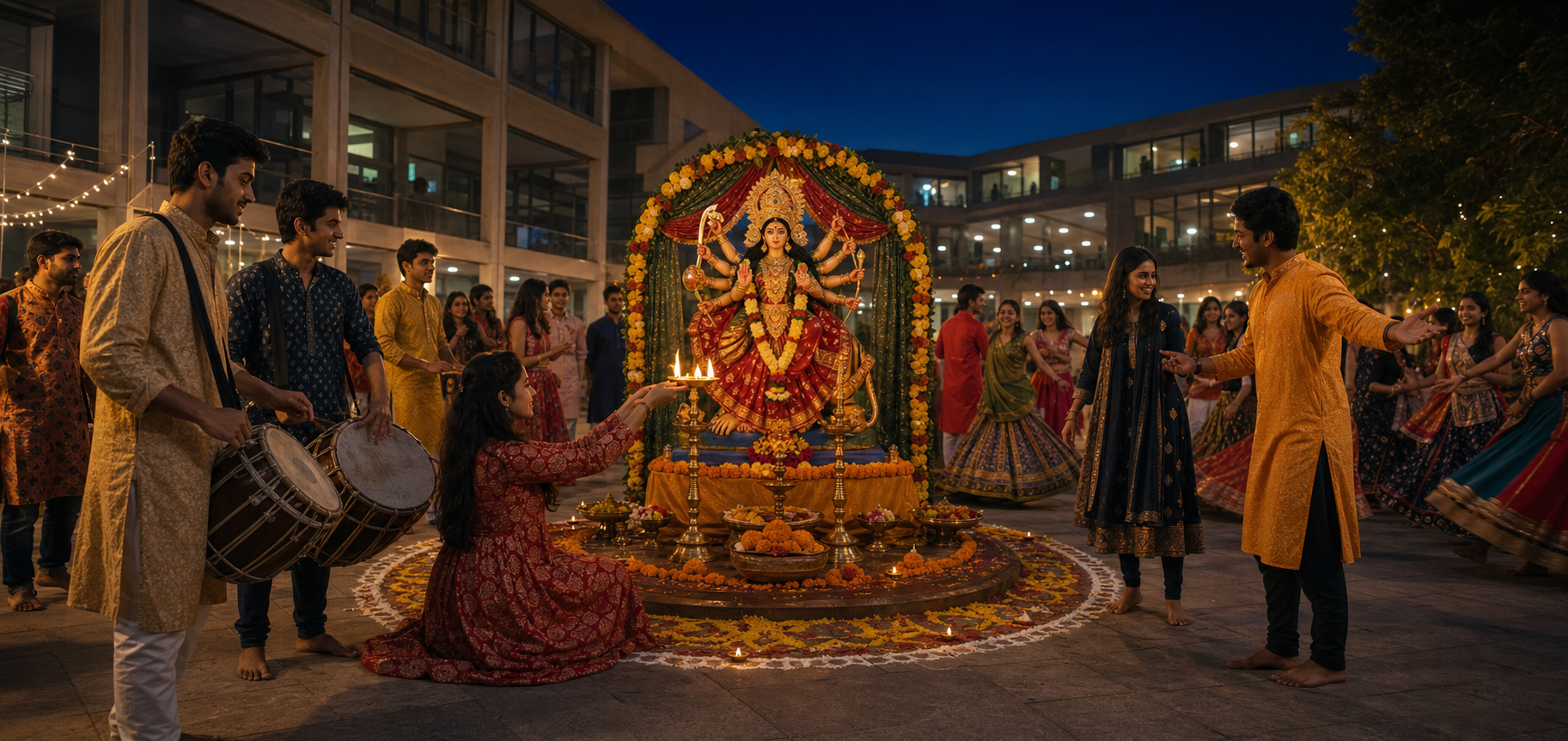
If you are planning Navaratri on a campus or helping younger members of a community organize a festival, the hardest question is not where to find a venue or how to fill the dance floor. It is whether people will leave having attended a cultural night or having participated in a living Dharmic tradition.
Shakti gives you a way to close that gap. When the lamp, Devi murti, puja, music, Garba, teaching, and leadership all express the same sacred idea, celebration becomes more than a display of identity. It becomes a repeatable path through which young people learn to see clearly, act responsibly, and carry dharma forward.
Begin with a symbol people can live
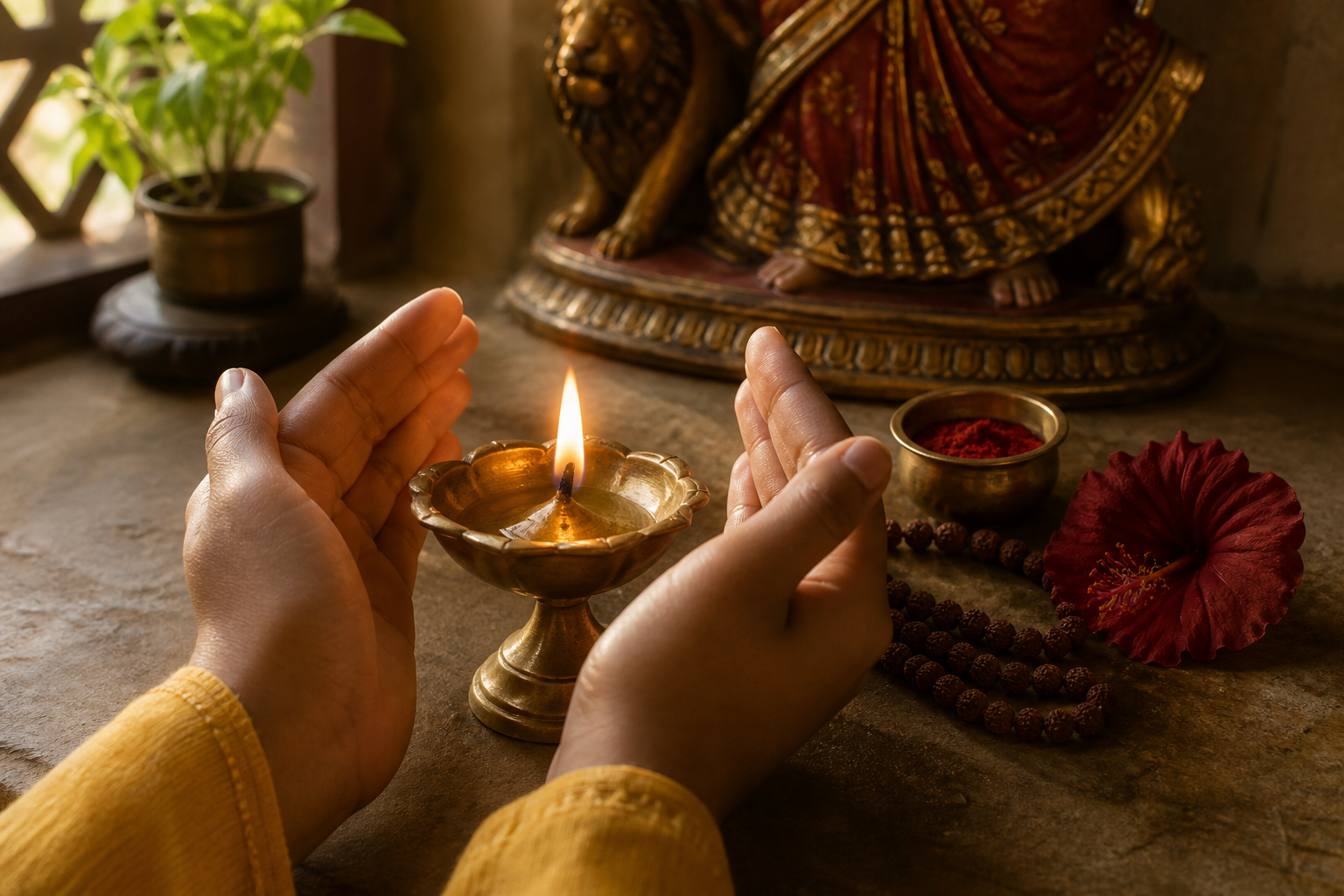
Shakti is sometimes reduced to a loose slogan about power. That misses what makes the idea spiritually demanding. Divine power in Hindu thought is not merely the ability to produce an effect. It is energy governed by awareness, discipline, purpose, and dharma.
Maa Durga makes this distinction visible. When the devas cannot overcome Mahishasura separately, their powers and shastras converge in the Mother. Her victory therefore signifies more than individual fearlessness. It shows strength gathered around a righteous purpose. A youth-led festival can embody that lesson by distributing real responsibility instead of depending on one charismatic organizer. Ritual, teaching, hospitality, music, food, communications, and care for the space become contributions to one sacred undertaking.
Maa Lakshmi and Maa Saraswati prevent that strength from becoming one-dimensional. Lakshmi asks whether the community uses its resources with gratitude and generosity. Saraswati asks whether participants are gaining knowledge rather than merely consuming an experience. If the budget produces elaborate decoration but no one can explain the festival, the symbolism and the planning have parted company.
Kali offers an even sharper test. The eye depicted on Her curved khadga can be contemplated as the jnana-netra, the eye of wisdom. The blade is viveka, the discernment that cuts through ignorance, attachment, fear, and inertia. The eye makes the ethical order unmistakable: first see, then sever. In a Shakta and Tantric reading, this is inner transmutation, not permission for indiscriminate aggression. Shakti acts, but awakened awareness directs the action.
Use that principle when choosing the central image for your program. Do not place a Devi murti, lamp, or sacred weapon on a stage as unexplained decoration. Give participants a concise account of what it asks of them. The symbol should influence at least one visible decision: who shares authority, what people learn, how conflict is handled, or what practice continues after the event.
Key takeaways
- Choose one Shakti symbol as the organizing center of the festival, not merely as its visual theme.
- Translate its meaning into a real practice, responsibility, or standard of conduct.
- Give young people ownership of a complete sacred act, with preparation and knowledgeable support.
- Pair every explanation with participation: a lamp with Garba, a shloka with contemplation, or a sacred story with seva.
- Decide what will continue before the decorations come down.
Give young people responsibility for a complete sacred act
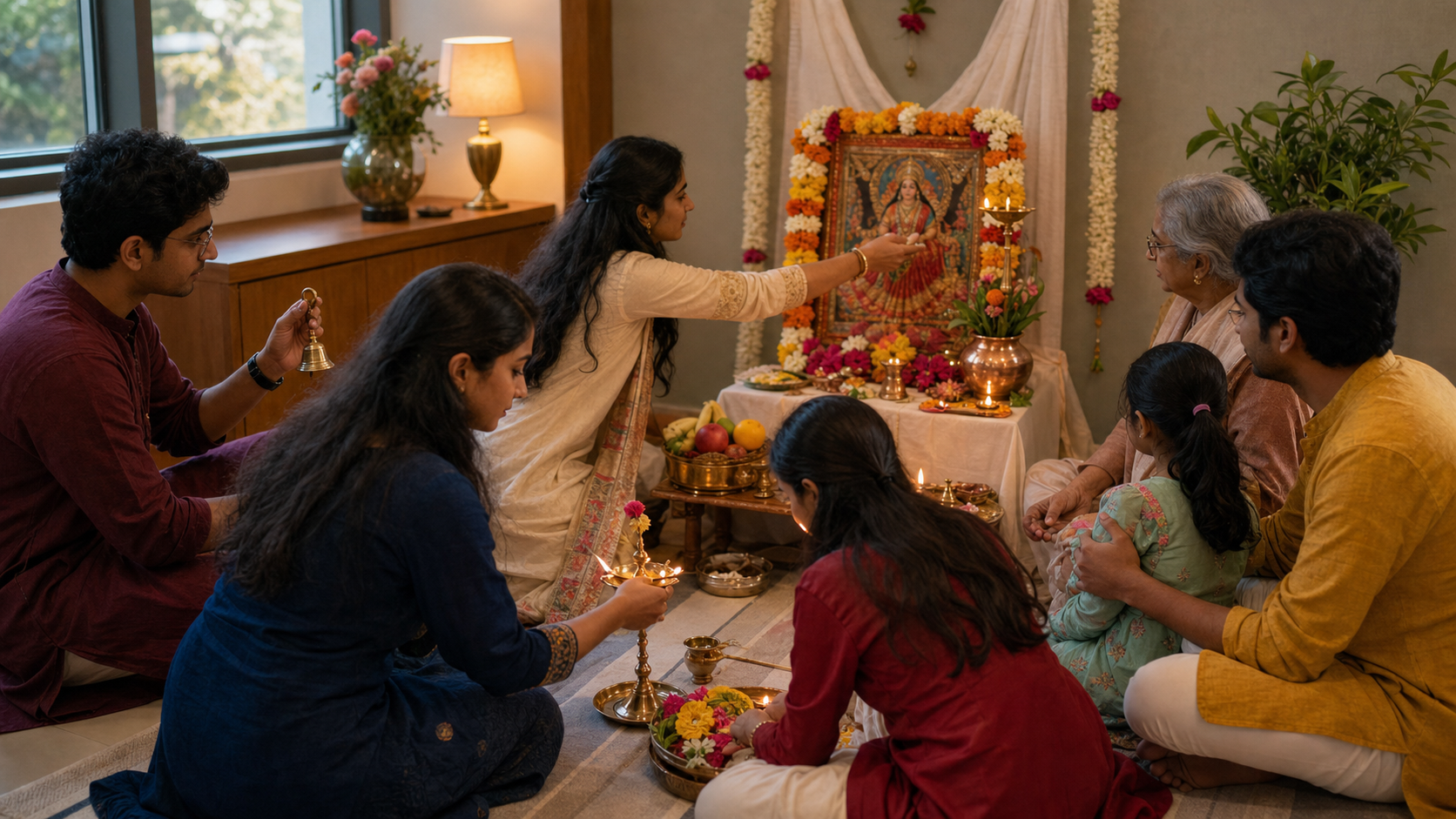
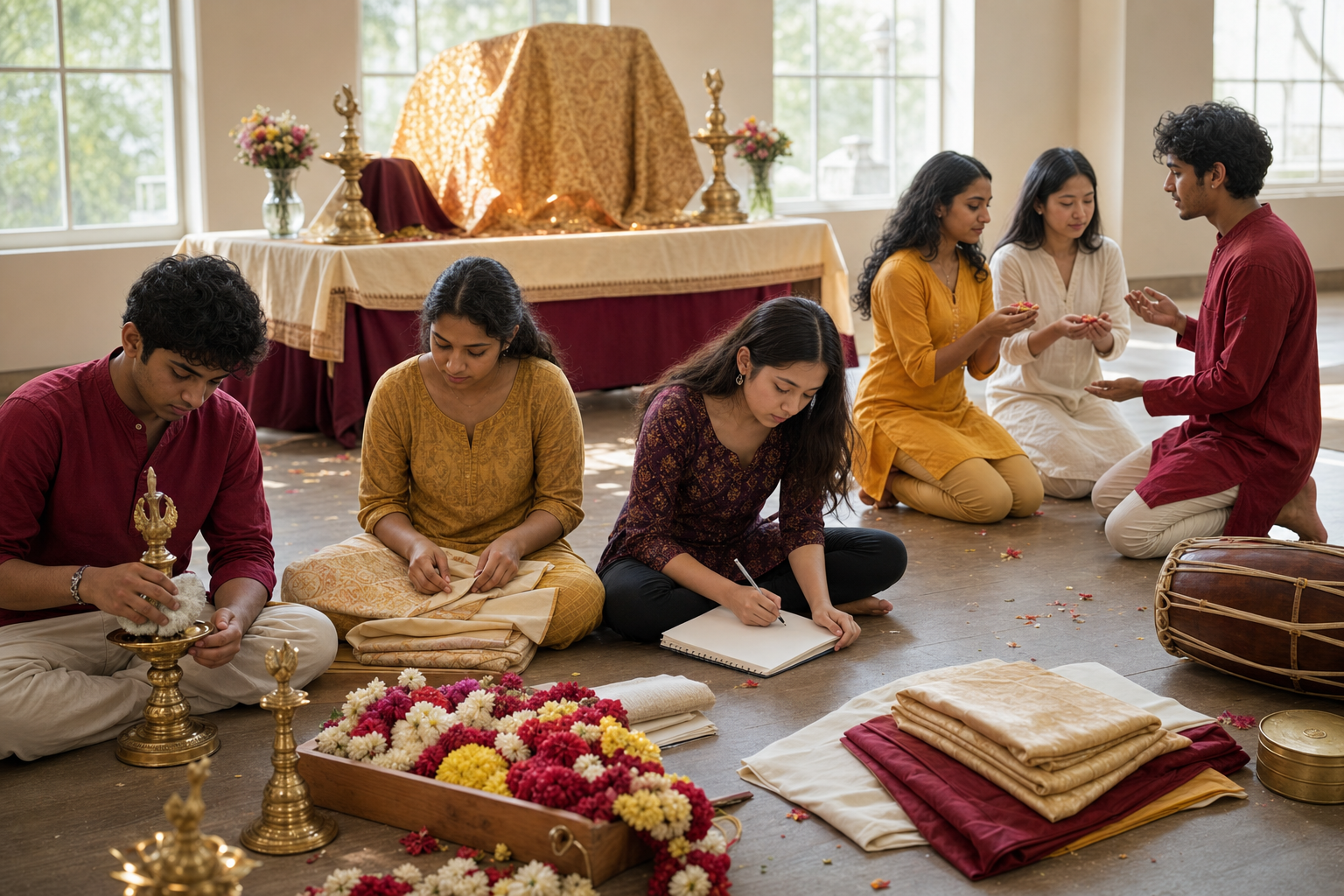
Youth leadership becomes meaningful when it includes the sacred center of the festival. Asking young volunteers to manage tickets and social media while reserving all ritual knowledge for older adults may produce an efficient event, but it does not produce transmitters of tradition.
A useful campus example began with eight women organizing a Ganesh Chaturthi observance. They cleaned the space, established a Ganapati pandal, prepared prasad, and conducted the sixteen-step Shodashopachara Puja. With only two days of outreach, nearly forty people attended the forty-five-minute puja completed from beginning to end. Its practical lesson is not that every group must reproduce that format. It is that devotion, preparation, and a manageable ritual can make participation possible before everyone feels like an expert.
For a Shakti festival, choose one complete act that fits your community’s tradition: a Devi puja, lamp lighting with an appropriate shloka, a bhajan sequence, a reading followed by reflection, or a carefully explained Garba centered on the jyoti. Then build the volunteer structure around that act.
- Identify the ritual lineage. Establish which family, temple, regional, or sampradaya practice you are following. Do not assemble a ceremony from disconnected internet fragments merely because each one looks attractive.
- Find a knowledgeable adviser. Ask a pandit, experienced practitioner, teacher, or elder to review the sequence and answer precise questions. The adviser need not take control away from the youth team.
- Prepare a usable ritual text. Include the original words, transliteration where needed, brief meanings, actions, and clear transitions. A participant should be able to find the next line without breaking the flow.
- Assign sacred and practical roles together. Name people responsible for leading, reading, preparing offerings, welcoming newcomers, arranging prasad, maintaining the space, and explaining participation. Treat these roles as parts of one act of seva.
- Rehearse transitions rather than staging a performance. Practice who speaks, who moves the offerings, and how the gathering proceeds from explanation to worship. The purpose is steadiness, not theatrical polish.
- State the boundaries honestly. If the observance is a guided community practice rather than a temple ceremony, say so. Refer tradition-specific questions beyond the team’s knowledge to the appropriate teacher.
Women should not appear only as the visual proof that a Shakti event is inclusive. Willing and prepared women can help lead ritual learning, make program decisions, teach symbolism, manage resources, and define how the community responds to problems. The Divine Feminine cannot remain the object of reverence while women are confined to decoration, food service, or dance coordination.
At the same time, youth-led does not have to mean youth-isolated. Elders safeguard memory; pandits and teachers can clarify practice; young organizers understand how their peers enter the room. Renewal happens when those strengths cooperate without making young people permanent spectators.
Build one path from welcome to worship
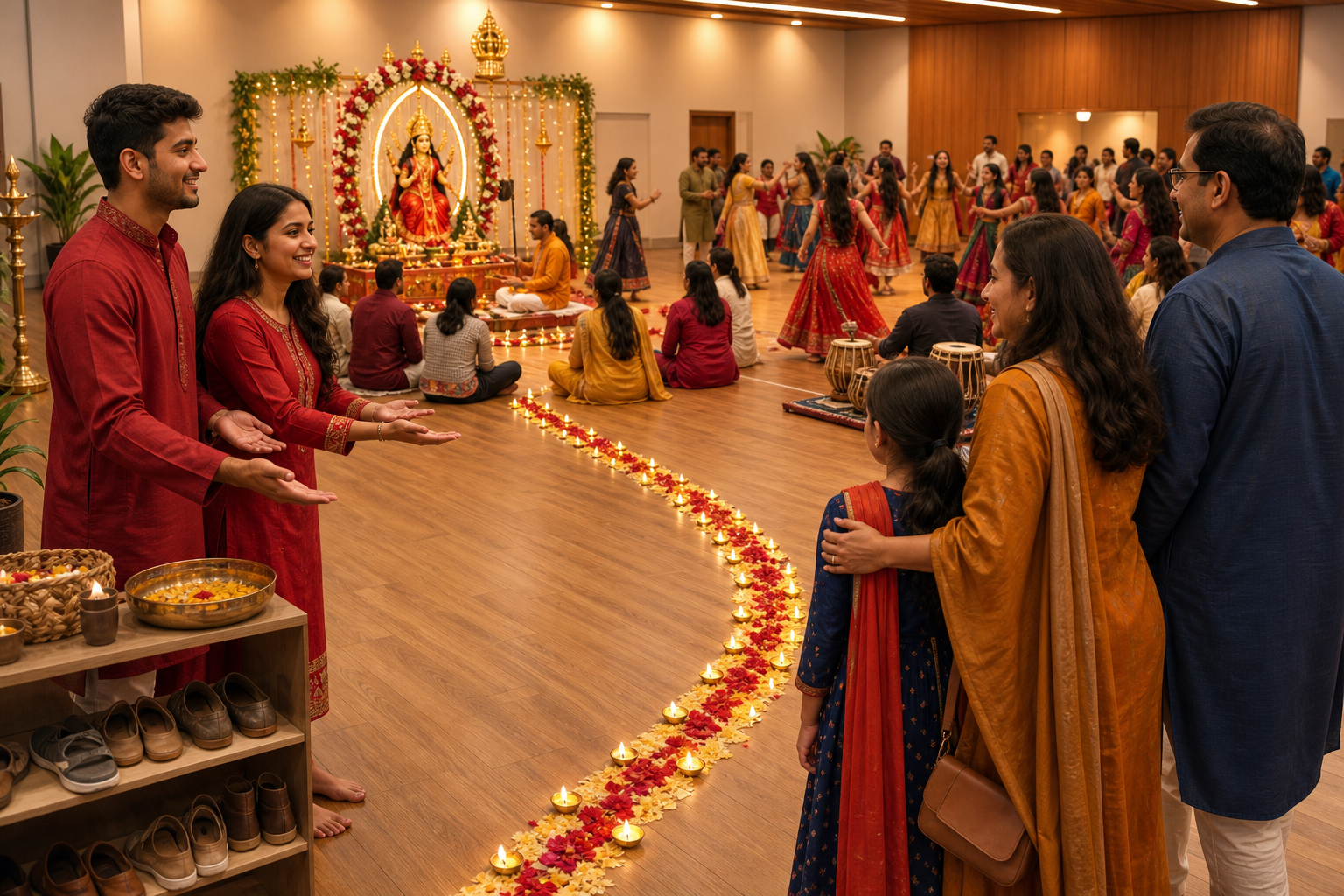
A common festival problem is fragmentation. The puja happens in one corner, the educational remarks interrupt the social program, and Garba begins as though the sacred part has ended. Participants receive several activities but no intelligible journey through them.
Garba already contains the structure needed to correct this. Its name is connected with garbha, the womb, while its circular movement evokes the cycles of life, death, and rebirth. The lamp at the center represents the divine source around which the dancers move. When participants understand that the circle turns around the source of Shakti, the dance no longer has to compete with devotion. It embodies devotion.
Organize the gathering as a coherent sequence:
- Welcome people into a sacred space. Explain what is at the center, how participants may approach it, and whether they may observe without performing every action.
- Invoke before interpreting. Begin with the prayer, puja, lamp, or bhajan appropriate to the community. Let people encounter the practice before loading them with a lecture.
- Interpret one symbol well. Explain why the lamp occupies the center, why Durga bears weapons, or why Kali’s blade bears an eye. One memorable teaching is better than a catalogue of attributes.
- Embody the meaning. Move into Garba, bhajan, a regional observance such as Bathukamma, a Bommakolu presentation, or another form that belongs naturally to the community.
- Carry the energy outward. End by naming the next practice, study gathering, seva commitment, or organizing responsibility. Do this while people are still present.
The same discipline applies when several Dharmic traditions are represented. Hinduism, Buddhism, Jainism, and Sikhism share ethical concerns such as wisdom, compassion, self-discipline, ahimsa, seva, and responsible strength. Their sacred vocabularies and practices are not interchangeable, however.
An inter-Dharmic conversation becomes more respectful when it compares a clear ethical question rather than blending symbols into a generic spirituality. You might ask how prajna guides action in Buddhism, how samyak darshan grounds right conduct in Jainism, how the kirpan joins vigilance with protection in Sikh tradition, and how jnana and kriya meet in Kali’s eye and khadga. Let practitioners describe their own traditions, then identify the shared demand that awareness govern power.
Protect depth without turning knowledge into a gate
Many young Hindus hesitate because they do not feel sufficiently knowledgeable, observant, or fluent to lead. That insecurity can push a festival in either of two unhelpful directions. Organizers may avoid sacred content altogether, or they may overcompensate by presenting uncertain claims with absolute confidence.
Dharma is not an entrance examination. You can seek, ask, practice, and grow. Openness does not mean accuracy is optional. It means the path into accurate practice remains available to someone who is willing to learn.
Use three layers when teaching festival content:
- Name the practice. Tell participants what the community is doing and which tradition or regional form it follows.
- Explain the established meaning. Distinguish a widely taught interpretation from a local custom or a particular Shakta, Tantric, philosophical, or family reading.
- Offer the application as an invitation. When you connect Kali’s sword to ending an unhealthy habit or Durga’s weapons to coordinated community work, describe that as a contemplative use of the symbol rather than the only possible interpretation.
This approach lets a youth leader speak with confidence without pretending that Hindu traditions contain no internal diversity. It also teaches listeners how to recognize the difference between ritual description, theological interpretation, and personal application.
Learning can begin on a scale small enough to sustain. Read the Bhagavad Gita with attention to a manageable passage. Bring a specific ritual question to a local pandit. Sit for five minutes with a chosen shloka before your Ishtadev. Form a discussion circle around Bhakti voices such as Lal Ded, Kabir, Molla, Meera Bai, Akka Mahadevi, Annamayya, Ramadasu, Andal, or Sant Tukaram. These are among the practical entrances into study and devotion available to a young community.
Do not try to cover every poet, deity, scripture, and regional tradition in one festival. Choose material that fits the gathering, learn it well, and create a place for questions you cannot yet answer. An honest commitment to find out builds more trust than a quick improvisation presented as settled fact.
Judge renewal by what remains after the festival
Attendance, photographs, clothing, food, and a full dance floor can show that a festival attracted people. They cannot by themselves show that the tradition has gained another generation of custodians.
Look instead for evidence of transmission. Can a participant explain why the lamp was placed at the center? Can a new volunteer lead part of the next observance? Does the team possess a reviewed ritual text it can use again? Did someone begin a daily shloka practice, join a reading circle, or ask to learn how prasad is prepared? Has an elder’s knowledge been recorded in a form younger members can actually use?
Plan for those outcomes before the event. Keep the pronunciation notes, meanings, supply list, role assignments, and unanswered questions together. Invite participants to choose the next responsibility while the gathering is still underway. If everyone leaves with only photographs, the community must rebuild its knowledge from the beginning next year.
Public explanation is part of this work. A clear event description can tell classmates or neighbors what Navaratri honors, why Garba has a sacred center, what respectful participation looks like, and whom to ask about the ritual. That is cultural advocacy at its most durable: confident enough to be visible, disciplined enough to be accurate, and open enough to invite genuine understanding.
When a misconception or hostile claim appears, Kali’s eye and blade offer a practical order of response. See before cutting. Verify what was actually said, separate ignorance from malice, answer the precise error, and preserve the dignity of the tradition in your own conduct. Force without discernment contradicts the very Shakti you mean to defend.
The seasonal movement from Navaratri toward Diwali reinforces the same discipline. Even Shri Ram’s devi upasana before confronting Ravana places humility and devotion before righteous action. The victory of dharma is not a celebration of pride; it is strength aligned with a higher order.
For your next festival, begin with one image of Shakti and ask what it requires your team to do differently. Put that requirement into the ritual, the leadership structure, and the follow-through. A festival renewed in this way does not merely preserve a memory. It prepares another person to carry the light.
References
- DharmaRenaissance Blog — Complete Navaratri–Diwali Guide: Discover Dharma’s Transformative Light, Shakti, and Advocacy
- DharmaRenaissance Blog — Beyond Garba Nights: Discover Proven Ways Hindu Youth Reclaim the Dharmic Core of Festivals
- DharmaRenaissance Blog — Discover the Secret Eye on Kali’s Sickle Sword: A Complete Guide to Transformative Symbolism
