
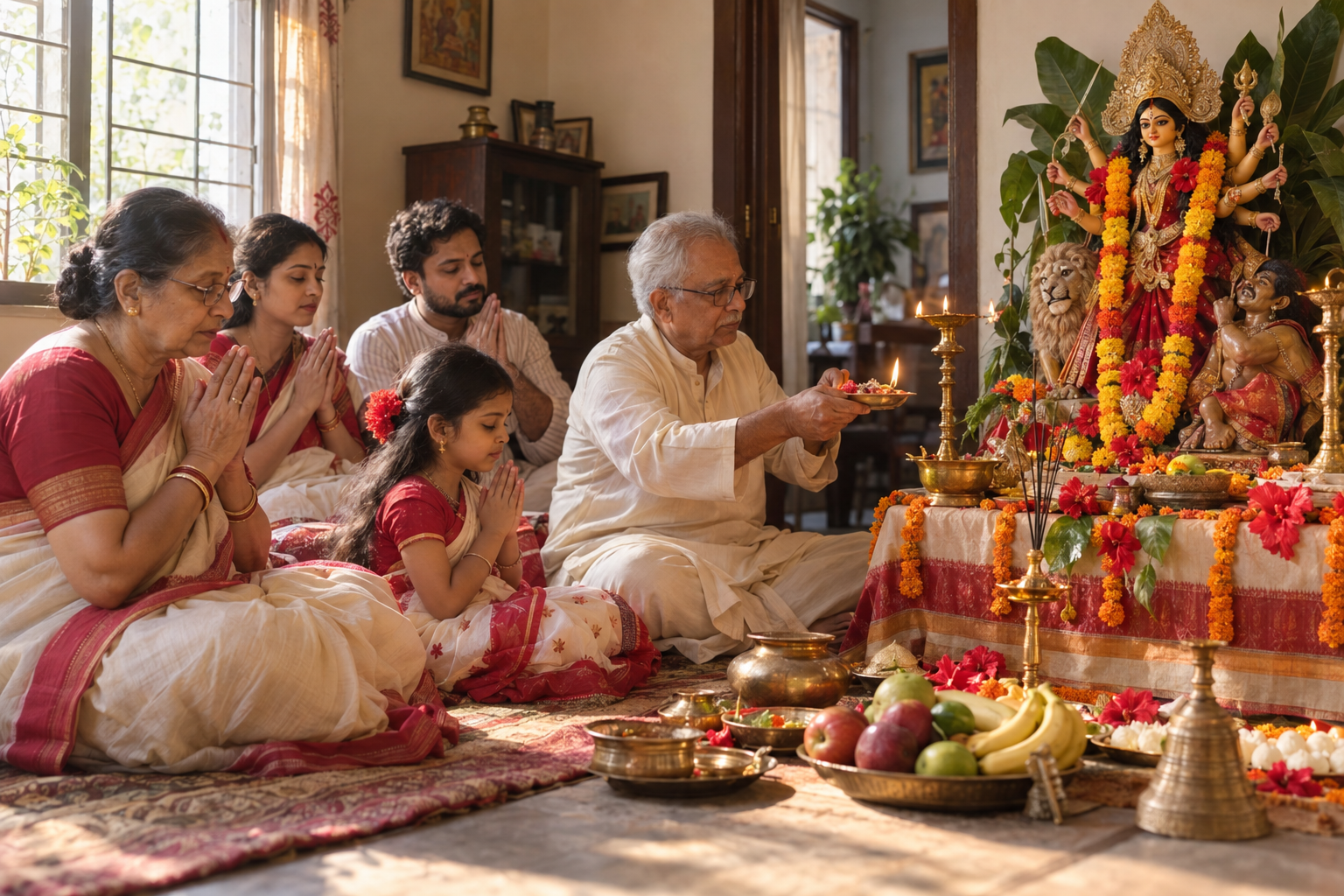
You have two consecutive sacred days on the calendar, several rituals associated with both, and one practical question: what belongs on which day? The answer depends less on assembling every custom you can find and more on following one coherent family, regional, or temple tradition.
In 2026, Durga Ashtami falls on October 18 and Mahanavami on October 19. Use those dates to plan, but confirm the applicable tithi and puja period for your location before fixing invitations, fasting, or a temple visit.
Fix your tradition before fixing the programme
The most common source of confusion is Kanya Puja. Some households perform it on Durga Ashtami; others perform it on Mahanavami. Both days are recognised in regional practice. That does not make the observance arbitrary. It means the correct choice is the one grounded in the paddhati you actually follow.
Do not decide by counting how many websites place the ritual on each date. Ask a more useful set of questions:
- Which day has your family traditionally used for Kanya Puja?
- If the family practice is no longer known, which tradition does your regular temple or purohit follow?
- Does your local panchang place the relevant tithi across unusual civil-day boundaries?
- Are you keeping the full concluding days of Navratri, or a shorter vrata such as Ekaratrotsava?
A Hindu tithi does not have to begin at midnight. A printed civil date is therefore a planning anchor, not a substitute for a location-appropriate panchang. Confirm the timing once, record it, and build the household schedule around it. Rechecking unrelated calendars usually adds noise rather than clarity.
If relatives maintain different customs, name the tradition being followed in your home that year. You need not declare one family wrong to practise another faithfully. Consistency is more useful than trying to combine incompatible sequences in order to satisfy everyone.
Give Ashtami and Mahanavami distinct purposes
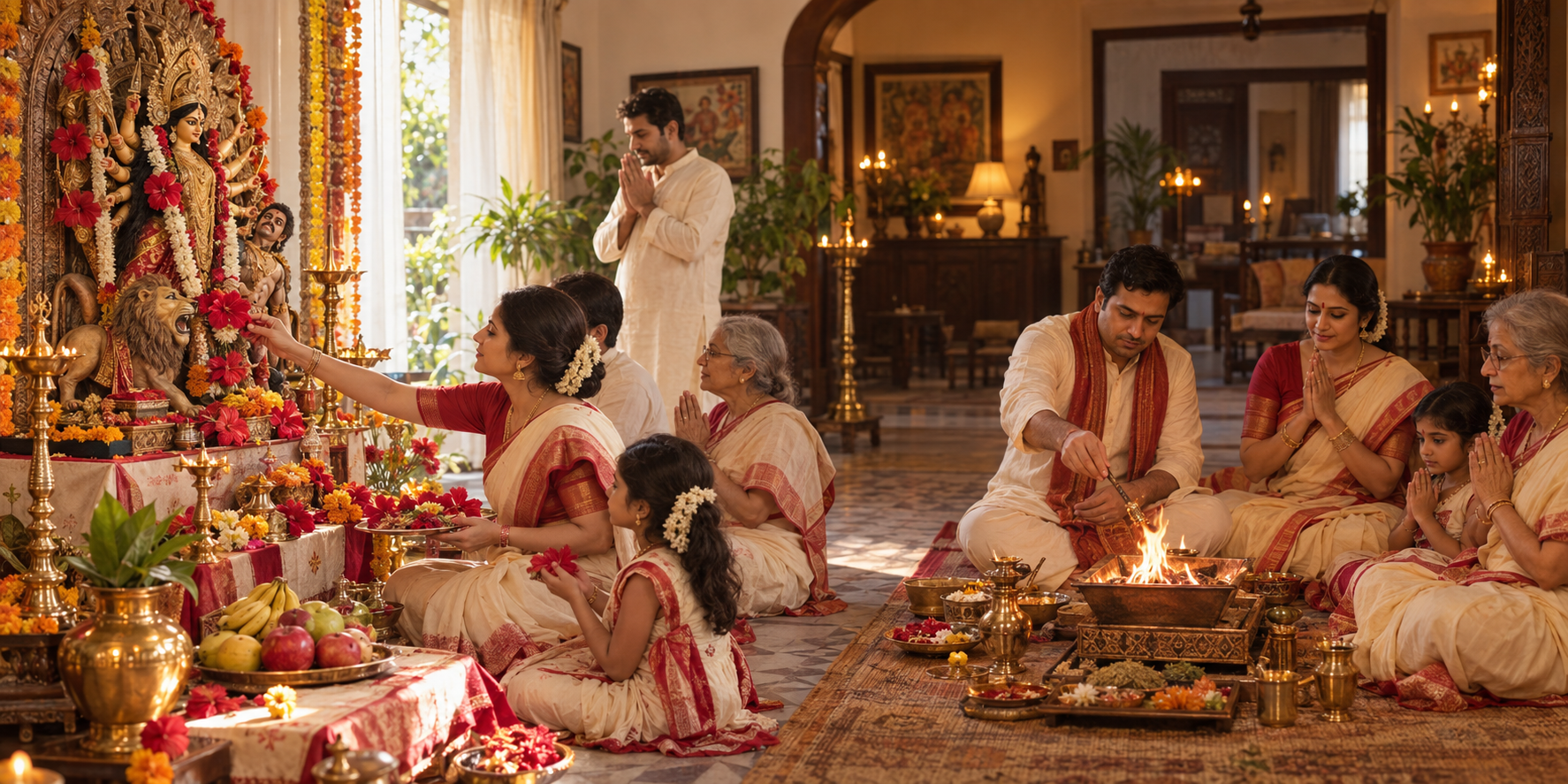
Durga Ashtami deserves to be treated as a complete day of Devi worship, not merely as preparation for the following morning. Keep the form of Durga Puja, recitation, fasting, offering, or temple worship established in your tradition. If your household performs Kanya Puja on Ashtami, make it part of that day’s central observance rather than an item hurried between other commitments.
Mahanavami carries the work of completion. A household that assigns Kanya Puja to Navami should reserve adequate time for it then. A household following Ekaratrotsava begins its condensed Navratri observance on Ashtami and reaches its conclusion on Mahanavami, with Saraswati Balidan or visarjan forming part of the closing practice.
Mahanavami also has a Vaishnava dimension in a number of communities. Hayagriva Puja is observed on Mahanavami in many places, especially in South India. Hayagriva, the horse-headed form of Vishnu, is worshipped as the Lord of wisdom and knowledge. If this belongs to your family or temple practice, prepare for it deliberately. If it does not, its presence in another community’s Navami observance does not create an obligation to add it to yours.
This distinction prevents a common mistake: treating a rich field of regional practices as a checklist. Durga worship, Kanya Puja, an Ekaratrotsava conclusion, and Hayagriva Puja can all belong within the larger sacred period without every household being required to perform all of them.
Keep Kanya Puja centred on honour, not display
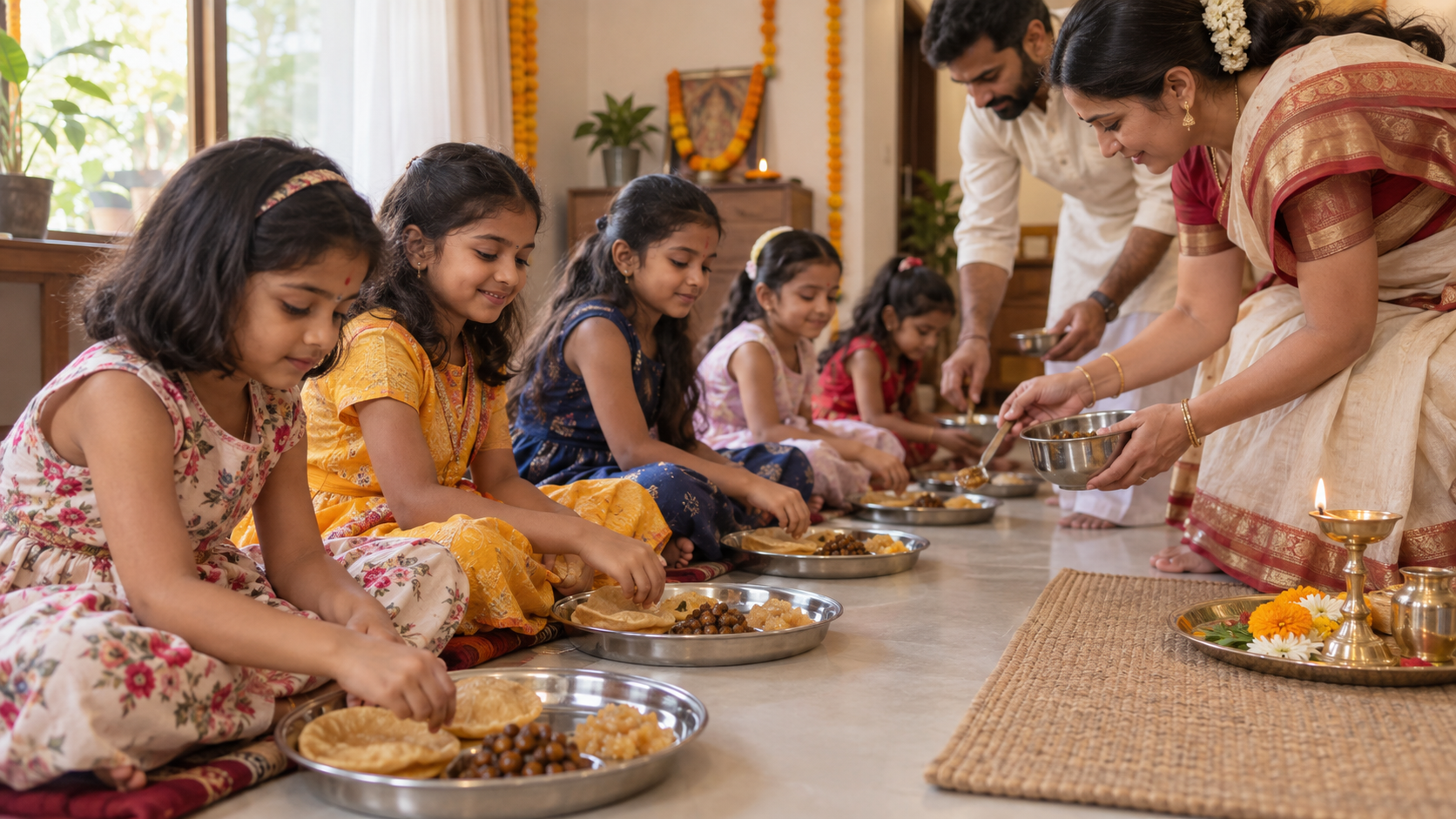
Kanya Puja, also called Kumari Puja or Kanjak Puja, honours the sacred feminine through a young girl. The ritual’s meaning should govern its practical arrangements. The child is a participant to be received with dignity, not a prop for photographs or a number needed to complete a display.
A respectful household plan is straightforward:
- Choose the day first. Settle whether your tradition observes Kanya Puja on Ashtami or Navami before sending invitations.
- Speak to the parent or guardian. Explain the timing, approximate duration, meal, and form of participation. Ask about allergies, dietary limits, accessibility, and anything that may make the child uncomfortable.
- Prepare a clean, calm place. Arrange the altar, seating, puja materials, food, and gifts before the guests arrive. A complicated setup that keeps children waiting does not deepen the worship.
- Use the ritual sequence you have received. Follow the mantras and upacharas taught in your household or temple. Customs concerning the number of participants and the form of honour can vary, so do not manufacture certainty from an isolated online list.
- Respect personal boundaries. If a child does not want her feet touched, photographed, marked, or included in a particular action, adapt without argument. Reverence cannot be produced through pressure.
- Offer food and gifts thoughtfully. Serve what the invited children can actually eat, and give without making anyone perform gratitude for the camera. Confirm collection or return arrangements with guardians.
These details are not separate from dharma. Maryada is visible in how you treat the person before you. A smaller puja conducted attentively is preferable to a large event in which the invited children are hungry, confused, or hurried through the ritual.
Choose a realistic two-day or condensed observance
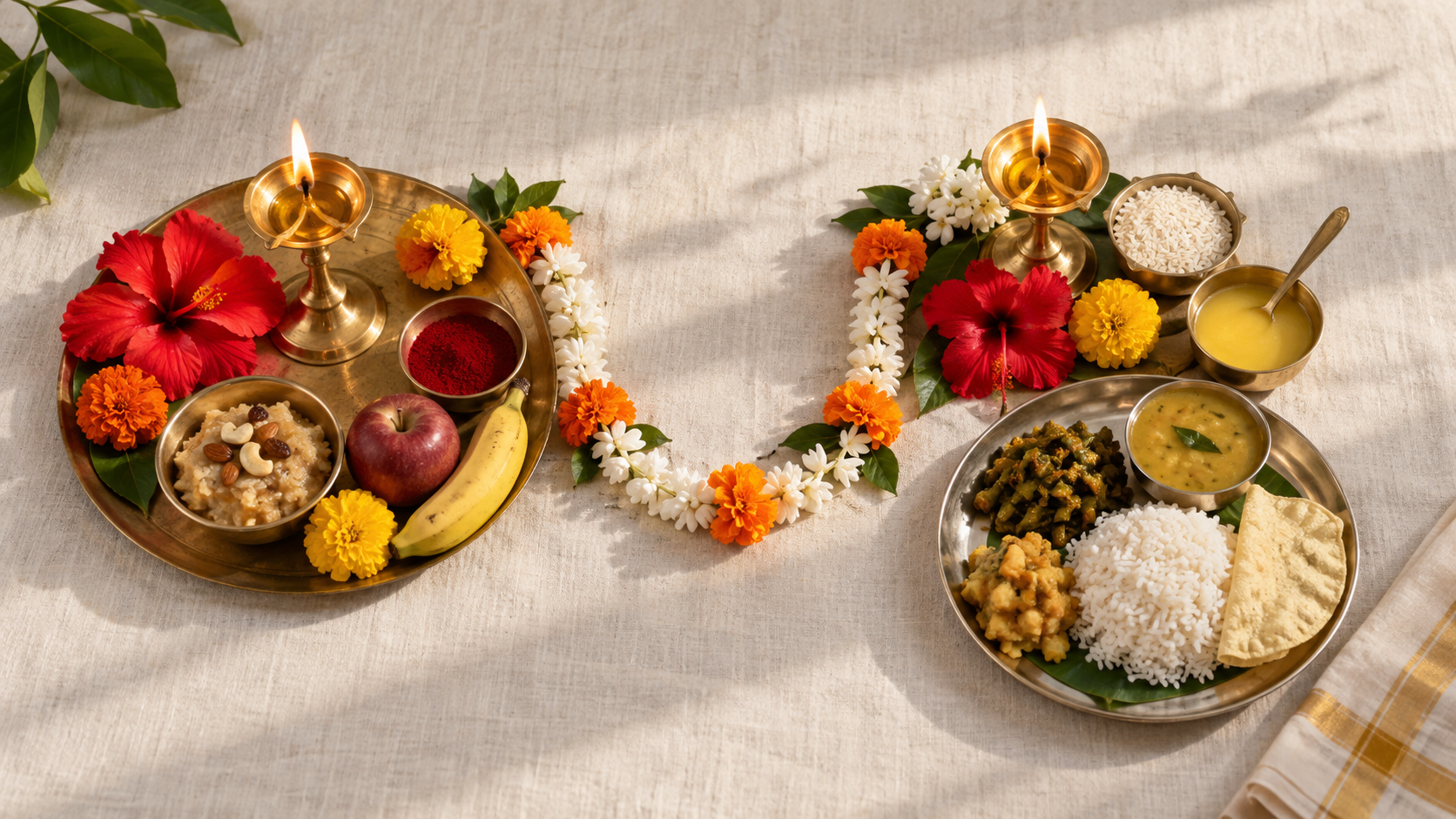
You do not need an elaborate household programme to keep these days meaningfully. You do need a plan that distinguishes worship from logistics.
If you can observe both days
- Before Ashtami: Confirm local timings, decide the Kanya Puja day, speak to any invited families, and place puja materials together.
- On Ashtami: Make Durga worship the centre of the day. Perform Kanya Puja here only if that is your chosen tradition. Before ending, check what must remain ready for the Navami conclusion.
- On Mahanavami: Complete the Navratri sequence followed by your household. Hold Kanya Puja if Navami is your customary day. Include Hayagriva worship only where it belongs to your practice.
- At the close: Carry out the prescribed concluding act, including Saraswati Balidan or visarjan when following the relevant Ekaratrotsava method. Do not dismantle the sacred setup early merely to clear the room.
If you are keeping Ekaratrotsava
Ekaratrotsava is a one-day Navratri vrata beginning on Durga Ashtami and concluding on Mahanavami. It is a recognised condensed form, not permission to compress a collection of unrelated rituals into the shortest possible session. Obtain the sequence from the tradition you follow, identify the beginning and concluding periods, and protect that time from ordinary appointments.
If work or family duties sharply limit your time
Choose one coherent observance rather than making several promises you cannot keep. Attend the main temple puja, conduct the established household worship, or follow a properly guided condensed vrata. If Kanya Puja cannot be arranged with adequate notice and care, do not summon children at the last minute simply to preserve appearances. Make the invitations properly when your chosen tradition and circumstances allow.
Prepare the food, guest arrangements, and ordinary cleaning in advance. During the puja period, let worship remain worship. This single boundary often does more for the quality of the observance than adding another decoration, dish, or copied ritual.
Key takeaways
- For 2026 planning, Durga Ashtami is October 18 and Mahanavami is October 19; confirm local tithi timings before setting the hour.
- Kanya Puja may be observed on either Ashtami or Navami. Follow your family, regional, or temple paddhati consistently.
- Ashtami centres Durga worship; Mahanavami carries the concluding observances of the sequence you follow.
- Ekaratrotsava offers a condensed Navratri vrata that begins on Ashtami and concludes on Mahanavami.
- Hayagriva Puja on Mahanavami is especially associated with practices found in South India; it is not a universal requirement.
- In Kanya Puja, advance consent, dietary care, calm preparation, and respect for each child’s boundaries are part of honouring the Kumari.
Before purchasing anything, write down three decisions: the local puja timing, the tradition you are following, and the day assigned to Kanya Puja. Then contact the temple, purohit, and invited families as needed. Once those decisions are settled, the rest of the preparation becomes simple and the two sacred days can unfold without avoidable confusion.
References
- Hindu Pad – Kanya Puja 2026 | Kumari Pooja during Navratri Durga Puja
- Hindu Pad – Ekaratrotsava 2026 | 1 Day Navratri Poojan | Ekaratri Vrata
- Hindu Pad – Hayagriva Puja on Mahanavami during Navratri

Leave a Reply
You must be logged in to post a comment.