
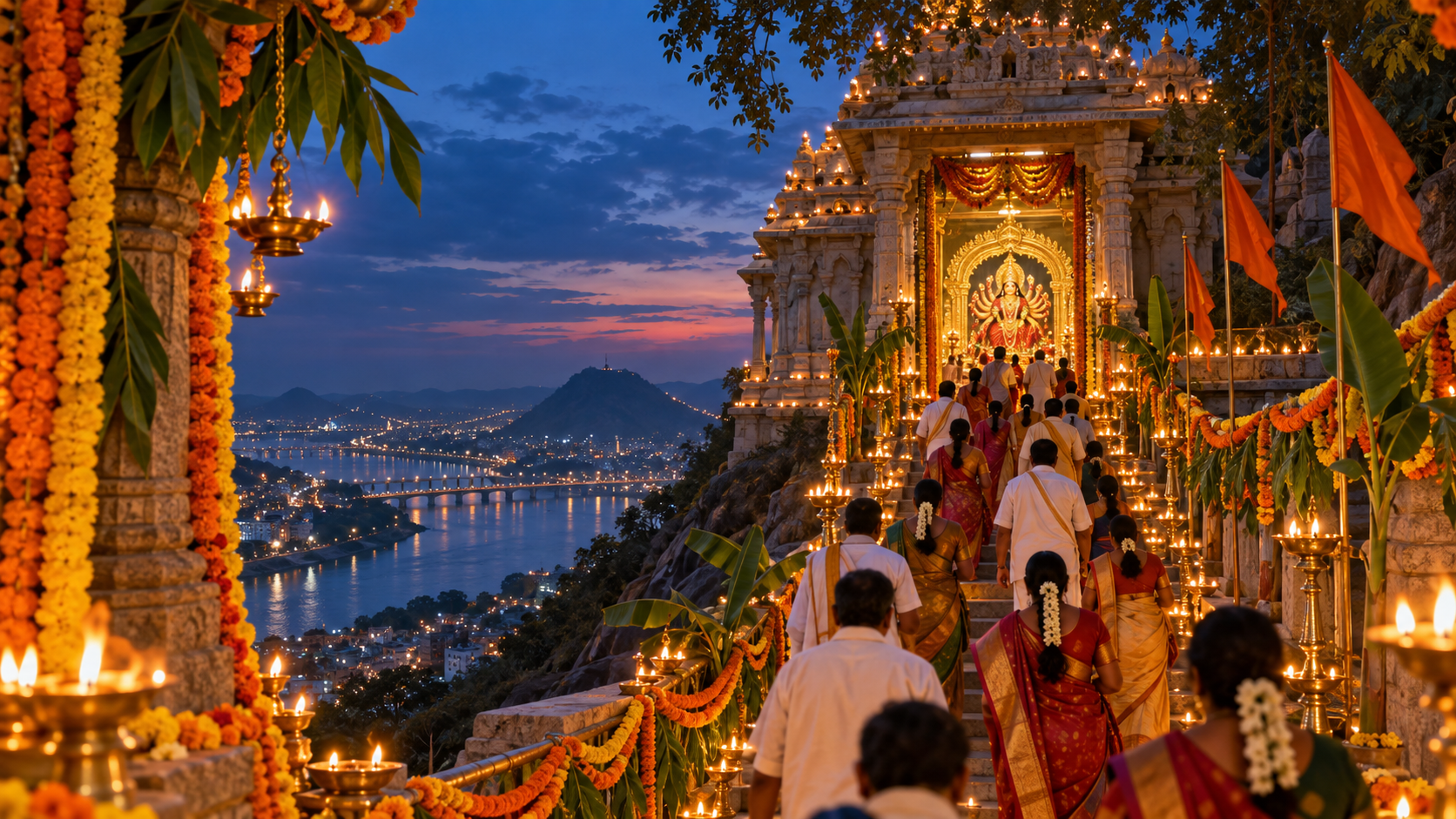
If you are arranging a visit to Vijayawada’s Kanaka Durga Temple or observing Dasara at home, a list of Devi’s forms is only the starting point. For each day, you need to know which alankaram is being presented, how its saree colour fits the observance, and which naivedyam you intend to offer or receive as prasad.
In 2026, Vijayawada Dasara Navaratri is scheduled from Sunday, 11 October through Tuesday, 20 October. Mark the whole period now, but verify the exact alankaram, naivedyam, darshan arrangements and rules for the day you will attend. That distinction matters: the festival window can be planned well in advance, while daily logistics should come from a current notice rather than an old calendar or forwarded image.
Read the alankaram as theology, not decoration
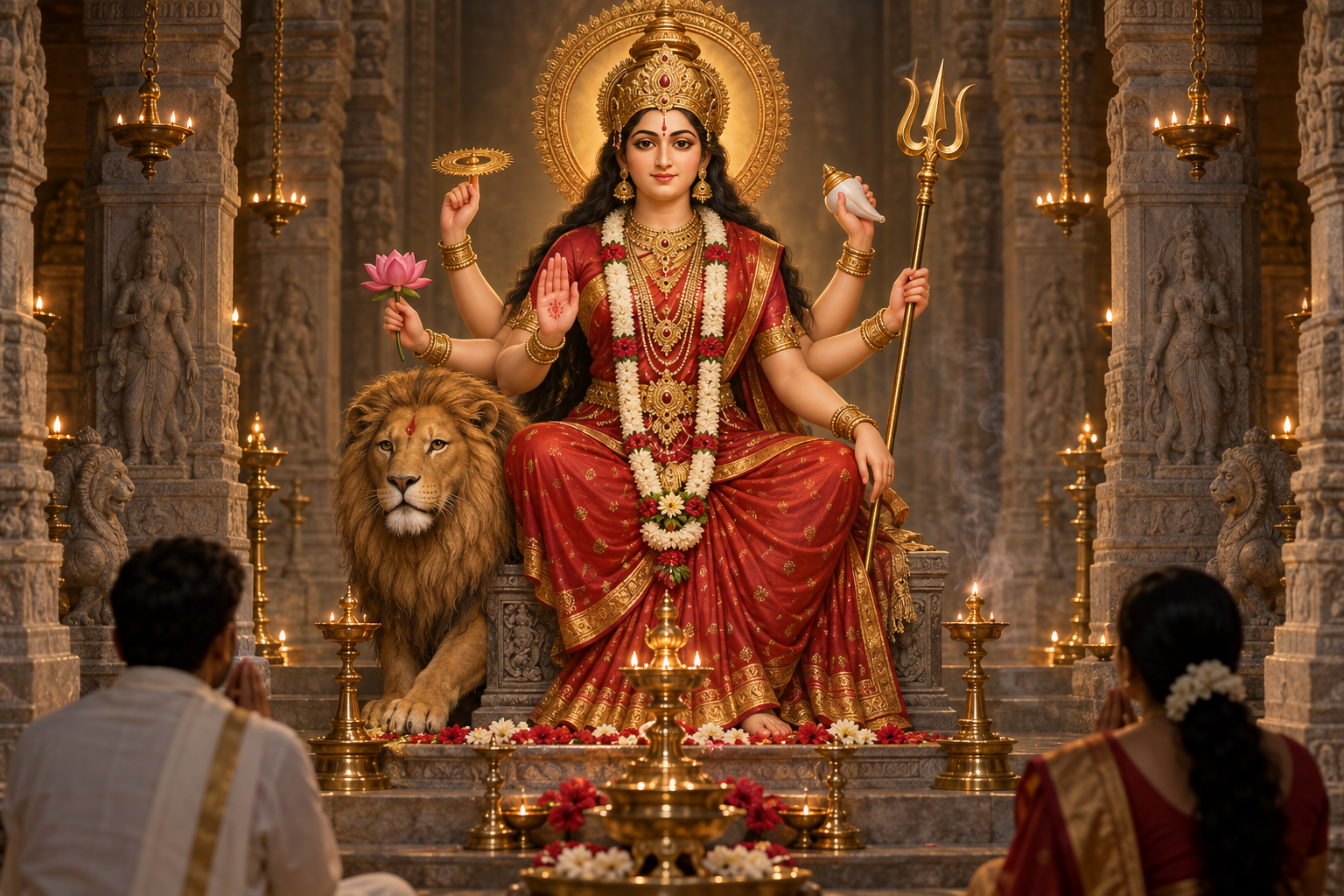
A Navaratri alankaram is not simply a change of costume. It makes a particular manifestation of Devi visible so that you can approach the one divine power through a distinct form, name and devotional mood. The theological key is the unity behind all the different manifestations: the forms change, but Shakti is not divided into competing powers.
This protects you from two common misreadings. The alankarams are not unrelated deities assembled for a festival, but neither are they interchangeable labels placed on the same decoration. Each form directs attention to a particular expression of Devi. The right question is therefore not only, “What is today’s name?” Ask what the form reveals about divine action and what response it asks from you.
Before darshan, read the day’s name and look at the current image or description issued for that observance. During darshan, notice the whole presentation: expression, posture, hands, emblems, ornaments and colour. Do not let the saree colour become the only detail you remember. After darshan, carry one clear sankalpa into the day. That turns a visual encounter into sadhana rather than a photograph-and-exit routine.
Keep the form, saree colour and offering distinct
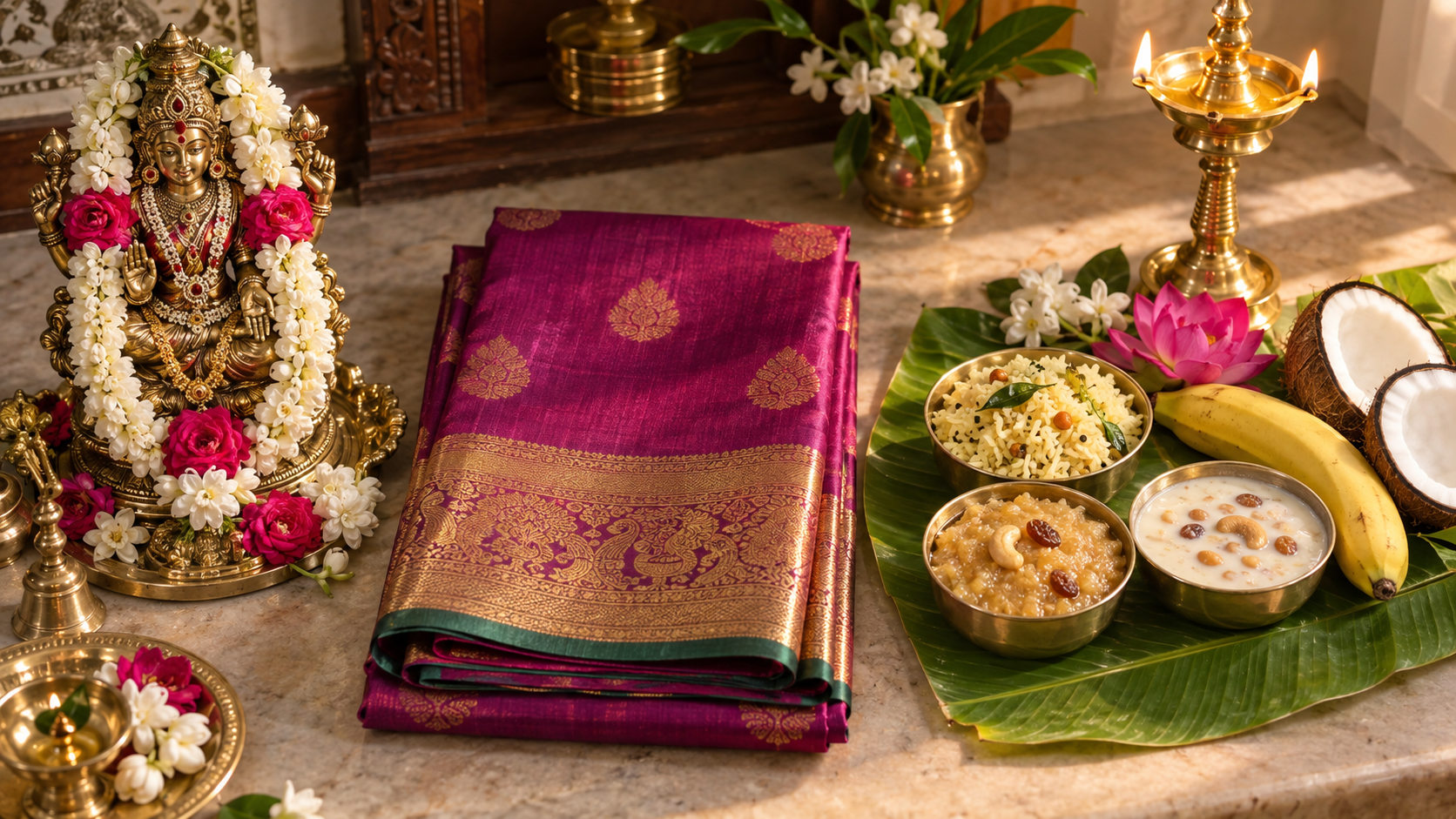
Vijayawada’s daily observance pairs three elements: an alankaram, a saree colour and a naivedyam. They belong together, but they do different work.
- Alankaram: the particular form in which Devi is presented. This is the theological centre of the day.
- Saree colour: a visible feature associated with the day’s presentation. A devotee may choose to wear or offer the corresponding colour where local and family practice supports it, but clothing is not a substitute for understanding the form.
- Naivedyam: food placed before Devi as an offering. Once offered according to your practice, it is received and shared as prasad rather than treated as an ordinary menu item.
Keeping these categories separate prevents a surprisingly practical mistake: preparing the right colour while following the wrong year’s alankaram or cooking a remembered festival dish without checking the day’s named offering. A date, form and naivedyam should always be copied as one set from the 2026 schedule.
For home worship, make a small daily card with five lines: date, alankaram, saree colour, naivedyam and sankalpa. Add the verified darshan time if you are going to the temple. This takes less than a minute and gives everyone in the household the same plan.
Plan your 2026 observance without relying on guesswork
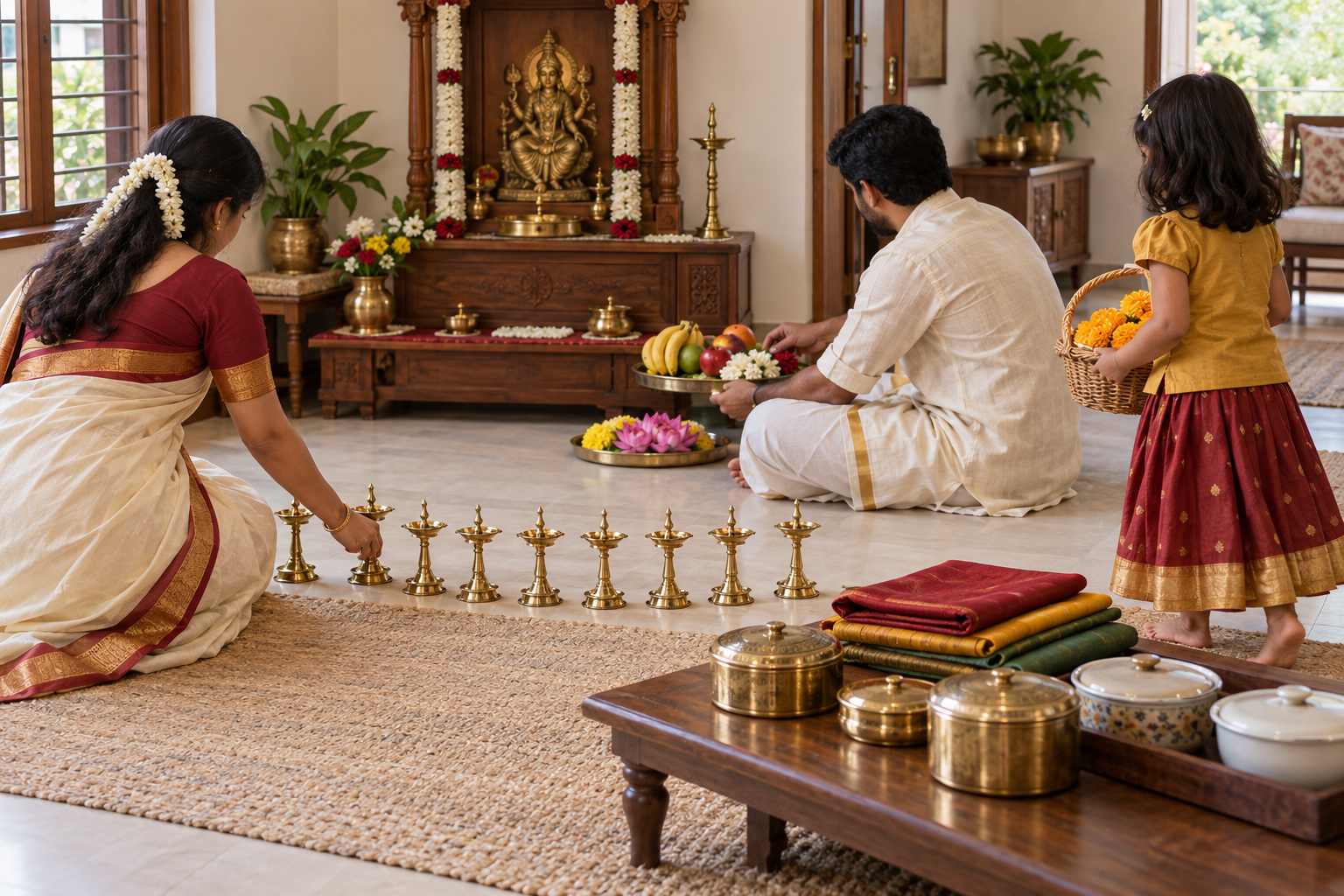
The useful way to plan Vijayawada Dasara is to decide first what you are actually trying to do. A devotee attending on one chosen day needs a different plan from a household observing the entire festival. Make that decision before buying clothes, ingredients or travel tickets.
- Reserve the festival window. Put 11-20 October 2026 in your calendar. If you need leave or accommodation, make those broad arrangements around the full date range.
- Choose your level of observance. Decide whether you will follow every day at home, attend the temple on a selected day, or combine home puja with one temple visit.
- Use a 2026-specific entry for each day. Do not transfer the date of a favourite alankaram from an earlier year’s chart. Match the form, colour and naivedyam to the 2026 date.
- Confirm practical details close to the visit. Check the current alankaram, darshan hours, queue or entry arrangements, and rules for items that devotees may carry. A circulating image may identify the form correctly while omitting later logistical instructions.
- Prepare only what your setting permits. At home, follow your family sampradaya. If you intend to carry an offering to the temple, first confirm what is accepted; do not assume that every homemade dish or container may be taken inside.
- Set aside naivedyam deliberately. Prepare it cleanly and according to your household practice, place the offered portion separately, and avoid serving it as ordinary food before the offering is complete.
- Share the prasad. Plan the quantity around the people who will receive it. Devotional abundance does not require avoidable food waste.
A practical home naivedyam checklist
- Write down the exact name of the day’s naivedyam before shopping.
- Use a recipe consistent with your family tradition rather than presenting one regional variation as universal.
- Keep the preparation manageable enough to complete with attention and cleanliness.
- If the named preparation is not feasible, follow the simpler alternative permitted by your household tradition and identify it honestly rather than calling it the scheduled dish.
- Keep the portion for offering separate from the family meal.
- After worship, distribute the prasad respectfully and store any remainder appropriately.
Exactness has a proper place here. If you are intentionally following the Vijayawada calendar, use its named offering when you reasonably can. But exactness should serve devotion, not become a display or a reason to waste food. The temple’s daily naivedyam and a household’s permitted offering are related observances in different settings; they need not be treated as identical procedures.
Approach Maha Chandi as protective Shakti, not mere anger
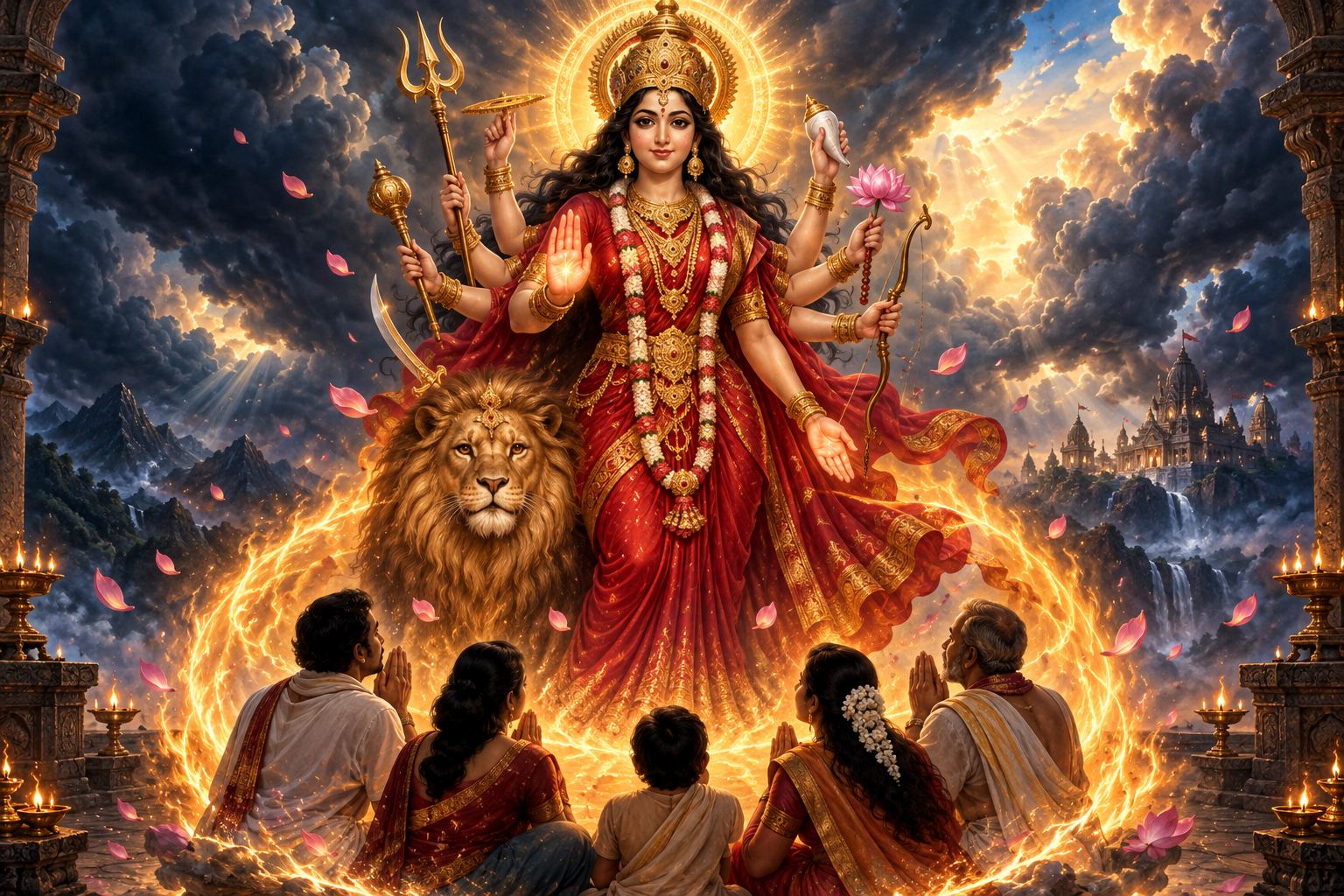
Sri Maha Chandi is an avatara of Adi Shakti associated especially with the Devi Mahatmya, also known in devotional practice as the Chandi Path. She is a fierce and powerful form of the divine mother and an embodiment of Shakti.
Fierceness here should not be confused with malice. Maha Chandi prevents the idea of divine motherhood from being reduced to passivity. Her alankaram directs attention to power that confronts what must be confronted. For a devotee, that calls for disciplined courage in the service of dharma, not a desire to dominate other people.
If Maha Chandi is the form you especially wish to see, verify her exact 2026 date before committing to travel; do not assume that a date remembered from another year still applies. If the Devi Mahatmya is already part of your practice, its recitation or attentive reading gives the alankaram its scriptural frame. If it is not, a simple prayer conducted according to your family tradition is preferable to inventing elaborate procedures merely because the form is fierce.
- Confirm Maha Chandi’s date in the current 2026 sequence.
- Learn why the form is associated with the Devi Mahatmya before darshan.
- Frame your sankalpa around strength for right conduct, self-command and the protection of dharma.
- Follow the day’s verified naivedyam where feasible, or the permitted household practice when worshipping at home.
- Receive and share the prasad without turning a serious form of Devi into a spectacle.
Quick answers for devotees
Are the Navaratri alankarams separate goddesses?
They are distinct manifestations through which devotees encounter the one Shakti. Preserve both sides of that teaching: do not divide Devi into competing powers, and do not erase the meaning carried by each form.
Must you wear the day’s saree colour?
The saree colour belongs to the day’s visible observance, and wearing it can be a meaningful act of participation where that custom is followed. It should not be presented as a universal condition for darshan or as more important than understanding the alankaram.
Must a home offering reproduce the temple naivedyam exactly?
If your aim is to follow the Vijayawada daily sequence, prepare the named naivedyam when your household practice and circumstances permit. Recipe details can follow your family’s tradition. When an exact preparation is not possible, use the simpler offering allowed by that tradition rather than improvising a claim that the substitution is identical.
Can you carry homemade naivedyam into the temple?
Do not assume so. Temple rules govern what may be brought into the premises and how offerings are received. Confirm the current rule before carrying food, vessels or other puja materials; otherwise, make the offering at home and receive the temple’s prasad during your visit.
Put 11-20 October in your calendar now. Then create one card for every day you will observe: date, alankaram, colour, naivedyam and sankalpa. Verify the day’s temple details before you leave, and let that preparation clear the way for attentive darshan rather than becoming the purpose of it.
References
- Hindu Pad – Vijayawada Navaratri 2026 Alankarams List, Naivedyams (Prasadams List)
- Hindu Pad – Significance of Navaratri Alankarams of Durga Mata
- Hindu Pad – Maha Chandi Devi Alankaram in Vijayawada Dasara Navaratri 2026

Leave a Reply
You must be logged in to post a comment.