
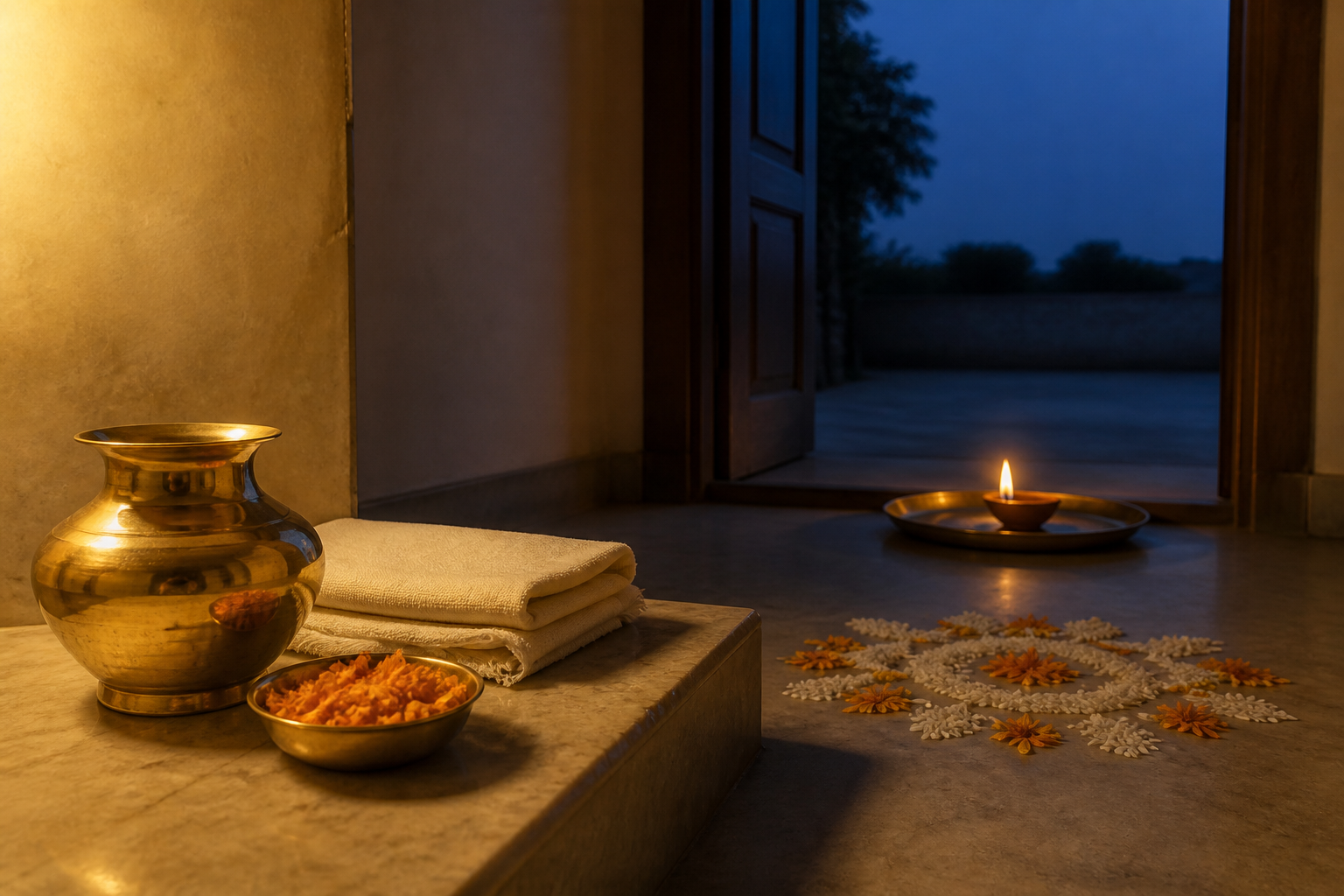
You may know that sacred water should be prepared and a lamp should be offered for Yama, yet the practical order can still be unclear. Which rite comes first? Where should the diya go? What must be ready before the next morning? Treat the observance as a two-part discipline: establish purity before sunset, then offer light after sunset.
“Diwali eve” does not describe one universal ritual period across Bharat. Jala Poorna Trayodashi prepares sacred water for Narak Chaturdashi, while Yamadeepdaan coincides with Dhanteras in many North Indian and Gujarati traditions. Some regional calendars also identify the lunar month differently as Ashwin or Kartik. Follow your family’s parampara and a reliable local panchang; when both observances fall within the same household sequence, prepare the water first and light the Yama diya after sunset.
Key takeaways: the order of your observance
- Complete ordinary cleaning before ritual purification. Sacred water does not replace washing vessels, floors, or surfaces.
- Before sunset, wash and dry the household water vessels, refill them with fresh water, and offer a brief puja to Goddess Ganga.
- Reserve only the water you will use for the pre-dawn Abhyanga Snana, light household sprinkling, puja, or prasada.
- After sunset during Pradosh Kaal, place the Yama diya outside the main entrance and orient it south according to your custom.
- Let ahimsa govern the details: conserve water, prevent pollution, stabilize every flame, and never preserve an overnight-lamp ideal at the cost of fire safety.
Before sunset: prepare the Jala Poorna water
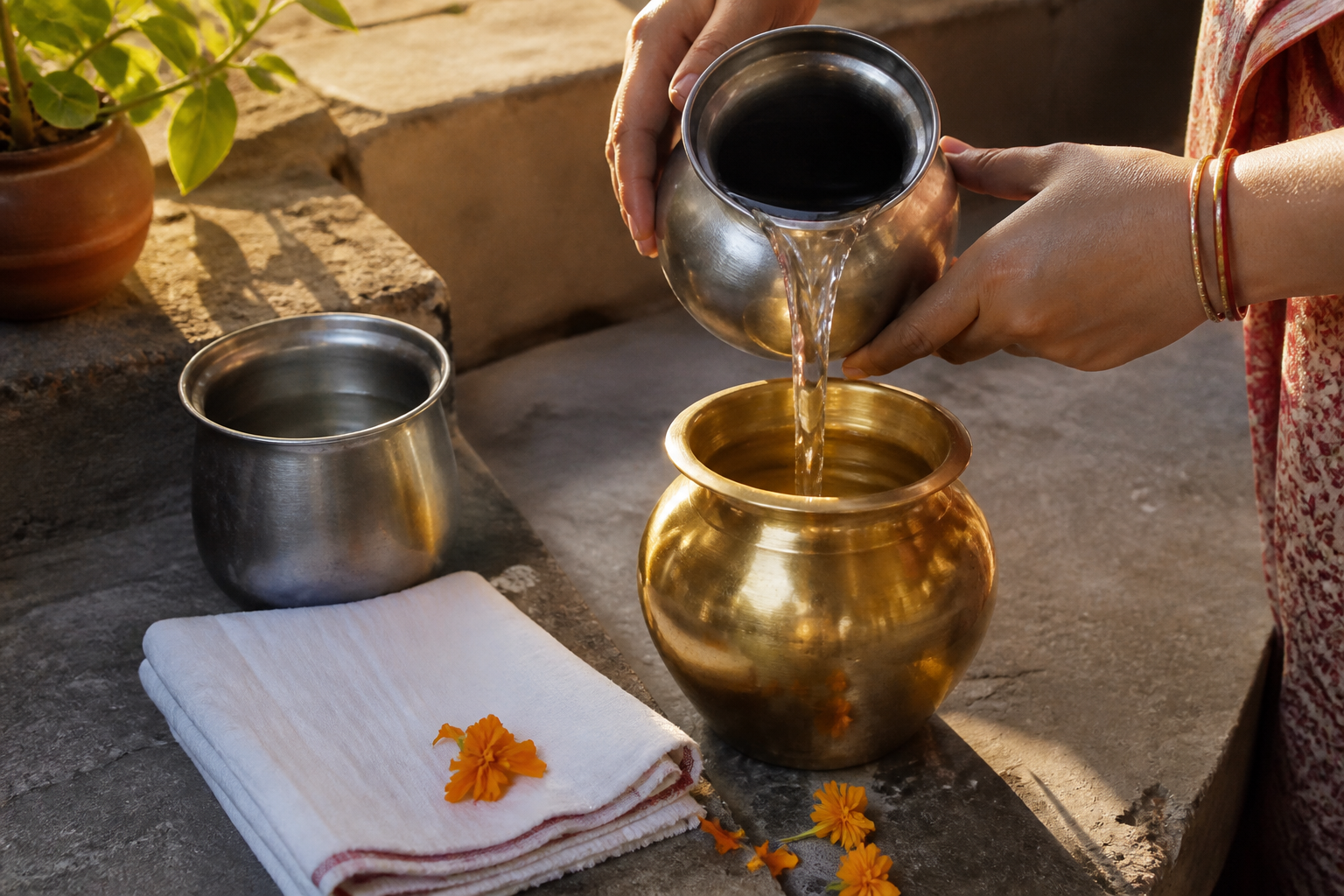
Jala Poorna Trayodashi begins with a modest household duty. The vessels used to hold or serve water – traditionally a kalash, matka, or lota – are cleaned and filled afresh. This is both practical hygiene and ritual preparation. The important movement is from neglect to care: the vessel is made clean, the water is received with gratitude, and an ordinary household resource is then set apart for sacred use.
- Select the vessels. Gather the containers actually needed for the observance. There is no virtue in filling every available vessel and wasting water later.
- Wash and dry them thoroughly. Remove stale water and visible residue before refilling. Ritual intention begins after this physical cleaning, not instead of it.
- Add fresh water. Use water suitable for its intended purpose. If any will be consumed or used in prasada, it must already be safe for consumption; sanctification does not make contaminated water potable.
- Offer a simple Ganga puja. Place the vessels in a clean area and offer a diya, fragrant flowers, and the Ganga invocation used in your family. If you have not inherited a particular mantra, offer a sincere prayer for purity, gratitude, and the responsible use of water rather than improvising a claim of scriptural authority.
- Reserve the water carefully. Keep it clean for the pre-dawn Abhyanga Snana on Narak Chaturdashi. A portion may also be retained for puja, prasada, or light sprinkling at the threshold and through the home.
The sprinkling is a domestic act of shuddhi, not a substitute for cleaning or disinfection. Sweep and wash first. Then use a small, controlled amount of sanctified water at the entrance and in the principal living or worship spaces. The distinction matters: physical cleaning removes dirt, while the ritual marks the household’s intention to enter Deepavali with greater clarity.
Keep the water covered or otherwise protected according to the normal hygiene of your home. When dawn comes, use the reserved water in the Abhyanga Snana according to your regional practice. The purpose is not excess. A carefully preserved quantity, used without waste, expresses reverence for Ganga more convincingly than abundance poured away.
After sunset: light the Yama diya correctly and safely
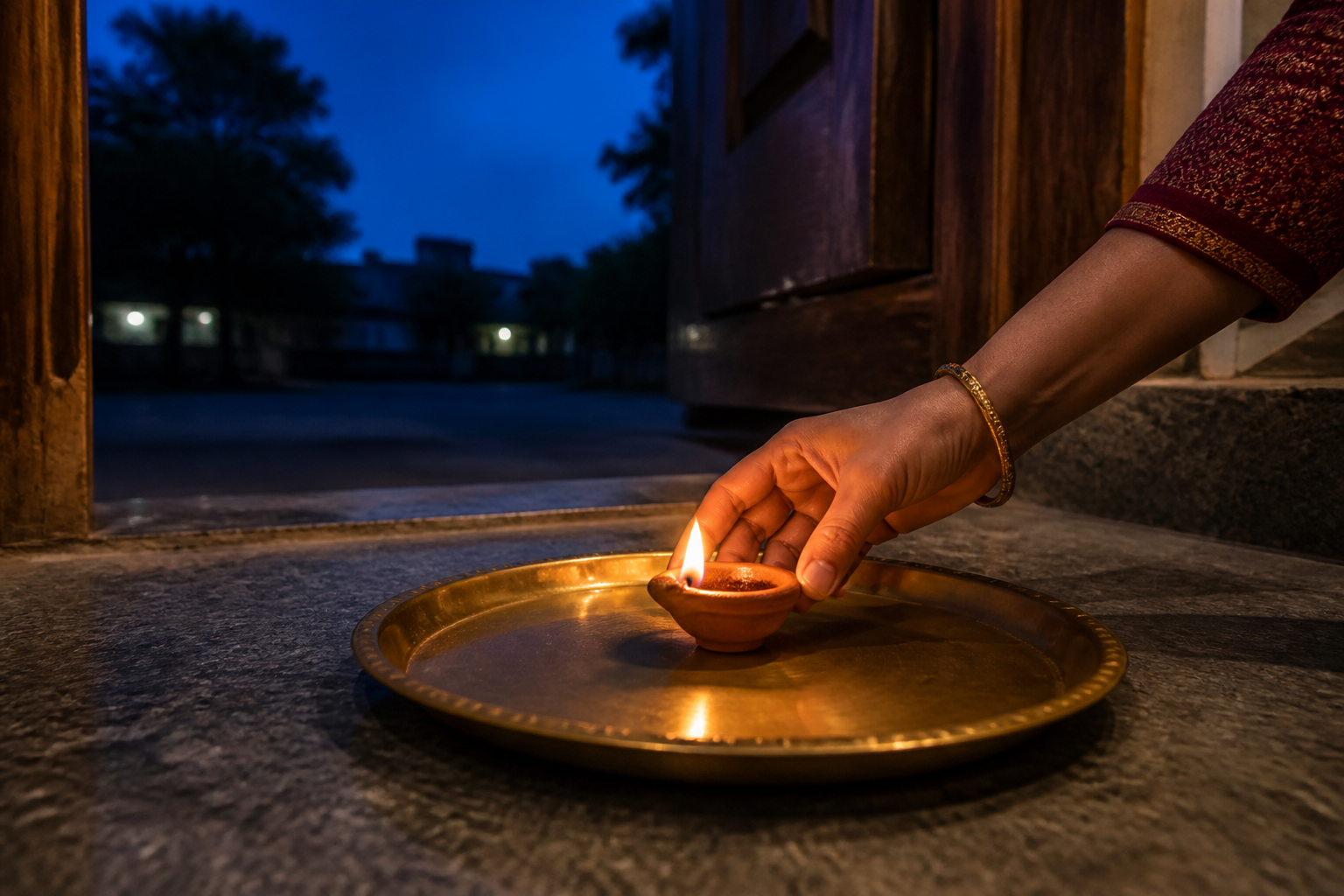
Yamadeepdaan is often called a protection rite, but its deeper mood need not be fear. Yama is associated with justice and the moral order governing life and death. The south-facing light acknowledges that association while the household prays for health, longevity, protection, and the welfare of all beings. The lamp is therefore both an offering and a reminder: a protected life should also be a responsibly lived life.
Prepare an earthen diya, a cotton wick, sesame oil or ghee, and a steady plate or lamp stand. A few black sesame seeds may be added where that custom is observed. Simplicity is entirely sufficient; the meaning does not depend on an elaborate arrangement.
- Clear the entrance. Remove paper decorations, loose fabric, dry leaves, footwear, and anything else that could make the placement unstable or flammable.
- Prepare the lamp. Add sesame oil or ghee and set the cotton wick. If black sesame belongs to your family custom, add only a few seeds.
- Place it deliberately. Put the diya outside the main door on a firm plate or stand and orient it toward the south. The flame should be beyond the reach of children, pets, clothing, curtains, and normal foot traffic.
- Light it during Pradosh Kaal. This evening period begins after sunset, but its clock time changes with date and location. Confirm the local timing rather than copying a time published for another city or year.
- Offer the prayer. Pray quietly for the health and longevity of your family, remembrance of those who came before you, and the welfare of all beings. A calm and truthful intention is more important than extending the ritual with unfamiliar words.
- Keep it burning only while it is safe. Allowing the diya to glow through the night is an ideal in many households. Use a stable, wind-shielded holder where appropriate, but do not leave an exposed flame unattended merely to satisfy that ideal. If continued burning cannot be supervised safely, extinguish it responsibly when supervision ends.
Wind protection prevents the flame from going out, but it does not remove the risk of fire. Do not improvise a shield from paper, thin plastic, or another combustible material. A ritual offered for protection should not create danger at the doorway.
Ancestor remembrance can accompany the Yama offering without being made compulsory for every household. Where your custom calls for it, light an additional diya near the Tulsi plant or at a clean place of family remembrance. Keep that lamp distinct from the entrance diya so that each placement retains its own intention.
Some families float remembrance lamps on water. Do this only where the setting is safe, respectful, and environmentally responsible, using materials that will not leave oil, plastic, metal, or other debris behind. If responsible placement and retrieval are uncertain, arrange clay lamps around a clean bowl of water at home. The remembrance remains dignified without burdening a river, pond, or public space.
Complete the protection rite through dharmic conduct
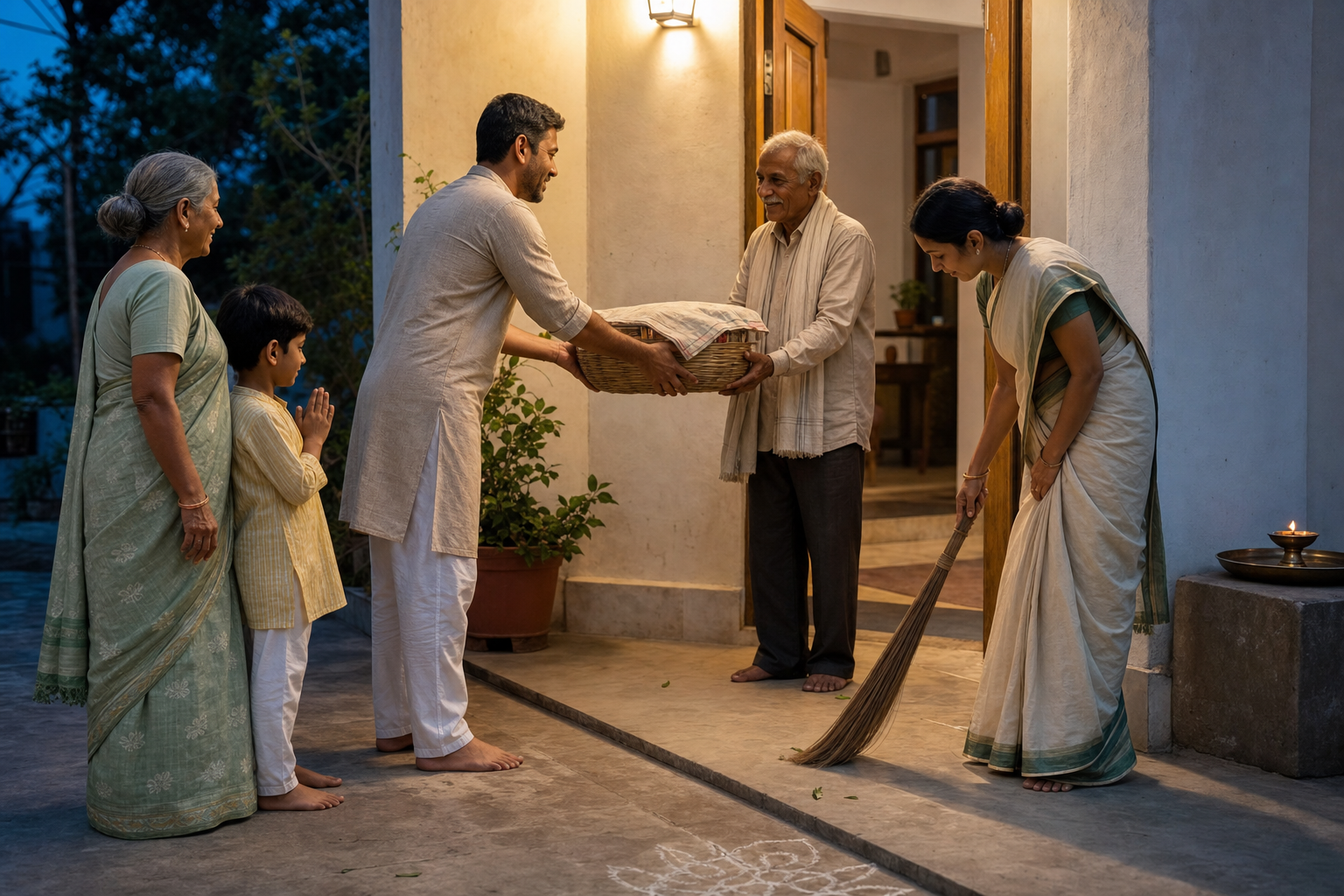
A clean vessel and a steady flame are visible signs. The harder purification concerns conduct. Yamadeepdaan invokes moral order, while the water rite asks you to receive a life-giving resource with care. Neither meaning is completed by decoration alone.
- Smarana, or remembrance: Invite an elder to name an ancestor, recount a family act of courage or service, or explain why the household lights the lamp. This gives younger family members something more durable than a photograph of the diya.
- Daan, or generosity: Choose one concrete act of giving connected to the festival. Decide who will benefit, what will be given, and when it will be delivered instead of leaving generosity as a vague intention.
- Ahimsa, or non-harm: Use only the water required, avoid polluting natural water, and arrange every flame so that people, animals, and property remain safe.
- Seva, or service: Divide the work meaningfully. Children can help arrange flowers or clean unbreakable vessels; elders can lead remembrance and prayer; a responsible adult should handle and monitor the lamps.
- Accountability: Name one neglected household duty you will complete after the festival. The pledge may be small, but it should be specific enough that the family can tell whether it was kept.
These values also reveal a wider dharmic kinship without erasing the distinctions among traditions. Pure-water offerings associated with clarity and generosity in Buddhist practice, Jain attention to purity and non-harm, and Sikh emphasis on ishnaan, seva, and the sanctity of sarovars all affirm disciplined care. The ritual forms are not interchangeable, but gratitude, restraint, remembrance, and service create a recognisable moral relationship among Hindu, Buddhist, Jain, and Sikh communities.
Before dusk, clean the vessels and reserve only the water you will need. Before lighting the lamp, verify the local Pradosh timing and make its placement genuinely safe. Then choose one dharmic obligation that will remain after the flame is gone. That is how you carry Diwali eve from outer shuddhi into lived responsibility.
References
- DharmaRenaissance Blog – Complete Guide to Yamadeepdaan 2025: Discover Yama Deepam Meaning, Date, and Puja Steps
- DharmaRenaissance Blog – Discover the Essential Jala Poorna Trayodashi: Complete 2025 Diwali Water Ritual Guide
