
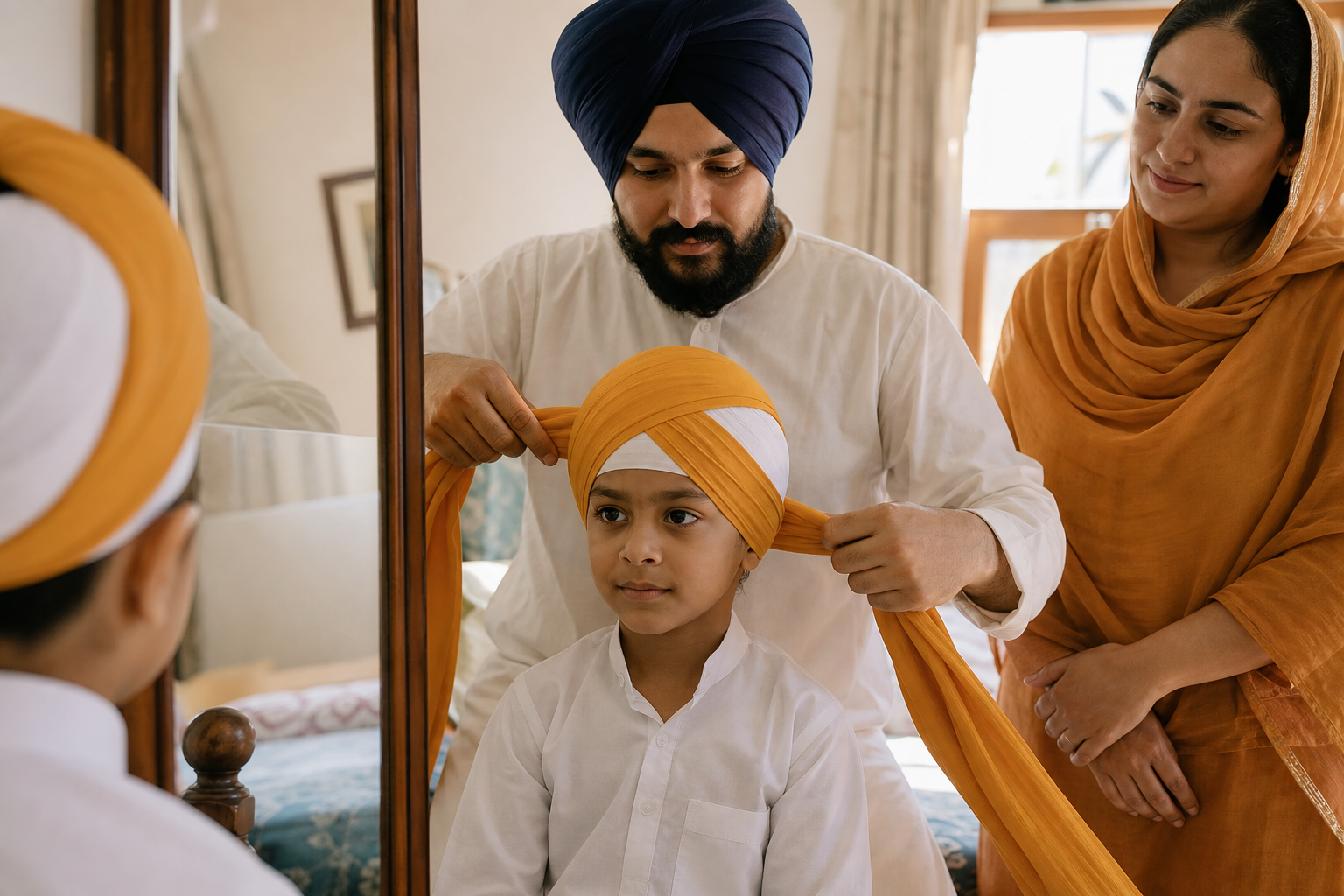
Your child may already cover their hair, may be learning to tie a dastar, or may simply have reached the point when the family wants to mark this responsibility publicly. The difficult part is rarely choosing a colour. It is creating a ceremony that feels spiritually grounded, respects the child, and prepares them for what comes after the photographs.
A thoughtful Dastar Bandi does all three. It gives the first formal turban a clear meaning, lets the child participate in the decisions, and turns a memorable day into the beginning of a sustainable daily practice.
Understand what the ceremony marks
Dastar Bandi marks a child’s first formal turban. The word “dastar” refers to the turban, while “bandi” carries the sense of tying. The ceremony publicly recognises a visible step in Sikh identity and the responsibility that accompanies it.
That first formal turban need not be the first time the child’s hair has been covered. A child may previously have worn a patka or another suitable head covering. Dastar Bandi marks a transition in how the child will carry and care for the turban, not a denial of everything that came before it.
Families and congregations do not all conduct Dastar Bandi in precisely the same way. Do not assume that a sequence seen at another family’s celebration is a universal Sikh rule. Ask your gurdwara which elements belong to its practice and which choices remain with the family.
Dastar Bandi should also not be confused with Amrit Sanchar. A first-turban ceremony and formal initiation into the Khalsa are distinct occasions with different meanings. Invitations, speeches, and social-media captions should not imply that the child has undertaken a commitment that has not actually occurred.
Before choosing a date, write one sentence explaining what your family is marking. For example: “We are marking Simran’s first formal dastar and promising to support the responsibilities that come with it.” If relatives cannot agree on that sentence, settle the meaning before planning the programme. Decorations cannot repair a ceremony whose purpose remains unclear.
Let the child’s readiness shape the occasion
The child is not a ceremonial prop. They are the person who will wear the turban after the guests leave. Readiness therefore matters more than a fashionable age, a convenient family gathering, or pressure to match what another child has done.
Talk through three kinds of readiness with the child:
- Meaning: Can the child explain, in their own words, why they want to wear a dastar? The answer need not sound like a lecture. It should be recognisably theirs.
- Practical comfort: Have they worn the intended style long enough to notice pressure, looseness, heat, or difficulty moving normally? A trial at home is more informative than approving a style from a photograph.
- Public attention: Are they comfortable being watched, congratulated, photographed, or recorded? Ask separately about each one. Agreement to the ceremony is not automatic agreement to unrestricted photography.
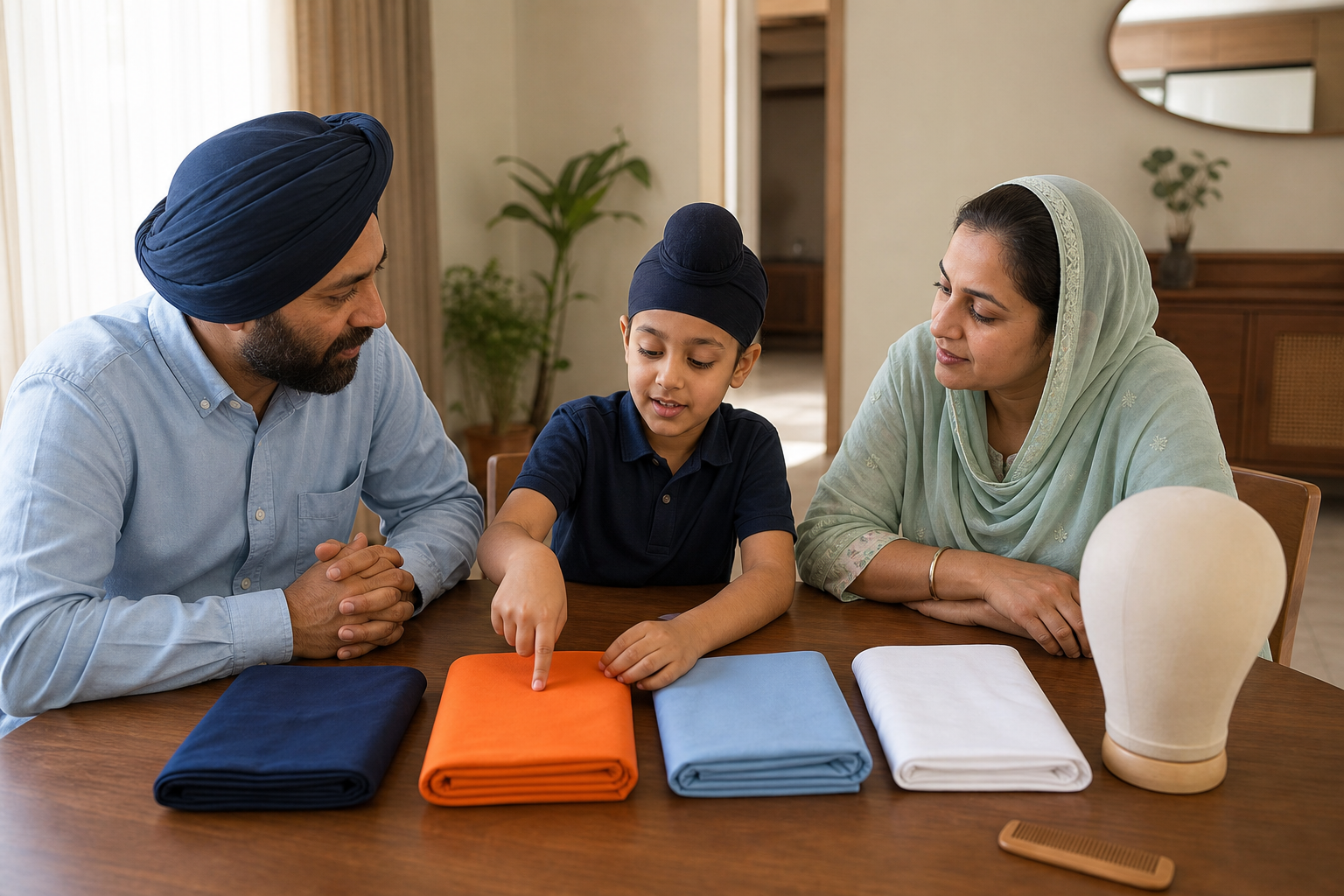
Rehearse with the actual cloth, the intended style, and the person expected to tie it. This is not a performance rehearsal. It is a practical check that gives the child a chance to say what feels uncomfortable and allows the person tying the dastar to make adjustments before the congregation is waiting.
Give the child genuine choices that do not change the religious purpose: an appropriate colour, the trusted person who will help tie it, whether a large gathering feels welcome, and which photographs may be shared. A child’s objection to a crowded stage or an uncomfortable style is not a rejection of Sikhi. Treating every preference as disobedience can attach needless anxiety to an occasion meant to strengthen belonging.
Plan with the gurdwara before inviting guests
The most avoidable mistakes happen when a family prints invitations first and asks the gurdwara about procedure later. Local scheduling, congregational programmes, space, photography expectations, and the appropriate devotional elements can all affect the shape of the event.
- Speak with the gurdwara. Explain that you are planning a Dastar Bandi and ask whether it will sit within a regular programme or be arranged separately. Confirm the date only after the relevant people and space are available.
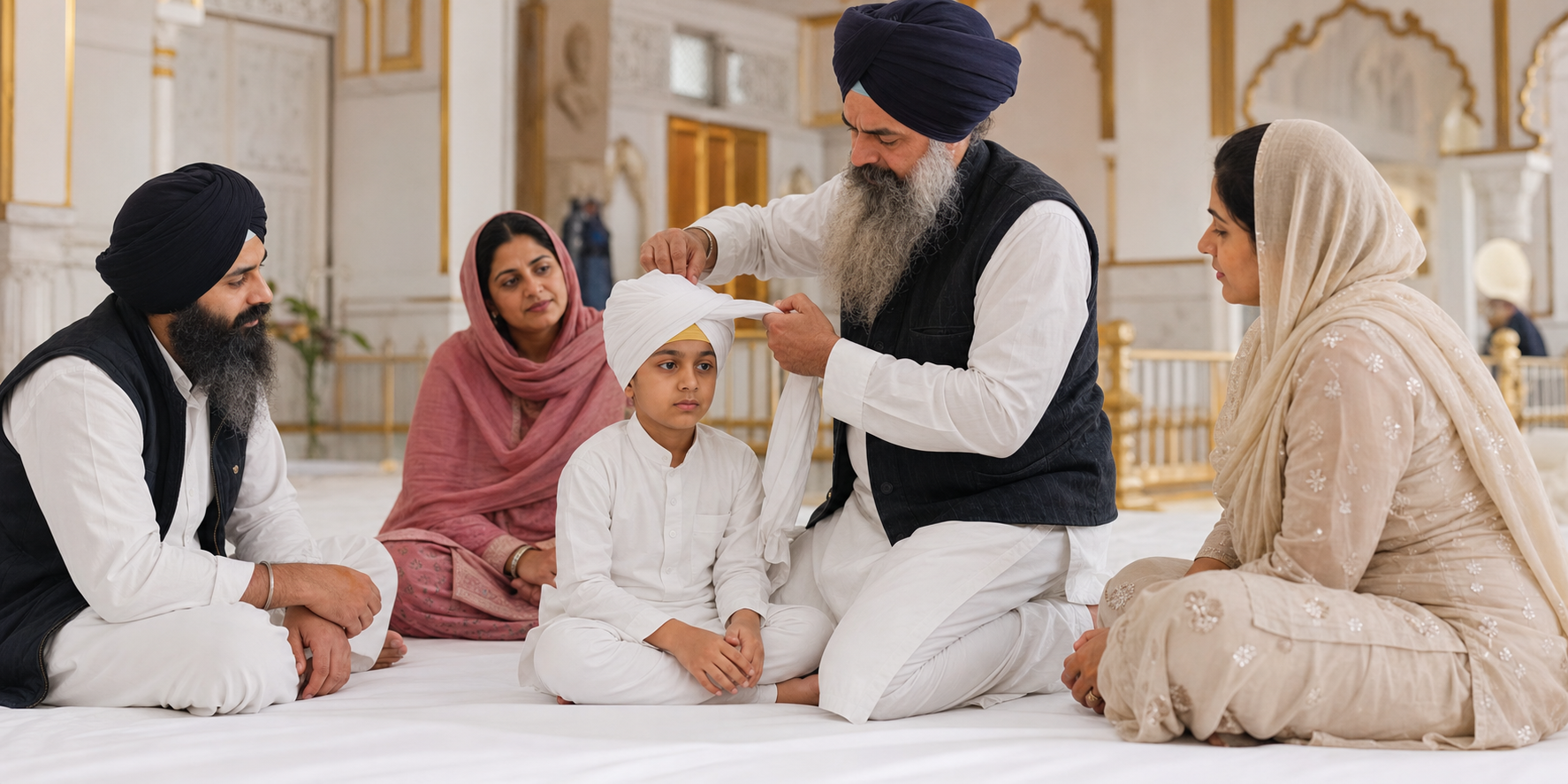
- Ask what the religious portion will include. The programme may involve prayer, kirtan, an explanation of the milestone, Ardas, or other elements according to local practice. Let the gurdwara identify the suitable order and the people who should lead it.
- Choose the person tying the turban. Select someone the child trusts who can tie the chosen style competently and calmly. Arrange a backup if the ceremony depends on one person’s availability.
- Prepare the turban itself. Ask an experienced Sikh to help select appropriate cloth and a workable style. Appearance matters less than whether the child can wear it comfortably and learn to manage it consistently.
- Confirm guest etiquette. Ask the gurdwara for its instructions on head coverings, footwear, photography, seating, and any other visitor expectations. Send these with the invitation instead of expecting unfamiliar guests to work everything out at the door.
- Decide how hospitality will work. If the family hopes to participate in langar, offer seva, or arrange another gathering, coordinate that separately from the religious programme. A celebratory meal should support the occasion rather than turn worship into an opening act for a party.
Keep the invitation accurate and uncomplicated: name the occasion, say that it marks the child’s first formal dastar, give the confirmed gurdwara details, and include the etiquette information guests need. Avoid calling it an initiation unless an initiation is actually taking place.
You also do not need to make expensive clothing, gifts, staging, or professional photography the measure of respect. If the budget is limited, place the effort where it will still matter a month later: suitable turban cloth, patient instruction, and reliable help for the child.
Design the day around the life that follows it
A simple flow for the ceremony
Follow the order agreed with the gurdwara. A simple family plan can still identify the purpose of each stage:
- Welcome relatives and give visitors any final etiquette guidance before the programme begins.
- Briefly explain what the family is marking so that the child is not left standing inside a ceremony that guests misunderstand.
- Give the devotional portion the time and attention directed by the gurdwara.
- Have the trusted person tie the dastar without rushing the child for the sake of a schedule or camera.
- Offer the customary acknowledgement, blessing, or Ardas in the form established for the occasion.
- Move to congratulations, photographs, and food only after the central religious purpose has been honoured.
Assign one adult to handle logistics and another to remain attentive to the child. If the same parent is answering vendors, directing relatives, finding missing guests, and checking the turban, the child’s discomfort will be the easiest signal to miss.
Tell photographers in advance which moments may be photographed and whether movement near the child would be distracting. Do not ask for repeated tying, staged prayer, or a re-enactment merely to obtain a better image. The record should serve the occasion; the occasion should not be redesigned for the record.
Prepare for the first ordinary morning
The ceremony can be beautiful and still fail the child if no one has planned the next morning. Daily turban practice involves time, skill, clean cloth, patience, and help when a tie does not work. Put that support in place before Dastar Bandi.
- Set aside unhurried practice time rather than making the child learn while everyone is trying to leave home.
- Teach the process in manageable parts. The child can learn preparation, alignment, tension, and finishing progressively instead of being expected to master everything at once.
- Keep the cloth clean, organised, and ready to use. Agree on an appropriate backup head covering for mornings when assistance or time is limited.
- Make one experienced person available for questions after the ceremony. A named helper is more useful than a roomful of relatives saying, “Ask us anytime.”
- Correct mistakes privately and constructively. Public teasing about a loose or uneven turban can turn a learnable skill into a source of embarrassment.
If the child attends a school where staff or classmates may be unfamiliar with the dastar, speak with the relevant teacher in advance. Explain its name, its religious significance, and that it should not be touched or removed without the child’s permission. Give the child a short explanation they are comfortable using, but do not make them solely responsible for educating every curious person.
Identify a trusted adult at school whom the child can approach if questions become ridicule, unwanted touching, or harassment. The practical message should be clear: asking for help protects dignity; it does not show weakness.
Key takeaways
- Dastar Bandi marks a child’s first formal turban; it should not be described as Amrit Sanchar or treated as an interchangeable form of initiation.
- Let the child participate in decisions about readiness, style, the person tying the turban, the size of the gathering, and photography.
- Confirm the gurdwara’s procedure, schedule, visitor etiquette, and photography expectations before sending invitations.
- Rehearse with the actual cloth, style, and person who will tie the dastar so practical problems surface privately.
- Plan daily practice, cloth care, school communication, and a trusted mentor before the ceremony takes place.
- Judge the occasion by whether the child feels prepared to carry the dastar afterward, not by the scale of the celebration.
Your next step is simple: speak with your child, write the family’s one-sentence purpose, and take that sentence to the gurdwara. Once those two conversations agree, the date, programme, guest list, and practical preparations can follow without losing sight of whom the ceremony is for.

References
