
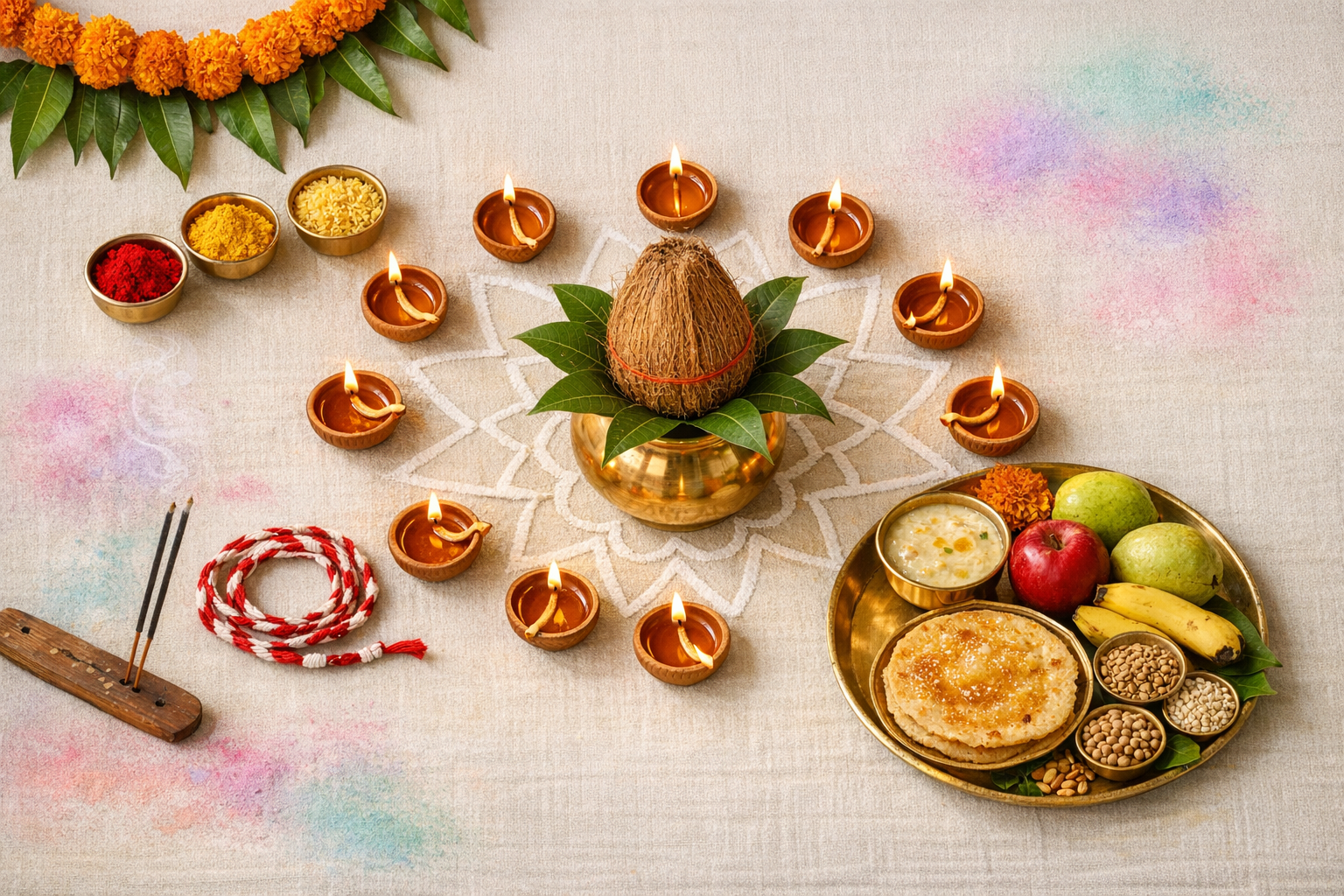
Dasha Mata Vrata in 2026 begins on 4 March 2026, the day following Holi, and culminates on Chaitra Krishna Dashami, 13 March 2026 (IST). Across northern and western Indiaparticularly in parts of Rajasthan, Gujarat, Madhya Pradesh, and Uttar Pradeshhouseholds observe this ten-day vrata with a disciplined routine of puja, katha, fasting, and dana (charitable giving). The vow seeks the protective grace of Dasha Mata, a revered form of the Divine Mother associated with safeguarding all ten directions, stabilizing family well-being, and averting misfortune.
Calendar alignment is central to understanding the observance. In the Purnimanta (North Indian) tradition, the last and most significant day is Chaitra Krishna Dashami, which falls on 13 March 2026. In Amanta traditions (prevalent in many western and southern states), the corresponding tithi may be mapped to Phalguna Krishna Dashami while retaining the same civil date in India. Devotees outside India should consult a local panchang for precise tithi overlap, as tithis are lunar and follow sunrise-to-sunrise or variable spans rather than strict civil days.
Within Shakta practice and regional folk devotion, Dasha Mata embodies householder protection, resilience, and auspiciousness. The tenfold aspect invokes the ten directions (dasha dik) as well as the comprehensive guardianship of the domestic spherechildren’s health, harmony among family members, and continuity of livelihood. Oral traditions emphasize the Goddess’s motherly vigilance, reinforcing an ethic of care, restraint, and gratitude throughout the vrata.
The name “Dasha” is layered in meaning. It points to “ten” (symbolizing completeness across the ten directions), and it resonatesat a cultural levelwith the notion of difficult “dasha” (periods) known in Jyotisha. While the vrata is primarily devotional rather than astrological, many households perceive it as a compassionate, community-centered way to navigate challenging times, augmenting individual effort with devotion, service, and self-discipline.
Regional practice demonstrates rich diversity. In Rajasthan and adjoining regions, the vrata is often woven into a post-Holi rhythm of re-centering the home after communal celebration. In Gujarat, a related folk devotion to Dashama is popularly observed in Ashadha (monsoon months) with fairs and community worship; practitioners note that the post-Holi Dasha Mata Vrata and the Ashadha Dashama observances are distinct yet complementary expressions of Shakta faith.
The intention of Dasha Mata Vrata is explicit: to seek protection from misfortune across all “ten” spheres of life, to ensure family well-being, and to cultivate a steady, sattvic routine. Participants frequently report a sense of psychological anchoringmoving from the exuberance of Holi to a contemplative, restorative cycle marked by daily devotion, mindful eating, and shared storytelling (katha).
Preparations commonly begin on Day 1 (4 March 2026). After household cleaning and a simple sanctification of the puja space, devotees undertake a sankalpa stating the name, intention, and the ten-day vow. A kalasha (if used), an image or symbol of Dasha Mata, and a protective thread with ten knots (dora/dori) are arranged. Some traditions delineate a simple ten-point diagram to represent the ten directions, reinforcing the vow’s cosmological breadth.
The daily puja routine is concise yet meaningful. A deepa is lit, incense is offered, and a brief stotra or Devi shloka is recited. The Dashamata Vrat Katha is read or narrated, followed by aarti and distribution of prasada. Many households adopt a fixed timeoften morning or early eveningto consolidate the habit, strengthen family participation, and maintain the vow’s rhythm over all ten days.
Fasting (upavasa) or partial dietary restraint (phalahara) is observed according to capacity and local custom. A sattvic dietfavoring simplicity, moderation, and non-violenceframes the vrata. Those who are elderly, pregnant, nursing, unwell, or engaged in heavy physical work may opt for light, regulated meals rather than a stringent fast, aligning with the dharmic principle that health and responsibility are integral to any vow.
Symbolism of “ten” pervades the observance. Households may use a ten-knotted thread, offer ten lamps or a lamp with ten wicks, present ten varieties of grains or sweets in small measures, or mark ten auspicious dots near the altar. The repeated tenfold motif serves as a tactile reminder of protection radiating in all directions and all aspects of life.
The Udyapan (concluding rite) on Chaitra Krishna Dashami (13 March 2026) is the vrata’s focal day. Typical practices include tying or wearing the ten-knotted protective thread, offering a simple sweet roti with ghee and sugar to the Goddess, distributing prasada to neighbors or community members, and performing anna-dana. Many families also offer food to cows and birds, aligning devotion with compassion and ecological sensitivity.
The Dashamata Vrat Katha exists in several regional versions, but a consistent ethical thread runs through them: humility, truthfulness, honoring one’s commitments, and caring for dependents bring lasting auspiciousness; neglect, arrogance, and disregard for the vow invite avoidable hardship. The narrative functions as moral pedagogytransmitted by eldersto embed values alongside ritual.
The placement of the vrata immediately after Holi is spiritually significant. Following a season of color, festivity, and social interaction, the ten-day vow of restraint and order becomes a conscious transition back to harmony and steadiness in the home. This cyclical balancecelebration followed by contemplationanchors the practice in lived rhythms rather than abstract rule.
Practitioners sometimes connect the vrata with Jyotisha-informed remedies in difficult planetary periods (graha dasha). While devotional observance is not a substitute for professional guidance or practical problem-solving, households value the vrata as a form of shanti (pacification), integrating seva (service), dana, and inner discipline to navigate adversity with clarity and courage.
Items commonly used across regions include a deepa, incense, flowers, haldi, kumkum, akshata, a protective ten-knotted thread (dora), a simple naivedya (often sweet roti, kheer, or seasonal fruits), water for achamana, and a text or printout of the Dashamata Vrat Katha. Households adapt materials to availability, keeping the focus on purity, humility, and intention rather than elaborate display.
It is important to distinguish the post-Holi Dasha Mata Vrata from the popular Dashama observance in Gujarat during Ashadha. The former is a ten-day vrata beginning the day after Holi and ending on Chaitra Krishna Dashami; the latter is a distinct seasonal devotion that often includes fairs and processions. Both converge in honoring the Devi’s protection and benevolence, reflecting the breadth of Shakta piety across regions.
The vrata’s ethical core resonates across dharmic traditions. The principles of restraint (niyam), compassion (karuna), truthfulness (satya), and service (seva) are shared values in Hinduism, Buddhism, Jainism, and Sikhism. Many families pair daily puja with small acts of generosityoffering food, supporting education, or volunteeringthus aligning ritual with the wider dharmic vision of social harmony and non-violence.
Community practice enhances both learning and belonging. Neighbors may gather for collective katha recitation, distribute prasada, or rotate hosting duties across the ten days. In the diaspora, video calls and shared readings allow families to synchronize rituals across time zones, preserving continuity with elder-taught customs while remaining inclusive and practical.
Sustainability considerations are increasingly integral to the vrata. Households favor plant-based prasada, minimize single-use plastics, compost floral offerings, and choose natural lamps and incense. After Holi, many consciously transition from synthetic to eco-sensitive materials in the puja space, embodying the dharmic ideal of care for the living environment.
The 2026 day-by-day structure under IST is straightforward: Day 1 commences on 4 March (the day after Holi), and daily worship continues through Day 10, with Udyapan on Chaitra Krishna Dashami, 13 March. Where local sunrise-based tithi transitions alter the civil-day mapping, practitioners follow the local panchang and complete the Udyapan squarely within Dashami.
Participation is open. While women traditionally lead the observance in many regions, men and children also join the puja, assist with readings, or help prepare prasada. The underlying aim is collective alignmentone household, one intentionso that the vow’s benefits naturally extend to all members.
Best practice emphasizes clarity of intention, regularity, and gentleness. A short, consistent daily puja often sustains devotion more effectively than irregular, elaborate rites. When in doubtabout fasting intensity, specific offerings, or Udyapan customsfamilies consult a trusted elder, local pujari, or panchang to ensure alignment with regional tradition and personal capacity.
In 2026, the arc of Dasha Mata Vratabeginning 4 March and concluding 13 Marchoffers a ten-day pathway from celebration to centeredness. By combining puja vidhi, vrat niyam, katha, and community-minded dana, households experience the vrata not only as a request for divine protection and prosperity but also as a lived pedagogy of discipline, gratitude, and unity across the dharmic family.
Inspired by this post on Hindu Pad.
