
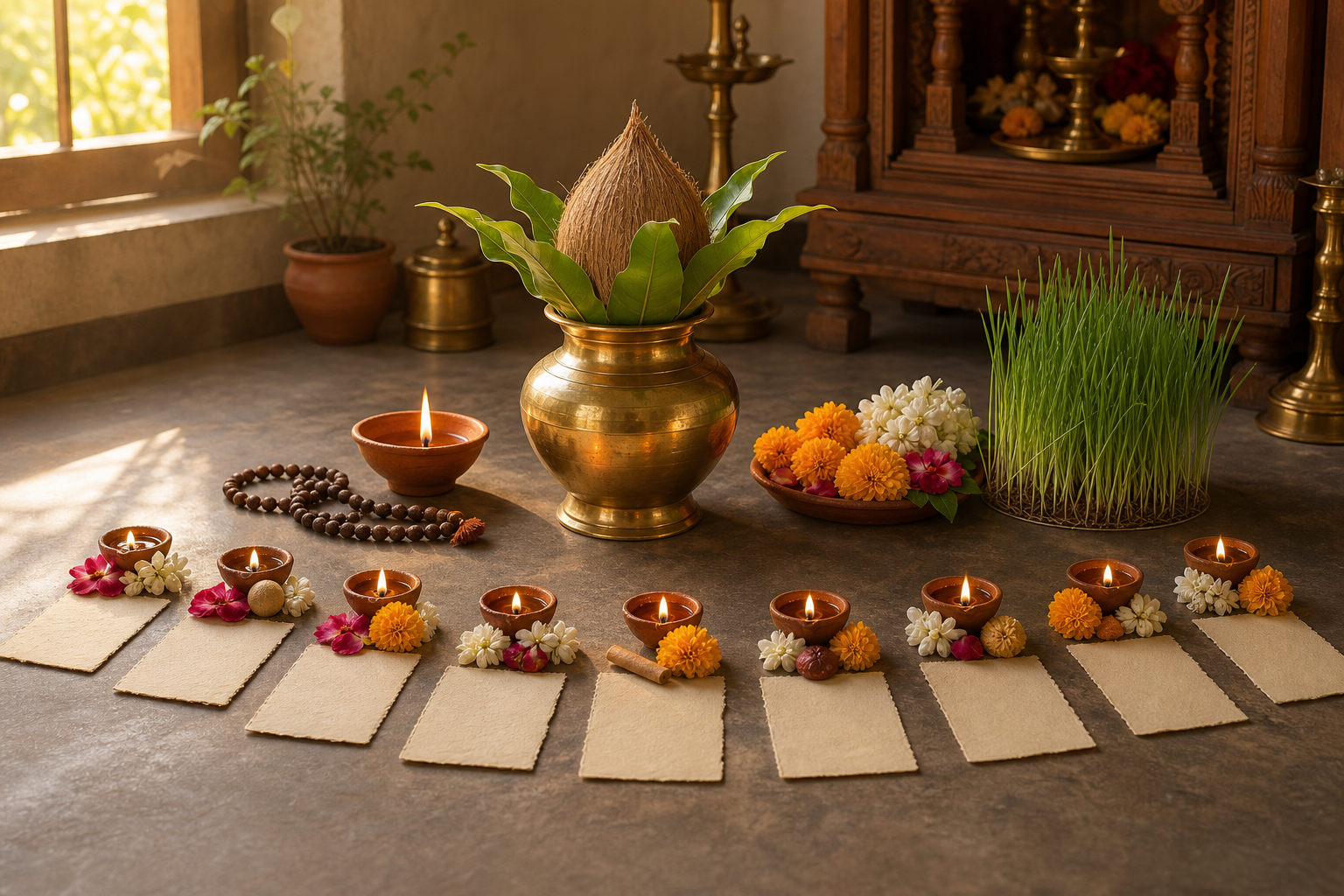
If you want to observe the Chaitra new year and Chaitra Navratri in 2026, the main difficulty is not finding one festival date. It is fitting several connected observances into one household calendar without treating every regional tradition as identical.
For most devotees in India, the plan begins on 19 March. The days that follow include Lakshmi Panchami on 23 March, Bhavani Ashtami on 26 March, and Sri Rama Navami, likely on 27 March in many regional calendars. If you live outside India, regard those dates as a planning framework until a Panchang calculated for your location confirms them.
Your Chaitra 2026 planning calendar
In the Amanta calendars commonly followed by Telugu, Kannada, and Marathi communities, Chaitra Masam runs from 19 March through 17 April 2026. The most useful way to plan it is by tithi first and Gregorian date second.
| India date | Tithi or transition | Main observance | What to plan |
|---|---|---|---|
| 19 March | Chaitra Shukla Pratipada | Ugadi, Gudhi Padwa, related regional new years, and the opening of Chaitra Navratri | New-year worship in the morning; begin a sustainable Navratri discipline |
| 23 March | Chaitra Shukla Panchami | Shri Vratam or Lakshmi Panchami | Lakshmi puja, an ethical review of household finances, prasada, and dana |
| 26 March | Chaitra Shukla Ashtami | Bhavani Ashtami, Durgashtami, or Ashokashtami according to region | Devi worship, Kanya Pujan where customary, and a locally timed Sandhi observance |
| Likely 27 March in many calendars | Chaitra Shukla Navami | Sri Rama Navami | Confirm locally, then complete the Navratri discipline through Rama worship |
| Around 13–14 April | Mesha Sankranti | Solar new-year season, including Puthandu, Vishu, Vaisakhi, and Rongali Bihu | Keep this solar transition distinct from the lunar new year of 19 March |
| 17 April | Amanta month boundary | Conclusion of Chaitra Masam | Close any month-long recitation, service, or study commitment |
Do not confuse the lunisolar Chaitra Pratipada with Chaitra 1 in the Indian National Calendar, which normally begins around 22 March. Ugadi and Gudhi Padwa follow the lunar tithi at sunrise, not a fixed Gregorian date or the solar Saka-calendar boundary.
The sunrise rule also explains why an Indian festival calendar can be wrong for Toronto, London, Singapore, or California. A tithi is determined by the changing angular relationship between the Moon and Sun. It can begin or end at any clock time, and the civil day selected for many observances depends on whether the required tithi prevails at local sunrise. For the diaspora, Ugadi or Gudhi Padwa may shift among 18, 19, or 20 March.
Before entering dates in a shared family calendar, set the Panchang to your city and verify three things: the tithi at sunrise, the ending time of that tithi, and the convention used by your temple or sampradaya. If your household and local temple use different civil dates, decide in advance whether you will perform a brief home observance on the tithi and join the temple celebration on its announced day.
March 19 is both New Year and the first Navratri day
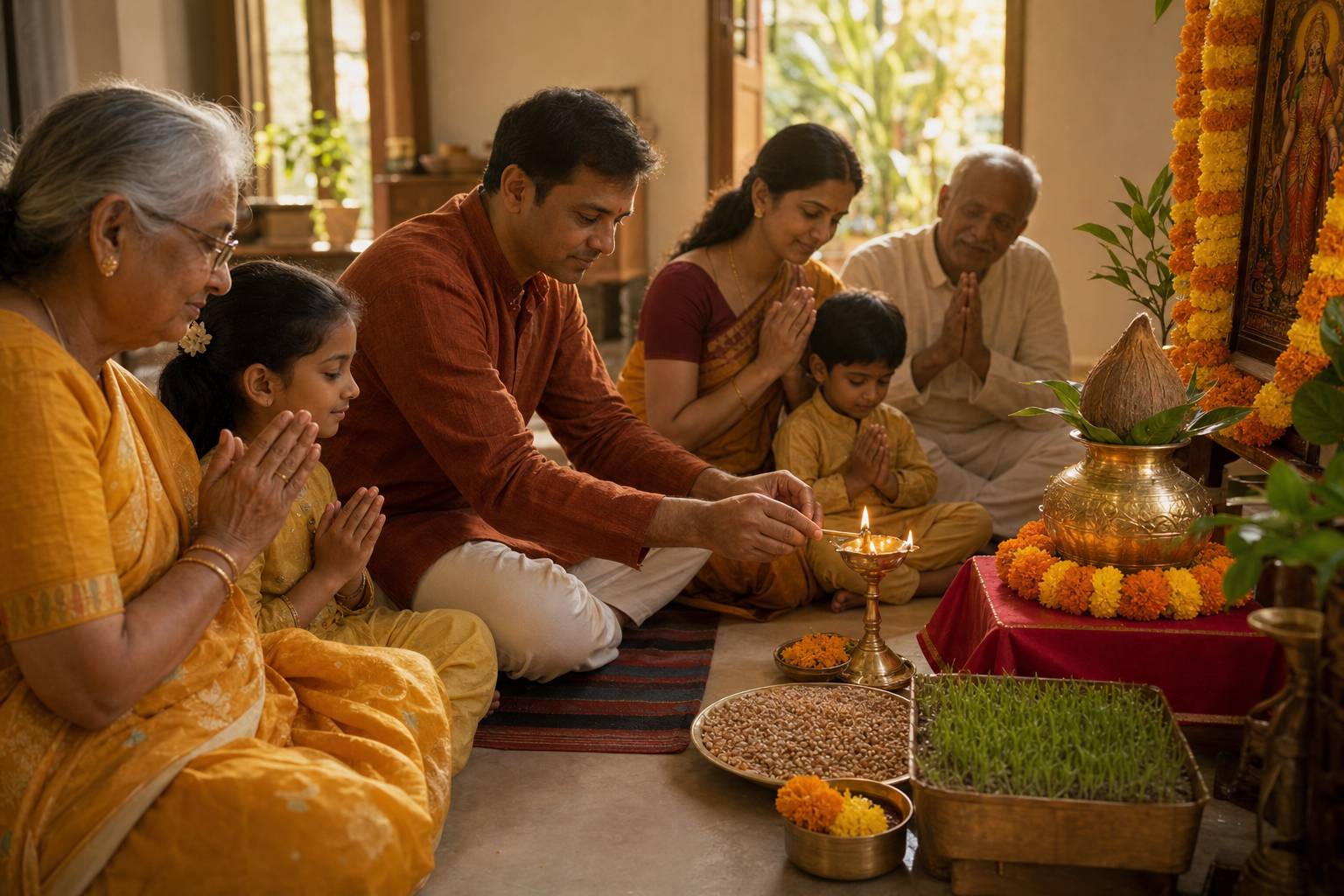
Chaitra Shukla Pratipada falls on 19 March 2026 across India, opening the Parabhava Nama Samvatsaram in many Telugu and Kannada Panchangs. Telugu and Kannada families celebrate Ugadi; Marathi families raise the gudhi for Gudhi Padwa; Kashmiri Hindu and Konkan communities preserve their own forms of new-year observance. These are related doors into a common sacred season, not interchangeable ceremonies.
Prepare for the new year without exhausting the first Navratri day
Complete the labor-intensive work on 18 March. Clean the shrine, obtain flowers and lamp supplies, prepare the gudhi materials or Ugadi Pachadi ingredients, and place any scripture you intend to read near the altar. This leaves the morning of Pratipada for worship rather than shopping and hurried cooking.
- Begin after bathing and wearing clean clothes. An oil bath at dawn is customary in many Ugadi households, but follow your family practice rather than treating it as a universal rule.
- Light the lamp and make a clear sankalpa. Name one daily spiritual discipline and one act of service you can actually sustain through Navratri.
- Invoke Ganesha, worship the household deities, and offer seasonal flowers, fruit, or a simple sattvic preparation.
- Hear or read the Panchanga Shravanam. Attend to its five limbs – tithi, vara, nakshatra, yoga, and karana – without reducing the new year to deterministic predictions.
- Perform the regional new-year custom: share Ugadi Pachadi, raise and worship the gudhi, or follow the practice inherited through your family and temple.
- Close with prasada, dana, or a concrete act of help. Beginning the year with generosity makes the sankalpa social rather than merely private.
Ugadi Pachadi combines six tastes through ingredients such as neem, jaggery, tamarind, raw mango, salt, and chili or pepper. Its value lies in what you do while sharing it: name the range of experiences a household may face and resolve to meet sweetness and difficulty with the same steadiness. The gudhi expresses a related principle through a different form. Raised with bright cloth, leaves, a garland where customary, and an inverted metal kalash, it publicly marks auspicious renewal and the victory of dharma.
Choose a daily Navratri minimum
The first morning is often elaborate; the middle days are where an unrealistic vrata breaks down. Choose a minimum practice that remains possible on a workday: one lamp, a short Devi mantra or nama-japa, a measured passage from the Devi Mahatmya or another text followed in your lineage, and a few minutes of quiet attention. Add longer recitation, bhajan, temple darshan, or alankara when time permits.
If several generations share the home, assign visible roles. One person can maintain the lamp, another arrange naivedya, an elder can explain the day, and a child can place flowers or help prepare prasada. This is more durable than leaving the entire nine-day observance to the person who already carries most household work.
March 23: Lakshmi Panchami makes prosperity a discipline
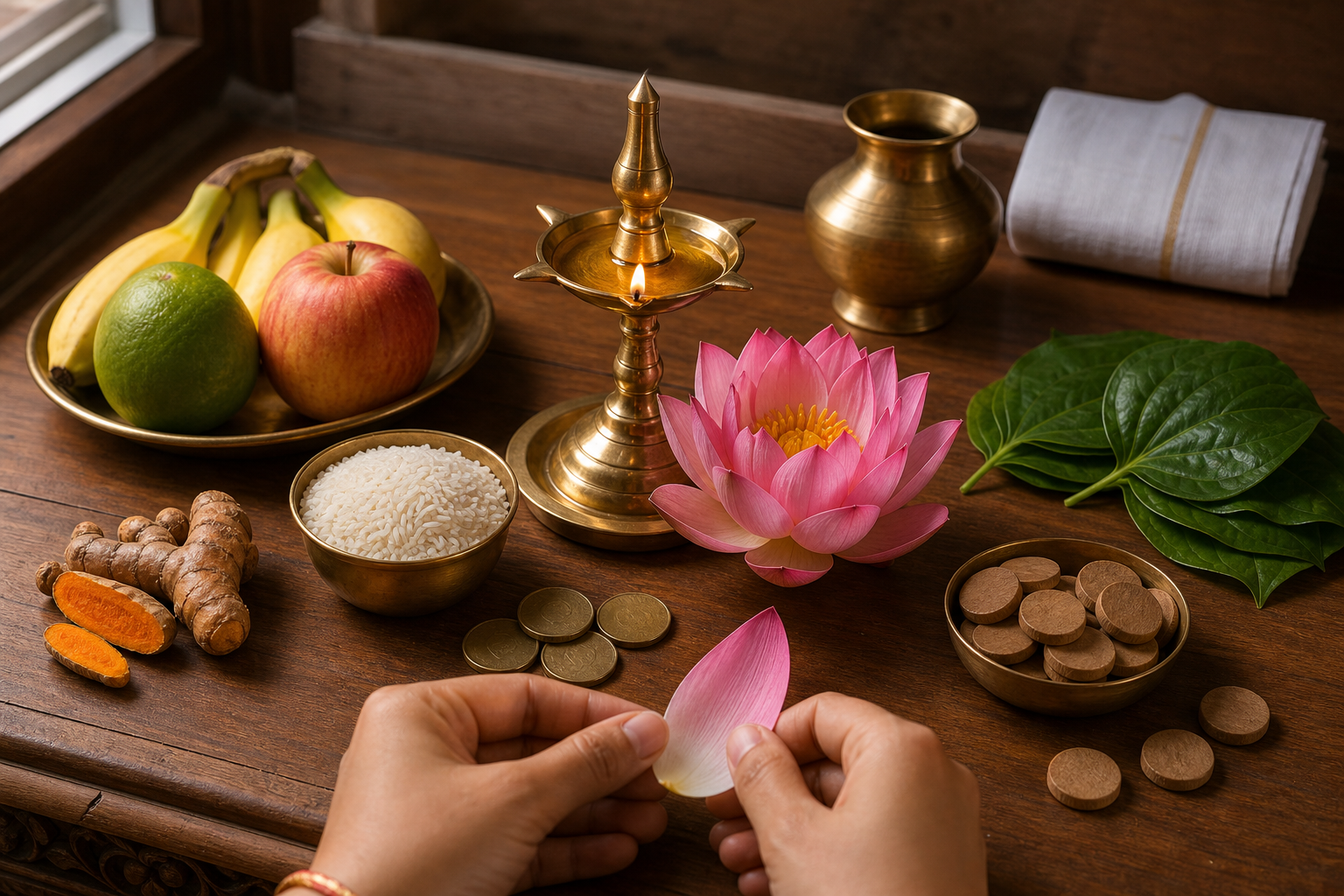
Shri Vratam falls on Chaitra Shukla Panchami, 23 March 2026, in India. It is also called Lakshmi Panchami, Lakshmi Vratam, or Chaitra Lakshmi Puja. It should not be confused with Varalakshmi Vratam in Shravan or the Lakshmi Puja performed during the Diwali season.
The practical focus is Shri: prosperity understood as nourishment, order, beauty, and resources used within dharma. That makes this a suitable day to examine how money enters and leaves your home. A large display is less meaningful than paying someone on time, correcting an unfair transaction, setting aside dana, or stopping a wasteful habit that burdens the family.
A workable Lakshmi Panchami home puja
- Clean the altar and place a red or yellow cloth. Set the image or murti of Lakshmi where everyone can worship without crowding the shrine.
- If your tradition installs a kalasha, place it on rice, decorate it with turmeric and kumkum, and complete it with mango leaves and a coconut. Use reusable vessels and avoid purchasing disposable decoration for a single morning.
- After achamana and a brief settling of the breath, state the sankalpa for Chaitra Shukla Panchami and invoke Ganesha.
- Invite Lakshmi through avahana and offer water, fragrance, flowers, lamp, naivedya, and other upacharas according to your household method. A symbolic offering is sufficient when a full shodashopachara puja is not practical.
- Recite the Sri Suktam if it belongs to your practice. The Lakshmi Ashtottara, Kanakadhara Stotram, or selected names with their meanings provide accessible alternatives for a multilingual household.
- Offer kheer, payasam, fruit, coconut sweets, a jaggery preparation, or the customary food of your region. Share the prasada rather than treating it as decoration.
- Place a clean ledger or notebook before the altar. Record one commitment concerning honest earning, one concerning careful stewardship, and one concerning generosity.
- Conclude with arati, pradakshina, and dana. Where possible, connect the offering to food, education, household workers, or another need you understand directly.
Morning worship is common. Some families use Abhijit Muhurta near midday, while others worship during Pradosh if Panchami remains in effect. Avoid copying Rahu Kalam, Choghadiya, or Abhijit timings from a page set to another city. First verify that Panchami is still present locally; then follow the timing method your family actually recognizes.
If you fast, let restraint support worship instead of becoming a test of endurance. Fruit, milk, or a simple sattvic meal may be more appropriate than a complete fast in warm weather. Children, elders, pregnant people, and anyone with a medical condition should not be pressured into a severe vrata; health needs and qualified medical guidance take priority.
March 26: Bhavani Ashtami brings the vrata to its hinge
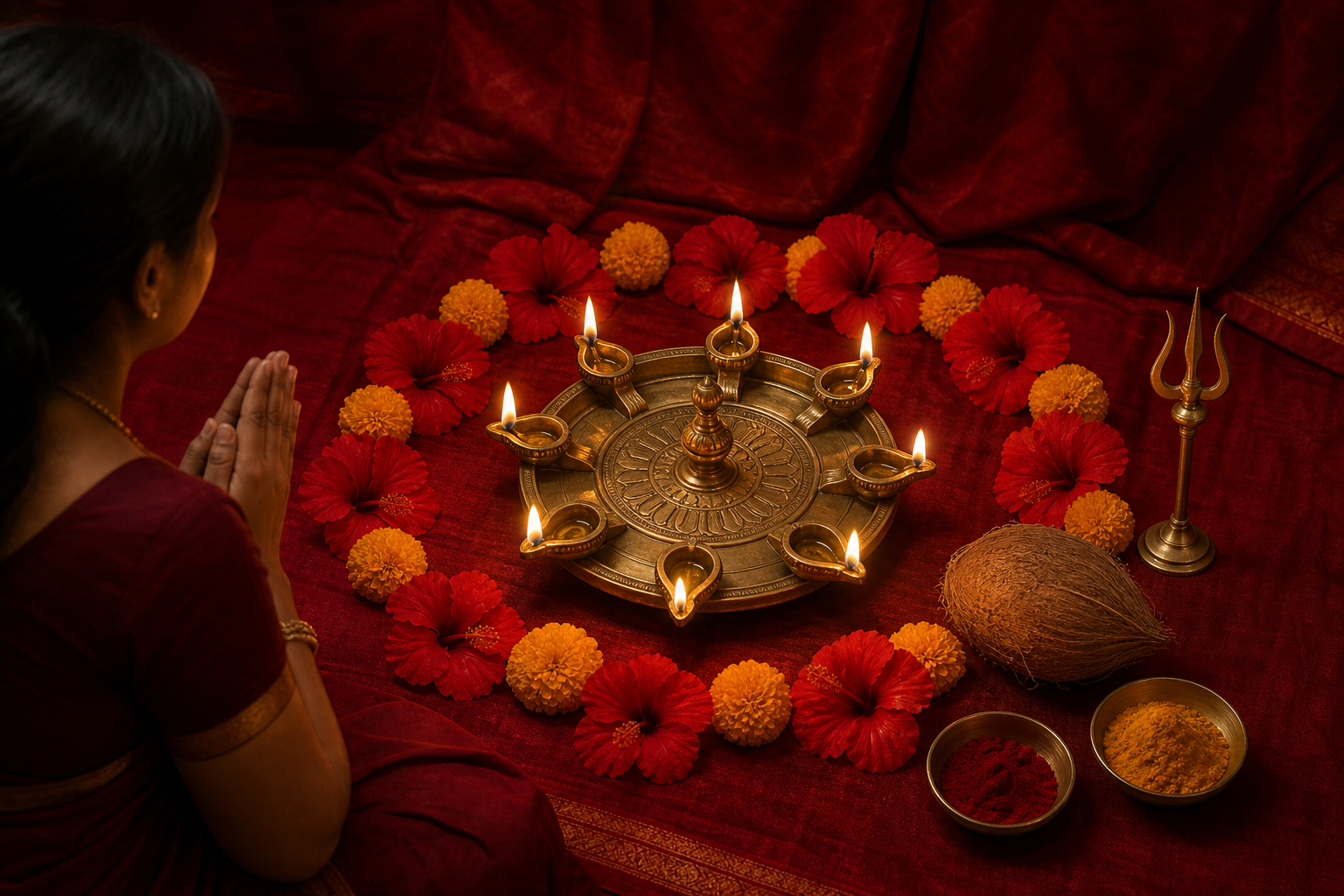
Bhavani Ashtami falls on Thursday, 26 March 2026, in India. Within Chaitra Navratri it is widely observed as Durgashtami. Maharashtrian devotion often centers on Bhavani; eastern communities may observe Basanti Durga Puja; and Odisha also marks Ashokashtami. Use the name and ritual form of your tradition rather than blending several regional rites into a newly invented ceremony.
Bhavani embodies protective power joined to compassion. That pairing gives the day a demanding ethical test: protection must not become hatred, and gentleness must not become passivity before adharma. Translate the worship into one specific action, such as defending someone being treated unfairly, providing food without seeking recognition, or correcting your own harsh speech.
Build the main worship around what you can complete attentively
- Prepare a clean altar with an image or murti of Bhavani or Durga, a steady lamp, water, flowers, and sattvic naivedya.
- Make the sankalpa for Chaitra Shukla Ashtami and invoke Devi through the liturgy used in your home or temple.
- Recite the Devi Mahatmya or selected chapters if a full Chandi Path is not realistic. A shorter reading completed with attention is better than rushing a text merely to claim completion.
- For a simple japa, use Om Devi Bhavanyai Namah. Keep a count only if counting helps concentration; otherwise establish a fixed period that fits the household schedule.
- Perform Kanya Pujan where it is customary. Welcome the girls respectfully, provide a clean and comfortable setting, offer food and simple gifts without display, and do not pressure any child to participate.
- Complete the day through annadana, community service, or another form of care that gives protective compassion a practical expression.
Calculate Sandhi Puja locally
The most time-sensitive observance is Sandhi Kaal, the junction between Ashtami and Navami. The traditional Sandhi Puja interval spans 48 minutes: 24 minutes before the Ashtami-to-Navami transition and 24 minutes after it. That does not mean the same clock time applies across India or the diaspora.
Find the Ashtami ending time in a Panchang set to your exact city. Subtract 24 minutes to obtain the beginning of the interval and add 24 minutes to obtain its end. Check whether your temple applies any additional sampradaya-specific rule before scheduling a homa or formal pushpanjali. If the transition falls at an impractical hour and your household does not maintain Sandhi Puja, perform an attentive Ashtami worship at a workable time instead of pretending that a generic online time is locally valid.
Ashtami fasting can range from nirjala to phalahara or a limited sattvic meal. The form is secondary to clarity, restraint, and ahimsa. Do not undertake a waterless fast when heat, age, pregnancy, medication, or illness makes it unsafe. Adapting the food rule does not prevent you from keeping the mantra, recitation, dana, and conduct of the vrata.
Sri Rama Navami likely follows on 27 March in many regional calendars, bringing Chaitra Navratri from Devi’s protective shakti to the disciplined maryada associated with Sri Rama. Confirm Navami locally before scheduling a kalyanam, temple visit, or concluding parayana.
Key takeaways for a workable household observance
- Use 19 March 2026 as the India anchor for Ugadi, Gudhi Padwa, and the opening of Chaitra Navratri; verify 18–20 March possibilities if you live abroad.
- Treat Amanta and Purnimanta month names as regional calendar conventions. Festival observance still depends on the relevant tithi and local sunrise.
- Keep one daily Navratri minimum that survives ordinary workdays: lamp, short japa or reading, and a modest act of disciplined conduct.
- Observe Lakshmi Panchami on 23 March by joining puja to an ethical financial action, not merely an appeal for more wealth.
- Observe Bhavani Ashtami on 26 March through Devi worship, compassionate courage, and Kanya Pujan where it belongs to your custom.
- For Sandhi Puja, calculate the 48-minute interval around the local Ashtami–Navami junction; never copy a clock time calculated for another city.
- Adapt fasting to age, health, climate, and medical needs. The purpose is clarity and restraint, not harm to the body.
Open your location-aware Panchang now and enter four items: the Pratipada sunrise observance, Panchami puja, the Ashtami–Navami transition, and your temple’s Rama Navami program. Then choose the daily practice you will maintain between them. That small piece of planning turns Chaitra from a crowded list of dates into a coherent new-year discipline.
References
- DharmaRenaissance Blog — Chaitra Pratipada 2026: Comprehensive Ugadi & Gudhi Padwa Rituals, Date, and Panchang Insights
- DharmaRenaissance Blog — Chaitra Masam 2026 in the Telugu Calendar: Sacred Dates, Ugadi Insights, and Festival Guide
- DharmaRenaissance Blog — Bhavani Jayanti 2026: Chaitra Ashtami’s Sacred Navratri Rituals, Traditions, and Significance
- DharmaRenaissance Blog — Shri Vratam (Lakshmi Panchami) 2026: Auspicious Chaitra Puja Vidhi, Tithi, Timings & Significance
