
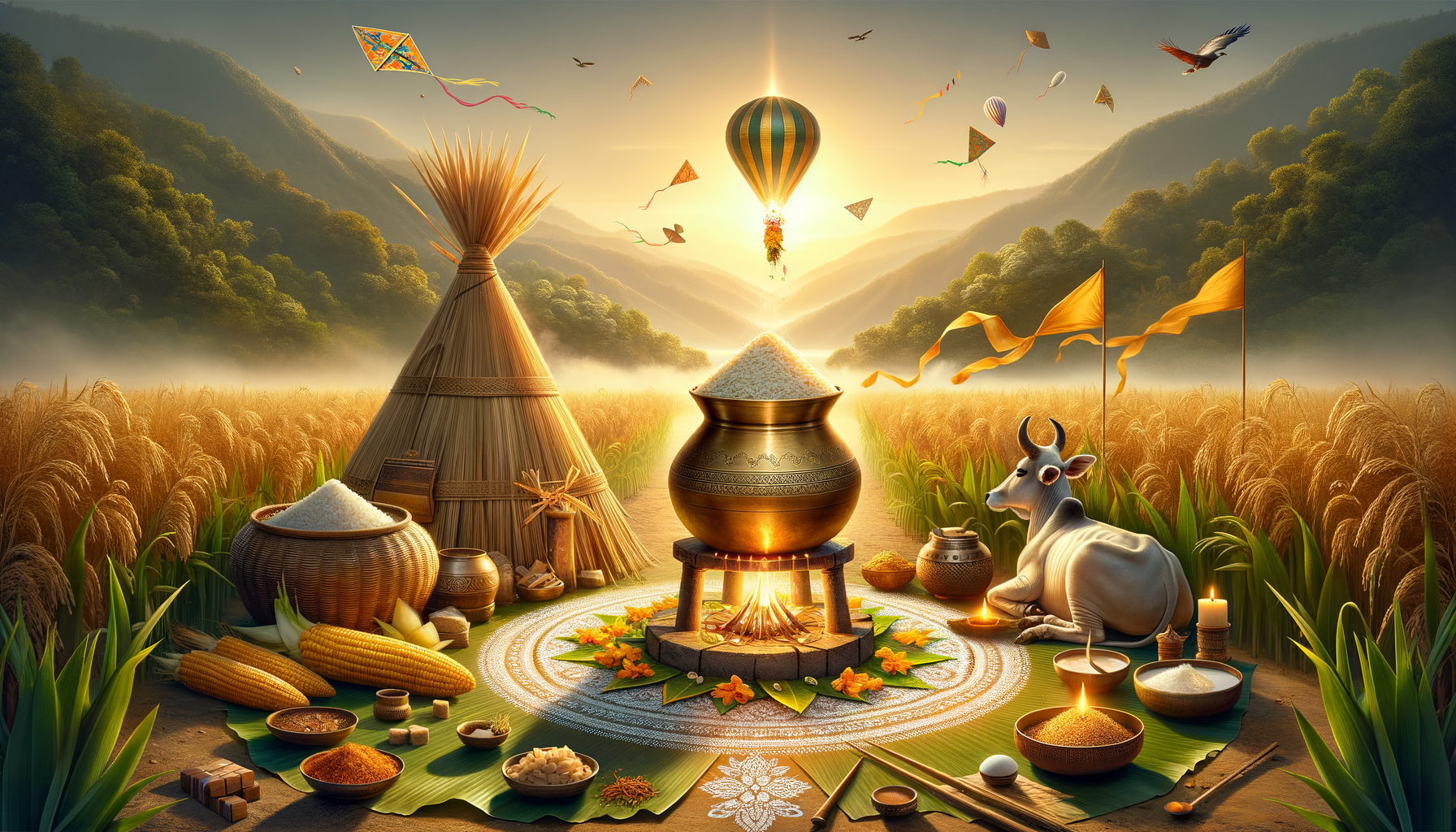
On 14 January 2026, communities across India observe Makara Sankranti, a pan-Indian harvest and solar festival that coincides with the season of Pongal in Tamil Nadu, Magh Bihu in Assam, and the joyous winter bonfires associated regionally with Lohri in North India. The day also marks Uttarayana Punyakalam, the auspicious commencement of the Sun’s northward journey, and includes the sacred Makaravilakku (Makarajyoti) observances at the Sabarimala Ayyappa Temple.
Astronomically, Makara Sankranti signifies the Sun’s transit into Makara (Capricorn), anchoring the festival’s timing to a solar movement rather than a lunar date. This transition is traditionally regarded as a threshold of light and renewal, inspiring gratitude, charity, and collective well-being. The alignment of seasonal harvests with solar symbolism lends the day both agrarian significance and spiritual depth.
In Tamil Nadu, the Pongal season centers on thanksgiving to nature and nurturance. Families decorate thresholds with kolam, prepare the signature sweet Pongal by boiling the new rice with milk and jaggery, and honor cattle during Mattu Pongal for their role in sustaining agrarian life. These rituals embody a living pedagogy of reciprocitytoward the Sun (Surya), the earth, and all beings that enable nourishment.
In Assam, Magh Bihu (also known as Bhogali Bihu) foregrounds community solidarity. Traditional feasts, the building of makeshift megal (bhelaghar) huts, and the lighting of Meji bonfires cultivate a sense of shared abundance and renewal. Songs, games, and communal meals express gratitude for the harvest while affirming intergenerational bonds and regional identity.
Across Punjab, Haryana, Delhi, and neighboring regions, festive bonfires and folk songs bring families and communities together in a spirit of warmth and generosity associated with the Lohri season. Offerings of sesame, jaggery, and seasonal foods acknowledge both the changing light of the year and the enduring values of sharing and fellowship cherished by Hindu and Sikh families alike.
At Sabarimala, 14 January 2026 is observed with profound devotion as the date of Makaravilakku (Makarajyoti). Pilgrims undertake vows, austerities, and collective prayers at the Ayyappa Temple, where the culmination of seasonal worship is marked by sacred light, devotional chanting, and an atmosphere of reverence. The event exemplifies how pilgrimage culture blends discipline, community ethics, and spiritual aspiration.
These observancesMakara Sankranti, Pongal, Magh Bihu, and the Lohri seasonreflect a shared dharmic ethos: gratitude to nature, reverence for the Sun, compassion toward animals, and care for community. The values celebrated resonate across Hindu, Buddhist, Jain, and Sikh traditions, where alignment with natural rhythms, ethical living, and harmony guide both inner and social life. In this spirit, 14 January 2026 becomes a luminous moment of unity in diversity.
For households and communities, simple practicessuch as offering arghya to the Sun at sunrise, preparing sesame-jaggery sweets, sharing food, and contributing to charitytranslate timeless principles into daily action. Whether at home, in village squares, or on pilgrimage, the day invites reflection on interdependence, stewardship of the environment, and the collective journey toward light and knowledge.
As the Sun enters Makara, the season’s festivals offer a coherent narrative: the harvest’s fruition, the year’s subtle turning, and the reaffirmation of bonds across regions and traditions. 14 January 2026 thus stands as both an astronomical marker and a cultural bridgeuniting India’s many homes, languages, and lineages in radiant gratitude.
Inspired by this post on Hindu Pad.
