
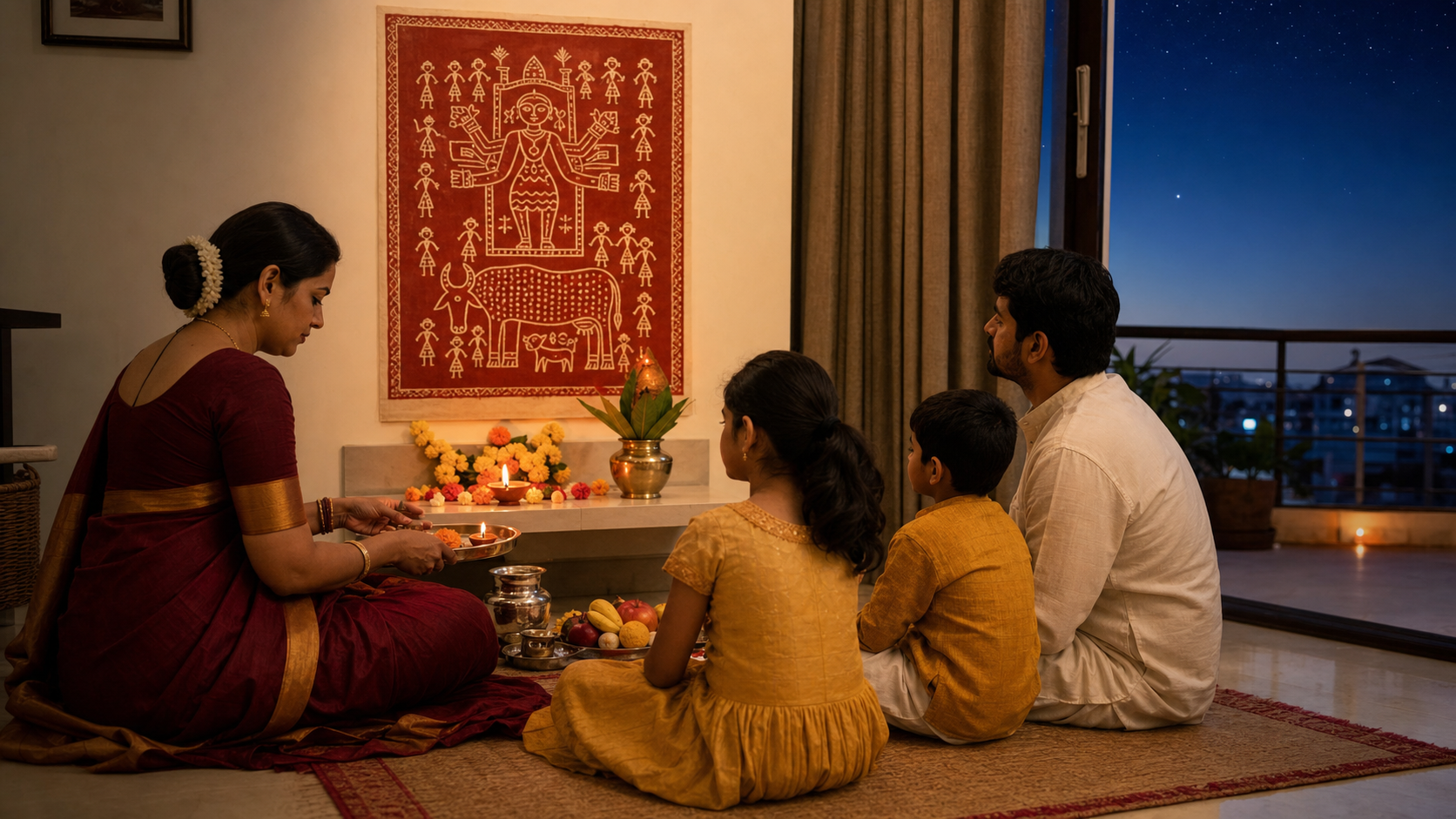
If you are preparing Ahoi Ashtami at home, the difficult part is usually not arranging the puja thali. It is deciding which actions carry the vrata and which details belong to a particular region or family. Keep that distinction clear, and you can observe the day faithfully without turning devotion into a test of how elaborate your preparations are.
The essential movement is simple: make a sankalpa for the welfare of children, observe an appropriate fast, worship Ahoi Mata, listen to the Vrat Katha, offer arghya after seeing the stars, and share prasad. The practical vidhi below shows how to prepare each part, where customs may differ, and how the Katha can shape family conduct after the lamp has been extinguished.
Keep the essential vrata separate from regional customs
Ahoi Ashtami is observed on Kartik Krishna Ashtami, approximately a week before Diwali. Because tithi boundaries and evening observance times depend on the year and location, check the panchang used by your family or temple rather than carrying forward a date from an earlier year.
Key takeaways
- The sankalpa is made for children’s aayu, aarogya, kshema, growth, and happiness.
- Ahoi Mata is represented by an image or drawing, commonly accompanied by eight stars or an eight-part pattern marking Ashtami.
- The traditional syahu and its offspring may appear in the iconography because they are central to the Vrat Katha.
- The evening sequence includes puja, naivedya, Katha, aarti, tara darshan, and an offering of water to the stars.
- The fast is concluded with water and prasad after the household’s customary completion of tara darshan.
Those elements form the dependable spine of the observance. A kalasha with coconut and mango leaves, a decorated soop, a red or yellow vrata thread, eight separate offerings, and particular sweets may all be meaningful, but their use varies. The same is true of wall paintings that are renewed each Kartik and family recipes handed down through generations.
If your household has an inherited vidhi, preserve it unless there is a health or practical reason to adapt it. If you are establishing the observance for the first time, begin with the essential sequence. Collecting customs from several regions does not make a puja more authentic; it can make the purpose harder to see.
Prepare the altar, offerings, and fast before dusk
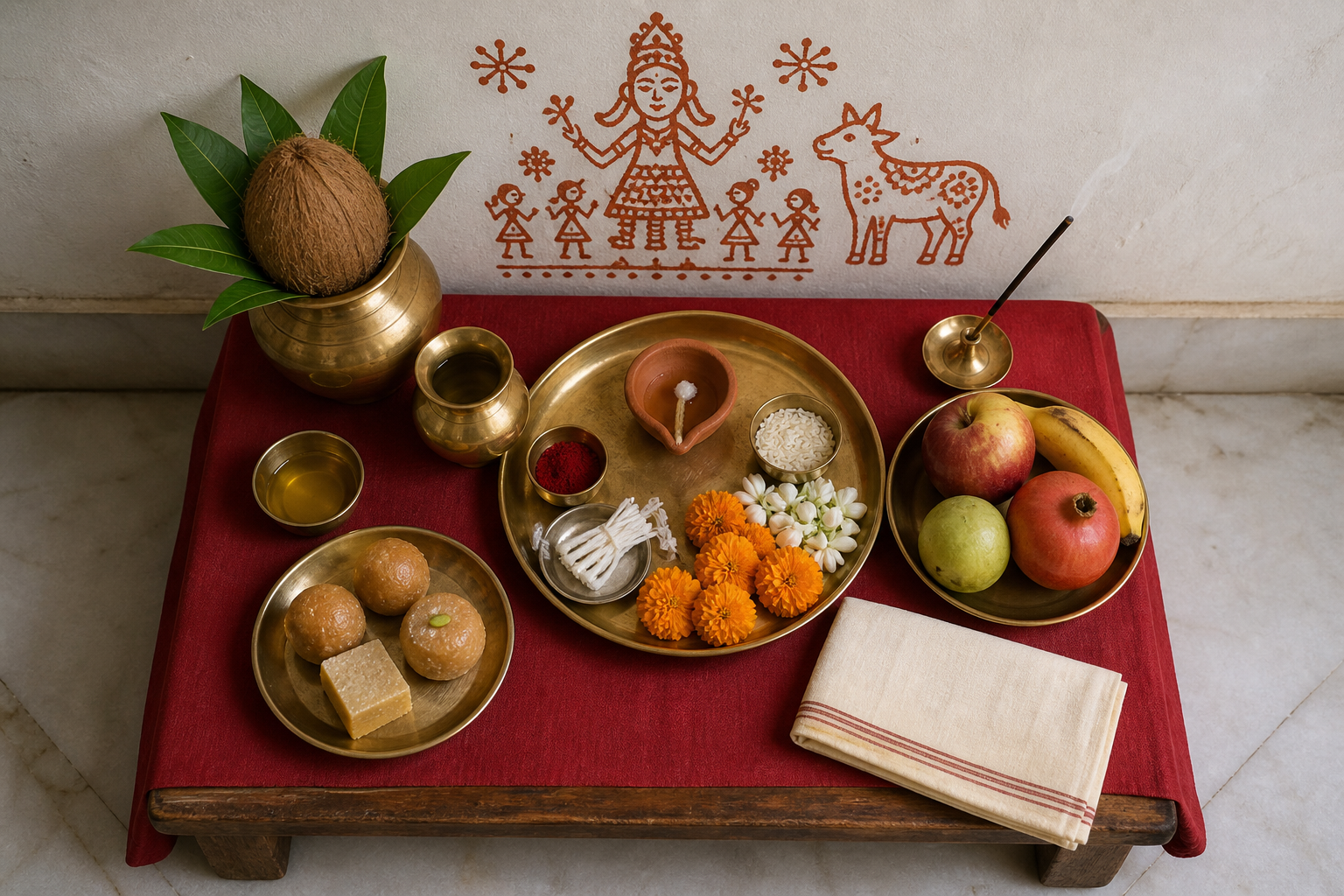
Set up the sacred space before the day’s fast makes concentration or cooking more difficult. Use a clean wall, board, or wooden chowki. Place an image of Ahoi Mata there, or make the customary drawing with eight stars or an ashta-koshthak, an eight-part pattern. Include the syahu motif if that belongs to your family practice. Regional renderings may resemble a hedgehog or porcupine; the moral role of the creature in the Katha matters more than settling its modern zoological label.
A practical puja checklist is:
- An image or drawing of Ahoi Mata, with eight stars or an eight-part pattern
- A diya with oil or ghee and a wick, plus agarbatti if your household uses it
- Roli, haldi, kumkum, akshata, flowers, and a clean puja cloth
- A kalasha, coconut, and mango leaves if they form part of your vidhi
- A separate lota or small vessel of clean water for the star offering
- Seasonal fruit and the foods your family offers, such as kheer, halwa-puri, chana-gud, milk, or homemade sweets
- The Vrat Katha, aarti, and a red or yellow thread if it is customarily tied near the image
- A soop and grains only where that regional or family custom is followed
Decide the form of the fast when you make the morning sankalpa, not when fatigue arrives late in the day. Some devotees keep nirjala vrata, while others undertake a fruit-and-water or otherwise health-appropriate fast. Severity is not a measure of sincerity. If restricting food or water may be unsafe because of your health or life stage, choose a suitable form of observance and seek individual medical guidance when needed. You can strengthen a lighter fast through mantra-japa, attentive puja, charity, and service.
Make the intention precise. Instead of treating the vrata as a vague request for good fortune, remember the children by name and pray for long life, health, protection, wise growth, and right conduct. This turns the sankalpa into a living responsibility rather than a formula recited and forgotten.
Follow this Ahoi Ashtami puja sequence at home
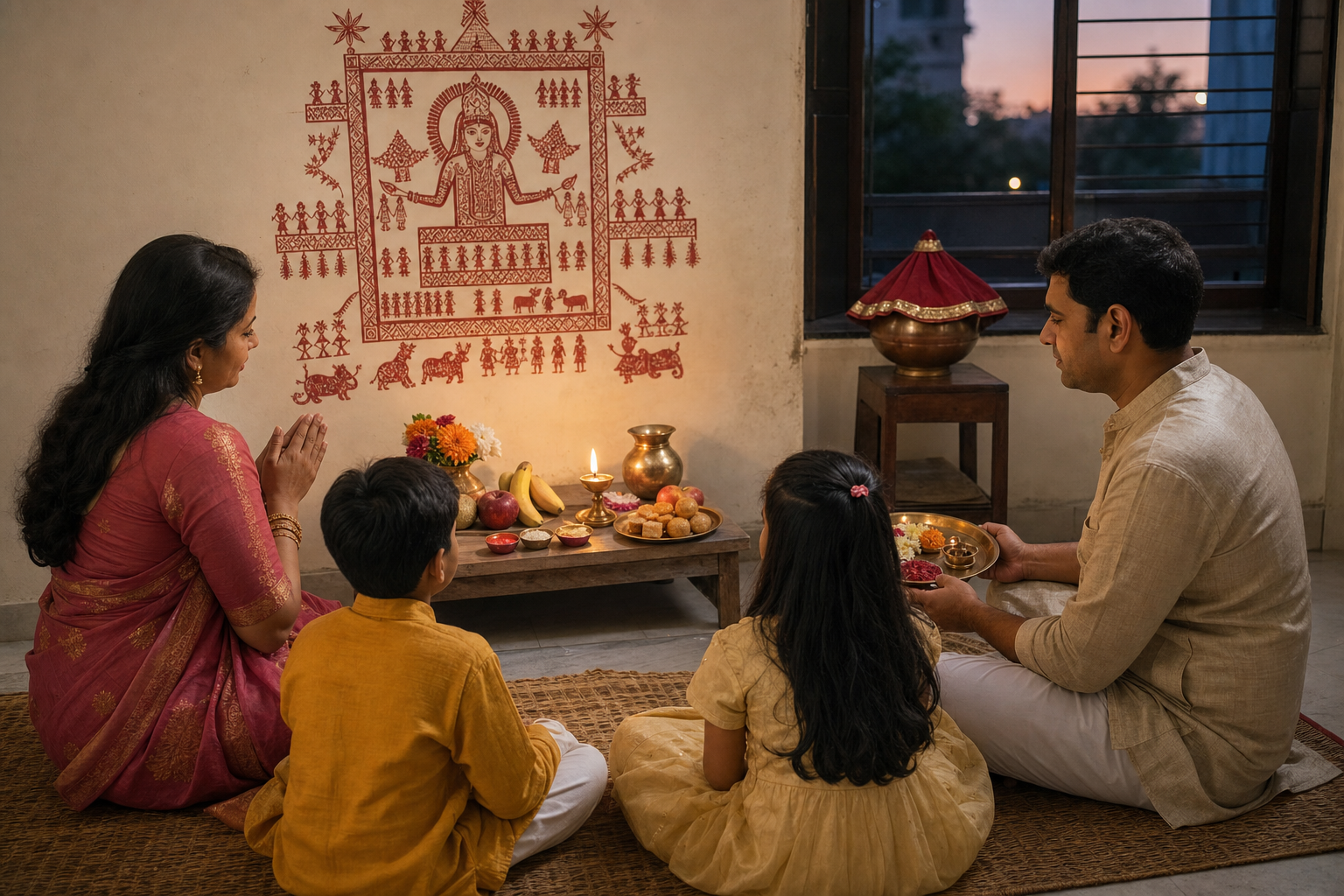
Begin the main worship at dusk, with the altar and food offerings already prepared. The exact local time should come from the panchang and tradition you follow. The customary sequence concludes with tara darshan and arghya, so plan for the puja to lead naturally into star-sighting rather than treating the two as unrelated activities.
- Settle the mind. Wash your hands, sit before the altar, light the diya, and allow the household to become quiet. Begin with remembrance of Ahoi Mata rather than rushing directly into the offerings.
- State the sankalpa. In Sanskrit, Hindi, or your own language, declare that you are observing the Ahoi Ashtami vrata for the aayu, aarogya, kshema, happiness, and dharmic growth of the children. Include their names if appropriate.
- Honor the kalasha and sacred image. If a kalasha has been established, apply roli and offer akshata to it. Then worship the image or drawing of Ahoi Mata, the eight stars or eight-part pattern, and the syahu motif. Place or tie the vrata thread according to family custom.
- Offer the upacharas. Present roli, haldi, kumkum, akshata, flowers, fragrance, and light with steady attention. The purpose is not to finish a checklist quickly but to make each action an expression of gratitude and care.
- Place the naivedya. Offer the prepared fruit, kheer, halwa-puri, chana-gud, milk, sweets, or other customary food. Keep the food before the deity until the worship is completed and it can be received as prasad.
- Recite or hear the Vrat Katha. Everyone present should be able to hear it. If younger children cannot follow a formal version, tell the narrative plainly without changing its ethical movement from carelessness to consequence, repentance, and restoration.
- Perform aarti and pray for the children. Remember not only your own sons and daughters but also grandchildren, younger relatives, and other children for whom the family carries responsibility. Men, elders, and children may join the prayers even when one person has undertaken the formal fast.
- Complete tara darshan and arghya. When the stars are visible, take the designated water outside or to a suitable open place, view the stars reverently, and offer a small arghya. Then remember Ahoi Mata and formally conclude the vrata according to household custom.
- Break the fast and distribute prasad. Begin with water and prasad in the customary manner. Share the offerings with the family, giving particular attention to the children. Grains or sweets may also be shared with neighbors or people in need.
Clouds, tall buildings, or limited outdoor access can complicate literal star-sighting. If this is likely, ask a knowledgeable family elder or local priest how your own parampara handles it before the vrata begins. There is no need to invent a universal substitute at the last moment when regional practices already differ.
Tell the Vrat Katha as a lesson in responsibility
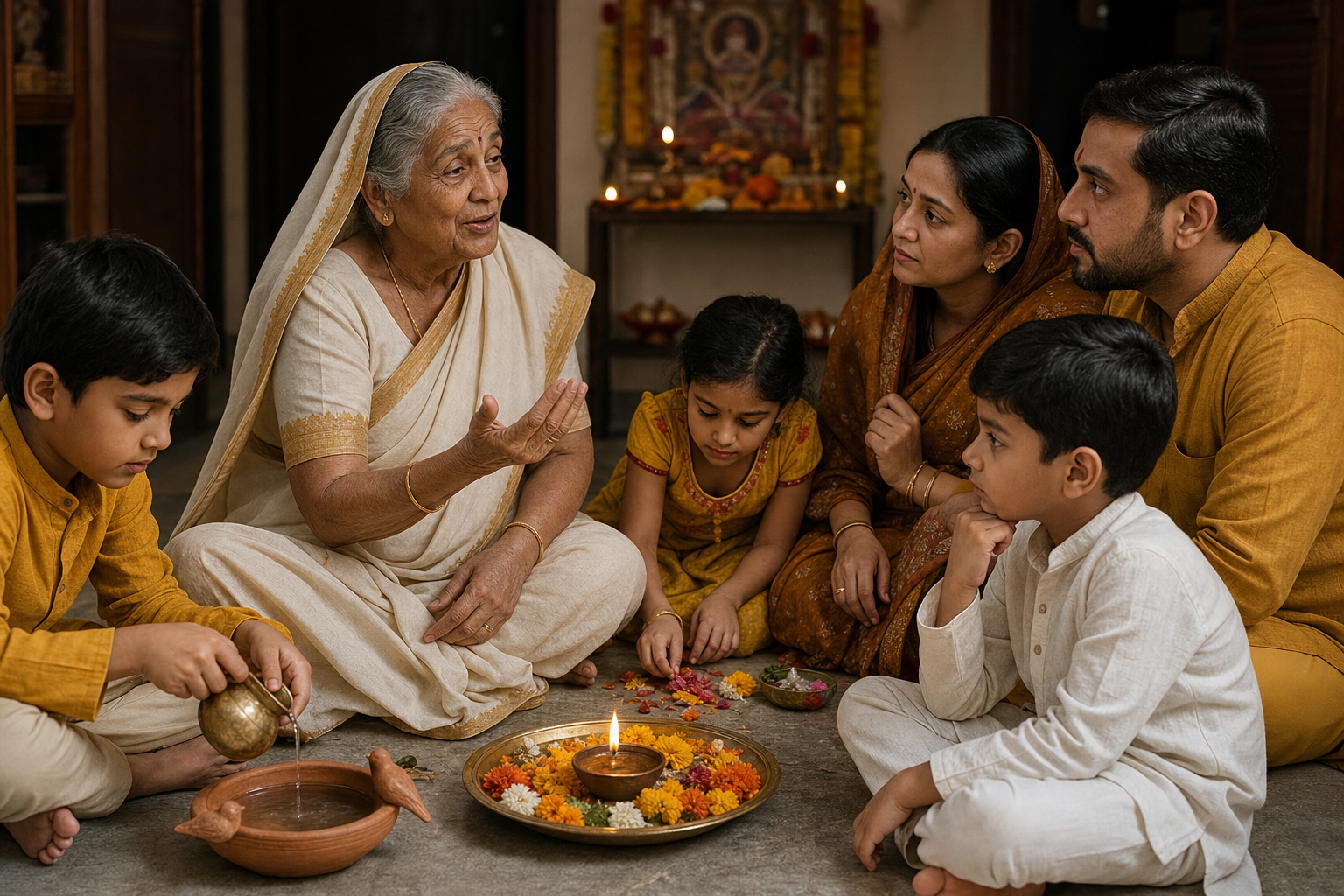
The Ahoi Ashtami Vrat Katha begins with unintended harm. A mother digging or gathering soil accidentally injures the offspring of a syahu. Hardship later touches her family and children. When she recognizes the moral weight of what happened, she responds with sincere remorse and undertakes the Ahoi vrata with devotion. Through repentance, disciplined worship, and grace, protection and well-being return to the family.
The Katha’s power lies in the fact that the original harm is not presented as deliberate cruelty. An accident may lack malicious intention, but that does not make its consequences unreal. Dharma asks the mother to acknowledge the injury, change her conduct, and seek restoration. The vrata is therefore not a bargain in which hunger purchases a blessing. It is a disciplined act of moral repair.
This is why the movement from inadvertent harm to repentance and renewed protection should not be lost beneath decorative details. The mother prays for her children while learning to regard another creature’s offspring as worthy of care. Concern for one’s own family expands into ahimsa, daya, and reverence for life.
When children listen, avoid turning the Katha into a threat that one missed ritual will bring misfortune. Let it open a conversation instead. Ask where hurried actions can harm small or vulnerable lives, what sincere repentance requires, and how a family can repair harm rather than hide it. A child who helps arrange the flowers, counts the eight stars, listens to the Katha, and shares prasad is already participating in cultural memory without being burdened by an adult fast.
Ahoi Ashtami is a specifically Hindu vrata, even though its ethical center is recognizable across the wider dharmic family. Ahimsa, compassion, restraint, truthful self-examination, charity, and service appear in distinct forms within Hindu, Buddhist, Jain, and Sikh life. Recognizing those resonances can deepen mutual respect without flattening the traditions into one practice.
Let the observance change how the family cares
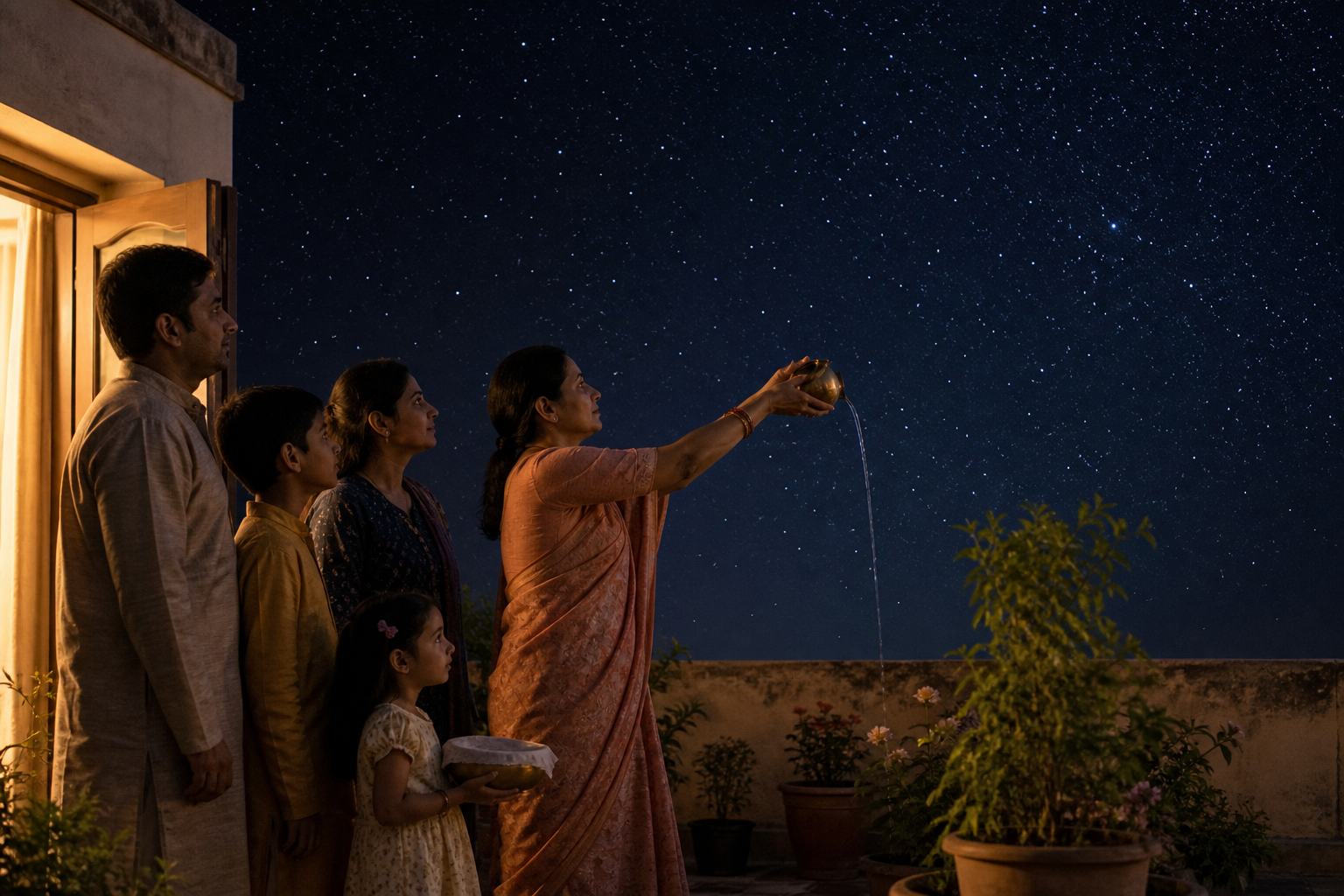
The vrata becomes thin if all responsibility falls on the fasting mother while everyone else waits for prasad. Other adults can clean the puja place, prepare food, help children participate, read the Katha, and arrange a safe place for tara darshan. Shared work makes the prayer for children’s welfare a shared duty.
Keep the material side proportionate. Natural rangoli colors, an oil diya, reusable decorations, and durable puja vessels honor the festival without producing needless waste. If your family decorates a soop or prepares eight small offerings, explain why those elements are present. An understood custom is more likely to survive than one repeated only because no one dares to ask about it.
Charity gives the vow an outward direction. Set aside grains, sweets, or another appropriate offering to share after the puja. This does not replace tara darshan, Katha, or worship; it carries their values into the community. Prayer for protected and well-nourished children becomes more honest when it awakens concern for children beyond the immediate household.
The day before Ahoi Ashtami, make three decisions: confirm the tithi and evening timing, choose a safe form of fasting, and identify which additions truly belong to your family tradition. Then write down the names and intentions you want to hold in the sankalpa. With those decisions settled, you can give the evening to devotion, listen to the Katha without haste, and let the vow make your care more attentive long after the stars have appeared.
References
- DharmaRenaissance Blog – Complete Ahoi Ashtami Puja Guide 2025: Master the Proven Vidhi for Children’s Blessings
- DharmaRenaissance Blog – Ahoi Ashtami Vrat Katha: Complete, Proven Guide to Rituals and Significance
