
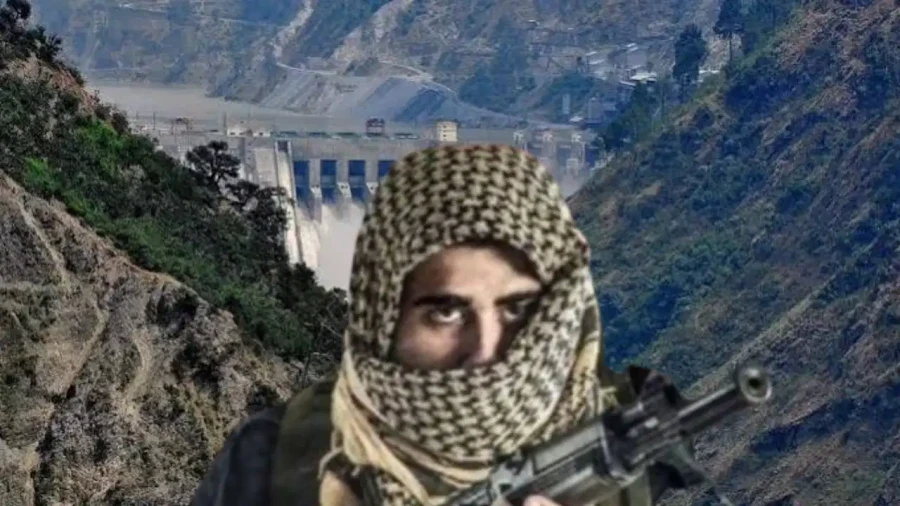
A reported Lashkar-e-Taiba training effort associated with Mangla Dam places terrorism, critical infrastructure and the Indus dispute in the same risk picture. The allegation warrants attention, but the public material described by the source does not establish that an attack has been approved or is imminent.
This guide separates the reported claim from established precedent, explains the physical limits behind water-war rhetoric, and considers a response grounded in Bharatiya security, accurate evidence and protection of life-sustaining rivers.
What the Mangla allegation does and does not establish
According to the source article, a July 2026 TV9 Hindi report citing Bharatiya security inputs alleged that Lashkar cadres had completed a 10-day basic course for waterborne activity associated with Mangla Dam, with advanced instruction expected to follow. The report attributed to commander Haris Dar an attempt to connect the programme with Pakistan’s dispute with Bharat over water.
That is warning intelligence, not proof of an operational plan. The publicly described evidence does not independently confirm the programme’s scale, every participant, the precise training location or a selected target. Sound assessment must distinguish possession of a capability from intent, detailed planning and imminent execution.
The expression water jihad should likewise remain attributed to militant rhetoric. It describes an alleged effort to turn reservoirs and treaty grievances into extremist propaganda; it is not a neutral category and must not be projected onto Muslims generally. The source notes that Lashkar-e-Taiba is listed under the UN Security Council’s sanctions regime, so responsibility belongs to the organisation, its operatives, facilitators and sponsors.
Why Mangla carries more than operational significance
The source places Mangla Dam on the Jhelum near Mirpur, in territory administered by Pakistan and claimed by Bharat. As a major reservoir and hydropower asset, its water surface, shoreline and connected infrastructure could be relevant to navigation or training. Suitability, however, is not evidence that training occurred.
Historical precedent explains the concern. As summarized by the source, the judicial record in the Ajmal Kasab case documents Lashkar’s marine instruction, navigation and GPS training before ten terrorists reached Mumbai by sea in November 2008 and killed 166 people. That record locates a final training phase near Karachi; later claims specifically connecting Mangla to the preparations should not be presented as a settled court finding.
The allegation also emerged after the 22 April 2025 Pahalgam attack. The article reports that the NIA described the killing of 25 tourists and one local civilian and later named LeT and The Resistance Front as organisational participants in the conspiracy. Separate media claims about Saifullah Kasuri’s presence at Mangla remain allegations, not a judicial finding about his role.

Treaty conflict is real, but rivers are not switches
The source explains that the 1960 Indus Waters Treaty principally assigned the Ravi, Beas and Sutlej to Bharat and the Indus, Jhelum and Chenab to Pakistan, while preserving specified Bharatiya uses on the western rivers. Those uses include constrained run-of-the-river hydropower. Such projects may hold limited pondage for generation, but they do not provide the multi-season storage needed to capture entire river flows.
Bharat reportedly placed the treaty in abeyance on 23 April 2025, linking continued cooperation to an end to Pakistan-backed cross-border terrorism. The move carries strong political meaning, yet it does not instantly create storage or diversion infrastructure. Pakistan disputes unilateral suspension, while the source notes that Article XII describes termination through a duly ratified treaty between both governments.
The practical danger is therefore less about switching off a river than manipulating timing, withholding data or intensifying uncertainty during low-flow, sowing or flood periods. Parallel disagreement over the Kishenganga and Ratle proceedings adds a jurisdictional conflict to the engineering dispute: Bharat rejects the arbitral body’s legitimacy, while that body maintains its competence.
Key takeaways
- The Mangla report identifies a possible capability-development concern, not a publicly proven attack plan.
- Lashkar’s documented maritime history justifies scrutiny without validating every later claim about Mangla.
- Treaty abeyance changes the political framework, but physical control still depends on storage, diversion and operating capacity.
- Reliable emergency data can deter propaganda and reduce dangerous miscalculation without resolving the wider dispute.
Security must protect infrastructure and social cohesion
A proportionate response begins with corroboration across human, financial, technical and geospatial intelligence. Protection should extend beyond guards at a dam to personnel screening, vessel access, cyber systems, communications and continuity plans for water and electricity. Authorities also need tested coordination among security agencies, technical operators and civilian administrations.
Narrow channels for authenticated flood, dam-safety and emergency information should be preserved where possible. Such communication is not indulgence toward militancy. It reduces the ambiguity that terrorist propaganda can exploit and helps communities distinguish hostile interference from weather, sedimentation or ordinary operations.
The civilisational answer is equally important. Hindu reverence for rivers, Buddhist and Jain commitments to ahimsa, and Sikh traditions of seva converge on protection of life and responsible stewardship. That shared dharmic ethic supports firm action against terrorists while rejecting collective suspicion. The durable path is evidence-led deterrence, resilient infrastructure and a public culture that refuses to let an extremist organisation redefine sacred and sustaining waters as instruments of ideological war.
