
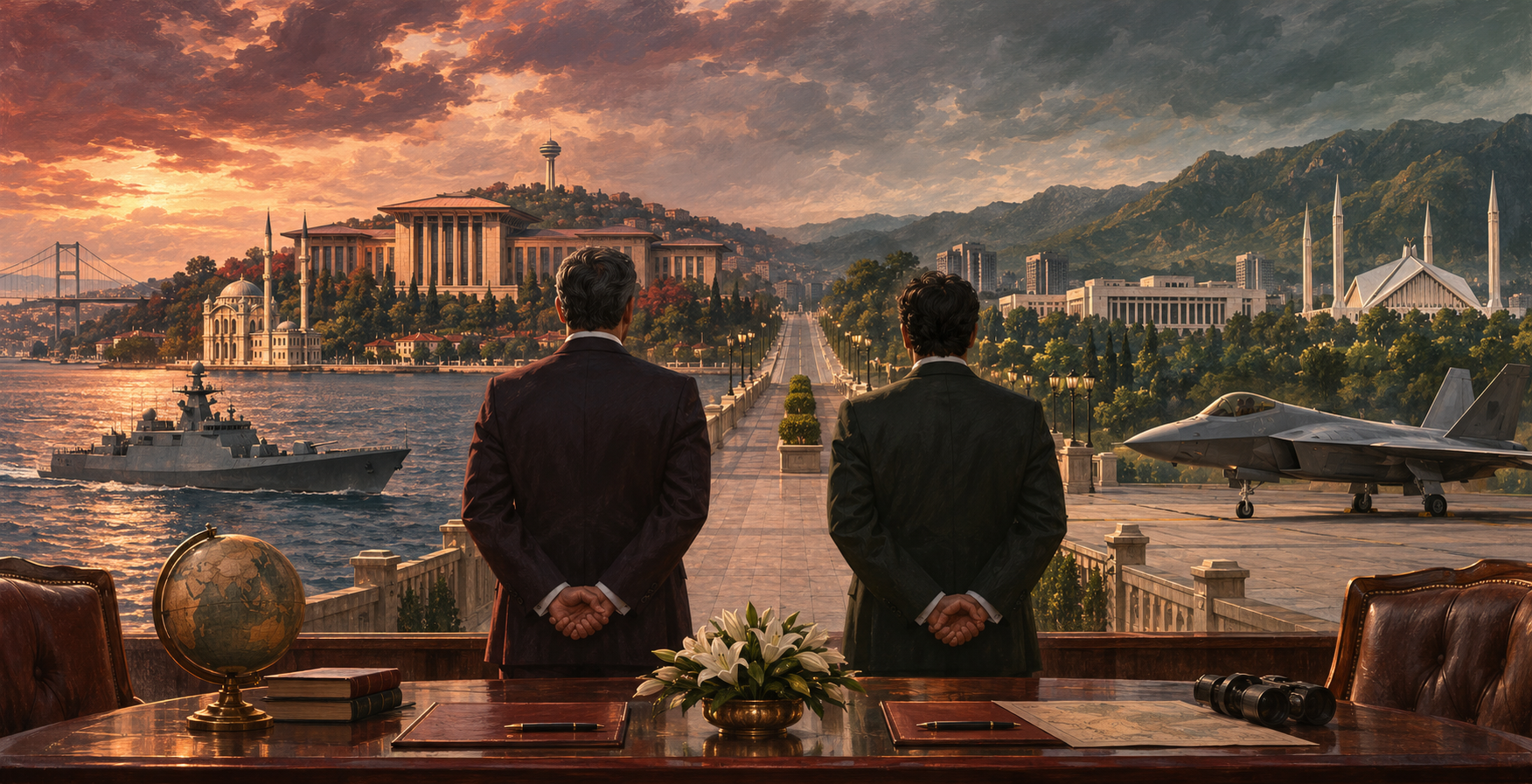
If you are trying to understand why Ankara keeps appearing beside Islamabad at moments of confrontation with Bharat, do not start with the latest speech. Start with the political system Recep Tayyip Erdogan has been building at home. Turkey’s recurring support for Pakistan makes more sense when domestic identity policy, civilizational symbolism and military cooperation are read as connected layers.
That does not mean every Turkish decision is religiously motivated, or that every Turkish citizen shares the government’s outlook. It means you should judge the relationship through institutions, repeated conduct and material capabilities rather than through one provocative quotation.
The shift is institutional, not merely rhetorical
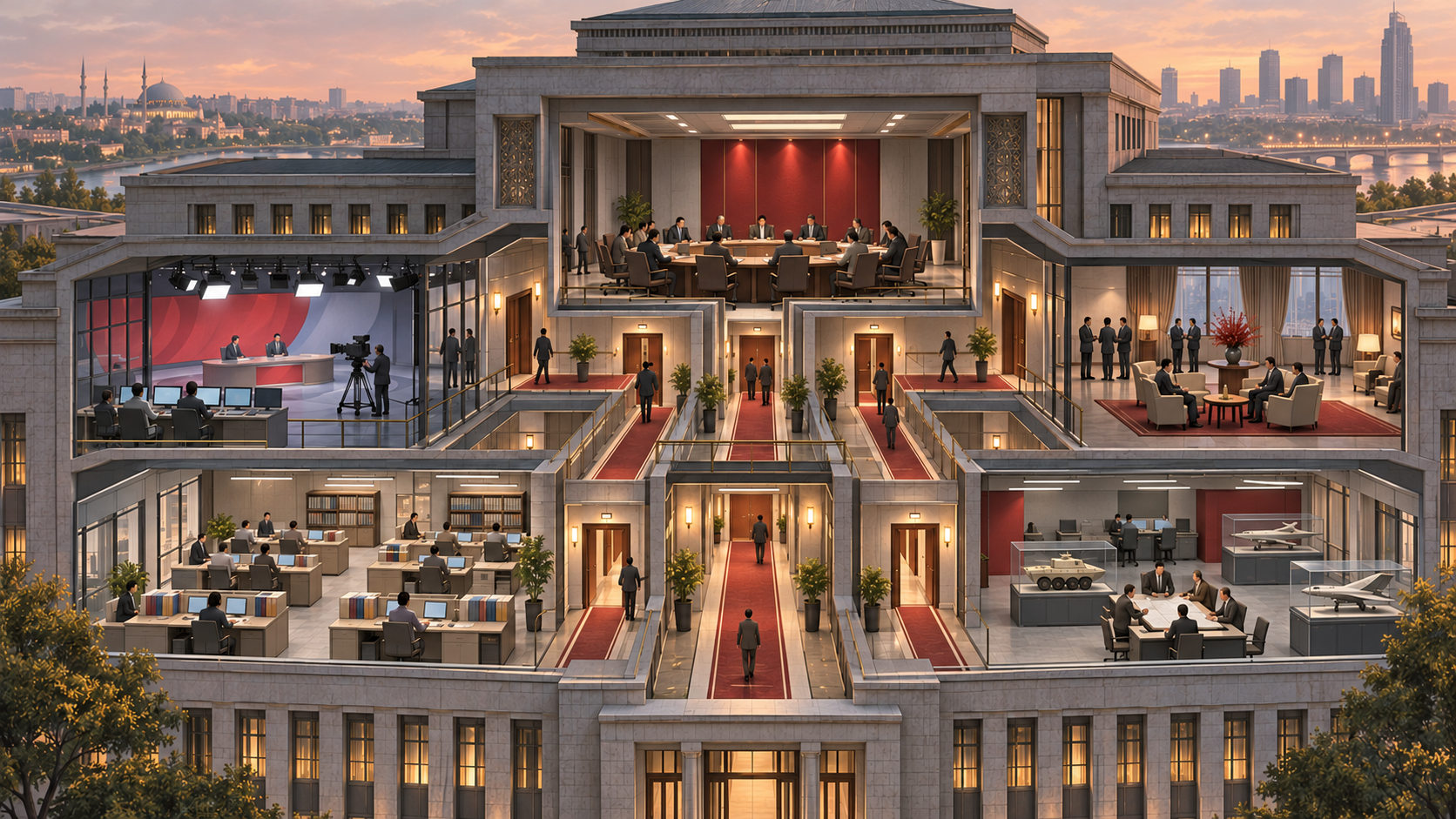
The contrast begins with Turkey’s founding settlement. The republic was established on 29 October 1923 after the Ottoman Empire’s collapse and the Treaty of Lausanne. Mustafa Kemal Ataturk sought a secular, democratic and modern nation-state modelled on the West. Under Erdogan, that orientation has been substantially reworked over roughly two decades.
The relevant distinction is not between a country with religion and one without it. Personal faith, worship and religious community are not the same as Islamism. Islamism turns a religious identity into a programme for political authority, public institutions and state power. The question is therefore not whether Turkish citizens have become more observant. It is whether the state increasingly privileges a particular religious identity and carries that preference into public policy.
Four developments help you identify that transition:
- Institutional power: The Diyanet, Turkey’s state religious apparatus, has expanded while promoting a stronger Sunni identity and leaving Alevis increasingly marginal to the official religious order.
- Generational policy: Erdogan’s declared ambition to raise a “pious generation” treats religious formation as a long-term political project, not simply a private family choice.
- Sovereign symbolism: The conversion of Hagia Sophia back into a mosque turned an internationally recognised monument into a statement about the religious character of the state.
- Transnational alignment: Ankara’s association with the Muslim Brotherhood connects its domestic direction to a wider current of Sunni Islamist politics.
These developments operate at different levels, but their convergence matters. One changes the machinery of government. Another seeks to shape the next generation. A third rewrites the meaning of a national symbol. The fourth places Turkey within an international ideological network. When religious administration, social formation, public symbolism and foreign relationships move in the same direction, you are looking at structural reorientation rather than an election slogan.
Claims that Erdogan personally intends to restore the Caliphate go beyond observable policy into inferred motive. Treat that proposition as an interpretation, not as a proven confession of intent. You do not need to accept it to recognise the documented pattern. The institutional changes are consequential even without certainty about Erdogan’s ultimate personal ambition.
Key takeaways
- Erdogan-era Turkey is best understood as undergoing cumulative state reorientation, not as having changed because of a single speech or symbolic event.
- The Diyanet’s expansion, the “pious generation” objective, Hagia Sophia’s conversion and alignment with the Muslim Brotherhood represent institutional, generational, symbolic and transnational dimensions of that turn.
- Ankara’s repeated support for Islamabad during confrontations with Bharat gives the relationship a pattern that an isolated diplomatic disagreement would not have.
- The reported use of Turkish-made drones adds a material security dimension, but hardware provenance does not by itself prove Turkish operational control.
- A serious Dharmic analysis must distinguish Erdogan’s government from Turkish society and Islam as a faith from Islamism as a programme of state power.
Why Pakistan fits Turkey’s new political identity
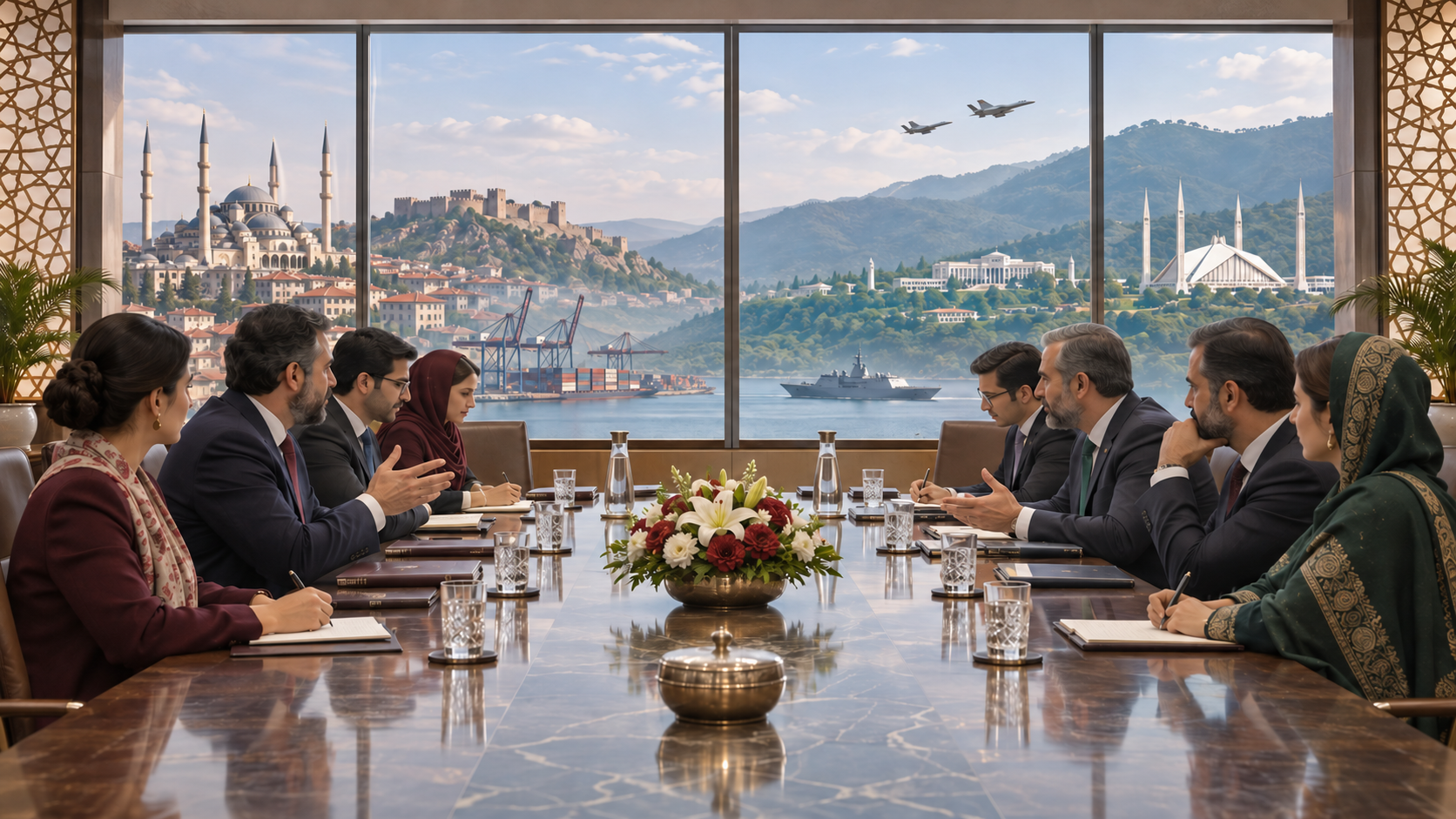
Foreign policy never follows ideology alone. Security calculations, economic interests and the incentives of political leaders also shape it. Ideology nevertheless changes which partners appear natural, which conflicts receive attention and which narratives a government is willing to endorse.
Turkey’s Pakistan alignment is significant because it has survived multiple crises. Ankara backed Islamabad in the periods following Uri, Pulwama and Pahalgam, as well as during Operation Sindoor. Repetition across separate confrontations is more revealing than the intensity of any one statement. It indicates that support for Pakistan is not readily explained as a passing disagreement with New Delhi.
The relationship should be assessed in three separate layers:
<!– wp:list {
Leave a Reply
You must be logged in to post a comment.