

If you are trying to explain why 26/11 still matters – at home, in a classroom, or in an online argument – the hardest part is not recalling the horror. It is preventing a documented Lashkar-e-Taiba assault from being dissolved into a debate about everything Bharat has ever done wrong.
You can keep the discussion honest by separating four questions: What happened? Who carried it out? How did institutions respond? What political meaning was later imposed on it? When those questions are mixed together, context becomes an alibi, suspicion replaces evidence, and the victims disappear behind the commentators.
Fix the factual record before debating its meaning
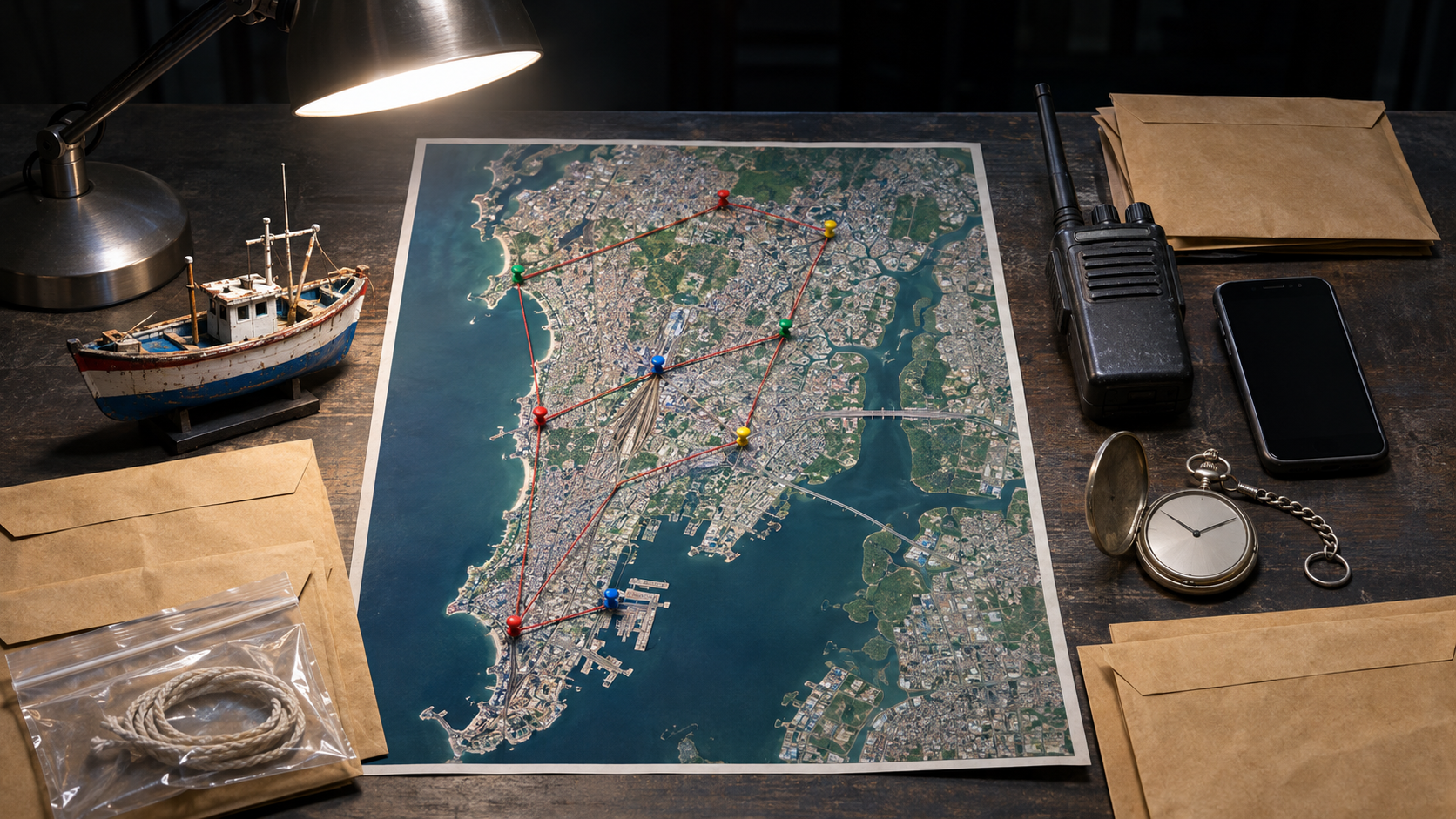
Over roughly 60 hours, ten Lashkar-e-Taiba terrorists who arrived from Pakistan by sea attacked Mumbai, killing 166 people and wounding more than 300. Their targets included Chhatrapati Shivaji Terminus, the Taj and Oberoi-Trident hotels, Leopold Cafe, Cama Hospital and Nariman House. These were not incidental details. They establish the scale, method, origin and intended reach of the operation.
Assistant Sub-Inspector Tukaram Omble then changed the evidentiary history of the attack. Armed with a lathi, he seized the barrel of Ajmal Kasab’s rifle at Girgaum Chowpatty and held on while being shot. Kasab was captured alive. Omble received the Ashoka Chakra posthumously, and Kasab was executed in 2012.
That living capture matters because it denied propagandists the freedom created by a dead, unidentified attacker. A corpse can be assigned a convenient identity. A surviving participant can be interrogated, prosecuted and tested against other evidence.
- Operational attribution asks who selected the targets, trained the attackers and sent them into Mumbai.
- Institutional accountability asks whether intelligence, coastal security, crisis command and political leadership failed.
- Political context asks how existing conflicts influenced public reaction.
- Moral responsibility remains with the people who planned and executed the massacre.
You can investigate every institutional failure without obscuring operational attribution. You can debate Kashmir, Gujarat, communal violence or foreign policy without converting those subjects into alternative perpetrators. The presence of a grievance does not identify the person who fired a weapon.
The kalawa detail shows how a Dharmic symbol could be weaponised
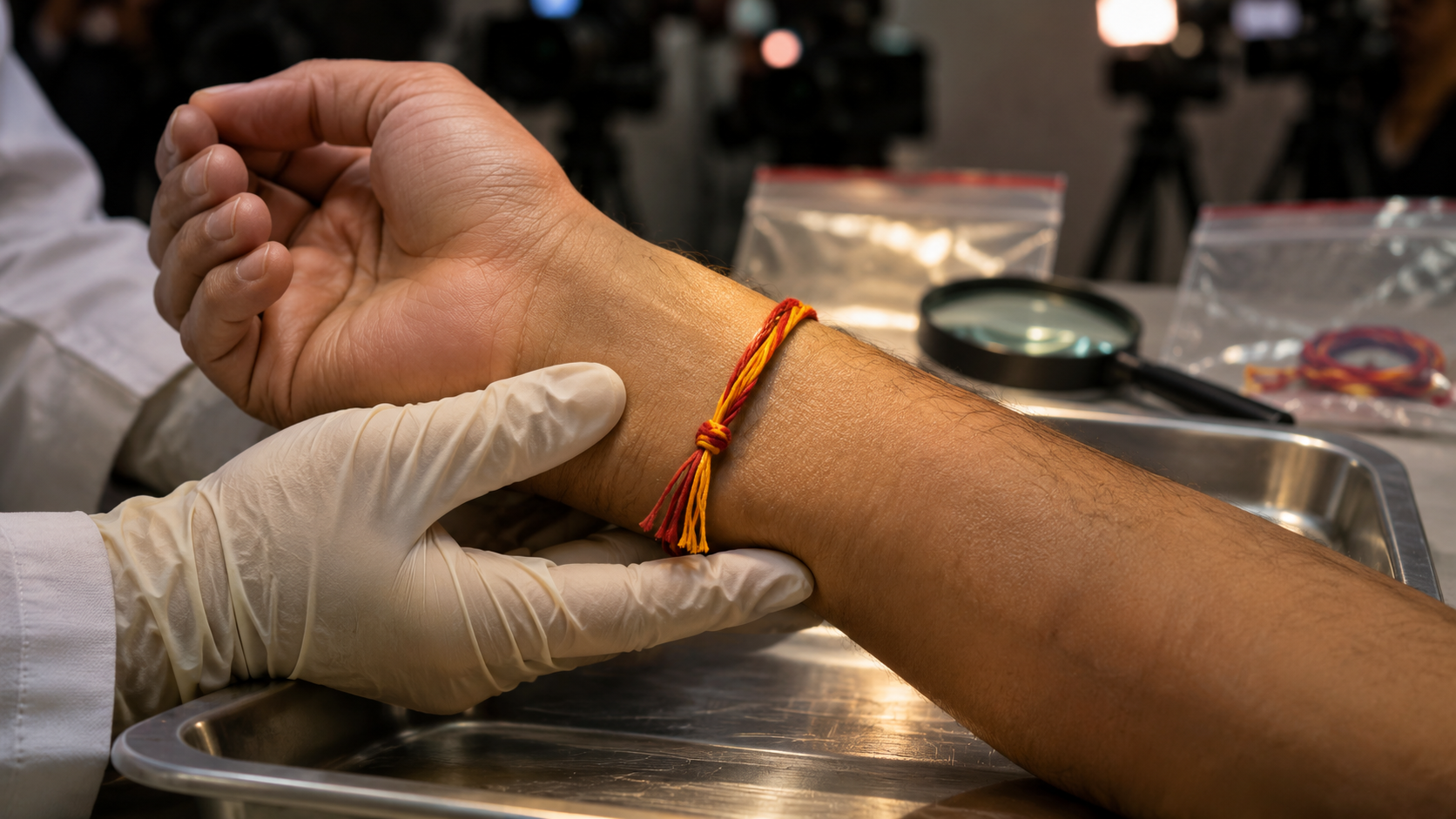
Former Mumbai Police Commissioner Rakesh Maria wrote in 2020 that Lashkar intended to present Kasab as a Hindu named Samir Chaudhari. He carried a false Bharatiya identity card and wore a kalawa, the sacred red thread familiar in Hindu practice. Maria believed that, had Kasab died, the manufactured identity could have been used to portray the massacre as Hindu terrorism.
Keep the evidentiary distinction clear. Kasab’s capture, prosecution and execution belong to the judicial history of 26/11. The explanation of the false identity comes from Maria’s later account. It is significant testimony from the police commissioner associated with the investigation, but it should still be described as his account rather than silently upgraded into a separate court finding.
For a Dharmic reader, the kalawa is the most intimate part of the deception. A mark of religious belonging was allegedly chosen not because the terrorist honoured it, but because observers might treat it as instant proof of Hindu guilt. The correct response is precision, not indiscriminate outrage. Do not claim that every investigation involving Hindu radicalism must therefore be fabricated. Say exactly what the evidence supports: Maria stated that this particular LeT attacker had been equipped with a false Hindu identity.
This gives you a useful question whenever someone revives an alternative theory of 26/11: how does that theory account for the attacker who was captured alive? A claim that cannot accommodate the strongest direct evidence is not a brave challenge to the official account. It is an attempt to reason around the evidence.
Domestic reframing follows a recognisable sequence

Narrative distortion rarely begins with a blunt declaration that the terrorists were innocent. It works through smaller moves: minimising the event, relocating the cause, floating a substitute culprit, and shifting moral attention away from the dead. Once you recognise those moves, you can challenge the precise distortion instead of entering an endless ideological quarrel.
- Naturalise the atrocity. Maharashtra Home Minister R.R. Patil responded with the claim that such incidents occur in a large city. He resigned on 1 December. The problem with this language is not merely insensitivity. It turns an organised cross-border assault into something resembling urban bad luck, weakening the demand to identify decisions and failures.
- Replace attribution with context. In the immediate aftermath, Arundhati Roy redirected attention toward Kashmir, Gujarat and the demolition of the Babri structure. Each can be debated on its own evidence. None changes the identity of the men who attacked Mumbai. Context can help explain a conflict; it cannot substitute a different actor for the one established by evidence.
- Circulate an alternative culprit before it can be tested. Two years later, Congress leader Digvijaya Singh lent support to Aziz Burney’s book blaming the RSS for 26/11. Burney subsequently apologised in the face of defamation proceedings. Retractions seldom travel as far as sensational accusations, which is why you should demand evidence at the moment a theory is introduced.
- Move the moral centre from victims to perpetrator. After Kasab received a death sentence, 203 citizens petitioned the President to spare him. A clemency petition is lawful, and principled opposition to capital punishment is not support for terrorism. The distortion arises when nearly all moral energy is spent humanising a convicted murderer while the 166 people he helped kill become scenery.
- Treat unfinished justice as uncertainty about the attack. Failure to punish every alleged planner shows an accountability gap. It does not make the origin of the operation unknowable. Lack of enforcement is not lack of evidence.
Language also shapes policy. In May 2010, the Union government sent 25 Pakistanis associated with Lashkar-e-Taiba, Hizbul Mujahideen and Jaish-e-Mohammed across the Wagah border as a goodwill gesture. One was Shahid Latif, later identified as the handler of the Jaish squad that attacked the Pathankot airbase. This does not mean diplomacy itself is weakness. It means a conciliatory gesture must be assessed against the identity, history and future risk of the people included in it.
That is why domestic narratives are not a side issue. If leaders describe an organised attack as an unavoidable feature of city life, or treat clear attribution as socially inconvenient, they alter the political cost of weak security decisions.
Use this five-question test on every 26/11 claim
You do not need to memorise every speech, memoir or controversy. Apply the same five questions to claims from politicians, activists, journalists and partisan accounts – including claims that agree with your instincts.
- What exact proposition is being made? Separate a claim about the attackers’ identity from a claim about government negligence, social conditions or the appropriate punishment. A failure in one category does not prove a claim in another.
- What is the evidence level? Give the greatest weight to captured participants, physical evidence, judicial findings and corroborated operational links. Treat memoir testimony, diplomatic cables, political speeches and commentary according to what each can actually establish.
- Does the claim name the responsible actor? Phrases such as Mumbai was attacked or violence occurred can hide agency. Ask who recruited, trained, transported, directed and armed the attackers.
- Is context explaining conduct or excusing it? A historical grievance may help explain propaganda or recruitment. It does not transfer responsibility from the person who deliberately attacks civilians to people who were not involved.
- Is the legal status stated accurately? Accused, charged, convicted and executed are different conditions. Tahawwur Rana was extradited from the United States in April 2025 and accused of helping David Headley scout targets. A Delhi court subsequently pressed the NIA to expedite its chargesheet. That procedural history must not be misstated as a conviction.
The same discipline applies when discussing alleged planners in Pakistan. Say that accountability remains unfinished and identify allegations accurately. Do not inflate a pending case to make your argument sound stronger. Overstatement gives denialists an easy error to attack while leaving the central evidence untouched.
Also watch the timing. A theory advanced before crucial evidence was known may be an understandable early hypothesis. A theory repeated after Kasab’s identity, affiliation and role were established has a different character. It is no longer filling an information gap; it is asking you to disregard what filled that gap.
Key takeaways for responsible remembrance
- The first duty of remembrance is to preserve the fixed record: ten LeT attackers arrived from Pakistan, killed 166 people and wounded more than 300 over roughly 60 hours.
- Tukaram Omble’s sacrifice did more than stop a gunman. By enabling Kasab’s capture, it preserved living evidence against a potentially false identity.
- Investigating extremism in any community is legitimate. Attaching an unrelated label to 26/11 without evidence is not investigation.
- Kashmir, Gujarat, Babri and other political disputes can be discussed without using them to displace responsibility for the Mumbai massacre.
- Due process strengthens the truth. Distinguish testimony from adjudication and an accusation from a conviction.
- Reject collective blame. Naming LeT and its Pakistan connection does not authorise hostility toward an uninvolved Muslim, Pakistani or political opponent.
On each anniversary, do something more useful than forwarding the angriest message in your feed. Centre the 166 victims. Remember Omble by name. When you encounter a false or evasive claim, correct the exact claim with the strongest available evidence. Do not amplify the distortion merely to denounce it.
A Dharmic public voice should hold satya and restraint together: truth without euphemism, but also truth without collective vengeance. Name the attackers, the external network, the institutional failures and the domestic inversions. Keep those categories distinct. That is how memory becomes a defence against the next manufactured narrative.
References

Leave a Reply
You must be logged in to post a comment.