
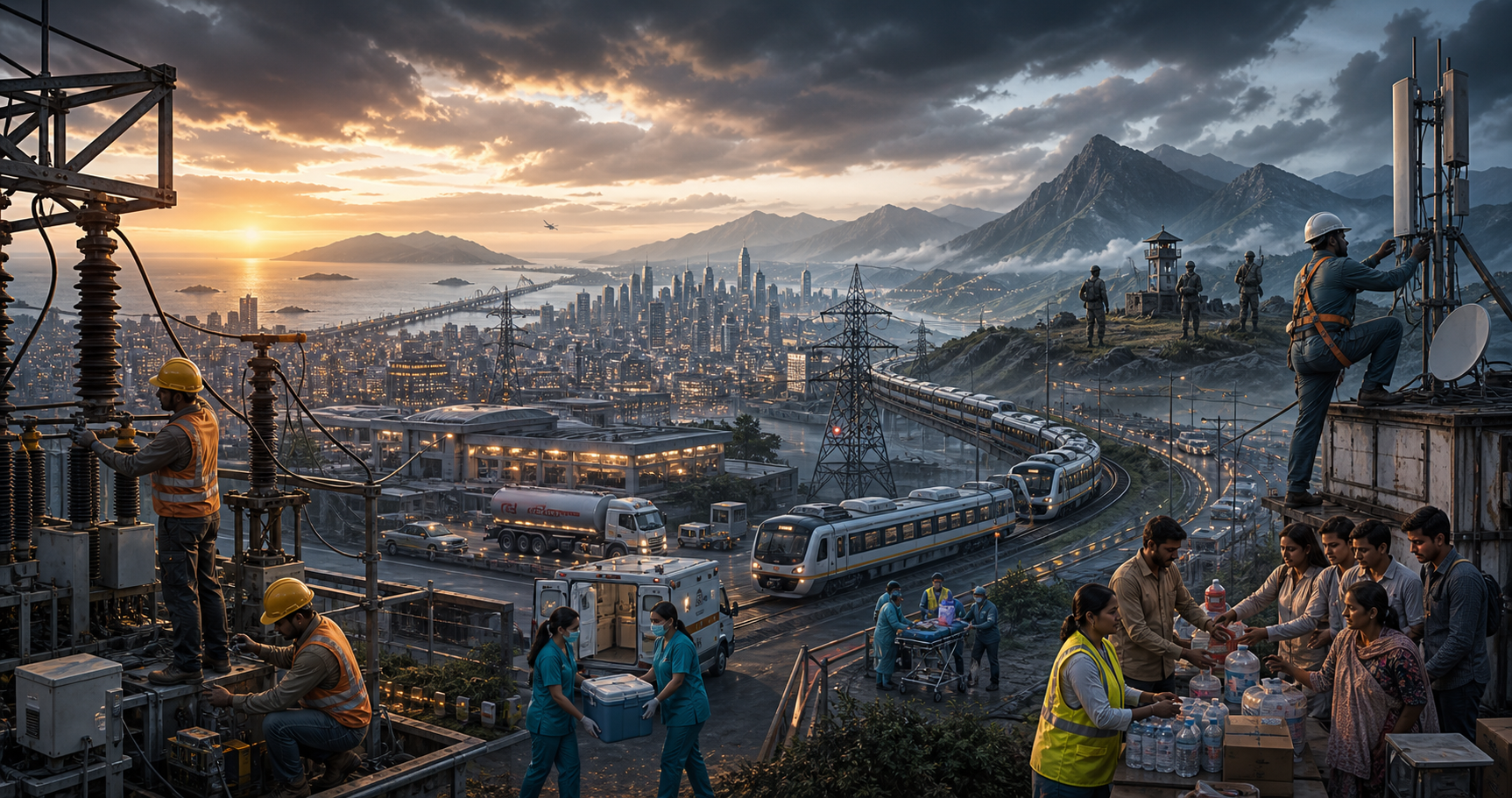
If your picture of national security ends at the border, it is too small. A serious conflict can interrupt power, communications, transport, payments, hospitals, fuel distribution and public decision-making far from the fighting. The question is not only whether the armed forces can stop an attack. It is whether the country can continue to function while they do.
Taiwan is useful to Bharat because it treats readiness as a recurring national responsibility rather than a plan to be opened after a crisis begins. Bharat should not copy an island’s defence model. It should adopt the harder principle behind it: every essential system must have an owner, a fallback and evidence that the fallback works.
The border is only the first line of national defence
Taiwan’s security problem grew out of the Chinese Civil War. After Communist forces prevailed on the mainland in 1949, Chiang Kai-shek’s Nationalist forces withdrew to Taiwan. The hope of returning to the mainland faded, but the confrontation did not disappear.
The last major ground clash occurred around the Kinmen Islands in 1949, where the Nationalists prevailed. The absence of another major ground confrontation since then has not removed the need for preparation. That distinction matters for Bharat: a quiet border is a condition to use, not proof that readiness can be deferred.
Military preparedness and national continuity are different jobs. The first prevents or defeats an attack. The second keeps the state and society operating under pressure. If either fails, the other becomes harder. Troops cannot be sustained indefinitely without transport, repair, energy, communications and functioning administration. Civilians cannot maintain confidence if official information is late, contradictory or unavailable.
For every essential public function, planners should be able to answer five questions without reaching for vague assurances:
- What is the minimum service that must continue during disruption?
- Which person or institution has authority to activate the emergency arrangement?
- What single dependency could stop the service entirely?
- What manual, local or lower-technology alternative can operate if the primary system fails?
- When was the alternative last tested under realistic conditions?
You can use the same questions when judging public claims about preparedness. A list of purchased equipment tells you what the state owns. It does not tell you what remains operational after communications fail, a supplier is unavailable or a key route is blocked. The more useful question is always: what function is protected, and how does it continue in degraded conditions?
Exercises must test recovery, not merely display readiness
Taiwan’s annual Han Kuang exercise has tested military readiness since 1984, and its 42nd edition was conducted in 2026. Its significance lies not only in the scenario being rehearsed but in repetition. A recurring exercise can reveal whether lessons survived changes in personnel, whether agencies learned to work together and whether a correction made in one cycle still functions in the next.
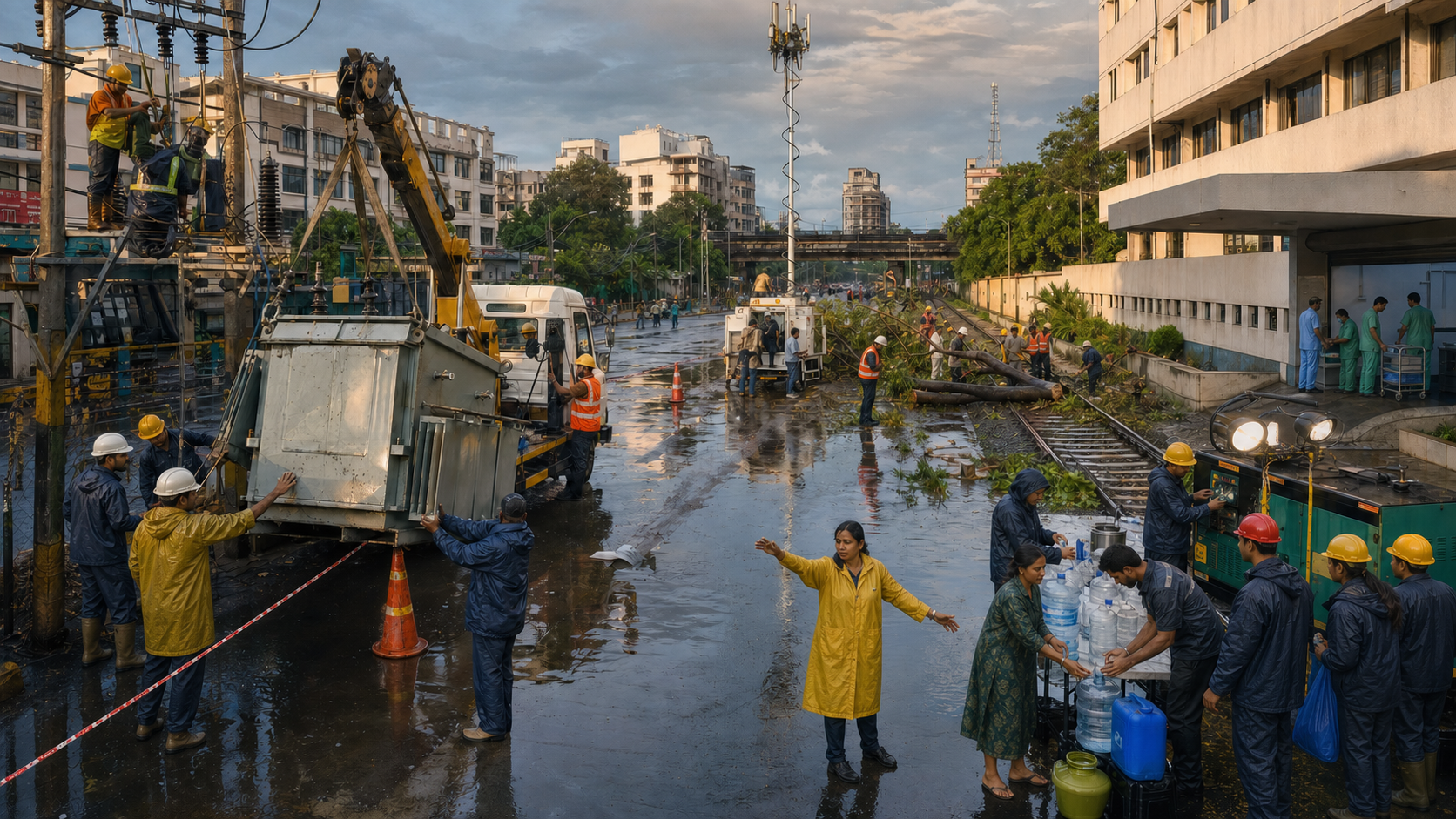
A drill becomes ceremonial when participants know exactly what will fail, senior officials retain every decision and the exercise ends as soon as the visible action is complete. A useful exercise creates friction. It removes a dependency, forces a handoff, tests an alternate channel and continues until the interrupted function is restored or replaced.
Bharat’s national exercises should therefore test more than combat formations. Where appropriate, they should include the public-facing responsibilities of Union ministries, state governments, district administrations and operators of essential services. The purpose is not to expose sensitive military details. It is to discover whether civilian institutions can make lawful decisions, coordinate resources and communicate with the public when normal systems are degraded.
Four features separate a resilience test from a performance:
- A genuine failure is introduced, such as the loss of a normal communication or supply channel.
- Responsibility crosses an institutional boundary, forcing two or more organisations to coordinate rather than act in isolation.
- The exercise measures restoration of a service, not just completion of a scripted movement.
- Identified failures receive named owners and are tested again in a later cycle.
The simplest test is unforgiving: if a drill ends when the alarm stops, it has rehearsed reaction but not recovery. Readiness begins to become credible only when the replacement system has taken over, the public knows what to do and decision-makers have verified that the service is actually working.
Bharat should adapt Taiwan’s logic, not copy its map

Taiwan is an island with a military primarily organised against a potential Chinese attack. Bharat must plan across land frontiers, a long coastline, airspace, cities, rural districts and extensive internal transport networks. Its Union, state and local institutions also divide responsibility across different levels. A plan designed for one compact island cannot simply be enlarged and relabelled.
The transferable lesson is a method: identify the pressure that could break an essential function, assign responsibility before the emergency, rehearse the failure and correct what the rehearsal exposes. The translation for Bharat should occur function by function:
| Taiwan’s strategic signal | Bharat’s planning question | Evidence of readiness |
|---|---|---|
| Preparation must persist even without a recent major ground battle. | Does the readiness cycle survive political, administrative and personnel changes? | Recurring exercises retest previously identified weaknesses. |
| Military defence and social resilience affect each other. | Can essential civilian functions operate while defence resources are under pressure? | Exercises include restoration, public communication and cross-agency handoffs. |
| Geography shapes the military problem. | Has each region planned for its own routes, terrain, population and essential services? | Local plans use local alternatives rather than a single generic checklist. |
| External powers influence the strategic balance. | Which functions would fail if outside assistance or imported supplies arrived late? | Critical plans include an independently usable fallback. |
The United States has continued to support maintenance of the status quo across the Taiwan Strait. That support matters, but it also illustrates a limit of partnerships: another government retains control over its own decisions and timing. Bharat should cultivate strong partnerships without allowing any vital national function to depend on an untested assumption about when an outside actor will respond.
This does not require autarky. Imports, alliances and specialised foreign technology can all serve national interests. The danger is an invisible dependency with no substitute, no repair path and no authority empowered to act when access is interrupted. Strategic autonomy becomes real when Bharat knows which outside connections are useful, which are indispensable and how long an indispensable function can continue without them.
Deterrence depends on repair capacity and civic confidence
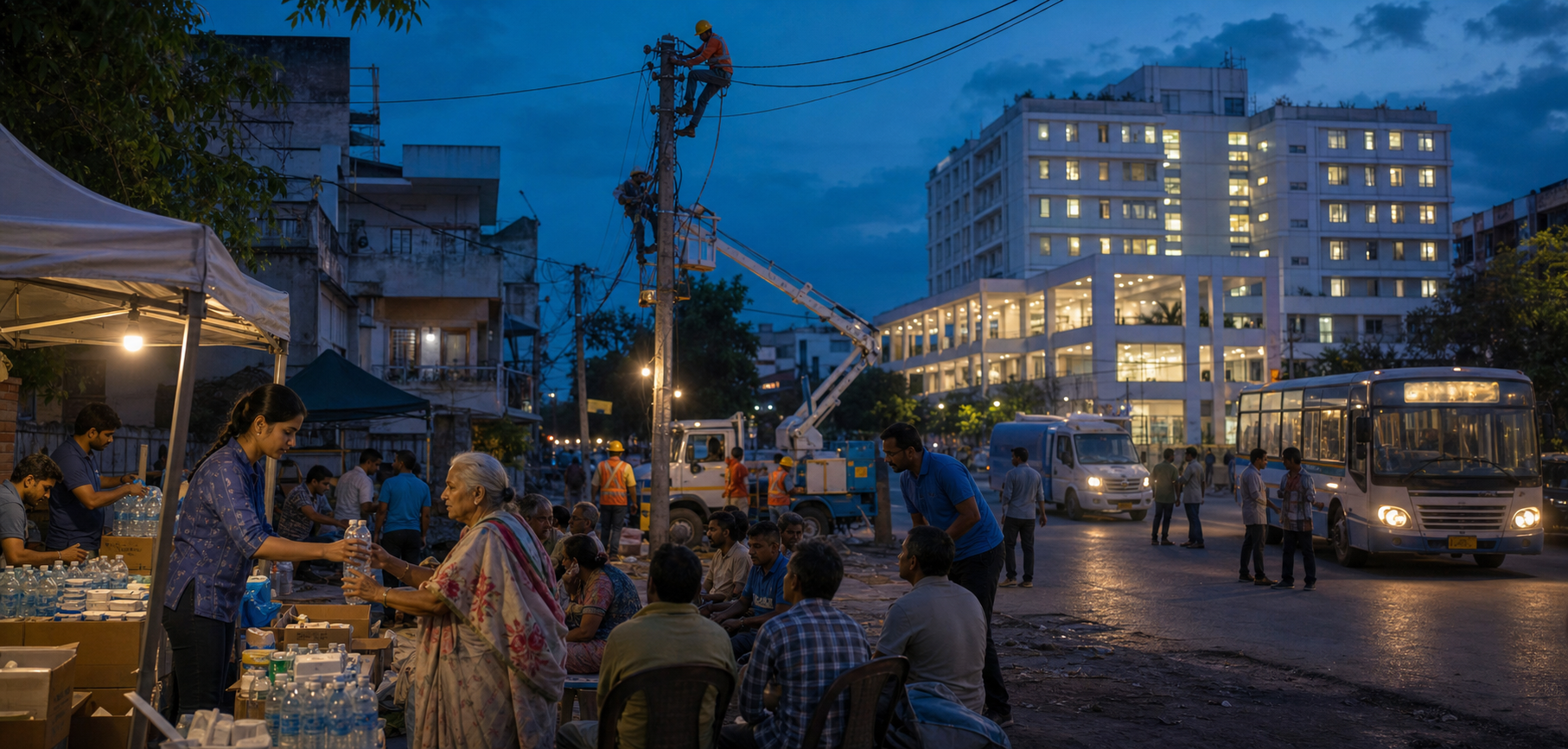
Weapons contribute to deterrence because an adversary expects them to work. National resilience contributes for the same reason. If disruption cannot easily paralyse public authority, essential services or military support, coercion becomes less attractive and its outcome less predictable.
Bharat should assess resilience in four connected layers:
- Command continuity: lawful authority is delegated clearly enough that decisions do not stop when a senior office or normal communication channel is unavailable.
- Physical redundancy: essential power, communications, transport and data functions have alternatives that do not share the same point of failure.
- Industrial endurance: equipment can be maintained, repaired and returned to service through known skills, tools, components and suppliers.
- Civic confidence: public instructions are timely, consistent and specific enough that citizens can act without depending on rumour.
This is where self-reliance must become more precise than a slogan. The decisive question is not whether every component was made domestically. It is whether Bharat can diagnose a failure, obtain or produce the necessary part, perform the repair and restore the function when an external supply line is uncertain. Domestic production without repair knowledge can remain brittle. A foreign purchase with maintainable systems, diversified support and transferred know-how may be more resilient than a nominally local arrangement that depends on one opaque bottleneck.
Procurement scrutiny should therefore follow an asset beyond the purchase decision. Who maintains it? Which consumables and components determine whether it remains usable? Can compatible alternatives be qualified? Are trained people distributed across more than one location? Does a civilian supplier depend on the same vulnerable power, data or transport system as the military user?
Public accountability can support this work without exposing operational secrets. Citizens do not need classified stock levels, deployment locations or tactical procedures. They can reasonably ask whether responsibilities are assigned, whether exercises recur, whether civilian continuity is included and whether failures found in one exercise are corrected and retested. Good scrutiny asks for proof of process, not disclosure that would help an adversary.
Key takeaways for a whole-nation security culture
- National defence must protect the continuity of decision-making and essential services, not only territorial lines.
- A recurring exercise is valuable when it introduces failure, tests handoffs, restores services and verifies earlier corrections.
- Bharat should translate Taiwan’s readiness discipline to its own geography and federal structure instead of copying an island-defence template.
- Partnerships strengthen security, but no vital plan should assume that external help will arrive on a convenient timetable.
- Self-reliance should be measured through maintenance, repair, substitution and recovery rather than labels alone.
- Citizens can demand measurable preparedness without seeking sensitive operational information.
The next time you hear a claim about national preparedness, ask four questions: what must keep working, who owns the fallback, what happens when the main system fails, and when was the alternative actually tested? Those questions turn concern into useful democratic scrutiny. If Bharat can answer them across defence, administration, industry and essential services, a crisis will meet a functioning rashtra rather than a collection of isolated plans.
References
