

Allegations of sexual assault, intimidation and forced displacement after West Bengal’s 2021 Assembly election raise a question larger than party rivalry: can women safely seek justice when the people they accuse are perceived to hold local political power?
A 2026 DharmaRenaissance Blog article, drawing on an Organiser report, describes several women’s accounts alongside court intervention and alleged failures by police and medical institutions. The available material is not an adjudicated record or independent corroboration of each allegation. It is most useful as a source-aware examination of the reported pattern, the points at which justice can fail and the standards by which the official response should be judged.
What the reported allegations establish – and what remains contested
The source places the allegations in the aftermath of the 2021 election, when the Trinamool Congress returned to power under Mamata Banerjee. BJP workers and supporters in several districts alleged retaliatory attacks, while the TMC and its supporters disputed many claims and accused political opponents of exploiting the violence. That conflict over the narrative makes independent investigation essential: allegations cannot substitute for findings, but partisan denial cannot substitute for inquiry.
The article presents anonymised or identity-protected accounts involving women from different circumstances. A Scheduled Tribe woman identified by the changed name Reena Hansda reportedly alleged an armed incursion, sexual assault by multiple men, threats, difficulty registering a police complaint and inadequate hospital treatment. Ragini Mete, identified by another changed name and described as belonging to a Scheduled Caste family associated with the BJP, reportedly said that a mob attacked her home, beat her husband, damaged property and forced the family to leave its village.
Two other accounts connect political visibility with alleged gendered retaliation. Rituparna Roy, described as a specially-abled former BJP Mahila Morcha functionary, reportedly alleged that she was threatened before the results and later assaulted after taking shelter with her children. Sharmila, described as a BJP campaign and social-media worker, reportedly alleged that she was sexually assaulted while her father was beaten, followed by pressure to compromise. These are serious allegations reported by the source, not declarations of guilt; individual culpability remains a matter for evidence and lawful adjudication.
Why displacement and silence belong in the measure of violence
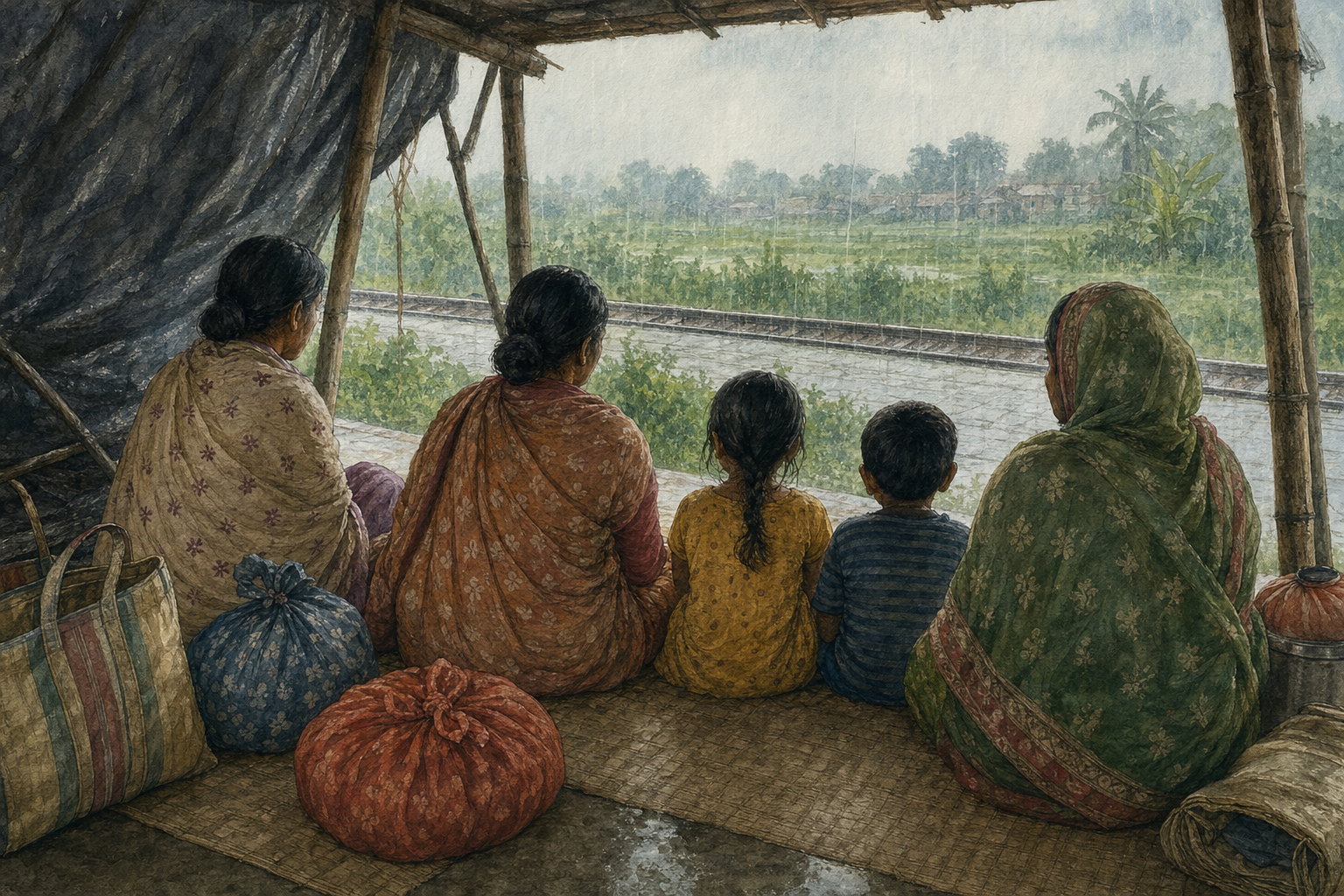
Political violence is often counted through deaths, physical injuries and damaged property. The women’s accounts described by the source point to less visible consequences: families ceasing to live in their own homes, children witnessing alleged assaults, complainants fearing neighbours or local power holders, and survivors remaining dependent on institutions they believe have failed them.
Forced displacement is especially consequential because it changes the practical meaning of citizenship. A person may retain the formal right to vote or support a party, yet lose the ability to exercise that right freely if returning home, making a complaint or identifying an alleged attacker appears unsafe. Displacement can also separate a complainant from documents, witnesses, medical services and the police station responsible for the initial record.
In this setting, alleged sexual violence has a potential coercive function beyond the immediate harm to one person. If used to retaliate against political participation, it can warn an entire household or locality about the perceived cost of dissent. That interpretation must still be tested case by case. It must not become collective blame against a political, religious, caste or social community; accountability should attach to identified conduct supported by evidence.
The institutional chain that can preserve or destroy a case
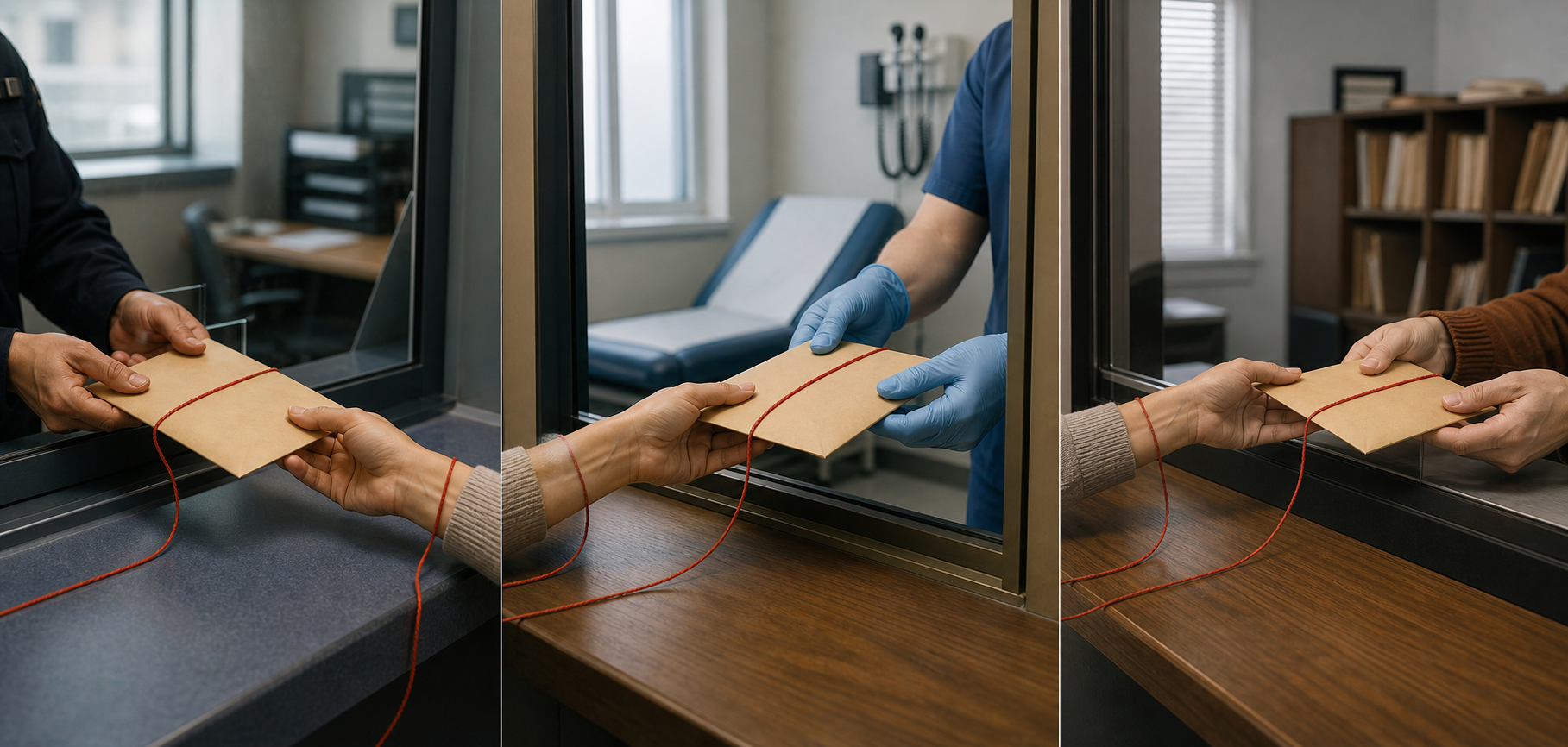
The source attributes a revealing warning to a woman police officer who allegedly discouraged a rape complainant: “One cannot afford to make an enemy of a crocodile while living in the water.” Whether or not that alleged remark can be independently established, it expresses the central obstacle described across the accounts – a complainant may have to seek protection from institutions operating in the same environment as the people she accuses.
A sexual-violence case can weaken at several connected points. A delayed or refused complaint can obscure the first account of events. Inadequate medical care or documentation can diminish available evidence. Threats can affect witnesses and continued residence. Pressure to compromise can distort later statements. Long delays can then be used to question inconsistencies that may themselves have arisen from fear, trauma or institutional inaction. None of these factors proves an allegation, but each affects whether the allegation can receive a fair test.
According to the source, the Calcutta High Court in 2021 directed the Central Bureau of Investigation to examine serious allegations, including murder and rape, while other matters were assigned to a special investigative mechanism. The article also notes the National Human Rights Commission’s involvement and subsequent litigation. It further reports that, by 2026, hundreds of post-poll violence cases were receiving renewed scrutiny, particularly matters involving crimes against women. These developments indicate institutional concern, but renewed examination after years cannot fully recreate evidence that should have been secured promptly.
What a credible survivor-centred review must demonstrate

Credibility depends first on independence from local political influence. Investigators should be able to examine the original complaint process as well as the alleged offence: when assistance was requested, what the police recorded, whether a hospital provided appropriate treatment and documentation, and whether any official discouraged the complainant.
Protection must be practical rather than symbolic. Confidential handling of identities, safeguards against contact or intimidation, secure relocation where necessary and reliable communication about case progress can determine whether survivors and witnesses remain able to participate. The reported involvement of Scheduled Caste and Scheduled Tribe women also requires careful attention to whether social position intensified vulnerability or obstructed access to institutions, without presuming a motive before evidence is examined.
Where time has passed, reconstruction should be systematic. The source calls attention to medical records, earlier statements, call records, police diaries and hospital documents. Comparing these materials can help investigators distinguish later political claims from contemporaneous evidence. Any resulting prosecution must remain individualised and subject to due process; survivor-centred justice and a fair trial are complementary requirements, not competing ones.
Key takeaways
- The supplied source reports a recurring sequence of alleged attack, displacement or intimidation, difficulty obtaining institutional help and pressure to remain silent or compromise.
- The allegations are politically contested and have not been independently verified here; that uncertainty strengthens the case for impartial investigation rather than either automatic acceptance or blanket dismissal.
- Police response, medical documentation, witness safety and the preservation of early records are central to whether a sexual-violence allegation can be fairly adjudicated.
- Accountability must focus on provable acts by identified people. Political or community-wide blame would replace justice with another form of collective punishment.
The meaningful measure of future progress will be whether complainants can participate without fear, investigators can recover and test the available evidence, and courts can reach reasoned outcomes within a credible process. Only such a response can protect women without turning their suffering into permanent partisan property.