
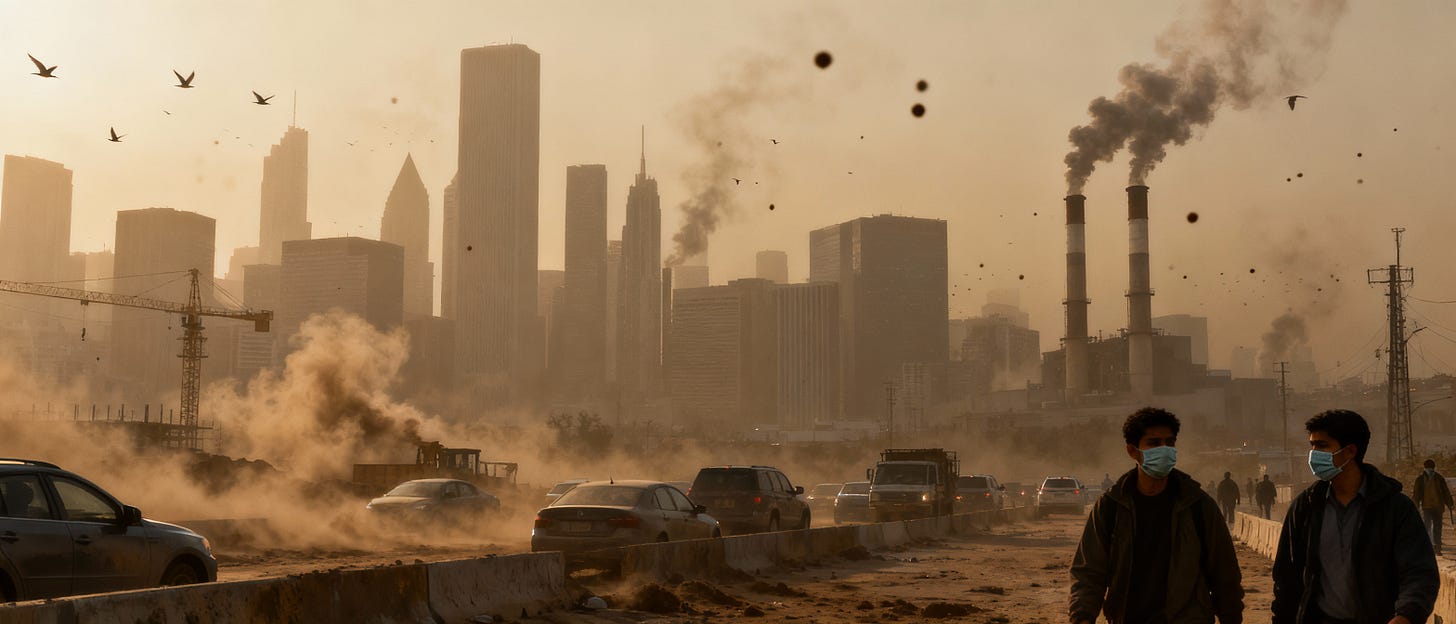
Urban air quality strongly shapes daily life and long-term health. Each winter, air quality in Delhi deteriorates sharply, with stubble burning in Punjab and Haryana recognized as a major seasonal contributor across downwind northern regions. Beyond the north, a different reality is noticeable nationwide: live telecasts of cricket matches in India often show visible haze when compared with broadcasts from England or Australia, even after post-production adjustmentsan unmistakable indicator of air quality challenges.
Understanding air quality begins with its chemical composition. Nitrogen oxides (NOx, including NO and NO2) are central precursors of urban smog and acid rain, originating largely from combustion in power plants, industry, and heating systems; they also react with volatile organic compounds (VOCs) in sunlight to form ground-level ozone. Sulfur dioxide (SO2), emitted from coal-fired power, smelting, and oil refining, aggravates respiratory issues and contributes to acid deposition. Carbon monoxide (CO), an odourless toxic gas from incomplete combustion in industrial and domestic settings, diminishes oxygen transport in the blood.
Ground-level ozone (O3) is a secondary pollutant formed by NOx, VOCs, and sunlight; it irritates the respiratory system and worsens asthma, with urban sources including solvents, paints, and industrial emissions of precursors. VOCs themselves arise from consumer products, industrial evaporation, and storage leaks, contributing both to ozone formation and secondary particulate matter. Other hazardous air pollutants (HAPs)such as benzene, formaldehyde, PAHs, and heavy metalsare associated with industrial emissions, waste burning, and legacy sources including old paints and batteries. Ammonia (NH3), often overlooked, contributes to secondary aerosol formation and can stem from waste decomposition, sewage treatment, peri-urban agriculture, and specific industrial processes.
Air quality is also defined by its physical composition. Dust and heavy particulates are often non-inhalable but affect eyes, skin, and surfaces; they readily resuspend in wind. Coarse particles (PM10) lodge in the upper respiratory tract, increasing irritation and congestion; common sources include road dust, construction debris, agriculture, and wind-blown soil. Fine particles (PM2.5) penetrate deep into the lungs and bloodstream, elevating risks of cardiovascular and respiratory disease; they arise from combustion and secondary formation in the atmosphere. Ultrafine particles (PM0.1) are smallest and can cross into organs including the brain, primarily originating from combustion and high-temperature processes.
In most Indian cities, the dominant challenge is dust rather than noxious gases. Construction and demolition generate substantial coarse dust (PM10) via excavation, building, material handling, and demolition. Industrial processes emit dust and fine particulates, often carrying toxic constituents. Power generation, especially coal-fired plants, contributes PM2.5 and secondary aerosols. Household use of solid fuels for cooking and heating remains a significant particulate source in dense settlements.
Waste management practicessuch as open waste burning at urban fringesand emissions from landfills and material stockpiles add to ambient particulates. Consumer products releasing VOCs, including paints, cleaning agents, and personal care items, further elevate secondary PM levels. Wind-blown soil from exposed ground, unpaved stretches, and eroded surfaces creates a persistent baseline of natural particulates, while seasonal pollen and spores add organic dust. Occasional geological or weather-driven dust events can compound the problem.
Ecology amplifies these pressures. Much of India lies within the global desert belt between 15 and 30 degrees latitude, experiencing intense sun most of the year and a concentrated monsoon from June to October. Extended dry seasons desiccate soils, making dust control more challenging than in many temperate countries. Consequently, urban governance must work harder to prevent soil exposure and resuspension.
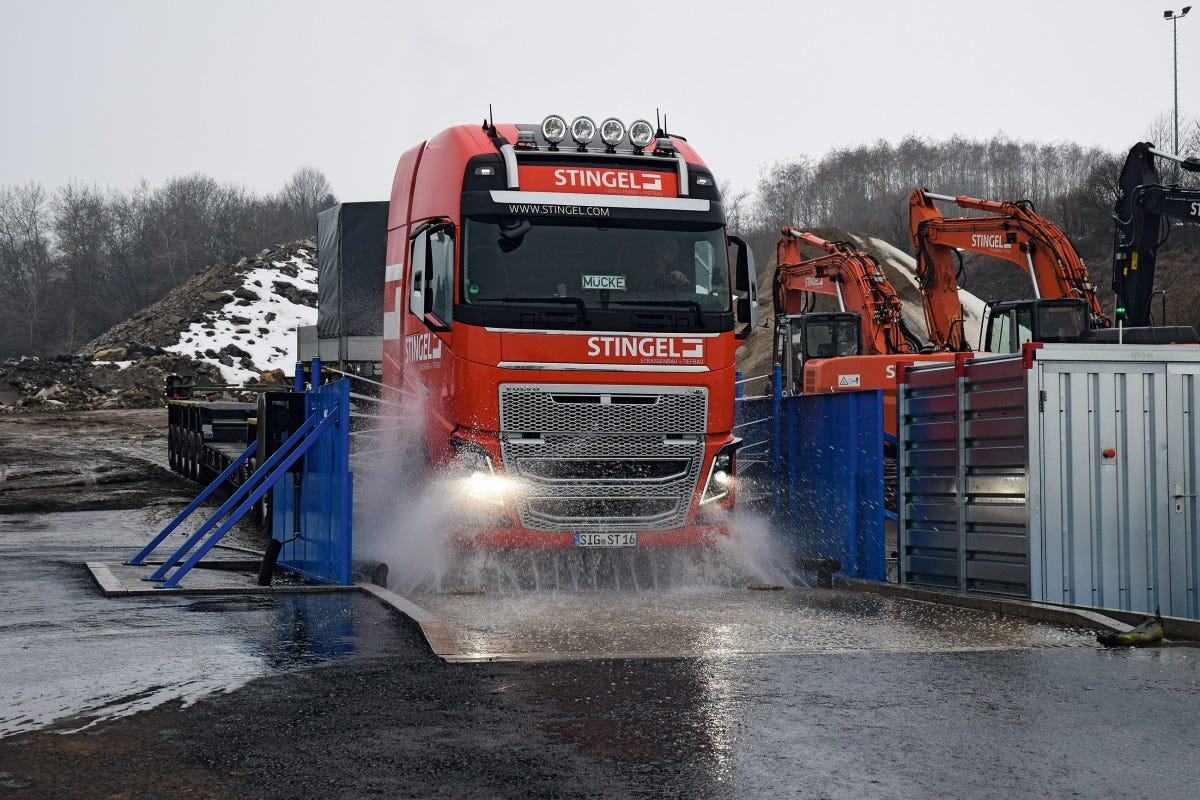
Targeted solutions are well established and actionable. Construction and demolition site management should prioritize dust suppression using water sprinklers, mist cannons, or polymer-based suppressants, combined with enclosures, barriers, and tarps. Material handling protocolscovering stockpiles, enforcing low on-site vehicle speeds, and wheel-washing before exitlimit resuspension on public roads; cities mandating wetting and covering have reported substantial local reductions. Phased scheduling tied to enforceable permits ensures minimal exposed areas and accountability.
Road and traffic dust suppression includes paving unpaved stretches with asphalt or permeable materials, regular street sweeping and vacuuming, and stabilizing rural-urban fringes. Vegetative barriers, hedgerows, and groundcover reduce soil erosion and trap particulates. A core principle is eliminating uncovered open soil, which dries rapidly and elevates ambient dust under wind and traffic.
Industrial and waste management controls require emission control technologiesbaghouses, electrostatic precipitators, and optimized combustionto reduce PM2.5 and precursor emissions. Covered garbage bins, sealed collection systems, and well-maintained compactor trucks raise containment standards. Waste processing reforms should ban open burning, expand recycling, and ensure engineered landfills with covering and leachate management. Parali-processing power plants can procure crop stubble as a fuel, with dual-fuel capability (including gas), bag filters, and carbon scrubbing to control emissions. Zoning laws separating heavy industry from dense neighborhoods, combined with real-time monitoring via IoT sensors linked to SMART City control rooms, strengthen compliance.
Transportation measures address both exhaust and non-exhaust emissions. Electrifying buses and urban fleets reduces brake and tyre wear particulates and eliminates exhaust pollutants at point of use; phasing down diesel, especially in public fleets, has shown measurable gains in international examples. Reducing stand-still trafficat signals, toll booths, and roadworkslowers localized suspended particulate matter by smoothing flows and minimizing idling.
Urban planning and greening strategies can mitigate PM exposure. Urban forests, parks, green roofs, and vegetative corridors trap particulates and improve microclimates; trees and hedges can locally filter a notable share of PM when well sited. Building orientation informed by wind mapping increases ventilation and dispersion, while materials that capture carbon or reduce dust adhesion contribute incremental benefits. Sustainable land use that limits soil disturbance and preserves wetlands, ponds, and lakes provides natural buffers.
Household and indoor measures complement citywide action. Transitioning from solid fuels to gas, electricity, or renewables cuts indoor and ambient particulates. Where conventional energy remains, improved combustion efficiency and end-of-pipe controlsincluding carbon scrubbing and capture in industrial contextsreduce cumulative burdens. Because homes ventilate into neighborhoods, indoor improvements translate into outdoor air quality gains.
Policy frameworks, monitoring, and community engagement provide durable scaffolding. Effective regulation with transparent enforcement, credible penalties, and rapid dispute resolution deters non-compliance. Advanced monitoring networksusing distributed sensors, AI analytics, and adaptive traffic managementidentify hotspots and optimize interventions in real time. Public participation deepens accountability and accelerates adoption of best practices.
Across dharmic traditionsHinduism, Buddhism, Jainism, and Sikhismprinciples such as ahimsa, seva, and stewardship of nature align closely with clean-air goals. Emphasizing shared dharmic values fosters unity of purpose: reducing dust and emissions protects the vulnerable, honors interdependence, and strengthens community well-being. Collaborative, science-based action grounded in these values can transform air quality while reinforcing social cohesion.
In sum, urban pollution is multi-dimensional. India has already advanced substantially in curbing gaseous pollutants; continued progress is both necessary and feasible. The most immediate opportunity lies in tackling suspended particulate matterespecially dustthrough disciplined construction management, road and soil stabilization, industrial and waste controls, electrified transport, green infrastructure, cleaner household energy, and rigorous monitoring. Implemented together, these measures can deliver cleaner skies, healthier cities, and a future consistent with shared dharmic ethics and sustainable development.
Inspired by this post on RightViews.
