
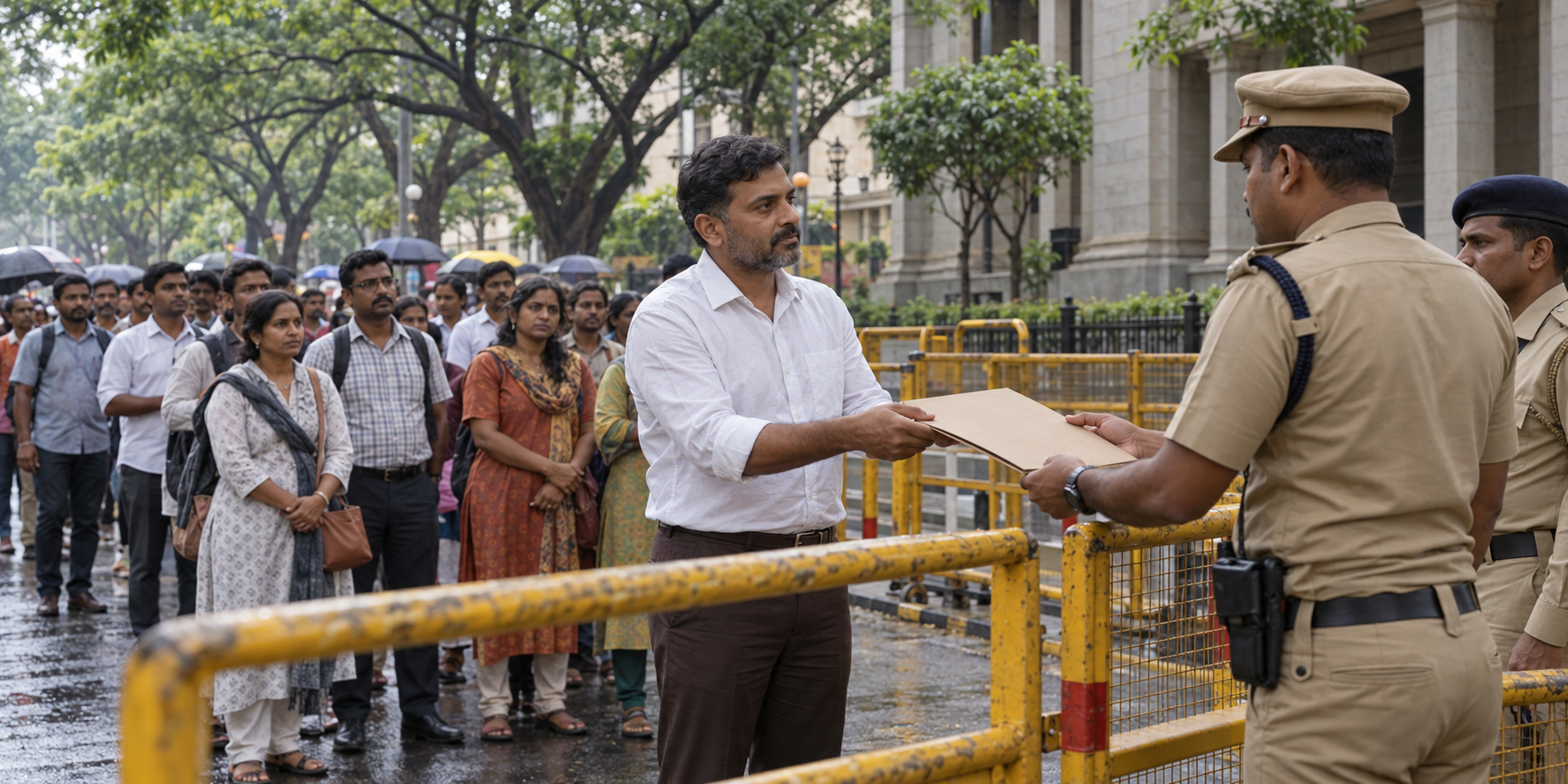
If you are organizing or joining an RSS path sanchalan in Karnataka, the immediate question is whether a letter informing the police allows the march to proceed. Under the position publicly stated by Priyank Kharge, it does not: organizers must submit a formal application to the competent authority and obtain approval before going ahead.
The danger is a simple but consequential category error. Proof that the police received your information is not proof that permission was granted. Until the responsible authority issues an affirmative decision, treat the event as pending, not approved.
The controlling distinction: notice, application and approval

Three different documents can appear similar in an organizer’s file, but they do different jobs. Keeping them separate prevents the most avoidable dispute.
| Document or status | What it establishes | What you should do |
|---|---|---|
| Intimation or notice | The authorities have been told about the proposed march. | Do not treat it as consent. Ask how to submit the prescribed permission request. |
| Formal application | The organizer has asked the competent authority for authorization. | Keep proof of filing, but regard the application as pending until a decision arrives. |
| Written approval | The authority has affirmatively permitted the event, possibly subject to conditions. | Check the approved route, time and conditions before briefing participants or proceeding. |
An inward stamp, diary number, email receipt or acknowledgement can prove that something was submitted. It does not, by itself, change a request into permission. For risk-management purposes, look for clear language stating that permission has been granted, together with a reference number and any attached conditions.
If the response only says “received,” “noted,” “forwarded” or “under consideration,” ask a direct written question: “Has permission for this path sanchalan been granted, and if so, under which order or reference and subject to what conditions?” Do not fill an administrative silence with your preferred answer.
The publicly stated position is not that every RSS march must be rejected. It is that requests will be considered under the established procedure and may be approved when found appropriate. That makes a complete application, rather than a bare notification, the organizer’s first practical task.
Build a permission file that an authority can actually assess

A route march affects more than the people walking in it. Police deployment, traffic control, transportation coordination, security and other logistical arrangements may all depend on the information supplied by the organizer. An application that omits the facts needed for those decisions invites delay, follow-up questions or refusal.
Kharge’s stated position does not identify a single statewide form, a fixed filing deadline, the governing legal provision or the competent office for every locality. Do not invent those details or rely on an old event file. Confirm the current procedure with the authority having jurisdiction over the proposed route.
- Identify the decision-maker. Ask the jurisdictional police office which authority receives and decides the application for that particular route. If the application must pass through more than one office, obtain that instruction in writing.
- Request the prescribed procedure. Ask whether there is a current form, required enclosure, filing method or minimum lead time. A previous year’s process may not answer what applies to the proposed event.
- Describe the event completely. Be ready to provide the organizer’s identity and responsible contacts, the date and proposed start and end times, assembly and dispersal points, the full route, expected participation and any feature that could affect traffic, transport or security planning.
- Submit well in advance. The stated administrative concern is that large or simultaneous marches require manpower and public-resource planning. Filing near the event date reduces the time available to resolve route or security concerns.
- Keep an exact copy and proof of receipt. Preserve the submitted application, maps and enclosures in the form in which they were delivered. Record the date, office, acknowledgement number and later communications.
- Wait for the decision. Ask for written approval, refusal or proposed modifications. If approval contains conditions, circulate the final authorized route and timing rather than an earlier draft.
This is an operational readiness list, not a claim that every item is a statutory requirement in every Karnataka jurisdiction. The competent authority must identify the applicable procedure. Your job is to remove ambiguity early and preserve a clear record of what was requested, supplied and decided.
If you are a participant rather than the applicant, ask the local coordinator for the approval reference before relying on a poster, social-media message or verbal assurance. That one check can reveal whether the event is approved, still pending or subject to a changed route.
Large programmes need event-by-event control
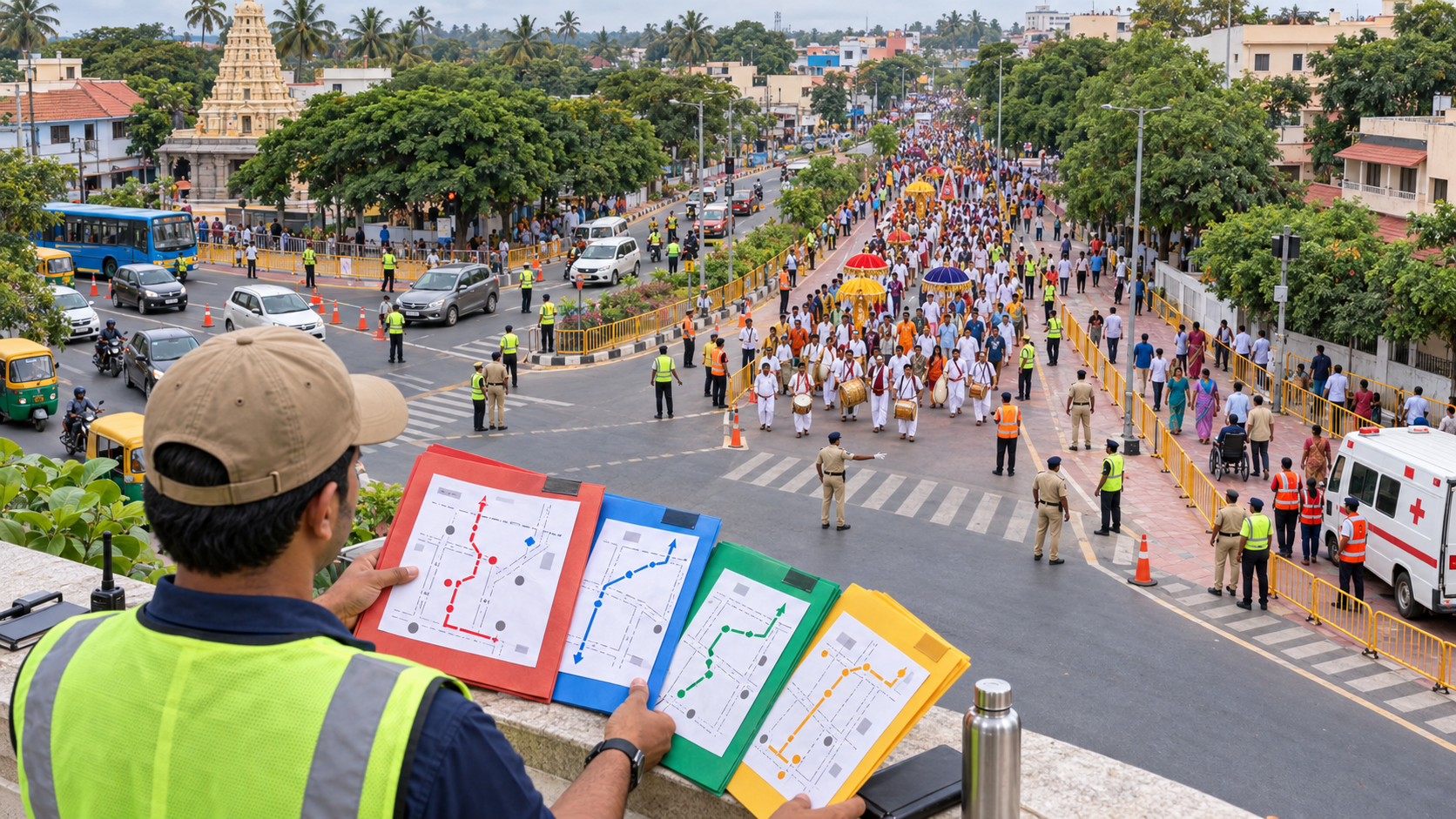
Scale is central to the Karnataka dispute. Kharge cited the RSS’s Akhil Bharatiya Pratinidhi Sabha Annual Report 2025-26 as recording 562 route marches involving 221,963 uniformed participants in Karnataka. Those figures explain why authorities focus on advance coordination, especially when several events may occur at the same time.
For a multi-district programme, do not assume that a state-level announcement, common circular or single covering letter authorizes each local procession. Unless the competent authorities expressly confirm otherwise, manage every proposed march as its own permission file.
- Maintain one central register listing each location, route, applicant, filing date and acknowledgement number.
- Give one named local coordinator responsibility for following the application through to a written decision.
- Flag routes or timings that may overlap with other marches, major gatherings or traffic-sensitive periods.
- Track “not filed,” “filed,” “clarification requested,” “approved,” “approved with conditions” and “refused” as separate statuses.
- Do not describe an event publicly as confirmed while its status is merely “filed.”
- Brief volunteers from the final approval, not from the original proposal, because the authorized route or timing may differ.
This discipline also protects the organization when officials claim that an application was incomplete or that no permission was sought. A dated file answers factual questions more effectively than competing recollections after the event.
If enforcement appears selective, document it without assuming permission
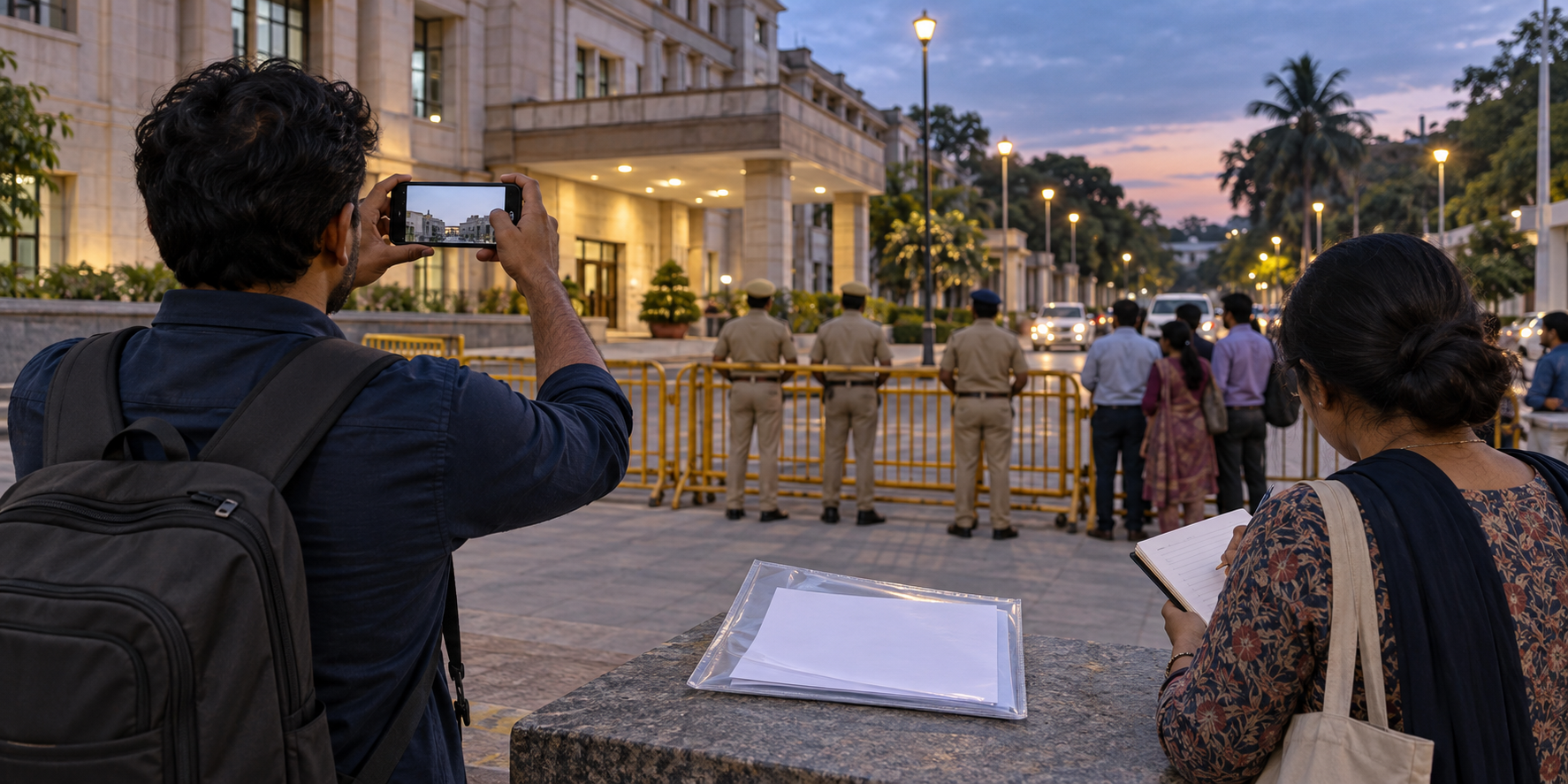
Equal treatment is a legitimate public issue. The BJP has accused the Congress government of using different standards, pointing to a Tiranga march that reportedly proceeded after Bengaluru police denied permission and asking whether the same requirements were applied to an Eid Milad procession. Those claims raise questions, but the available account does not establish the complete application files, official orders or legal outcomes for the comparator events.
The practical rule is important: an alleged failure to enforce the law against another procession does not convert your intimation into approval. Proceeding on that theory may create legal and public-order exposure while leaving the unequal-treatment question unresolved. Compliance and challenge are two separate tracks.
If you believe an RSS application has been treated differently, build the comparison around verifiable records:
- Preserve your complete application, acknowledgement, correspondence, decision and every condition imposed.
- Request the applicable rule, order or procedure and ask for the reasons for any refusal or route restriction in writing.
- For a comparator event, look for its actual application, approval or refusal order rather than relying only on photographs showing that a procession occurred.
- Compare relevant features such as jurisdiction, route, timing, expected crowd, simultaneous events and security assessment. Unequal outcomes are most probative when the underlying circumstances are genuinely alike.
- Create a dated chronology of communications and events. Separate what an official document proves from what has merely been reported or alleged.
If permission is refused, remains unclear close to the proposed date, or appears discriminatory, consult a Karnataka advocate familiar with public-procession and administrative matters. The advocate can examine the current legal instrument, the actual order and the available avenue for challenge. General information cannot determine whether a particular march may lawfully proceed.
Key takeaways
- Under the Karnataka position described publicly, telling the police about an RSS path sanchalan is not the same as obtaining permission.
- Organizers should submit a formal application to the competent authority, supply enough information for traffic and security planning, and await an affirmative decision.
- A receipt or acknowledgement proves submission, not approval.
- No uniform form, precise deadline or jurisdiction-by-jurisdiction authority is identified in the public statements discussed here, so verify the current local procedure instead of guessing.
- For coordinated programmes, track every local event and its permission status separately.
- Possible selective enforcement should be documented and challenged lawfully; it should not be treated as authorization to proceed without approval.
If a path sanchalan is being planned, make the permission file the first deliverable, not the final formality. Confirm the competent authority, file early, obtain a written decision and brief participants only from the approved terms. That is the clearest way to protect both the march and the principle of equal application of the law.
References

Leave a Reply
You must be logged in to post a comment.