
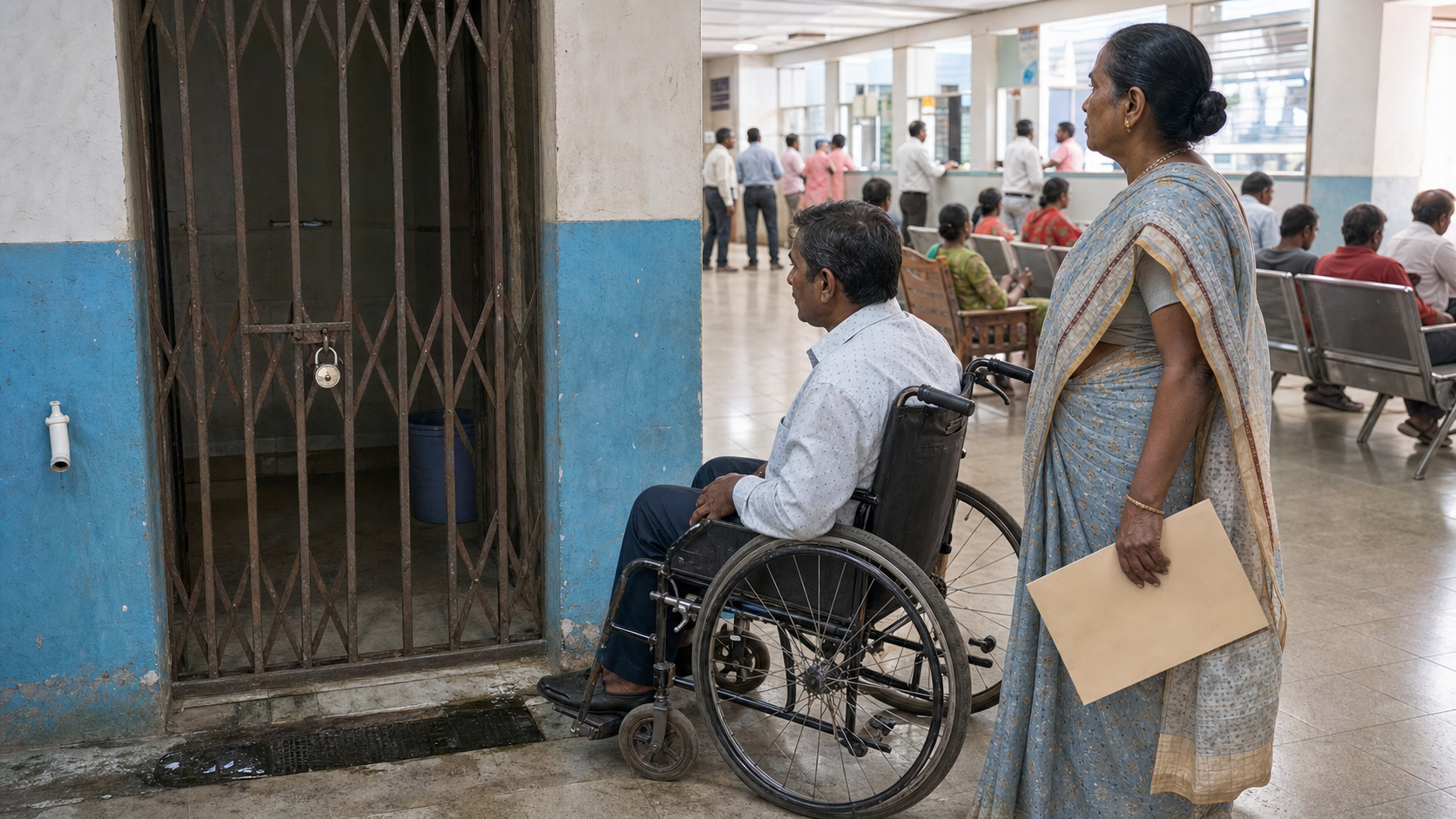
You walk into a government office to obtain a certificate, settle a land matter, collect a pension document, or complete another essential task. Then you find the toilet locked, overflowing, dark, without water, or impossible to use with limited mobility. That isn’t a minor inconvenience. It can determine whether you are able to remain in the building long enough to receive a public service.
You don’t need to reduce that experience to a vague complaint that the toilet was dirty. Record the exact failure, request a specific remedy, and create an escalation trail. That turns an unpleasant encounter into an accountable service-delivery issue.
This is a public-duty failure, not a housekeeping inconvenience
A public toilet is functional only when a person can reach it, enter it safely, use it with privacy, wash their hands, and leave without being exposed to an avoidable hazard. A freshly painted room with a dry tap is not functional. Nor is an accessible cubicle that remains locked, a women’s facility without a working latch, or a toilet that is technically open but too dark to use safely.
The legal foundation is stronger than many citizens realise. Indian constitutional jurisprudence has connected environmental sanitation and hygienic public spaces with the right to life under Article 21. In Municipal Council, Ratlam v. Vardichand (1980), the Supreme Court required a local body to abate a public-health nuisance despite its plea of financial constraint. In Virendra Gaur v. State of Haryana (1995), the Court treated sanitation as part of a healthy environment. These decisions do not automatically decide every toilet complaint, but they explain why an authority should not dismiss sanitation as optional beautification.
The health mechanism is straightforward. A blocked fixture, intermittent water, missing soap, contaminated surfaces, poor ventilation, pests, and unmanaged waste can increase exposure to fecal-oral disease transmission. Standing water and broken flooring create additional risks. If sewage is actively overflowing or water has reached electrical equipment, avoid contact, alert office staff immediately, and ask that the affected area be isolated. An online form is not an adequate first response to an immediate physical hazard.
Dignity also has a practical meaning. A person who cannot safely use the toilet may have to abandon a queue, postpone an application, avoid drinking water, or depend on an unsafe alternative. The burden falls especially heavily on elderly visitors, women, children, people managing menstruation, and persons with disabilities. In that sense, sanitation failure can become unequal access to government itself.
The Rights of Persons with Disabilities Act, 2016 and the Harmonised Guidelines issued in 2021 place barrier-free access within the legal and administrative framework for public buildings. An accessible facility requires a usable route, appropriately designed ramp, sufficiently wide doorway, adequate wheelchair turning space, grab bars, anti-slip flooring, and reachable faucets and flush controls. A wheelchair symbol on an ordinary narrow cubicle does not satisfy the purpose.
Record conditions that an officer can verify and correct
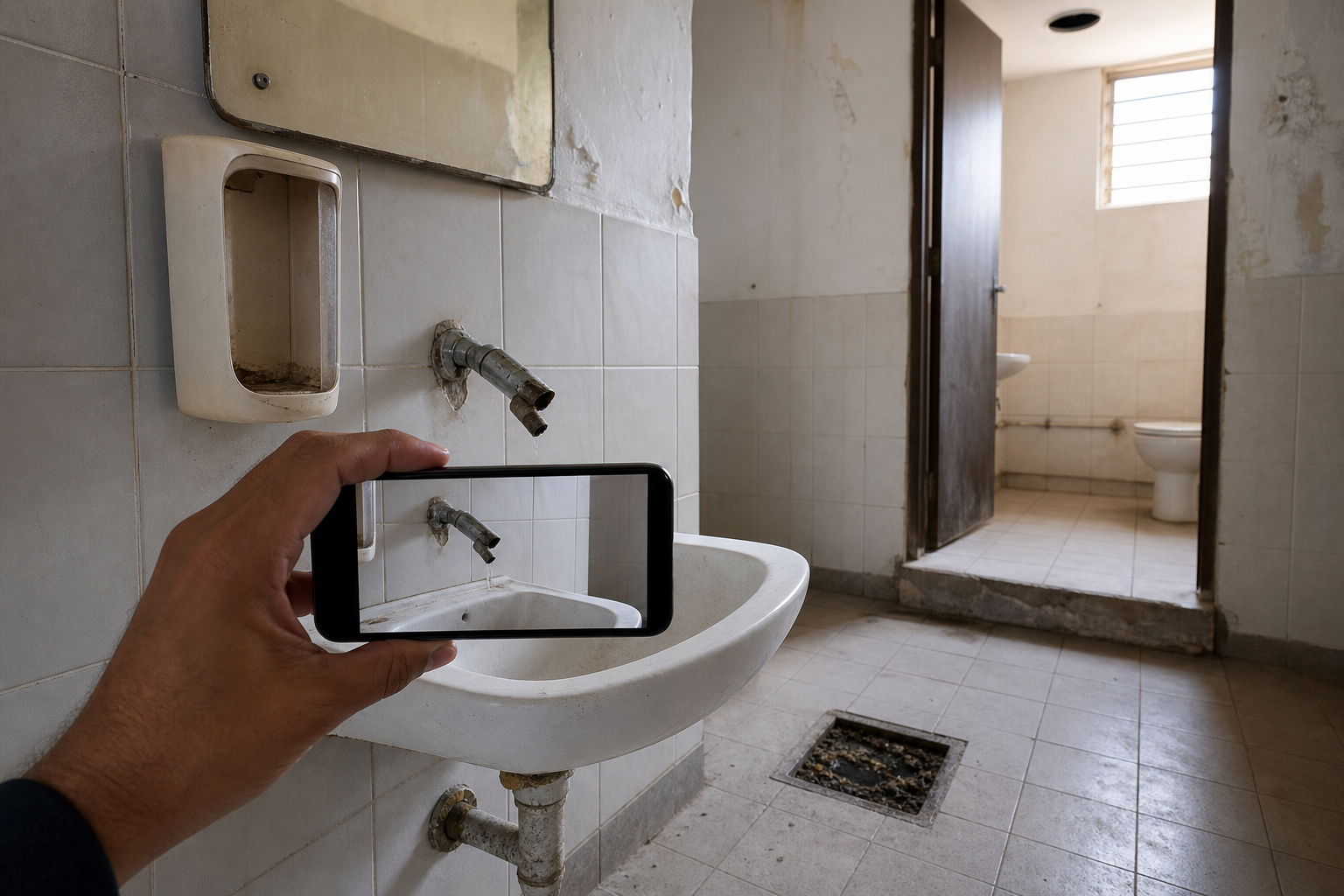
Before escalating, separate what you observed from what you assume. You may know that the tap produced no water at 11:20 a.m.; you probably do not know whether the cause was an empty tank, a closed valve, a broken line, or a vendor lapse. Report the first fact and request investigation of the second. This keeps your complaint credible and prevents an unsupported accusation against an individual worker.
A useful inspection note can be made in a few minutes. Record:
- The office name, building or floor, and exact toilet location.
- The date and time. Conditions can change during the day, so avoid saying always or never unless you have records supporting it.
- Whether the facility was open, unlocked, and clearly identified by signage.
- Whether water was available at the basin, toilet, and flush mechanism. Do not make claims about water quality without evidence.
- Whether soap or another handwashing provision was present and usable.
- Whether toilets, urinals, basins, drains, doors, latches, and flushes worked.
- Whether there was overflow, blockage, standing water, visible waste, severe odour, pests, or an obvious slip hazard.
- Whether lighting, ventilation, privacy, and the route to the toilet were adequate.
- Whether the accessible cubicle could actually be approached and entered, and whether its grab bars, turning space, floor surface, faucet, and flush were usable.
- Whether the women’s facility had a safe sanitary-waste bin and whether disposal arrangements appeared functional.
- Whether a cleaning log, responsible contact, complaint register, helpline, or QR feedback code was displayed.
Photographs can support the note, but privacy comes first. Photograph an empty facility, a broken fixture, a dry tap, or an obscured sign without capturing users, children, personal documents, or intimate activity. Do not enter a facility you would not ordinarily use merely to obtain an image. Preserve the original files and your dated note; edited images alone are easier to dispute.
Write the complaint around remedies rather than disgust. A clear structure is: where and when you observed the problem; the specific defects; who is prevented from using the facility safely; the immediate actions requested; the longer-term correction requested; and the evidence attached. Ask for an acknowledgement, inward number, grievance reference, or stamped copy.
For example, request restoration of water and soap, repair of the latch and flush, cleaning of the overflow, safe closure of any hazardous cubicle, and confirmation of the officer responsible for follow-up. If the problem has recurred, also ask for the cleaning schedule, inspection, and preventive-maintenance response. The difference matters: cleaning one floor treats today’s symptom; changing the operating routine addresses why it keeps returning.
Route the complaint without letting responsibility disappear

Government premises can involve several actors. The department controlling the building may hold administrative responsibility, the Public Works Department may support civil or plumbing repairs, and a private housekeeping vendor may perform daily cleaning. In a Maharashtra Tehsildar office, the Revenue administration and District Collector commonly sit within that chain. Jurisdictional overlap is not a reason to leave a public-facing toilet unusable: the officer in charge of the premises remains responsible for ensuring that facilities function hygienically during working hours.
Use a simple escalation ladder:
- Report an immediate hazard to staff on site. Then submit the written complaint to the Tehsildar, office head, designated grievance officer, or inward desk. Keep proof of submission.
- If the defect is not corrected, or no accountable response arrives, forward the original complaint and its reference to the District Collector. State what remains unresolved rather than rewriting the entire account.
- Use the relevant departmental, state, or central grievance system where available. CPGRAMS may be an appropriate channel for matters within its scope, but routing depends on the authority involved. Include the prior reference and ask for an action-taken response.
- Use the Right to Information process to obtain existing maintenance records when recurring failure, unclear responsibility, or unsupported claims of compliance need to be examined.
Do not send the complaint only to the housekeeping contractor. A vendor may be responsible under a contract, but the public authority controlling the premises cannot make its duty to citizens disappear by outsourcing the cleaning work. Let the authority determine contractual fault while you keep the complaint focused on restoration of service.
An RTI application serves a different purpose from a grievance. A grievance asks the authority to act. RTI asks for records that already exist. If the toilet presents an active hazard, file the complaint immediately and use RTI in parallel or afterward; waiting for records can leave the danger unaddressed.
For a defined period and facility, useful RTI requests may seek certified copies of:
- The housekeeping work order, contract, service-level conditions, and name or designation of the supervising officer.
- The approved cleaning frequency, duty roster, daily checklist, consumables record, and maintenance log.
- Inspection reports, sanitation scorecards, complaints received, and action-taken entries.
- Repair requisitions or correspondence concerning water, plumbing, lighting, doors, accessibility, drainage, or ventilation.
- Records of payments, performance deductions, penalties, or corrective notices under the housekeeping contract, where such records exist.
- The operation-and-maintenance budget or approved expenditure for the facility.
Ask for identifiable records rather than posing broad questions such as why the toilet was dirty. RTI generally works better when the public information officer can locate a file, register, contract, log, report, or correspondence. Keep the time period proportionate to the problem so that the request remains precise.
If you are considering litigation, compensation, or a formal allegation against a named person, preserve the unedited evidence and obtain advice from a lawyer familiar with the relevant facts and jurisdiction. Constitutional principles support the seriousness of sanitation, but they are not a substitute for analysing the correct respondent, available remedy, evidence, and procedure in an individual case. Avoid publishing personal accusations that your records do not establish.
Demand an operating system, not one ceremonial deep-clean
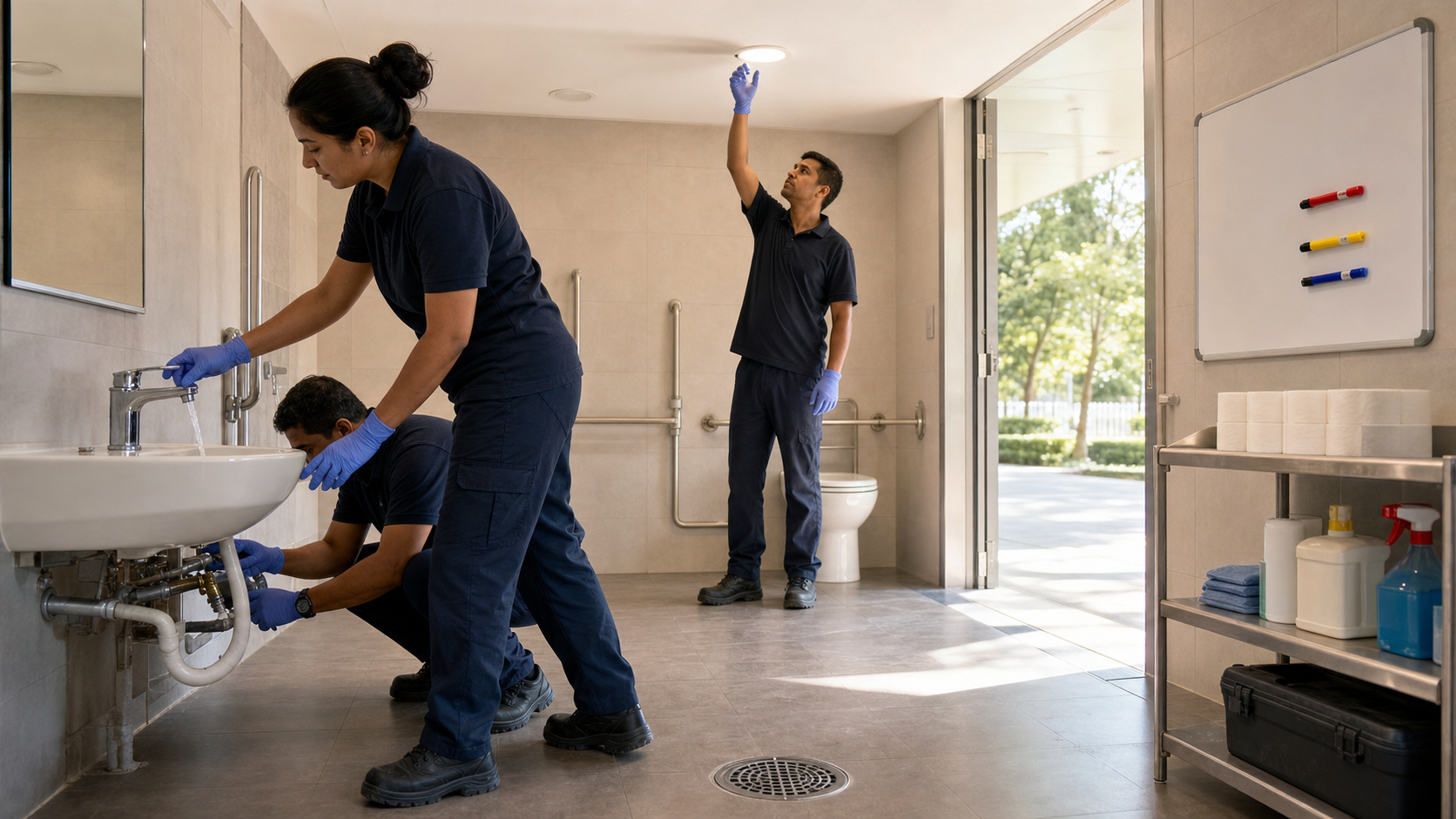
The most visible response to a complaint is often a cleaning drive. It can make the room usable again, but it will not keep water in the tank, soap in the dispenser, a latch on the door, or a trained worker on the roster. Lasting improvement needs an operation-and-maintenance system with named responsibility, supplies, repair authority, inspection, and a budget.
A practical 30-60-90 day sanitation programme gives citizens and administrators observable milestones. The periods below are management windows, not permission to leave an overflow, electrical risk, broken lock, or inaccessible essential facility unattended until a deadline.
| Window | Actions to require | Evidence of completion |
|---|---|---|
| First 30 days | Restore reliable water, soap, handwashing, flushes, locks, lighting, and ventilation; deep-clean the facility; isolate hazards; begin daily cleaning logs; display a grievance contact or QR feedback route. | Working spot-checks during public hours, stocked consumables, dated logs, repaired fixtures, and a visible complaint channel. |
| By 60 days | Complete minor plumbing and civil work; add clear Marathi and English signage; install menstrual-hygiene disposal bins; correct feasible access barriers; organise janitor storage; retrain the vendor; and establish consumables inventory control. | Completion and inspection records, usable accessibility features, trained duty staff, maintenance entries, and evidence that supplies are replenished. |
| By 90 days | Embed service levels in contracts; link vendor payment to performance; conduct monthly or independent audits; schedule preventive maintenance; brief staff; and publish a concise sanitation compliance note. | Monthly scorecards, complaint and resolution times, audit findings, contract-monitoring records, and public disclosure of outstanding defects and corrective action. |
Three distinctions help you ask for the right fix.
- A cleaning failure concerns frequency, technique, staffing, supplies, or supervision. The response belongs in the daily roster, checklist, and vendor service level.
- A repair failure concerns a broken tap, drain, flush, light, door, pipe, fan, or other fixture. It needs a recorded work order, responsible maintenance unit, completion date, and verification.
- A design or capacity failure concerns too few fixtures, an unusable route, narrow doors, inadequate turning space, poor drainage, or an inherently unsafe layout. The National Building Code of India, 2016 provides public-building fixture and plumbing baselines, including ratios connected to occupancy. A housekeeper cannot solve an architectural shortfall.
Accessibility must be tested in use, not only shown on a plan. Check whether the route is obstructed, whether a ramp has an appropriate gradient, whether a wheelchair can turn, whether grab bars are stable, and whether controls can be reached without unsafe movement. Likewise, a women’s facility needs privacy, lighting, working latches, and menstrual-waste arrangements. These are conditions of equal access, not premium additions to be considered after ordinary maintenance.
Monitoring should measure what a visitor experiences. Cleaning-frequency compliance, water and soap availability, unresolved defects, complaint-resolution time, user feedback, and periodic inspection results are more useful than a signed checklist by itself. Photo verification can help, but an officer should still spot-check taps, locks, lights, floors, and accessible features. A form saying completed does not make a dry tap run.
Funding should also follow the lifecycle of the facility. A one-time renovation without money for consumables, minor repairs, preventive maintenance, and trained staff will decay. Ring-fenced operation-and-maintenance funds, annual maintenance arrangements, and performance-linked vendor payments give the supervising officer tools to correct repeated failures instead of ordering another temporary clean-up.
The dignity of sanitation workers belongs inside the same accountability framework. They need gloves, masks, boots, mechanised equipment, safe storage for chemicals, training, and realistic duty rosters. The Prohibition of Employment as Manual Scavengers and Their Rehabilitation Act, 2013 must be observed in letter and spirit. No complaint about cleanliness should become pressure for a worker to perform hazardous manual practices. If an onsite septic system requires desludging, demand recorded, mechanised handling and conveyance to an authorised treatment facility.
This is also where dharmic ethics become concrete civic conduct. Shauch directs attention to cleanliness in the spaces we share. Ahimsa requires us to prevent avoidable harm to visitors and workers. Seva asks whether an institution serves the elderly pensioner, the mother caring for an infant, and the citizen with limited mobility when assistance is most needed. Cleanliness can be contracted administratively, but responsibility for human dignity cannot be outsourced morally.
Key takeaways
- Describe exact defects, locations, dates, and times. Dirty is an opinion; no water at a named basin at a recorded time is a verifiable service failure.
- Report overflows, wet electrical areas, severe slip hazards, and unusable essential facilities to on-site staff immediately. Do not wait for a portal response before flagging an active danger.
- File first with the office head and retain an acknowledgement. If the failure continues, escalate the same record to the District Collector and the relevant grievance channel.
- Use RTI to obtain contracts, logs, inspections, repair records, and action-taken files. It creates transparency but does not replace a request for immediate correction.
- Ask for separate responses to cleaning, repair, accessibility, and capacity failures. Each has a different responsible process.
- Judge success by working water, soap, locks, lighting, safe access, timely repairs, protected sanitation workers, and resolved complaints – not by a one-day cleaning photograph.
At your next visit, make one dated observation, submit one remedy-focused complaint, and retain its reference number. If action does not follow, escalate the same facts instead of beginning again with a new general grievance. That paper trail is how private discomfort becomes public accountability – and how a neglected toilet becomes a test of whether a government office truly serves everyone with dignity.