
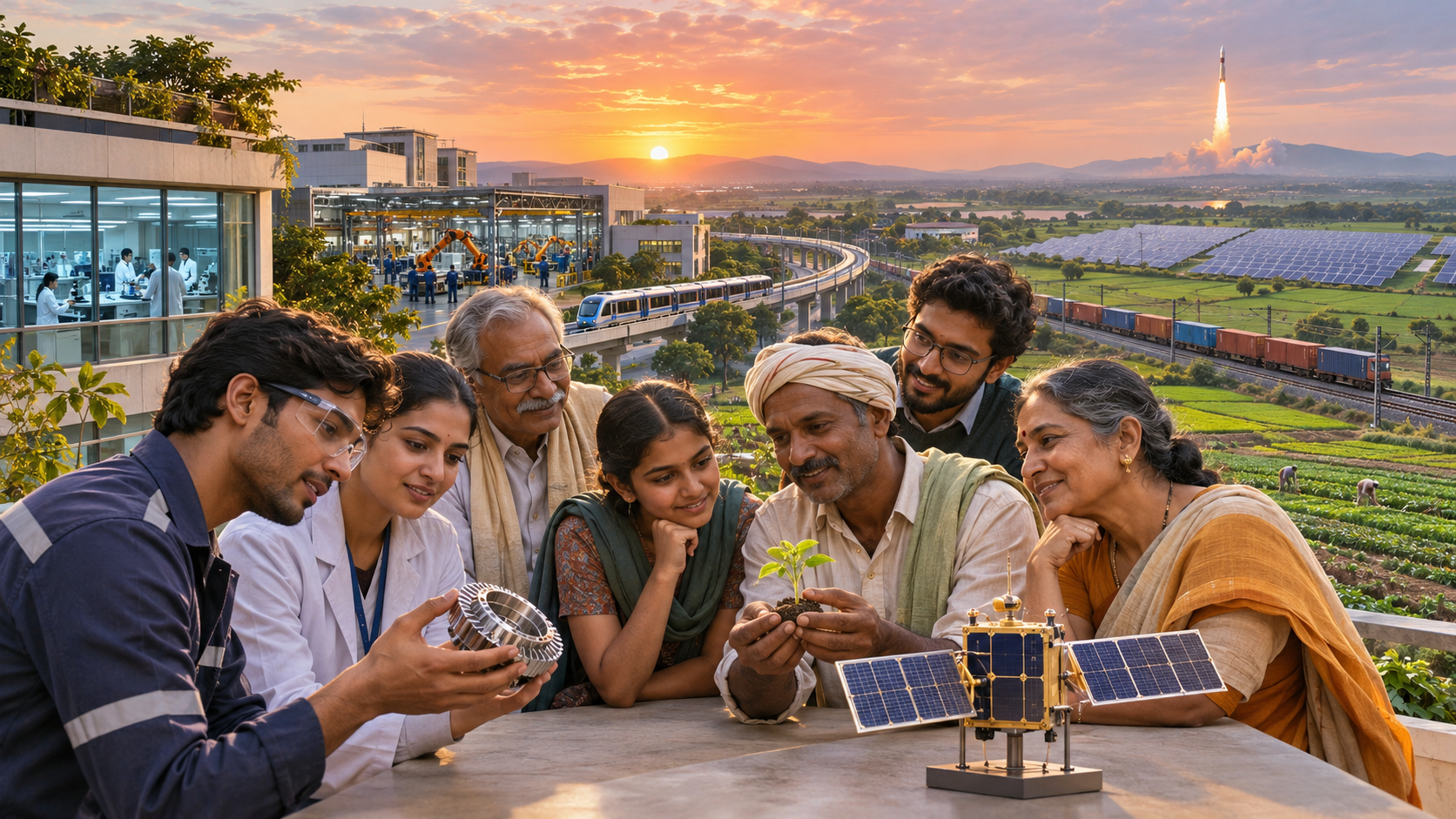
You may want to celebrate Bharat’s gains without becoming gullible about every triumphant headline. That is a sound instinct. National pride deserves more than applause; it needs a method for separating a promising milestone from a durable national capability.
The useful question is not simply, “Is Bharat rising?” Ask what is rising, what made it possible, whether it can be repeated, and how you can strengthen it. That turns pride from a passing emotion into informed participation.
Give national pride three tests: fact, capacity and Dharma
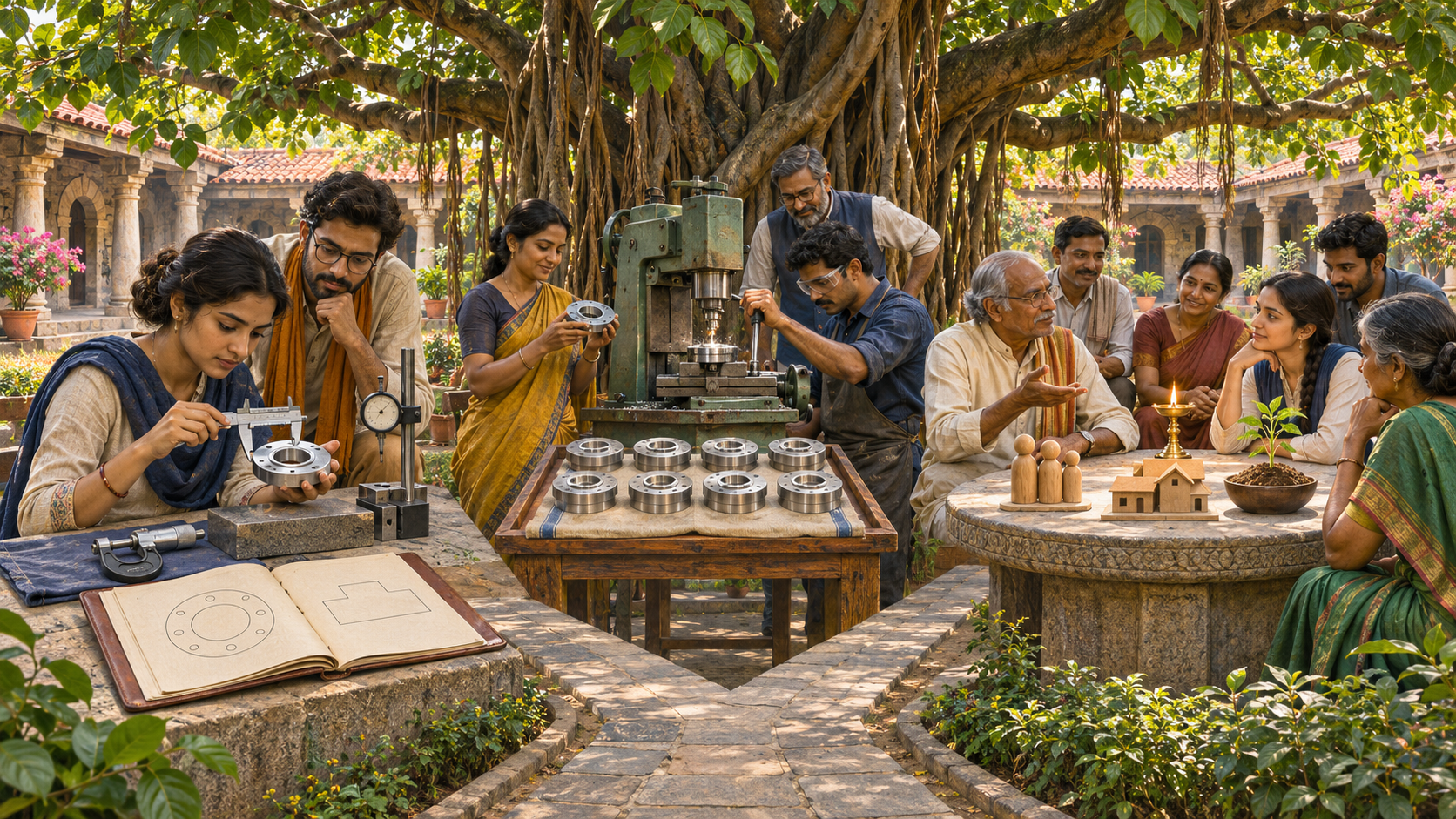
Healthy pride begins with facts, but it cannot end there. A medal, a new facility or a large export figure tells you that something important happened. It does not, by itself, tell you whether the achievement is widespread, resilient or likely to endure.
Use three tests whenever you encounter a claim about Bharat’s progress:
- The fact test: What exactly happened? Look for the measure, period, location and comparison. “Exports are booming” is a slogan. A percentage, value and reporting period give you something you can examine.
- The capacity test: What repeatable ability sits behind the result? A student medal may reveal exceptional talent and training. A manufacturing number may point to productive capability. A new institution may create access to knowledge. The capacity matters more than the celebratory language around it.
- The Dharmic test: What duties accompany the achievement? Ask whether progress enlarges knowledge, dignified work, ecological responsibility and service to society. Power without right purpose may be national strength in a narrow sense, but it is not a complete civilizational rise.
This framework prevents two common errors. The first is cynicism, which dismisses every success because other problems remain. The second is triumphalism, which treats one success as proof that every underlying problem has been solved. You can acknowledge a genuine advance and still ask what must happen next.
Read Bharat’s rise as a chain of capabilities
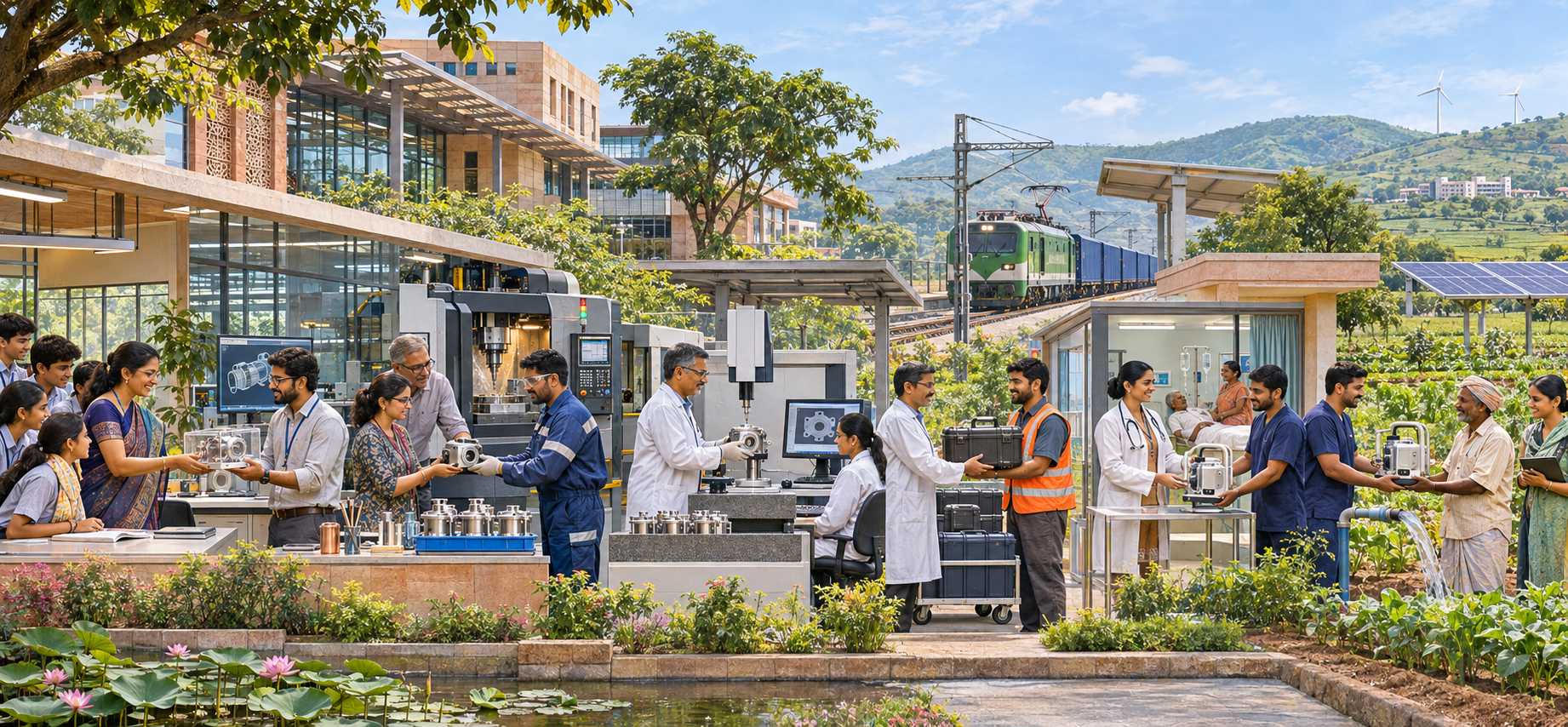
A nation does not rise through one sector or one spectacular event. Talent, institutions, production, infrastructure and adoption reinforce one another. Recent achievements offer a practical way to see that chain.
Talent must be connected to institutions
Bharatiya students won two gold, two silver and one bronze medal at the fifth International Olympiad on Astronomy and Astrophysics for Juniors, held in Thailand from 1 to 8 November 2026. The team earned five medals among participants from 25 countries.
That is a concrete achievement. The wrong response is to inflate it into a verdict on the entire education system. The better response is to identify the capacity it reveals: young people with scientific curiosity can reach an international standard when talent, preparation and opportunity meet.
You can act on that insight locally. Ask whether students around you know that astronomy and astrophysics are open to them. Help a school or community group locate science clubs, competitions and public learning facilities. Celebrate the medal winners, but direct the resulting attention toward the next group of learners.
Institutions can widen that path. The COSMOS Planetarium on the University of Mysore campus, inaugurated on 13 November 2026, is described as Bharat’s first LED dome planetarium. Its advanced visual presentations are intended to help students, researchers and other visitors engage with astronomy and space science.
The opening is a milestone; its lasting value will depend on use. When you assess a new educational facility, look beyond the inauguration. Watch whether schools can access it, whether programming remains active, whether teachers incorporate it into learning, and whether curiosity leads to further study. A building becomes national capability only when people repeatedly use it.
Production must be distinguished from headlines
Bharat’s electronics exports increased by 44% to US$31.97 billion during April-September 2026-27. Total exports reached approximately US$568.84 billion between April and October 2026.
These figures matter because exports face an external test: someone in another market must choose and pay for what Bharat produces. Yet the figures answer only the first question. To judge whether growth is becoming durable, continue asking how much value is created within Bharat, whether suppliers are deepening their capabilities, whether quality is repeatable, and whether firms can keep competing when conditions change.
You do not have to choose between celebrating growth and examining its foundations. Do both. Record the period and baseline when sharing a number. Do not convert a six- or seven-month figure into an unsupported annual claim. And do not treat export value as automatic proof of technological self-reliance; it is evidence of market performance, not an answer to every question about the production chain.
Infrastructure must produce usable outcomes
Installed solar capacity reached approximately 174.55 GW by October 2026. This is a significant measure of infrastructure creation, but installed capacity is not the same thing as electricity generated at every hour or energy delivered wherever it is needed. When following Bharat’s energy transition, keep capacity, actual generation, grid integration and reliability as separate questions.
The same discipline applies to emerging technology. Microsoft, NITI Aayog’s Atal Innovation Mission and Samhita-Collective Good Foundation are exploring ways to use artificial intelligence for small-business empowerment. “Exploring” is the important word. It describes an initiative under development, not a completed transformation.
Judge such efforts by the friction they remove for an actual enterprise. Does a tool reduce repetitive work, improve access to useful knowledge or help a small firm compete more effectively? Can the owner use it without unaffordable infrastructure or specialist staff? National capability grows when advanced technology becomes practical for people outside a narrow technical circle.
A civilizational rise must change everyday conduct
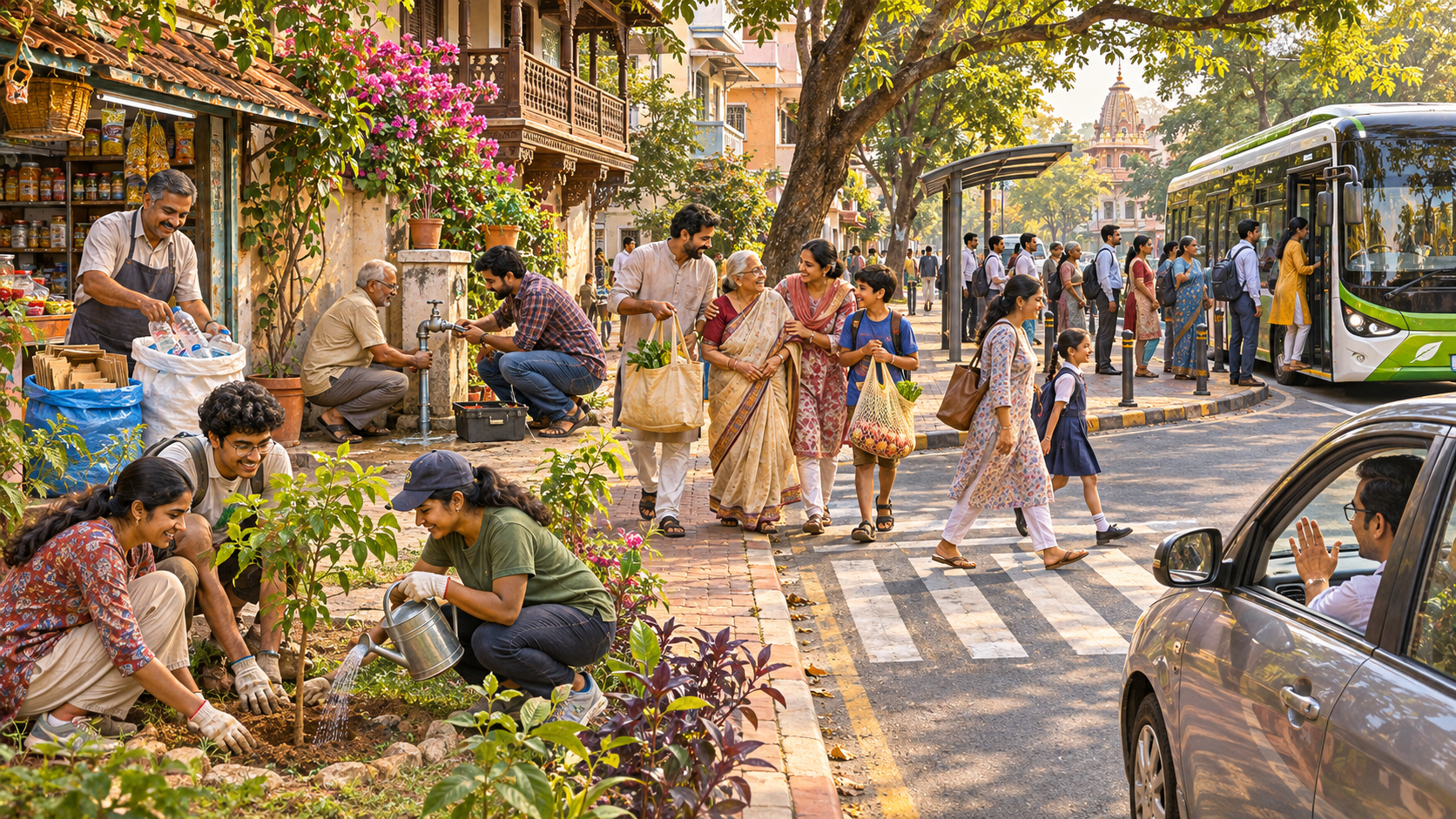
Economic scale and scientific achievement are necessary parts of Bharat’s rise, but they are not the whole of it. A civilization also rises when inherited wisdom becomes a living discipline rather than a decorative memory.
Tulsi Vivah illustrates the distinction. Celebrated on Kartik Shukla Dwadashi, it ceremonially joins the sacred Tulsi plant with Bhagwan Vishnu in the form of Shaligram. Tulsi is associated in Hindu tradition with purity, devotion and prosperity, and families have long cultivated the plant at home and offered daily prayers. The practice places a living plant inside the household’s field of reverence and responsibility.
Its environmental value should neither be mocked nor exaggerated. One ritual cannot substitute for serious work on pollution, deforestation, water use or biodiversity. Its distinct contribution is moral formation: nature is encountered as something worthy of care, not merely as raw material available for consumption.
If you observe Tulsi Vivah, let the ritual govern a few visible choices. Use natural or biodegradable decorations instead of plastic. Avoid wasting water. Care for the plant after the festival rather than treating it as temporary scenery. Plant additional greenery where you can sustain it. Explain to children why the plant is being honoured and what daily responsibility follows from that honour. These practices carry the festival’s ecological message into ordinary life.
This is a useful standard for every claim about civilizational renewal. Ask what habit it restores, what duty it teaches and what problem it helps you address. Heritage that changes conduct is alive. Heritage used only as a badge of superiority has been reduced to branding.
Turn pride into a weekly discipline

You do not need to wait for a government programme or a grand national campaign to participate. Use the following discipline whenever a promising achievement reaches you:
- Write down the exact claim. Preserve the number, period and link. This stops a precise achievement from becoming an exaggerated message after repeated sharing.
- Classify what it represents. Is it an individual achievement, a new institution, productive output, installed infrastructure or a proposed initiative? Different categories require different follow-up questions.
- Name the missing measure. A medal does not measure access across all schools. An inauguration does not measure continued use. export value does not reveal every layer of domestic capability. Installed capacity does not equal actual generation. An exploratory partnership does not equal adoption.
- Find the next capability. Ask what must exist for the gain to repeat: better teaching, regular institutional programming, skilled suppliers, reliable infrastructure, accessible tools or responsible household practice.
- Choose one contribution within reach. Mentor a student, support serious science learning, help a small enterprise understand a useful technology, reward quality production, reduce disposable plastic or teach the meaning behind a family observance. Small action is not a replacement for national policy, but it is how public achievement acquires social depth.
- Review the claim after three months. Look for continuity rather than another burst of publicity. Has access expanded? Is the facility active? Has an initiative moved from exploration to practical use? Pride becomes informed when you follow the second chapter.
This approach also improves what you share with others. Instead of forwarding a slogan, add one sentence explaining the capability behind the achievement and one question about the next step. You help create a culture that can celebrate without surrendering judgement.
Key takeaways
- Bharat’s rise is best judged through repeatable capabilities, not the emotional force of a headline.
- Student medals, scientific institutions, export growth, solar capacity and emerging technology initiatives measure different stages of national development; none should be used as a substitute for the others.
- A Dharmic national confidence joins achievement to duty, including the duty to spread knowledge, deepen productive capacity and care for nature.
- You can participate by preserving accurate facts, asking what remains unmeasured and supporting one capability in your own sphere.
Choose one achievement this week and follow it beyond the celebration. Verify the exact claim, identify the capability beneath it, then take one action that helps that capability travel farther. Bharat’s rise becomes durable when national pride produces careful attention, disciplined work and seva.
References

Leave a Reply
You must be logged in to post a comment.