
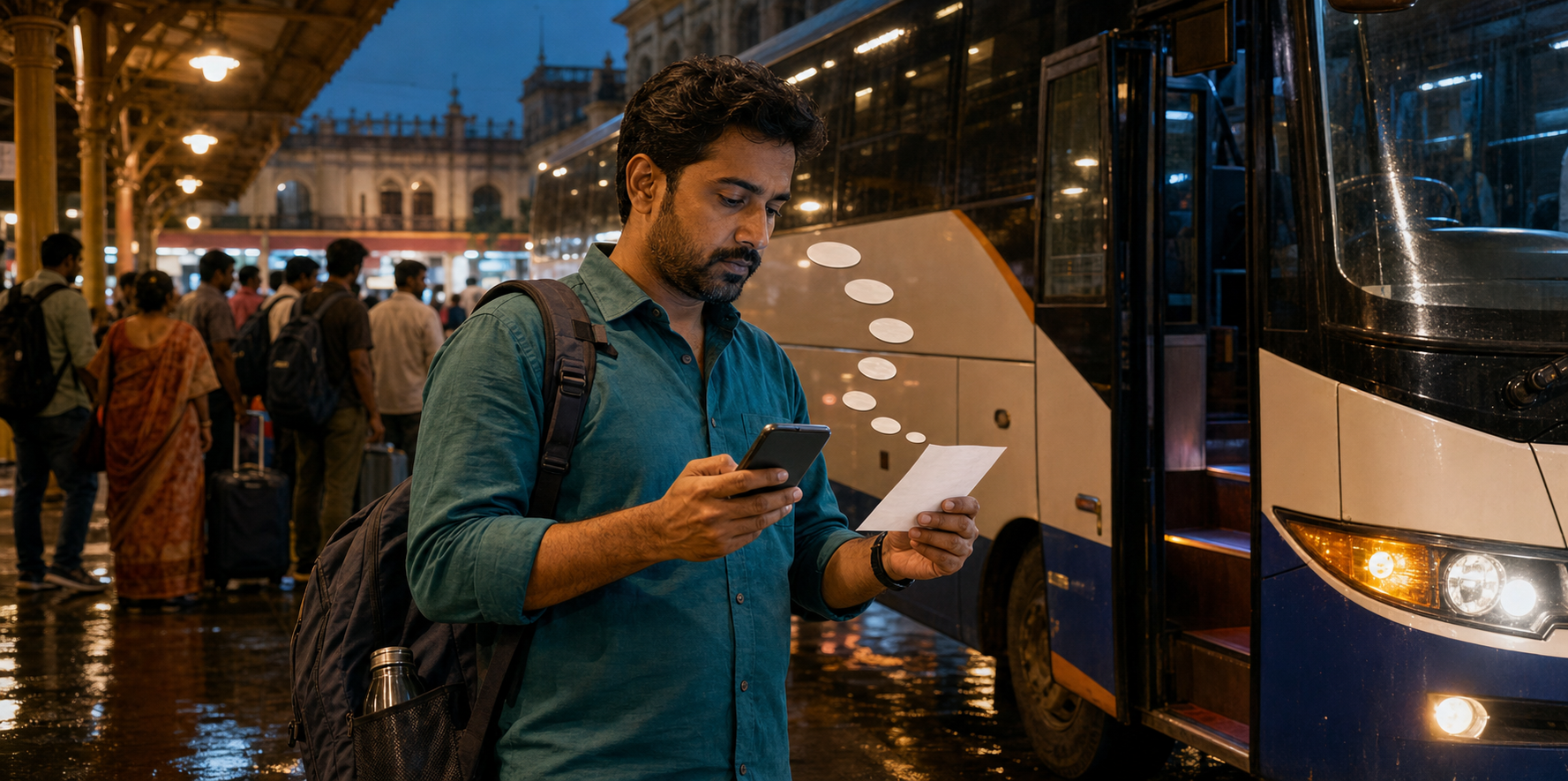
Your bus ticket can look affordable in the search results, then become more expensive as convenience charges, seat fees, baggage costs, or other additions appear at checkout. If you are travelling on a weekend, holiday, or during a festival, waiting for a clearer price may also mean losing the seat.
Maharashtra has committed to pursuing a dedicated law on private-bus fares and online travel aggregators. That could bring overdue discipline to the market. If you are booking now, however, the crucial point is this: an intention to regulate fares is not yet the same thing as a notified fare table that you can enforce against every operator.
The commitment is real, but it is not yet a fare chart
The policy shift has two parts. The longer-term part is a proposed law intended to restrain overcharging and establish rules for online travel aggregators. The immediate administrative directions concern illegal ticketing apps, improvements to MSRTC helplines, and the use of official place names across travel portals.
The distinction matters when you challenge a charge. The commitment described here does not itself specify a statewide rupee ceiling, a route-by-route fare table, a commencement date, or a universal deadline for refunds. It also does not settle how ordinary seats, air-conditioned coaches, sleepers, and premium coaches will be classified. A high fare may be objectionable without yet violating a particular notified ceiling.
For now, treat the proposed regulation as a clear policy direction rather than a receipt-level entitlement. You can still challenge an undisclosed fee, a misleading price display, a refund that contradicts the stated terms, or an operator whose identity and permissions cannot be verified. Just do not weaken a valid complaint by citing a fare cap whose amount, scope, or effective date has not been established for your journey.
Key takeaways
- Maharashtra intends to regulate private-bus fares and booking platforms, but the policy commitment alone does not prove that a particular fare is unlawful.
- Judge the all-in checkout total, not merely the first price shown in search results.
- Compare the same route, travel date, boarding point, departure time, and bus category before alleging an unexplained markup.
- Save the listing, checkout page, fee breakdown, cancellation terms, ticket, invoice, payment reference, and written replies.
- Once rules are notified, check their effective date and their coverage of your route, permit type, service class, operator, and booking platform.
Capture the evidence before the price disappears
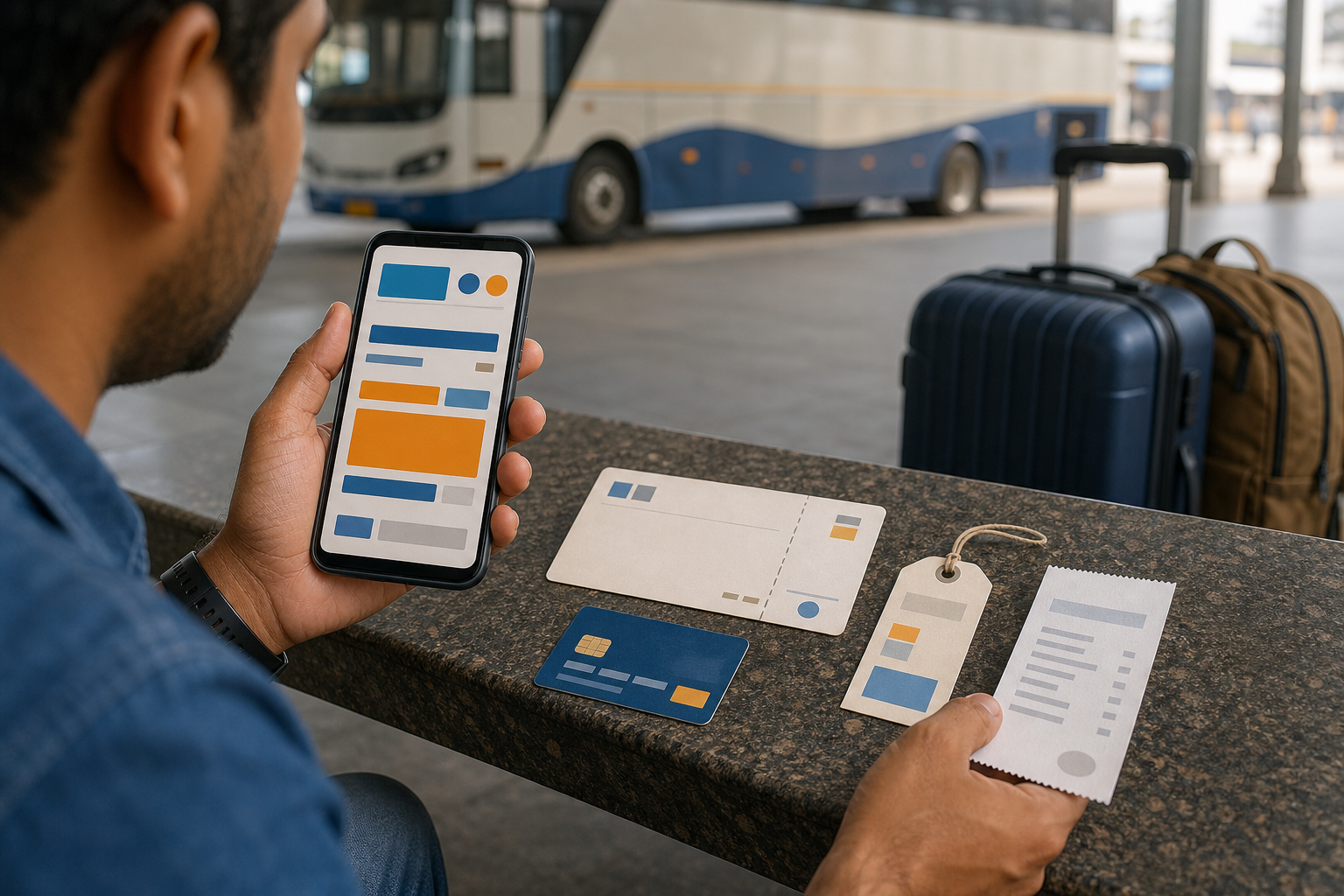
Dynamic prices and changing booking screens create a practical problem: by the time you complain, the price you saw may no longer be visible. A bank debit proves how much you paid, but it usually does not prove what the platform displayed earlier, which charges were disclosed, or which cancellation promise you accepted.
Build a small evidence bundle while you book:
- Record the seller. Save the website address or app name, the platform’s stated business identity, the bus operator’s name, and any vehicle or permit details displayed. A familiar logo is not a substitute for an identifiable merchant and operator.
- Record the exact journey. Include the origin, destination, boarding point, travel date, departure time, seat or berth type, and bus category. These details matter because a premium sleeper cannot be fairly compared with an ordinary seat.
- Take two price screenshots. Capture the first fare shown in the results and the final page immediately before payment. Make sure the images show the base fare and any convenience, seat-selection, baggage, tax, or other mandatory charge.
- Save the cancellation and refund terms before paying. Capture the deductions at each cancellation stage, what happens if the operator cancels, any force-majeure exception, and the promised refund method.
- Preserve the transaction trail. Keep the ticket, invoice, booking identifier, payment reference, merchant name, amount debited, SMS or email confirmations, and every later cancellation or refund message.
- Check the place name and boarding location. If a portal relies on an older alias for Chhatrapati Sambhajinagar or Dharashiv, save the mismatch and confirm the map pin before travelling. An alias can help a search, but it should not leave you uncertain about the official destination or boarding point.
A higher price by itself is not conclusive evidence of overcharging. Your record becomes persuasive when it shows a hidden mandatory fee, a total that changed during checkout without a clear explanation, different treatment of the same service, a violated refund term, or a future notified ceiling that directly applies to the booking.
Do not publish an unredacted ticket merely to make the complaint visible. Remove phone numbers, email addresses, payment references, QR codes, identity details, and any token that could expose your booking or account. Give the complete version only through the appropriate grievance or regulatory channel.
Escalate a fare or refund dispute in the right order

Maharashtra does have legal levers, but each one addresses a different part of the problem. Section 67 of the Motor Vehicles Act, 1988 concerns state regulation of stage-carriage fares, while Section 93, as amended in 2019, governs aggregators. Because the private intercity market includes different service and permit categories, the eventual Maharashtra rules will need to say precisely which journeys fall within each obligation.
Other protections can matter even before a dedicated fare regime is complete. The Consumer Protection Act, 2019 addresses unfair trade practices. The Central Consumer Protection Authority’s 2023 guidance against dark patterns includes concerns such as drip pricing. The Information Technology (Intermediary Guidelines and Digital Media Ethics Code) Rules, 2021 address online due diligence and grievance redress, while the Digital Personal Data Protection Act, 2023 governs responsible handling of passenger data. None of these provisions makes every price increase or refund delay automatically illegal; the displayed terms, facts, platform role, and applicable notification still matter.
- Write to both the platform and the operator. Identify the booking, describe the discrepancy in one or two sentences, attach the relevant screens, and ask for a specific remedy. That remedy might be an itemised explanation, repayment of an undisclosed fee, correction of a cancellation deduction, or release of an overdue refund.
- Use the platform’s published grievance channel if ordinary customer support does not resolve the issue. Keep the complaint number, submission time, promised response period, and every reply. A telephone conversation without a ticket or written follow-up is difficult to prove later.
- Escalate suspected fare, permit, licensing, fitness, or operator violations to the Maharashtra Transport Department or the relevant Regional Transport Office. Use the RTO or Transport Department path that covers the operator, vehicle, or route rather than sending the same unstructured message to unrelated offices.
- Use an MSRTC helpline for an MSRTC service. For a private-bus dispute, do not assume that MSRTC is the final adjudicator unless an upgraded helpline expressly provides a referral route to the relevant RTO or aggregator grievance cell.
- Consider the consumer-protection route when the complaint concerns a misleading display, an undisclosed mandatory charge, a service not provided as promised, or an unresolved refund. If the amount or legal consequence is significant, obtain advice suited to the facts rather than relying on a general description of the proposed policy.
- Raise privacy misuse separately. A fare dispute does not permit a platform or operator to collect, retain, or circulate unnecessary personal data. State what data use you object to, preserve the relevant consent screen or message, and use the platform’s privacy or grievance channel.
A useful first message is short: “Booking [identifier] for [route, date, time and bus class] displayed [first amount] at [time]. The final charge was [second amount], including [fee] that was not clearly disclosed before checkout. Please provide the itemised basis for the charge and refund [disputed amount]. The listing, checkout screen, invoice and payment record are attached.” Replace the brackets with facts and remove any sentence you cannot prove.
Eight tests for a regulation that will actually protect riders

The success of fare regulation will depend less on the word “cap” than on the details underneath it. When a bill, draft rules, or final notification appears, test it against these questions:
- Does it define the covered services? The text should identify the permit and service categories within scope, including how it treats stage carriages, contract-carriage operations, and bookings made through aggregators.
- Is the fare formula public? A workable system could use route types or distance tiers, with minimum and maximum amounts tied to service class. Any indexation for fuel, inflation, or other operating costs should use a published formula and a known review process.
- Are premium categories separated clearly? Air-conditioned coaches, sleepers, and premium Volvo-type services may justify different bands, but the label, included amenities, and applicable ceiling should be visible before payment.
- Is the first meaningful price an all-in price? The mandatory total should include the base fare, convenience charge, seat fee, baggage charge, and taxes. Optional purchases should remain genuinely optional rather than appearing late in the transaction.
- Can an algorithm raise the price outside the notified band? Limited variation may help manage peak demand, but the maximum must remain enforceable. The platform should retain the route, time, price, and reason for a variation so that a regulator can audit it.
- Are cancellation and refund obligations measurable? The rules should identify permitted deductions, operator-cancellation consequences, refund methods, time limits, and narrowly framed force-majeure exceptions. “Refund initiated” should not become an indefinite holding status.
- Can the passenger verify the marketplace? Aggregator licensing should be backed by checks on operators, permits, insurance, vehicle fitness, and safety compliance, with verification linked where appropriate to VAHAN and e-Challan data. A Maharashtra-based compliance contact, multilingual grievance access, and a public list of authorised platforms would make those duties usable.
- Are breaches visible and costly? Enforcement should progress from monetary penalties and required refunds to listing suspension, permit action, or other proportionate sanctions for repeated misconduct. Time-stamped screenshots should be accepted as digital evidence, while route monitoring, peak-period inspections, platform audits, and public performance dashboards should expose patterns rather than treating every complaint as an isolated event.
A ceiling set below sustainable operating costs could reduce legitimate supply or push transactions onto informal channels. That is not an argument for unrestrained pricing. It is a reason to use transparent fare bands, input-cost indexation, periodic review, and separate treatment of genuine premium services. Any temporary relaxation during a natural calamity or comparable disruption should be disclosed when the ticket is sold and examined afterward, not granted as an invisible exception.
Official place names belong in this test as well. A compliant portal should use the notified name on search results, tickets, invoices, SMS alerts, and boarding documents while retaining older names as searchable aliases. Consistent use of Chhatrapati Sambhajinagar and Dharashiv is both a wayfinding safeguard and a matter of respect for Maharashtra’s cultural identity.
Turn one disputed booking into usable civic evidence

Maharashtra’s commitment came after sustained civic advocacy by Surajya Abhiyan. The next useful contribution is not a vague claim that “fares are too high.” It is a documented example that shows where the market failed and what a rule would need to correct.
If a draft bill or set of rules is opened for public comment, submit a compact record containing:
- The route, date, departure time, boarding point, operator, platform, and exact bus category.
- The first displayed fare and the all-in checkout total, with the additional charges identified separately.
- The cancellation or refund term shown when you paid and what happened when it was applied.
- The response from the operator, platform, helpline, or RTO, including how long each stage remained unresolved.
- The change you want in the rules, such as upfront mandatory totals, a defined premium category, a refund deadline, an official-name correction, or an auditable surge ceiling.
Student groups, senior-citizen organisations, resident associations, and pilgrimage or temple bodies can make this evidence stronger by identifying recurring patterns across holiday and festival journeys. Pool the route and pricing data, but remove passenger identities and payment details before circulating it. Aggregated examples are more useful to a regulator when they reveal the same fee, interface, refund failure, or naming error across multiple bookings.
Before your next journey, save the listing, final checkout screen, cancellation terms, ticket, and receipt in one folder. When a fare notification arrives, verify its effective date and coverage before invoking it. That small discipline gives you something enforceable now – a clean record – while Maharashtra works toward rules that make fair pricing the default.