
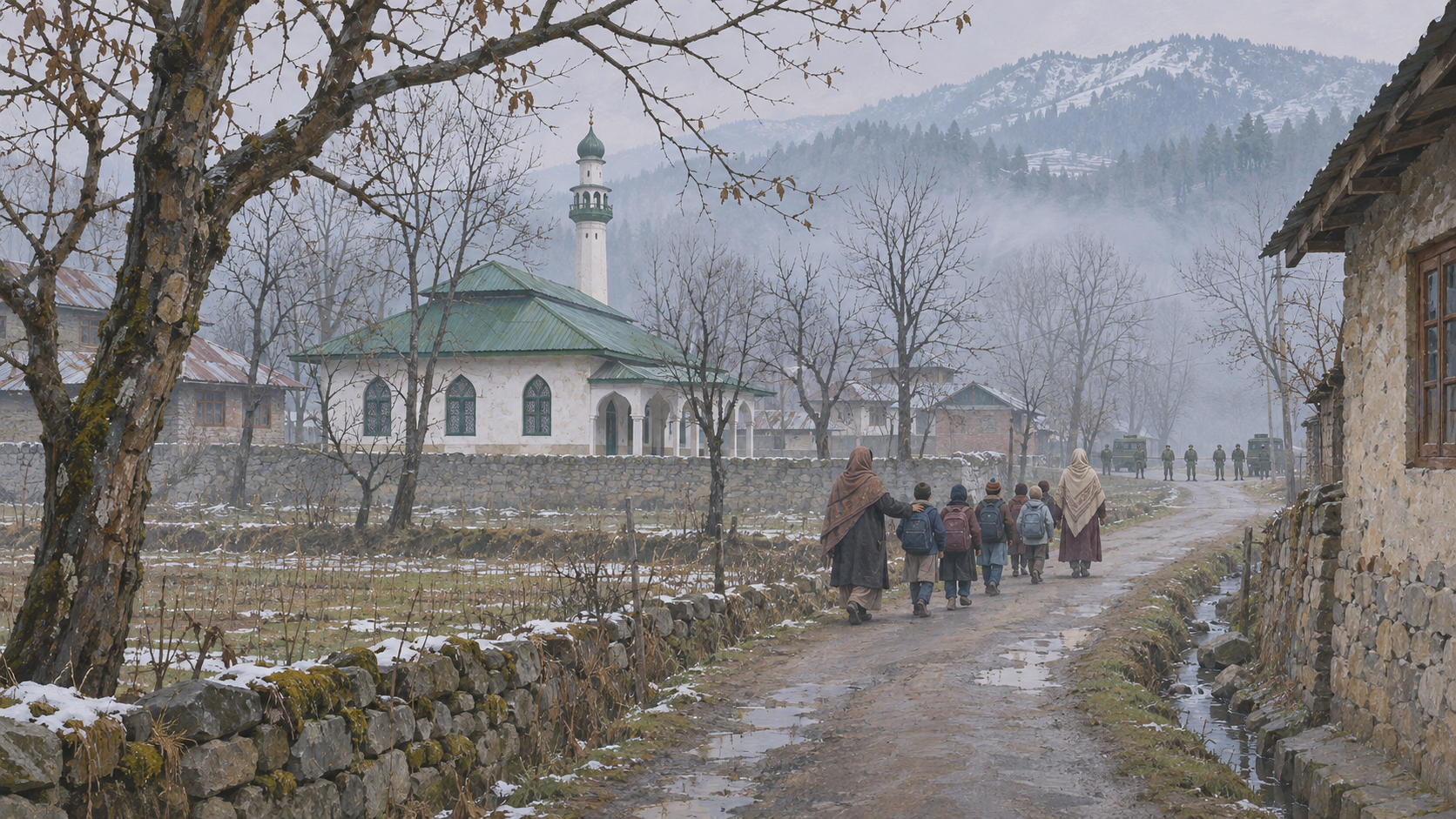
If you encountered the dramatic claim that a Lashkar terrorist chose death inside a Kulgam mosque, you need more than the slogan. You need the sequence of events, the claims that still require attribution, and the conclusions the known facts do not justify.
The clearest reading is narrow but consequential: security forces killed 22-year-old Latif Bhat in Jangalpora after he refused an attempt to secure his surrender. He was inside a mosque, while 25 girls and two teachers were evacuated from a nearby Darul Uloom before the operation. Those details belong together. Separating them produces either propaganda or communal suspicion rather than understanding.
Key takeaways
- The encounter took place on Wednesday, 18 November 2026, in Jangalpora village in the Devsar area of Kulgam.
- Security forces identified Latif Bhat, aged 22, as a Lashkar-e-Taiba operative and commander. He was hiding inside a mosque when he was surrounded.
- An officer contacted Bhat by video call and urged him to surrender. Bhat reportedly said that he wanted to meet Allah and would not surrender.
- Before the operation, personnel moved 25 girls and two teachers out of a nearby Darul Uloom.
- Security forces linked Bhat and Umar Nisar Dar to the 11 November firing on a CRPF post at Nowpora Akhran, in which three personnel were injured. That connection is a security-force allegation and should be described as such.
- Bhat’s presence inside a mosque is a fact about his choice of refuge. It is not, by itself, evidence of complicity by the mosque, its worshippers, or a religious community.
What happened in Jangalpora, step by step
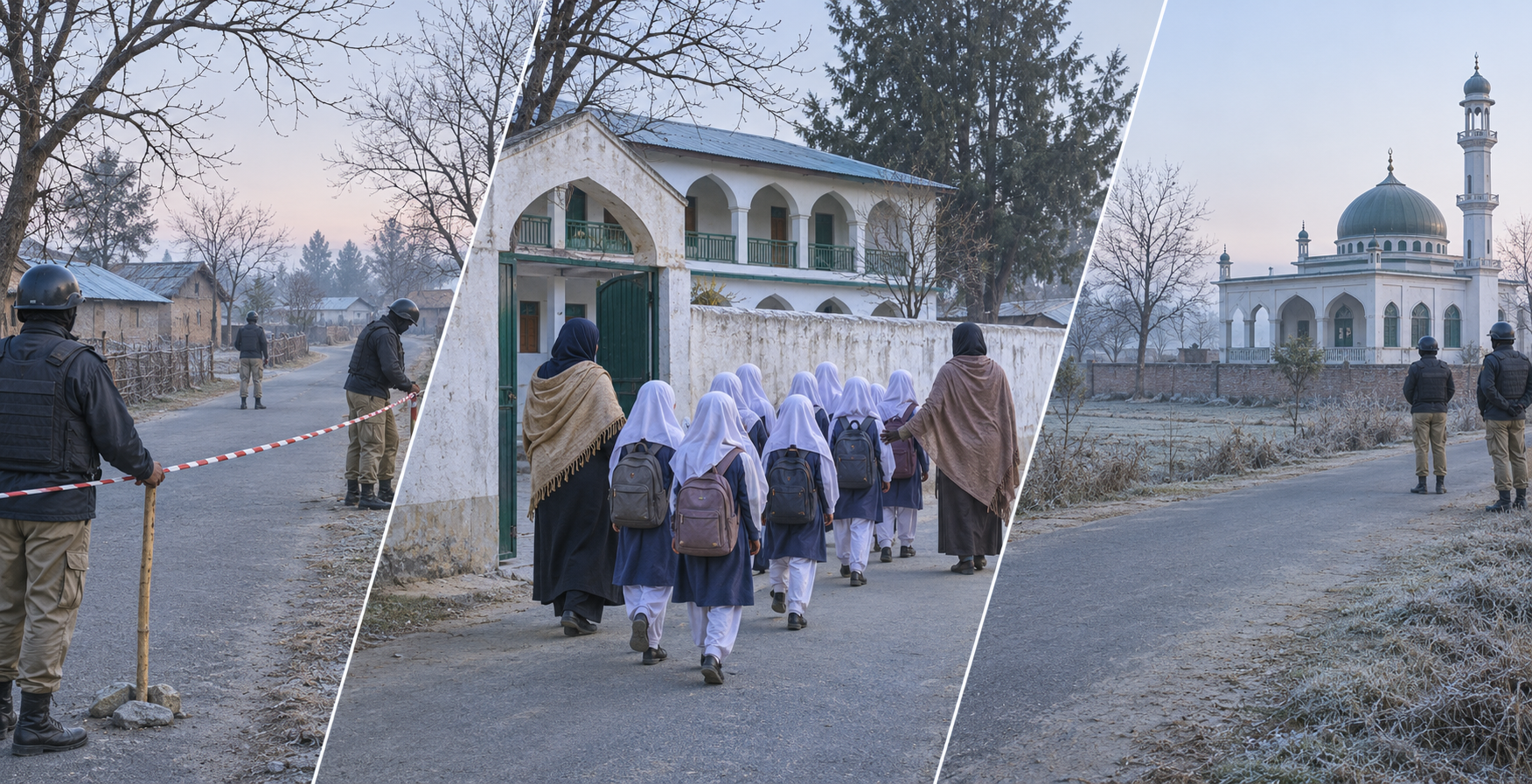
On 18 November, security forces surrounded Bhat in Jangalpora, a village in Kulgam’s Devsar area. He had taken shelter inside a mosque. Before the encounter reached its fatal conclusion, an officer used a video call to ask him to give himself up and told him that his life was not over.
Bhat rejected that opening. He reportedly expressed happiness at the prospect of meeting Allah and said he would not surrender. The operation then ended with his death. The available facts do not establish how long the confrontation lasted, what weapons were recovered, whether the mosque was damaged, or how Bhat entered the building. You should not fill those gaps with assumptions.
The evacuation nearby is an essential part of the chronology. Twenty-five girls and two teachers were removed from a Darul Uloom before the operation. That precaution reduced their immediate exposure to an armed confrontation. It does not answer every question about the operation, but it shows that identifiable civilians were moved before force was used.
The immediate background began one week earlier. Security forces said Bhat and Umar Nisar Dar fired on a CRPF post at Nowpora Akhran on 11 November, injuring three personnel. Both men were reported to have fled afterward. When you repeat this part of the story, retain the attribution. An operational identification by security forces is important evidence, but it is not the same thing as a publicly presented judicial finding.
Bhat was also identified as a Lashkar commander. If his precise rank is not necessary to your point, the more restrained description is Lashkar operative. That wording communicates the reported affiliation without implying that an independently verified organisational chart has been made public.
The mosque detail requires precision, not collective blame
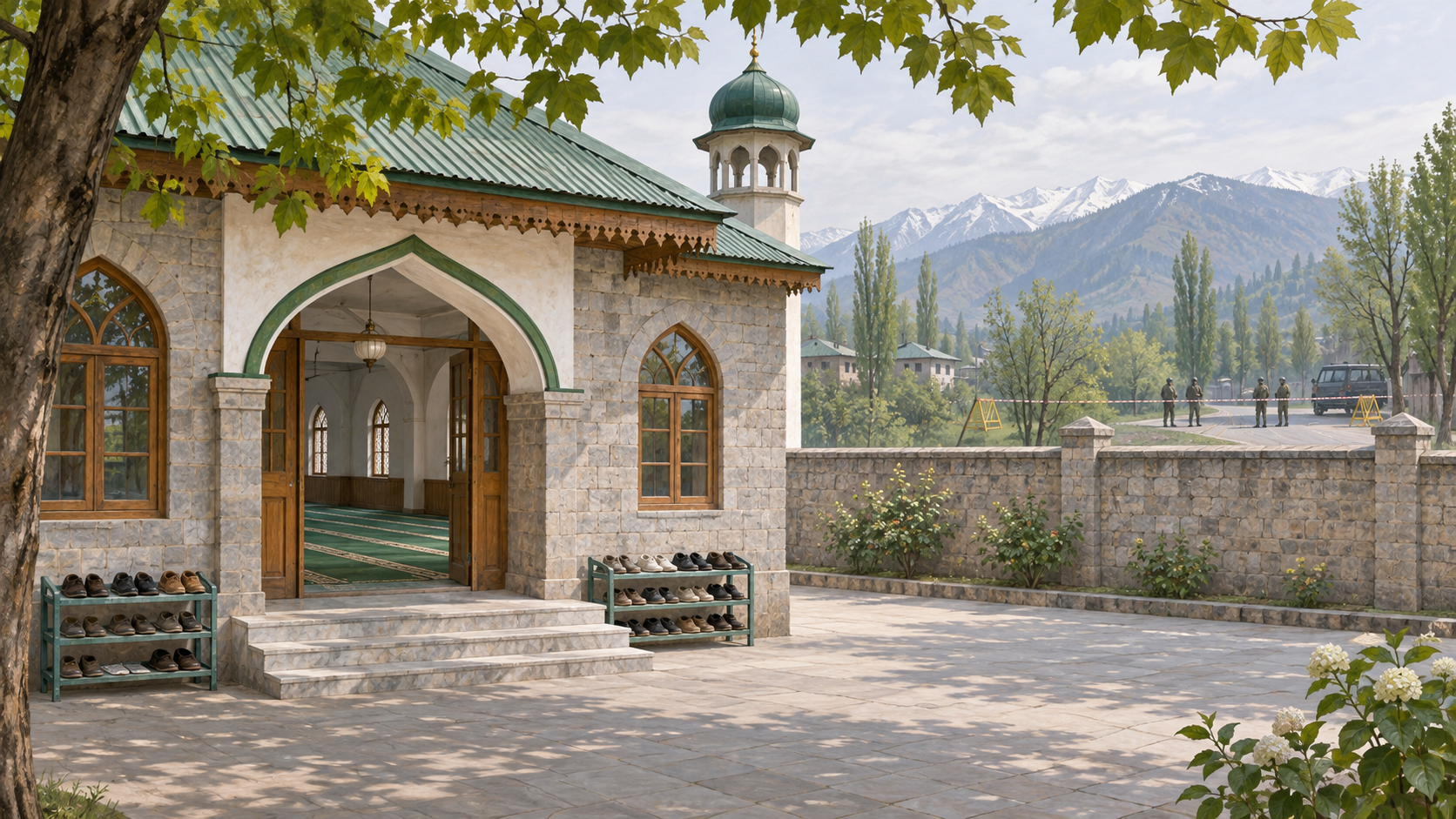
An armed operative who takes refuge in a place of worship creates a deliberate security and moral problem. Waiting can prolong the threat. Acting can endanger worshippers, students, neighbours, and the sacred building itself. That is why the surrender call and the evacuation cannot be treated as side notes. They are central to assessing how the danger was handled.
At the same time, location is not complicity. No fact available here establishes that mosque authorities invited Bhat inside, helped him hide, knew he was present, or approved of his actions. Calling this an attack on a mosque would therefore be misleading: it could suggest that the religious site, rather than an armed man sheltering inside it, was the object of the operation.
If you describe the event, say that the encounter involved a Lashkar operative hiding inside a mosque. Do not convert inside a mosque into supported by the mosque. That single distinction prevents a tactical fact from becoming an accusation against people for whom no evidence has been offered.
A Dharmic response begins with viveka, or discrimination between things that should not be confused. You can distinguish the attacker from the worshipper, the misuse of a sacred place from the faith practised there, and accountability from prejudice. This is not softness toward terrorism. Precision denies extremists the communal division they seek while keeping responsibility fixed on the actor and any proven accomplices.
A pro-Bharat position can therefore be both firm and exact. Condemn the alleged attack on CRPF personnel. Support the protection of civilians and an effort to obtain surrender where feasible. Demand evidence before assigning guilt to a religious institution or its congregation. None of these commitments cancels another.
What Bhat’s refusal reveals, and what it cannot prove
Bhat’s reported answer matters because it shows how he framed his own decision at the decisive moment. He was offered the possibility of staying alive, yet he rejected surrender in explicitly religious language. The practical fact is not that death became holy; it is that an armed operative chose a fatal confrontation over a route out of it.
Do not repeat his words as a free-standing slogan. Detached from the surrender request and the alleged CRPF attack, such language can turn an operational failure into a romantic image of martyrdom. If the words must be mentioned, place them beside the complete sequence: an officer appealed to him to live, civilians were evacuated, and he refused to come out.
Nor can one militant’s statement define Islam, Kashmiri Muslims, or the people who use that mosque. It establishes only how Bhat reportedly explained his own refusal. Treating it as a confession by an entire community would reproduce the collective logic on which radicalisation itself feeds.
His age and recruitment are also relevant. Bhat was 22, and a handler operating from across the border was reported to have recruited him. That points to a mechanism larger than one young man’s final decision: a distant handler could draw a local recruit into an armed network and its violence. The known facts do not reveal when the recruitment occurred, how contact was established, or what mixture of ideology, pressure, status, or material inducement was used. Those questions remain open.
Bhat’s death was also described as the fourth killing of a Lashkar commander within six months. That count indicates tactical attrition in the organisation’s local leadership. It does not establish that its recruitment channels, handlers, weapons, or remaining operatives have disappeared. Leadership losses can weaken a network without ending the threat, so the number should not be turned into a premature declaration of victory.
How to read and share the encounter responsibly

You can discuss this event without softening terrorism, glorifying Bhat, or treating a mosque as the accused. Use this five-part test before forwarding a clip or writing a caption:
- Preserve the sequence. State that civilians were evacuated and surrender was attempted before Bhat was killed. Leaving out either fact materially changes how the operation appears.
- Keep allegations attached to their claimant. Write that security forces linked Bhat and Umar Nisar Dar to the 11 November CRPF-post attack. Do not silently convert that attribution into a court judgment.
- Separate the person from the place. Bhat’s presence inside the mosque does not prove institutional assistance. Look for actual evidence before alleging that anyone connected with the mosque helped him.
- Refuse the militant’s preferred frame. His reported wish to die should not become the headline at the expense of the surrender offer, the three injured CRPF personnel, or the evacuated students and teachers.
- Track what remains unresolved. Do not infer Umar Nisar Dar’s status from Bhat’s death. Look separately for substantiated information about Dar, any recoveries from the encounter site, civilian harm, and damage to the mosque.
A careful one-sentence account would read as follows: On 18 November in Jangalpora, Kulgam, security forces killed 22-year-old Lashkar operative Latif Bhat after he refused surrender from inside a mosque; 25 girls and two teachers at a nearby Darul Uloom had been evacuated, and security forces linked him to an earlier attack that injured three CRPF personnel.
Use that disciplined frame until stronger evidence adds to it. It keeps the victims visible, denies glamour to the operative, and prevents an unproven communal accusation. A secure Bharat needs operational resolve, protection for innocents, respect for sacred places, and citizens who do not let precision collapse under the pressure of a dramatic clip.
References

Leave a Reply
You must be logged in to post a comment.