

If the Jaipur CCTV footage left you angry, separate three questions before you share a claim: What does the recording show? What has been alleged about the events leading up to the violence? What can investigators actually prove? That discipline does not minimise the assault. It helps turn public attention into justice instead of rumour.
Mayank Gopalia, a Hindu cafe owner, suffered serious head injuries and required surgery at Fortis Hospital in Jaipur. The available facts indicate a coordinated and potentially premeditated ambush. A reported workplace dispute is being examined as a possible cause, but no communal motive has been established in the material presently available. You do not have to exaggerate an allegation to demand a forceful response to such brutality.
What is known, and what the CCTV does not settle
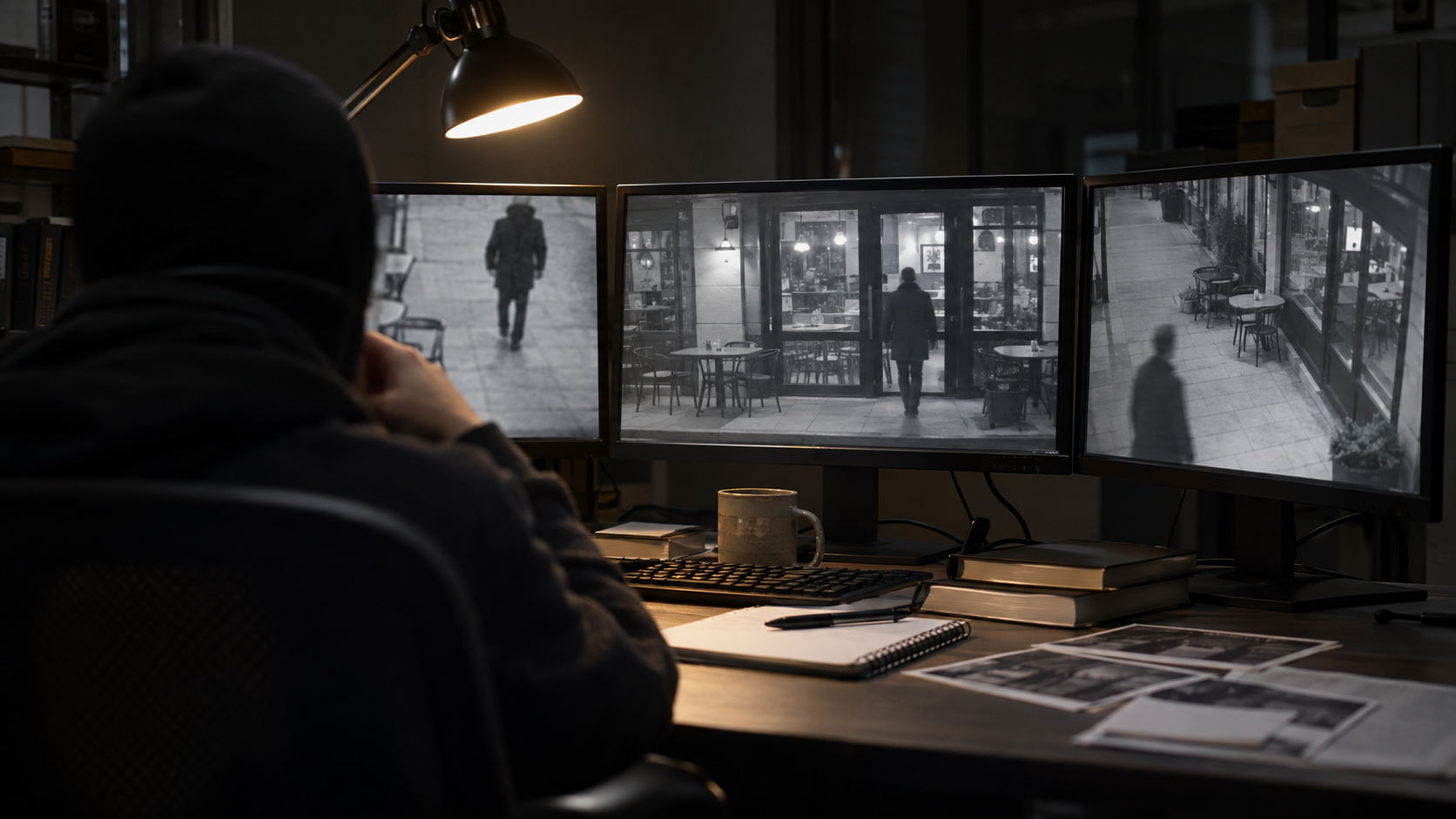
The footage reportedly shows at least two men rushing toward Gopalia with iron rods and sticks. They appear to strike his head and continue hitting him after he falls onto the road. Other people were reportedly positioned nearby with two-wheelers, enabling the attackers to leave quickly.
Those details distinguish this incident from an impulsive argument. Waiting attackers, weapons, repeated blows and a prepared escape are all circumstances investigators can examine when determining whether the violence was planned. They may support an inference of coordination or intent to cause grievous injury, but a video clip alone cannot identify every participant, establish who organised the attack or prove the motive behind it.
Passersby and local residents reportedly found Gopalia bleeding and helped get him to hospital. His family became alarmed when he did not return home and could not be reached by phone. Their effort to retrace his movements led to the surveillance footage, which became a central piece of evidence.
The reported investigative lead concerns tensions at the cafe. A disagreement had allegedly developed around the repeated presence of an acquaintance connected to an employee. Another argument and alleged threats reportedly occurred on the day of the assault. The complaint and staff statements placed suspicion on Shahrukh, the husband of employee Shabana Khan, and certain associates.
Those names must be handled as investigative claims, not declarations of guilt. Suspicion recorded in a complaint is not the same as identification supported by evidence, arrest, charge or conviction. Circulating addresses, family details or unsupported accusations could endanger uninvolved people and distract from the evidence police need to test.
Vaishali Nagar Police Station opened an investigation, questioned family members and cafe employees, and examined surveillance material. Station House Officer Arvind Singh Shekhawat said Gopalia was initially unable to give a statement because of his condition. An FIR was subsequently registered and police teams were assigned to find those responsible. The material available here does not confirm arrests or the eventual charges, so those gaps should not be filled with social-media speculation.
Key takeaways
- The recorded violence was not a minor scuffle: weapons were used, the victim’s head was attacked and blows allegedly continued after he collapsed.
- The presence of waiting riders and a rapid escape may indicate coordination, but investigators must still establish who planned and participated in the assault.
- Gopalia sustained severe head trauma and required surgery, making his medical recovery and ability to give a statement central concerns.
- A workplace dispute and alleged threats are reported investigative leads. They are not yet a judicial finding about motive or guilt.
- No communal motive has been established in the available record. The victim’s Hindu identity should be reported accurately without being converted into proof of a religious motive.
- The most useful public demands are complete identification of the participants, preservation of all evidence, support for the victim and transparent progress through lawful investigation and prosecution.
A pro-Hindu response requires precision
Hindu concern about the safety of a Hindu entrepreneur is legitimate. Gopalia was running a local enterprise, employing people and returning from ordinary work when he was subjected to potentially life-threatening violence. Protecting Hindu life and livelihood is not an abstract ideological question when a businessman is recovering from head surgery.
Precision makes that concern harder to dismiss. The available facts support calling this a brutal assault on a Hindu cafe owner. They support asking whether the attackers waited for him and arranged an escape. They support scrutiny of the alleged threats and workplace conflict. They do not presently support describing the assault as an established anti-Hindu hate crime.
This distinction matters for more than tone. If the motive was retaliation arising from a workplace dispute, investigators need the relevant witnesses, messages, call records and sequence of confrontations. If evidence of religious hostility emerges, that evidence should be documented and addressed. Starting with a predetermined conclusion can cause people to overlook facts that do not fit it.
A responsible Hindu civic response follows three rules:
- Name the victim and the harm accurately. Do not reduce Gopalia to a symbol while ignoring his recovery, family and business.
- Demand action against every individual involved: those who struck him, anyone who transported the attackers and anyone who may have planned or facilitated the ambush.
- Do not transfer the alleged acts of named individuals onto an entire religious or social community. Collective accusation weakens the demand for individual accountability.
You can also resist the false choice between due process and a strong police response. Due process means identifying the correct people, preserving admissible evidence and proving the case. It does not mean indifference, unexplained delay or treating an armed group attack as a routine quarrel.
A practical safety review for cafe owners

The most unsettling feature for another small-business owner is the apparent transition from workplace friction to an attack outside the establishment. You cannot eliminate that risk, but you can make threats easier to detect, emergencies faster to manage and evidence harder to lose.
- Check what every camera actually records. Cover the entrance, customer area, staff access point, cash-handling position, parking area and the route used when closing. Review the view after dark as well as during business hours. A camera that captures only silhouettes or misses the pavement may provide little help at the moment it is needed.
- Verify the system clock and retention settings. Incorrect timestamps can complicate the task of matching video to calls, messages and witness accounts. Learn how long footage remains available, how it is exported and who has administrator access before an incident occurs.
- Preserve an original export and a separate backup after any threat or confrontation. Do not rely on a compressed clip forwarded through a messaging app. Give investigators the clearest available copy and keep a record of when it was exported and by whom.
- Document threats while the details are fresh. Record the exact words used, the time, location, witnesses and any related phone numbers, messages or vehicle details. Keep the factual record separate from assumptions about motive. If a threat appears credible or immediate, contact the police and obtain advice from a qualified local lawyer rather than trying to resolve it alone.
- Change how difficult employee disputes are handled. Hold sensitive meetings during business hours, within camera coverage and with another responsible person present. Recover keys, access cards and passwords through a documented process. Avoid a heated one-to-one confrontation at closing time.
- Create a closing check-in. When a person must leave late, designate someone who knows the expected departure and arrival. Where practical, close with two people and avoid predictable solo movement involving cash.
- Assign emergency roles. Staff should know who calls emergency services, who directs responders to the scene, who preserves video and who contacts the injured person’s family. Written roles prevent everyone from assuming someone else has acted.
- Control publication of evidence. Preserve and provide the full recording to investigators before posting excerpts online. Viral footage can produce witnesses, but it can also alert participants, expose bystanders and surround the case with false identifications. Seek legal guidance when publication could affect an active investigation.
Do not wait for a violent incident to discover that the only person who knows the camera password is absent, the timestamp is wrong or footage is automatically overwritten. A short review with staff can reveal those failures while they are still easy to correct.
What meaningful accountability should look like
Public anger is understandable, but the useful measure of the response is not the volume of condemnation. It is whether the investigation reconstructs the whole event and produces a case capable of surviving judicial scrutiny.
- Identify every visible role, including the people who wielded weapons, the riders who facilitated escape and any person who arranged or encouraged the assault.
- Secure original recordings from the cafe, neighbouring premises and the surrounding route before routine deletion removes them.
- Test the alleged threats against witness accounts, messages, calls and the timeline of the workplace dispute.
- Record Gopalia’s statement when doctors consider him fit, without allowing the initial delay caused by his injuries to become an excuse for investigative drift.
- Use the medical evidence and the recorded pattern of blows to evaluate the seriousness and apparent intent of the violence under the applicable law.
- Provide clear procedural updates about identification, arrests and charges when disclosure will not compromise the investigation.
- Protect witnesses and the victim’s family from intimidation, harassment and pressure to settle outside lawful channels.
Speed matters because video can be overwritten, memories can fade and participants can coordinate their accounts. Accuracy matters because arresting the wrong person or overstating the motive can damage the prosecution. Authorities should be expected to deliver both urgency and care.
If you want to help, verify before reposting, support Gopalia only through a channel confirmed by his family, and keep public questions tied to observable progress: Have all attackers and getaway riders been identified? Has the original footage been secured? Have the alleged threats been examined? Is the victim protected while he recovers? Those questions keep attention on the people who must answer for the violence.
For business owners, review your cameras, threat log and closing procedure now. For citizens, insist on a complete investigation without inventing a communal conclusion. The strongest response to this assault is disciplined solidarity: preserve the truth, protect the victim and pursue every person responsible through the law.
References

Leave a Reply
You must be logged in to post a comment.