
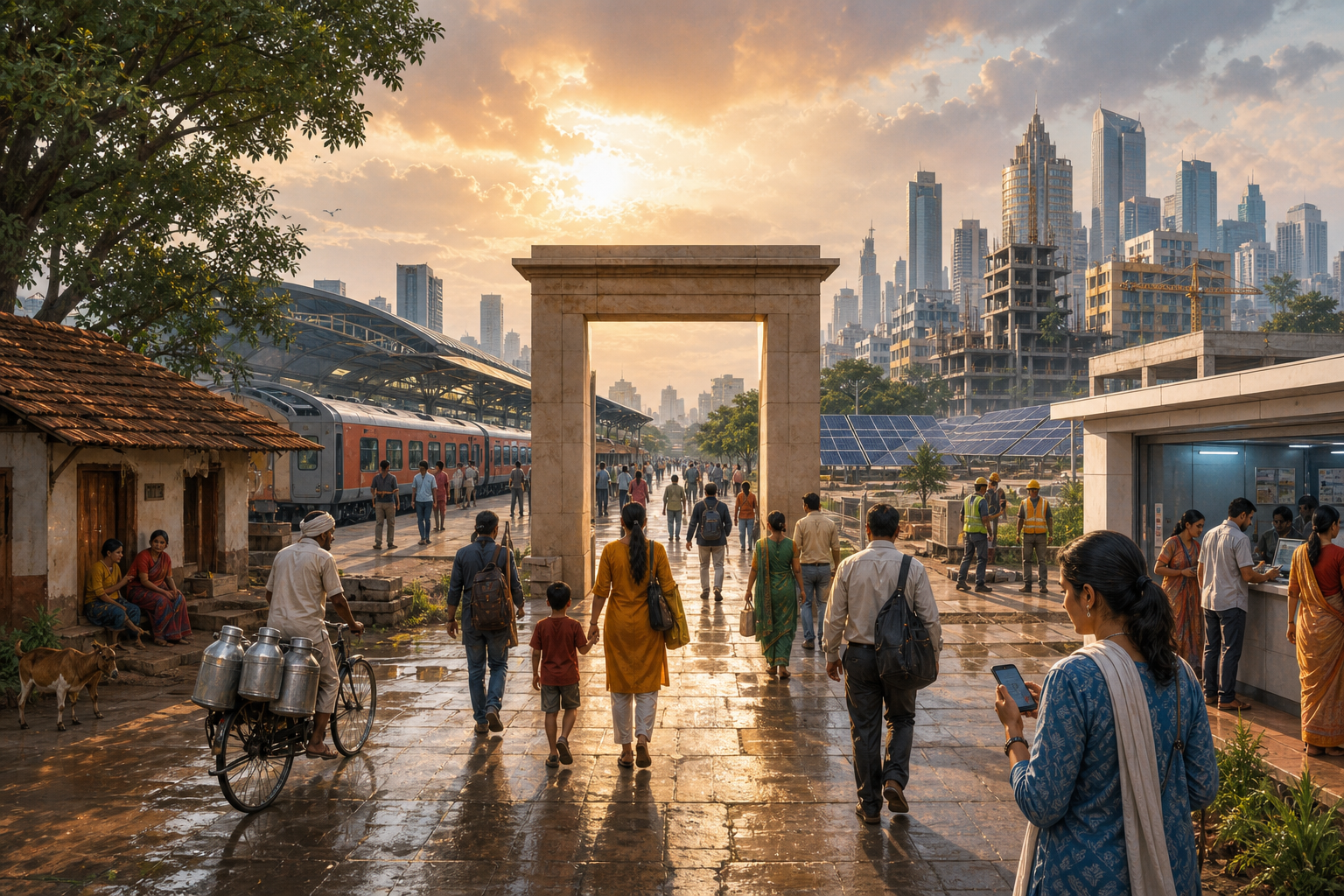
You may be trying to answer a deceptively simple question: did India actually transform under Narendra Modi, or did its political language merely become more confident? The clean answer is that several changes qualify as transformation because they altered ordinary behaviour and narrowed what future governments can easily undo. But the record is neither uniform nor a blank cheque for every claim made in Modi’s name.
The useful test is not whether you admire Modi. Ask what became normal, what became durable, and what still depends on the leader at the centre. That distinction reveals a country with stronger national systems and greater strategic confidence, but also unfinished work in education, health, institutional accountability, and state-level delivery.
Transformation begins when yesterday’s breakthrough becomes today’s baseline
An improvement gives you more of what already existed. A reform changes a rule. A transformation changes expectations: citizens, businesses, officials, and political parties start behaving as though the new arrangement is permanent.
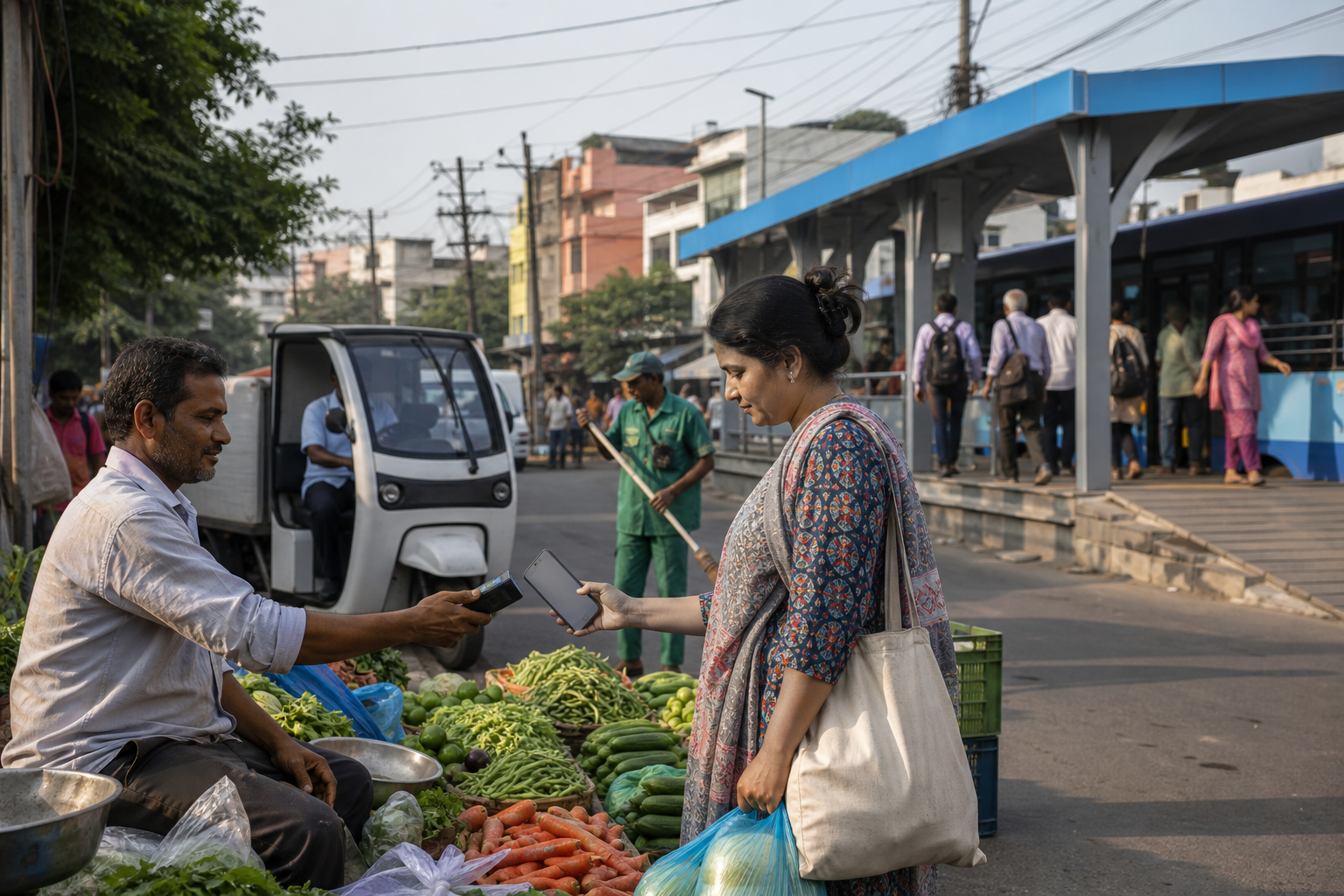
That is why India’s most consequential changes are often the least theatrical. UPI became embedded in ordinary economic life so quickly that its novelty largely disappeared. Direct Benefit Transfer established a durable expectation that public benefits should reach the intended person directly. GST became the national framework within which arguments now occur: the dispute is generally about rates and slabs, not whether India should return to the previous arrangement.
These policies should not be bundled together as though they worked in the same way. UPI is an everyday transaction rail. Direct Benefit Transfer is a delivery mechanism. GST is an ongoing tax framework. Demonetisation was a one-time monetary intervention. Calling all four transformative does not prove that all four were equally effective, equally well executed, or equally beneficial. Irreversibility is evidence of political consequence, not automatic evidence of policy success.
You can apply three tests to any claim about the Modi era. First, did it change routine behaviour outside government offices? Second, would a successor government face substantial public or economic resistance if it tried to reverse it? Third, does the system continue to function without requiring a fresh political campaign every month? UPI, Direct Benefit Transfer, and GST pass much more of this test than a slogan, a commemorative event, or a temporary administrative drive.
This also explains why transformation is usually noticed late. A dramatic announcement attracts attention immediately. A national operating system becomes visible only after people stop imagining life without it. If you want to judge governance seriously, look for the second kind of change.
State capacity is measured in journeys completed, not announcements made

Infrastructure becomes politically meaningful when it removes a calculation that citizens once had to make. A traveller who previously allowed for extreme uncertainty on a long journey can now begin by searching for a direct flight. A household that once organised its day around power cuts can use electricity without making interruption the first assumption. A manufacturer benefits when moving goods across India becomes less fragmented. These are changes in the citizen’s planning horizon, not merely additions to an asset register.
One recollection captures the shift without pretending to be a national statistic: planning a passenger-train journey from Chennai to the Northeast once meant allowing for a delay as long as a week, whereas a Chennai-Dimapur flight can now be the first option considered. The anecdote does not establish that every route works well. It shows what infrastructure changes when it works: distance stops carrying the same penalty in time and uncertainty.
The foundations did not appear in 2014. Atal Bihari Vajpayee’s New Telecom Policy, Golden Quadrilateral, and more assertive foreign policy established important lines of continuity. Modi’s distinctive contribution was to combine continuity with political scale, administrative pressure, and a parliamentary majority capable of moving changes that coalition governments had found difficult. Recognising that continuity gives you a more accurate picture than treating national development as the invention of one leader.
It also prevents a common attribution error. A road opened under one prime minister may have been planned under another, financed through several budgets, built by a private contractor, and maintained by a state authority. The right question is not who appeared at the inauguration. Ask whether the governing system increased the pace, reach, reliability, and integration of the network.
You can make this assessment locally. For a project or public service in your district, identify when it was sanctioned, when work began, when citizens could actually use it, and whether maintenance followed. Then compare the same scheme in another state. That comparison matters because central reconstruction can stall at the level of state execution. Several services that determine daily quality of life depend heavily on state and local capacity, even when New Delhi supplies money, standards, or political momentum.
This is where the transformation remains incomplete. Roads, payments, transfers, and national platforms can advance faster than schools, public health systems, municipal administration, and the everyday conduct of officials. These areas depend on human institutions that cannot be rebuilt by capital expenditure alone. They require recruitment, training, incentives, supervision, and consequences for persistent failure.
The bureaucracy therefore remains a central test. Reported resistance among some IAS officers to open-office arrangements at the new Kartavya Bhavan, including concern over losing private cabins, may look like a minor workplace dispute. It exposes a larger question: is public office still organised around rank and distance, or around accessible and measurable service? Changing the floor plan cannot answer that question by itself, but resistance to the loss of status can reveal how deeply the older culture survives.
Security and sovereignty need a stricter standard of proof

The Modi era also changed how India speaks and acts on national security. The removal of Article 370 was a concrete parliamentary action. A harder posture toward Pakistan, resistance to Chinese pressure at Galwan, efforts to reduce the role of defence middlemen, and a more openly India-first foreign policy belong to a wider strategic shift. Together, they project a state less willing to treat restraint, accommodation, or foreign approval as virtues in themselves.
Yet security claims must be separated into three different categories. A legal or administrative output can be verified directly: a constitutional arrangement changed, a policy was adopted, or an institution was reorganised. A security outcome requires trend evidence: attacks declined, territory became more governable, or recruitment into violent movements weakened. A geopolitical interpretation asks what the behaviour of other countries reveals about India’s leverage. Mixing these categories allows a verifiable action to lend undeserved certainty to a much larger conclusion.
Consider the claim that the earlier rhythm of jihadist attacks on Indian soil ceased after 2014. It is consequential enough that you should neither dismiss it reflexively nor accept it because it sounds decisive. Test it against incident frequency, location, severity, and a consistent definition of what is being counted. Do the same with the reported rollback of Maoist violence. The most meaningful outcome is not a triumphant press conference but ordinary institutions such as schools functioning again in places like Gadchiroli.
Defence reform deserves the same discipline. Removing entrenched brokerage would be a major gain, but it should be judged through procurement integrity, delivery, domestic capability, and operational readiness. A cleaner process that does not deliver usable equipment is insufficient. Faster procurement without accountability is also insufficient. National security is too important to be assessed through either habitual cynicism or partisan faith.
Foreign policy is harder to score because ceremony can resemble influence. Invitations, praise, and photographs show access. Leverage is visible when other powers alter decisions, negotiate seriously, or accept costs to preserve the relationship. India’s willingness to hold its ground at Galwan and to pursue its interests even when Washington is displeased represents a more demanding conception of sovereignty. But foreign criticism does not automatically prove that India is succeeding, just as Western approval does not certify that an Indian policy serves the national interest.
The information ecosystem complicates the picture. The decline of a small legacy media establishment’s control over political access and public interpretation has opened space for more Indian voices. It has also created a noisy environment in which speed, outrage, and loyalty can outrun verification. You should judge media freedom by whether institutions can scrutinise every centre of power: government, opposition, corporations, courts, ideological networks, and foreign influence. Replacing one gatekeeper with another is not intellectual swaraj.
Civilisational confidence must become administrative duty
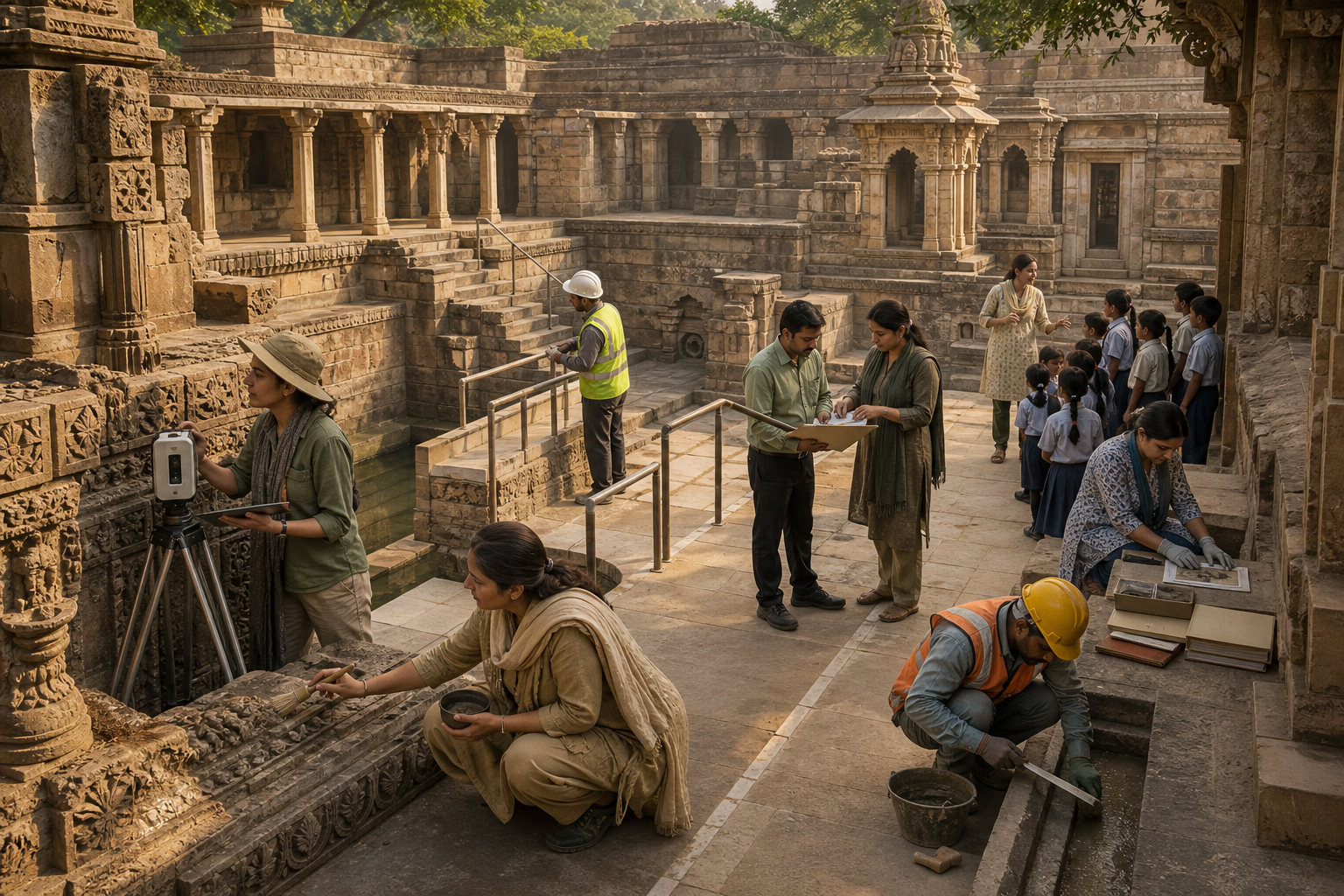
The renaming of Rajpath as Kartavya Path expresses one of the clearest civilisational themes of the Modi years. The imagined relationship changes from ruler and subject to duty and service. Renaming the administrative complex Kartavya Bhavan carries the same intention: authority should be understood as an obligation, not a personal estate.
This vocabulary matters because independent India inherited more than buildings and statutes from colonial rule. It inherited habits of distance: the inaccessible official, the ceremonial office, the citizen made to wait, and the idea that government rank confers personal grandeur. A civilisationally self-aware Bharat should be able to discard those habits without discarding constitutional restraint, professional competence, or institutional memory.
But dharma supplies a demanding standard. Kartavya is not fulfilled by putting the word on a sign. You should see it in an office that resolves an application without extracting deference, a police system that protects without discrimination, a court that delivers justice without disabling delay, and a ministry that publishes outcomes rather than advertising intentions. Symbolic decolonisation becomes substantive only when the citizen experiences a different moral relationship with the state.
The same caution applies to national pride. Escaping an inherited inferiority complex is healthy. India need not seek moral certification from Western capitals or accept descriptions of Bharat built around poverty, passivity, and permanent civilisational guilt. Yet confidence becomes fragile when every criticism is labelled anti-national and every achievement is attributed to one personality. A strong civilisation can distinguish hostile propaganda from an inconvenient fact.
This distinction is especially important in a pro-Dharmic public sphere. Hindu civilisational recovery should widen India’s ability to understand itself, protect its traditions, and act without apology. It should not reduce national judgment to whether a statement flatters the government. Dharma binds power to responsibility. That means supporters of civilisational renewal should demand more institutional honesty, not less.
Modi’s political strength made certain long-delayed actions possible. The removal of Article 370 is the most obvious example in this record. Stable majorities can overcome veto points that immobilise coalition governments. They can also concentrate credit and reduce internal resistance. The Dharmic test is therefore not strength versus weakness. It is whether strength is exercised for national reconstruction and then converted into institutions capable of surviving the leader who supplied it.
Key takeaways for judging the next phase
- Look for a changed baseline. A policy is transformative when citizens plan their lives around it and a future government would struggle to remove it.
- Separate systems from shocks. UPI, Direct Benefit Transfer, and GST are continuing institutional rails; demonetisation was a discrete intervention and must be evaluated on its own terms.
- Measure delivery where you live. Trace sanction, construction, use, reliability, and maintenance. Distinguish central policy from state and local execution.
- Demand stronger evidence for security claims. Legal changes can be verified directly; reductions in terrorism or insurgency require consistent incident data; geopolitical influence must be inferred from other states’ behaviour.
- Judge civilisational language by administrative conduct. Kartavya becomes real when officials, courts, and public institutions treat authority as duty rather than privilege.
- Ask whether the gains can outlast Modi. A leader can initiate transformation, but only durable institutions can complete it.
On these tests, India’s transformation under Modi is real but uneven. The strongest case lies in the combination of everyday digital systems, national infrastructure, political irreversibility, strategic confidence, and a civilisational vocabulary that rejects inherited diffidence. The weaker areas are precisely those in which announcements cannot substitute for patient institution-building: education, health, bureaucracy, judicial accountability, local government, and consistent execution across states.
You do not have to choose between declaring the decade flawless and denying that anything changed. Both positions evade citizenship. Preserve the systems that now work, verify the claims that remain contested, and insist that national confidence produce competent institutions rather than permanent political theatre.
When the next major policy is announced, do not begin with applause or cynicism. Identify the citizen’s old friction, define the outcome that would remove it, watch where implementation breaks across states, and ask whether the result can survive a change of government. That is how you turn transformation from a leader’s legacy into Bharat’s lasting capacity.
References
