
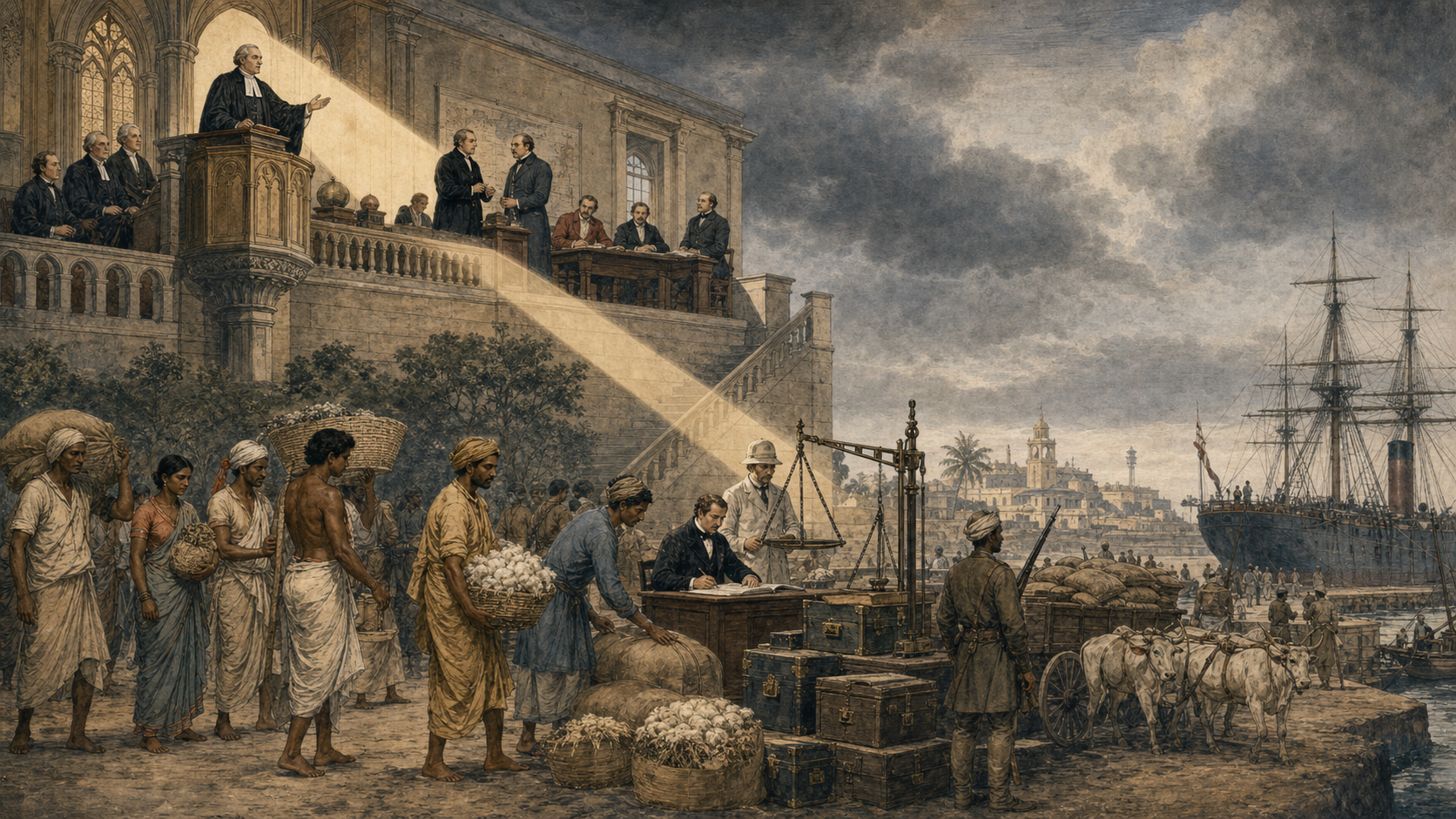
If you are trying to explain how the Church aided British rule in Bharat, the weak version is a slogan: missionaries arrived with empire. The stronger version identifies what influential clergy said, when they said it, and what their words made morally permissible.
That distinction matters. Complicity did not require every cleric to draft revenue rules, command troops, or hold the same opinion. Ecclesiastical voices could assist extraction by presenting British possession as a divine trust, portraying Dharmic traditions as error, and turning resistance to foreign rule into resistance to God’s purpose. The sermons delivered during the crisis of 1857 show this mechanism with unusual clarity.
Define complicity by function, not by a sweeping label
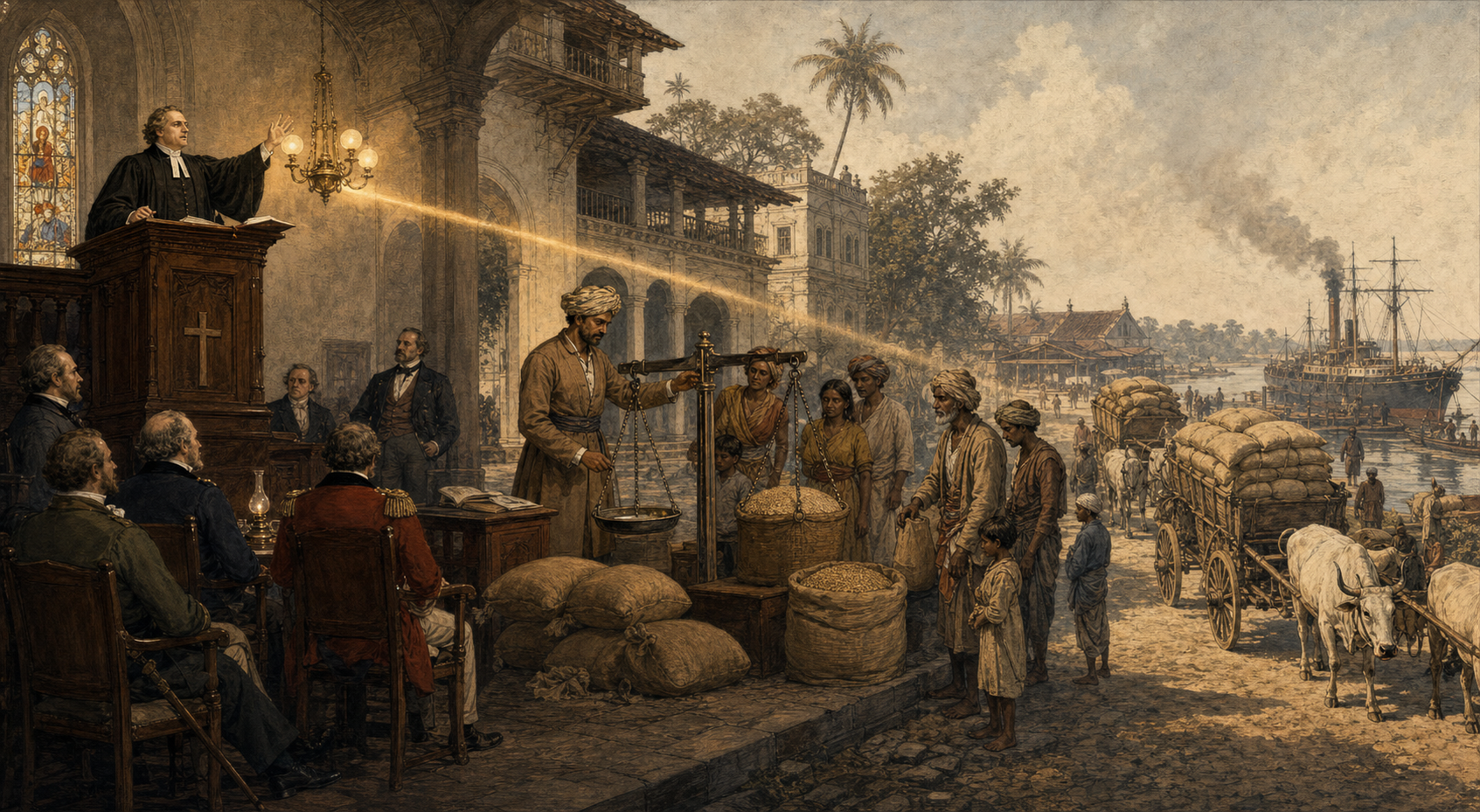
The word Church can conceal more than it reveals. Nineteenth-century Christianity contained different institutions, denominations, clergy, missionaries, congregations, and political tendencies. A credible historical argument should therefore identify the particular ecclesiastical voices involved and the function their rhetoric performed.
In the colonial setting, religious complicity could operate through four distinct functions:
- Sanctifying possession: British control was described as something entrusted by God rather than acquired and maintained by force.
- Creating a moral hierarchy: the people of Bharat were classified as idolatrous, infidel, or spiritually deficient, while the ruler appeared as teacher and guardian.
- Delegitimising resistance: opposition to colonial power could be treated as rebellion against a providential mission, not merely resistance to foreign government.
- Normalising the imperial order: violence and economic extraction became easier to defend once that order was represented as benevolent in purpose.
This religious frame did not stand alone. It worked beside colonial administration, education, and census machinery. Providential language supplied moral meaning to the political system those institutions organised. You should therefore look for a chain of assistance rather than a single order from a pulpit to a treasury.
When you assess a sermon, speech, or school text from this period, ask four questions. Who is speaking? What part of empire is attributed to divine will? How are the colonised people and their traditions described? What coercive or economic arrangement becomes easier to accept after that description? Those questions turn an accusation into a testable historical claim.
The sermons of 1857 reversed the moral question
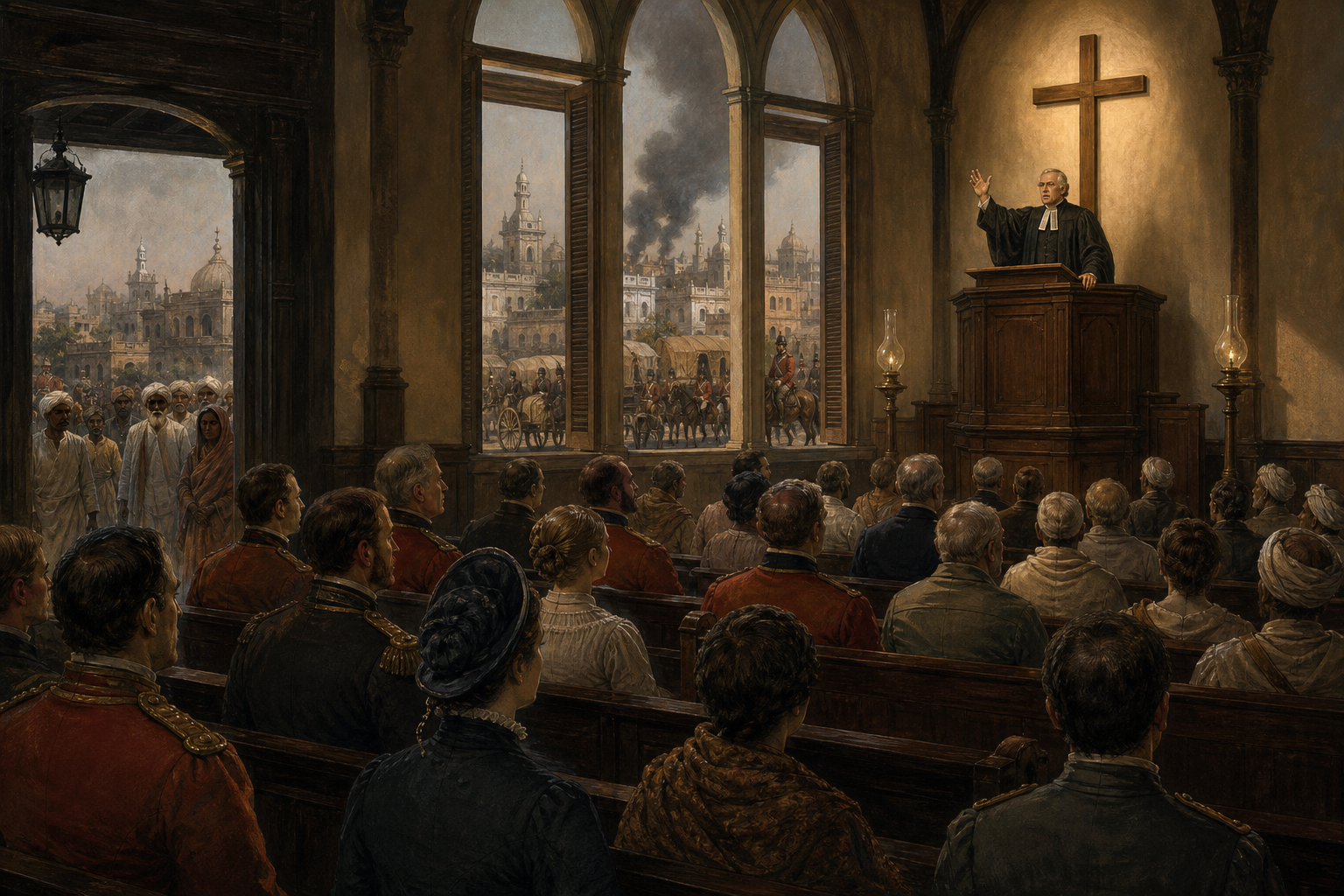
The uprising of 1857 confronted Britain with an obvious political question: why were people under colonial rule taking up arms? Influential pulpits redirected the question. Britain proclaimed a national Day of Humiliation, and sermons across England interpreted the revolt as divine punishment. The alleged failure was not that Britain had interfered too deeply in Bharat’s religious life. It was that Britain had not evangelised forcefully enough.
The Dean of St Paul’s identified Britain’s sin as “neglect in spreading Christianity among the idolatrous and infidel populations of India”. At St Michael’s Cornhill, worshippers heard that the Indian empire was “God’s gift,” entrusted to Britain so that it might teach salvation. In Hoxton, the Reverend Kelly asked what purpose Britain’s Indian possessions served if not to spread the “healing of the Cross.”
Notice what this interpretation accomplished. Bharat’s people disappeared as political agents with grievances of their own. Their religious traditions appeared not as mature traditions deserving freedom, but as obstacles to a British spiritual assignment. Colonial possession became a duty. The answer to revolt was therefore not restraint or withdrawal, but renewed confidence in the imperial mission.
The logic moved in three steps:
- Britain’s control of Bharat was declared providential.
- Evangelisation was made the purpose of that control.
- Failure to evangelise sufficiently was blamed for the crisis.
Once those premises were accepted, violent suppression could be represented as the restoration of a divinely assigned order. The rebellion no longer appeared primarily as evidence against colonial rule. It became evidence that Britain must pursue its religious purpose more aggressively.
Brian Stanley characterises this reaction as a dominant current of British Christian opinion rather than an eccentric position at the edge of public life. Olive Anderson connects the mutiny with the growing respectability of evangelical militarism in mid-Victorian Britain. The pious commander Henry Havelock, whose forces played a central part in the recapture of Cawnpore and Lucknow, could consequently be celebrated as an ideal Christian soldier. Religious devotion and imperial force were made to reinforce one another.
How a sacred mandate protected a material system
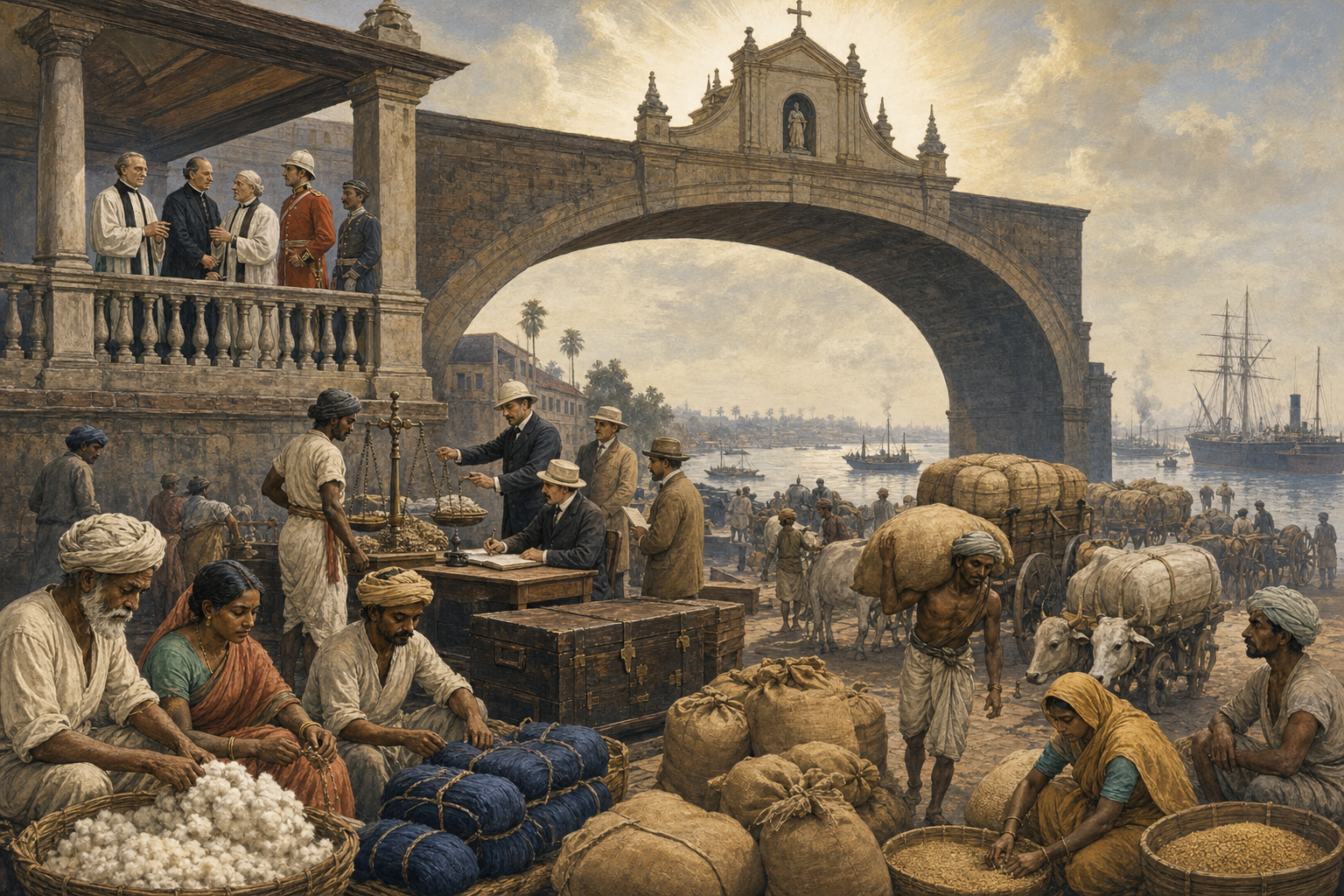
A sermon did not itself transfer revenue, regulate trade, or move goods from Bharat to Britain. That is not the serious claim. Colonial extraction depended on political control, administrative machinery, commercial arrangements, and the coercive capacity to keep them operating. Ecclesiastical rhetoric helped reduce the moral and political cost of maintaining that system.
The connection becomes clearer when you follow the sequence:
- Conquest becomes trusteeship. If the empire is God’s gift, British possession no longer looks like domination. It looks like an obligation that Britain would be wrong to abandon.
- Religious difference becomes deficiency. Calling Dharmic communities idolatrous or infidel places them beneath the ruler in an invented moral hierarchy. British authority then appears corrective rather than self-interested.
- Resistance becomes impiety. A revolt against foreign power can be recoded as opposition to salvation, civilisation, or providence.
- Coercion becomes service. Military suppression can be honoured as the defence of order and mission instead of judged by the suffering it imposes.
- Extraction becomes stewardship or benevolent trade. The sustained movement of wealth toward the imperial centre can fade behind claims about the benefits Britain supposedly brings.
This is ideological complicity with material consequences. The pulpit supplies the moral vocabulary; the colonial state supplies force and administration; the imperial economy receives the benefit. No single part of that chain has to perform every function for the system to work.
The distinction between motive and effect is also important. A particular preacher may have been motivated by sincere evangelical conviction rather than personal financial gain. Sincerity does not cancel political effect. If a theological claim presents foreign occupation as sacred duty and makes resistance morally suspect, it can help preserve the conditions under which extraction continues.
When someone objects that clergy did not personally collect colonial revenue, the answer is therefore simple: complicity is not identical to administrative authorship. The relevant question is whether ecclesiastical authority legitimised the rule, hierarchy, and coercion that made the extractive order durable.
Make the historical case without flattening Christianity
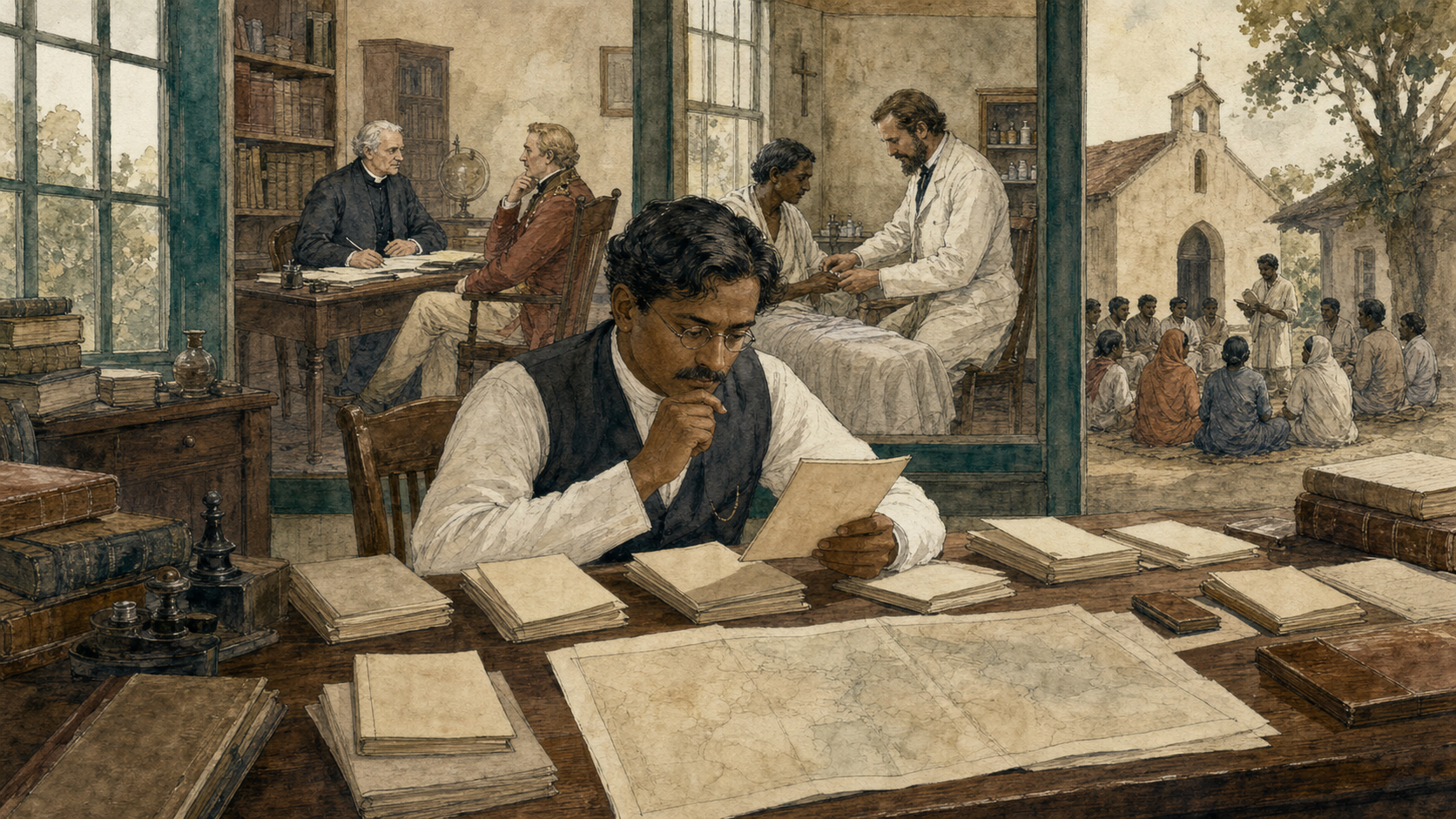
A pro-Dharmic account does not become stronger by being indiscriminate. Precision protects the argument from two avoidable failures: treating every Christian as responsible for imperial policy, and treating religious rhetoric as irrelevant unless a cleric personally signed an economic order.
What the evidence supports
- Influential Victorian ecclesiastical voices described British possession of Bharat as providential and evangelisation as its proper purpose.
- During the crisis of 1857, prominent sermons blamed insufficient Christianisation rather than excessive religious interference.
- That interpretation converted a political challenge to empire into a religious summons to continue and intensify the mission.
- Evangelical militarism could celebrate commanders involved in suppressing the uprising as models of Christian character.
- This rhetoric helped legitimise the colonial order within which wealth was extracted from Bharat.
What requires a different or broader body of evidence
- A claim that every Christian, missionary, denomination, or church institution supported the same policies.
- A claim that Christianity was the only cause of British colonialism or the only justification Britain used.
- A claim that every preacher intended to enrich Britain personally.
- A detailed claim about a particular tax, trade rule, famine policy, or transfer of money without records connecting that mechanism to the argument.
A defensible formulation is: influential Christian ecclesiastical voices helped legitimate British rule by presenting empire as a providential trust, denigrating the traditions of the colonised, and interpreting resistance as a reason for greater evangelisation. That legitimacy helped sustain the coercive political order on which colonial extraction depended.
Avoid the loose formulation that “the Church stole Bharat’s wealth.” It collapses different actors and mechanisms into one phrase. Name the ecclesiastical act, the political effect, and the material system separately. The resulting argument is more accurate and much harder to dismiss.
Context also matters when you quote the sermons. Preserve the occasion: the uprising of 1857 and the national Day of Humiliation. Preserve the venues: St Paul’s, St Michael’s Cornhill, and Hoxton. Preserve the direction of the argument: the speakers treated the crisis as evidence of insufficient evangelisation. A detached phrase about God or salvation cannot establish the same case by itself.
Key takeaways for discussing this history
- Define complicity as a function. Ecclesiastical voices could aid extraction by legitimising possession, hierarchy, coercion, and the continuity of colonial rule.
- Anchor the argument in a documented moment. The sermons surrounding the 1857 uprising show how a political revolt was reframed as punishment for insufficient evangelisation.
- Follow the entire causal chain. Providential mandate supported political legitimacy; legitimacy supported suppression; suppression preserved the extractive order.
- Separate direct administration from moral authorisation. Clergy did not need to operate the revenue system to help make its continued operation acceptable.
- Do not substitute collective blame for historical precision. Identify particular speakers, institutions, claims, occasions, and effects.
- Keep Bharat’s agency visible. Do not repeat the colonial habit of reducing its peoples and Dharmic traditions to a passive mission field.
The next time you are asked whether the Church was really involved in British extraction, begin with the moral reversal of 1857. Name the claim that empire was divinely entrusted, show how revolt became a demand for greater evangelisation, and then trace how that reasoning protected the political order from moral scrutiny. That is a narrower argument than a civilisational accusation, but it reveals far more.
Use the same discipline when examining other colonial institutions. Ask who supplied legitimacy, who supplied force, who administered the system, and who received its material benefits. Keeping those roles distinct does not weaken the charge of complicity. It shows how an extractive empire was made to appear righteous.
References
