

China’s influence in South Asia is best understood not as a collection of isolated border disputes, loans, ports or technology contracts, but as a network of relationships that can alter what governments are able to choose. The supplied DharmaRenaissance Blog analysis brings military pressure, infrastructure finance, defence cooperation, trade and digital dependence into a common strategic frame.
The useful distinction is between beneficial interdependence and asymmetric dependence. That distinction helps identify where Chinese engagement can support development, where it can create avoidable vulnerability, and why each South Asian state must be assessed on its own terms.
The decisive question is control, not Chinese presence
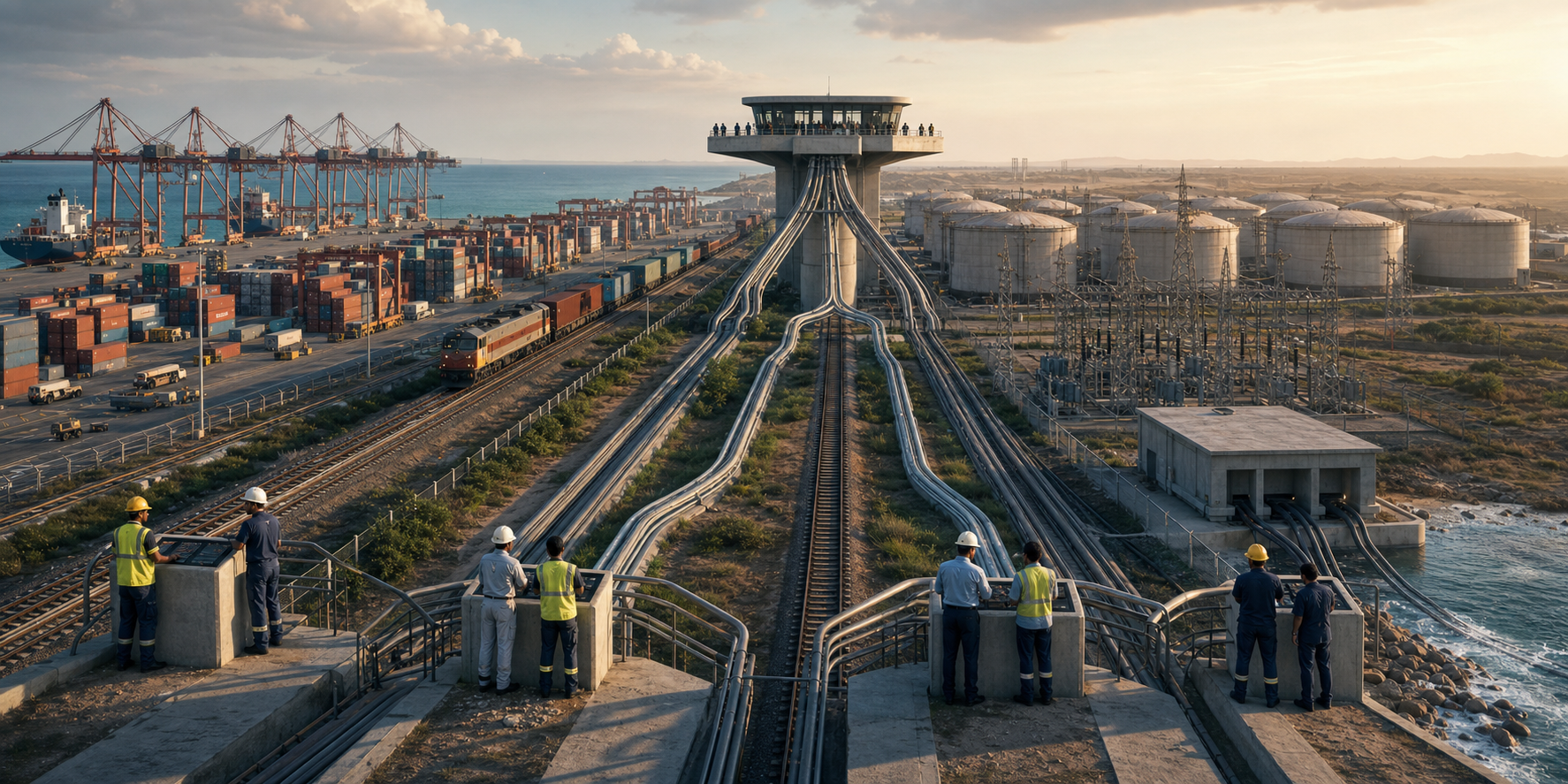
A Chinese-funded road, port or telecommunications system is not inherently a security threat. Commercially useful infrastructure can improve mobility, trade and public services. The strategic issue arises when a host country cannot inspect the arrangement, refinance its obligations, secure the resulting data, replace the supplier or retain effective authority over an essential facility.
The source analysis identifies several variables that determine the risk: ownership, financing terms, contractual control, location, technical specifications, data access and security arrangements. These variables matter more than a project’s label. A nominally civilian facility may remain entirely commercial, but its location, communications equipment or logistical capabilities could also make it useful during a crisis. Conversely, suspicion based solely on the nationality of a contractor can obscure both the project’s economic value and the host government’s agency.
China’s potential advantage, according to the article, is the ability of state-linked banks, manufacturers, construction companies, defence industries and diplomatic institutions to support connected objectives. Finance can lead to construction and long-term maintenance; maintenance can bring technology, software and logistical access; and those relationships can generate knowledge or political leverage. This is a pathway rather than an automatic outcome, so it requires project-level evidence rather than a presumption of hostile intent.
Key takeaways
- Chinese influence becomes strategically significant when several dependencies reinforce one another across finance, infrastructure, defence supply, technology and diplomacy.
- India faces the region’s clearest combination of direct military pressure and deep economic exposure, making selective risk reduction more practical than indiscriminate separation.
- Pakistan approaches China as a strategic partner, while other neighbouring governments retain their own interests and bargaining power; South Asia is not a field of passive states.
- Transparency, regulatory control, supplier alternatives and the ability to operate essential systems during a crisis are better risk indicators than the mere presence of Chinese investment.
India shows how military and economic exposure overlap

India’s relationship with China demonstrates why military and economic assessments cannot be separated. The article identifies the unresolved boundary, competing territorial claims and deployments along the Line of Actual Control as the most direct security dimension. It cites the violence in the Galwan Valley in 2020 as evidence that arrangements intended to preserve stability can fail under pressure.
The source also records a later diplomatic development that complicates any simple account of continuous escalation. Citing an Indian Ministry of External Affairs parliamentary answer, it reports that India and China agreed on patrolling arrangements in Depsang and Demchok on 21 October 2024, followed by disengagement from friction points associated with the 2020 crisis. The analytical distinction is important: disengagement can reduce immediate contact without producing wider de-escalation, restoring trust or resolving the boundary.
In the eastern sector, the article reports Chinese objections to Indian political activity in Arunachal Pradesh, the assignment of Chinese names to locations and infrastructure development near disputed areas. It presents these measures as legal, diplomatic and psychological pressure alongside the physical military contest. Tibet’s geography adds another layer because the plateau overlooks the Himalayan frontier, although religious access, rivers and territorial claims still require separate evidence-based assessments rather than being folded into a single theory.
Economic exposure creates a different kind of constraint. Drawing on official Indian commerce data, the source reports that India imported approximately US$113.45 billion in merchandise from China and exported about US$14.25 billion in 2024-25. It also notes that many imports are machinery, electronics, components, capital goods and active pharmaceutical ingredients used by Indian producers. The imbalance therefore cannot be understood only as lost market share: some Chinese inputs also support domestic output.
This produces a difficult policy problem. Abrupt separation could disrupt Indian manufacturing, while concentrated dependence in essential sectors could give a supplier leverage during a confrontation. The relevant objective is consequently not the elimination of all trade, but the identification of components and systems whose interruption would impose unacceptable national costs.
The neighbourhood is a field of bargaining, not a chessboard

South Asian geography magnifies the regional effects of national decisions. The source situates India, Pakistan, Nepal, Bhutan, Bangladesh, Sri Lanka and the Maldives between the Himalayan approaches, the Bay of Bengal and the Arabian Sea, while extending its strategic frame to Myanmar because of its influence on adjoining land and maritime corridors. Roads in mountain regions, ports near major sea routes and digital networks serving national institutions can therefore have consequences beyond the country hosting them.
Yet the same Chinese relationship does not carry the same meaning everywhere. India treats China as a direct military competitor as well as a major supplier. The article characterises Pakistan as viewing Beijing as a strategic partner and major defence supplier. For smaller states, engagement may offer financing, infrastructure or diplomatic room for manoeuvre, even as opaque liabilities, exclusive vendor relationships or weak regulatory oversight create risks.
This variation makes the familiar image of geopolitical encirclement incomplete. It captures India’s concern about accumulating access around its continental and maritime environment, but it can also erase the motives of neighbouring governments. Those governments negotiate among competing external partners, respond to domestic constituencies and may revise arrangements when political or economic circumstances change. Their choices should be examined as sovereign decisions, not treated as moves ordered from Beijing.
The more precise concern is cumulative optionality. A port need not be a foreign naval base to provide useful logistical information. A telecommunications vendor need not control national policy to create dependence on maintenance, updates or proprietary systems. A creditor need not dictate routine decisions to gain influence when refinancing becomes urgent. Strategic weight emerges when several such relationships converge and the host government lacks credible alternatives.
A practical test for influence and regional resilience

Five tests can separate ordinary economic engagement from consequential dependence. Criticality asks whether the asset supports an essential function such as power, communications, health, transport or defence. Control covers not only legal ownership but also software, data, maintenance and operating knowledge. Transparency examines contracts, guarantees and refinancing obligations. Substitutability measures whether another supplier can take over at tolerable cost and speed. Crisis utility considers how the asset or information could be used when normal political relations deteriorate.
This framework also points toward proportionate responses. Competitive procurement can reduce exclusive dependence; publication and legislative scrutiny of major commitments can expose hidden liabilities; independent cybersecurity review can test digital systems; and diversified supply chains can protect essential production without requiring blanket economic disengagement. Domestic maintenance skills matter because nominal ownership offers limited autonomy when only an external vendor can keep a system operating.
For India, resilience also depends on maintaining credible border preparedness while preventing tactical incidents from automatically determining the entire bilateral relationship. For neighbouring countries, stronger regulatory institutions and multiple financing options can improve bargaining power. Regional partnerships will be more persuasive when they offer reliable development benefits and respect local priorities rather than demanding alignment as proof of friendship.
South Asia’s next strategic contest will be shaped as much by contracts, technical standards and replacement capacity as by visible military deployments. Governments that preserve the ability to inspect, renegotiate and substitute will remain better placed to benefit from Chinese engagement without allowing interdependence to harden into constraint.