
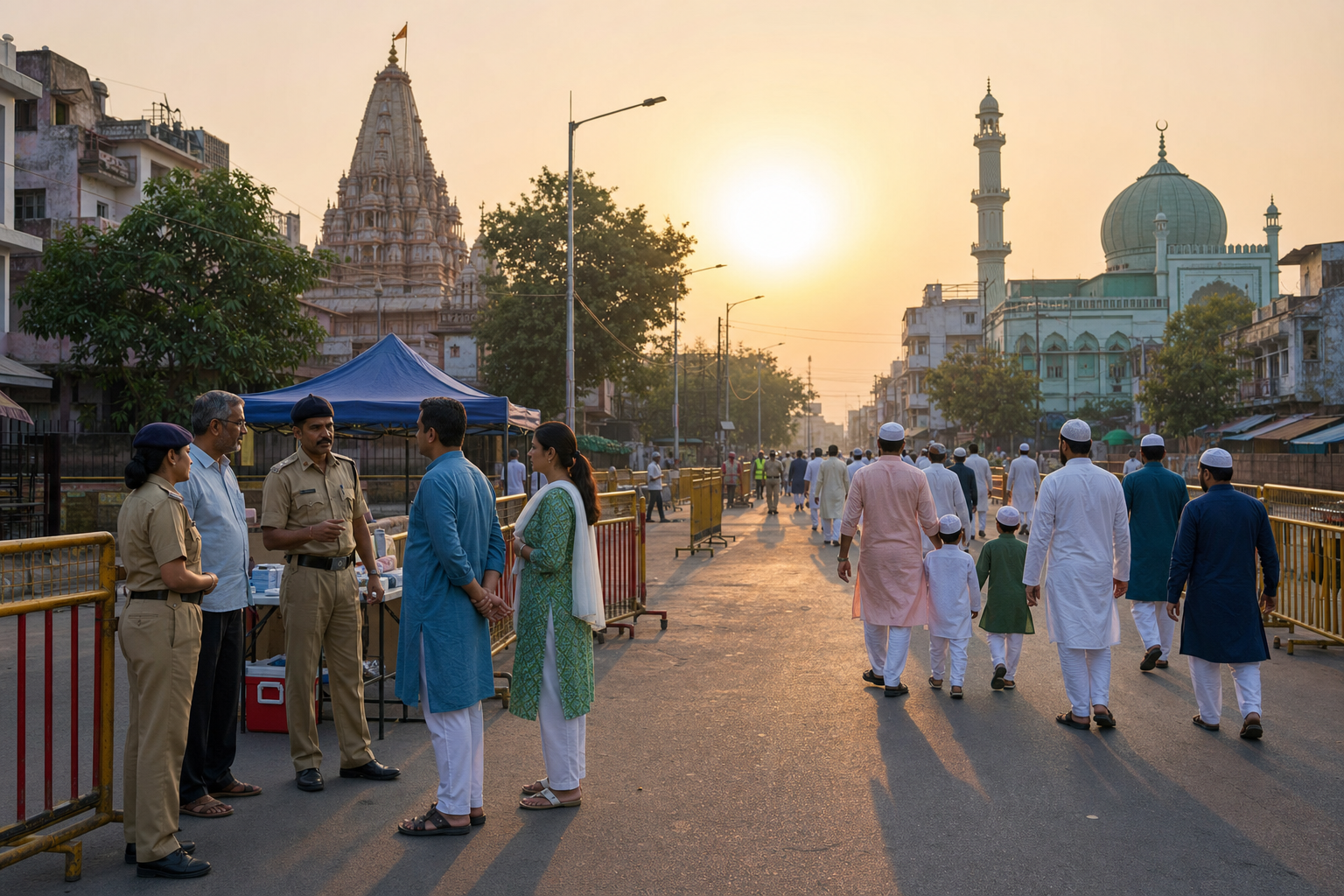
If Eid al-Adha in your area now arrives with worry about street disorder, visible animal slaughter, inflammatory messaging, or the safety of your children, you do not have to choose between silence and fury. You can defend Hindu dignity, insist on equal enforcement, and protect your family without turning an alleged offence into a judgment against every Muslim.
The practical task is to prepare before tension rises, distinguish verified misconduct from lawful religious observance, and create an evidence trail when a crime occurs. That combination is firmer than a rumour-driven confrontation because it gives police, courts, administrators, and responsible community leaders something concrete to act on.
Separate crime, public-order breaches, and lawful observance
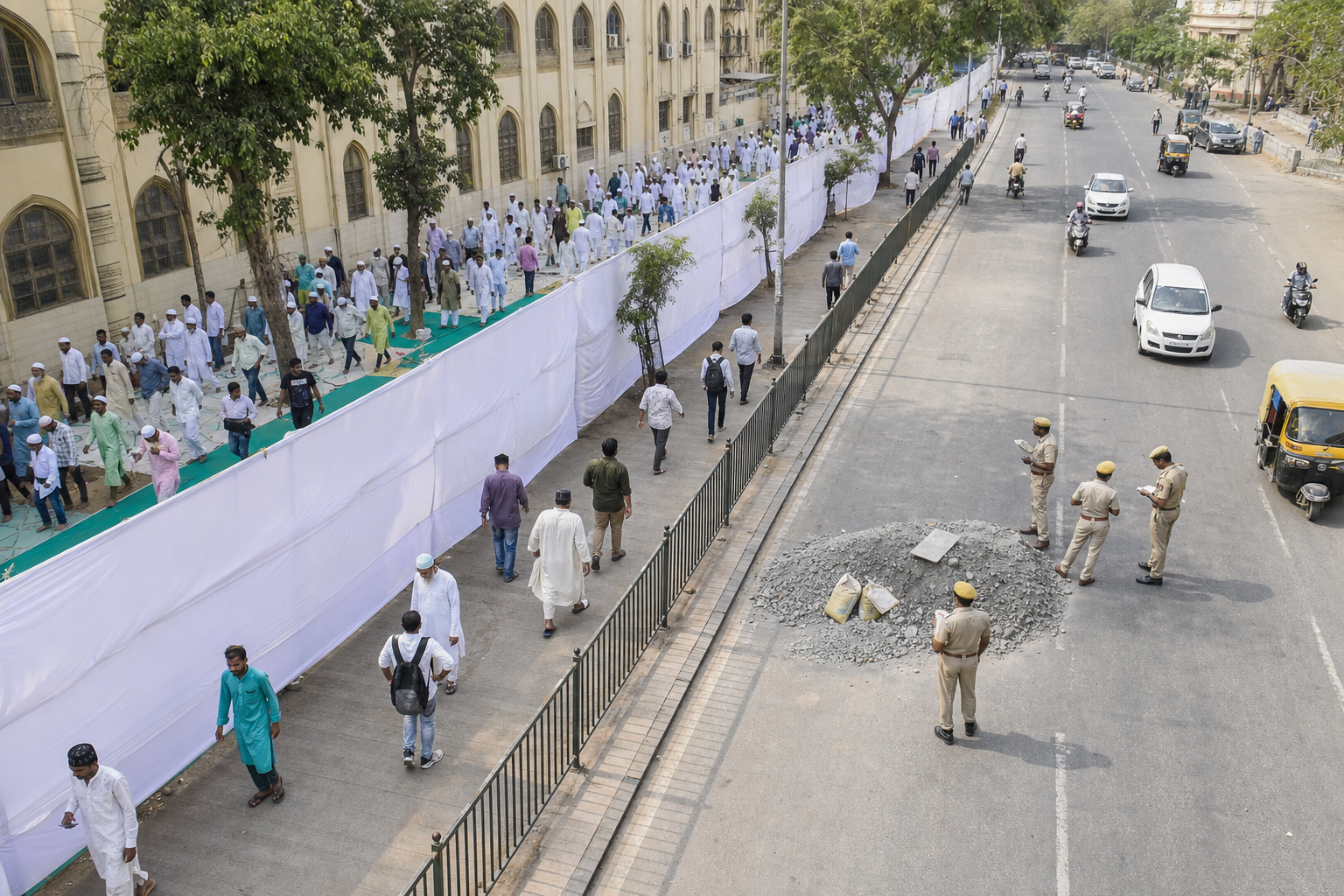
Public discussion becomes dangerous when every incident is described simply as a communal clash. That label can blur who did what, hide an identifiable victim, and invite people with no connection to the event to retaliate against one another. Start by identifying the kind of problem actually in front of you.
If someone has been attacked, threatened, restrained, or lured into danger, treat it as a potential crime. Move the person to safety, seek emergency assistance, and give police a factual description of conduct, people, time, and place.
If the issue is road obstruction, unauthorized gathering, waste disposal, excessive crowd pressure, or use of a protected site, treat it as a regulatory and public-order matter. Ask which authority controls the space and what written order applies.
If an observance is permitted but distressing to you, do not manufacture an offence that the applicable rules do not recognize. Reduce unwanted exposure, document any actual breach, and pursue a change through lawful representation.
If the claim exists only in a forwarded message or short video, treat it as unverified information. A clip may omit the location, the sequence before the recording, or the date on which it was made.
The fatal stabbing of 17-year-old Surya Pratap Chauhan in Ghaziabad shows why these distinctions matter. Initial local accounts linked the preceding interaction to an invitation to witness goat slaughter during Bakri Eid, but the alleged participants, sequence, and motive still require verification through investigation and adjudication. The established fact of a young life lost demands seriousness; the preliminary character of the surrounding allegations demands accuracy.
You can therefore hold two positions without contradiction: every person proved responsible must face individual, evidence-based accountability, and people who merely share a religious identity with an accused must not be assigned collective guilt. Refusing collective blame is not softness toward violence. It protects the credibility of the demand for justice and reduces the chance of another innocent family becoming a victim.
Build a festival-day plan before the crowd forms
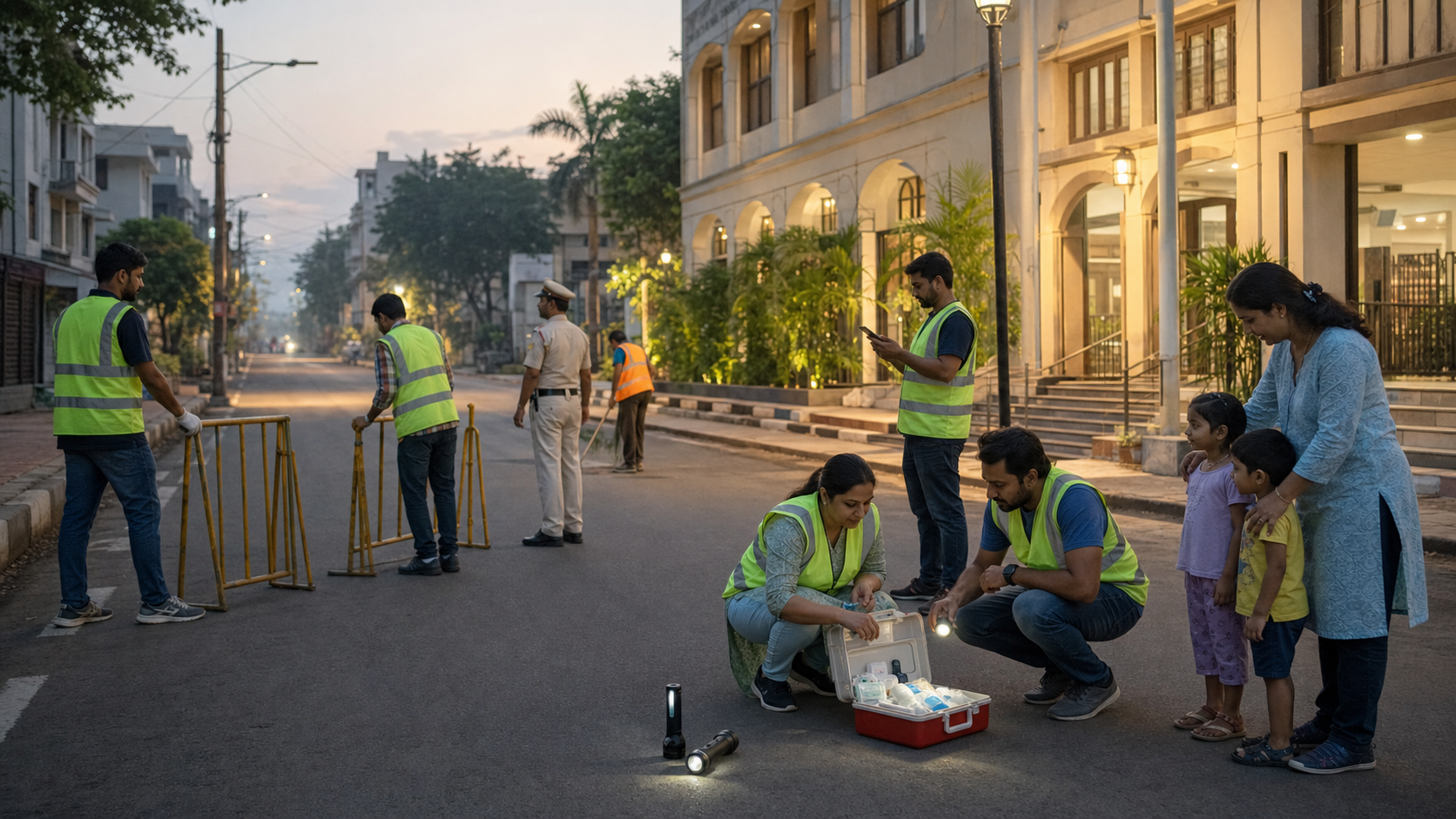
Most families make safety decisions only after a procession, gathering, or argument has already altered the street. By then, children may be away from home, traffic routes may be blocked, and contradictory messages may be circulating. A one-page household or neighbourhood plan is more useful than a large messaging group with no verification rule.
Before the day
Check the latest district administration, local police, municipal, or site-management advisory. Record the applicable entry rules, traffic diversions, gathering locations, and restricted areas. Do not rely on what was permitted in a previous year.
Save the numbers of the local police station, beat officer or community liaison, resident welfare association contact, and the adult responsible for each child. Put the same list on paper in case mobile connectivity becomes unreliable.
Walk the route used by school-age children and older relatives. Identify a normal route, a safer alternative, and a nearby staffed place where they can wait. Use a buddy or escort arrangement when unusually heavy movement is expected.
Tell minors not to follow anyone to a private residence or isolated location to view slaughter, investigate a disturbance, or settle an argument. This is an ordinary safety rule, not an accusation against every invitation or every household.
Choose one person to monitor verified official updates and another to contact authorities. Everyone else should forward questionable material to them privately instead of spreading it through neighbourhood groups.
If your temple, gurdwara, vihara, derasar, or RWA expects a specific problem, send a short written representation beforehand. State the location, expected risk, requested patrol or access measure, and a contact person. Avoid sweeping accusations that an administrator cannot verify or act upon.
When tension starts
Your first decision is whether the scene is safe enough to remain near. A weapon, an injury, forced entry, a rapidly compressing crowd, or an attempt to surround someone is a reason to withdraw and call emergency services. Do not approach merely to obtain better footage. Recording from danger can turn a witness into another casualty.
State what you can see: the exact location, direction of movement, visible injuries, and identifying features. Do not tell police a motive you inferred from a slogan, name, or appearance.
Move children, older people, and anyone visibly distressed away from the disputed point. Do not send young people back to gather information.
If it is safe to record, preserve the original file with its time and location information. Do not edit it, add dramatic audio, or publish faces before investigators can receive it.
For provocative but nonviolent conduct, note the time, place, words used, and authority notified. Direct argument inside a charged crowd rarely clarifies a legal question.
If you join a protest, remain within the announced place and conditions. Do not enter a worship area, protected precinct, or private property to force an immediate resolution.
A community liaison arrangement should be narrow and functional. Its purpose is to pass verified information between police, civic bodies, and local institutions, not to negotiate criminal liability or pressure a victim into compromise. Any proposed settlement involving violence, intimidation, or legal rights should be reviewed by a qualified lawyer.
After violence, turn outrage into an evidence trail
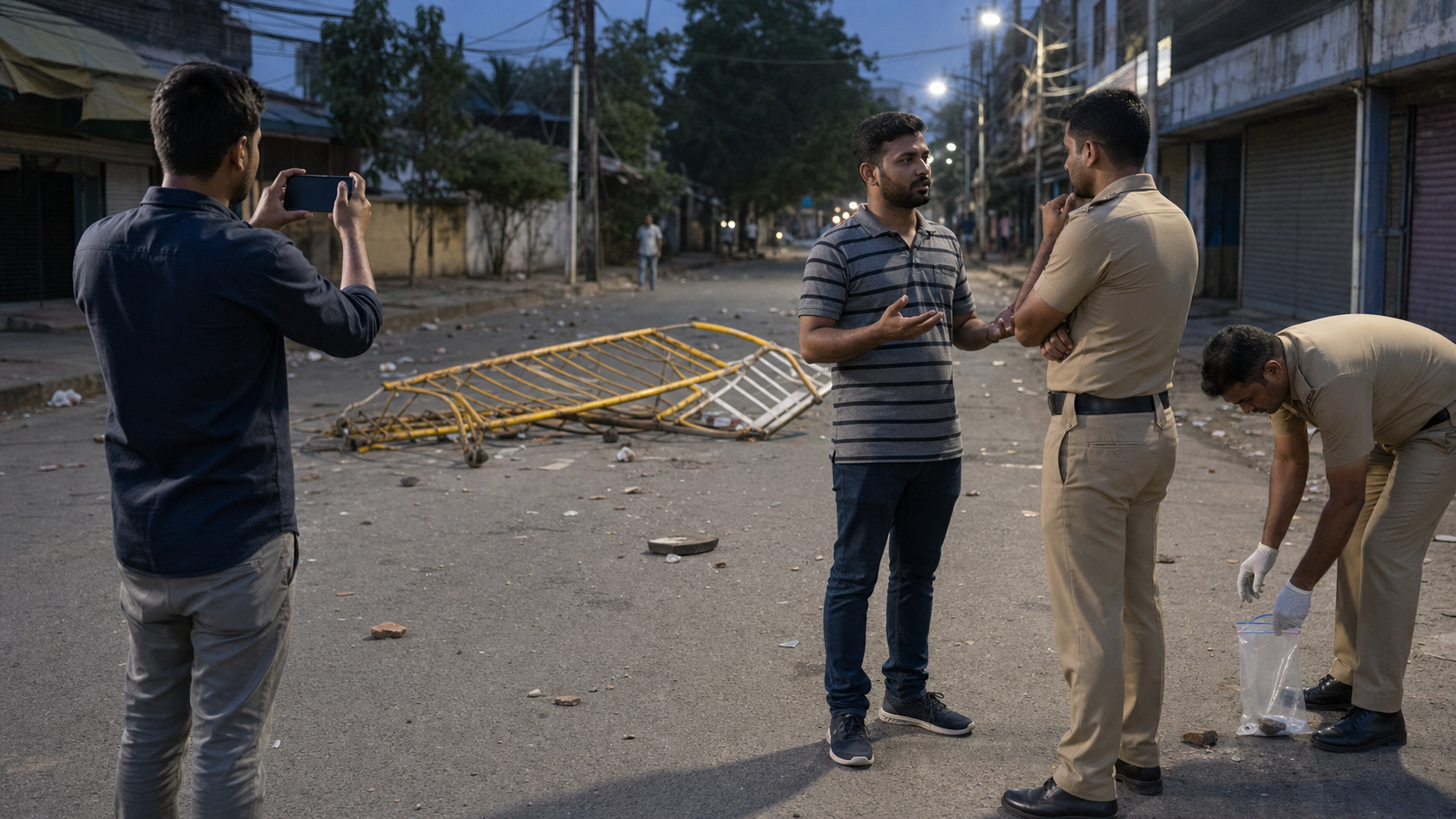
Anger can produce a crowd quickly, but a case depends on records. The family and its supporters should concentrate on the actions that preserve evidence and make institutional delay visible.
Attend to medical and personal safety first. Preserve hospital, medico-legal, and post-mortem records where applicable. Do not circulate images of the injured or deceased as proof.
Write a plain chronology while memories are fresh. Separate what each witness personally saw or heard from what someone else later told them.
Ask for the FIR number, the name and contact details of the Investigating Officer, and the method for requesting case updates. Describe conduct in ordinary language rather than guessing which penal section should be used.
List possible evidence: CCTV cameras, original phone recordings, call records that investigators may lawfully seek, vehicles, clothing, medical documents, and people present. Ask nearby property managers to preserve relevant CCTV before routine overwriting can occur.
Keep a contact log showing when evidence or representations were submitted, to whom, and what acknowledgement was received. Retain copies of written complaints and receipts.
If the family needs representation, approach a lawyer or the District Legal Services Authority. Ask specifically about victim-compensation eligibility and whether the Witness Protection Scheme of 2018 is appropriate for anyone facing intimidation.
These are general civic steps, not case-specific legal advice. The applicable criminal provisions, rights of a juvenile accused, evidence strategy, and available remedies depend on the facts and the law in force. A lawyer should review any decision that could affect testimony, settlement, compensation, or court proceedings.
Digital restraint is also part of justice. Do not publish a witness’s address, a minor’s identity, an unverified list of accused people, or graphic material. Doxxing can expose families to retaliation, contaminate identification evidence, and punish an innocent person before police have established a case. Give original material to investigators or counsel and retain a secure copy.
A public campaign is strongest when its requests can be measured: preserve named CCTV footage, investigate identified suspects, provide a written status update through the lawful process, protect threatened witnesses, and help the bereaved family access compensation. Calls to punish a neighbourhood, boycott unrelated families, or retaliate against a place of worship replace individual responsibility with collective vengeance.
At shared and protected sites, demand written and equal rules
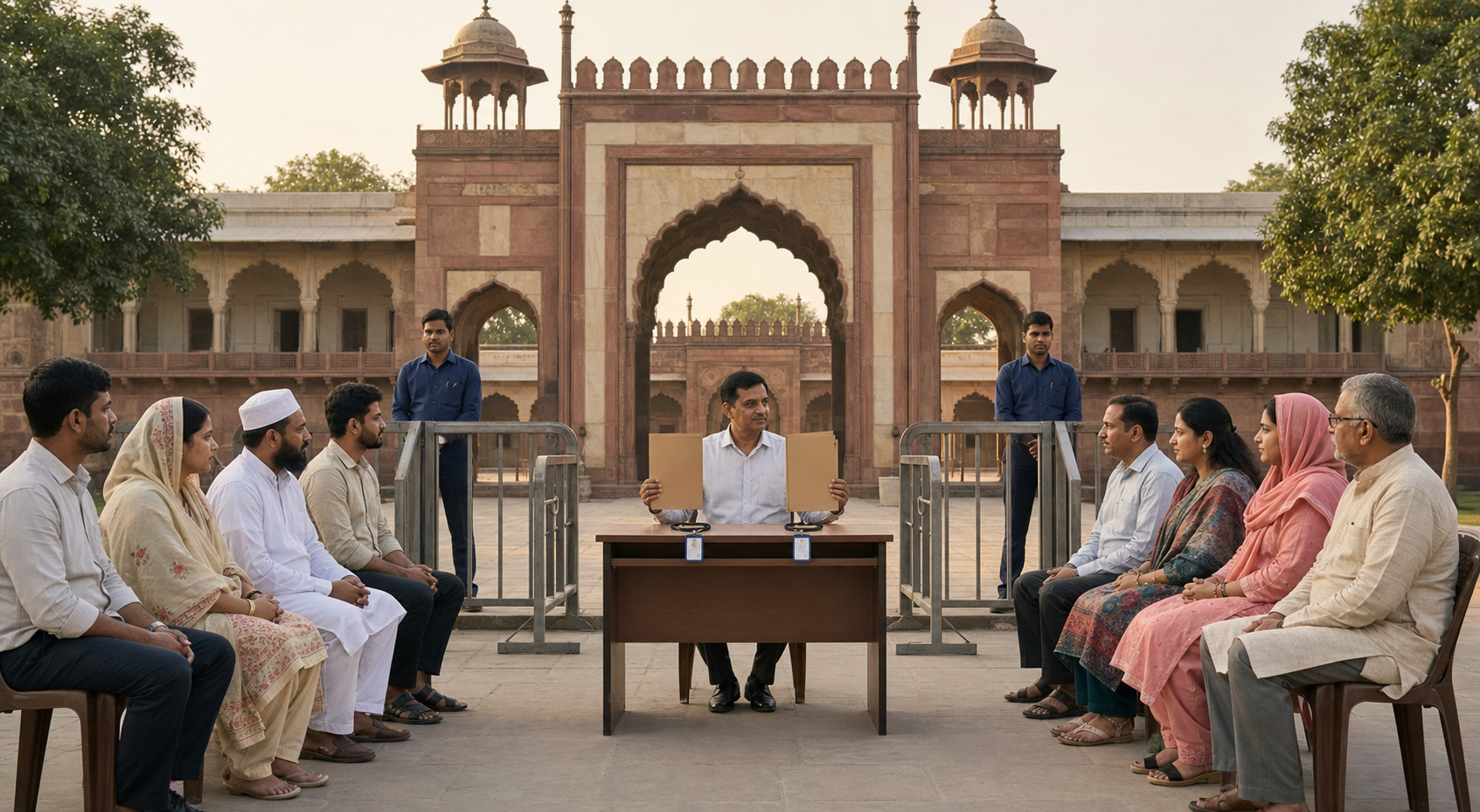
Religious freedom does not create an unrestricted right to use every place in any manner or at any scale. Articles 25 and 26 of the Constitution protect religious practice subject to public order, morality, and health. Public-order restrictions, in turn, should not become an excuse for selective or improvised treatment of one community.
A protest on 29 May 2026 against Eid al-Adha namaz within the Taj Mahal precincts placed this tension at a protected monument containing a functioning mosque. The Archaeological Survey of India generally distinguishes historically continuous worship at a living monument from a new ritual or an expansion of use. Continued worship can still be limited by conservation, access, crowd management, and security requirements under the AMASR framework.
If a dispute arises at the Taj Mahal or another protected or shared site, ask precise questions before joining a confrontation:
Is the activity historically continuous worship, a newly introduced practice, or an exceptional expansion for a festival?
What current written order from the ASI, district administration, police, or other controlling authority governs it?
Do the rules distinguish ordinary worship days from a major festival gathering?
What capacity, queue, entry, identity, timing, and security controls apply?
If the protected precinct cannot safely accommodate the expected number, what larger lawful venue or alternate arrangement has been announced?
Are comparable restrictions being enforced consistently when other communities use congested or protected civic spaces?
The strongest civic demand is not a shouted historical claim at the gate. It is a published, time-bound standard operating procedure that residents, worshippers, visitors, police, and site staff can read before arrival. It should specify permissible activity, access conditions, crowd limits where required, alternate locations, and the official channel for changes. Predictability removes the ambiguity that opportunistic mobilizers exploit.
A pro-Hindu position can be explicit here: heritage must be conserved, unauthorized expansion should not be normalized, public streets and visitor access deserve protection, and the same administration must apply the same governing principle consistently. Credibility requires us to accept equivalent limits on unauthorized obstruction, intimidation, and damage when a Hindu event is involved.
Dharmic ethics help convert that principle into conduct. Ahimsa rules out revenge against uninvolved people but does not require passivity toward an attacker. Jain anekantavada asks you to distinguish what was observed, what was inferred, and what remains unknown; it does not turn right and wrong into moral equivalents. Buddhist compassion keeps concern for suffering from becoming hatred of a population. Sikh seva turns solidarity into meals, transport, accompaniment, and practical support for a victim’s family. Hindu acceptance of multiple marga supports equal civic space without requiring you to abandon your own convictions.
Dharmic institutions can make those values operational. They can appoint trained liaison contacts, host sessions on emergency response and citizens’ legal rights, maintain a rumour-verification chain, and offer supervised physical-fitness or self-defence instruction through qualified coaches. Such training should build awareness, escape skills, discipline, and confidence. It should never become a vigilante unit organized around hostility to another community.
Key takeaways
Classify the event before reacting: violent crime, regulatory breach, lawful observance, and unverified online content require different responses.
Prepare routes, contacts, youth-safety rules, and a verification channel before a high-mobility festival day.
In immediate danger, withdraw and call for help. Evidence is valuable only when gathering it does not expose you or another person to greater harm.
After violence, preserve original files, build a witness-by-witness chronology, track the FIR and Investigating Officer, and seek qualified legal support.
At monuments and shared spaces, demand written, prospective, and equally enforced rules instead of an improvised confrontation.
Seek individual accountability without collective punishment. That is both a Dharmic discipline and the foundation of a credible justice campaign.
Before the next sensitive date arrives, save the relevant police and civic contacts, walk the route your children use, and agree on one trusted verification channel. Preparedness is neither fear nor appeasement. It is how you protect life and dignity without handing your judgment to a crowd.
References
- DharmaRenaissance Blog — Ghaziabad Teen Killed During Eid: Hard Facts, Justice Roadmap, and Paths to Harmony
- DharmaRenaissance Blog — At the Taj Mahal, Eid al-Adha Namaz Protest Sparks High-Stakes Debate on Heritage, Faith, and Law