
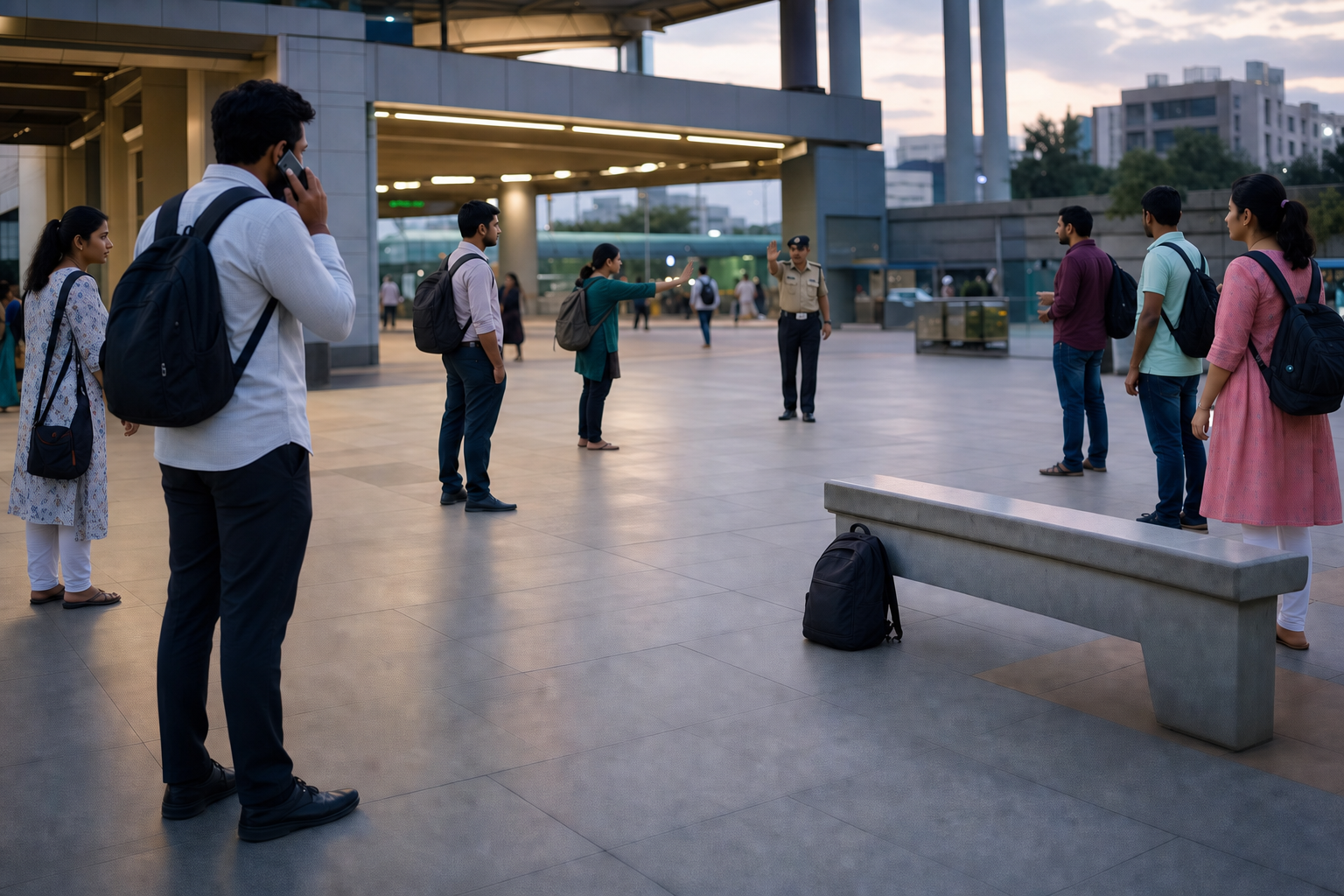
You notice a bag, parcel, toy, or piece of electronics where it does not belong. Your first impulse may be to inspect it, move it aside, or film it. In a possible urban IED incident, those are precisely the impulses to resist.
Your job is not to decide whether an object contains an explosive. Your job is to create distance, keep other people from approaching, and give police or security staff a clear report. That simple division of responsibility protects you, preserves evidence, and leaves the dangerous work to trained personnel.
Ordinary appearance is not proof of safety
A concealed improvised explosive device exploits ordinary habits more than technical sophistication. A familiar object lowers attention. Curiosity draws people closer. Once someone stops to inspect it, others may gather to watch. The resulting crowd can become part of the danger.
A reported Mumbai investigation involving two detained suspects and an alleged toy-car IED plot remains subject to investigation and judicial scrutiny. Its practical lesson does not require prejudging the case: an object’s familiar shell must never override the circumstances in which it appears.
This does not mean that every abandoned toy, lunch box, package, or electronic device is a bomb. It means that you should judge the situation before you judge the object. Is it unattended? Does anyone nearby claim it? Is it in a place where such an item would not normally be left? Is it obstructing a controlled entrance, sitting near a dense queue, or positioned beside essential infrastructure? Has someone already tried to move it without establishing ownership?
No single observation proves malicious intent. You do not need proof before alerting responsible staff. The sensible reporting threshold is an unexplained object in a consequential place, not personal certainty that an attack is underway.
Key takeaways
- Pay more attention to unexplained placement and absent ownership than to whether an object looks harmless.
- Do not touch, open, shake, move, cover, photograph at close range, or attempt to test a suspicious item.
- Move away, discourage other people from approaching, and report from a safer position.
- In India, call 112 or notify the nearest police or security personnel.
- Describe what you observed without declaring that the item is a bomb or assigning a motive.
- Report behavior and location, never a person’s religion, clothing, language, caste, or community identity.
What to do when you find a suspicious object
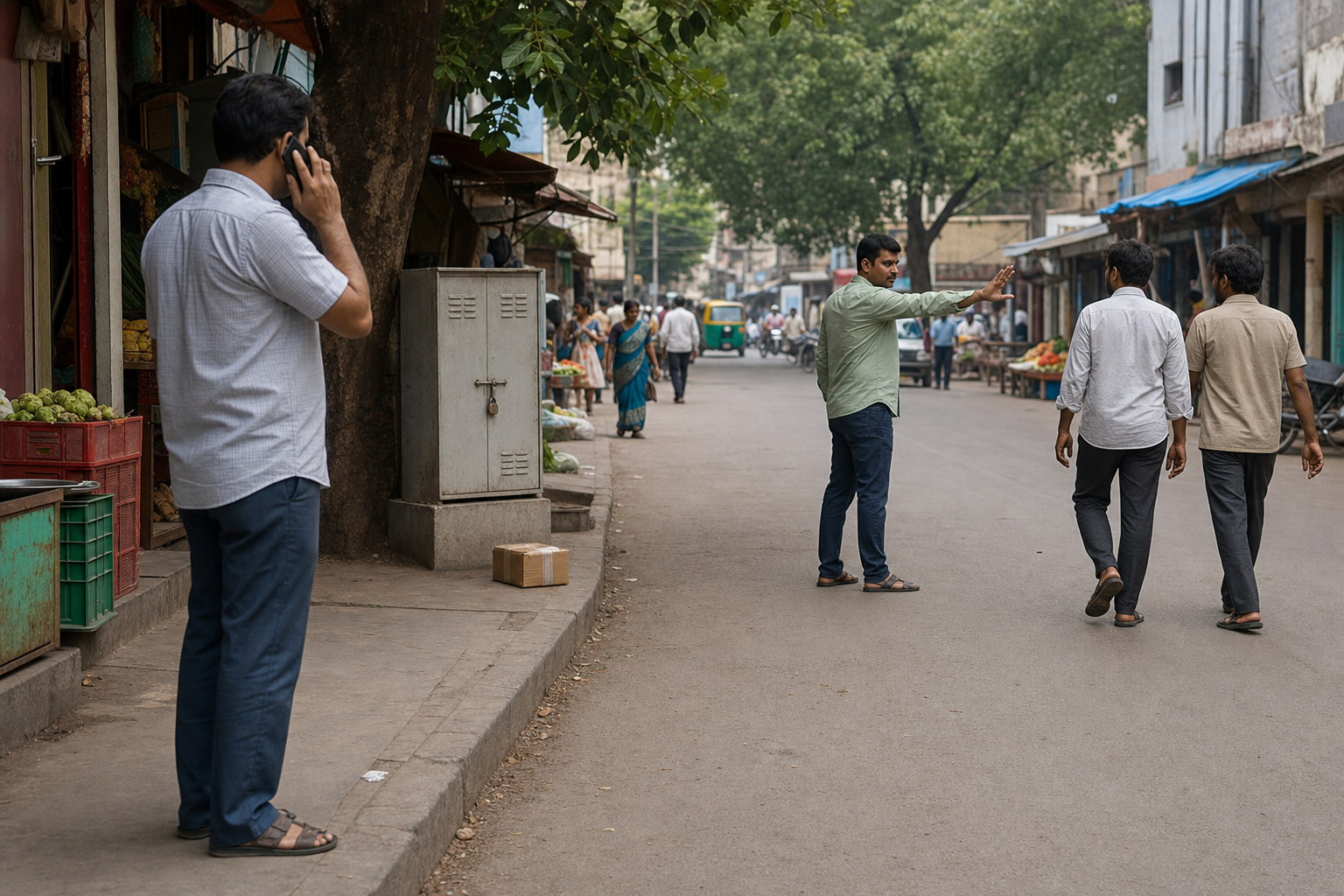
A good response is deliberately uneventful. It avoids both curiosity and panic. Use this sequence whenever an unexplained object raises a credible concern in a station, market, mall, school, parking area, street, temple, gurdwara, vihara, Jain derasar, or public gathering.
- Stop where you are. Do not make physical contact with the object or disturb anything around it. Do not ask a child, cleaner, vendor, or junior employee to inspect it for you.
- Move away calmly. If you can warn nearby people without returning toward the item, ask them to step back. Use plain language and avoid unsupported claims that could cause a rush or stampede.
- Report from a safer position. Call 112 or contact onsite police or security. Give the exact venue, the object’s location within it, a nearby landmark, a neutral description, when you noticed it, and what made its placement unusual.
- Keep the approach clear. Do not form a viewing circle, block an entrance, park nearby, or send other people toward the location. Explosive Ordnance Disposal personnel and emergency responders need unobstructed access.
- Follow the cordon and evacuation instructions you receive. The safest direction may depend on the object’s position, so do not insist on using a familiar gate or assembly area when authorities redirect you.
- Record useful observations only after reaching safety. Note what you directly saw, including relevant movements or vehicles, but do not chase, confront, detain, or interrogate anyone. Give those details privately to police.
Do not move an item to a lost-property desk or place it in a bin to clear the walkway. Do not pour water on it, cover it with a cloth, place another container over it, or attempt to disconnect anything. A well-intentioned intervention can injure the person intervening, alter evidence, and make the scene harder for specialists to assess.
Resist the urge to publish a close-up image or live location on social media. An unverified warning can send crowds toward the scene, obstruct responders, expose tactical movements, and wrongly identify an innocent person. Tell the authorities first. If public communication becomes necessary, share only confirmed official instructions.
Vigilance must not become profiling or vigilantism
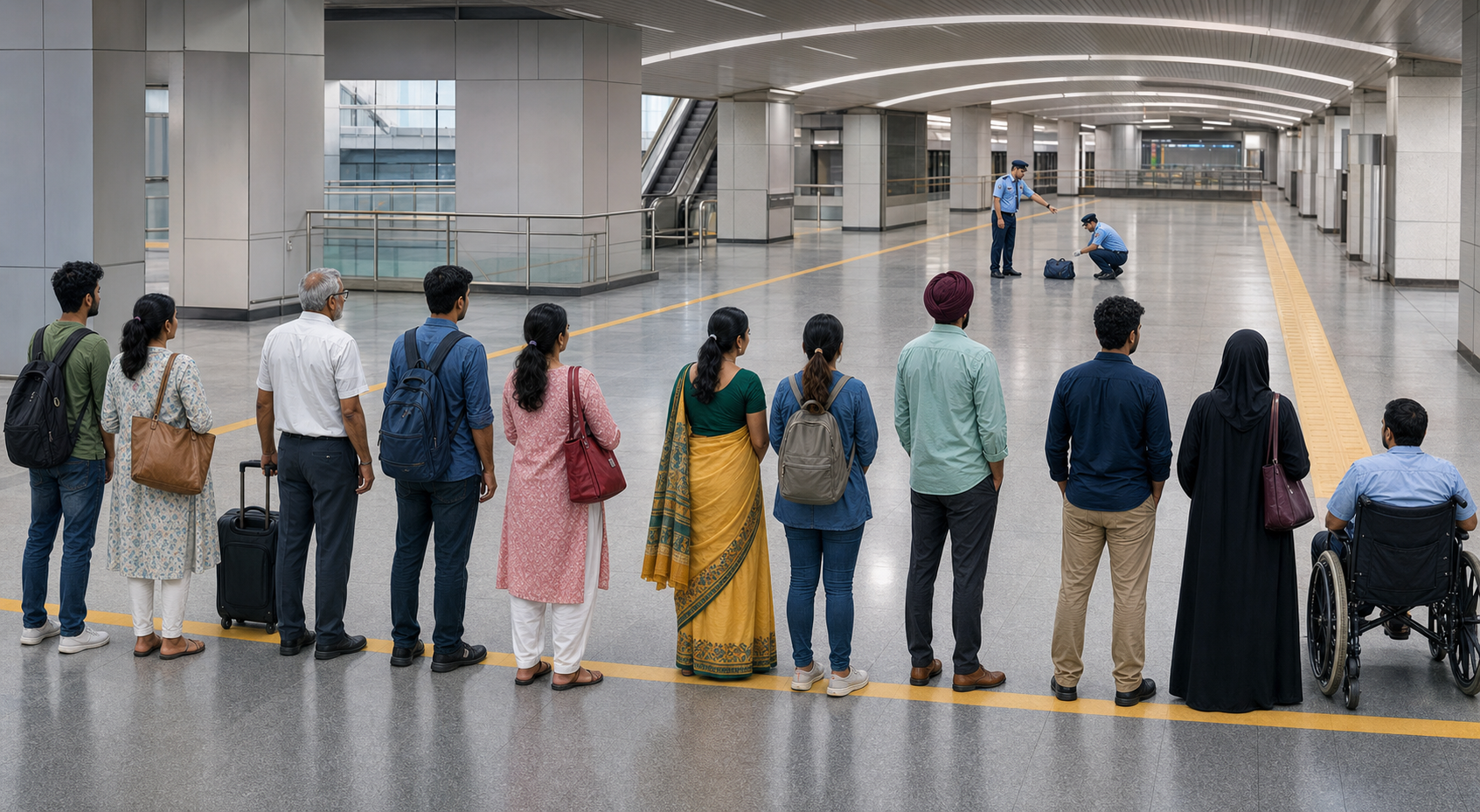
A useful witness reports observable facts. An unreliable witness supplies a communal theory. The distinction matters because police need precise information, not assumptions about who appears to belong in a neighbourhood or place of worship.
A useful report sounds like this: an unattended object is beneath the east stairwell; nobody nearby claims it; it was not there when the shop opened; the nearest public entrance is beside it. An unhelpful report focuses on a stranger’s dress, accent, religious appearance, or presumed nationality without describing any dangerous act. The first gives responders something they can verify. The second creates noise and risks harming an innocent person.
Do not search another person’s bag, surround a suspected individual, block a vehicle, or organize an improvised patrol to pursue someone. Apart from the risk of violence, such actions can contaminate evidence and interfere with a lawful investigation. Observe from safety, note only what you directly witnessed, and let police determine whether an offence occurred.
The same discipline applies after an arrest. Detention is not conviction, and an allegation is not a judicial finding. Names of legally proscribed organizations may be relevant to an investigation, but the alleged conduct of a cell or individual cannot be assigned to an entire religious community. Collective blame weakens the trust on which timely tips, witness cooperation, and community policing depend.
This is where a Dharmic outlook has practical force. Ahimsa is not passive denial of danger; it is disciplined action that avoids adding needless harm. Karuna restrains dehumanization, while maitri protects the civic relationships through which neighbours warn one another and institutions cooperate. Firm security and communal restraint are not competing duties. Each makes the other more effective.
Prepare your family and place of worship before an alarm
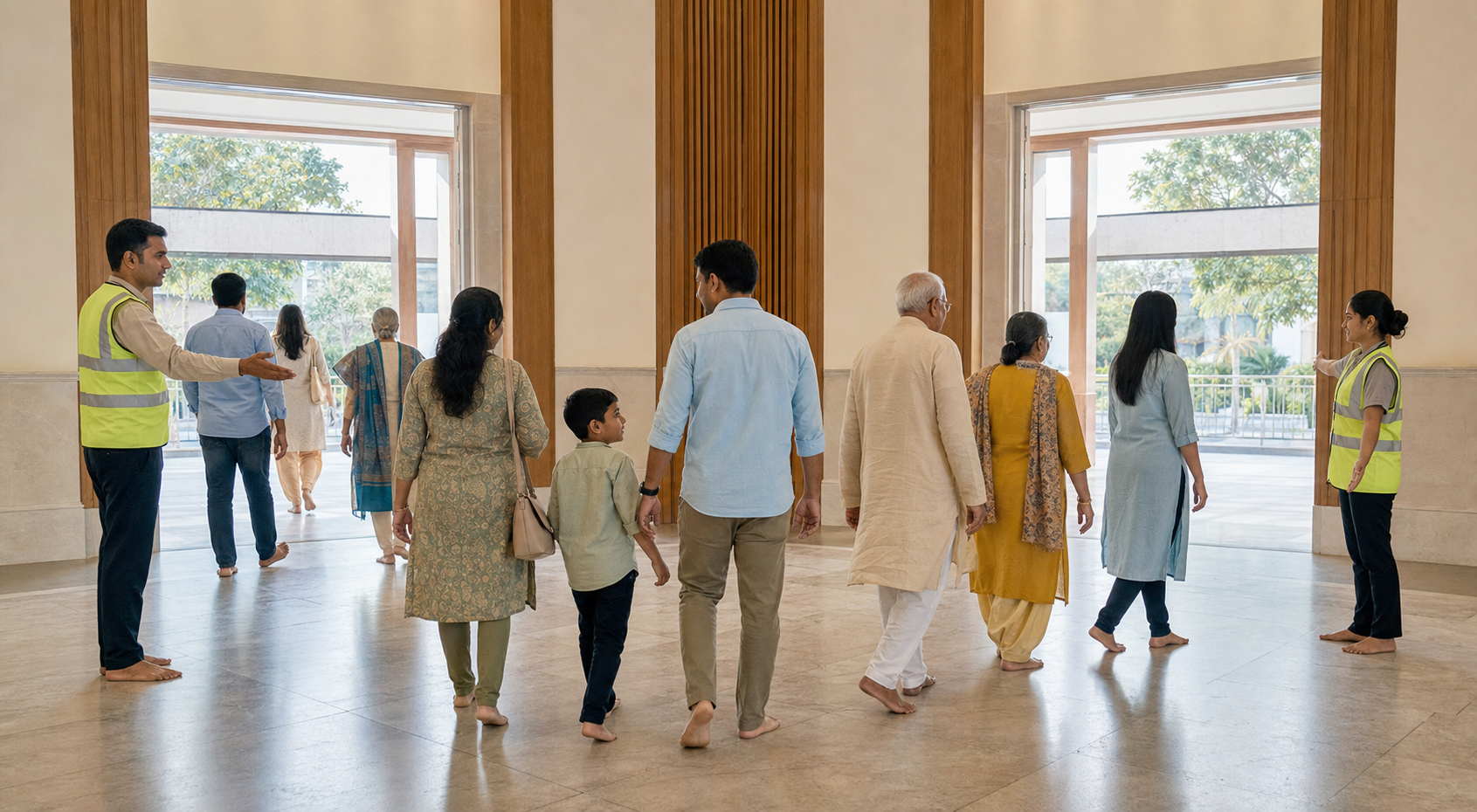
The middle of an evacuation is the wrong time to invent a family plan or decide who is authorized to speak for a venue. Preparation should be simple enough to remember under pressure and specific enough to prevent contradictory instructions.
For families
- Teach children that an unattended object is not a treasure to open, a toy to retrieve, or content for a video. They should move away and tell a trusted adult or uniformed member of staff.
- Choose a reunion point outside the main flow of people whenever you enter a large event. The point may have to change during a real incident, so children must also know to follow police or venue instructions.
- Choose one family contact who can receive updates if relatives become separated. Avoid repeated calls to everyone in the group while official instructions are still developing.
- Tell children never to return through a cordon for a phone, bag, shoes, religious offering, or other possession.
- When travelling with an older adult, a young child, or someone with limited mobility, identify the security desk and accessible exit route before joining a dense queue.
For temples, gurdwaras, viharas, derasars, and community events
- Name a security lead and an alternate. Staff and volunteers should know who contacts police, who manages public instructions, and who keeps emergency access clear.
- Give entrances, halls, stairwells, parking sections, and vendor areas consistent names. A caller who can identify an exact zone saves responders from searching a large complex.
- Brief priests, sevadars, guards, cleaners, parking attendants, stallholders, and volunteers on the same rule: do not personally inspect or relocate an unexplained object.
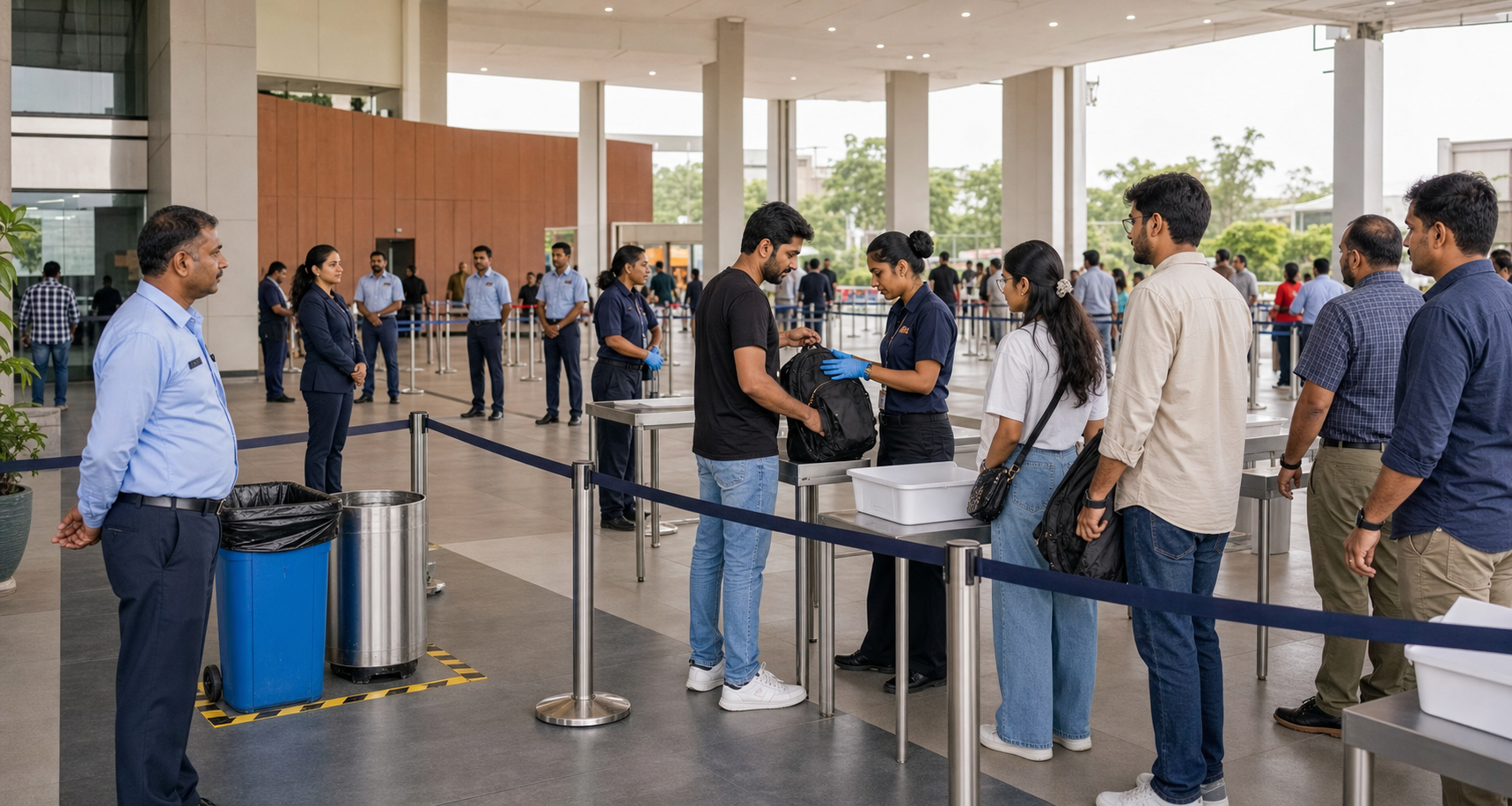
- Use randomized screening, CCTV, access control, and trained observation as layers. No scanner or camera removes the need for a person to notice an item that is out of place and report it promptly.
- Plan for evacuation routes to change according to where a threat is found. Avoid a rigid procedure that sends every crowd toward the same gate regardless of the danger’s location.
- Preserve relevant CCTV and access records for police. Do not circulate clips among volunteers or online groups, where context can be lost and innocent people can be misidentified.
For vendors, drivers, and frontline workers
Street vendors, rideshare drivers, parking attendants, cleaners, delivery staff, and shopkeepers often notice changes before a centralized security team does. They know which items belong in a location, when a package appeared, and whether a vehicle has remained outside its normal pattern. Venue managers should give these workers a direct reporting channel instead of assuming they will find the right official during a crisis.
Frontline workers should report anomalies, not conduct their own search. A cleaner who finds an unexplained package should not be expected to carry it outside. A parking attendant should not reach into an abandoned vehicle. Their value lies in early recognition, an accurate location, and timely escalation.
Prevention begins before an object reaches the street
Urban terrorism now crosses physical and digital spaces. Encrypted communications can support recruitment and coordination, while grievance narratives, social isolation, and repeated exposure to gamified or celebratory violence can make extremist conduct appear normal to a vulnerable young person. Lawful investigations may require device imaging, metadata correlation, link analysis, and cooperation across agencies. Families do not need to imitate those forensic functions.
Instead, notice combinations of change. Abrupt ideological rigidity, growing isolation, intense secrecy around online contacts, and the normalization of violence deserve a calm conversation. None of these signs alone proves radicalization. Adolescents also seek privacy, argue strongly, and change interests. Treating every disagreement as extremism will close the very line of communication you need.
Ask direct questions without turning the exchange into an interrogation. Who is this online group? What does it ask members to hide? Does it portray an entire community as less than human? Does it claim that violence is a test of loyalty? Has anyone pressured the young person to cut off family, school, or trusted friends? Listen for concrete answers rather than demanding a declaration of innocence.
If you encounter a specific threat, evidence of planning, or an identified target, do not confront an online network or attempt an amateur sting. Move to safety if necessary, contact police, and follow their instructions about preserving the device or messages. Do not delete possible evidence, but do not forward it through family or community groups either.
Where a minor is involved, public safety and accountability remain essential, but so do counseling, family support, supervised reintegration, and lawful juvenile procedures. The long-term aim is not merely to interrupt one act. It is to prevent a recruiter from replacing family, friendship, learning, and seva with a violent identity.
Temples and other community institutions can help by offering credible belonging before an extremist channel does. Sports, arts, study circles, mentoring, seva, and service across community lines give young people relationships in which grievances can be examined without being weaponized. This is not a substitute for police action when a concrete danger exists. It is the social work that reduces the space in which recruitment thrives.
Before your next visit to a crowded market, transit hub, festival, or place of worship, identify the security desk, a usable exit route, and a family reunion point. If an unexplained object appears, leave it where it is, create space, call 112 or alert onsite security, and report only what you observed. Calm attention is more protective than either indifference or panic.