
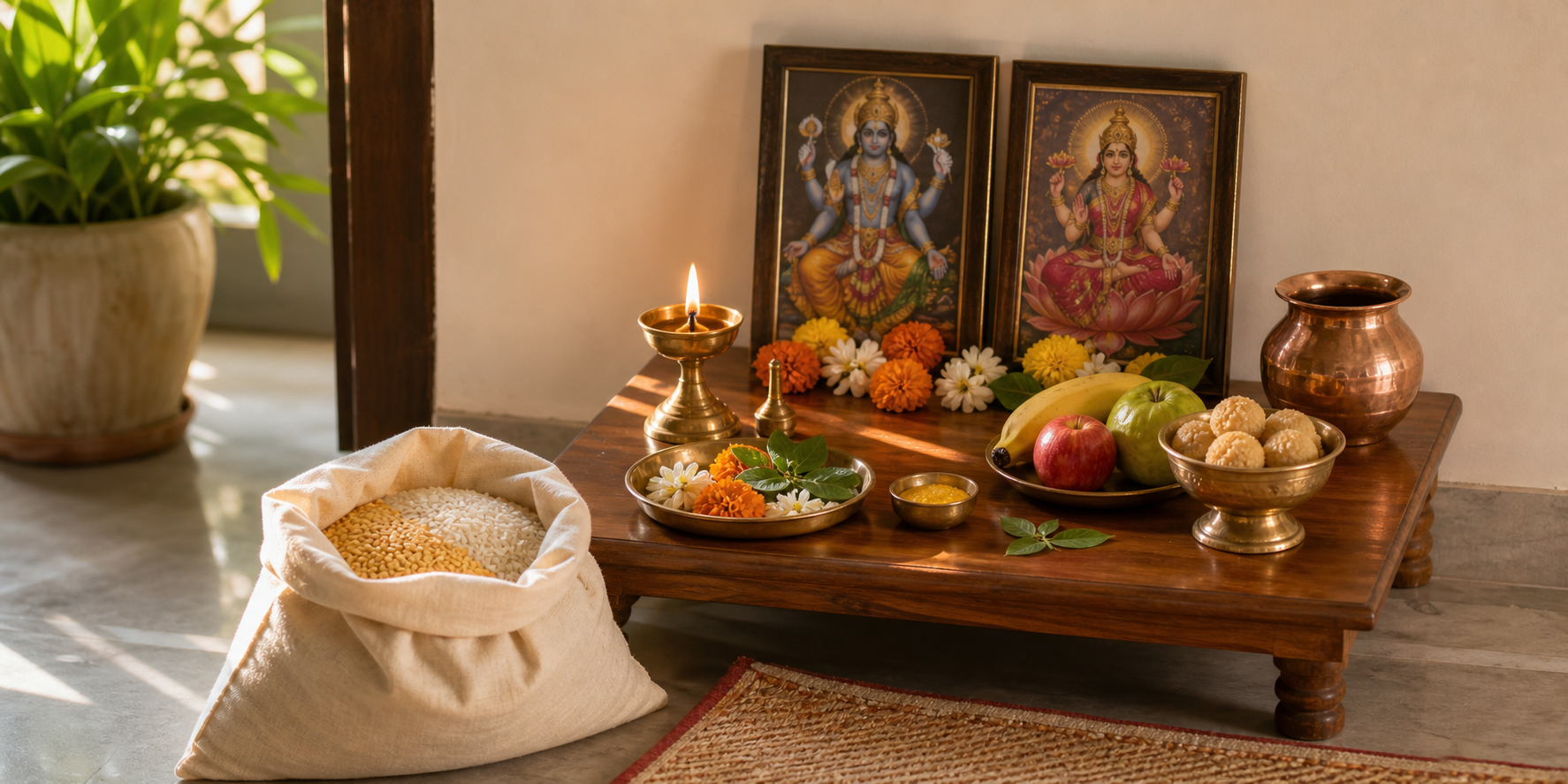
You want to observe Akshaya Tritiya properly, but the choices can become confusing: Lakshmi Puja or Vishnu worship, a long stotra or a short mantra, gold or charity, fasting or a normal meal. The simplest answer is also the most traditional: choose a sincere form of worship you can complete attentively, then make dāna that meets a real need.
You do not need an elaborate altar or an expensive purchase. A clean lamp, a clear sankalpa, one devotional focus, sattvic naivedya, and a useful gift are enough to turn Vaishakh Shukla Tritiya into a disciplined household observance. The aim is not to perform everything associated with the festival. It is to align worship, livelihood, and generosity so that the good begun on the day can continue.
Decide what “akshaya” should mean in your home
Akshaya means imperishable, inexhaustible, or not subject to decline. In the festival’s religious setting, it describes the enduring merit associated with japa, tapas, vrata, worship, and dāna. It should not be reduced to a promise that spending money on the day will automatically make you wealthy.
This distinction changes how you prepare. If prosperity is separated from dharma, Akshaya Tritiya becomes a shopping occasion. If prosperity is understood as the ability to sustain family, learning, worship, truthful livelihood, and service, the observance acquires a clear order:
- Protect what is already your duty. Do not neglect household needs, repayment obligations, or the welfare of dependants in order to make a show of celebration.
- Worship before you acquire. Begin with gratitude and sankalpa rather than a purchase.
- Set aside dāna deliberately. Decide what you will give and who can use it before considering symbolic gold, silver, or another durable asset.
- Begin one practice you can sustain. New study, community service, ethical bookkeeping, or regular food support is more faithful to the idea of akshaya when it continues after the tithi ends.
Buying gold is customary, not compulsory. If a purchase would require costly debt, disturb essential savings, or encourage an impulsive financial decision, leave it. An auspicious date does not remove price risk or replace ordinary due diligence. A book needed for study, a tool that strengthens honest work, or a contribution toward a lasting community asset may express the day’s purpose more directly than jewellery bought under pressure.
Use a trusted local panchang to confirm when Tritiya prevails in your location. Tithi boundaries depend on local sunrise and longitude, so a timing copied from another city may not apply to you. Many traditions regard the daylight portion of Akshaya Tritiya as broadly auspicious, while some families select a morning period or sthira lagna and avoid Rahu Kalam. Preserve your family or sampradāya practice where it is known; otherwise, a clean morning period during the locally applicable tithi is a sound household choice.
Fasting is similarly optional and dependent on paramparā. Do not force a vrata that is unsafe for your health. Worship, japa, restraint, and charity remain meaningful even when you need to eat normally.
A home puja that is complete without becoming burdensome
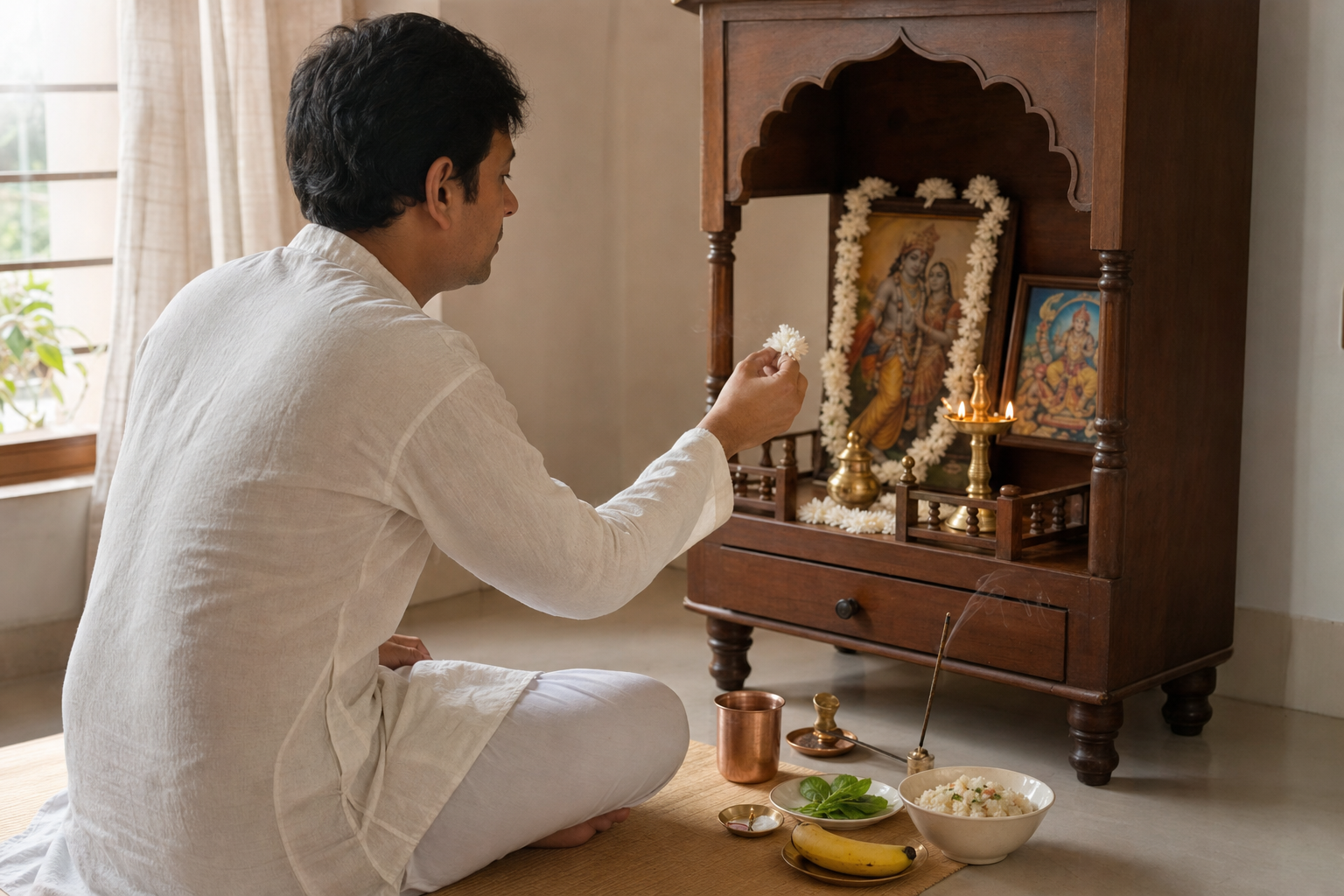
Gather only what you will actually offer
A simple household puja can be performed with items already available at home. Prepare them before you sit so that the ritual is not repeatedly interrupted.
- A clean image or murti of your chosen deity
- A lamp with ghee or suitable oil, plus incense if you use it
- Clean water in a small vessel and spoon
- Flowers or akshata
- Turmeric, kumkum, and sandalwood paste where customary
- Fruit, a sweet, or another sattvic food for naivedya
- Tulasi leaves if you are worshipping Vishnu or Krishna and they are available
- A clean cloth for the altar
- An optional kalasha, coin, Sri Yantra, or Kubera image if these belong to your household practice
No gold object is needed for the puja. A clean coin may be placed before Lakshmi as a symbol of resources held under dharmic stewardship. It should return afterward to responsible use rather than being treated as a device that guarantees profit.
Follow this sequence
- Prepare yourself and the space. Bathe, wear clean clothes, clear the altar, and sit facing east if that is practical in your home.
- Light the lamp. Settle your breathing and bring your attention to the purpose of the observance. Perform ācamana according to family practice if you know it.
- Take a sankalpa. You may use Sanskrit from your paramparā or speak clearly in your own language: “On this Vaishakh Shukla Tritiya, I undertake this worship, japa, and dāna for divine grace, the well-being of my family, righteous livelihood, and the welfare of others.” A sincere, intelligible intention is better than hurriedly repeating a formula you do not understand.
- Establish the kalasha if you use one. A traditional arrangement may include clean water, a few grains, turmeric, a coin, mango leaves, and a coconut. If you do not know kalasha-sthāpana, keep a clean vessel of water on the altar without pretending to perform a more technical rite.
- Invoke your iṣṭa-devatā. Lakshmi and Vishnu form the most widely used household focus. Gauri, Krishna with chandan, or Parashurama may be included according to lineage and regional observance.
- Offer the five upacāras. In a concise pañcopacāra puja, offer gandha, flowers, incense, lamp, and naivedya. Name each offering mentally or aloud. A full ṣoḍaśopacāra sequence is appropriate when you already know it, but procedural length is not a measure of sincerity.
- Recite one principal text or mantra. Choose a recitation you can pronounce attentively. Śrī Sūkta, Mahalakshmi Ashtakam, Vishnu Sahasranama, Lakshmi Ashtottara, a Devi prayer, or a short name-mantra are all established choices within their respective traditions.
- Offer naivedya and perform ārati. Pause before distributing prasāda. Let the offering remind the household that nourishment is received, sanctified, and shared.
- Ask forgiveness for errors. A brief kṣamā-prārthanā is sufficient: request forgiveness for mistakes in pronunciation, sequence, or attention.
- Complete the sankalpa through dāna. Do not allow charity to remain an intention noted during worship but forgotten after ārati. Give the prepared item, make the planned contribution, serve the meal, or begin the water initiative that day.
If you are worshipping with a printed picture, do not pour water or apply wet paste directly to it. Offer water in a vessel and place sandalwood before the image, or make a small application only where the material can safely receive it. Abhiṣeka is not required for a home print.
When time is limited, retain the structure and reduce the quantity: lamp, sankalpa, five offerings, one mantra, naivedya, ārati, and dāna. That concise form preserves the essential movement of Lakshmi worship from invocation to sharing.
Choose one devotional centre instead of reciting everything
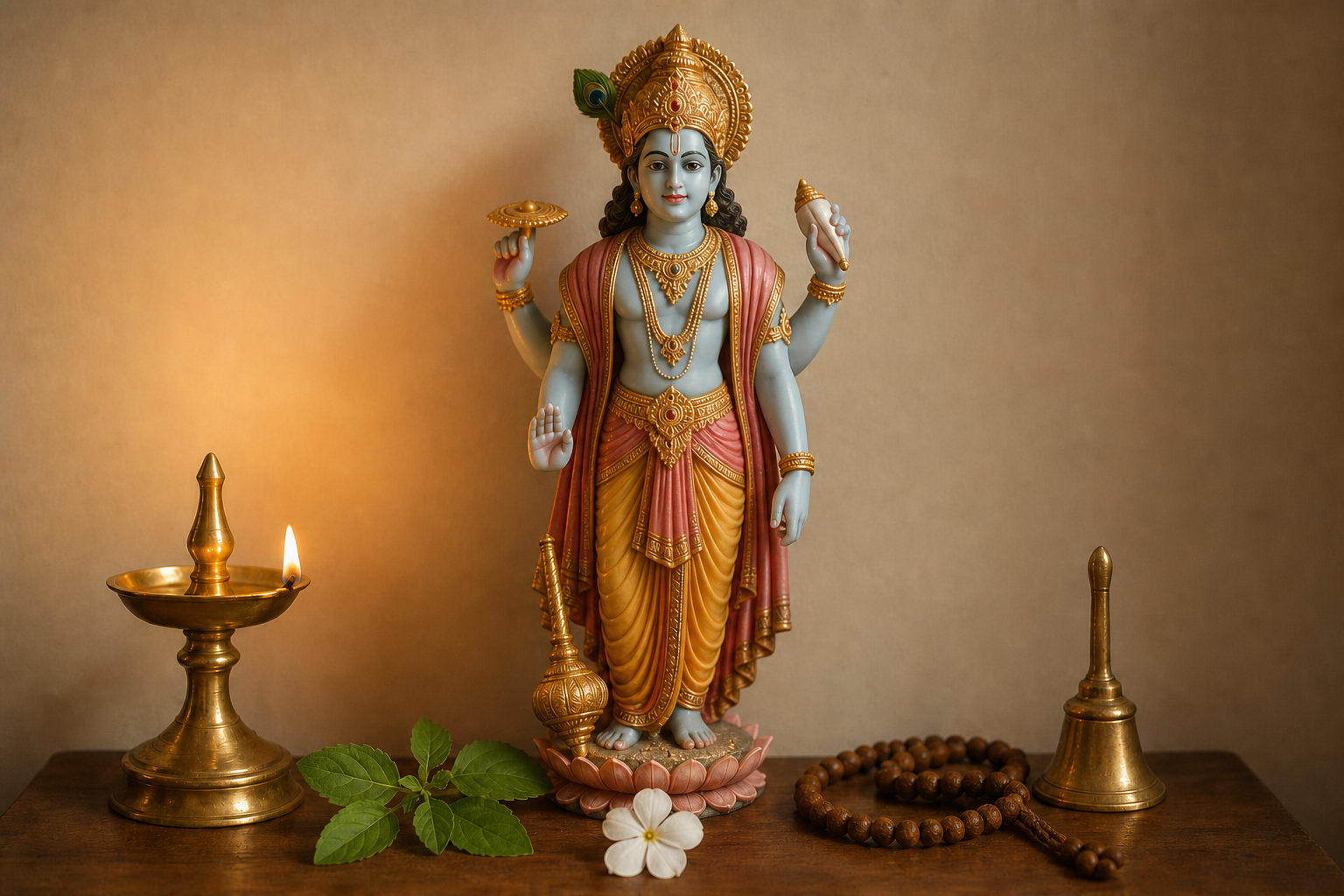
Akshaya Tritiya carries several sacred associations, but your home puja does not have to reproduce an entire temple calendar. Select the centre that accords with your paramparā. Add a short salutation to the others only if it helps rather than scatters your attention.
| Devotional centre | Simple offering | Suitable recitation | Conduct to carry forward |
|---|---|---|---|
| Lakshmi and Vishnu | Flowers to Lakshmi; tulasi and flowers to Vishnu; lamp and sattvic naivedya | Śrī Sūkta, Mahalakshmi Ashtakam, Lakshmi Ashtottara, or “Om Shreem Mahalakshmyai Namah” | Orderly finances, honest livelihood, gratitude, and generous use of resources |
| Gauri | Flowers, kumkum, akshata, lamp, and food offering | Sarva-maṅgala prayer, Ya Devi refrain, or Gauri Ashtottara | Inner steadiness, protection of family, and strength without harshness |
| Krishna | Sandalwood paste, tulasi, flowers, water, and naivedya | “Om Namo Bhagavate Vāsudevāya,” Vishnu Sahasranama, or Madhurashtakam | Friendship, tenderness, humility, and the sharing of abundance |
| Parashurama | Flowers, akshata, lamp, and a respectful salutation | Parashurama Gayatri or an Ashtottara known in your tradition | Transforming anger into disciplined courage used in defence of dharma |
For Lakshmi worship, “Om Shreem Mahalakshmyai Namah” is a concise household invocation. Śrī Sūkta is the principal Vedic hymn when you have a reliable text and can recite it with care. Kanakadhara Stotram may also be used as a contemplation of compassionate relief from scarcity. The prayer should lead you toward right action; it is not a substitute for work, prudence, or assistance to someone in need.
For Gauri, the well-known prayer beginning “Sarva-maṅgala-māṅgalye” invokes the Devi as the auspicious refuge and fulfiller of rightful aims. For Krishna, “Om Namo Bhagavate Vāsudevāya” is direct and sufficient. Chandan Puja reflects the cooling, loving mood of the seasonal Chandan Yatra: offer a modest amount of sandalwood rather than turning the rite into decoration.
Where Parashurama Jayanti is observed, you may recite: “Om Jamadagni-sutāya vidmahe, Bhārgava-rāmāya dhīmahi, tan naḥ Paraśurāmaḥ pracodayāt.” Its practical contemplation is righteous power governed by discrimination. If the prayer leaves your anger untouched and your conduct undisciplined, its ethical lesson has not yet entered the observance.
Kubera worship may accompany Lakshmi Puja in homes where it is customary. The pairing points to two complementary responsibilities: Lakshmi as śrī, flourishing, order, and abundance; Kubera as the guardian and allocator of resources. Place Kubera beside, not conceptually above, Lakshmi. Organising household accounts or reviewing whether money has been earned and allocated honestly is a fitting practical accompaniment.
Do not collect unfamiliar bīja mantras or arbitrary repetition counts merely because the day is auspicious. Use a name-mantra, hymn, or practice already accepted in your lineage. Technical mantra disciplines and initiated bījas should remain under the guidance of a qualified teacher. Clear attention to a simple mantra is preferable to anxious concern about an impressive count.
Make dāna useful, dignified, and accountable
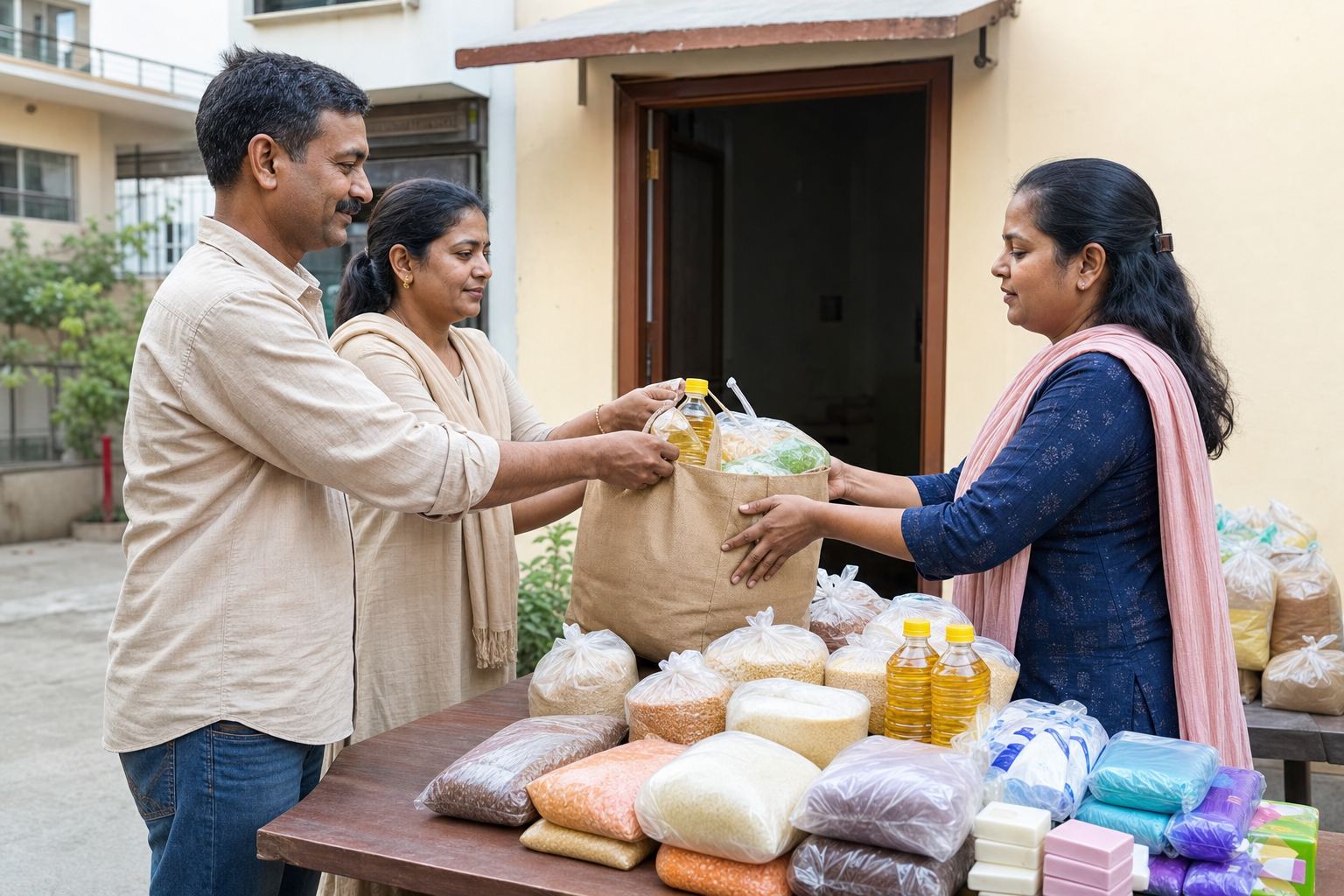
The most important dāna decision is not how much you can display. It is what will genuinely relieve another being’s difficulty. The Bhagavad Gita 17.20–22 distinguishes giving by its intention and manner: sattvika dāna is given at the proper time and place, to a worthy recipient, without expectation of repayment; rajasika giving seeks return or recognition; tamasika giving is careless, disrespectful, or unsuitable. That ethical test remains directly applicable to Akshaya Tritiya dāna.
Before giving, ask five questions:
- Is this needed? Confirm the recipient’s actual requirement instead of assuming that any donated object will help.
- Is it fit to use? Give safe water, wholesome food, intact clothing, clean bedding, and durable equipment. Dāna is not a route for disposing of damaged belongings.
- Does it preserve dignity? Offer respectfully and without forcing the recipient to pose for publicity.
- Can the delivery be verified? For an organisation or community initiative, check who is responsible for procurement, distribution, maintenance, and reporting.
- Would you still give without recognition? If the answer is no, correct the intention before enlarging the gift.
Begin with water in the heat of Vaishakh
Udakumbha dāna, also called kumbha dāna or jala dāna in related usage, is especially suited to the season. A customary gift may include an earthen or metal water pot, clean water, cloth, seasonal fruit, grain, jaggery, or ghee. These items are not a compulsory shopping checklist. The governing purpose is to relieve thirst and support life.
If you give a water pot to a household, make sure the recipient can use and clean it. If you establish a public water point, decide who will refill it, clean the vessel, protect the water from contamination, and remove waste. A neglected pot or an overflowing pile of disposable cups does not fulfil the intention of ecological care. When direct distribution is impractical, support reliable potable-water infrastructure or a well-run hydration effort for pilgrims and outdoor workers.
Choose the next gift by the hardship it removes
- Annadāna: Sponsor or serve wholesome meals, contribute staples requested by a community kitchen, or support student meals and ration distribution. Confirm how many people the kitchen can safely serve before sending highly perishable food.
- Heat relief: Useful gifts can include umbrellas, footwear, hand fans, shade support, and hydration materials for people exposed to summer conditions.
- Vastra and śayana dāna: Give climate-appropriate clothing, clean sheets, sleeping mats, or durable cots to a shelter, elder-care facility, hostel, or family that has confirmed the need.
- Vidyā dāna: Fund books, devices, scholarships, Sanskrit learning, monastic libraries, or a local study circle. Knowledge is particularly compatible with the idea of an asset that grows through sharing.
- Medical or community equipment: A durable device or well-maintained public facility may create longer benefit than many ceremonial objects. Verify the institution and the maintenance plan first.
- Go-sevā and animal welfare: Instead of arranging a token transfer of an animal, support accountable fodder, shelter, and veterinary care in a responsibly managed goshala or ahiṃsā-based welfare effort.
If you can give gold without hardship, suvarṇa dāna belongs to classical charitable lists. It is not a higher form of giving merely because the material is costly. A modest gift placed where it relieves hunger, thirst, educational exclusion, or illness may be more responsive to the recipient’s situation.
Quiet giving and accountability are not opposites. The recipient’s dignity calls for discretion; stewardship of entrusted money calls for records. If you collect funds from relatives or a community, document the amount received, the purpose, the organisation paid, and the result. Transparency is itself part of dharmic handling of wealth.
Turn the auspicious beginning into a durable practice
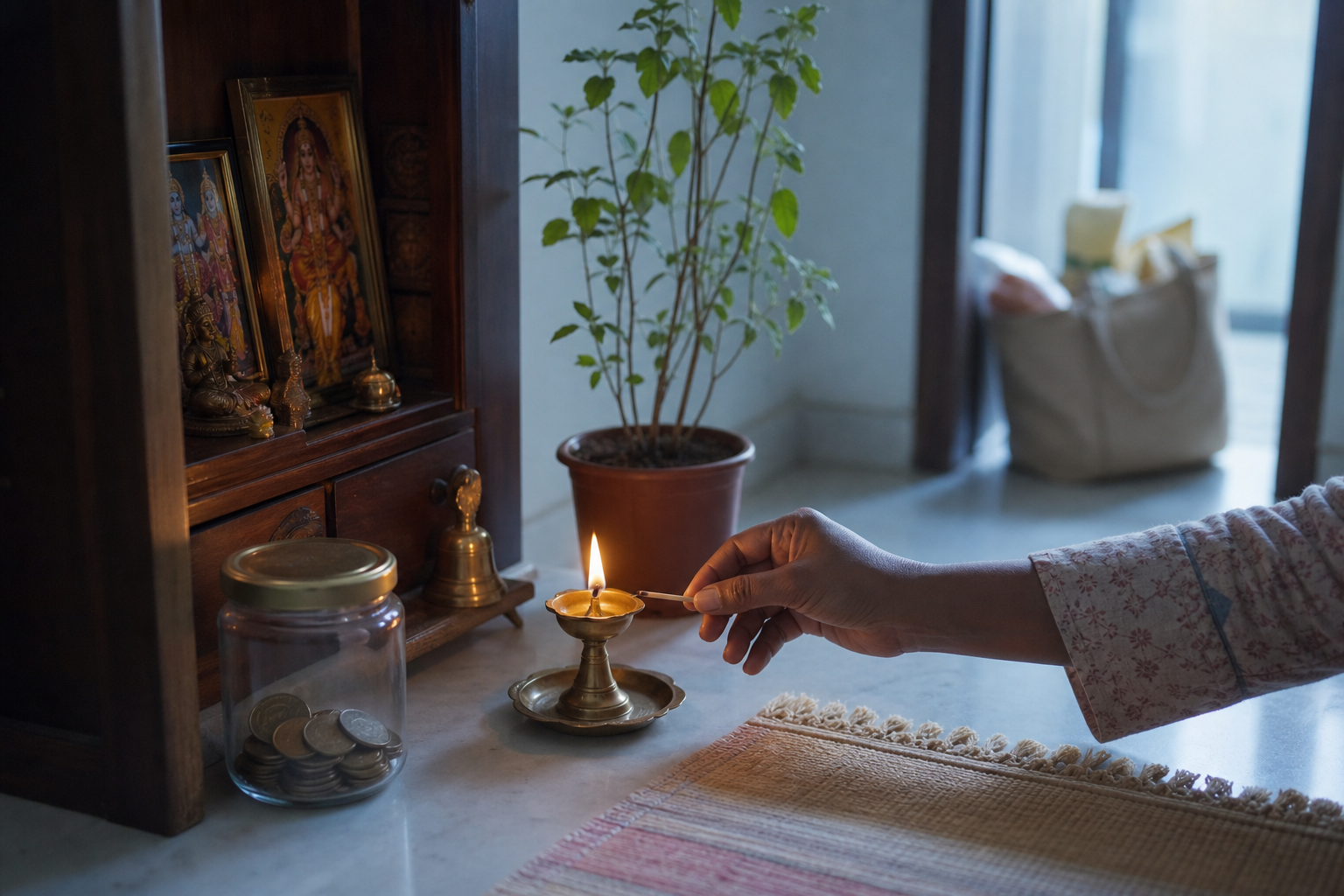
Akshaya Tritiya is also used to begin learning, community service, livelihood projects, house-related rites, and other wholesome undertakings. The date can give a beginning ceremonial clarity, but it cannot carry an unplanned undertaking by itself. Complete the necessary legal, technical, financial, and safety checks. Then use the sankalpa to state how the venture will serve something beyond appetite or status.
Choose one continuation promise before the puja ends. You might maintain a summer water point rather than filling it once, support a kitchen regularly rather than sponsoring one visible meal, finish the course begun on the day, or review household giving whenever you organise your accounts. The mechanism of enduring benefit is not magical multiplication. It is a sacred beginning reinforced by repeated conduct.
The day also reveals a broader Dharmic grammar without erasing the differences among traditions. Hindus centre deity worship, vrata, and dāna in varied sampradāyas. Jains remember Ṛṣabhanātha’s acceptance of sugarcane juice from Śreyāṃsa and the completion of Varshi Tapa. Buddhist dāna-pāramitā and Sikh seva and langar express their own disciplined forms of generosity. These are not interchangeable rituals, but they show how restraint, service, and the sharing of sustenance recur across the Dharmic family.
Regional observances extend the same principle into public life. Chandan Yatra and the commencement of Ratha construction at Puri unite devotion, craftsmanship, and seasonal care. Agrarian rites connect auspiciousness with seeds, tools, rain, and responsible livelihood. Your household need not imitate every regional form. It can notice the shared discipline: resources are blessed so that they may be used well.
Key takeaways
- Confirm the Tritiya window with a local panchang; do not copy another city’s timing.
- Choose one principal devotional focus instead of rushing through every associated deity and stotra.
- A lamp, sankalpa, pañcopacāra offerings, one attentive recitation, naivedya, ārati, and dāna form a complete simple observance.
- Gold is optional. Do not borrow, disturb essential savings, or make an unexamined investment for the sake of the date.
- Prioritise dāna that meets a verified need: safe water, food, heat relief, bedding, education, healthcare, or sustained animal care.
- Give usable items respectfully, protect the recipient’s dignity, and keep transparent records when handling pooled funds.
- Make one promise that carries the day forward through continuing study, service, ethical livelihood, or recurring generosity.
Before Akshaya Tritiya, write two lines: “This is the worship I will complete,” and “This is the need my dāna will meet.” Prepare those two commitments first. Everything else—extra decorations, longer recitations, a purchase, or a public celebration—can remain secondary.
References
- DharmaRenaissance Blog — Akshaya Tritiya Unveiled: Definitive Mantras, Stotras, Puja Vidhi & Sacred Dāna for Prosperity
- DharmaRenaissance Blog — Akshaya Tritiya 2026 (Akha Teej): Treta Yugadi, Vishnu’s Blessings, and the Dawn of Treta Yuga
- DharmaRenaissance Blog — Akshaya Tritiya Dāna: The Definitive Guide to Inexhaustible Blessings and Scriptural Merits
- DharmaRenaissance Blog — Akshaya Tritiya Lakshmi Puja: Auspicious Timings, Kubera Vidhi, and Proven Ritual Steps