
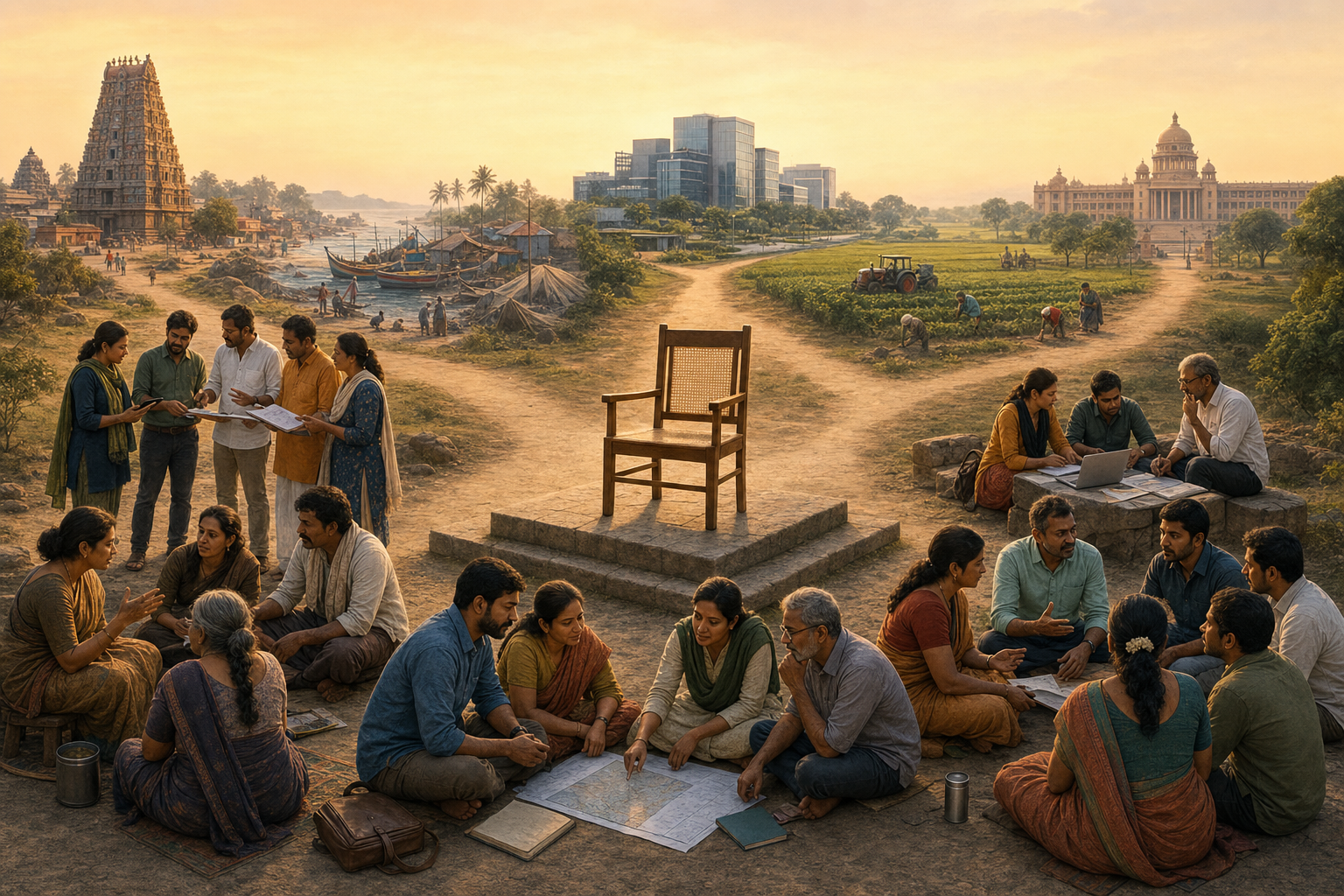
If you are asking whether the BJP’s southern project can survive the reported departure of K. Annamalai, do not begin with the hunt for another magnetic face. Begin with a harder question: can the political habits he accelerated continue when he is no longer the sole centre of attention?
That question leads to a clear answer. The BJP can keep expanding in the South, but not through a louder version of the same national campaign. It must turn Annamalai’s momentum into distributed leadership, translate Hindutva through each state’s own civilizational vocabulary, and prove that cultural conviction produces competent local government. Visibility may win attention; only rooted organisation converts attention into trust.
Key takeaways
- Annamalai performed several jobs at once. Replacing him with one personality would preserve the BJP’s dependence on a single organisational node.
- Tamil Nadu requires a Tamil-first Hindutva grounded in its Shaiva and Vaishnava inheritance, social representation, linguistic confidence and federal sensitivity.
- There is no single southern formula: Kerala needs credible coalition-building, Karnataka needs state-level delivery, Telangana rewards an urban performance agenda, and Andhra Pradesh offers an alliance-led route.
- Temple governance can widen support when it means transparent accounts, conservation and community participation. It can repel voters when it appears centralising or exclusionary.
- You should judge the next phase by district leadership, candidate quality, booth continuity and local policy work, not by rallies or social-media attention alone.
The real vacancy is a bundle of jobs, not one chair
Annamalai’s importance in Tamil Nadu did not come only from his assertive public style. The former IPS officer became a political narrator, organiser, fundraiser, recruiter of professional and civil-society talent, interlocutor with allies, digital campaigner and visible source of energy for booth-level workers. He helped make a national party legible inside a political system long dominated by the DMK and AIADMK.
A conventional succession announcement cannot fill all those functions. If the BJP simply places another prominent name at the top, it recreates the same vulnerability: too many relationships, routines and decisions concentrated in one person. A durable response must divide the work without dissolving responsibility.
- Assign a named owner and a capable backup for organisation, communications, fundraising, candidate recruitment, alliance management and cadre grievance resolution.
- Document the routines that previously travelled through the leader: booth reviews, volunteer onboarding, issue escalation, campaign logistics, donor communication and media response.
- Train several district-level figures to speak in regional media about their own constituencies. They should not sound like substitutes reading a state headquarters script.
- Preserve institutional memory through issue logs and constituency dossiers. A weaving cluster, industrial belt or coastal community should not have to explain the same unresolved problem whenever leadership changes.
- Diversify political fundraising through small-donor digital channels as well as established patrons. A leadership transition becomes more dangerous when donor confidence also depends on one relationship.
The first evidence of resilience will appear before the next major election. Do district events continue without waiting for a state-level celebrity? Do volunteer complaints reach someone empowered to resolve them? Can alliance discussions proceed through an authorised team? Are donors and prospective candidates hearing from an institution rather than a personal network? If those functions pause, the problem is structural, regardless of how energetic the replacement appears.
This does not mean charisma is dispensable. Politics needs recognisable people. It means charisma should bring citizens into a functioning organisation, not conceal the absence of one.
Tamil Nadu will reward a Tamil-first Hindutva, not a translated script
Tamil Nadu is the decisive test because its resistance is not merely electoral. The state’s political imagination has been shaped by linguistic identity, Dravidian traditions, social-justice claims, competitive welfare and concern about excessive central control. Treating those instincts as obstacles to be defeated would keep the BJP confined to a protest constituency.
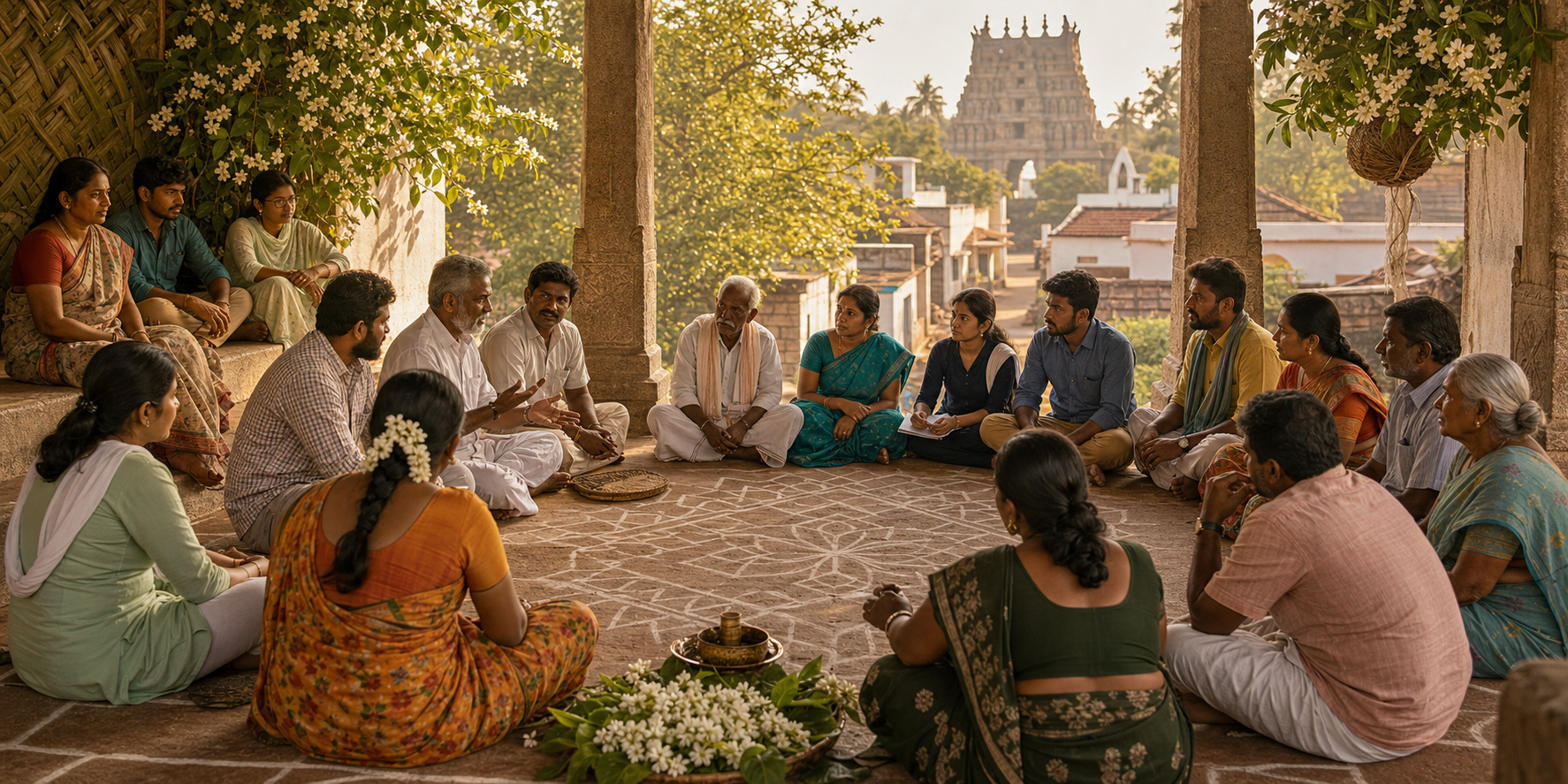
A Tamil-first approach is not a retreat from Hindutva. It is an insistence that civilizational unity must be expressed through the civilisation of the place. Tamil Shaiva and Vaishnava traditions are not regional decorations attached to a northern narrative; they are foundational streams of Bharatiya dharma. The party’s cultural language should therefore begin with local sacred geography, Tamil devotional inheritance and the institutions through which communities still practise that inheritance.
The same rule applies to language and federalism. Support for classical-language preservation, mother-tongue-first education with strong access to English, and meaningful local authority over urban planning and fiscal priorities should be treated as governing commitments. If linguistic respect appears only in campaign symbolism, voters will notice the difference.
Social justice needs equally careful handling. Tamil Nadu’s caste coalitions are granular, including politically significant communities such as Thevars, Vanniyars, Kongu Gounders and Nadars. No single umbrella appeal makes their interests disappear. The BJP needs representative candidate selection and cross-caste programmes built around mobility, education, enterprise and dignity. Zero-sum rhetoric may consolidate a narrow segment, but it makes durable statewide acceptance harder.
Temple governance is where cultural principle can become credible institutional policy. The South’s sacred landscape includes Divya Desams, ancient Shaiva kshetras and Jain basadis. A serious reform proposal should tell you who audits accounts, how local devotees and sampradayas participate, how heritage structures are conserved, and where grievances are heard. Transparency and community stewardship can build trust. A plan that looks like remote administrative control or sectarian exclusion can trigger the opposite reaction.
Finally, the party has to connect identity with ordinary competence. In Coimbatore’s industrial economy, Kanchipuram’s weaving networks and Madurai’s commercial life, a candidate must understand credit, infrastructure, municipal services and employment. For women, relevant tests include primary healthcare, inheritance rights, safer transport, childcare and support for home-based enterprises. For young voters, the practical questions are skill portability, apprenticeships, placement opportunities and predictable urban services. Cultural affinity may earn a hearing; answers to these questions determine whether that hearing becomes a vote.
One South, five different routes to political relevance
Calling this a southern strategy can hide the most important fact: the five major southern states present different political bottlenecks. A method that opens a door in one state can close it in another. National leadership can provide coherence, but state organisations must supply the political grammar.
| State | Political starting point | Viable BJP route | Evidence worth watching |
|---|---|---|---|
| Tamil Nadu | DMK-AIADMK competition, Dravidian political traditions, linguistic federalism and competitive welfare | Patient standalone organisation combined with carefully negotiated regional partnerships; Tamil-rooted cultural and governance messaging | Locally credible candidates, functioning booth teams, cross-caste representation and constituency-specific policy work |
| Kerala | Historically difficult terrain, but the 2024 Lok Sabha victory in Thrissur demonstrated an opening | Candidate credibility, micro-community engagement, livelihood issues, heritage and infrastructure rather than crude polarisation | Whether success expands beyond one candidate or constituency without sacrificing religious harmony and constitutional confidence |
| Karnataka | The BJP’s most developed southern organisation, with an established social base, but also a 2023 Assembly setback | Renew state leadership, repair social coalitions and make state-level delivery as important as national campaigning | Credible local governance, leadership depth and recovery that is visible in state politics rather than only national contests |
| Telangana | Urban and peri-urban voters concerned with growth, jobs, probity and public services | Anti-corruption credibility joined to a practical agenda for GHMC areas and emerging economic corridors | Municipal policy depth on mobility, pollution, housing, safety, skills and employment |
| Andhra Pradesh | A coalition-centred landscape in which the 2024 alignment with the TDP and Jana Sena created governing relevance | Use co-governance to demonstrate value on irrigation, ports, fisheries, industrial corridors and social protection | Concrete governing responsibility, a distinct contribution inside the alliance and organisational growth beyond negotiated seats |
These routes should not be confused with inconsistency. They answer different constraints. Kerala shows how a trusted candidate can widen coalition bandwidth. Karnataka warns that organisational strength cannot compensate indefinitely for weak state delivery. Telangana offers a performance-led urban model, but it must be adapted to each city’s municipal ecology. Andhra Pradesh shows that relevance can come through co-governance even when standalone expansion is limited.
Tamil Nadu may require both organisational patience and selective alliances. Any understanding with the AIADMK, PMK or another regional formation should be judged by more than the number of seats exchanged. The serious questions are whether the arrangement protects the BJP’s ability to build its own cadre, resolves differences over regional autonomy, and contains a governing programme on education, jobs and local development. An alliance that produces short-term visibility but freezes long-term organisation is not automatically a strategic gain.
Build a machine that can carry conviction into daily government
The post-Annamalai task has two connected parts: organisational architecture and message architecture. One without the other will fail. A strong organisation carrying an alien political vocabulary will meet resistance; resonant rhetoric without booth-level systems will generate attention that cannot be converted.
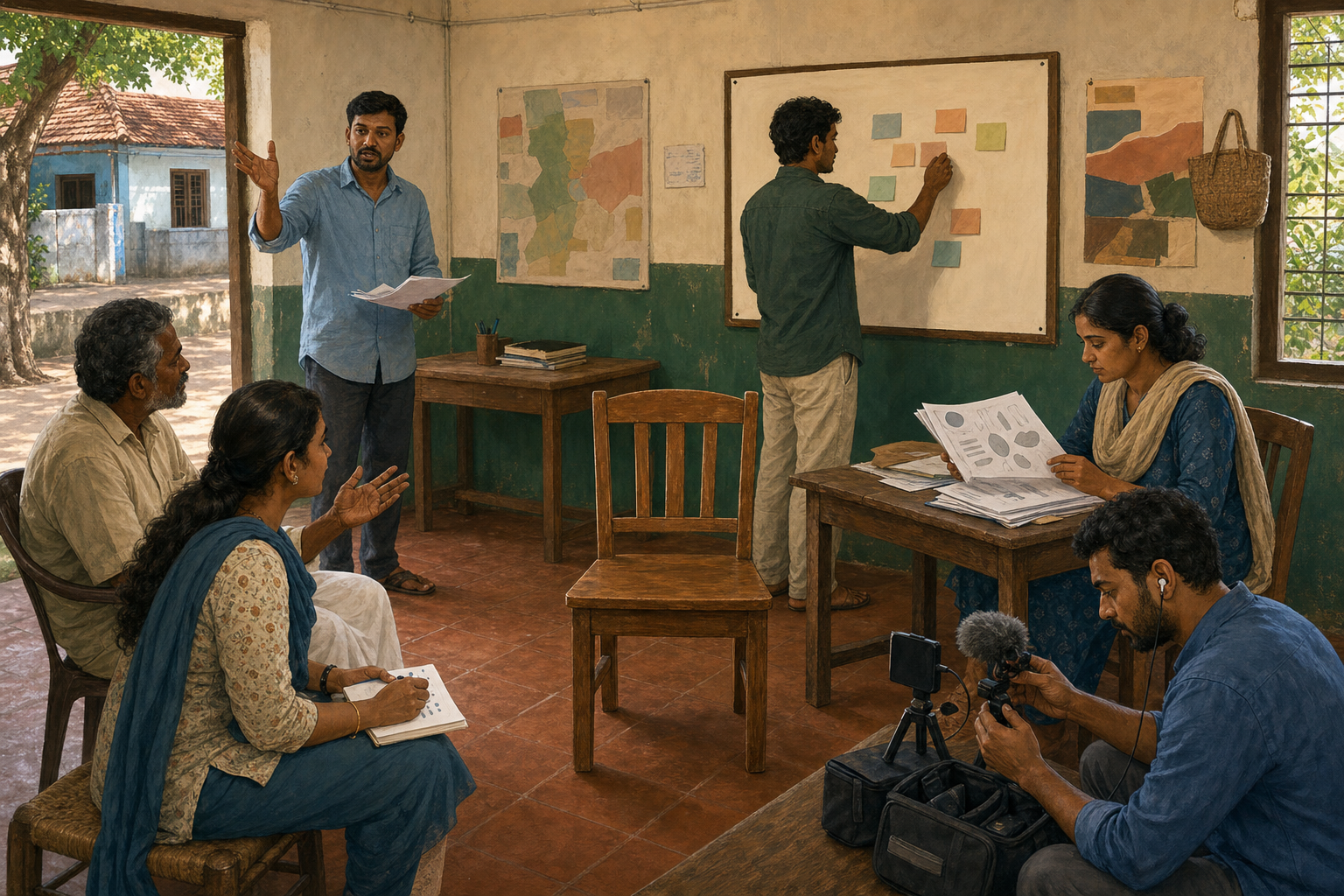
The organisational core should include a continuous volunteer pipeline, functioning booth committees, temple and cultural-outreach teams, legal capacity for heritage questions, district grievance channels and local-language digital studios. These units need named leaders, operating routines and succession depth. Their purpose is not to manufacture the appearance of activity. It is to make sure that information travels from a constituency to decision-makers and that a decision travels back to workers who can act on it.
Candidate development belongs inside that system, not at the end of it. Prospective candidates should be tested through local issue work before they receive a ticket: can they explain a municipal failure, convene affected communities, propose a feasible remedy and remain present after the cameras leave? Professional credentials or digital reach can help, but neither proves political rootedness.
The message should then operate in three layers:
- The civilizational layer presents Hindutva as confidence in Bharat’s dharmic inheritance, recognising relationships among Hindu, Buddhist, Jain and Sikh traditions without erasing their distinct identities. It must also respect constitutional pluralism and regional federalism.
- The governance layer translates dharmic stewardship into clean administration, reliable welfare, transparent institutions, public safety and conservation of shared heritage.
- The constituency layer answers the problem immediately in front of the voter, whether that is MSME credit in Tiruppur, coastal safety and sustainable fisheries along the Malabar, apprenticeships in a tier-two city, or congestion and housing in a technology corridor.
The order matters less than the presence of all three. Without the local layer, Hindutva can sound imported. Without the governance layer, cultural promises cannot be audited against performance. Without the civilizational layer, the BJP loses the reason it differs from a generic development party.
You can judge whether this architecture is becoming real by asking six questions whenever a new campaign, appointment or alliance is announced:
- Are several district leaders becoming known for substantive local work, or does every issue still require one state-level face?
- Can each candidate name a small set of constituency problems and show sustained work on them?
- Does local-language communication originate with culturally fluent state teams, or is national material merely translated?
- Does a temple-governance proposal specify audits, conservation, community participation and protection for different sampradayas?
- Does an alliance identify governing priorities and organisational boundaries, or does it discuss only leaders and seats?
- After a major rally or digital campaign, do booth workers receive voter issues, follow-up assignments and a working grievance channel?
If you can answer only with the name of the star campaigner, the organisation has not yet matured. Social-media reach, large meetings and sharp speeches can be useful inputs, but none independently demonstrates voter transfer, candidate trust or institutional continuity.
Annamalai mattered because he compressed many political systems into one recognisable leader. The BJP’s next southern phase depends on decompressing those systems into an institution without losing his urgency. Watch whether the party produces Tamil-first cultural confidence, district-level authority, credible delivery and state-specific coalitions. If it does, the reported exit can become a transition rather than a reversal. If the response is simply more centralised and louder, the southern ceiling will remain.


References
