
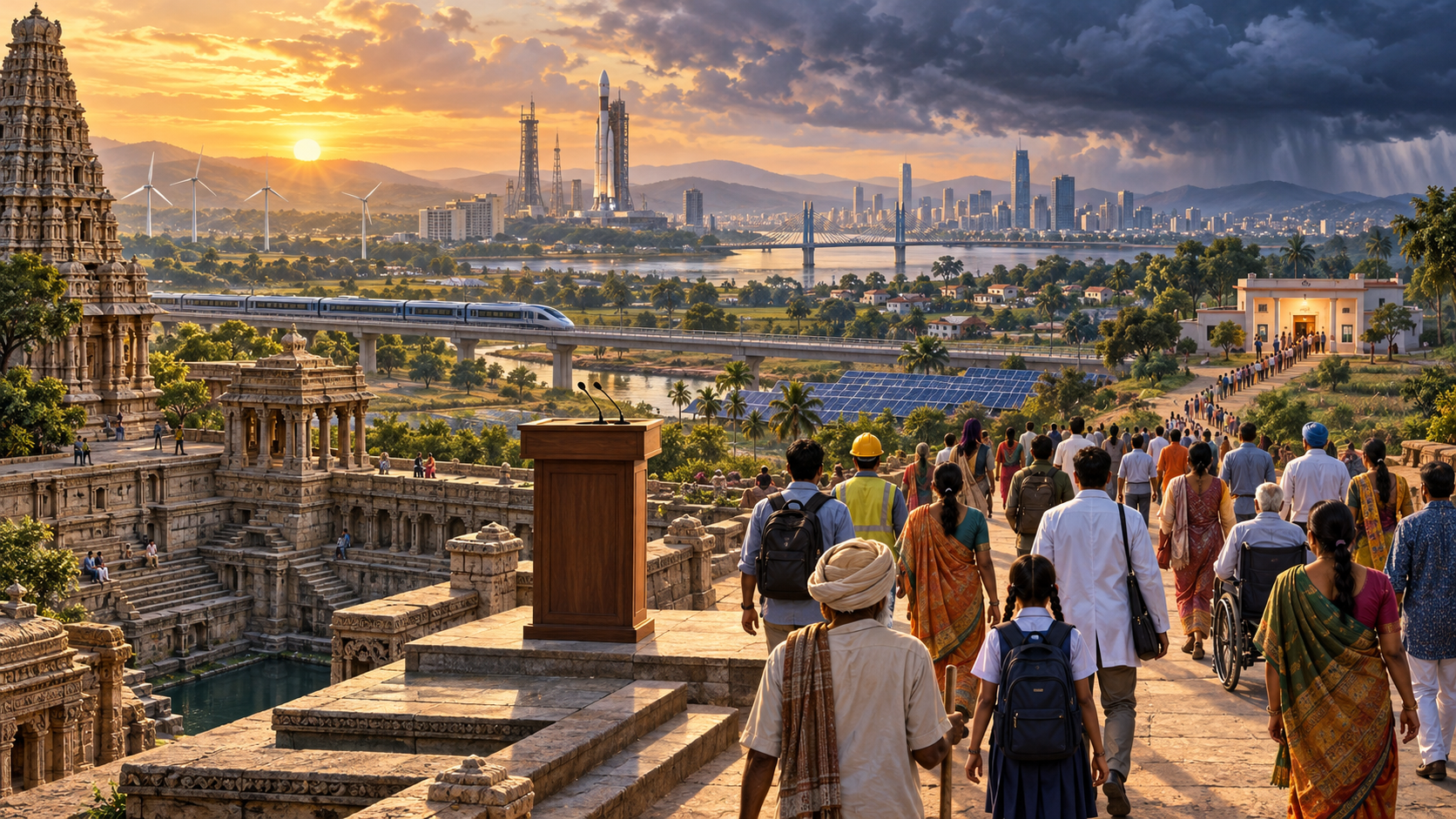
You may be trying to reconcile two truths. Bharat is visibly more confident about its place in the world and its civilizational identity, yet electoral setbacks, uneven outcomes and unfinished reforms make triumphalism difficult to defend. Uttar Pradesh’s 2027 Assembly election will bring that tension into unusually sharp focus.
The useful question is not whether you are for or against Narendra Modi. It is whether Bharat’s rise has become durable enough to outlast one leader, whether the nationalist movement can correct its weaknesses, and whether voters can distinguish a long national trajectory from the immediate contest in their constituency. Here is a practical way to make that judgment.
A rising nation needs capacity, confidence and continuity
National rise is often reduced to prestige: a leader’s reception abroad, an election victory, a major project or a powerful cultural moment. Those things can matter, but they do not establish durable rise on their own. You need to examine three connected layers.
- Capacity: Can the state set difficult objectives, coordinate institutions and produce measurable results?
- Confidence: Can Bharat present its own history, traditions and interests without seeking permission from inherited colonial or ideological frameworks?
- Continuity: Can gains survive changes of personnel, electoral reversals and the ordinary friction of implementation?
Project Cheetah shows why all three questions are necessary. The programme began in September 2022, decades after the cheetah was declared extinct in Bharat in 1952. By October 2026, the population had reached 60 cheetahs, including 41 born on Bharatiya soil. A Bharat-born female, KJP21, delivered five cubs at Kuno National Park on 5 October 2026, adding a Botswanan genetic line through their father.
That is meaningful progress, especially because reproduction by animals born in Bharat moves the programme beyond a simple story of imported cheetahs. It is not yet permission to declare the work complete. The real test is whether successive generations survive, genetic diversity remains viable and the grasslands and open forests supporting the animals are restored. The lesson for national policy is clear: celebrate a milestone, then identify the next condition required for permanence.
The 2026 Asian Games offer the same discipline in a different field. Bharat finished fourth with 85 medals: 21 gold, 27 silver and 37 bronze. The men’s and women’s hockey teams qualified for the Los Angeles 2028 Olympics, and there were important achievements in archery, boxing, wrestling and women’s sport. Yet the overall medal total was 21 below the previous edition’s 106. Fourth place was retained, but the conversion of opportunities into medals weakened.
A mature national outlook holds the achievement and the shortfall in the same frame. If you count only the ranking, you miss the decline. If you count only the decline, you miss the breadth of competitive capacity and the Olympic qualifications. Apply that method elsewhere: record the baseline, the result, the remaining gap and the institution responsible for closing it. Pride becomes more credible when it can withstand measurement.
Judge Modi’s legacy by what no longer depends on Modi
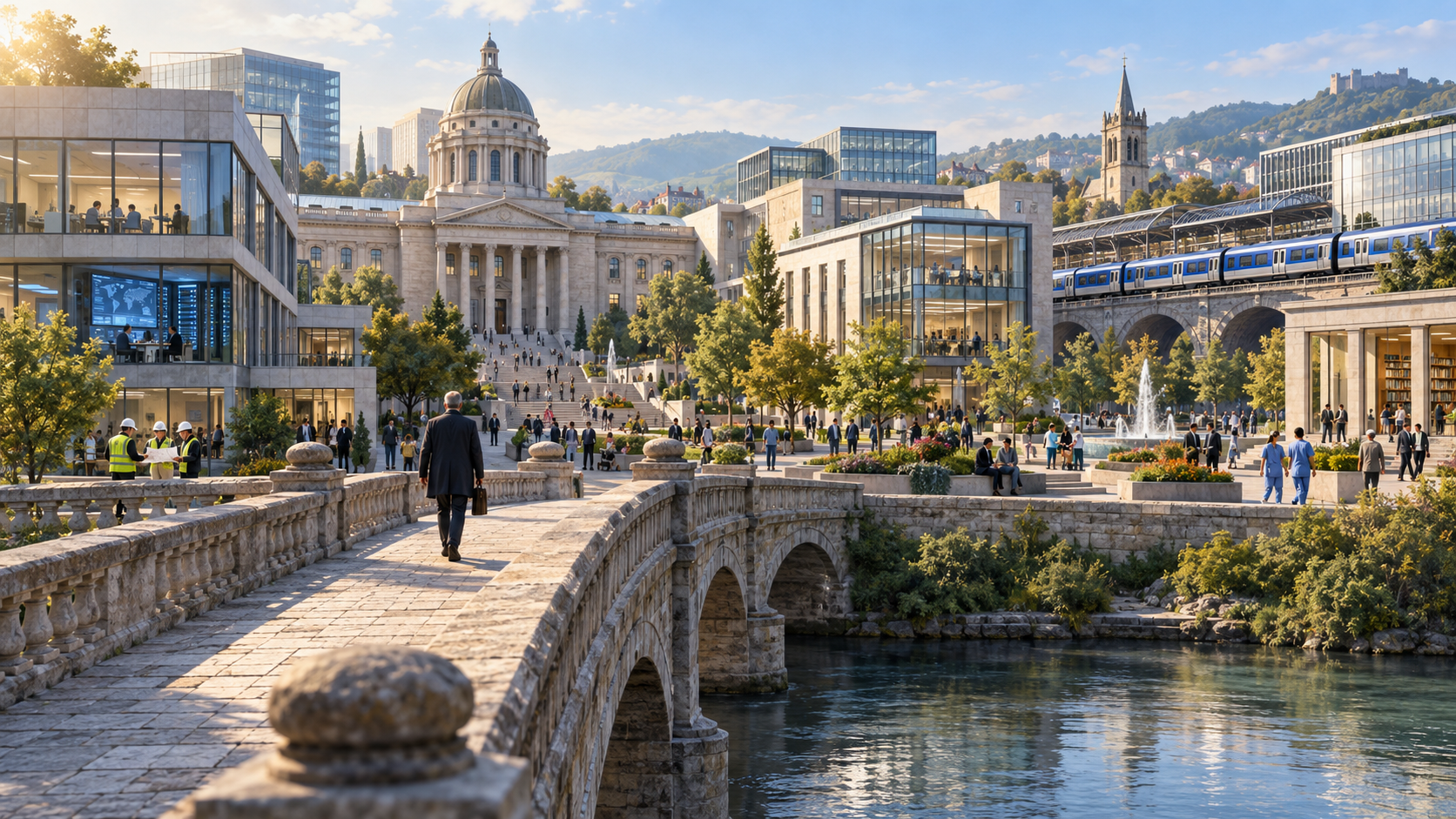
Narendra Modi completed 25 years as a head of government on 7 October 2026, counting from the beginning of his tenure as Gujarat chief minister on 7 October 2001. That longevity is politically exceptional, but time in office is not itself the legacy. The stronger test is what changed direction, what became institutional habit and what could continue under a less commanding successor.
The stated horizon is not the next election but Viksit Bharat by 2047. That places Modi’s record inside a longer national project. It also means that any honest verdict in 2026 must remain provisional: a leader can establish direction and momentum, but the 2047 outcome will depend on institutions and generations he does not personally control.
Use four tests when you assess that legacy.
- Change of national direction: Which ambitions now appear normal that once seemed politically or administratively unreachable? A durable leader changes the range of goals that governments, officials and citizens consider possible.
- Institutional durability: Which gains are embedded in procedures, budgets, trained personnel and public expectations? If progress requires the prime minister’s personal intervention every time, it remains a leadership achievement but not yet an institutional one.
- External leverage: Does greater diplomatic visibility produce room for Bharat to pursue its own interests? Former Serbian president Aleksandar Vucic has explicitly connected Bharat’s greater global importance with Modi’s leadership. Such praise is evidence of international perception, not a complete foreign-policy balance sheet. The harder test is whether influence survives disagreement, leadership transitions and pressure from larger powers.
- Civilizational legitimacy: Has public life become more comfortable acknowledging Bharat as a living civilization rather than merely a post-colonial administrative unit? Cultural recovery matters most when it informs education, conservation, social conduct and statecraft instead of ending at symbolism.
This approach avoids two bad conclusions. The first says that admiration for Modi requires treating every outcome as a success. The second says that an unresolved problem invalidates the larger change in direction. You can recognise historic leadership while asking whether the administrative machinery learns, whether weak programmes are corrected and whether a capable second line has been built.
The succession question is therefore part of the legacy, not an act of disloyalty. If national confidence collapses when one leader leaves office, it was never secure. If institutions, political workers and citizens have internalised the larger project, Modi’s influence will extend beyond his personal tenure.
Uttar Pradesh in 2027 will test correction, not just popularity
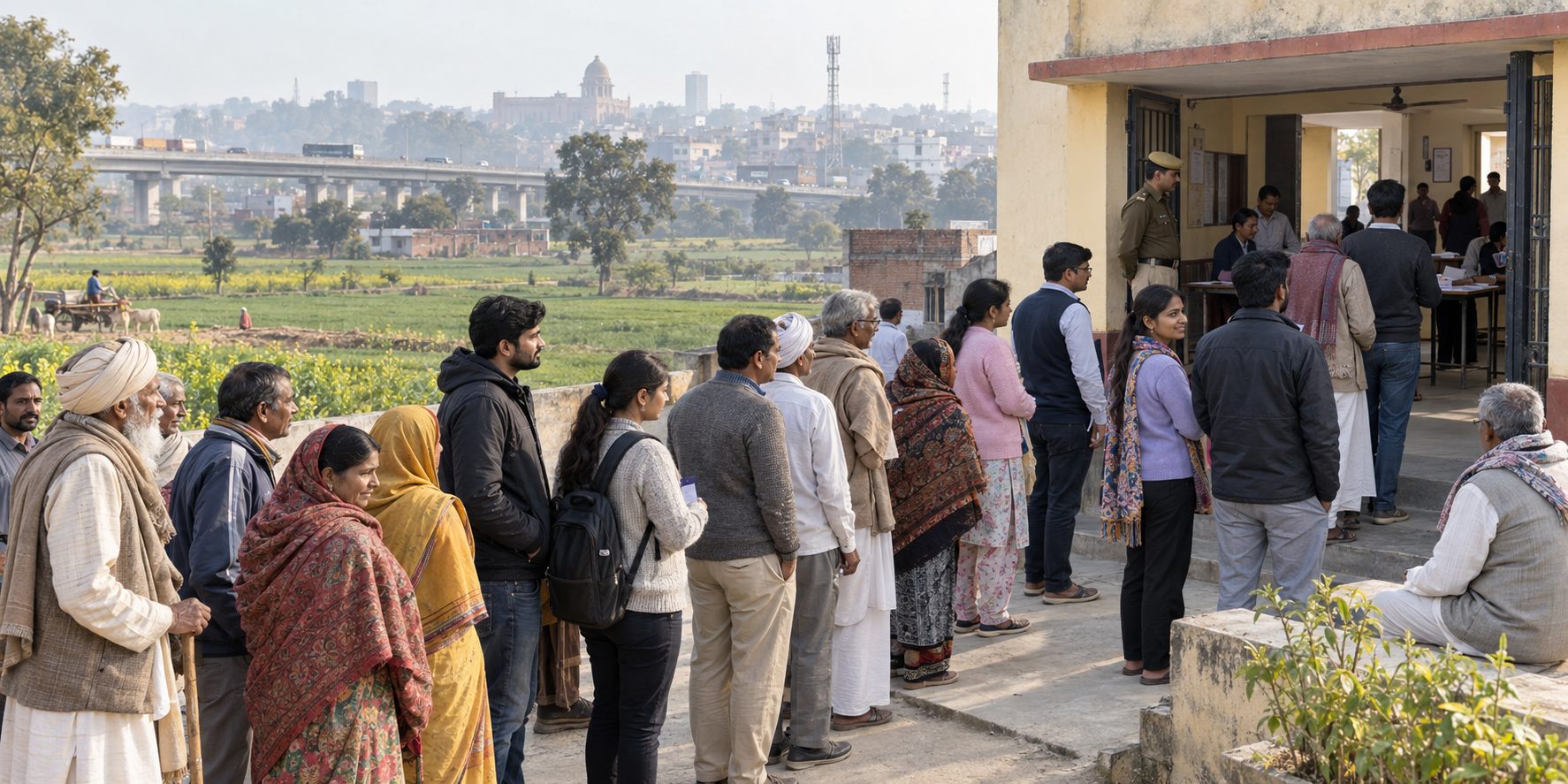
Uttar Pradesh has been governed by the BJP since 2017 and is due to hold its next Assembly election in early 2027. The BJP enters that contest with the advantages of incumbency, organisation and a decade-long record to present. It also carries vulnerabilities exposed by its 2024 Lok Sabha setback in Uttar Pradesh.
The opposition’s central strategy is the Samajwadi Party’s PDA coalition: Pichhadey, Dalit and Alpsankhyak communities, broadly referring to backward classes, Dalits and minorities. Its theory is that the SP-Congress alliance can retain its established blocs, deepen support among non-Yadav OBC and non-Jatav Dalit voters, and supplement electoral arithmetic with better booth-level organisation. That approach contributed to the SP’s strongest Uttar Pradesh result since 2012 in the 2024 national election.
Do not mechanically convert that Lok Sabha result into an Assembly forecast. A state election distributes the contest across individual seats, candidates, local disputes and organisation at the polling-booth level. National identification still matters, but voters can judge a local candidate differently from a prime ministerial choice. Alliance workers must also transfer support to one another in practice; an agreement among party leaders does not guarantee that transfer.
If you want to understand the contest rather than merely react to campaign noise, watch six signals.
- Candidate selection: Compare each party’s social outreach with the tickets it actually distributes. A coalition claim becomes credible only when communities receive winnable seats, visible responsibilities and local organisation.
- Alliance transfer: Look for joint campaigning and cooperation among workers below the leadership level. Where allied cadres remain hostile or inactive, attractive statewide arithmetic can fail inside the constituency.
- The lived governance record: Separate announcements from what residents can observe in policing, infrastructure, welfare delivery and public administration. Incumbency is defended through repeated local experience, not a catalogue of projects alone.
- Grievance conversion: A complaint matters electorally only if the opposition links it to a candidate, a credible remedy and turnout. Anger that cannot be organised may dominate conversation without deciding the seat.
- Booth depth: The SP’s 2024 momentum gives it an opening, but an Assembly challenge requires sustained voter contact across many more local contests. Watch whether it develops that machinery or continues to rely mainly on leadership messaging and social blocs.
- Nationalist correction: The BJP’s most revealing response will not be louder celebration of earlier victories. It will be whether the party diagnoses where support weakened, changes candidates or methods where needed, and reconnects national purpose with local concerns.
The result will matter far beyond Lucknow because Uttar Pradesh is central to the BJP’s political base and to the opposition’s route back to national competitiveness. Even so, it will not settle every claim about Bharat’s rise or Modi’s entire legacy. Treat it as a demanding stress test: can the nationalist movement absorb a setback, correct course and renew consent after a decade in state power?
A Dharmic political standard must include self-correction
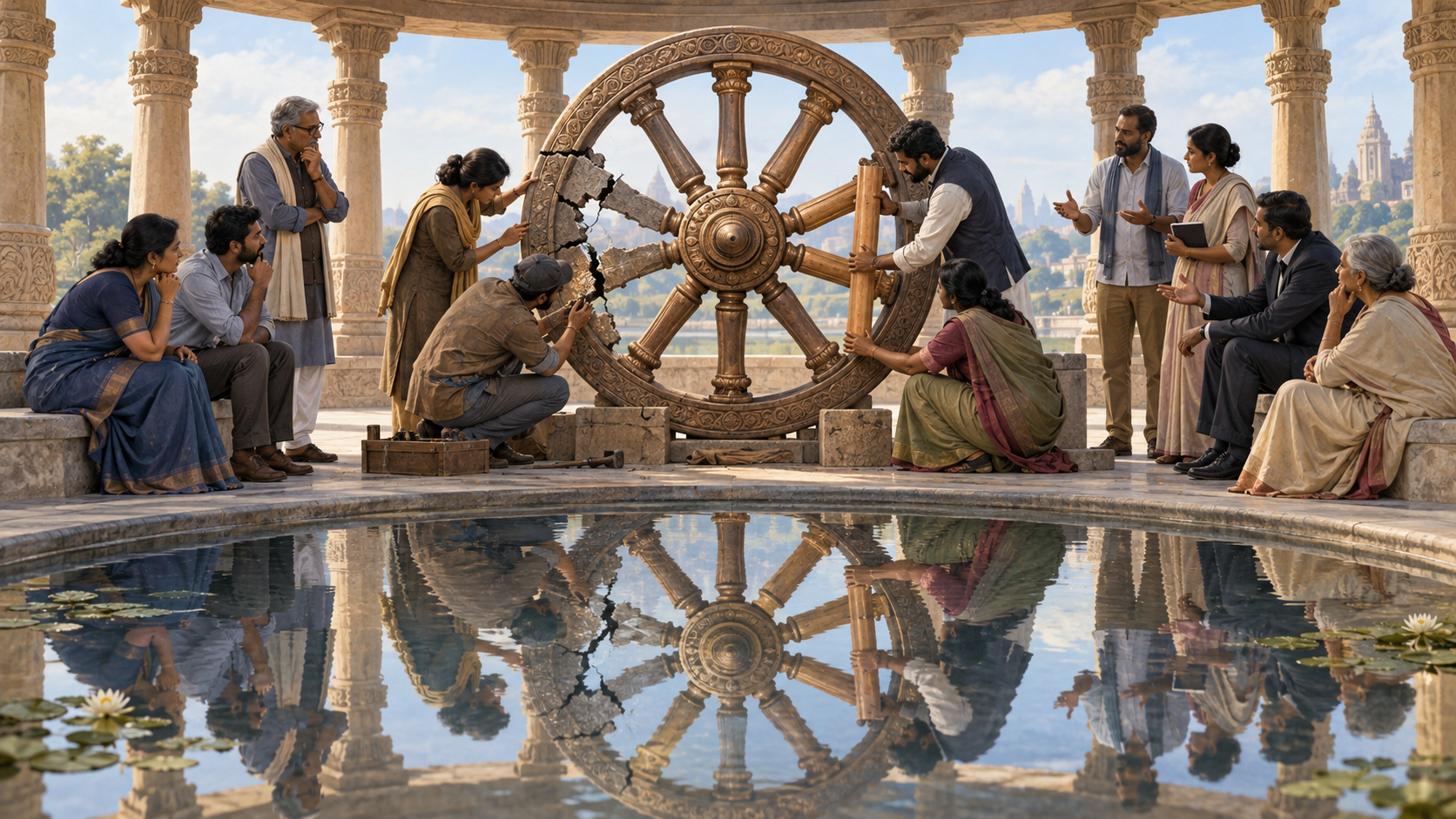
A pro-Hindu outlook should not require you to choose between civilizational conviction and administrative scrutiny. Dharma is not served by pretending that every institution works, every candidate deserves loyalty or every slogan has become reality. Nor is it served by the fashionable assumption that cultural assertion is automatically exclusionary or backward.
A practical civic test can be organised around four Dharmic instincts. This is not presented as a scriptural formula; it is a way to keep political judgment connected to responsibility.
- Satya: Are claims stated accurately, including inconvenient numbers and reversals? The Asian Games result remains worthy of respect after the medal decline is acknowledged.
- Seva: Does policy reach people in forms they can actually use, or does it stop at an announcement, ceremony or headline?
- Shakti: Can the state maintain order, execute decisions and defend national interests? Good intentions without capacity leave citizens exposed.
- Sanskriti: Does public power protect the continuity and dignity of Bharat’s traditions while turning civilizational knowledge into living practice rather than decorative branding?
These standards reinforce one another. State capacity without cultural memory can become efficient imitation. Cultural assertion without competence can become performance. Welfare without truthful measurement becomes patronage. Power without a norm of service becomes self-preservation.
This matters across the Dharmic family. Hindu civilizational confidence should create room for the distinct contributions of Buddhist, Jain and Sikh traditions rather than flattening them. Bharat’s strength lies partly in a long habit of argument, plural paths and shared sacred geography. A political movement claiming to represent that civilization should be confident enough to protect difference and disciplined enough to correct itself.
The same balance should shape your reading of national achievements. A cheetah birth is not a substitute for long-term habitat management. A foreign leader’s praise is not a substitute for strategic outcomes. A cultural reclamation is not a substitute for competent local government. Yet none of those achievements should be dismissed merely because the next stage remains unfinished. Dharma asks for proportion: neither denial nor intoxication.
Key takeaways: use a ledger, not a loyalty test
- Bharat’s rise is durable only when national capacity, civilizational confidence and institutional continuity advance together.
- Modi’s 25-year record should be judged by changes that can survive without his constant personal direction, not by longevity or admiration alone.
- The 2027 Uttar Pradesh election will test whether the BJP can correct weaknesses revealed in 2024 and whether the opposition can turn PDA arithmetic into constituency-level organisation.
- A Lok Sabha result is evidence, not an automatic Assembly forecast; candidates, alliance transfer, booth strength and local governance can change the result.
- A Dharmic voter can support civilizational renewal while demanding truthful measurement, service, state capacity and self-correction.
Before the campaign hardens every question into a partisan slogan, make a one-page ledger with three columns: claim, observable result and remaining gap. Give it three rows: Bharat, Uttar Pradesh and your constituency. Place every major assertion you hear into the correct row. This prevents a national achievement from excusing a weak local representative, and it prevents a local failure from erasing a genuine national advance.
Revisit that ledger when candidates are named and again when commitments become specific. By early 2027, your decision should rest on more than affection, anger or coalition arithmetic. Ask which choice can protect the civilizational direction, improve the machinery of governance and correct what the last election exposed. That is how electoral support becomes responsible participation in Bharat’s rise.
References
- Hindu Post — Bharat Rising: Celebrating National Pride and Success
- Hindu Post — The Battlelines of 2027: Contrasting Strategies, Nationalist Resilience, and the Future of Uttar Pradesh Part 29
- Hindu Post — Modi at 25: Destiny’s Man Shaping Bharat’s Rise and Securing Unmatched Foreign Policy Legacy

Leave a Reply
You must be logged in to post a comment.