

If you have been told that Bharat must choose between modernisation and decolonisation, you have been handed the wrong choice. A civilisation does not prepare for tomorrow by copying the West more efficiently, nor by restoring a frozen picture of its past. It examines what its institutions are for, keeps what serves the people, repairs what distorts them, and builds what does not yet exist.
You can apply that approach to a school syllabus, a workplace calendar, a technology investment, a temple committee or a household decision. The practical question is not, “Is this Indian or foreign?” It is, “Does this strengthen Bharatiya agency, Dharmic responsibility, social trust and the capacity to meet the future?”
Colonial power survives as an unexamined default
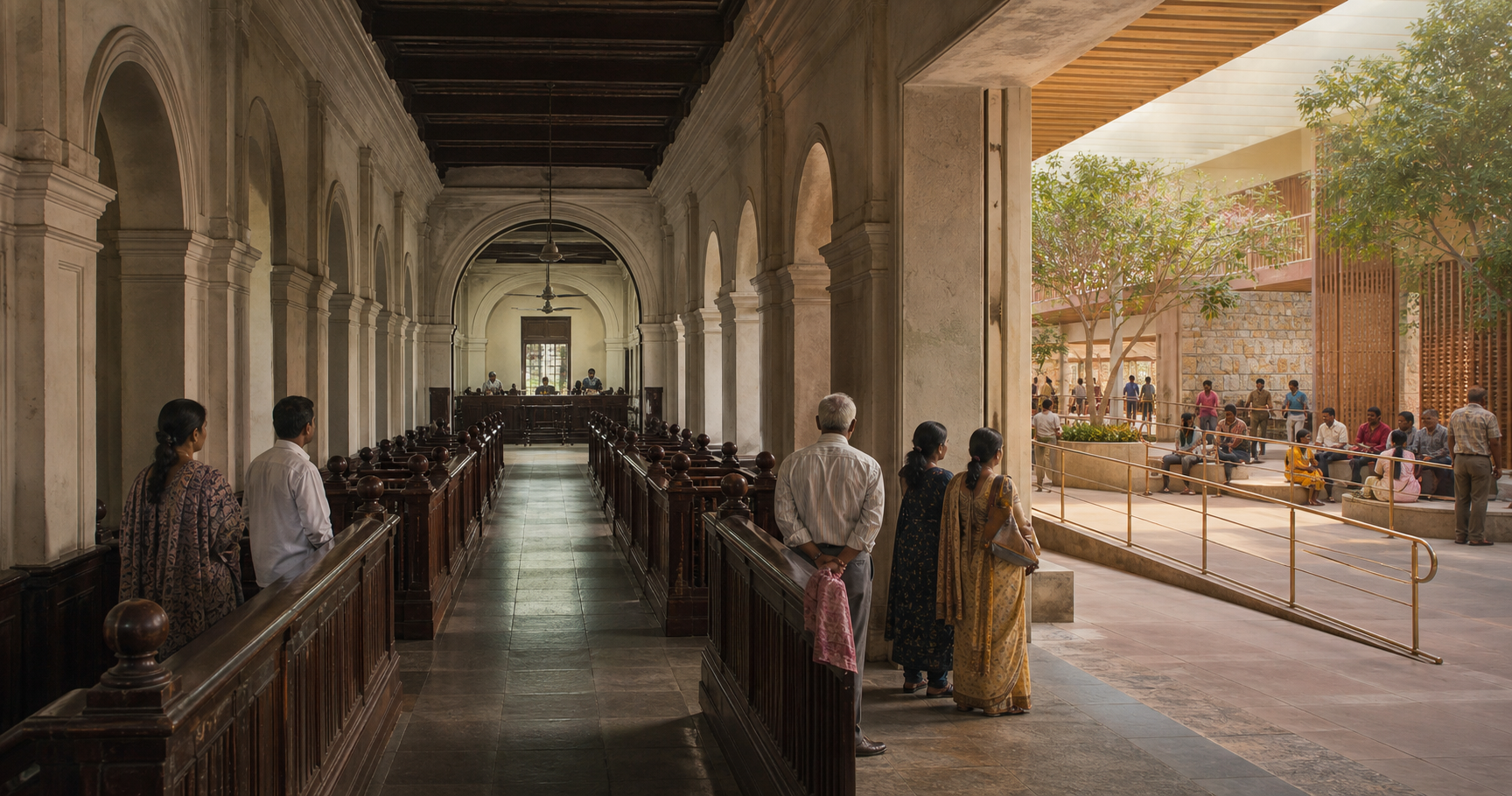
Company and Crown rule spread across the subcontinent between 1757 and 1947 with an overriding institutional purpose: to make Bharat governable and profitable for an imperial power. Its reach extended beyond revenue collection into governance, courts, education, working routines and social aspiration. Political rule ended, but many of the habits created or standardised under it became ordinary enough to escape examination.
That does not make every inherited institution useless. Origin and present value are different questions. A railway does not become undesirable because an imperial regime expanded the network. An examination calendar does not become sensible merely because generations have become accustomed to it. Decolonisation begins when you stop treating familiarity as proof of fitness.
Consider the organisation of time. Fixed office and factory hours, a Sunday weekly break, an academic year ending in April, and an April-May vacation became part of the colonial pattern. The first weekly day off for workers is traced to 1890, while the choice of Sunday reflected the religious rhythm of the colonial establishment. Hill stations, clubs and leisure travel also helped define what successful urban life was supposed to look like.
None of this means that resting on Sunday, visiting a hill station or playing cricket is an act of cultural surrender. The deeper issue is that an inherited schedule can quietly displace seasonal, regional and sacred rhythms without anyone making a conscious decision. What once served administrators living in a climate alien to them can continue to determine when Bharatiya children study, when families travel and which festivals require people to negotiate special permission.
Use three questions whenever an institutional rule presents itself as simply normal:
- What problem was this rule originally designed to solve, and whose problem was it?
- Does it fit Bharat’s climate, languages, family obligations, sacred calendar and current economic needs?
- If we retained, adapted or replaced it, what measurable benefit would the people using the institution gain?
This test prevents two equal mistakes. One is preserving an inefficient arrangement because it is familiar. The other is destroying a useful arrangement merely because it has a colonial genealogy. A future-ready Bharat needs judgement, not symbolic demolition.
Decolonise by function: recover, test and redesign
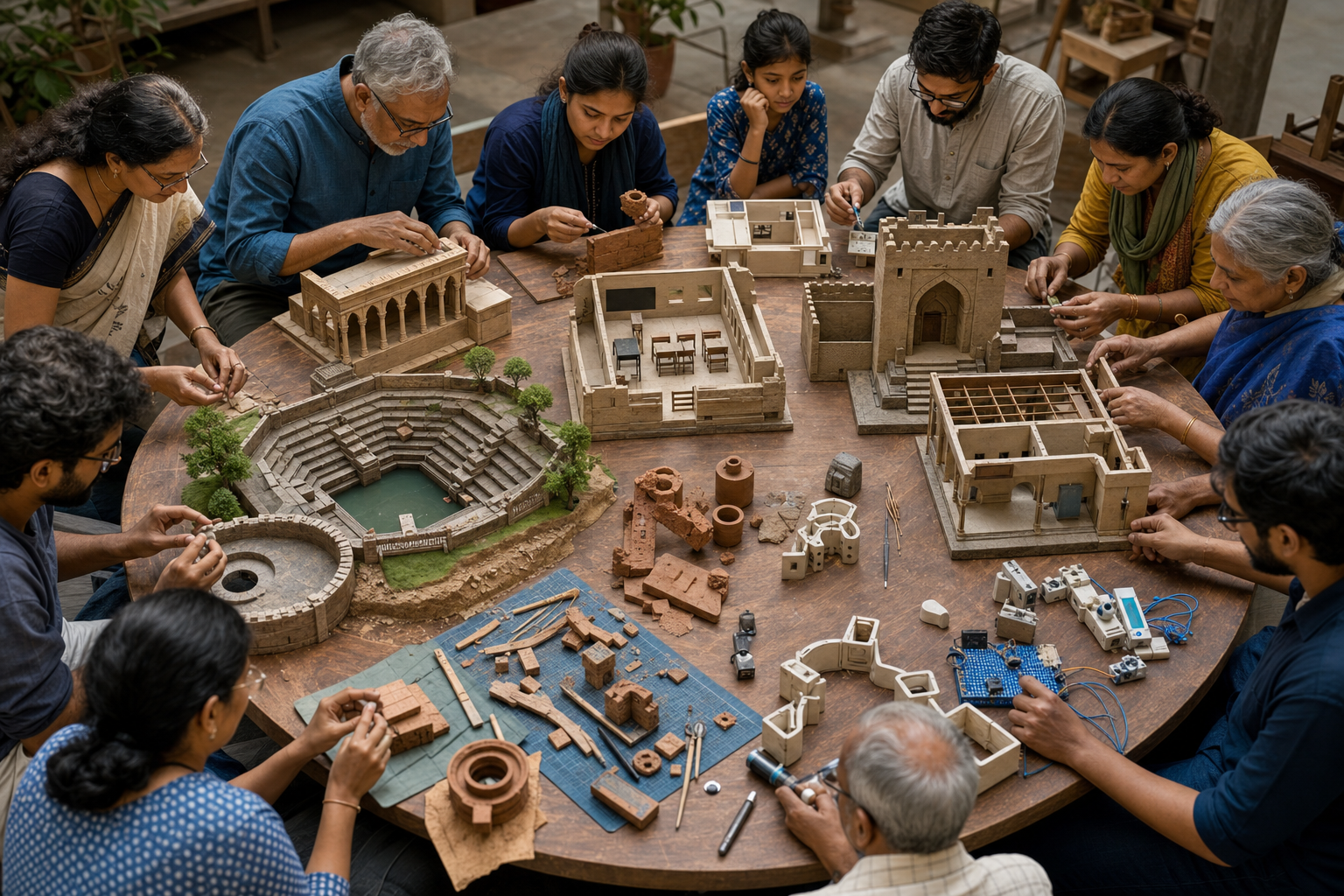
Dharma is not a museum catalogue, and civilisational memory is not an operating manual that can be copied unchanged into every modern institution. Dharmic thought can clarify the purpose of education, wealth, authority, restraint and social duty. Engineers, teachers, administrators and communities must still design forms suited to the present.
A workable method has three moves:
- Recover the displaced purpose. Ask how a practice related to family, community, season, sacred geography and duty before colonial administration became the dominant organiser of life. Pre-industrial Bharatiya society commonly placed family, community, seasonal work and spiritual obligation near the centre of daily life. Recovery does not require romanticising poverty, hierarchy or every old custom.
- Test the inherited and recovered options. Judge them by learning, dignity, access, productivity, ecological fit, social trust and resilience. An old form that fails these tests should not receive immunity merely because it is indigenous. A foreign form that passes them can be adopted without allowing it to define the civilisation’s goals.
- Redesign for present conditions. Combine Bharatiya purpose with current science, digital tools, industrial scale and the needs of a large, plural society. Restoration without redesign produces nostalgia. Modernisation without recovered purpose produces imitation.
You can make this concrete in four common settings:
- In education, mark each unit of a syllabus as foundational, useful but incomplete, or missing. Keep universal mathematics and science rigorous. Then identify where Bharatiya intellectual traditions, regional histories, primary texts or locally relevant applications are absent. Do not hide them in an annual culture day; connect them to the discipline being taught and assess whether students can use what they learn.
- In a workplace, map leave requests, heat, monsoon conditions, harvest obligations and major regional festivals before revising the calendar. A flexible holiday system can recognise local rhythms while retaining common days needed for national coordination. Measure absenteeism and service continuity after the change instead of assuming that either the colonial schedule or a reconstructed traditional calendar will work automatically.
- In travel and urban planning, distinguish a pilgrimage centre from a leisure commodity. Footfall alone cannot tell you whether a sacred place is flourishing. Track whether worship remains possible, local custodians retain a meaningful role, waste is controlled and visitors understand the conduct expected in a living tirtha.
- In public services, test every important transaction end to end in the language actually used by the citizen. A translated landing page is not enough if the form, help desk, appeal process or technical vocabulary still requires an English-speaking intermediary.
The aim is not to make institutions look more Bharatiya. It is to make them answer Bharatiya needs while remaining capable of excellence. Decorative Sanskrit names cannot compensate for poor teaching, unreliable systems or inaccessible administration.
Skills and strategic capability are the modern sovereignty test
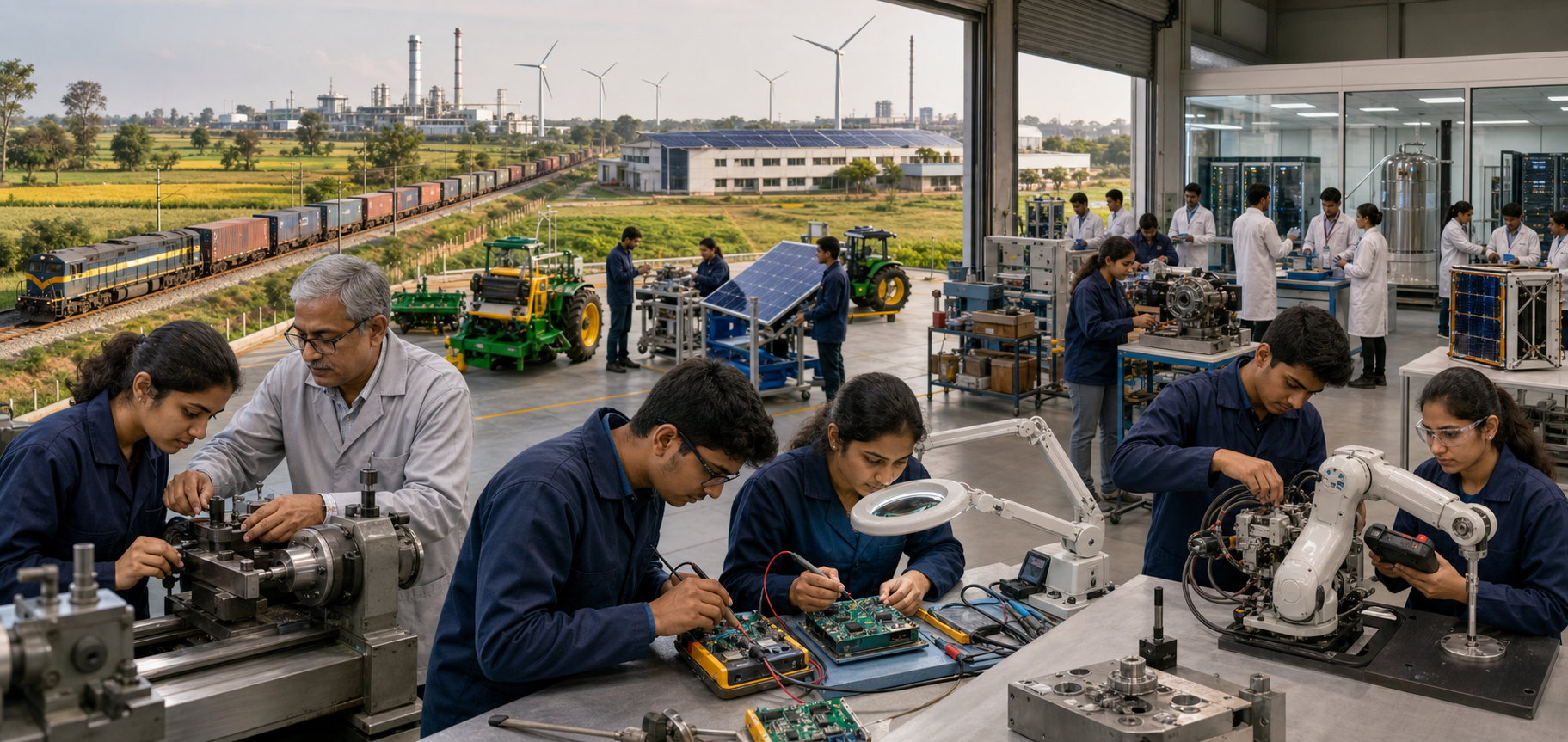
Training counts only when it becomes competence
A young population becomes an advantage only when people can make, maintain, improve and govern the systems on which the country depends. Recent expansion has been substantial: more than 1.64 crore candidates have been trained under the Pradhan Mantri Kaushal Vikas Yojana since 2015, more than 54.41 lakh apprentices have been engaged since 2016, and the ITI network has grown from 9,776 institutes in 2014 to 14,688. Bharat’s WorldSkills rank also moved from 29th in 2015 to 13th in 2024.
Those figures establish reach and momentum. They do not, by themselves, establish training quality, employment relevance or mastery. A certificate can record real competence, or it can become another administrative token. The difference appears when a learner meets an unfamiliar machine, a failed component, a changing standard or an employer who needs the work done safely.
If you are choosing a course for yourself, advising a young person or funding a training programme, ask for concrete answers:
- What will the learner be able to build, diagnose, operate or repair without step-by-step prompting?
- How many hours are spent using relevant tools, equipment or software rather than listening to lectures?
- Does the programme lead to a real apprenticeship, and which employers have accepted its learners?
- Are completion, placement and retention figures reported with the total number enrolled, or only as selected success stories?
- Can the qualification travel across employers and regions, and is there a clear route for updating skills when the technology changes?
- Does the course strengthen mathematics, scientific reasoning, communication and digital literacy alongside a narrow occupational task?
Treat skilled people with the seriousness normally reserved for roads, power and factories. That means laboratories that work, instructors who remain current, apprentices who perform real tasks, and social dignity for technical work. Bharat cannot decolonise education by changing historical vocabulary while leaving millions of learners dependent on weak instruction and credentials that employers do not trust.
Self-reliance must survive contact with scale
Atmanirbharta is often misunderstood as the absence of imports. A stronger definition is the freedom to make strategic choices. Imports can accelerate development, but a hidden single-point dependency in energy, defence, transport or manufacturing can remove that freedom when conditions change.
Current projects show why stages must not be confused. Bharat’s indigenous hydrogen-powered train on the Jind-Sonipat section was developed as a pilot for cleaner rail transport, with operations set to begin on 17 July 2026. Its significance will grow if the country can establish reliable hydrogen supply, safe operation, maintainable components, trained crews and an economically credible route from pilot to wider deployment.
Vimag Labs says its electric-motor design creates the magnetic field through software and power electronics while using copper and steel instead of rare-earth magnets. The company has received a fifth Indian patent for a rare-earth-free motor. That makes the work worth watching, particularly because rare-earth dependence affects electric-vehicle supply chains. But a patent and a company claim are not the same as independent performance validation, economical mass production or years of field reliability.
The Prototype Fast Breeder Reactor at Kalpakkam reached first criticality on 6 April 2026, marking an important technical stage in Bharat’s three-stage nuclear programme. First criticality, however, is a milestone within a longer operating journey. Future readiness depends on safe repeatable operation, fuel-cycle capability, maintenance knowledge and a talent pipeline that outlives the original project team.
Evaluate every strategic announcement with a stage-appropriate question:
- For a patent, ask whether the device has been independently tested and can be manufactured at the required cost and quality.
- For a prototype, ask whether critical materials, tooling and software are controlled or replaceable.
- For a pilot, ask for reliability, repair time, operator training and a credible route to repeat deployment.
- For an operational system, ask who can maintain and upgrade it when the original supplier is unavailable.
- For a competition medal or scientific achievement, ask whether institutions give that talent laboratories, mentors and consequential work inside Bharat.
A country becomes technologically sovereign when it can understand failure and recover from it. Design knowledge, materials, standards, tooling, maintenance and skilled people matter together. Domestic assembly with inaccessible intellectual property and irreplaceable imported components can still leave strategic decisions elsewhere.
Civilisational confidence must produce social equality
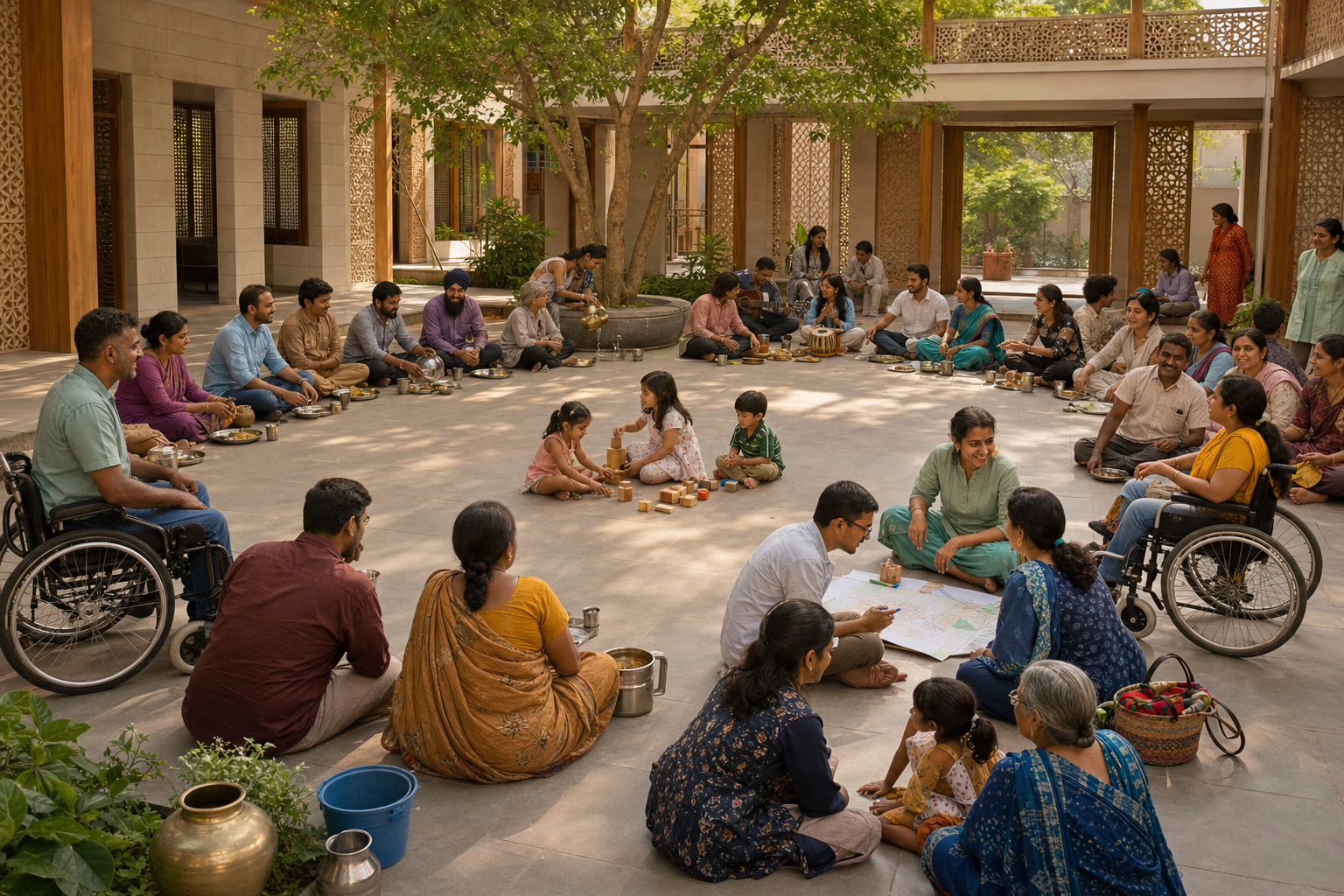
No technological leap can compensate for a society unable to cooperate across caste, region, language and sect. These differences do not need to be erased, but inherited contempt and closed networks have to be confronted. A pro-Dharma vision that speaks of civilisational greatness while denying dignity or opportunity to parts of Hindu society weakens the civilisation it claims to defend.
National cohesion also cannot be switched on only when an external religious or geopolitical threat appears. Unity created only as a reaction to aggression is unlikely to endure. It may mobilise people briefly, but it does not by itself build good schools, trustworthy institutions, technical competence or habits of mutual service.
Dharmic unity is not theological uniformity. Hindu, Buddhist, Jain and Sikh traditions do not need to surrender their distinct teachings for their adherents to recognise a shared civilisational terrain and obligations to Bharat. The useful test is whether difference can be coordinated around dignity, duty and the common good.
Apply that test inside any organisation you influence:
- Can a capable person enter, learn and lead regardless of caste, region or family connection?
- Are important instructions available in the languages participants understand, or does language function as a gatekeeping device?
- Do members from different regions and sampradayas perform consequential work together, or meet only for symbolic events?
- Is service directed toward a measurable public need, or mainly toward displaying the organisation’s identity?
- Will the institution retain its mission when a celebrated founder, political patron or dominant personality is no longer present?
The last question matters because institutions built around personal fame rarely survive succession well. The century-scale lesson associated with Dr Keshav Baliram Hedgewar is that the mission must remain larger than the founder. Future-ready organisations need disciplined succession, distributed responsibility and enough independence to judge rulers by principle rather than convenience.
Civilisational confidence should therefore be visible in conduct: less dependence on elite approval, less humiliation within society, more serious learning, more cooperation and a longer institutional horizon. Permanent outrage is not a development model. Shared work is.
Key takeaways: a 30-day decolonisation audit
You do not need control of a ministry to begin. This audit works for a household, school, business, trust, temple committee, training centre or voluntary organisation. Keep the first attempt narrow enough to complete in one month.
- On day 1, choose one default. Select a single calendar rule, course unit, language requirement, procurement dependency, visitor practice or decision process. Avoid declaring that the whole institution will be decolonised.
- During days 2-5, write down its actual purpose. Record what problem it solves, when it entered the institution, who benefits, who bears the friction and what would fail if it disappeared tomorrow. Separate evidence from assumptions.
- During days 6-10, recover what is missing. Speak to the people who use the system, including those excluded by language, cost, status or location. Identify the Bharatiya practice, local knowledge, sacred obligation or community relationship that the current arrangement overlooks. Recovery is investigation, not a promise to restore everything discovered.
- During days 11-15, classify the default as retain, adapt or replace. Retain it if it works and aligns with present aims. Adapt it if its useful core carries an avoidable distortion. Replace it only when you can name a better operating model, a responsible owner and a way to reverse the change if the pilot fails.
- During days 16-25, run a bounded pilot. Test one class, department, route, festival period, language workflow or supplier category. Do not abolish a functioning system across the institution before its replacement has survived ordinary use.
- During days 26-30, measure the result. Choose indicators suited to the decision: completion time, error rate, learner competence, local-language use, participation across social groups, repair time, import exposure, cost or service continuity. Publish a one-page decision stating what will be retained, revised or stopped.
Begin with one default you can name and one outcome you can measure. If the change restores civilisational purpose but reduces competence, redesign it. If it increases efficiency while deepening dependency or exclusion, redesign it. Keep the version that strengthens both agency and responsibility.
A future-ready Bharat will not emerge from rejecting everything inherited or attaching Bharatiya labels to unchanged machinery. It will be built when civilisational memory disciplines modern power, modern capability protects civilisational life, and social equality turns national belonging into daily cooperation. Audit one operating rule this month and make the first tested change.
References
- Hindu Post – RSS never looks for sunset, it lives with the sunrise: Prof Sinha
- Pragyata – British Colonial Raj: Drivers of Socio-Cultural Impact
- Hindu Post – Opinion: PM Modi Is Building a Future-Ready New Bharat
- Hindu Post – Generation Z: Apni urja ko Bharat ke nirman mein lagao