
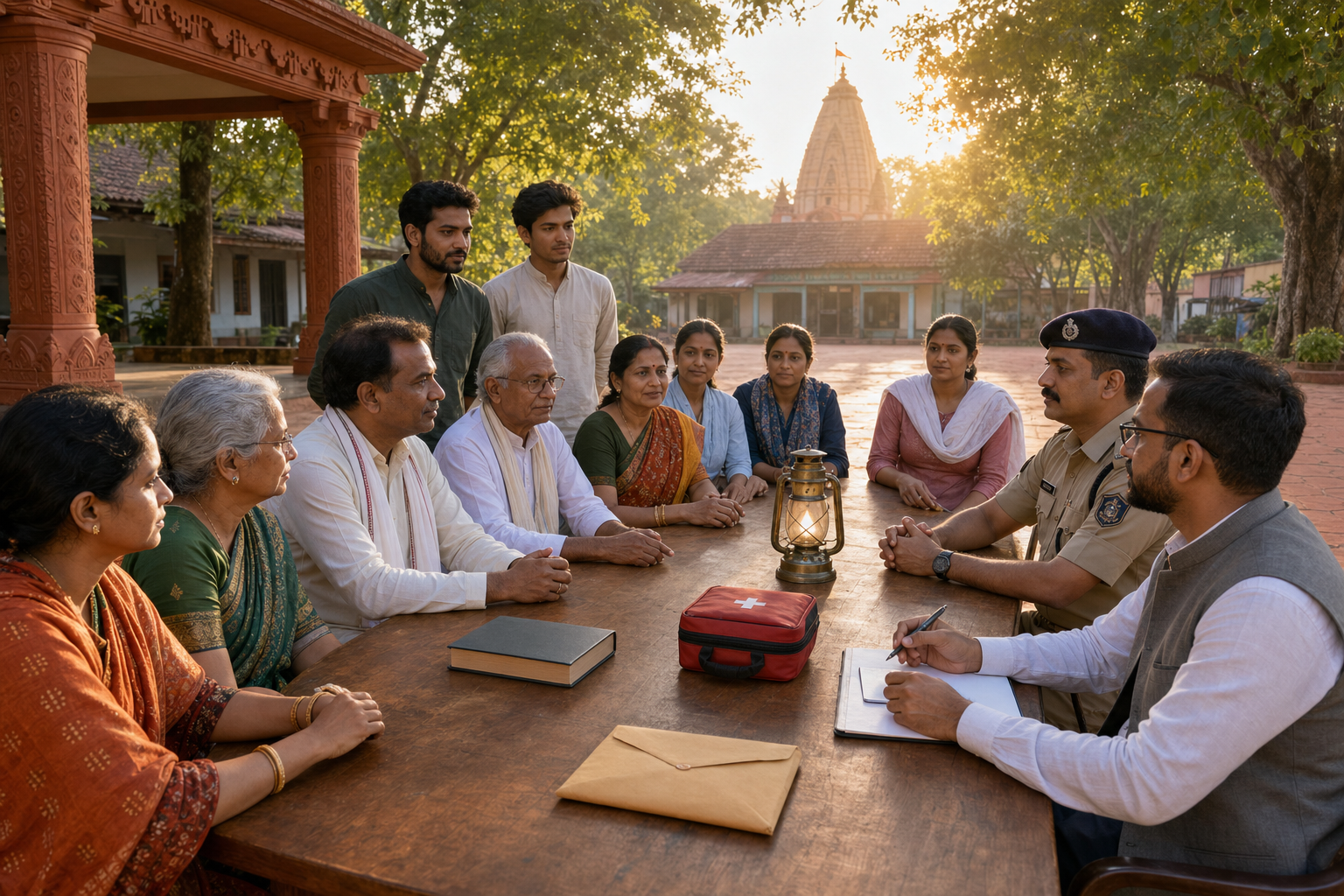
If you help run a temple committee, cultural association, festival, or neighbourhood network in Chhattisgarh, concern about Hindu safety can leave you with an uncomfortable choice: remain unprepared, or mobilise in ways that may deepen the danger. That is a false choice. You can protect people, preserve evidence, support lawful remedies, and strengthen Hindu solidarity without creating a parallel police force.
The Hindu Rashtra Samanvay Samiti has been formed in Chhattisgarh around the stated aims of uniting Hindus, responding to reported attacks, and strengthening social cohesion. Its practical value will depend less on declarations than on what happens when a frightened family calls, a procession encounters tension, or an unverified message begins spreading. The Constitution must become the operating method, not ceremonial language.
Protection begins with a boundary volunteers cannot cross
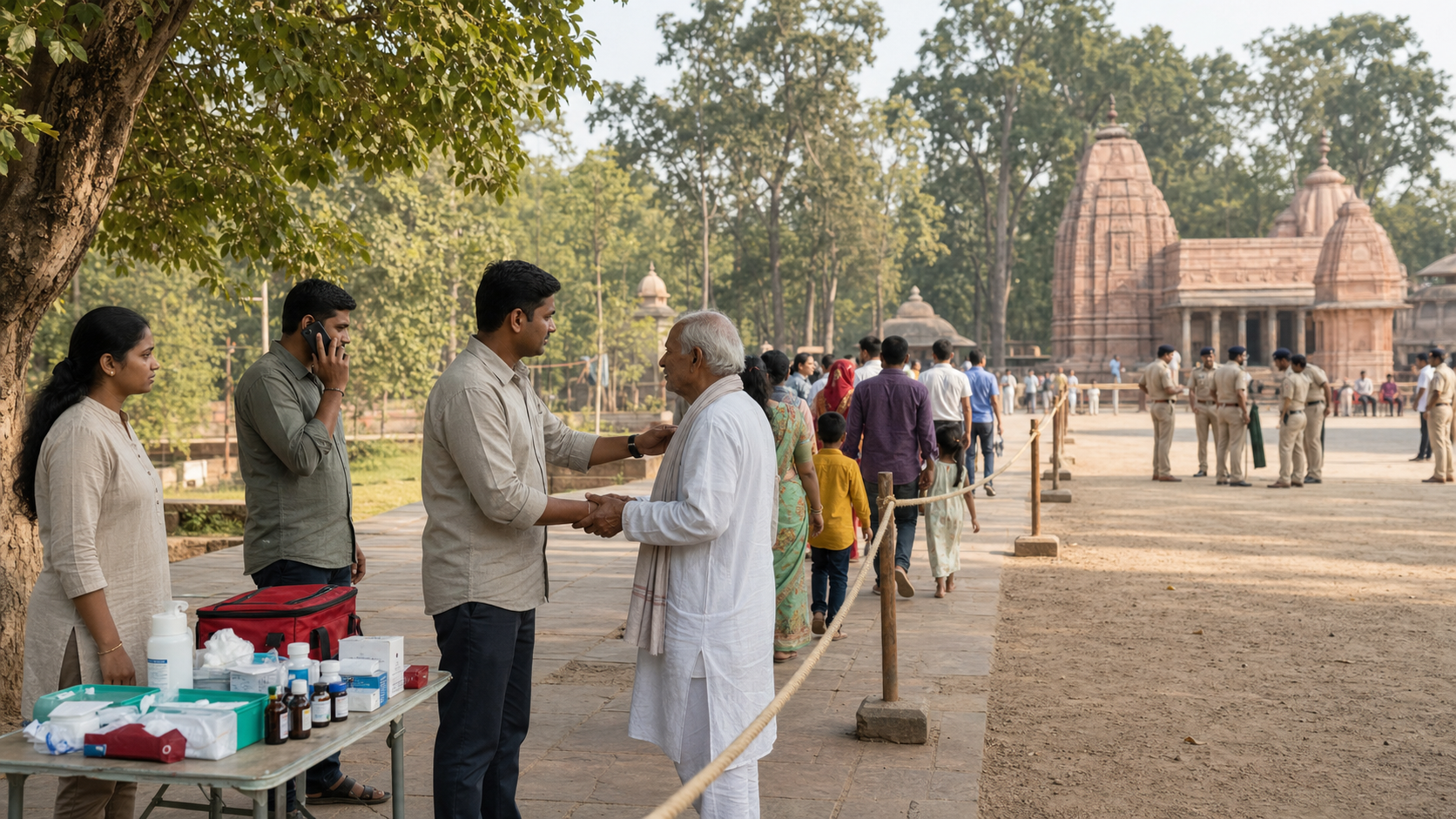
A community protection body should protect people and their access to lawful remedies. It should not investigate guilt, administer punishment, intimidate a suspected offender, or mobilise a crowd. Those limits are not concessions. They protect victims, volunteers, and the credibility of every legitimate Hindu grievance.
The first policy to approve should therefore be a written code of conduct. Every office-bearer, helpline worker, festival volunteer, social-media administrator, and district coordinator should sign it before taking responsibility.
- No threats, weapons, retaliatory action, or calls for collective punishment.
- No chasing, detaining, surrounding, or interrogating a person accused of wrongdoing.
- No hate speech or claims that transfer the alleged conduct of an individual to an entire religious or social community.
- No publication of a victim’s identity, witness details, private messages, or sensitive evidence without informed consent and appropriate legal review.
- No forwarding of an unverified allegation merely because it appears urgent or supports an existing fear.
- Immediate danger, suspected criminal conduct, and threats to public order go to the police or district administration through a named escalation channel.
Due process is not passivity. A rushed confrontation can endanger the complainant, contaminate evidence, expose volunteers to legal consequences, and turn attention away from the original harm. A disciplined group can escort someone to safety, record a report, preserve original material, arrange legal assistance, and follow up with officials. It cannot declare anyone guilty.
If your organisation uses the phrase “Hindu Rashtra,” define it publicly. A constitutionally defensible civil-society meaning is a civilisational and cultural aspiration expressed through service, ethical citizenship, cultural continuity, and mutual responsibility – not a claim to theocratic or coercive power. Ahimsa, Vasudhaiva Kutumbakam, and opposition to vigilantism should be written into the organisation’s rules so that the meaning is visible in conduct, not left open to inference.
Turn every report into a calm, documented response
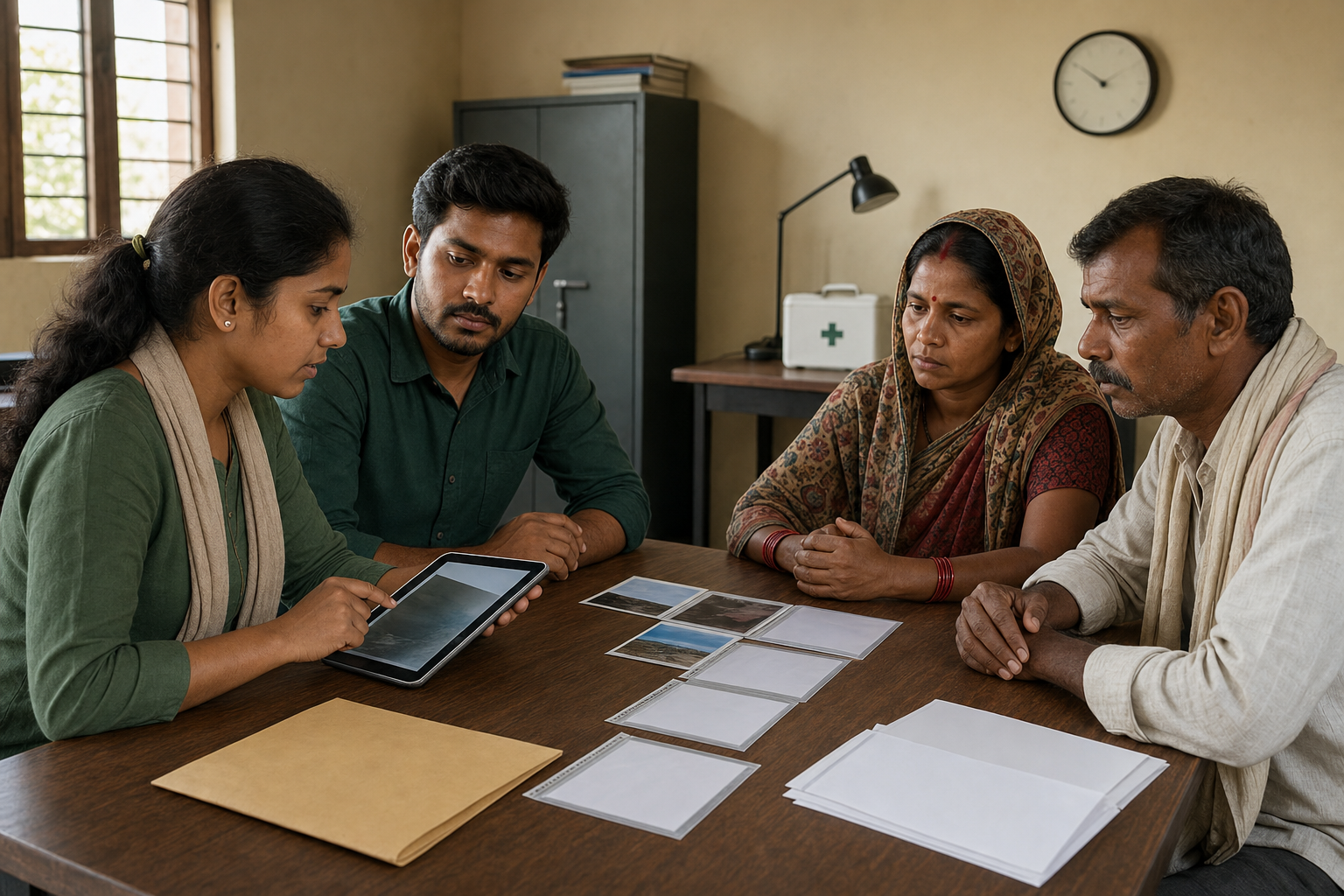
A helpline is useful only when the caller knows what it can do. It is an intake and coordination channel, not an emergency service, court, or public accusation desk. If it is advertised as available 24×7, someone must actually be assigned at all times and a backup must exist. Otherwise, publish the staffed hours and direct emergencies to the police control room. A promise that fails during a crisis damages trust more than a modest service described honestly.
| What has happened | First action | What volunteers should avoid |
|---|---|---|
| Violence, an immediate threat, or a person in danger | Contact the police control room, help the person reach safety, and notify the designated liaison | Confronting, pursuing, or gathering a crowd around the suspected person |
| An incident is reported after the immediate danger has passed | Open a confidential record, preserve original evidence, and connect the complainant with legal assistance | Promising an FIR, arrest, prosecution, or particular legal outcome |
| A disturbing claim is circulating online | Mark it unverified, check it through named local contacts, and issue a correction if necessary | Reposting names, images, or allegations to ask the public whether they are true |
| A family or witness is distressed after an incident | Address immediate safety, identify a trusted contact, and offer access to qualified psychosocial support | Pressuring the person to speak publicly, attend a protest, or recount the event repeatedly |
Use one standard operating procedure for every report. The identity of the complainant should not change the quality of the intake, and the seriousness of a claim should not be judged by how quickly it becomes popular online.
- Record the minimum facts: what was observed, when and where it occurred, whether anyone is still at risk, and how the reporting person can be contacted safely.
- Separate observation from interpretation. Write “the caller heard these words” or “this image was received from this account,” not a conclusion that has not been established.
- Preserve original files. Keep the original photograph, video, message, link, or document rather than relying only on cropped screenshots or edited compilations. Record who supplied each item.
- Restrict access. Case records should sit in a secure repository available only to authorised responders, legal advisers, and others who have a defined need to see them.
- Escalate through the agreed ladder: local volunteer, district coordinator, police or administrative liaison, and legal adviser. Imminent danger bypasses internal steps and goes directly to emergency authorities.
- Report back to the affected person. Tell them what was done, what remains outside the samiti’s control, and whom they can contact next. Do not mark a case resolved merely because it was forwarded.
Standardised incident records, evidence preservation, legal aid, and assistance with FIR-related processes can make a lawful response more effective. They do not turn volunteers into lawyers. Questions about criminal allegations, privacy, evidence, assembly rules, or an individual’s legal options should be reviewed by a qualified local legal professional. A generic volunteer handout cannot safely replace advice on a specific case.
Make festivals safer without turning them into flashpoints

Festival safety is often treated as a question of manpower. The more useful question is whether everyone knows the route, the vulnerable points, the communication chain, and the limit of their role. A large unbriefed volunteer group can create confusion. A smaller trained team with clear assignments can guide people, recognise a developing problem, and bring the proper authority in early.
Before a procession or major temple event, hold a route and crowd-management meeting with the relevant police and district officials. Put the agreed plan in writing. Walk through the route instead of discussing it only on a map.
- Identify entrances, exits, narrow stretches, traffic crossings, dark areas, and locations where crowds may meet or stop unexpectedly.
- Plan safe passage for children, elders, and people with disabilities. Parents should know where a separated child will be taken and whom to approach.
- Account for students, workers, priests, and traders returning after evening events. Safe dispersal is part of the event, not something that begins after responsibility has ended.
- Confirm lighting, CCTV coverage, first-aid posts, water access, and the location from which emergency vehicles can enter.
- Name one police liaison, one administrative liaison, one medical coordinator, and one volunteer lead. Circulate their roles to the team without publishing private contact details unnecessarily.
- Brief volunteers on de-escalation, lawful assembly, bystander assistance, and the exact circumstances that require them to step back and call officials.
During the event, keep public communication separate from operational communication. The public channel can carry route changes, safety instructions, and verified advisories. The internal channel should carry concise, location-specific reports to designated responders. Neither should become a stream of speculation.
When a rumour appears, accuracy matters more than speed. Verify it through the liaison structure, state clearly what is known and unknown, and correct false information on the same channels where it circulated. Do not use graphic images to demonstrate seriousness. They can expose victims, distress families, inflame a crowd, and circulate long after the context has been lost.
After the event, conduct an after-action review with volunteers and officials. Record where the plan failed, which calls were delayed, where people became confused, and what infrastructure was missing. A request for lighting, a camera, a barrier, or a first-aid point is more persuasive when it comes from a documented operational gap rather than a general expression of fear.
Build Hindu unity through credible, inclusive governance
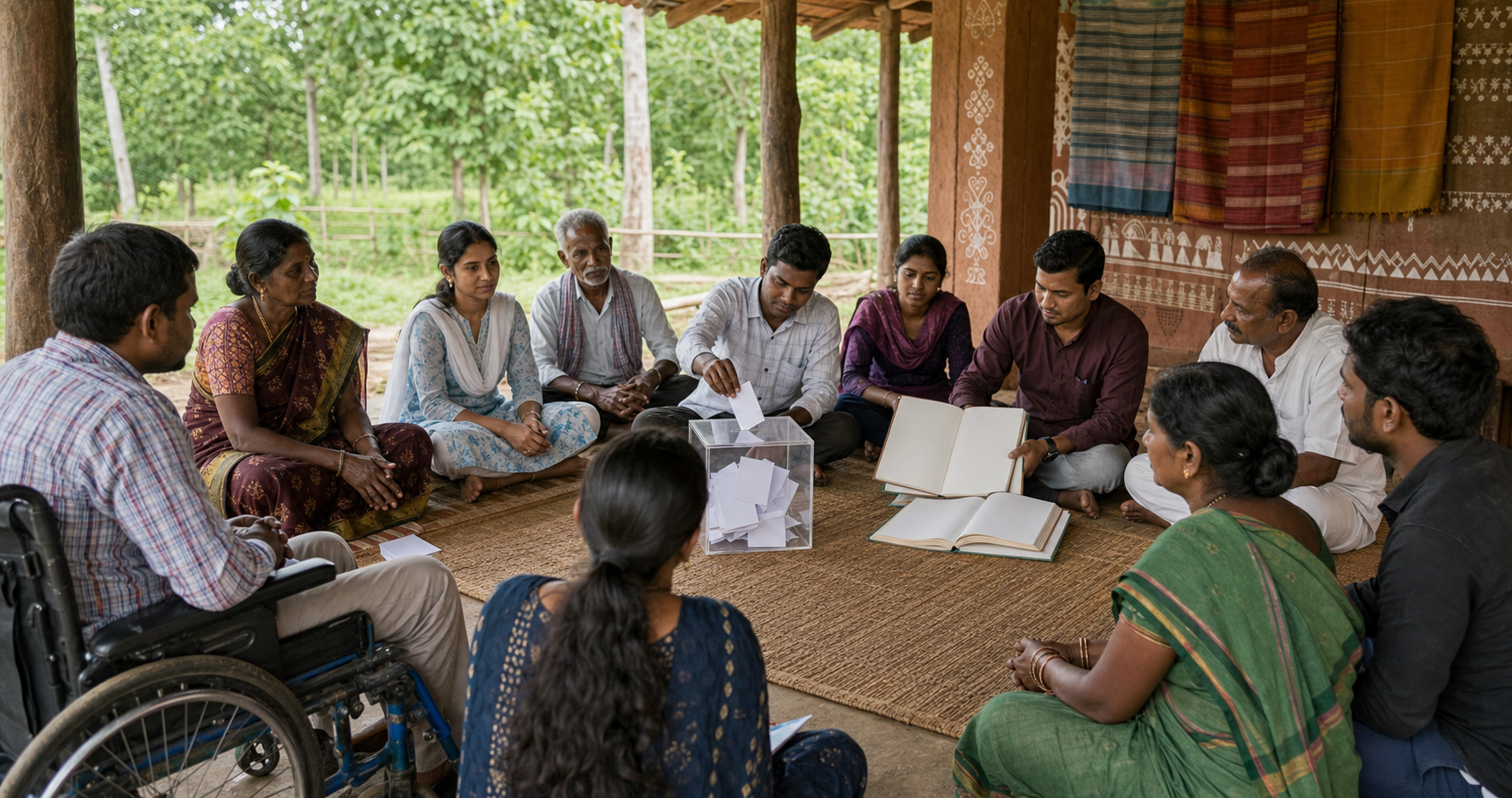
A protection initiative can have sincere intentions and still lose public confidence through opaque leadership, careless finances, factional capture, or misuse of sensitive cases. Governance is therefore part of community safety. It determines who may speak for the organisation, who can see personal information, who authorises expenditure, and how misconduct by a volunteer is handled.
A representative council with district-level chapters should publish its office-bearers, decision process, code of conduct, and complaint mechanism. Leadership pathways should include women, especially in roles involving family support, incident intake, event planning, and decisions about privacy. Representation is not symbolic when it changes whose risks are noticed before an event.
- Require conflict-of-interest disclosures from decision-makers, legal advisers, contractors, and anyone authorising funds.
- Separate incident intake, public communication, and finance. No single individual should control a sensitive allegation, the public narrative around it, and the money raised in its name.
- Publish financial summaries while keeping victim and witness information confidential.
- Create a process for suspending a volunteer who threatens others, spreads hate speech, leaks case information, or disregards the escalation protocol.
- Maintain standing access to legal and psychosocial professionals. Their role is to advise within their expertise, not lend professional titles to political messaging.
- Seek written coordination arrangements with police and district authorities covering contact points, festival planning, emergency escalation, and periodic exercises.
Dharmic unity can also be wider than a single institutional network. Buddhist viharas, Jain sanghas, and Sikh gurdwaras can be partners on ethical education, community safety, humanitarian relief, and rumour control. Ahimsa, Anekantavada, and sarbat da bhala offer distinct but compatible reasons to reject collective blame and serve people beyond one’s own congregation. Cooperation on common civic needs does not erase Hindu identity; it demonstrates the confidence to practise it constructively.
Service should be treated as core work, not public relations after a controversy. Blood donation, medical assistance, and disaster relief give volunteers useful experience in logistics, privacy, coordination, and care. They also show neighbours that organised religious identity can produce a public good without discrimination.
Public communication needs its own protocol. Identify who is authorised to speak, distinguish verified facts from allegations, obtain consent before sharing a person’s story, and correct errors visibly. Multilingual advisories may be necessary where one language would leave part of the affected locality uninformed. A communications team should never be rewarded for being first if being first means being wrong.
Use the first 100 days to prove the model
The first 100 days should produce a working safety system, not merely more committees. Sequence the work so that public promises follow operational capacity.
- Map temples, neighbourhood associations, cultural groups, Buddhist viharas, Jain sanghas, Sikh gurdwaras, legal professionals, psychosocial professionals, police contacts, district officials, hospitals, and recurring festival locations. Mark reported hotspots as areas for preventive attention, not as places or communities presumed guilty.
- Approve the code of conduct, privacy rules, incident form, evidence-handling procedure, escalation ladder, media protocol, and volunteer complaint process.
- Establish the helpline and secure record system. Test calls, handoffs, backup coverage, access controls, and the procedure for an immediate threat before publicising the number widely.
- Train an initial volunteer cohort in de-escalation, bystander assistance, digital hygiene, lawful assembly, privacy, and communication with authorities. Use scenarios that force volunteers to decide when not to intervene directly.
- Pilot the system at a medium-scale festival. Test route planning, liaison contacts, first aid, rumour control, incident intake, and safe dispersal.
- Hold a documented after-action review. Assign every corrective action to a named role and update the operating procedure before the next event.
Measure outcomes that reveal whether the system works. Useful indicators include helpline response time, the share of active volunteers who completed training, the share of documented incidents routed through legal channels, festival-related disturbances over comparable events, and confidential community satisfaction. A privacy-protecting public dashboard can report those measures without exposing complainants or turning unresolved allegations into publicity.
Choose definitions before publishing numbers. A call is not “resolved” merely because someone answered it. A volunteer is not “trained” merely because a message was sent to a group chat. An event is not “incident-free” if complaints were discouraged or never recorded. Credible measurement may produce modest-looking results at first, but it gives the organisation something real to improve.
Key takeaways
- A Hindu protection body gains legitimacy by stating clearly what its volunteers cannot do.
- A community helpline should triage, document, and coordinate; immediate danger belongs with the police control room.
- Preserve original evidence, restrict access, and distinguish observed facts from conclusions.
- Festival security works best as a written routine shared with police and district officials.
- Privacy, financial transparency, gender-inclusive leadership, and volunteer discipline are safety measures.
- Judge the first 100 days by tested systems and honest outcomes, not meetings, slogans, or social-media reach.
At your next organising meeting, begin with two pages: a code of conduct and an escalation sheet naming who handles danger, evidence, legal support, official liaison, and public communication. Test those pages against one realistic incident before announcing a larger programme. If the team cannot follow the process in a calm room, it will not follow it when fear and rumour arrive together.