
If you are trying to understand what happened in Narail, you do not have to choose between outrage and caution. You need both: urgency for people who may still be in danger, and disciplined language that does not turn an allegation into a proven fact.
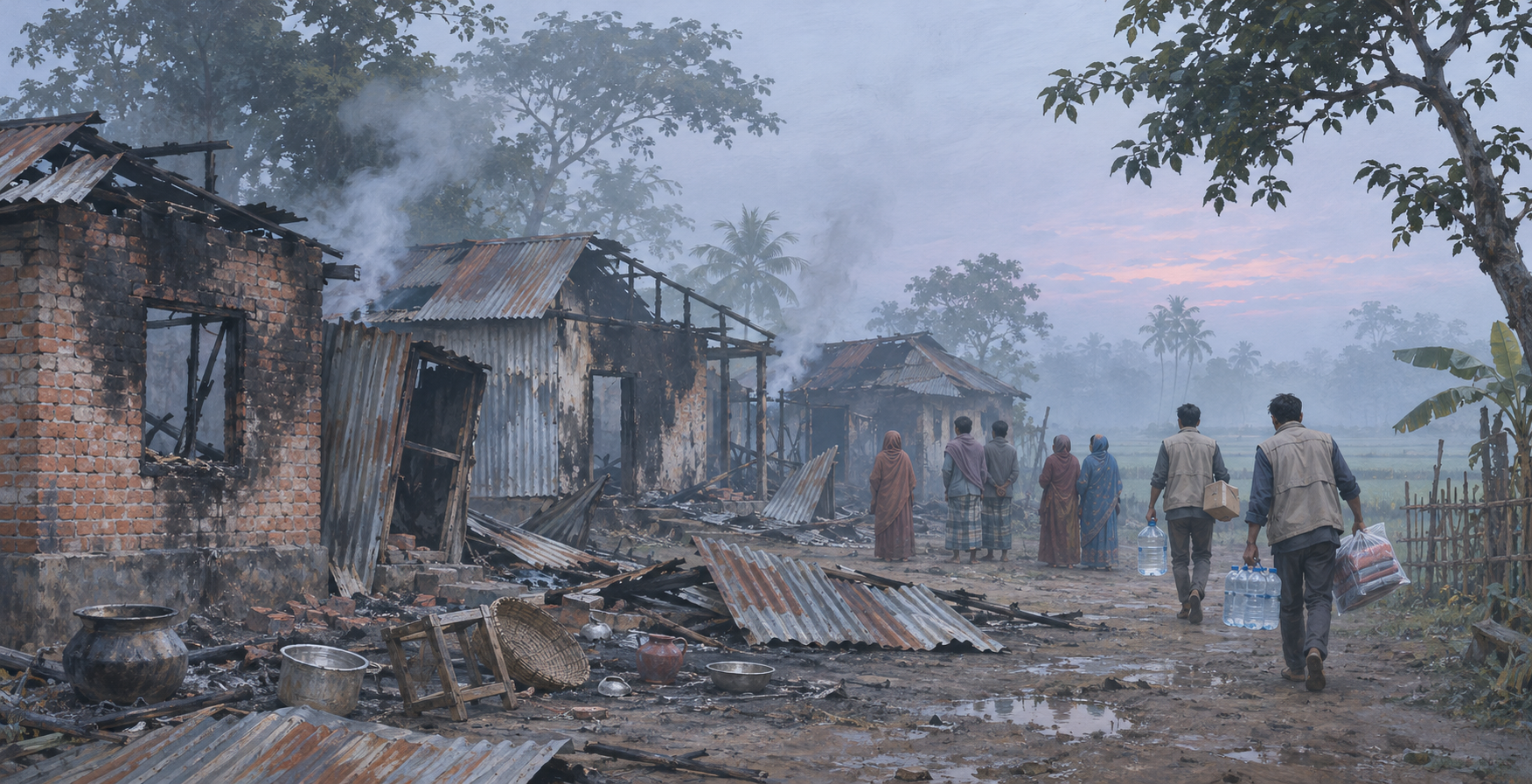
On the night of 20 November 2026, at least 100 homes in Kalia Upazila, Narail, were reportedly looted, vandalised and burned, including the homes of at least 30 Hindu families. Residents also alleged that Hindu women and girls were abducted, tortured or assaulted. The immediate task is to protect those at risk, establish where the alleged victims are now, preserve evidence and demand answers precise enough to test.
Key takeaways
- The reported total is at least 100 homes belonging to people accused of supporting the Awami League; at least 30 of those homes belonged to Hindu families. Do not inaccurately describe all 100 as Hindu homes.
- The destruction was presented as retaliation for the killing of two BNP-affiliated leaders on 18 November, but a political trigger does not exclude anti-Hindu targeting within the attack.
- A Hindu woman from Ghoshpara and two minor Hindu girls from Durgapur were allegedly abducted. At least eight Hindu women and girls were also reportedly assaulted. These remain grave allegations requiring urgent verification.
- Do not add the figures together: it has not been established whether the reported count of eight assaulted women and girls includes any of the three people allegedly abducted.
- The most useful response is to press for the alleged victims’ current status, registered case details, protection for witnesses, a household-level damage record and an independent investigation into both the perpetrators and the chain of command.
Separate the reported events from the unresolved allegations
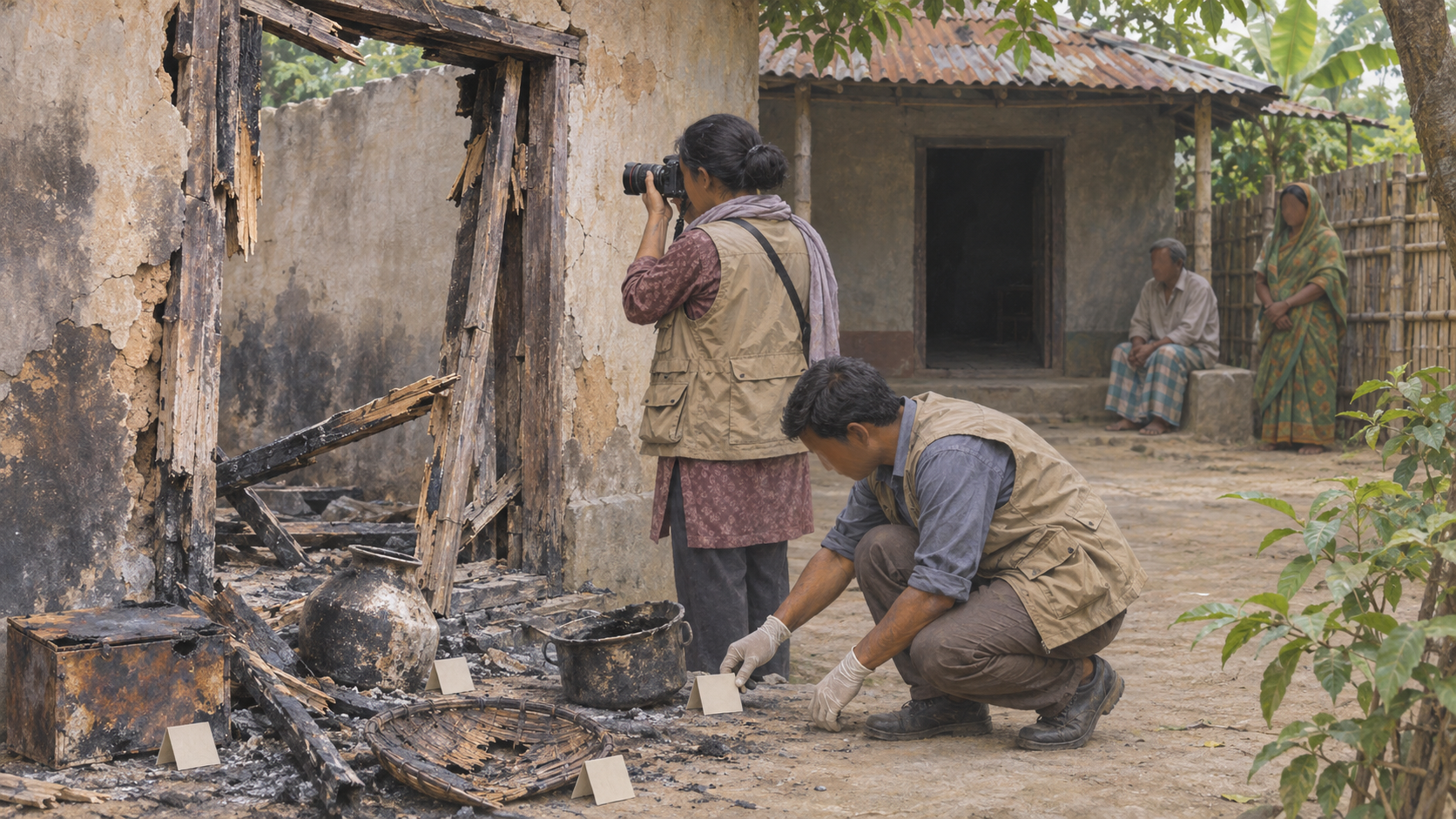
The reported destruction has a defined place, date and scale. Homes in Kalia Upazila belonging to people accused of Awami League sympathies were attacked on 20 November. They were reportedly looted and vandalised before being set on fire, and the arson was described as coordinated. At least 30 affected households were Hindu.
Two days earlier, Krishak Dal leader Shahinur Sheikh and Jasas leader Sohel Molla were killed during a motorcycle rally protesting nationwide arson and vandalism. Their deaths were given as the motive for the later retaliation. That sequence may explain the immediate political context; it does not prove who planned, ordered or participated in each attack on 20 November.
BNP activists and party workers were accused of carrying out the violence. The allegations named MP Bishwas Jahangir Alam, Central Secretary Rizvi and State Minister for Power Anindya Islam Amit as leaders. Those are serious accusations, not judicial findings. Repeating the names without carrying that qualification would convert an unproven claim into an assertion of guilt.
The allegations concerning women and girls require even greater care. Residents reportedly said that a Hindu woman was taken from Ghoshpara and tortured overnight, while two minor Hindu girls were taken from Durgapur. At least eight Hindu women and girls were also said to have been assaulted. Public answers are urgently needed about their present whereabouts, recovery, safety and access to medical and legal support.
Careful wording does not minimise their possible suffering. It protects the credibility of the demand for action. Say who made the allegation, keep the alleged conduct separate from what has been independently established, and update the claim when reliable information changes.
Political retaliation and anti-Hindu targeting can overlap
The easiest misreading is to force the violence into a single category. Because the larger group of homes belonged to alleged Awami League supporters, some will call it only partisan revenge. Because Hindu households and Hindu women and girls were reportedly targeted, others will describe every part of the attack as exclusively communal. Neither shortcut adequately tests what happened.
You should examine three layers separately. The first is the trigger: two BNP-affiliated leaders had been killed. The second is operational targeting: people accused of supporting a rival party reportedly had their homes attacked. The third is discriminatory harm: at least 30 Hindu households were among the victims, while the abduction and assault allegations specifically concern Hindu women and girls.
A mob can pursue political revenge while exploiting the vulnerability of a religious minority. Establishing the anti-Hindu dimension therefore requires household-level evidence: which homes were selected, what attackers said, whether Hindu properties suffered different treatment from neighbouring properties, who was threatened, and whether families were prevented from returning. The alleged attacks on Hindu women and girls must also be investigated as possible targeted violence, not absorbed into a generic property-damage count.
That scrutiny should remain directed at the alleged perpetrators and those who may have organised or enabled them. It should not become collective blame against Bangladeshi Muslims. Defending Hindus is strongest when it insists on individual responsibility, equal protection and evidence rather than retaliatory communal hostility.
Protection must come before the argument over labels
The first hours and days after an alleged abduction are not the time to debate terminology while basic questions go unanswered. Authorities, journalists and credible rights monitors should be pressed for a public accounting that addresses the following points:
- What are the current whereabouts and safety status of the woman from Ghoshpara and the two minor girls from Durgapur?
- Were they recovered, released or still reported missing, and when was each status last verified?
- Were police complaints or criminal cases registered for the alleged abductions, torture, assaults, looting and arson? What are the case numbers and investigating units?
- How many households were damaged, and how many belonged to Hindu families? A household-level inventory should distinguish total destruction, partial damage, looting and displacement.
- What original photographs, videos, fire-scene findings, witness statements and medical records have been preserved? Public summaries can protect identities while confirming that evidence exists.
- What evidence connects individual attackers to organisers or political leaders? Presence, incitement, logistical support and command responsibility are different claims and should not be blurred.
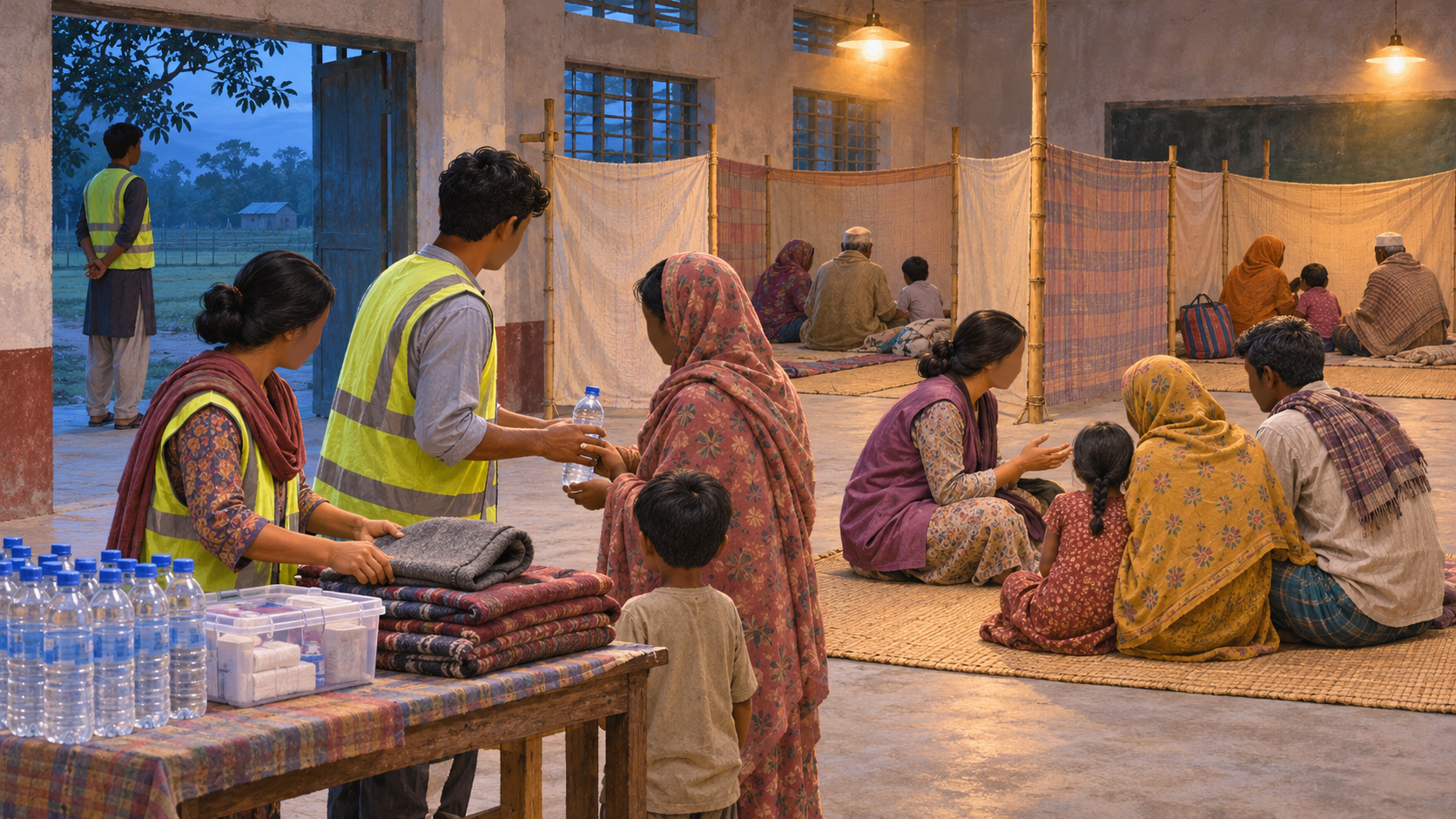
- What protection, shelter and assistance have affected families received, and can displaced residents return without intimidation?
If you are documenting events locally, do not publish the names, faces, addresses or contact details of minors or alleged survivors without informed consent and a clear safety reason. Keep original media files unedited, record the time and location separately, note whether information was witnessed directly or relayed by someone else, and store a duplicate away from the affected device. Do not confront alleged attackers or enter an unsafe area merely to obtain footage.
Privacy is not secrecy for its own sake. Public exposure can create stigma, retaliation and further danger for women, girls and their families. Investigators may need identifying information; the internet does not.
What you can do without spreading harm

A careful public formulation is: At least 100 homes of people accused of supporting the Awami League, including at least 30 Hindu families’ homes, were reportedly attacked in Kalia Upazila on 20 November. Residents alleged that a Hindu woman and two minor Hindu girls were abducted and that at least eight Hindu women and girls were assaulted. The allegations require urgent protection measures, verification and a transparent investigation.
That wording preserves the scale, the Hindu victims, the political context and the uncertainty. It is more useful than a dramatic caption that cannot survive scrutiny.
- Correct inflated claims. If you previously said that all 100 homes were Hindu homes, amend the statement. The supported distinction is at least 100 homes in total, including at least 30 Hindu families’ homes.
- Keep allegation labels attached. Do not crop out words such as reportedly or allegedly when reposting a screenshot. Do not state that a named politician ordered an attack unless evidence establishes that role.
- Protect women and minors. Do not circulate names, faces, intimate details or unverified descriptions of abuse. Their safety is more important than making a social-media post appear exclusive.
- Ask institutions for written answers. Send the seven questions above to elected representatives, diplomatic institutions, journalists or rights organisations capable of seeking verification. A written question creates a record and is harder to answer with a slogan.
- Verify relief appeals. Before donating, confirm who controls the collection, which households it serves, how money will reach them and whether recipients’ identities will remain private. Do not send alleged survivors’ personal information through an unverified fundraiser.
- Preserve corrections. If the status of an alleged victim changes or a figure is revised, update the original post instead of only publishing a new one. Readers encountering the earlier claim should be able to see the correction.
For readers in Bharat and the diaspora, solidarity should mean sustained, lawful pressure for answers: the safety and recovery status of the alleged abductees, protection for Hindu families, transparent criminal cases, relief for damaged households and scrutiny of political responsibility. It should not mean threats, collective blame or sharing material that endangers the very people you want to defend.
Your next step can be concrete: preserve the linked record, share the careful formulation above and ask one institution for written answers to the seven unresolved questions. Precision will not weaken the case for Narail’s Hindu families. It will make denial, evasion and impunity harder.
References

Leave a Reply
You must be logged in to post a comment.