
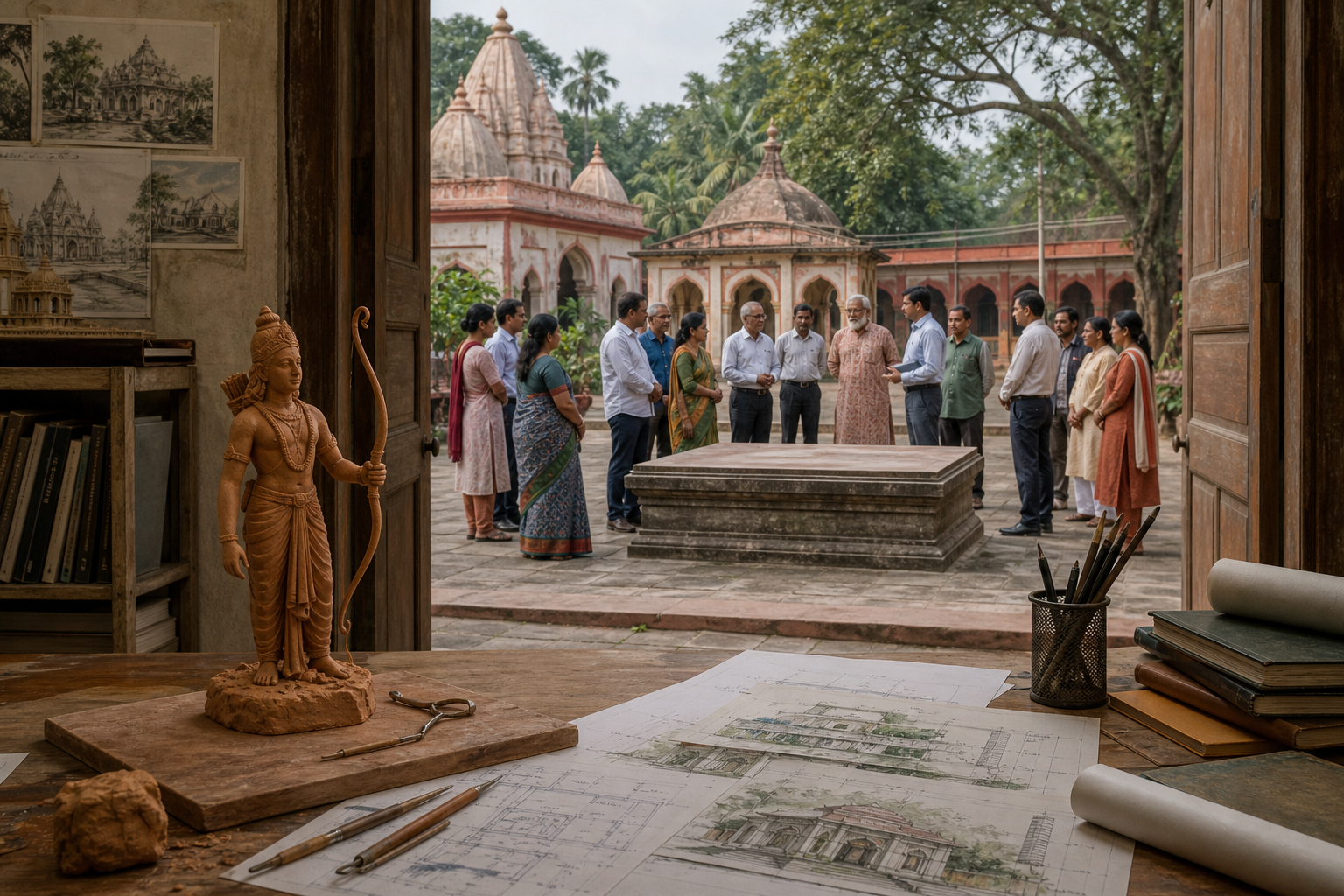
The dispute over a proposed statue of Lord Ram at a Hindu temple in Bangladesh raises a larger question than whether one monument should be built: can a minority community exercise its religion without threats or political pressure becoming an informal veto?
The supplied account presents serious allegations of intimidation, desecration and inadequate state protection, but it also leaves important facts unresolved. Separating those reported claims from the governing rights principles shows what a fair investigation and credible resolution would need to establish.
Key takeaways
- The supplied article reports that work on a large Ram statue at a temple complex in Palashbari was suspended amid Islamist agitation and threats.
- It also relays reports of an alleged desecration of an image of Ram and subsequent Hindu-led protests, but the provided material does not independently verify the sequence or identify official investigative findings.
- Bangladesh’s constitutional commitments make equal protection the central issue: public-order rules should be applied through transparent law, not according to which group can generate greater pressure.
- A defensible resolution requires disclosure of the project’s legal status, protection against violence, an impartial investigation and accountability based on evidence.
What the supplied account reports, and what it does not settle
According to the DharmaRenaissance article, the controversy concerns the Sri Sri Radha Govinda and Kali Temple in Palashbari, Gaibandha. It says an 81-foot statue of Lord Ram was reportedly planned within a larger complex that would also include statues of Lord Krishna and Lord Shiva. The article further reports that a substantial part of the construction had been completed before work was suspended following threats and agitation from Islamist groups.
The same article, summarising reports it attributes to The Times of India and The Economic Times, says Hindu protests intensified after an image of Lord Ram was allegedly desecrated during demonstrations against the project. It describes student participation, torchlight processions and demands for arrests and stronger minority protection. Because only the DharmaRenaissance account was supplied here, those details should be understood as second-hand reported claims rather than independently corroborated findings.
Several questions remain open in the provided material. It does not reproduce the project’s permits, identify the precise authority that stopped the work, set out the formal legal basis for suspension or provide the results of a completed investigation into the alleged desecration. It also does not establish whether construction was paused by an enforceable administrative order, by temple organisers responding to danger or through another mechanism. Those distinctions matter because a lawful regulatory dispute and a retreat under coercive pressure demand different remedies.
The reported threats should therefore be investigated without treating every contested detail as already proved. At the same time, uncertainty about permits or chronology would not excuse intimidation, vandalism or desecration. Administrative compliance and protection from violence are separate obligations; neither should be used to avoid the other.
Equal protection joins religious freedom with public visibility
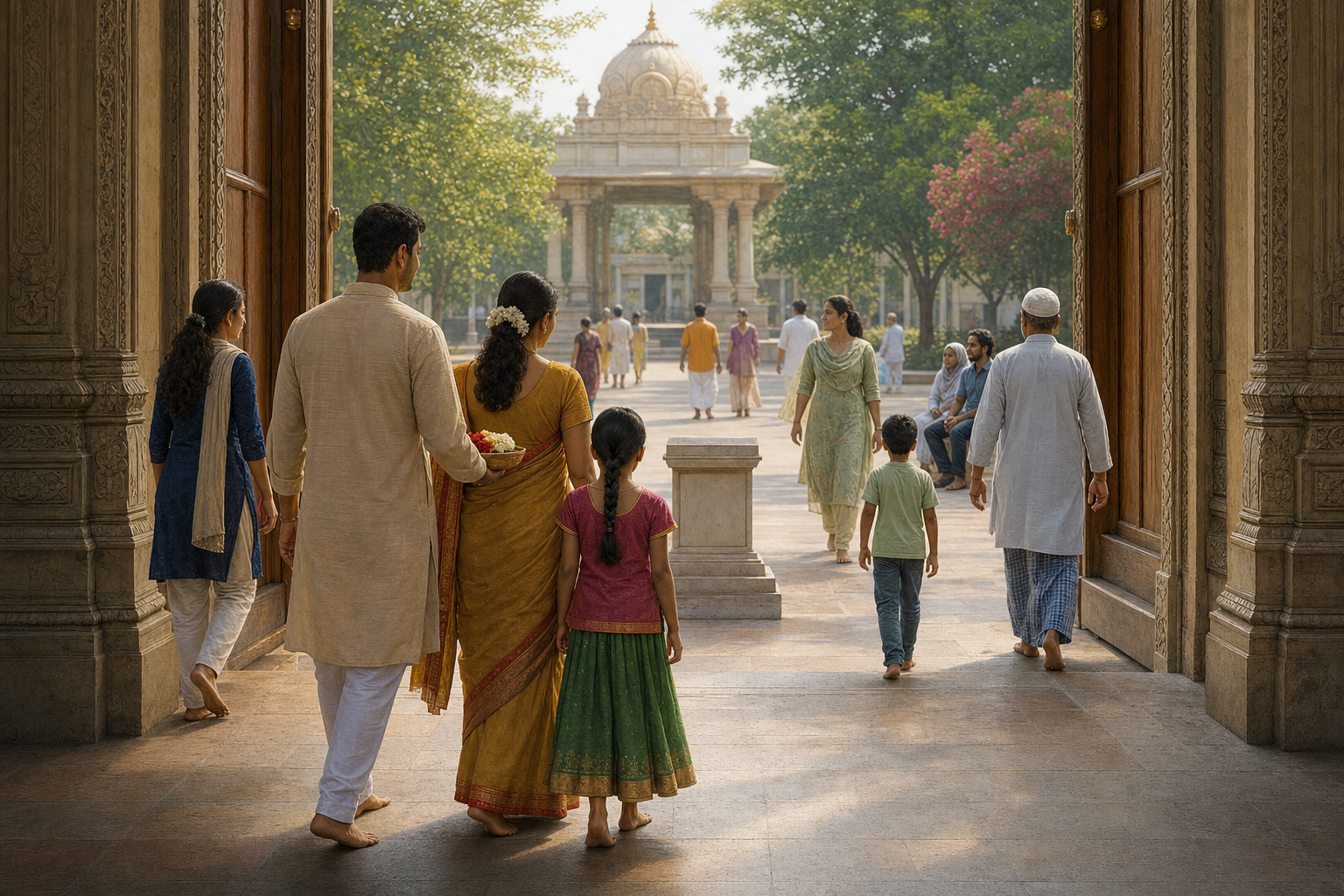
The supplied article describes Bangladesh’s constitutional order as combining Islam’s status as the state religion with secular principles and guarantees for other faiths. It points in particular to Article 41, which protects the profession, practice and propagation of religion subject to law, public order and morality, and Article 12, which rejects communalism, political misuse of religion and persecution on religious grounds.
These provisions do not mean that every proposed structure must automatically receive approval. Governments may ordinarily enforce neutral rules concerning land, construction, safety and public order. The rights test is whether the same standards are applied consistently and whether authorities give clear, reviewable reasons for their decisions. If a project is restricted because it violates a generally applicable rule, officials should identify that rule and the available appeal process. If it is halted mainly because opponents threaten disorder, the state risks rewarding coercion.
That distinction is sometimes described as the problem of a heckler’s veto: lawful expression is curtailed because others threaten a hostile reaction. As a general rule-of-law principle, the first response to such a threat should be protection and enforcement against unlawful conduct, not an automatic restriction on the threatened community. Otherwise, the group most willing to create a crisis acquires greater practical power than the group relying on ordinary legal procedures.
The question also extends beyond private worship. The article cites Bangladesh’s 2022 census as recording Hindus at approximately 7.95 percent of the population. For a historically rooted minority, temples, festivals and religious images are not merely devotional objects; they are also visible signs of membership in the national community. Equal citizenship becomes incomplete when worship is tolerated only on condition that minority identity remains inconspicuous.
The article connects the present fear to memories of Hindu persecution during the 1971 Liberation War and to the destruction and later reconstruction of Dhaka’s Ramna Kali Temple. That history helps explain why an alleged attack on a religious image may be understood by affected communities as more than an isolated insult. Historical memory does not decide the facts of the current case, but it does heighten the state’s responsibility to communicate clearly and prevent rumours or impunity from deepening insecurity.
Political framing can obscure the accountability question

The source places the episode within a broader critique of political accommodation after a Bangladesh Nationalist Party electoral victory. That is an interpretive claim in the supplied article, not an independently demonstrated explanation for every reported decision. Establishing political responsibility would require evidence showing who ordered or encouraged the suspension, what reasons were recorded and how police and administrators responded to specific threats.
The article also recalls earlier Islamist objections to sculptures, including a controversy involving the Lady Justice statue. The comparison identifies a recurring debate about religious objections to public representation, but the Ram project has a distinct minority-rights dimension because it reportedly belongs to a functioning Hindu temple complex. A general dispute over public sculpture and a community’s religious use of its temple property may involve different legal interests even when some opponents use similar arguments.
Another complication is the classification of attacks affecting minorities. The article says earlier interim authorities maintained that many reported incidents involving minority victims were criminal rather than communal, while acknowledging that some had a communal element. Motive should be determined through evidence rather than assumption. Yet classification cannot substitute for enforcement: an attack arising from land grabbing, political retaliation or ordinary criminality still requires investigation and protection, while evidence of religious targeting warrants recognition rather than minimisation.
The controversy also has a regional dimension. The supplied article reports that on June 23, 2026, India’s Ministry of External Affairs urged Bangladesh to curb extremist elements and protect minority communities after reports involving the desecration of Hindu deities and images. Such intervention can intensify diplomatic attention, but the central claim remains domestic. Bangladeshi Hindus are seeking protection as citizens of Bangladesh, not merely as the subject of concern from a neighbouring country.
A credible resolution needs evidence, protection and transparency
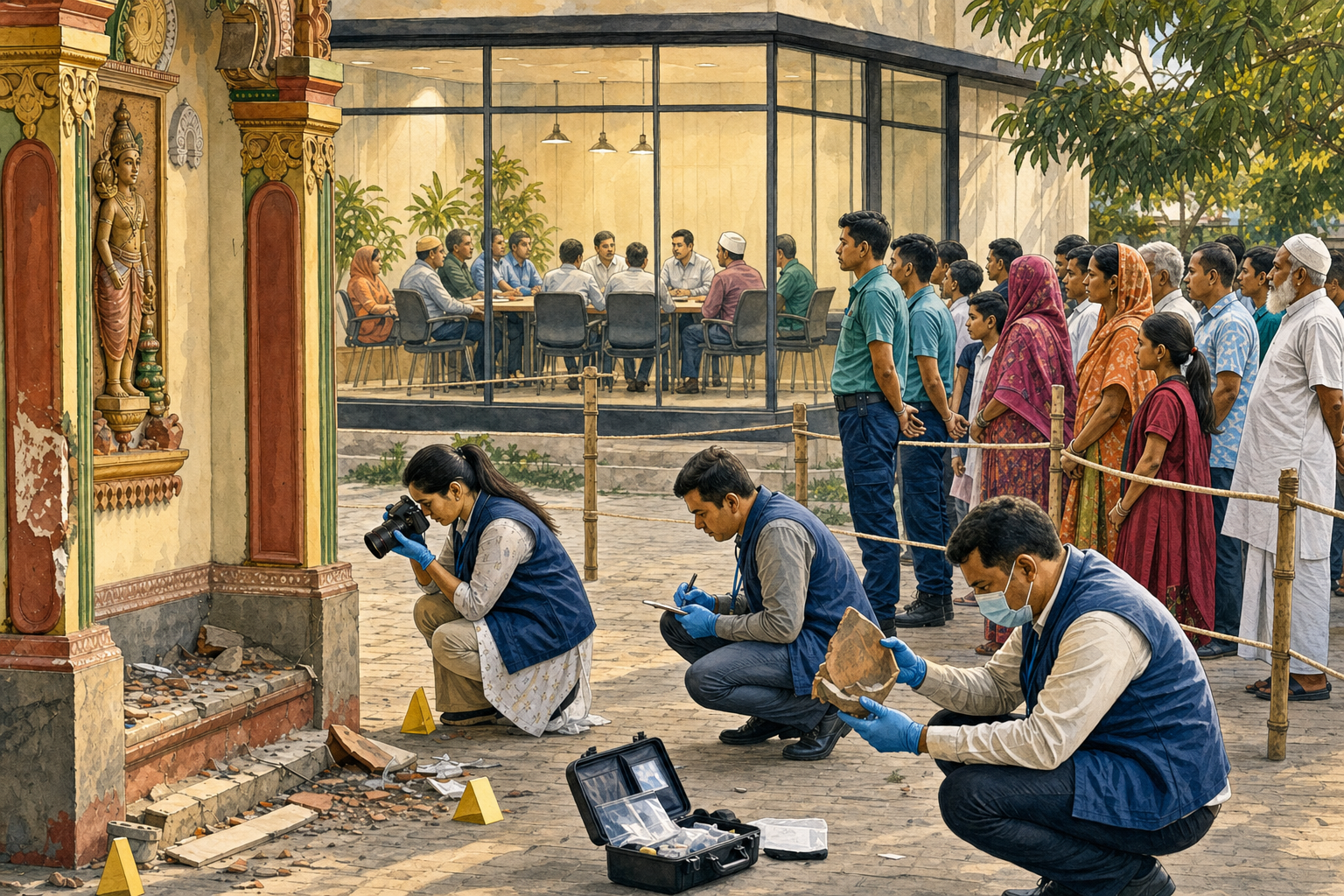
The immediate dispute can be assessed through a few concrete standards. Authorities should disclose the project’s land, planning and construction status; identify any formal order affecting the work; and explain which neutral legal provisions apply. Police should document reported threats and the alleged desecration, preserve evidence, protect witnesses and pursue suspects according to law. Public officials should distinguish peaceful opposition, which is part of civic life, from intimidation or destruction, which is not.
Protection should not depend on agreement with the statue’s scale, symbolism or aesthetics. Nor should allegations against protesters be presumed proved because the controversy is emotionally charged. Equal law requires both protection for Hindu worshippers and due process for anyone accused of misconduct. Transparent findings would reduce the space in which partisan narratives, communal suspicion and unverified claims compete.
The most consequential precedent will be set by the process, not simply by whether construction resumes. If Bangladesh can resolve the legal status openly, restrain coercion and hold proven offenders accountable, the case can affirm that minority rights survive controversy. If threats remain the decisive instrument, future disputes over temples, images and festivals will begin with the knowledge that pressure may succeed where law has not.