
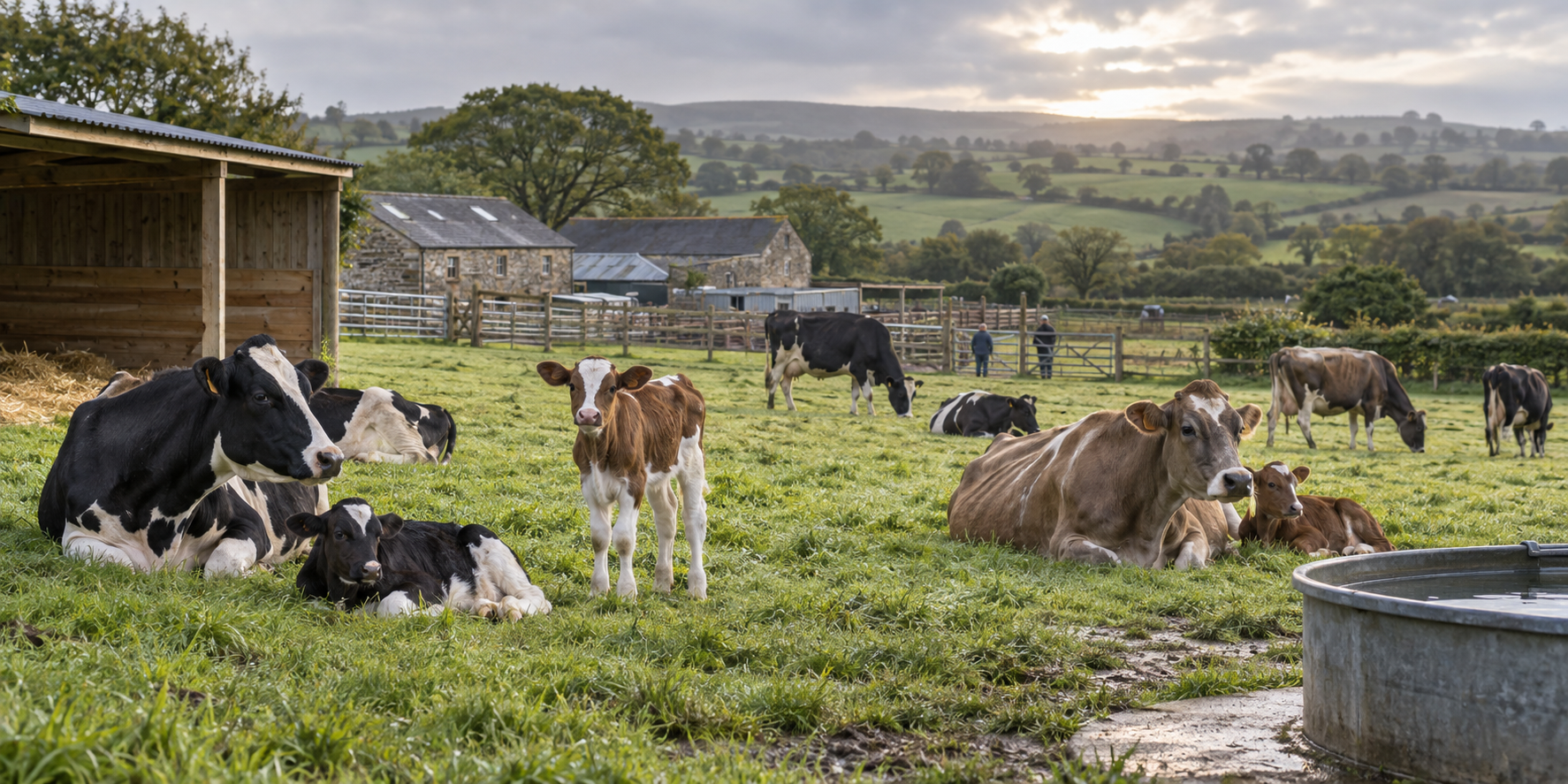
If you have been waiting for ahimsa milk, the proposed expansion in Devon presents a welcome possibility and a serious decision. More land and more milk could serve many more families. The real question, however, is whether care for the animals will grow as reliably as production.
You should therefore assess this as more than a milk purchase or a sentimental donation. It is a farm relocation, a major property commitment, an expansion of animal care and a multi-year request for community support. Each part needs to work for the others to succeed.
A larger farm must enlarge the circle of care
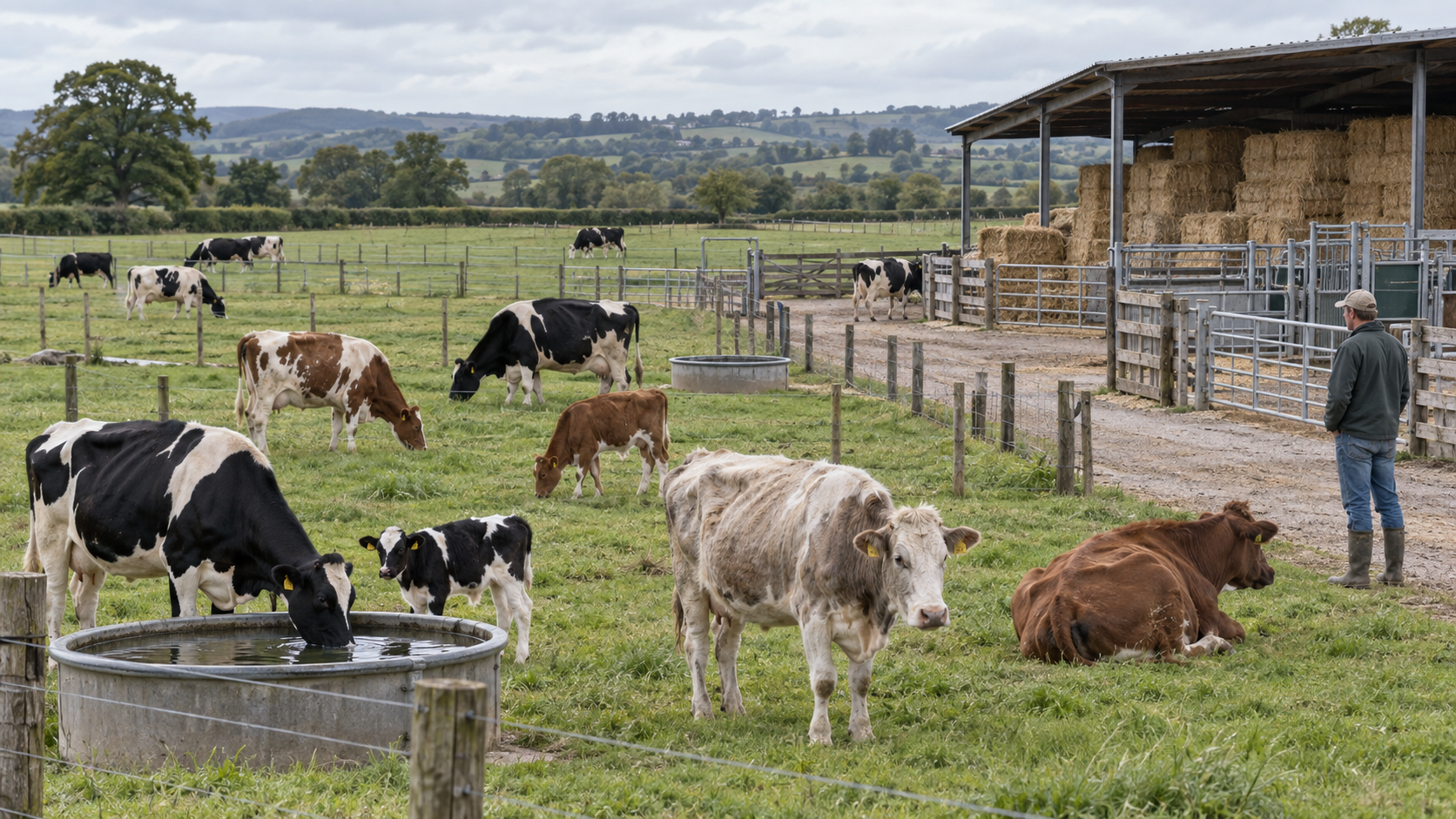
This is not a minor extension of the existing operation. The proposed move would take Ahimsa Dairy from a 40-acre farm to more than 350 acres, while raising milk output from 36,000 litres to 100,000 litres. The declared purpose of the additional land also reaches beyond the milking herd: it includes a home for retired cows and calves, an ox-working centre and, eventually, land on which grain can be grown.
Those commitments should be read together. The planned acreage is growing much faster than the planned milk output, and several proposed uses concern animals or activities outside immediate milk production. That is an encouraging sign of alignment between land use and ahimsa, but it is not proof that every promise will be delivered. Acreage creates the capacity for compassionate care; management determines whether that capacity becomes reality.
The scale of the leap also matters more than the project’s history might initially suggest. Ahimsa Dairy began with six cows and no land and developed an operating farm over the following years. That history shows persistence. It does not make a move of this size automatic. A project can be faithful to its founding principle and still face operational strain when land, animals, financing and customers all have to be coordinated at once.
For a Dharmic reader, the most important promise is not simply that a cow is valued while she produces milk. Care must remain when production declines or ends. The proposed homes for retired cows and calves therefore belong at the centre of the expansion, not at its charitable edge. When progress updates arrive, look for separate milestones covering those facilities rather than accepting milk volume as the only measure of success.
Read the expansion as three linked commitments
The headline numbers combine three different financial and operational tasks. Separating them will help you understand what your support is actually being asked to accomplish.
| Commitment | What has been proposed or reported | What a supporter should verify |
|---|---|---|
| Land acquisition | The project reports that it exchanged and placed a deposit on land valued at £4.1 million, with a substantial bank loan agreed. | Whether the purchase has completed, what remains conditional and how debt servicing affects the farm’s operating budget. |
| Farm capacity | The target is more than 350 acres and 100,000 litres of milk, together with facilities for retired cows, calves and working oxen. | Which facilities will open first, how animal numbers will be phased and whether care capacity will precede herd growth. |
| Community-backed transition | The project seeks 75 additional patrons to help service loans and 350 families giving £1 a day for three years to support the transition. | Which fund receives your money, whether the commitment recurs automatically and what reporting accompanies it. |
This distinction prevents a common misreading. The £1-a-day appeal is not described simply as another instalment toward the land price. It is intended to support the difficult period between the existing Rutland operation and the desired Devon operation. If you contribute, ask whether your payment supports property finance, ordinary farm operations, animal relocation or a ring-fenced transition fund. The answer affects both your expectations and the kind of accountability you should request.
Demand also needs careful interpretation. A waiting list of more than 1,500 people is strong evidence of interest, but a waiting name is not the same as dependable revenue. Some people may be outside the delivery area, decline the eventual price or need less milk than expected. If you are evaluating financial resilience, look for the conversion of that interest into active, serviceable customers rather than treating every name as a completed sale.
The transition period is where the principle will be tested
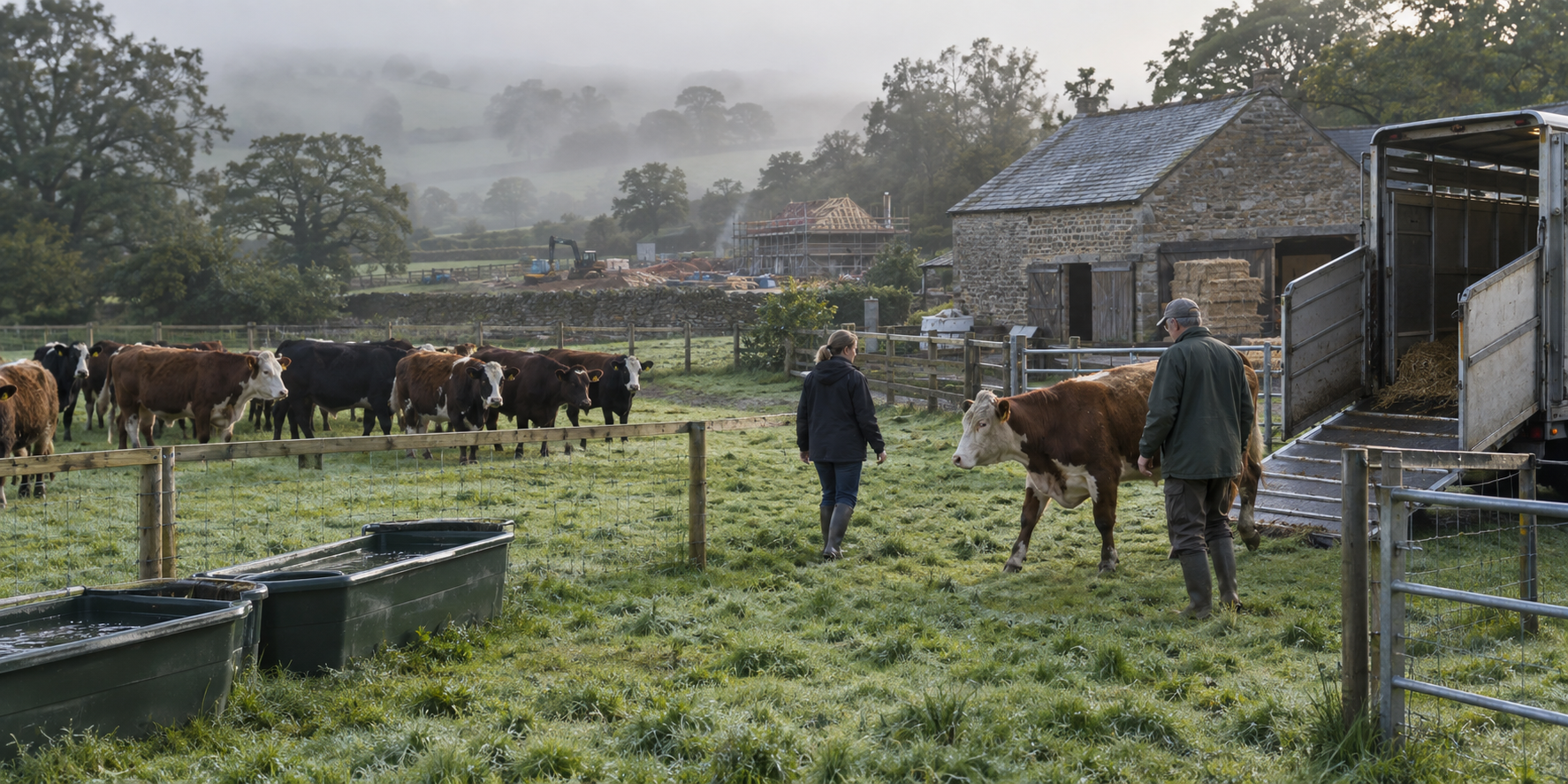
Land and output targets are easy to communicate. The move between farms is harder. Cows depend on routine, and the relocation, herd expansion and new-farm operation cannot responsibly be switched on in a single moment. The transition had begun with the first non-milking cows moving to land at Dartmoor, but that is one stage in a much larger sequence.
Before you treat the expansion as operationally complete, look for clear answers to these questions:
- Which groups of animals will move at each stage, and what conditions must be ready before they move?
- How will care be maintained at both locations while the farms overlap?
- Will housing and pasture for retired cows and calves be ready before the milking herd expands?
- What happens if the Devon operation takes longer than expected to reach its milk target?
- Which animal-care, relocation and financial milestones will be reported to supporters?
These are not hostile questions. They translate ahimsa from intention into observable practice. A trustworthy transition plan should make it possible for supporters to see whether animals are being moved according to readiness rather than according to financial pressure.
The milk offer needs similar precision. The appeal says that priority for obtaining milk will go to people who help fund the transition. Priority is not necessarily a guarantee of quantity, delivery date, price or geographic coverage. If access to milk is a major reason for your pledge, obtain the applicable terms before treating the contribution as a subscription or advance purchase.
The daily framing also deserves attention. One pound may feel modest when considered in isolation, but the request lasts three years. Budget it as a continuing household commitment. Do not pledge on the assumption that priority milk will offset the cost unless the current terms explicitly say so. Steady support that you can sustain is more useful than an ambitious promise you may have to abandon during the transition.
Use this five-step test before you contribute
- Decide what you are supporting. If your main concern is lifelong animal care, make the retired-cow and calf facilities your key milestone. If you chiefly want milk, verify delivery eligibility and timing. If your aim is institution-building, concentrate on the land, debt and operating plan.
- Choose your role carefully. The expansion identifies transition supporters, patrons and waiting milk customers as distinct groups. Ask what rights, benefits, obligations and updates attach to the option you select. Do not assume that the labels are interchangeable.
- Verify the live position. Property completion, relocation stages and support terms can change. Review the foundation’s current support options and request clarification before sending money if the purpose, recurrence or cancellation terms are unclear.
- Commit for the full period you can afford. If you choose the £1-a-day route, test the expense against your household budget as a three-year obligation. Do not assume a tax benefit, a milk entitlement or a refundable payment unless those terms are expressly confirmed.
- Keep the commitment accountable. Save the terms you accepted and follow concrete milestones: acquisition status, phased animal moves, facilities for non-milking animals, patron recruitment and progress toward sustainable milk delivery. If updates discuss output but omit animal care, ask for the missing half of the picture.
You do not need every future detail to be certain before helping. A farm transition inevitably contains uncertainty. You do need enough clarity to distinguish an aspiration from an obligation, a donation from a purchase and an encouraging milestone from a completed outcome.
Key takeaways
- The expansion aims to move Ahimsa Dairy from 40 acres to more than 350 acres and increase milk output from 36,000 to 100,000 litres.
- The strongest Dharmic measure of success is whether the new farm establishes durable care for retired cows, calves and oxen alongside its larger milking capacity.
- The £4.1 million land commitment, bank borrowing, patron recruitment and three-year transition appeal perform different jobs; confirm which one your money supports.
- Priority access to milk should not be treated as guaranteed delivery, quantity or price without explicit terms.
- A sustainable contribution paired with attentive follow-up serves the project better than an unaffordable pledge made on enthusiasm alone.
If the current terms answer your questions clearly, choose a level of support you can maintain and record the milestones you intend to follow. Then pay attention not only to the first bottle produced in Devon, but also to the first secure homes for calves, retired cows and oxen. That is where expansion becomes a durable practice of ahimsa rather than growth carrying an ethical name.
References
