
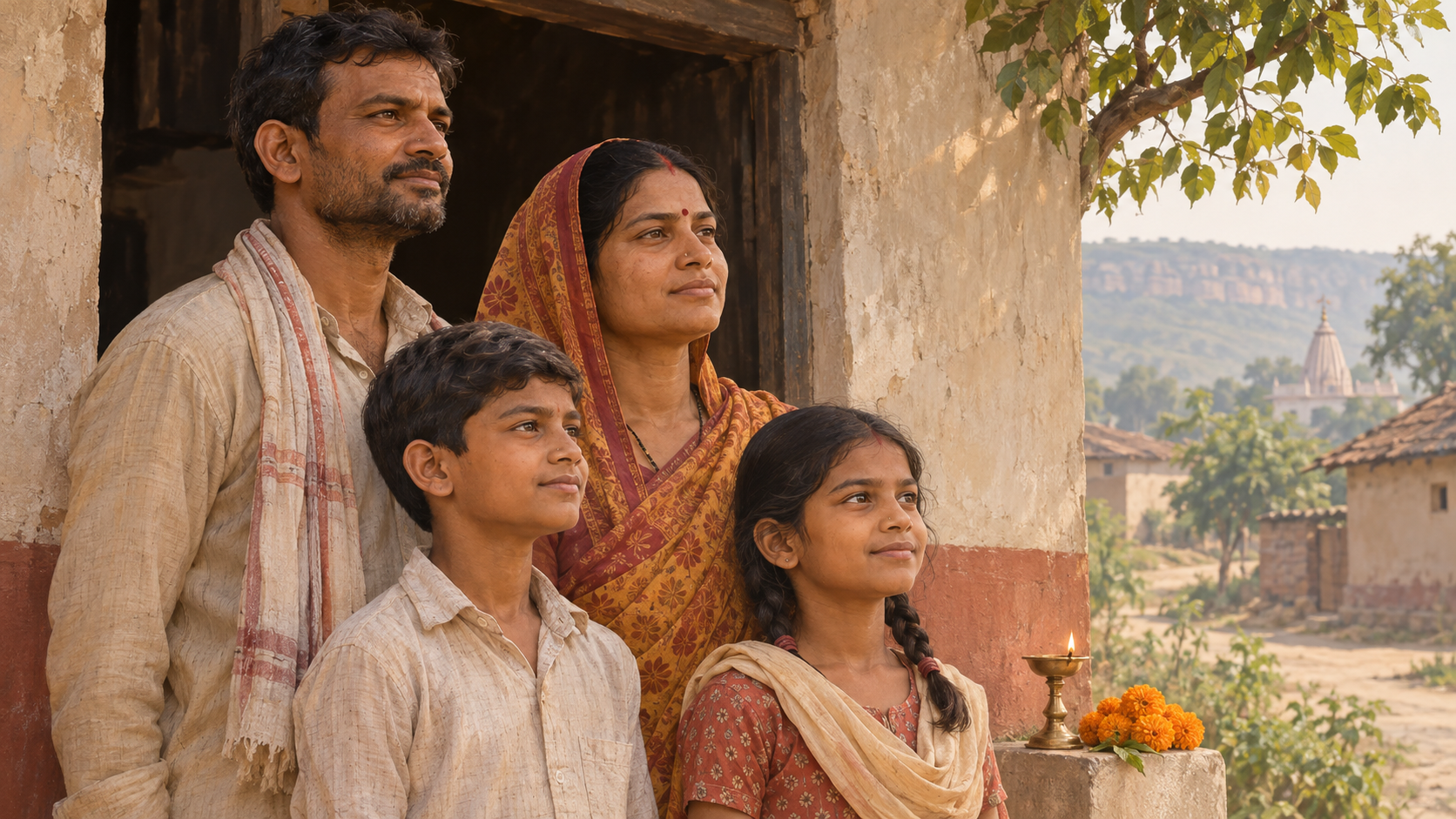
If you saw the Kaimur family’s decision reduced to another conversion headline, you may be wondering what actually changed and what a responsible Hindu response should look like. The clearest answer lies in the family’s own sequence: study and household practice came first; public worship and new names followed.
In Ramgarh, in Bihar’s Kaimur district, four members of one Muslim family publicly declared that they had embraced Hindu Dharma. Their decision deserves to be understood accurately, without exaggerating it into a mass movement or reducing it to a single temple ceremony.
Start with what the family actually declared
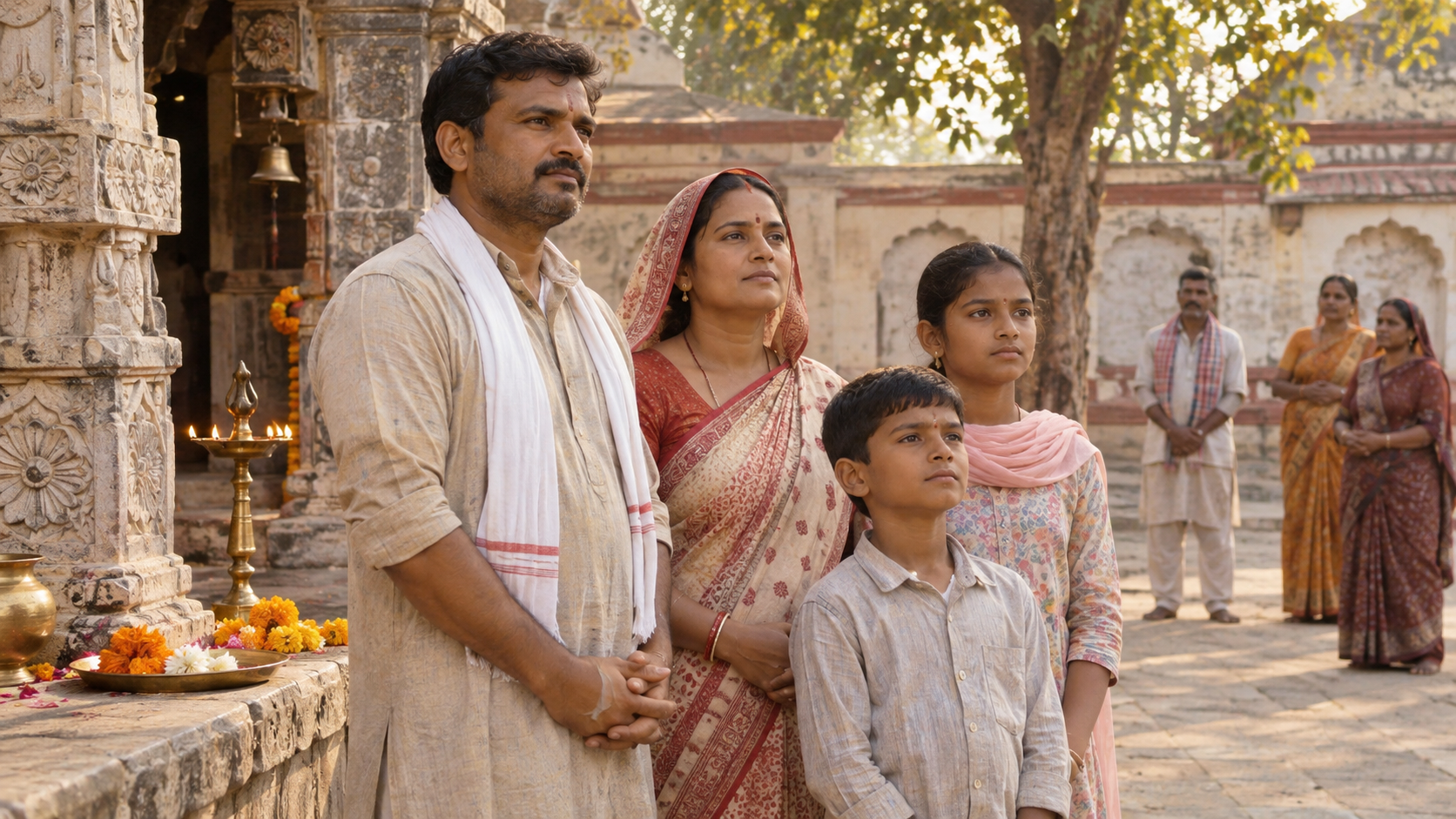
The head of the family, formerly known as Tasaduk Ansari, announced the name Swami Jeevan Siddharth. His wife adopted the name Annu Pandey, while their two children took the names Osho Pandey and Rani Pandey. These are the names the family announced publicly; no information has been provided about whether they were also entered into government records.
On Kartik Purnima, the four went to a Hanuman temple wearing tilak. They participated in puja, recited the Hanuman Chalisa and joined the aarti amid the chanting of mantras. These actions gave their private religious orientation a visible, communal form.
Jeevan Siddharth said that Hindu shastras and the ideas of Osho influenced his path. Puja had reportedly been part of the household for a considerable period, and the family’s two engineer children were already observing Hindu traditions. He also expressed a desire to introduce other people to Hindu principles and practices.
That is the factual boundary you should retain when discussing the case. The publicly known details do not establish a particular sampradaya, a formal initiation lineage, the duration of each family member’s study or a documented ancestral history. Adding any of those claims would turn a meaningful personal decision into an embellished story.
Why the order of events matters
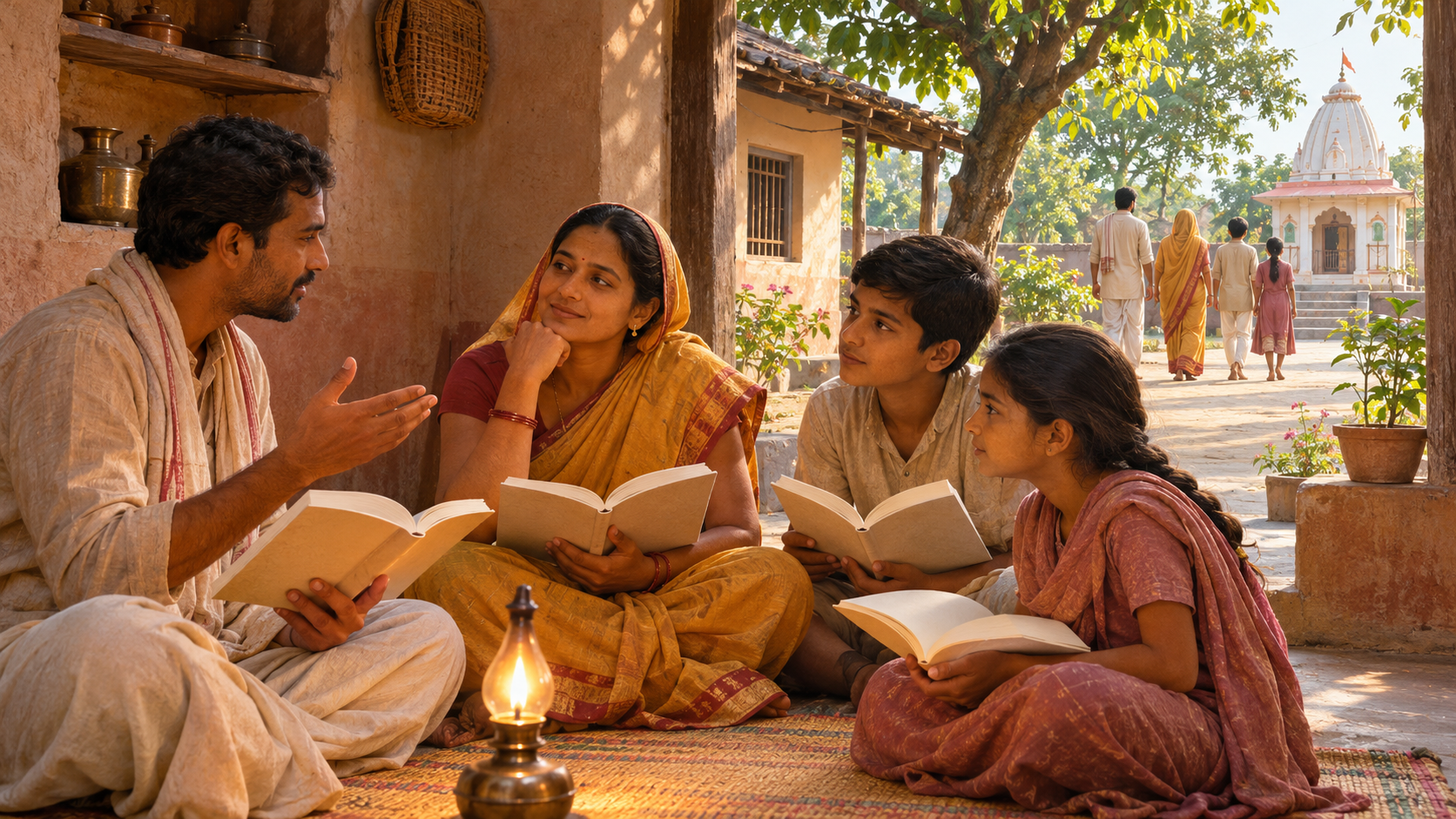
The temple visit was the visible moment, but it was not presented as the beginning of the family’s engagement with Hindu Dharma. Their account points to three preceding layers: engagement with ideas, worship within the home and the children’s existing observance of Hindu customs. The public ceremony made an internal direction socially legible.
This distinction matters whenever you encounter a ghar wapsi story. A photograph may show tilak, aarti or a visit to a mandir, but it cannot show the reading, reflection and daily practice that led to that moment. If you focus only on the ceremony, you risk treating Hindu identity as a costume put on for a day. If you focus on the path that preceded it, you can see a decision expressed through both conviction and conduct.
The same distinction protects personal agency. The family gave reasons connected to shastras, Osho and established worship at home. Those stated reasons should remain central. Outsiders should not replace them with speculative political motives, demographic theories or claims about hidden pressure for which no evidence has been made public.
For someone exploring Hindu Dharma, the practical lesson is straightforward: begin with sustained learning and practice rather than chasing a dramatic public event. Read, ask questions, visit a temple respectfully and understand the discipline you intend to follow. A ceremony can mark a commitment, but it cannot do the work of understanding on your behalf.
What ghar wapsi means here, and what it does not prove
In contemporary Hindu public language, ghar wapsi describes a return to Dharmic belonging. The phrase carries civilizational meaning: it presents Hindu Dharma as an inherited cultural home from which communities or families may have become separated over time.
That broad meaning should not be confused with a genealogical claim about this particular household. The known facts establish that four people chose Hindu names, entered a temple and practised recognizably Hindu forms of worship after a longer personal engagement with Hindu thought and tradition. They do not provide a documented family tree. You can honour the family’s decision without asserting a history that has not been supplied.
The same precision applies to their new names. A publicly adopted religious or social name is meaningful, but it is not automatically evidence of a completed legal name change. When retelling the event, say that the family announced or adopted these names. Do not claim that official records were changed unless such documentation becomes available.
Hindu communities do not operate under one central church or a universally binding admission ceremony. Local recognition therefore carries unusual importance. Tilak, Hanuman Chalisa, puja, aarti and a visit to the mandir are intelligible signs of participation, but no one act contains the whole of Hindu Dharma. The enduring test is whether a person is free to learn, practise, belong and develop a disciplined relationship with dharma over time.
How Hindu society can receive the family with dignity
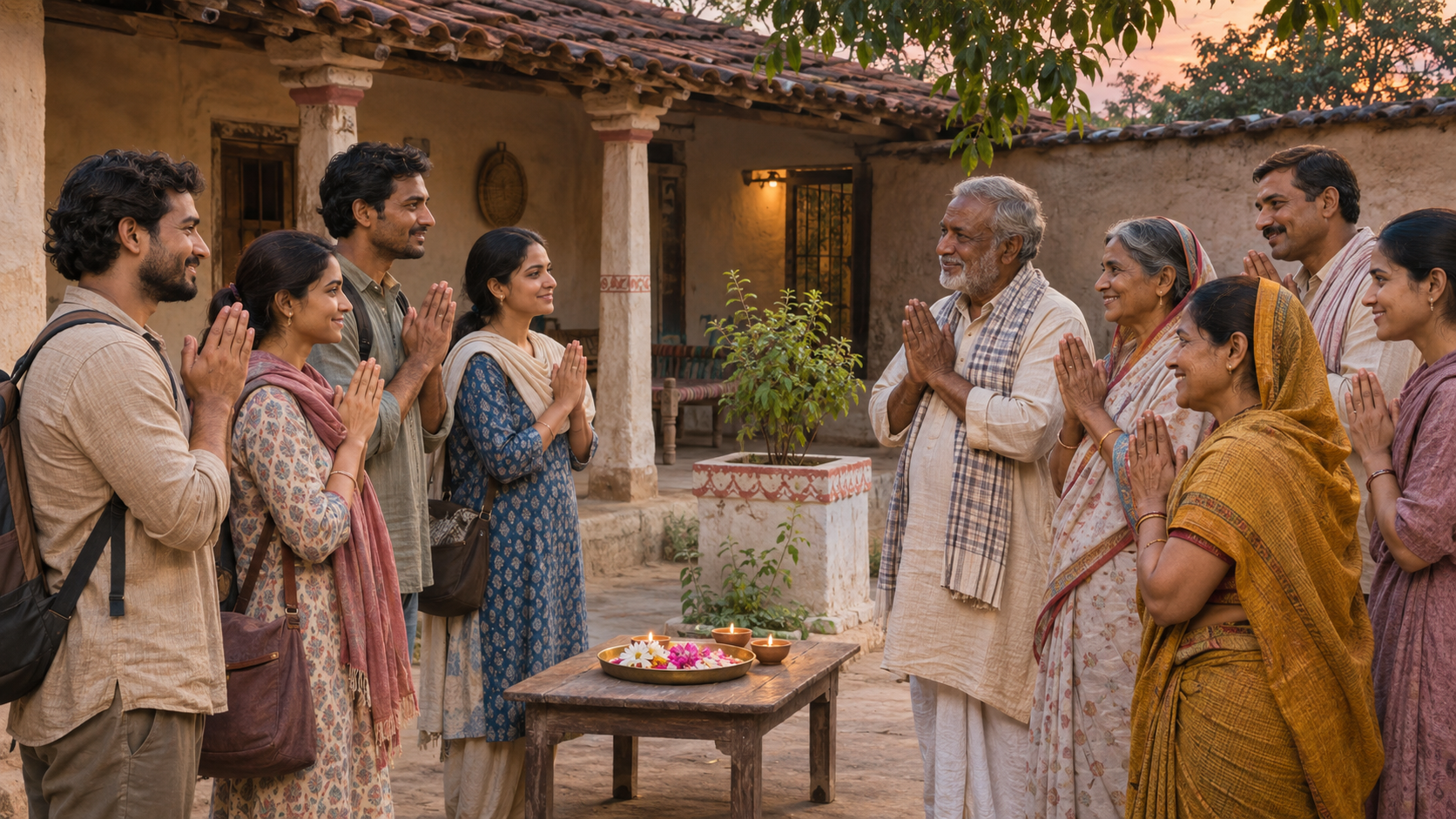
A public welcome is only the first step. If acceptance ends when the photographs stop circulating, the community has celebrated an event without supporting the people at its centre. Belonging is built through ordinary participation: invitations to worship, patient answers to questions, introductions to local families and space to learn without being repeatedly examined.
- Use the names the family has chosen. Respect does not require making unsupported claims about their legal documents.
- Ask before amplifying personal details. Participation in a public ceremony does not create unlimited consent to circulate addresses, contact information, private family history or photographs from unrelated settings.
- Offer normal community life, not permanent spectacle. Invite them to the same pujas, satsangs, festivals and seva opportunities offered to other Hindu families.
- Do not impose a purity test. A person new to public Hindu practice will not know every custom, pronunciation or theological distinction. Correct gently when correction is needed.
- Do not demand hostility toward a former community. Embracing Hindu Dharma does not require insulting Muslim relatives or neighbours. Making denunciation the price of acceptance substitutes resentment for dharma.
- Leave room for genuine theological discussion. Osho’s influence is part of the family’s stated path; it does not mean every Hindu tradition takes the same view of his teachings. Honest difference is healthier than manufactured uniformity.
Jeevan Siddharth’s stated wish to acquaint others with Hindu principles also calls for restraint. The most credible introduction to dharma is offered by invitation, through clear teaching and personal example. It should preserve the listener’s freedom rather than treating another person’s identity as a target to be captured.
This standard is not timidity. It is how a confident tradition behaves. A secure Hindu community can welcome a family warmly, explain its practices plainly and reject both coercion and sensationalism. It does not need to convert a personal decision into a weapon against an entire religious population.
Key takeaways
- The Kaimur case concerns four members of one family in Ramgarh, not an unspecified group or a wider movement.
- Their public observances included tilak, temple worship, the Hanuman Chalisa, puja and aarti on Kartik Purnima.
- The family’s stated path began before the temple ceremony, through shastras, Osho’s ideas, household worship and the children’s existing Hindu observance.
- Swami Jeevan Siddharth, Annu Pandey, Osho Pandey and Rani Pandey are the names they announced; no public evidence cited here establishes their status in government records.
- Ghar wapsi expresses Dharmic return, but this case alone does not document the family’s genealogy or establish a broader demographic trend.
- The constructive Hindu response is sustained inclusion, truthful retelling, respect for consent and freedom from political spectacle.
If you share this family’s story, keep the wording as disciplined as the welcome should be: four people publicly embraced Hindu Dharma after an existing engagement with Hindu thought and practice. Then let your next action be practical. Make the mandir, satsang and neighbourhood community places where a family can continue its path after the public attention has moved elsewhere.
References

Leave a Reply
You must be logged in to post a comment.