
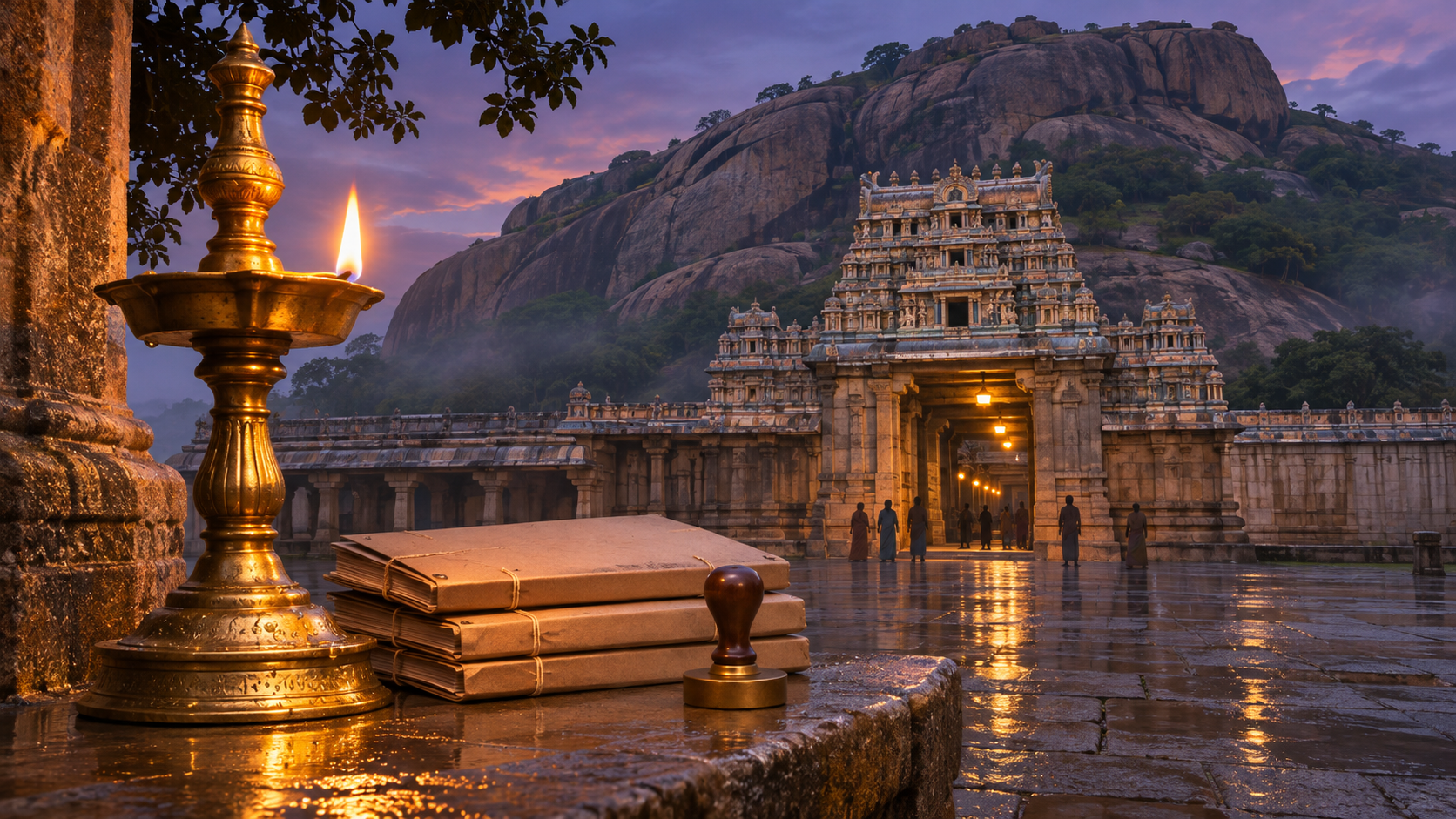
If you are trying to understand the Thiruparankundram Deepam controversy, do not begin by choosing between claims that the priests objected, the trustees blocked the ceremony, or the government simply could not proceed. Those claims concern different actors, different decisions, and different moments. Treating them as one explanation hides the central question: who had the authority to act, what did that person or body decide, and where is the contemporaneous record?
The dispute matters beyond one evening’s observance. It tests whether a Hindu temple tradition can be represented accurately, whether an administration can account for its response to a court direction, and whether devotees can obtain facts without being forced to rely on competing press statements.
The sequence is clearer than the blame
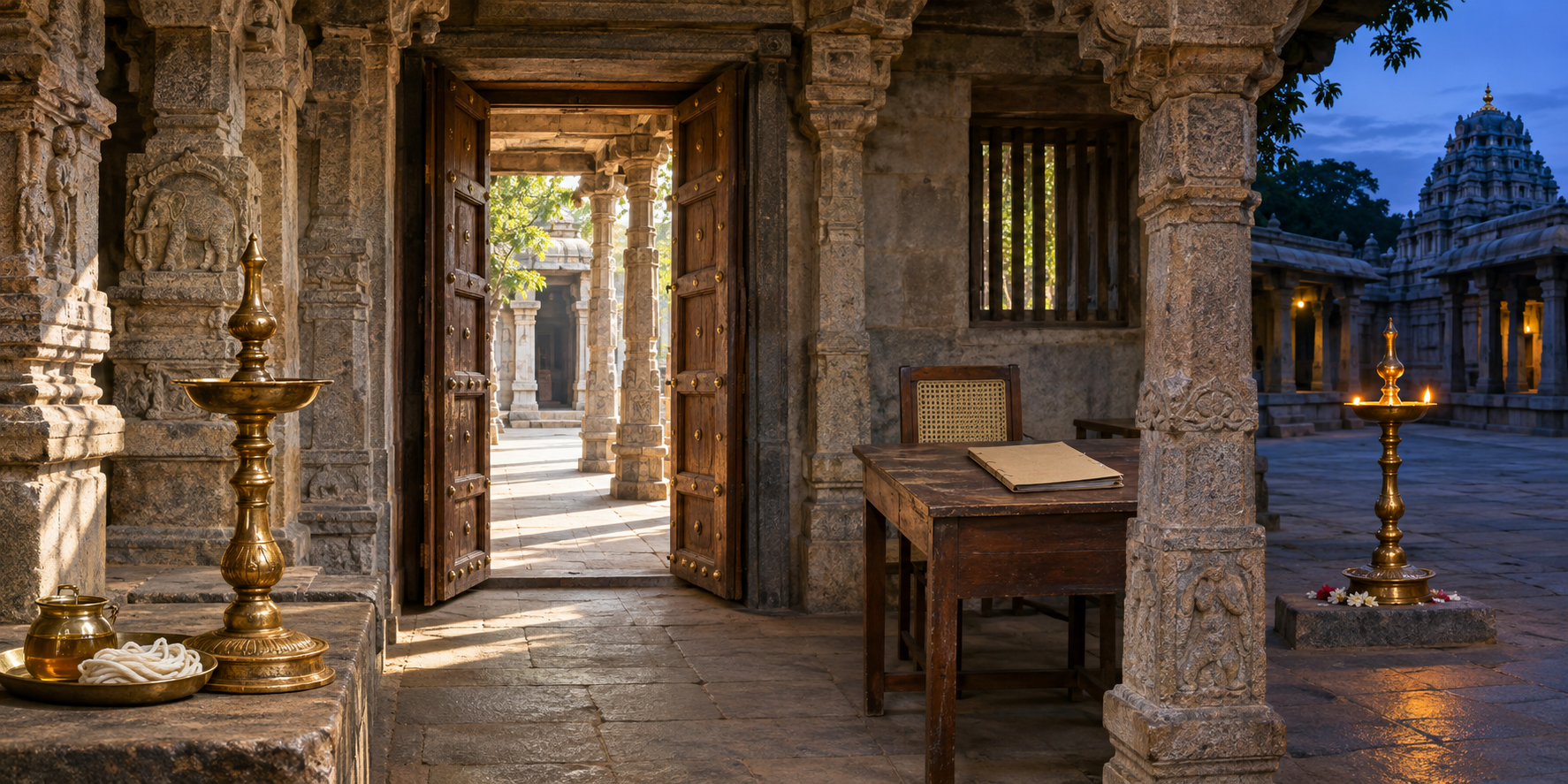
The reported sequence begins with a November 20 Supreme Court direction concerning a one-time ceremonial lighting at the Deepathoon, the pillar on the hill. The ceremony was to be conducted by an authorised team. That last condition is important: judicial permission, ritual performance, temple authorisation, and security arrangements had to meet at the same point.
The lamp was not lit at the Deepathoon on November 24. The temple’s Board of Trustees reportedly chose the customary location near the Uchipillaiyar temple instead. Police displayed a warning about forcible dispersal, a large force was deployed, and hundreds of protesters were reportedly detained.
On November 25, Madurai District Collector Nishant Krishna reportedly apologised to the Supreme Court for the failure and submitted a status report. His explanation was that the district administration had prepared to implement the court’s direction, but the trustees did not authorise the team that would perform the ceremony.
A further complication then emerged. The hereditary Sthanika Bhatters, or archakas, reportedly objected to their names being used in a communication sent to the media without their consultation. They said they had submitted no letter about lighting the Deepam at the Deepathoon that year. Their earlier correspondence, they said, concerned the previous year’s observance near Uchipillaiyar. They also denied expressing an opinion against carrying out the hilltop ceremony under the Supreme Court’s direction.
This chronology does not by itself establish deliberate disobedience by any one party. It does establish that the explanation offered after the failed ceremony must be tested against records created before and during it. A later allocation of blame is not a substitute for a dated request, resolution, authorisation, refusal, or operational instruction.
Five institutions had five different responsibilities
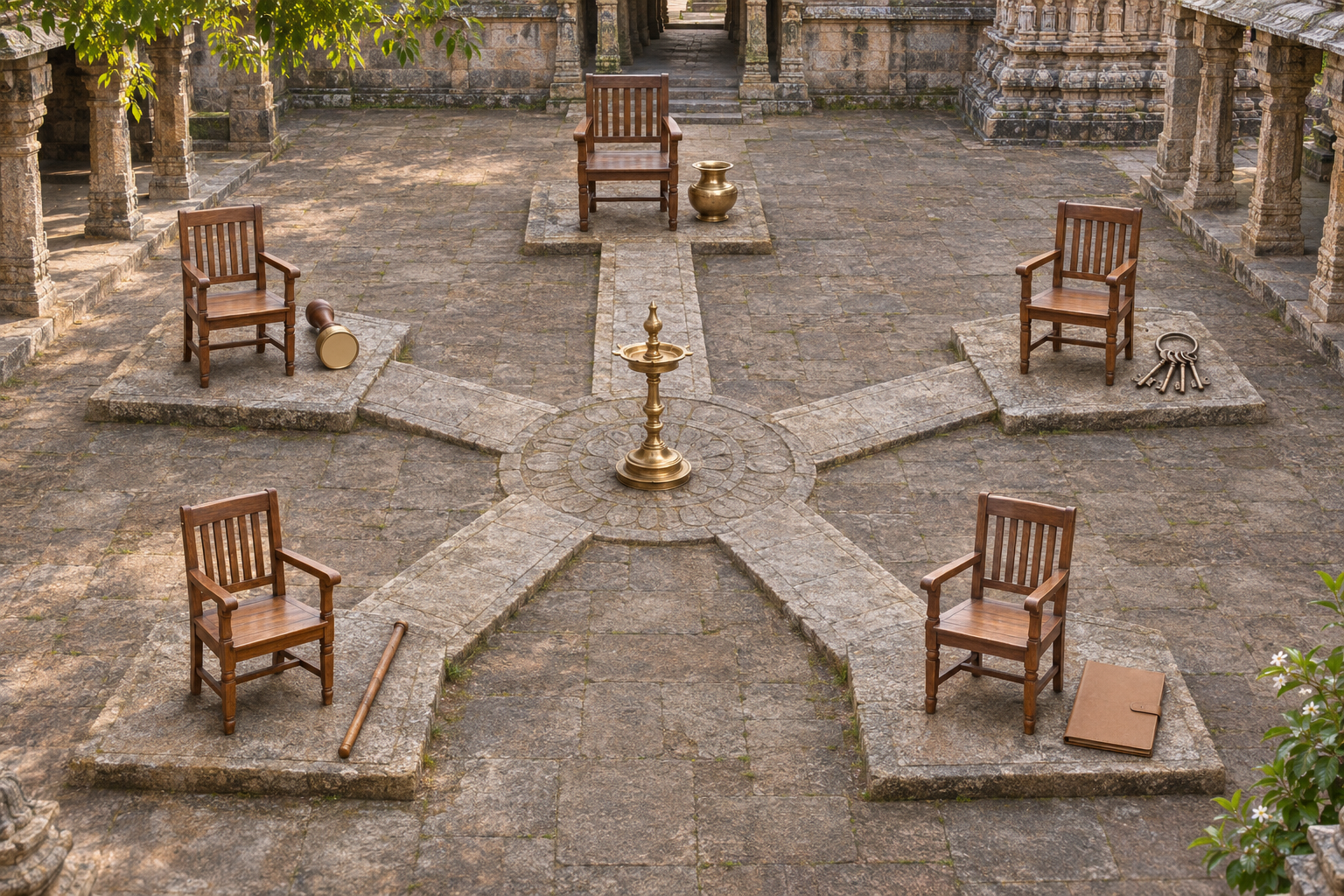
The easiest way to lose the thread is to treat the court, trustees, archakas, district administration, and police as though they formed a single temple authority. They did not. Each had a distinct part in the episode.
- The Supreme Court defined the legal scope of the one-time arrangement. Its exact operative words determine whether an act was required, permitted subject to conditions, or entrusted to a particular authority.
- The Board of Trustees reportedly decided where the temple observance would take place and whether a team would be authorised for the Deepathoon ceremony. The resolution, its reasons, and its timing are therefore central.
- The hereditary archakas could supply ritual knowledge and perform or advise upon the ceremony, but their views must be established through their own signed communication. Their names cannot be treated as evidence of agreement merely because they appeared in somebody else’s statement.
- The district administration was responsible for coordinating implementation, access, and public-order arrangements. If authorisation was essential, it should be possible to show when the administration requested it, from whom, and what response it received.
- The police enforced the public-order plan. Their deployment and detentions reveal the consequences of the administrative failure, but they do not prove who caused that failure.
Keep those roles separate whenever you encounter a new claim. A priestly opinion cannot replace a trustee resolution. A trustee resolution cannot alter a judicial order. A security plan cannot establish that the ritual team was authorised. And a warning to devotees cannot explain why the necessary institutional approvals were unresolved by the appointed day.
The archakas’ clarification changes the evidentiary burden
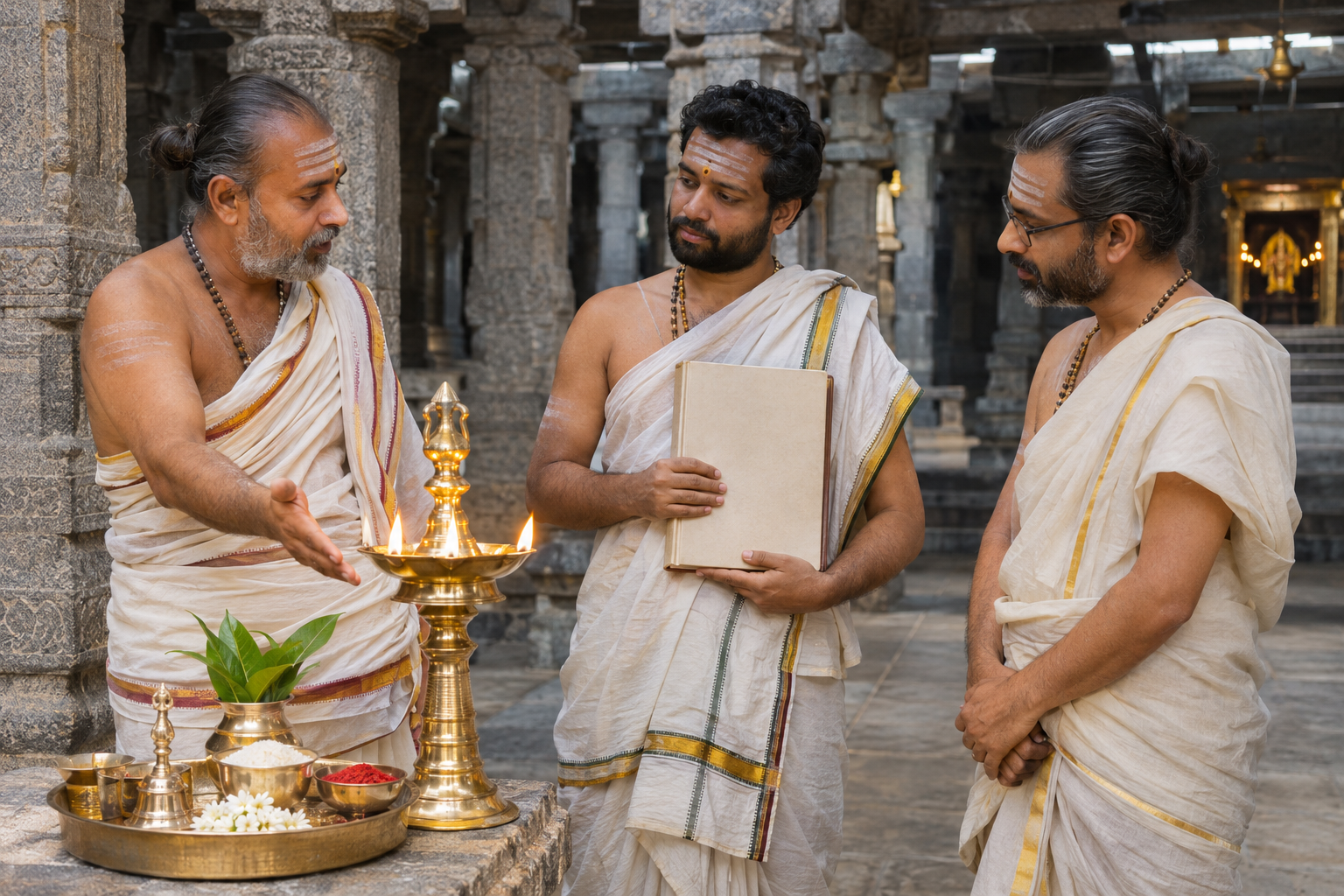
If the archakas’ reported clarification is authentic, it removes one possible basis for portraying the priesthood as opposed to the Deepathoon ceremony. Silence is not opposition, an old letter about another year’s arrangements is not a decision about the current dispute, and the appearance of a person’s name is not proof that the person approved the statement.
That is a serious issue because ritual authorities lend credibility to claims about temple practice. Using their names without consultation would not be a harmless drafting error. It could distort the institutional record, place priests in conflict with devotees without justification, and provide convenient religious cover for what may have been an administrative or trustee decision.
The clarification does not, however, prove every claim made on the devotees’ side. It does not establish by itself that the Deepathoon was the uncontested customary location, that the trustees acted from an improper motive, or that officials could lawfully bypass the required temple authorisation. It also does not establish deliberate contempt of court; that is a legal determination for the court on the complete record.
There is another distinction worth preserving. A one-time court arrangement and a claim of permanent temple custom are not the same thing. The ceremony could have been authorised for one occasion without resolving every historical or ritual dispute about future years. Conversely, an appeal to the customary Uchipillaiyar location would not automatically answer a specific judicial direction concerning the Deepathoon.
This is why the exact order matters. Do not let the words “directed” and “permitted” collapse into synonyms. If the operative text imposed a duty, officials must explain non-performance. If it granted conditional permission, the record must show who controlled those conditions and why they were not satisfied. A headline cannot settle that difference.
Key takeaways for judging the next claim
- Ask for the operative words, not a paraphrase. Whether the court required, allowed, or conditionally allowed the lighting determines what each institution had to do.
- Check the date of every document. A letter about the previous year’s customary location cannot establish an archaka’s position on the current year’s Deepathoon ceremony.
- Separate inclusion from consent. A person’s name on a press communication proves little unless the record also shows a signature, recorded approval, or authorised representation.
- Follow the authorisation chain. Identify who selected the ceremonial team, who asked the trustees to approve it, when the request was made, and how the trustees responded.
- Do not mistake enforcement for explanation. Police mobilisation and detention show how the state managed the resulting protest; they do not show why the ritual arrangement failed.
This method protects you from two common errors: accepting the administration’s explanation merely because it appears in an official filing, or rejecting every institutional claim merely because devotees were treated harshly. Official status does not remove the need for evidence, and justified anger does not make every allegation true.
What devotees should demand now
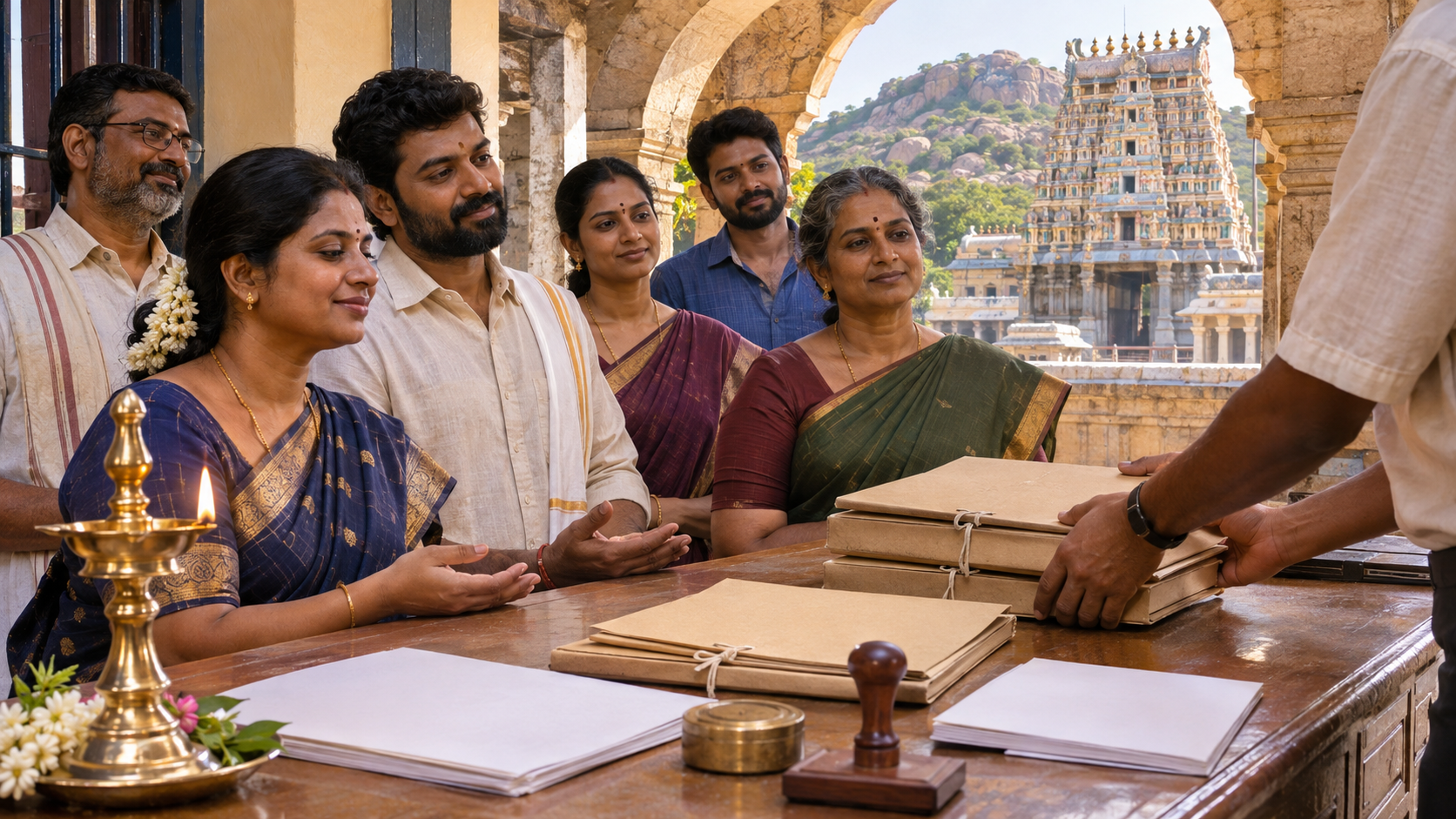
The next step should be document-led accountability. General assurances about respecting tradition will not resolve a dispute created by missing or contradictory authorisations. Devotees, temple stakeholders, elected representatives, and civil-society groups should seek a compact public record containing the following:
- The complete November 20 court order. The operative portion should be reproduced without selective paraphrasing.
- The trustees’ dated resolution. It should identify the chosen location, the members present, the vote or decision recorded, and the reasons given.
- The authorisation trail. The administration should disclose when it proposed the ceremonial team, when approval was requested, who received the request, and whether the response was a refusal, silence, or a demand for different arrangements.
- The original communication bearing the archakas’ names. The public needs to know who drafted it, who approved its release, and what proof existed that the named priests agreed with it.
- The archakas’ own clarification. It should be read in full and kept separate from their earlier correspondence about the Uchipillaiyar observance.
- The operational and detention record. Authorities should explain the purpose of the police deployment, the basis for the dispersal warning, the handling of detainees, and how public-order decisions related to the failed ceremony.
For the C. Joseph Vijay-led TVK administration, saying that preparations were made is only the beginning of an answer. If trustee approval was indispensable, officials must explain why it remained unsecured on November 24 despite the reported November 20 direction. If the trustees withheld approval, they should state their reasons directly rather than allowing archakas to be presented as their religious justification. If officials or temple administrators used the priests’ names without consent, the communication should be corrected publicly and responsibility identified.
You can help without amplifying confusion. Share complete documents instead of cropped screenshots. Label disputed assertions as disputed. Do not describe the archakas as opponents of the Deepathoon observance unless a genuine statement from them establishes that position. When writing to authorities, ask for a named document and date rather than sending a general accusation. If you plan to join a protest or challenge a detention, obtain current advice from a qualified local lawyer because the applicable orders and restrictions may be specific to the occasion.
A Dharmic response must hold satya and maryada together: truth in the record, restraint in conduct, and firmness in protecting sacred institutions. Respect for Hindu devotees requires more than controlling a crowd after an observance fails. It requires timely facilitation of lawful worship, honest representation of temple authorities, and a clear explanation when the state does not carry out what a court has authorised or directed.
Begin with the court order, the trustees’ resolution, and the archakas’ signed words. Once those three records are public, responsibility will be much harder to shift and the next Karthigai Deepam can be planned through authority and transparency rather than confrontation.
References

Leave a Reply
You must be logged in to post a comment.