

If you have encountered Prashastapada only as a commentator on Vaisheshika, you may be wondering why he deserves a place beside more visibly original philosophers. The answer begins with a distinction that modern readers often miss: in Bharatiya intellectual traditions, a commentator can preserve an inheritance and substantially reshape how it is understood.
Prashastapada matters because he helped turn the compact teaching of the Vaisheshika-sutras into a more explicit philosophical system. Once you see that transformation, you can read Vaisheshika historically without making either of two mistakes: treating the later system as if it had appeared fully formed in the sutras, or treating its development as a break from the tradition.
Why calling Prashastapada a commentator is not enough
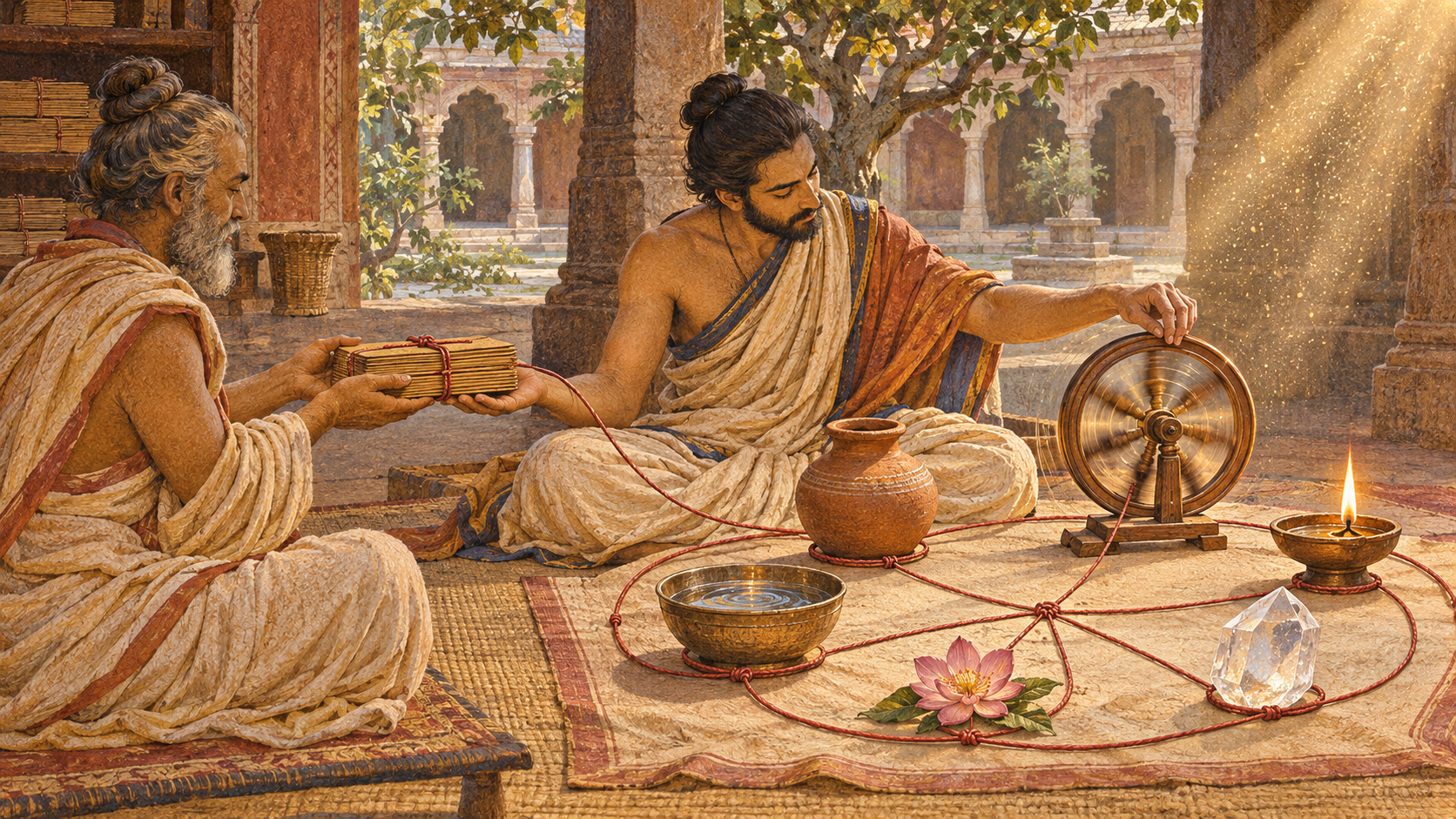
Prashastapada is generally placed in the fifth or sixth century CE and regarded as the earliest major commentator on the Vaisheshika-sutras. The date should remain a range; turning it into a precise year would claim more certainty than the available account supports. What matters philosophically is his position at a formative stage in the school’s development.
A sutra is deliberately compressed. It can preserve a doctrine in memorable form, but it cannot spell out every connection, implication, distinction or response to a possible objection. The person who explains it must therefore make intellectual decisions. Which terms require definition? Which statements belong together? Which implications deserve emphasis? What must a student understand before the next claim will make sense?
Those decisions are not neutral. To explain a compact proposition is to interpret it. To arrange related propositions is to reveal, or construct, an architecture. To add distinctions is to determine how the inherited framework will handle questions that its brief formulations leave open. Prashastapada’s expansion of Vaisheshika should be understood at this level: he was not merely repeating inherited sentences in longer form.
This gives you the right meaning of transformation. It need not mean rejection, replacement or rebellion. A tradition can be transformed from within when inherited principles receive a fuller and more systematic expression. Continuity and innovation are not opposites here; commentary is one of the mechanisms through which they work together.
What changes when a sutra tradition becomes a system
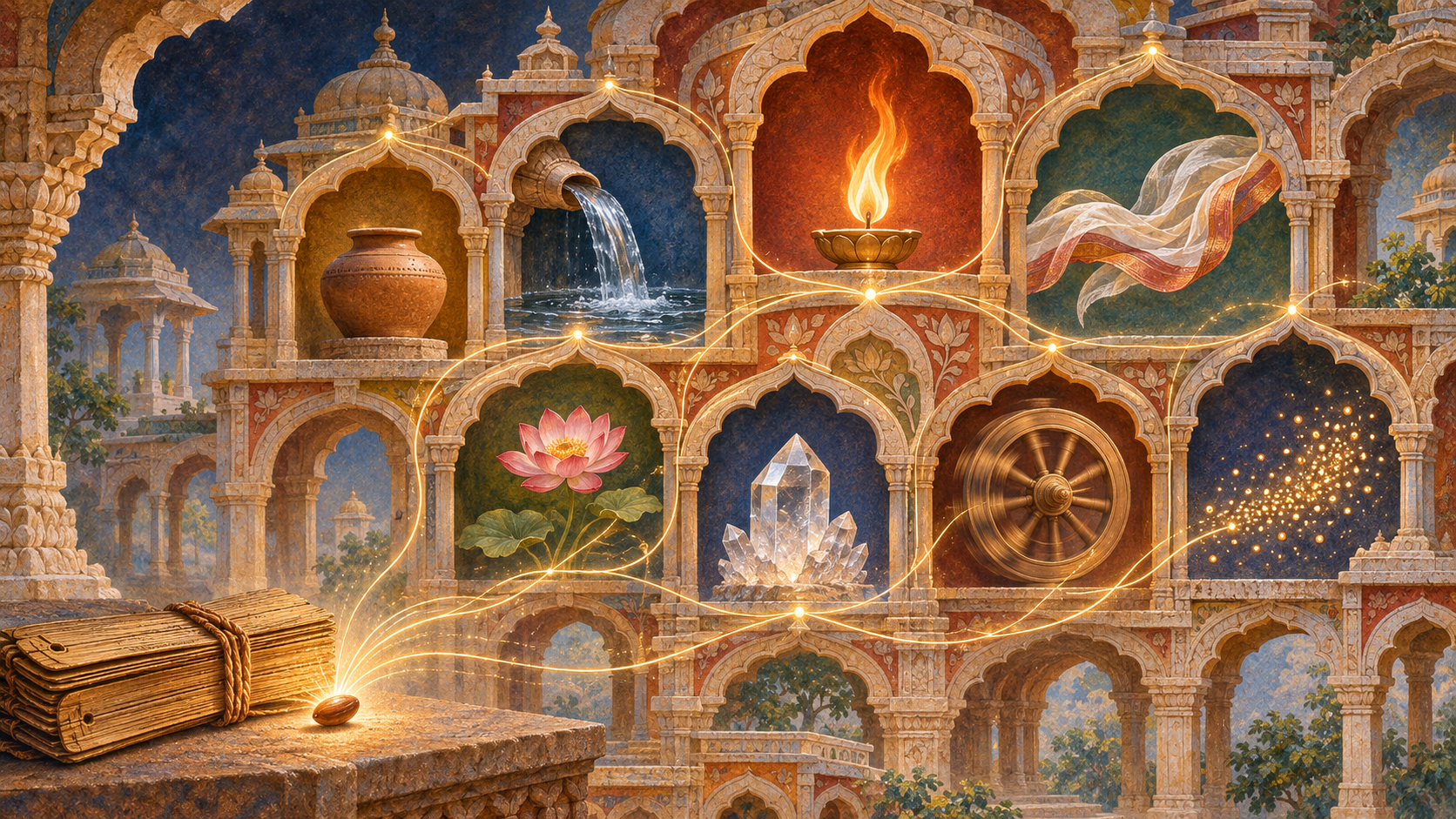
Vaisheshika is concerned with identifying and distinguishing the constituents and features of reality. In such a school, classification is not a decorative exercise. The placement of a concept affects what can be said about it, how it relates to other concepts and what kind of explanation it can support.
Prashastapada’s importance becomes clearer if you look for four kinds of movement rather than searching only for wholly new doctrines:
- From compression to exposition. A short formulation can indicate a position without displaying all its reasoning. Expansion makes the conceptual steps available to students and later thinkers.
- From a sequence of statements to an intellectual map. Once doctrines are connected and arranged, the reader can see which distinctions are foundational and which depend on earlier ones.
- From preserved terminology to usable analysis. A technical term becomes philosophically productive when its boundaries, relations and consequences are sufficiently clear to guide reasoning.
- From inherited teaching to continuing debate. A fuller system gives later philosophers something definite to defend, refine or challenge. Systematisation therefore affects not only how a tradition remembers its past, but also what it can do next.
These movements explain why the expansion of a school can be as consequential as its initial formulation. A doctrine that remains radically compressed may endure as a revered saying. A doctrine whose structure has been made explicit can also function as a curriculum, a method of analysis and a platform for sustained philosophical argument.
That is the practical difference you should notice. Prashastapada did not become important simply by writing after the sutras. He became important because his exposition affected how readers could apprehend Vaisheshika as a coherent field of thought.
How to read Prashastapada’s transformation carefully
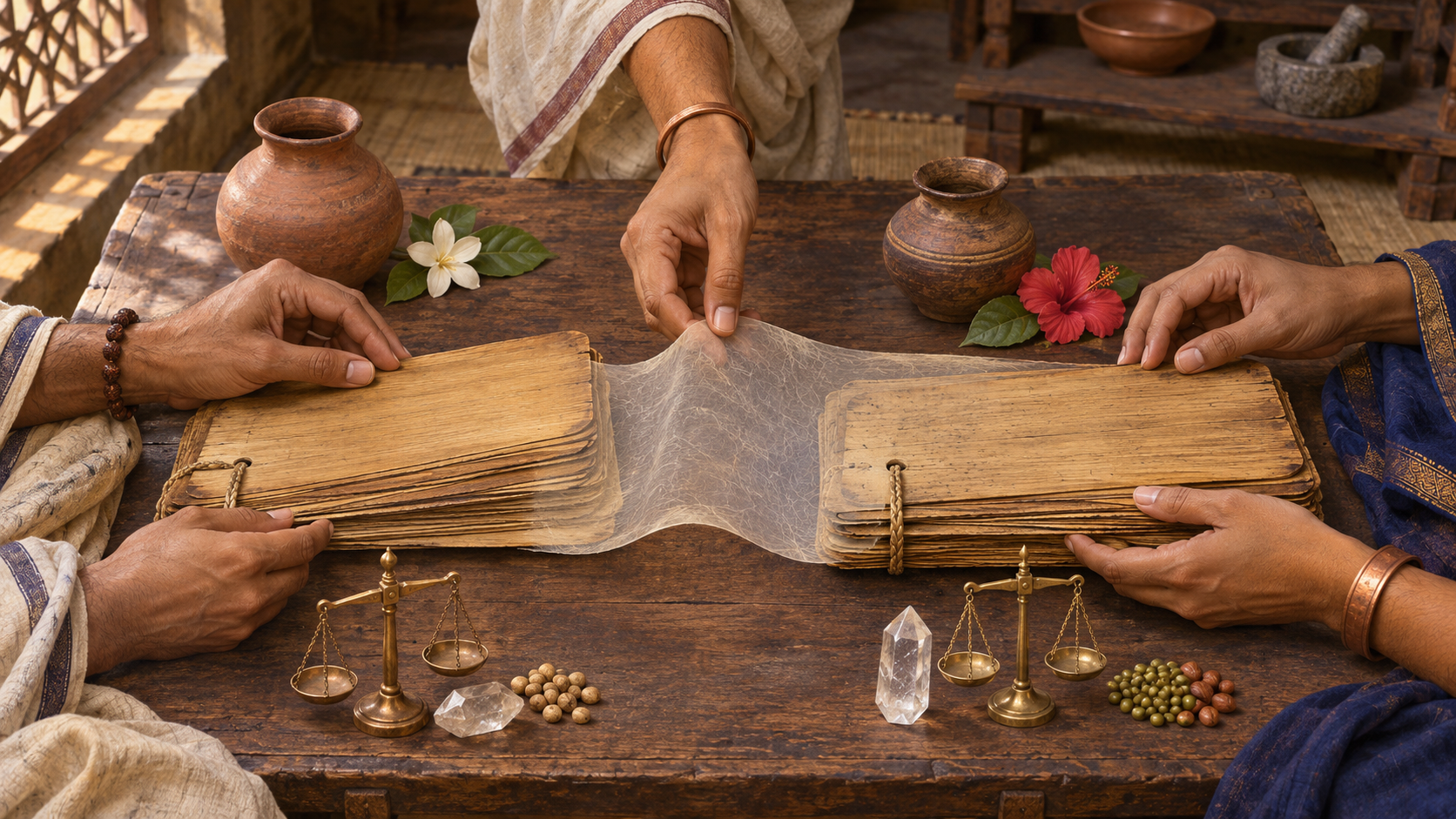
You do not need to choose between reverence for the sutras and recognition of Prashastapada’s intellectual agency. A layered reading lets you honour both. Use the following method whenever you study a translated passage, a lecture or a historical account of Vaisheshika.
- Separate inheritance from exposition. Ask what the sutra itself states and what the commentator supplies to explain it. Do not assume that every later definition or connection appears in the earlier wording.
- Mark the kind of addition being made. An explanation may define a term, connect two claims, supply a reason, draw a consequence or organise material into a larger scheme. Each operation changes understanding in a different way.
- Compare structures, not only sentences. The most important transformation may lie in the relation among doctrines rather than in a striking isolated statement. Look at what becomes central, what becomes dependent and what is treated together.
- Ask what the expansion makes possible. Does it make the teaching easier to transmit? Does it create sharper questions? Does it give later thinkers a clearer position to examine? This reveals the historical force of systematisation.
- Preserve the chronology in your notes. Label a claim as belonging to the sutra layer, Prashastapada’s exposition or a still later interpretation. This small habit prevents centuries of development from collapsing into a single undifferentiated doctrine.
The fifth step is especially important. Statements such as “Vaisheshika teaches” can conceal several historical layers. Sometimes that shorthand is harmless. At other times it wrongly attributes a commentator’s mature formulation to the earliest text. Asking “At which layer?” turns a vague summary into a responsible philosophical claim.
You should also resist the opposite error. Identifying development does not automatically expose corruption or inauthenticity. A commentator can make a tradition more explicit while remaining committed to its inherited orientation. Historical change must be demonstrated in the details; it should not be smuggled in through the assumption that explanation necessarily betrays the original.
Key takeaways
- Prashastapada belongs approximately to the fifth or sixth century CE; the range should not be converted into false chronological precision.
- His status as the earliest major commentator on the Vaisheshika-sutras places him at a crucial point in the school’s development.
- His transformation of Vaisheshika is best understood as expansion and systematisation within an inherited framework, not simply as rejection of that framework.
- Commentary is intellectual work: defining, relating and organising concepts can alter how an entire tradition is learned and debated.
- When studying Vaisheshika, distinguish the sutra layer from Prashastapada’s exposition and from later interpretations.
What Prashastapada teaches us about Dharmic continuity

Prashastapada’s place in Vaisheshika offers a useful correction to two shallow pictures of Hindu philosophy. The first imagines a timeless collection of finished doctrines that never underwent interpretation. The second assumes that anything added by a later thinker must be a departure from the authentic tradition. Neither picture can account for a living intellectual lineage.
Dharmic continuity has often depended on disciplined restatement. Compact teachings survive, but their survival as philosophy requires readers who can disclose their relations, test their implications and make them intelligible to new generations. Preservation is therefore not always passive conservation. It can demand substantial intellectual creation.
This is also why the history of Bharatiya philosophy should not be reduced to a list of founders. Foundational texts matter, but traditions acquire their durable forms through extended chains of interpretation. A major commentator can determine which questions become visible, which distinctions become standard and how future readers encounter the original teaching.
When you next meet a claim beginning with “Vaisheshika says,” pause before accepting the sentence as historically complete. Ask whether the claim comes from the sutras, from Prashastapada’s expansion or from a later layer. That one question will help you read the tradition with greater precision while appreciating the creative labour that allowed it to endure.
References

Leave a Reply
You must be logged in to post a comment.