
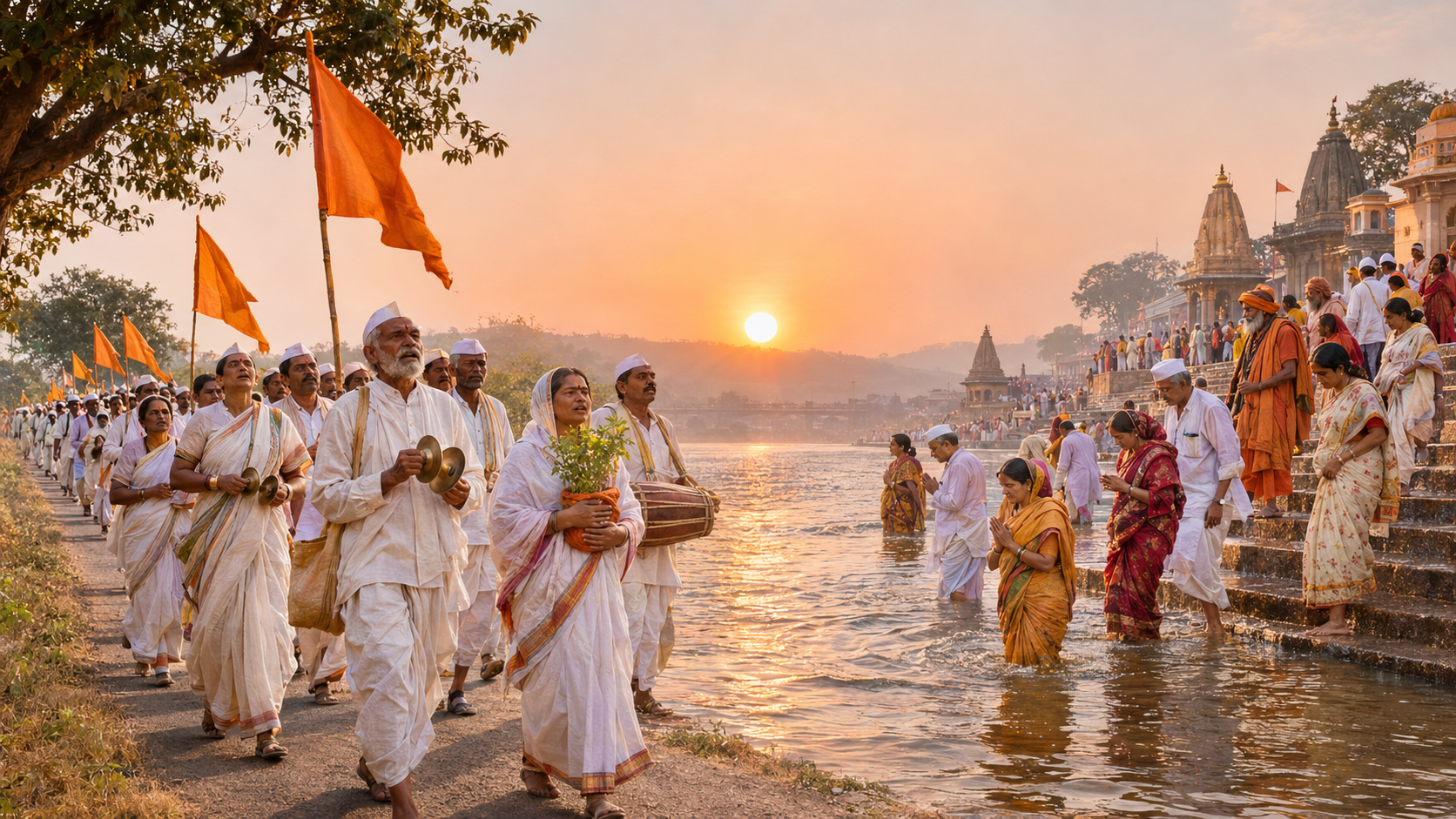
If you are trying to understand whether Wari and Kumbh are merely two enormous religious gatherings, look first at what each asks the pilgrim’s body to do. In one, you keep walking with others. In the other, you enter sacred water. The outward acts differ, but both test whether you can loosen your grip on comfort, status and self-importance long enough to turn towards the divine.
If you plan to participate – or simply want to understand why these traditions matter to Bharat – use three lenses: discipline, transmission and public conduct. They let you see pilgrimage from within without flattening Wari and Kumbh into versions of the same spectacle.
One Dharmic purpose, two different disciplines
The Alandi-Pandharpur Wari is an annual journey of roughly 250 kilometres over several weeks, culminating on Ashadhi Ekadashi. Lakhs of people travel in organised groups called dindis, chanting the names and praises of Sant Dnyaneshwar, Sant Tukaram and Lord Vithoba. The road itself becomes the place of practice.
Kumbh at Prayag concentrates the pilgrim’s attention on the sacred river and the act of bathing. Its bodily grammar is immersion rather than sustained walking. Yet the bath belongs to the same larger movement: away from papa and ego, and towards refuge in the divine.
| Dimension | Wari | Kumbh at Prayag |
|---|---|---|
| Central bodily act | Walking together over an extended route | Entering sacred water for ritual bathing |
| Sacred orientation | Pandharpur, Vithoba and remembrance of the saints | Prayag and the purifying sanctity of the river |
| Collective form | Organised dindis moving, chanting and resting together | A vast gathering converging upon a tirtha |
| Discipline made visible | Steadiness, endurance and submission to a shared rhythm | Surrender, purification and orderly conduct amid a dense crowd |
This distinction matters. If you approach Wari only as a long trek, you miss its devotional centre. If you approach Kumbh only as a chance to take a holy dip, you separate the visible rite from the inward surrender that gives it meaning. Neither pilgrimage is simply a difficult activity with a religious label attached.
The road and the river expose the same obstacle
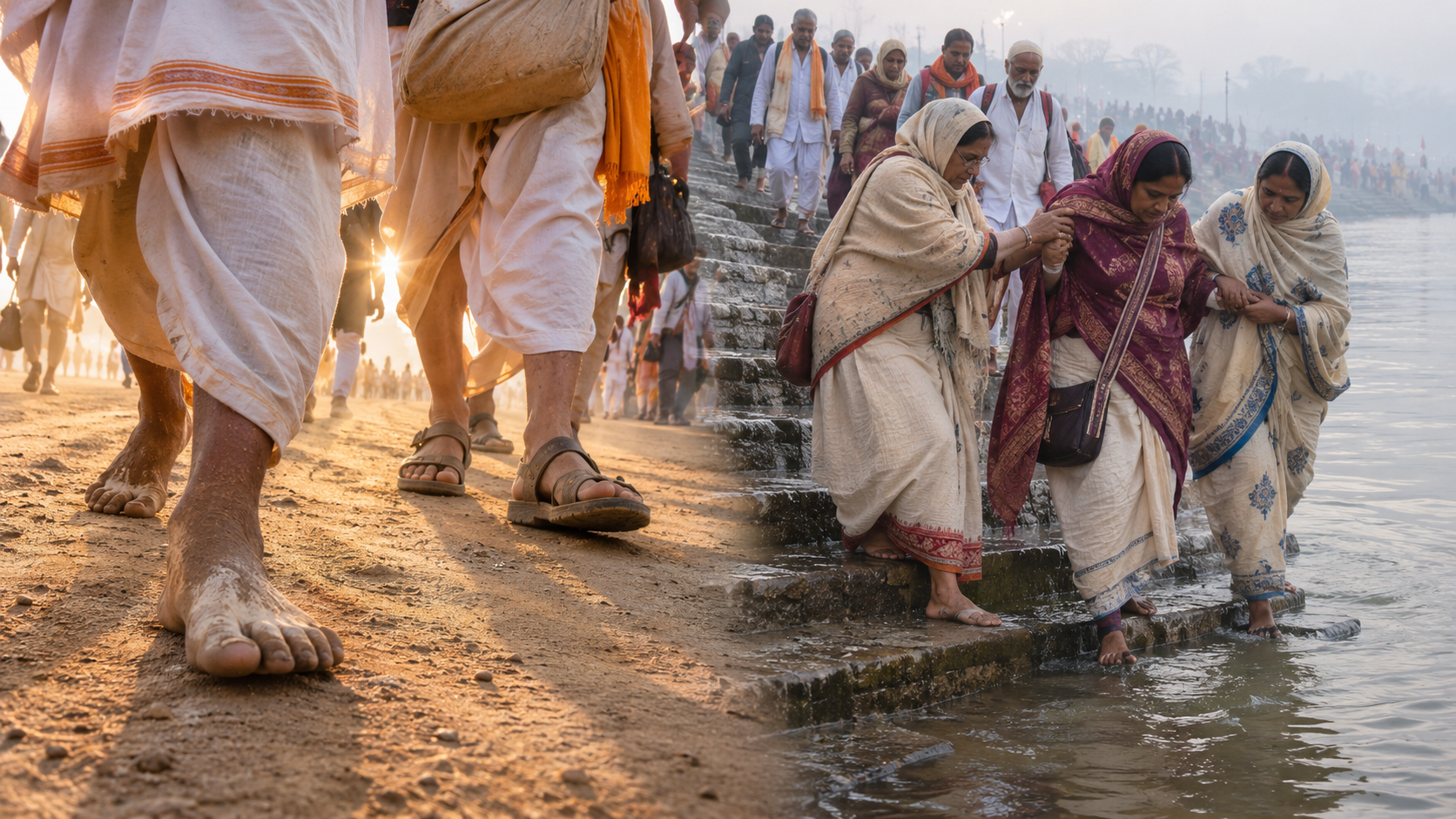
Ordinary life gives the ego many supports: privacy, possessions, professional standing, preferred food, control over time and the ability to avoid people unlike us. Pilgrimage weakens several of those supports at once. You move when the group moves, share public space and discover how quickly irritation appears when comfort is no longer guaranteed.
That discomfort is not an accidental interruption of the practice. It shows you where the practice is needed. The Wari’s long road turns devotion into repeated action: another step, another chant, another adjustment to the pace of others. Kumbh compresses surrender into the movement towards sacred water, where an individual act takes place inside an immense collective undertaking.
The aim is not to acquire a new badge of spiritual importance. Walking farther than someone else can feed the same ego the pilgrimage is meant to loosen. Nor should ritual bathing be treated as a mechanical transaction in which contact with water excuses unchanged conduct. Within the bhakti framework shared by these pilgrimages, purification and refuge belong together: the pilgrim turns towards the divine rather than merely completing an impressive act.
You can test your own participation with three questions. Are you becoming more willing to accommodate others? Are you treating inconvenience as permission to become angry, or as an opportunity for restraint? When the journey ends, will anything in your daily conduct show that you went? These questions are more revealing than the distance you covered or the photographs you brought home.
How pilgrimage carries memory across generations
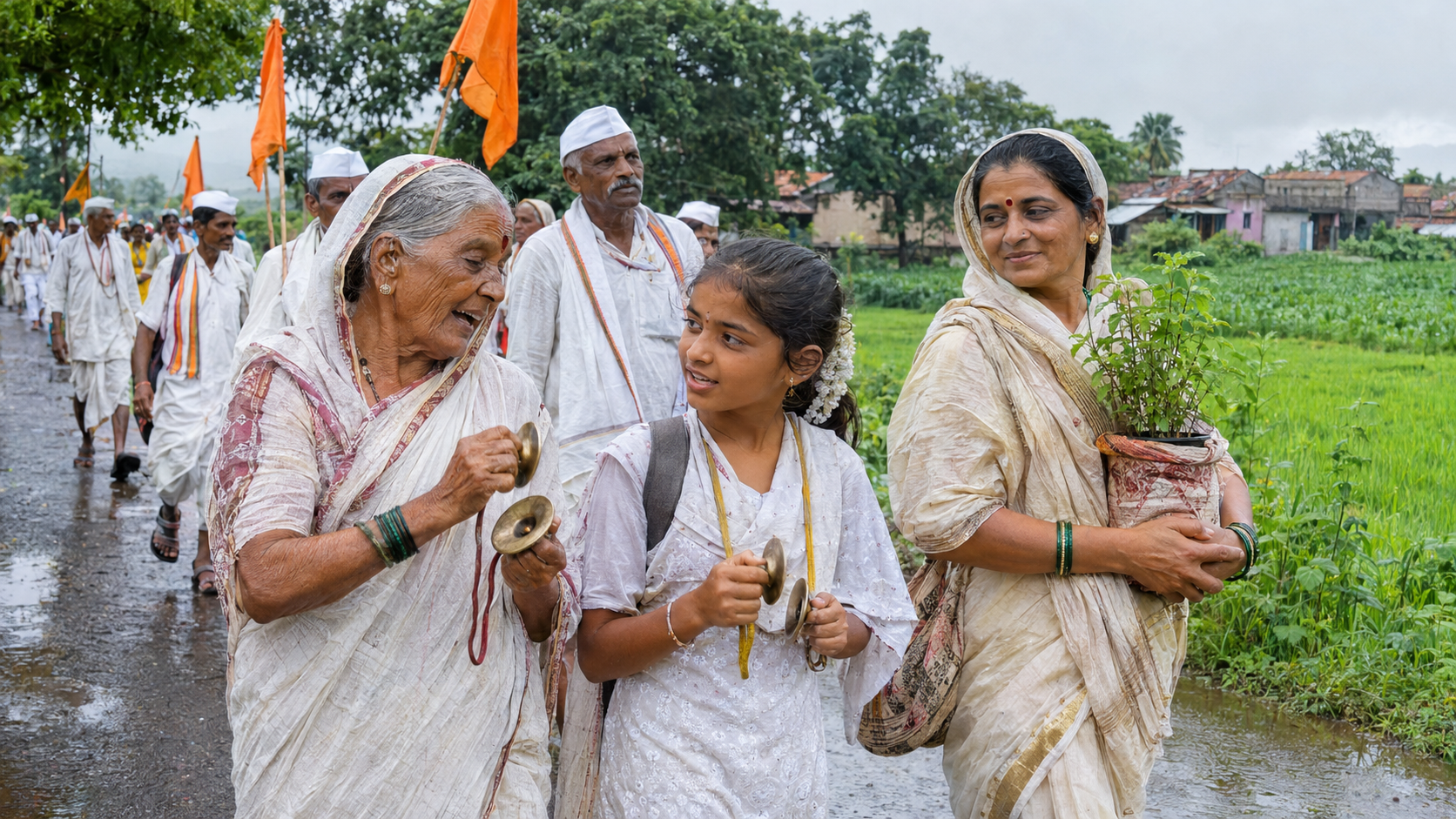
Wari and Kumbh do not depend on every pilgrim possessing a library or a formal theological education. Their force comes from faith carried through voice, memory and repeated practice across centuries. A route is walked again. A name is chanted again. A child watches an elder and later returns as an elder. The tradition remains recognisable while each generation enters it bodily.
The Warkari memory of the siblings Nivritti, Dnyaneshwar, Sopana and Muktabai is especially instructive. Their names and lives are not stored only as historical information. They are held inside a devotional world oriented towards mukti. Remembrance therefore becomes a form of teaching: the pilgrim carries a lineage without needing to turn the road into a classroom.
This also explains why chanting matters. A chant gives thousands of different people a shared rhythm, vocabulary and direction. It can be learned by hearing and repetition. You do not need to master every philosophical implication before joining the response, but you should learn what and whom you are invoking. Before attending Wari, know the place of Vithoba, Sant Dnyaneshwar and Sant Tukaram. Learn at least one chant or abhanga well enough to participate respectfully rather than treating the singing as background entertainment.
If you are observing rather than participating, notice the channels through which knowledge moves: the experienced pilgrim correcting the newcomer, the dindi maintaining its rhythm, the repeated divine names and the habits of service that keep a group moving. These small acts tell you more about the continuity of the tradition than crowd size alone.
Unity is produced through conduct, not slogans
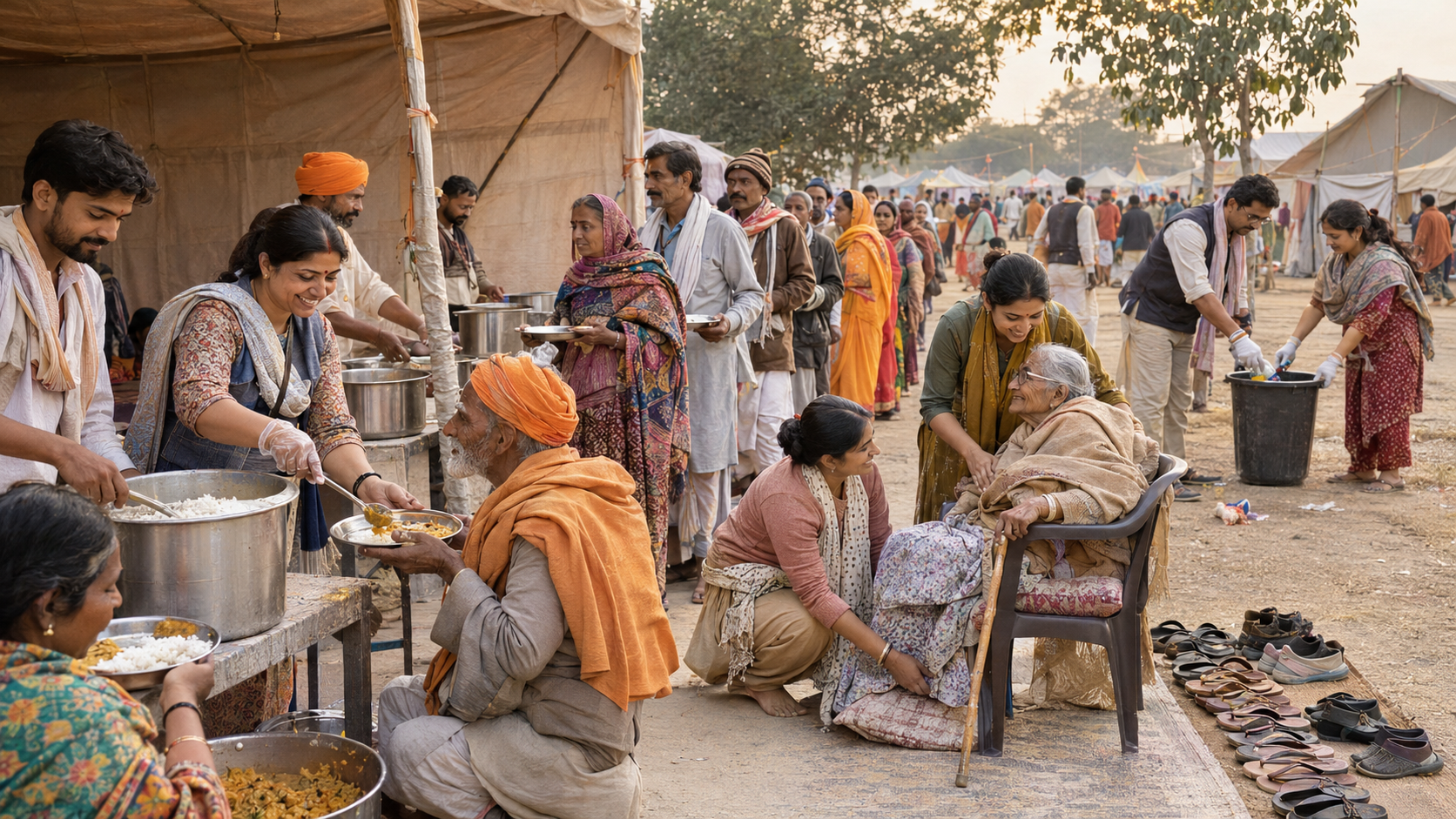
The Wari’s openness brings people of different ages, economic positions and communities onto the same road. Their differences do not magically disappear, but the normal staging of rank becomes harder to maintain. Everyone faces distance, weather, fatigue, sanitation and the practical needs of collective movement. At Kumbh, the sacred destination similarly draws people beyond the boundaries of their ordinary social circles.
This is one way Bharat renews unity without requiring uniformity. People do not have to speak identically, dress identically or belong to one local community. They recognise a shared sacred geography and a related vocabulary of tirtha, bhakti, papa, seva and mukti. They then enact that recognition through movement, restraint and worship.
The unity is real only when conduct supports it. A pilgrim who demands privilege, leaves waste behind, obstructs others or treats local volunteers as servants contradicts the meaning of the gathering. Crowd hygiene is not a secondary matter beneath spirituality. Where lakhs gather, one person’s carelessness becomes another person’s burden. Using designated facilities, keeping waste until it can be disposed of properly, cleaning your hands before eating and following the established movement of the crowd are forms of responsibility to fellow pilgrims.
Look for unity at that level. Notice who makes room for an older walker, who waits rather than pushes, who shares necessary information and who accepts the same arrangements as everyone else. A civilisation is held together not only by what it declares sacred, but by how its people behave when they meet at the sacred place.
Prepare to practise, not merely to attend
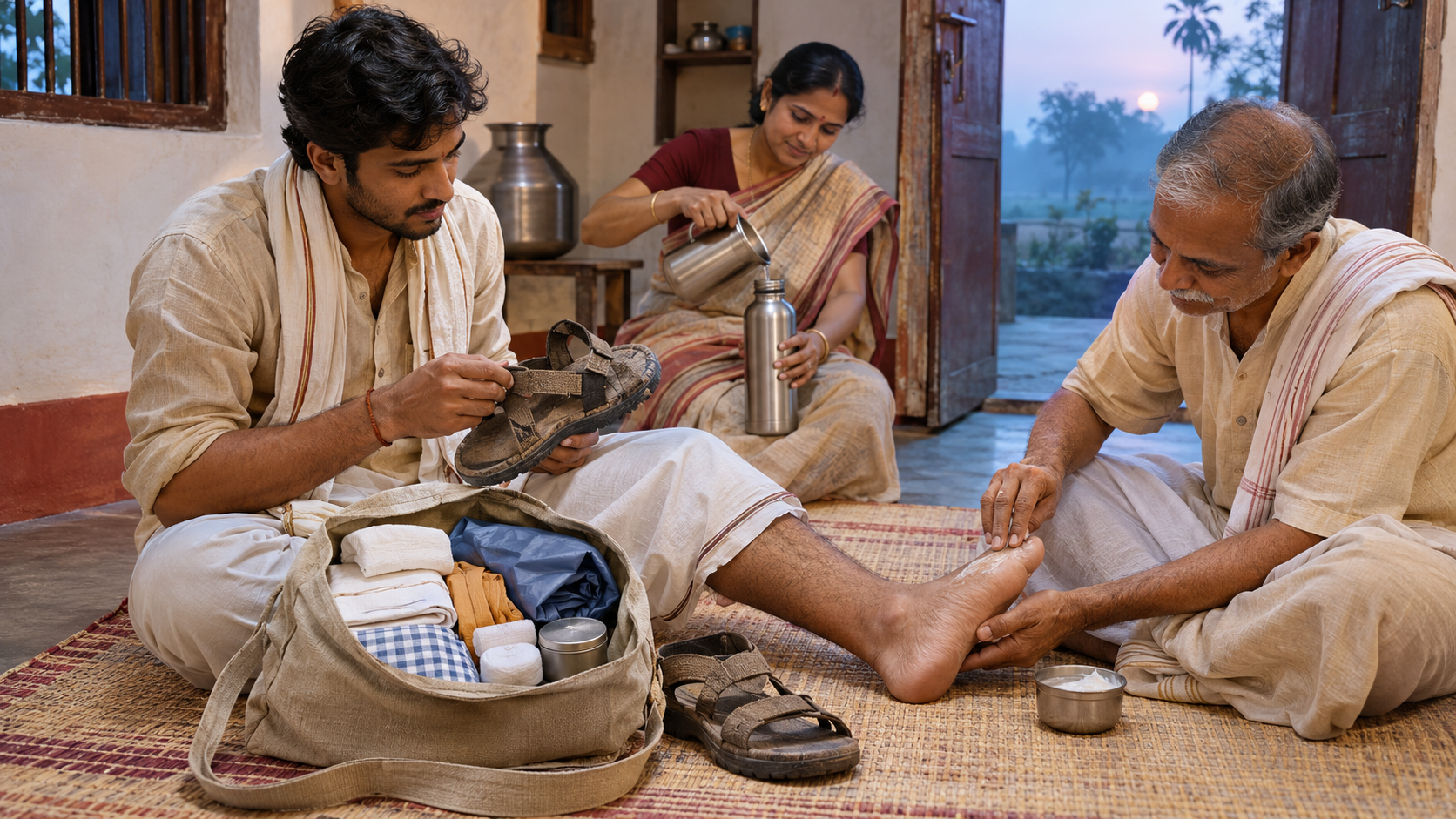
A first pilgrimage can easily become a logistics project followed by a photo archive. Preparation should instead protect the devotional purpose. Use this sequence.
- Choose the demand honestly. A complete Wari is a journey of roughly 250 kilometres over several weeks, not a ceremonial stroll. If you join only a portion, describe it honestly and give that portion your full attention. For Kumbh, decide whether you are prepared for a very large gathering centred on a sacred bath rather than an ordinary visit to a riverside city.
- Assess your physical capacity before committing. Extended walking and dense crowds can place serious demands on the body. If an existing condition affects exertion, mobility, medication, hydration or tolerance of crowded environments, seek individual guidance from a qualified clinician before travelling. Spiritual enthusiasm does not remove physical limits.
- Obtain current instructions. Routes, access arrangements, sanitation systems and crowd directions are practical facts, not matters for improvisation. Check the current information issued by organisers and public authorities. Do not assume that an old itinerary or a forwarded message remains accurate.
- Enter the collective structure. In Wari, respect the organisation and pace of the dindi rather than cutting through it for convenience. At Kumbh, follow designated approaches and on-ground directions. The shared order is part of what allows large numbers of people to worship.
- Learn the devotional vocabulary. Know the central names, destination and purpose before you arrive. Learn a chant or abhanga if you are joining Wari. At Kumbh, understand the sacred intention of the bath so that your conduct does not reduce it to novelty.
- Treat hygiene as seva. Use the facilities and disposal systems provided, keep the route and water clean, and avoid creating work or risk for others. Personal cleanliness and public cleanliness cannot be separated in a mass pilgrimage.
- Leave the camera in your bag when reverence requires it. Do not turn another person’s prayer, bathing or exhaustion into content without consent. Participation calls for presence; observation calls for restraint.
- Plan one practice for your return. Continue a divine name, an abhanga, a small act of service or a deliberate restraint. Without some continuity at home, the pilgrimage can shrink into a memory of unusual conditions rather than become a change in orientation.
Key takeaways for a first-time pilgrim
- Do not confuse the two forms: Wari disciplines the pilgrim through a long collective walk, while Kumbh at Prayag centres on ritual bathing at a sacred tirtha.
- Judge the journey by what it does to ego and conduct, not by distance completed, crowd size or photographs collected.
- Learn the names, chants and sacred purpose before arriving; oral participation is one of the ways these traditions remain alive.
- Follow group and crowd systems, and treat sanitation, patience and respect for others as parts of dharma rather than logistical inconveniences.
- Carry one discipline home so that the pilgrimage changes ordinary life instead of remaining an isolated religious event.
If you go, choose one burden you are willing to put down and one discipline you are willing to bring back. The road to Pandharpur and the sacred water at Prayag bind Bharat most deeply when the pilgrim returns less concerned with personal importance and more capable of serving the shared world.
References

Leave a Reply
You must be logged in to post a comment.