
If you saw the video from Kurla and want to know what actually happened, keep three questions separate: what has been alleged, what the police and juvenile court have done, and what remains unproven. Blurring those stages may produce louder outrage, but it does not produce stronger accountability.
The reported conduct is grave, and the couple deserves protection and a fair investigation. You can insist on both without treating an allegation as a conviction or turning the identities of several accused boys into collective guilt.
What is reported about the November 20 assault
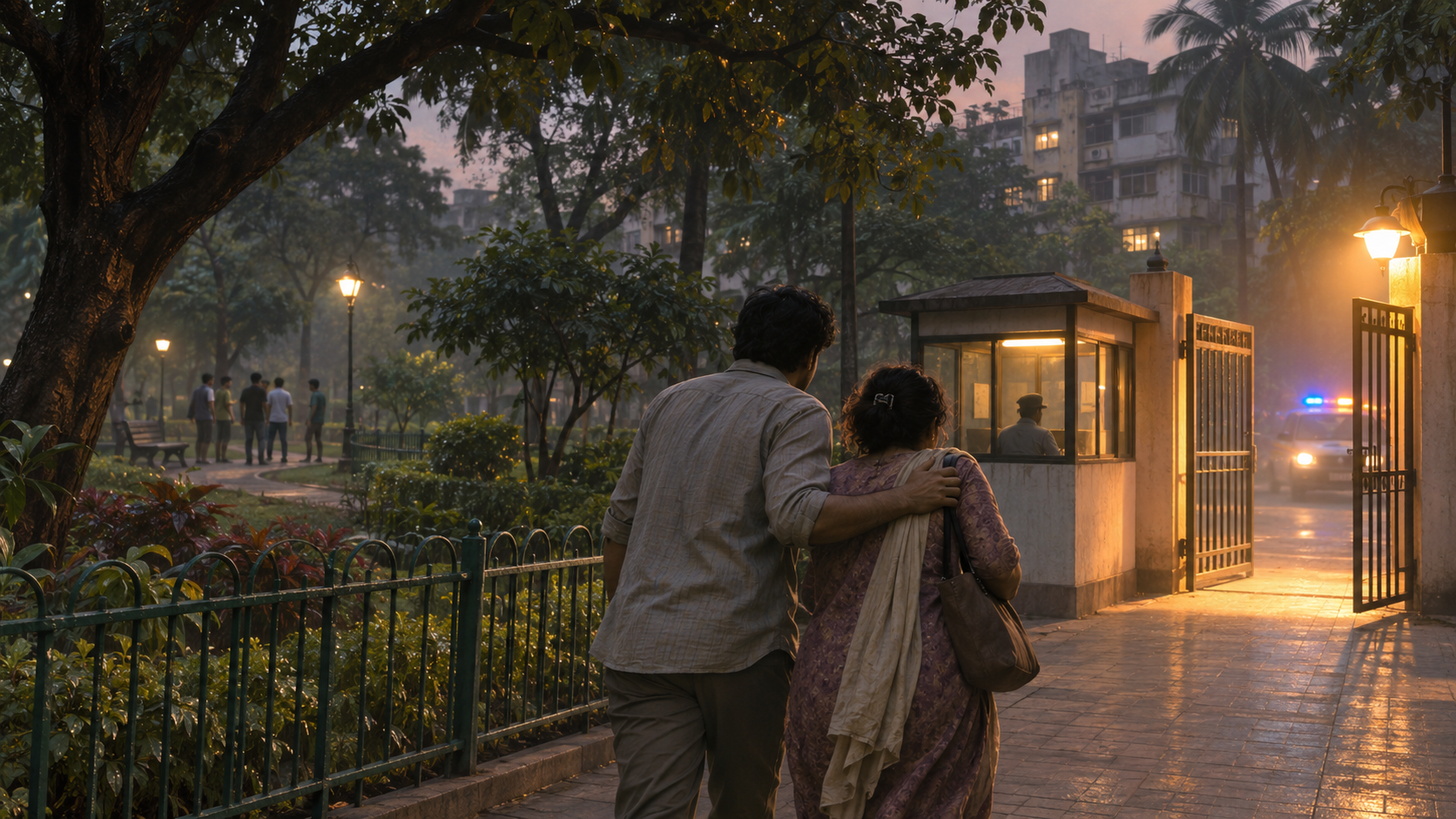
On 20 November 2026, a young Hindu couple went to Pramod Mahajan Garden, behind Phoenix Marketcity Mall in Kurla West, to take photographs. A group estimated at eight to ten boys allegedly approached them and made lewd remarks. When the couple objected, the boys allegedly surrounded them, obstructed their movement and attacked them with sticks, punches and kicks. The couple managed to escape.
A video of the confrontation subsequently circulated widely. Mumbai Police detained eight boys, reported as Muslim minors, while Ghatkopar Police registered an FIR under the Bharatiya Nyaya Sanhita. A juvenile court placed six of the accused, aged 12 to 15, in an observation home until 4 December. BJP leader Kirit Somaiya reportedly assisted the couple with filing the FIR.
These details establish that a serious complaint entered the criminal-justice process. They do not establish guilt, a communal motive or the precise role of every boy in the group. Detention is not conviction, and placement in an observation home is not a final finding. That distinction protects due process without diminishing the seriousness of the alleged attack.
Key takeaways: what is known and what is not

- The central allegation is specific: lewd remarks were followed by surrounding, obstructing and physically attacking the couple after they objected.
- The numbers describe different stages. The approaching group was estimated at eight to ten boys; eight minors were detained; six were sent to an observation home until the stated date.
- The couple and the accused have been identified in communal terms, but those identities alone do not prove why the confrontation occurred. No stated religious slogan, demand or motive has been reported in the known sequence.
- The proper next questions concern evidence: who did what, what the original video shows, whether other recordings or witnesses exist, and how the couple’s injuries were documented.
- Because the accused are minors, do not circulate names, addresses or speculative identifications. Misidentifying a child can harm an uninvolved family and weaken confidence in the genuine case.
If a group surrounds you, protect life before recording
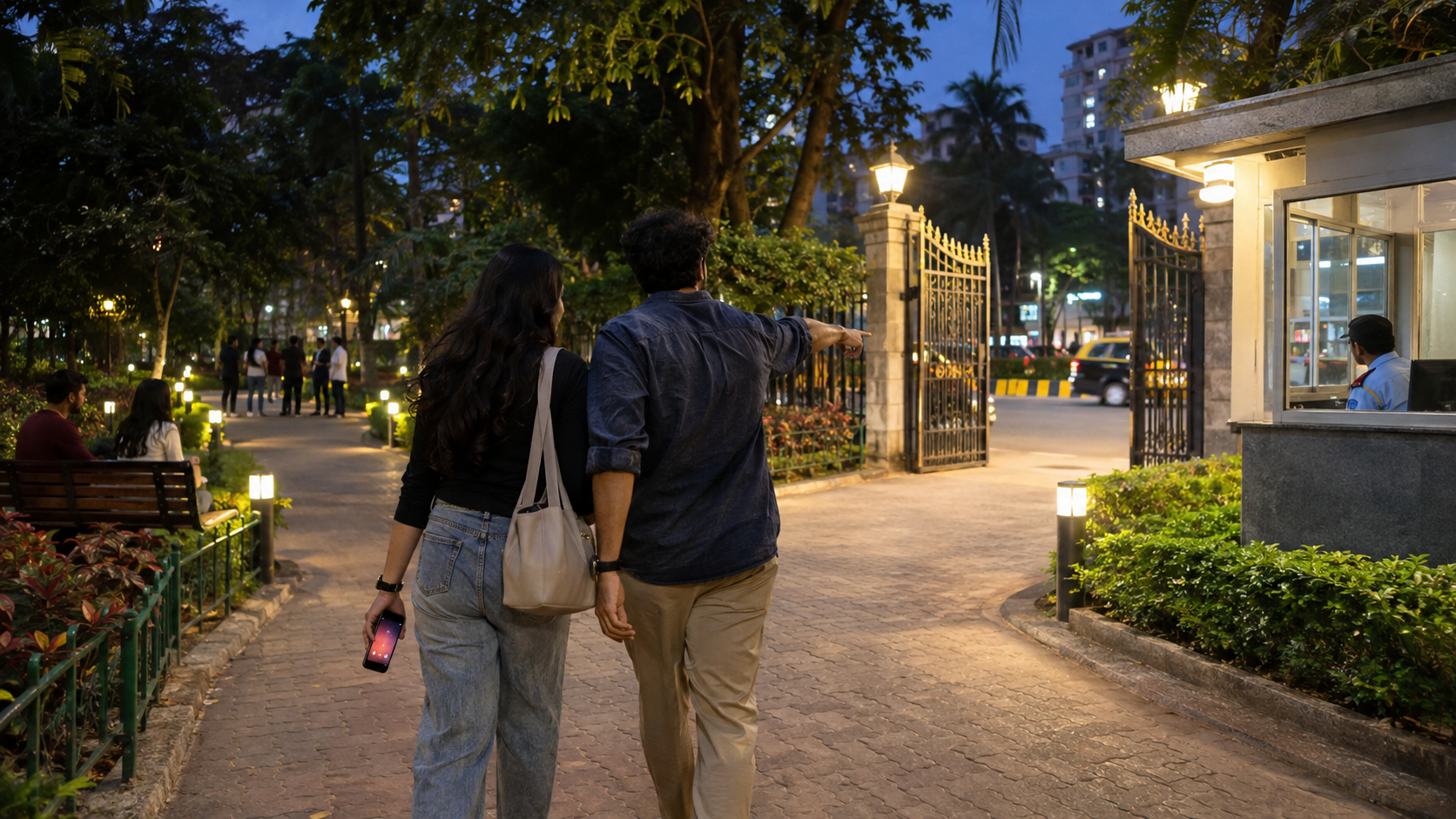
A person confronted by a group can lose the safest exit while trying to argue, film or prove a point. Your first objective is separation from the group. Evidence matters, but no recording is worth remaining within striking distance.
- Move toward people and controlled access. Head for a staffed gate, security post, open business or well-populated area. Do not let the confrontation draw you deeper into an isolated part of a park.
- Ask for a specific action. Point to one bystander and ask that person to call police or park security. A precise request is easier to act on than a general cry for help.
- Give responders usable location information. State the park name, the nearest gate or landmark, the approximate group size, whether weapons are visible and the direction in which the group is moving.
- Record only from relative safety. If one person can film without delaying escape, capture the group, location and sequence. Do not chase anyone to obtain a clearer face or provoke a second confrontation.
- Preserve the original file. Keep the unedited recording, make a backup and note who filmed it. Repeatedly trimmed, captioned or compressed social-media copies may lose timing, sound and visual context.
- Document the aftermath promptly. Write a chronological account while details are fresh, retain photographs of injuries or damaged property, seek medical attention where needed, and keep the resulting records.
- Keep a paper trail. When making a written complaint, retain its acknowledgement and, if an FIR is registered, its details. Take a trusted companion, advocate or lawyer if you fear intimidation or difficulty navigating the process.
The reported assistance given to the Kurla couple while filing the FIR illustrates why accompaniment matters. A victim who has just escaped a group attack should not have to manage safety, evidence and procedure alone. A community organisation or elected representative can help the person reach the proper authority and retain documents without dictating what investigators must conclude.
Public circulation should come after evidence preservation and police handover, not before them. Virality can attract attention, but it can also produce false names, edited clips and witnesses unconsciously repeating captions they saw online. Share verified updates and redact the identities of minors; do not turn a criminal complaint into an online identification contest.
Accountability should be individual, visible and difficult to evade

You do not have to choose between minimising the assault for the sake of social harmony and treating an entire religious community as suspect. Both responses avoid the harder work: establishing each participant’s conduct and requiring institutions to correct the conditions that allowed the incident.
Police accountability begins with separating roles. Who made the remarks? Who blocked the couple’s movement? Who struck either person? Who carried or used a stick? Who merely appeared in the surrounding crowd? Group footage can establish presence, but responsibility must rest on conduct and evidence. Investigators should preserve original recordings, seek park or nearby CCTV footage, identify independent witnesses and document injuries before memories and digital records become harder to recover.
Park administrators also have a concrete task. They should inspect the location of the confrontation, identify obscured paths or poorly monitored areas, check whether security staff could be reached quickly and establish a clear way for visitors to report harassment. The useful question is not whether the garden is broadly described as safe. It is whether a visitor at that particular spot can summon help and reach an exit when a group blocks the way.
Readers and civic groups can keep pressure focused by asking narrow questions: Has the video been preserved in its original form? Have all alleged participants been identified individually? Has evidence from the garden been secured? Has the couple been protected from further intimidation? When will the next verified procedural update be available? These questions are harder to dismiss than sweeping claims and easier to check against later developments.
Political representatives can help complainants access the system, request timely action and insist on transparent updates. They should not announce guilt before adjudication or use the incident to invite retaliation. The test is whether their involvement leaves the victim safer, the evidence stronger and the official record clearer.
A Dharmic response rejects silence, rumour and revenge
Dharma is not served by cowardice in the face of aggression. Nor is it served by directing anger at innocent people who share a label with the accused. Ahimsa does not require passivity; it requires disciplined action that prevents further harm. Satya requires us to describe the incident at the resolution the evidence supports, without erasing relevant facts or manufacturing missing ones.
At this stage, it is accurate to say that a Hindu couple was allegedly harassed, surrounded and assaulted by a group that included boys reported as Muslim minors. It is also accurate to say that the known facts do not establish a religious motive. If later evidence demonstrates such a motive, it should be named plainly. Until then, identity is not a substitute for evidence of intent.
Nothing established about this incident identifies the boys’ schools or religious institutions, personal beliefs, prior conduct or instructions from adults. Claims about any of those matters would therefore be speculation. That speculation does not strengthen the case for the couple. It gives defenders of inaction an opening to debate rhetoric instead of answering for the assault.
The accused boys’ ages also demand two forms of seriousness at once. The alleged violence must not be dismissed as ordinary mischief, especially where a couple was surrounded and struck. At the same time, the juvenile process exists to determine responsibility and an appropriate response for children rather than treating them as already convicted adults. Prevention will eventually require asking what supervision, family intervention and community discipline failed, but those questions must follow verified individual findings.
If you want to act, keep the demand precise: protect the couple, secure the evidence, identify every participant’s conduct, let the juvenile process determine responsibility and require the garden authorities to address the safety failure. That is how legitimate Hindu concern becomes durable civic accountability rather than another cycle of rumour and retaliation.
References

Leave a Reply
You must be logged in to post a comment.