
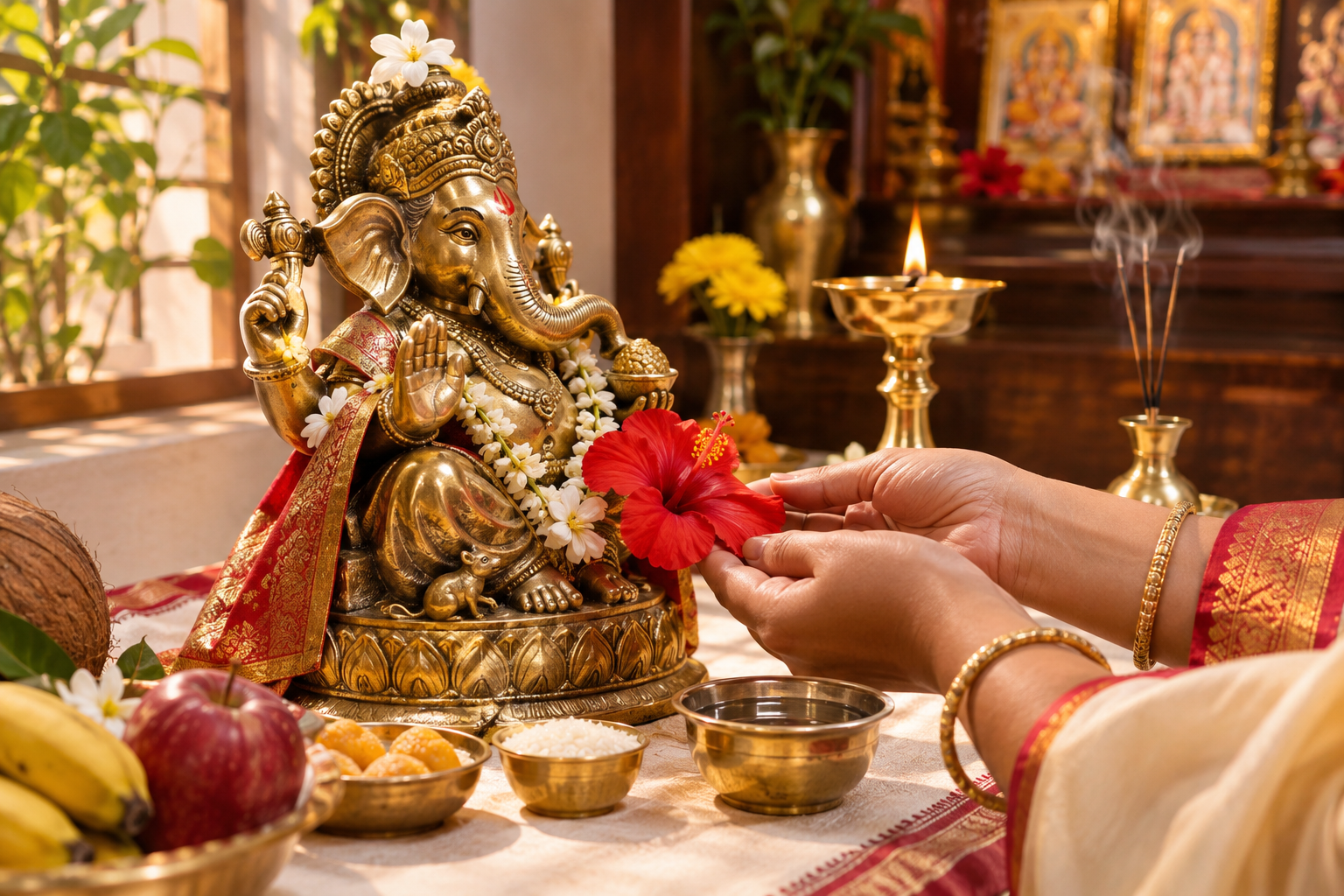
You are preparing a puja, the principal deity has your full attention, and then someone reminds you: begin with Ganesha. Is this an optional courtesy, a separate puja, or a rule that changes the whole order of worship?
The practical answer is simple. Ganesha receives precedence at the opening so that the sacred work begins with a conscious appeal for obstacles to be overcome. Once that opening observance is complete, you proceed with the puja you intended to perform.
Precedence means first in the ritual sequence
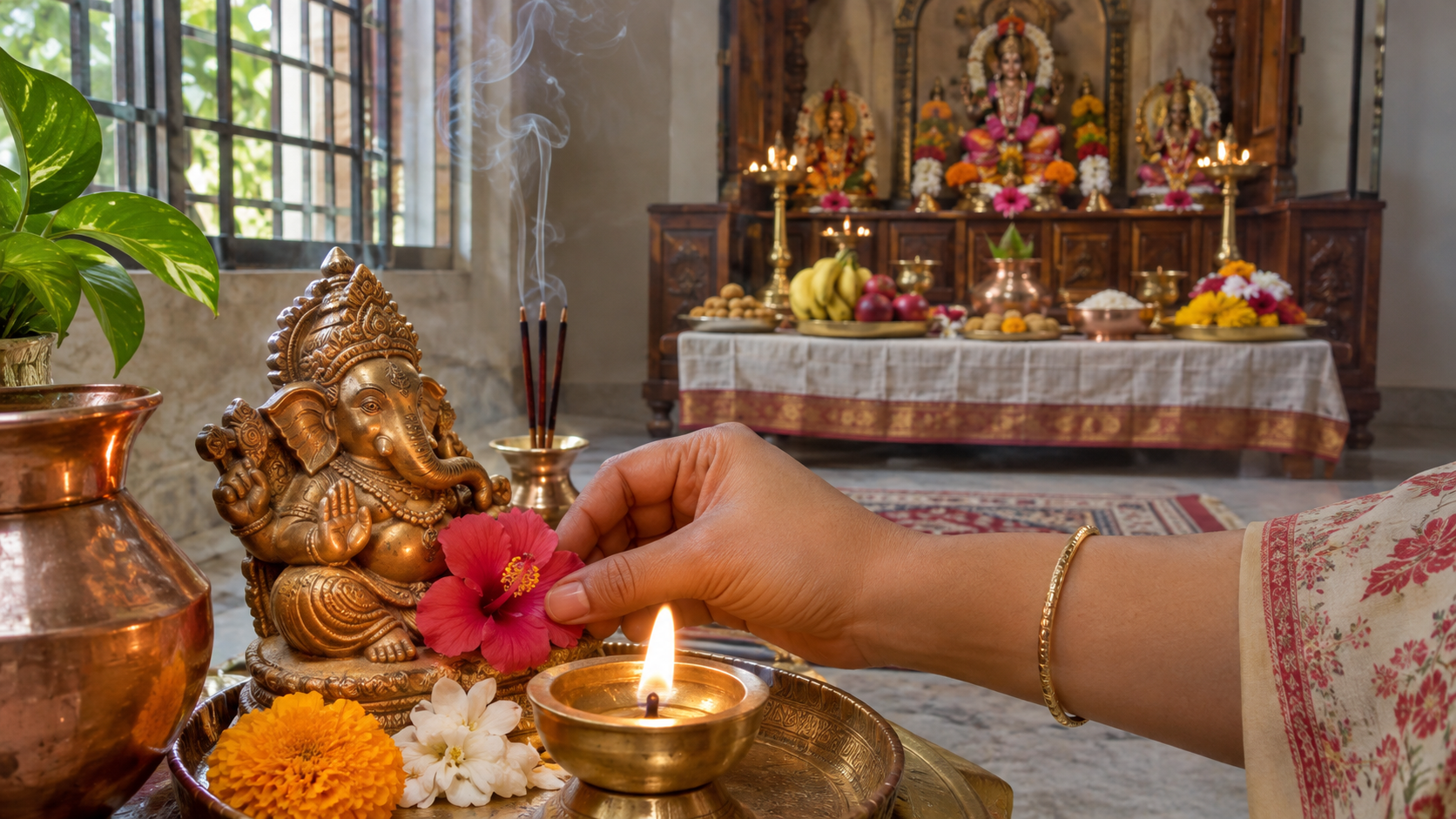
Ganesha is customarily invoked before a puja or ritual begins. The important word is before. His precedence concerns the order in which the rite is opened.
This distinction prevents a common misunderstanding. Worshipping Ganesha first does not replace the principal worship, nor does it turn every observance into a full Ganesha festival. The preliminary invocation and the main puja have different functions. The first prepares the ritual passage; the second carries out the chosen act of worship.
When Ganesha is called Aadideva in this ritual context, the immediately useful meaning is priority at the beginning. You do not need to turn that priority into a competitive ranking of deities. Hindu ritual sequence can assign a deity a particular role without reducing the sacred to a contest over status.
Why the opening belongs to Ganesha
A ritual is more than a good intention. It has a beginning, an order and a desired completion. Distraction, forgetfulness, confusion and practical interruption can all disturb that movement. Invoking Ganesha at the threshold directs attention to the conditions needed for the work to proceed without obstruction.
His traditional names make that role visible. Vighneshwara and Vighnahantari frame Ganesha in relation to impediments and their removal. Ganadhipa and Gananayaka express leadership. Vinayaka and Ganapati are also among the names by which he is addressed, while Gajanana, Lambodara and Ekadanta recall his recognisable form. These are not merely decorative alternatives. Together, the names help a worshipper notice why the deity of the opening is being remembered at that precise moment.
The point is not that every difficulty will disappear on demand. The ritual teaches a more disciplined posture: do not rush into sacred action as though desire alone guarantees completion. Begin by acknowledging impediments, gathering the mind and placing the undertaking within a sacred order.
What worshipping Ganesha first does not mean
Several avoidable mistakes arise when a rule of precedence is treated as an isolated slogan.
- It does not make the rest of the puja secondary. The opening invocation serves the principal observance; it does not compete with it.
- It does not require you to invent an elaborate preliminary ceremony. If the procedure you are following already contains a Ganesha invocation, use that form and continue in its prescribed order.
- It does not justify mixing unrelated instructions. A family practice, temple procedure or officiated rite may express the same principle through different words and actions. Combining fragments from several procedures can create confusion rather than devotion.
- It does not mean an accidental omission has made sincere worship worthless. If you notice the omission while preparing or beginning, correct the sequence calmly according to the tradition you are following. Ritual attentiveness is better served by a composed correction than by panic.
- It does not become redundant when Ganesha is the principal deity. His role at the threshold and his place as the focus of the main worship can coincide. Follow the sequence given for that observance rather than assuming that one role cancels the other.
The governing distinction is between principle and procedure. The principle is Ganesha’s precedence. The procedure is the particular way your tradition expresses it. Hold firmly to the first while respecting the authority of the second.
How to place the invocation in a home puja
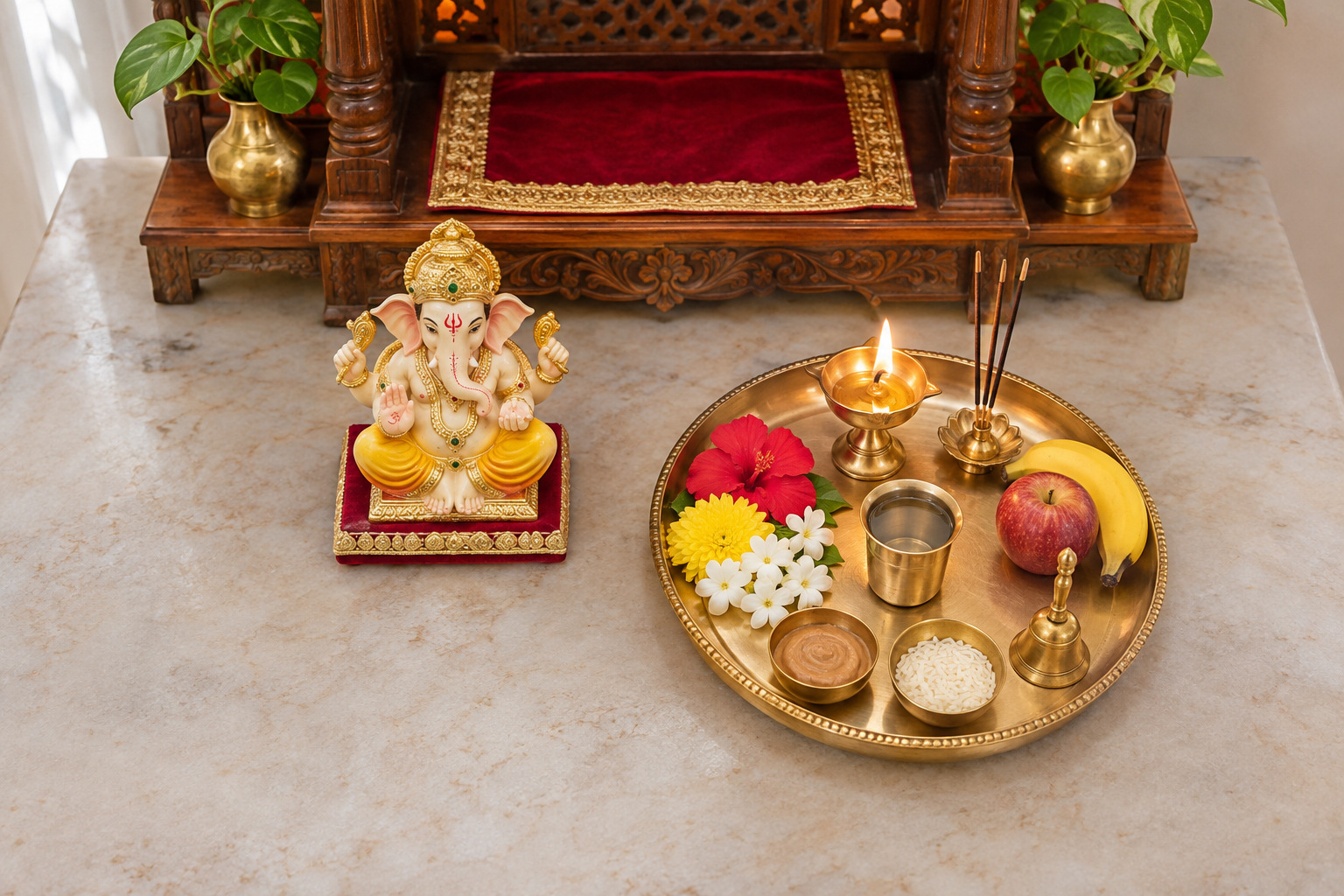
If you are conducting a simple home observance, use the following sequence as a practical check. It is not a substitute for the detailed instructions of a family tradition, priest or established ritual manual.
- Identify the procedure before you begin. Decide whether you are following an inherited family form, instructions from an officiant or a simple personal observance. This keeps you from changing methods halfway through.
- Prepare the whole worship space. Arrange what the chosen procedure requires before the formal opening. The aim is to reduce avoidable interruption after the rite has begun.
- Invoke Ganesha at the opening. Use the name, prayer, mantra or action prescribed by the procedure you have chosen. Give this moment your full attention instead of treating it as a hurried preface.
- Complete the preliminary observance. Do not begin the principal worship while still mentally assembling the opening. Let the sequence remain clear.
- Proceed to the main puja. Once Ganesha has been acknowledged in the customary place, continue with the intended rite without repeatedly restarting the opening.
If you have no inherited formula and are making an informal personal offering, a brief and respectful remembrance of Ganesha preserves the essential order without pretending to perform a complex rite you have not learned. If the occasion involves a formal vow, a major life ceremony, temple worship or an officiated ritual, ask the person responsible for that tradition which procedure should govern. Precision matters more in a formal rite than collecting extra steps from unrelated online instructions.
When attending a puja led by someone else, follow the officiant’s order. You do not need to insert a second private Ganesha ceremony because you fear the first was too brief. Ritual precedence is satisfied through its proper place in the rite, not through repetition for its own sake.
Key takeaways
- Ganesha’s precedence is primarily about ritual order: he is invoked at the beginning, before the principal worship proceeds.
- His names associated with leadership and the overcoming of impediments clarify why he presides over the threshold of sacred action.
- Being first in sequence does not turn the puja into a hierarchy or displace the deity at the centre of the observance.
- The exact words and actions can vary, so follow one coherent family, temple or officiated procedure rather than assembling fragments from several.
- For a simple personal observance, begin with a sincere remembrance of Ganesha; for a formal rite, obtain the correct sequence from a qualified custodian of the tradition.
At your next puja, make one practical change: decide on the opening before you light, offer or recite anything. Invoke Ganesha deliberately, complete that beginning, and then move into the principal worship with an undivided mind.
References

Leave a Reply
You must be logged in to post a comment.