
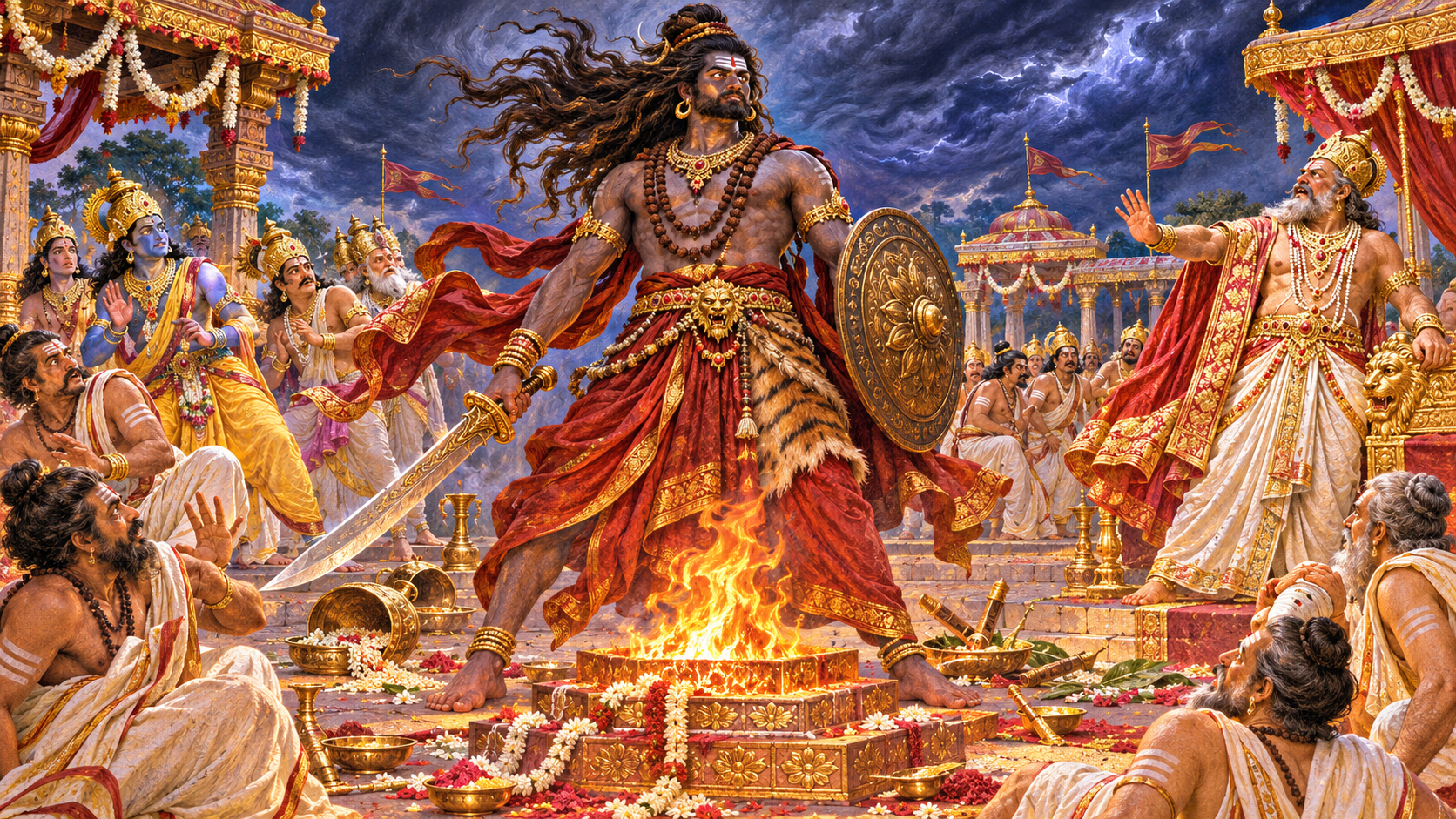
If you came to this katha wondering why a sacred sacrifice leads to a fierce confrontation, begin with the act of exclusion inside the ritual. “Daksha’s sacrifice” means the yajna conducted by Daksha. The decisive problem is that he uses the occasion to insult Shiva and leave him out.
That distinction turns the episode from a simple tale of divine anger into a practical warning. Sacred forms do not make pride sacred. A ceremony can invoke dharma while the person directing it acts from contempt.
Keep the sequence clear before interpreting it
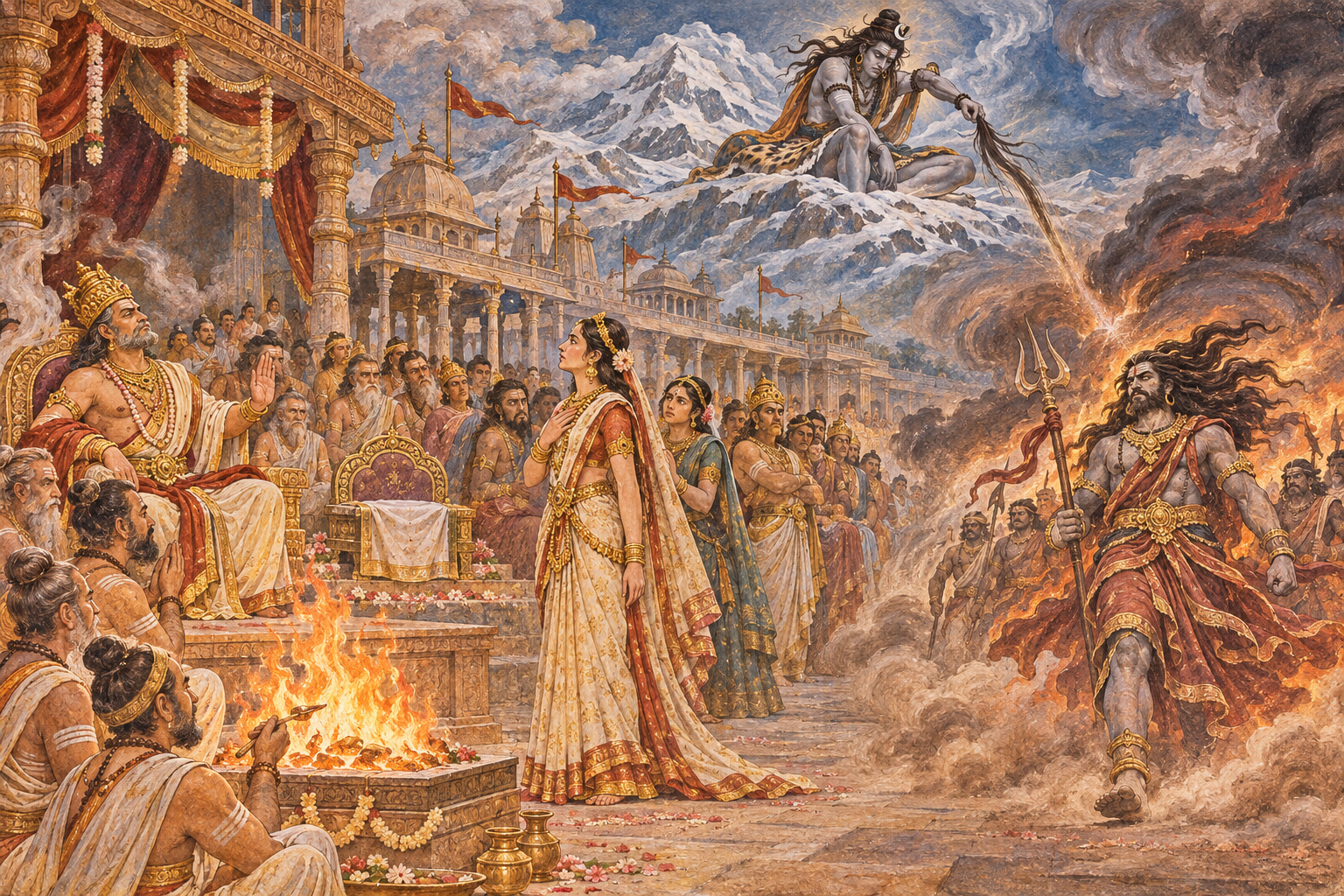
The essential sequence is compact: Daksha conducts a yajna, insults Shiva, and avoids inviting him; Shiva then creates Veerabhadra to teach Daksha a lesson. Sati is Daksha’s daughter and Shiva’s wife, so the offence is not an impersonal disagreement between strangers.
- Daksha holds the yajna and therefore occupies the visible position of host and authority.
- He excludes Shiva while insulting him, making the omission part of the offence rather than an innocent oversight.
- Sati’s relationship to Daksha and Shiva places a family bond inside the conflict.
- Shiva brings forth Veerabhadra as an avatar with a stated corrective purpose: Daksha must be taught a lesson.
The order matters. Veerabhadra does not appear merely because a yajna is taking place. The fierce response follows the misuse of the yajna as a setting for humiliation. When you hear a longer retelling with additional details, keep this moral chain in view: authority becomes pride, pride enters ritual, exclusion expresses the pride, and correction follows.
This also prevents a common misreading. The conflict is not a rejection of worship or disciplined observance. It exposes what happens when the outer form of religion is separated from the disposition that should animate it.
Daksha’s failure is not ritual; it is pride using ritual
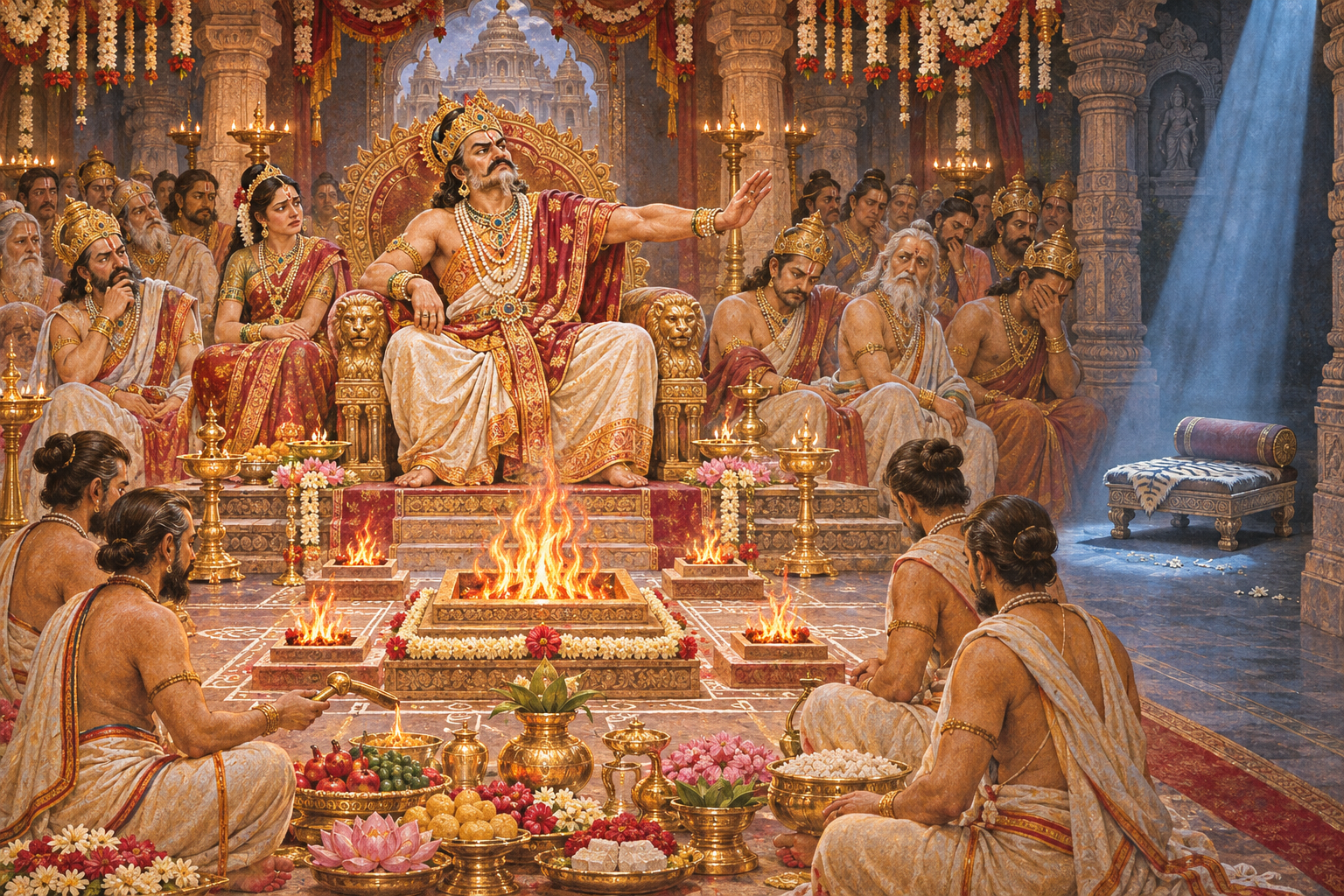
A yajna is supposed to direct attention beyond the ego of its organiser. Daksha reverses that movement. The sacred gathering becomes a stage on which personal approval and disapproval can be displayed. His position as host gives him the practical ability to exclude, but it does not turn exclusion into dharma.
This is the part of the katha worth carrying into present-day religious and family life. Guest lists, speaking roles, seating arrangements, honours, and public acknowledgements can all communicate respect. They can also be used to punish someone without saying openly that punishment is intended. The external action may look orderly while its motive is hostile.
Before a puja, festival, family samskara, or community event, ask three precise questions:
- Is anyone being omitted because of a genuine requirement, or because someone wants the omission to hurt?
- Could the reason for the decision be stated calmly and honestly to the person affected?
- Does the arrangement protect the purpose of the ceremony, or does it make the organiser’s status the centre of attention?
These questions do not mean that every gathering must include everyone. Boundaries, roles, and practical limits are real. The sharper distinction is between a boundary that serves the occasion and an exclusion designed to humiliate. Daksha’s conduct belongs to the second category because insult and non-invitation occur together.
If you are responsible for a ceremony, make consequential decisions before resentment hardens around them. Explain necessary limits privately. Do not use a sacred occasion to settle an unrelated personal dispute. The katha asks you to inspect the intention behind correct-looking arrangements, not merely the arrangements themselves.
Veerabhadra’s fierceness has a purpose
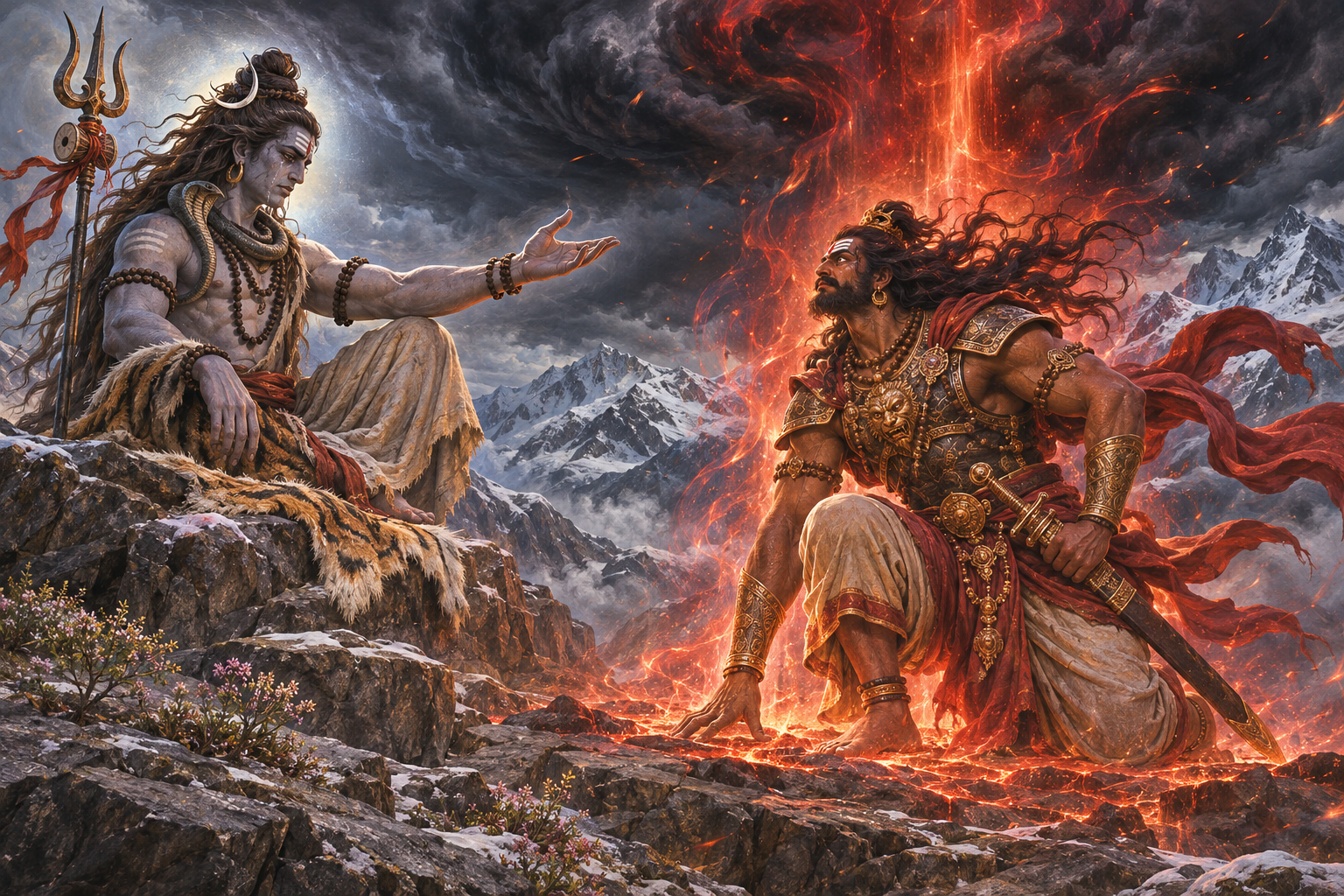
Veerabhadra is identified as an avatar of Shiva, created to correct Daksha after the insult and exclusion. That stated purpose is essential. Veerabhadra is not introduced as random temper detached from dharma; his fierceness answers a serious rupture produced by arrogance.
It is still important to read this carefully. A divine manifestation in sacred narrative is not a licence for a person to call personal rage righteous. We do not possess Shiva’s vision, and anger is especially good at disguising injured pride as moral clarity. The practical lesson is therefore not “retaliate fiercely.” It is “do not dismiss the gravity of contempt simply because it has been wrapped in respectable form.”
When anger rises in you after an exclusion or insult, separate the principle from the impulse before acting:
- Name the violated principle in one sentence, without describing the other person’s character.
- Ask whether your proposed response protects that principle or merely transfers humiliation back to the offender.
- Choose a response that is firm enough to stop the wrong but restrained enough not to create another one.
This does not reduce Veerabhadra to a psychological metaphor. Within the katha, he remains Shiva’s avatar. The inward application simply lets you examine what the narrative reveals about force, authority, and correction. You can honour the theological meaning while refusing to turn divine fierceness into an excuse for human vengeance.
Sati makes the offence relational, not merely ceremonial
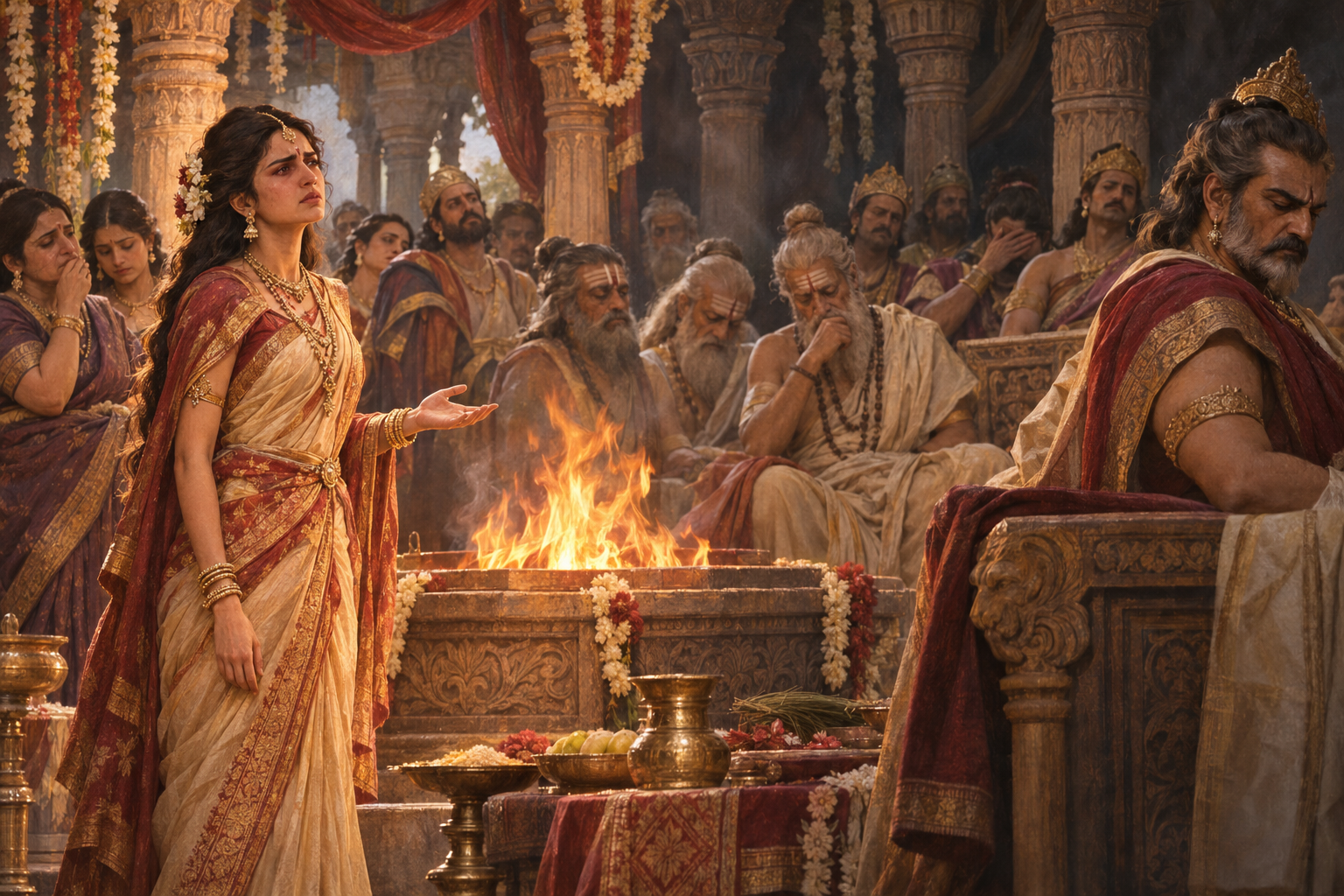
Sati is Daksha’s daughter, and her bond with Shiva places her between the two sides of the conflict. That relationship prevents the insult from remaining a private matter between Daksha and Shiva. Disrespect moves through families. The person caught between parent and spouse is made to carry a conflict that may not have begun with her.
This is easy to recognise in ordinary life. One relative insults another and then asks a son, daughter, spouse, or sibling to behave as though nothing consequential happened. The intermediary is expected to preserve harmony by silently absorbing the cost. That is not reconciliation. It is the relocation of conflict onto the person with the least freedom to answer it.
If you are in Daksha’s position as a parent, elder, organiser, or community leader, do not demand loyalty through disrespect toward someone’s spouse, guru, family, or chosen path. If you are caught between two sides, identify the precise conduct at issue instead of accepting a demand to declare one person entirely good and the other entirely bad. A clear boundary can reject an insult without turning every relationship into a permanent battlefield.
Sati’s place in the katha also reminds you that hospitality is never merely logistical. Whom you recognise, whom you omit, and why you do so can affect people beyond the intended target. Before making a public exclusion, count the relationships that will be forced to bear its meaning.
Key takeaways for reading and applying the katha
- Daksha’s sacrifice is the yajna he conducts; the narrative’s problem is the contempt he brings into it.
- The omission of Shiva is connected to an insult, so it should not be softened into a harmless failure to send an invitation.
- Veerabhadra is Shiva’s purposeful corrective manifestation, not merely an image of uncontrolled anger.
- Sati’s family bond shows how public disrespect spreads beyond the two people directly in conflict.
- The human application is disciplined self-examination and firm correction, not imitation of divine force.
- A sacred event should be reviewed not only for procedural correctness but also for motives expressed through honours, invitations, and exclusions.
Use the katha before your next family or community ceremony. Review the guest list and public roles with one uncomfortable question: is any decision meant to serve the sacred purpose, or is it meant to make somebody feel small? Correct the second kind before the ritual begins. That is where Daksha’s warning becomes a living practice rather than a story heard at a distance.
References

Leave a Reply
You must be logged in to post a comment.