
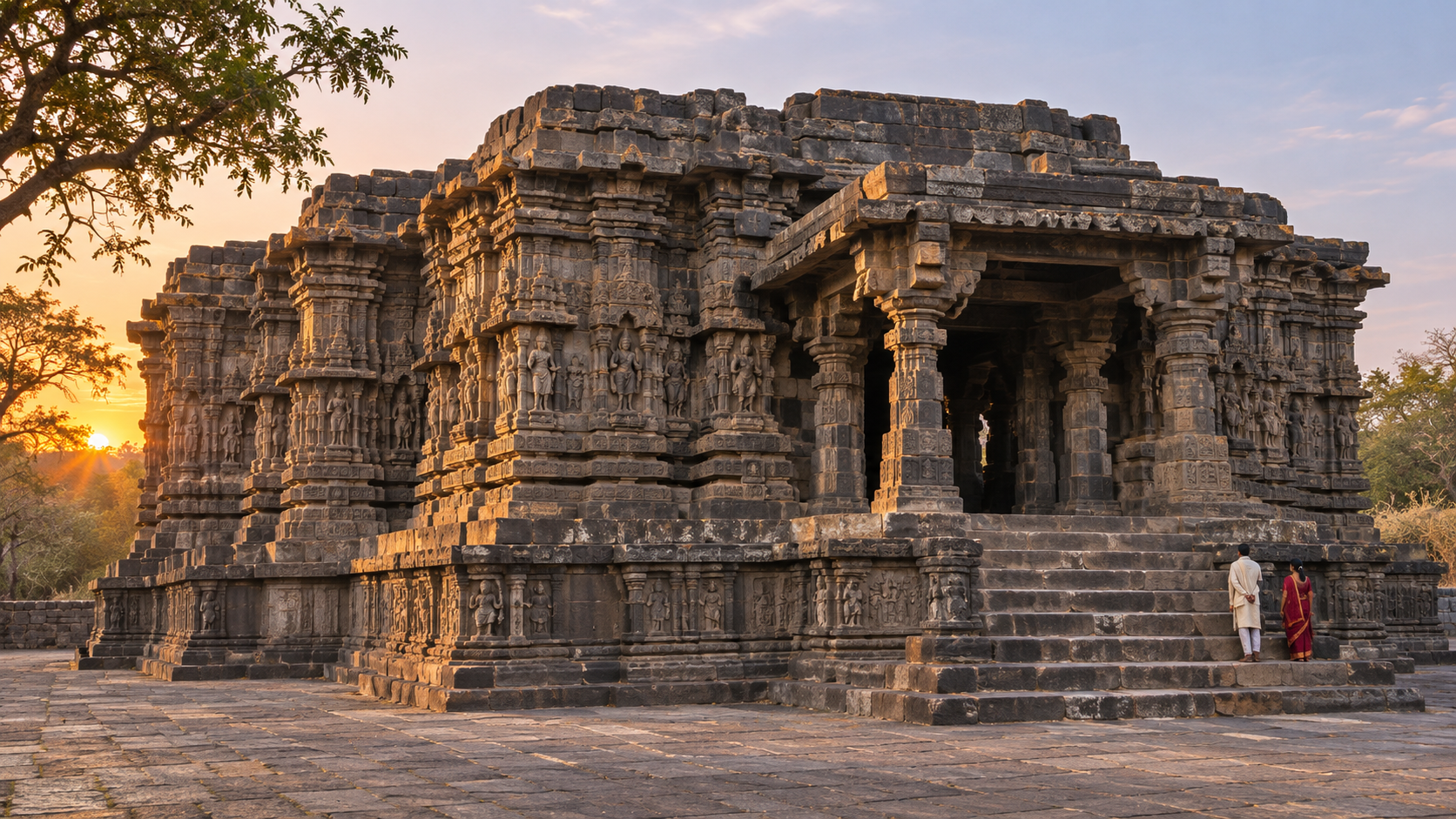
You may know Lonar first as a lake and only then encounter a temple whose name sounds like a verdict. If you are wondering why the shrine is called Daitya Sudan, the essential answer is precise: it remembers Bhagavan Vishnu as the vanquisher of Lonasura.
That answer is also your key to the site. The temple, its unusual murti, the legend, and the landscape belong together. Read them that way and you can approach Lonar as sacred geography without confusing religious meaning, architectural history, and later embellishment.
The name identifies a divine action, not merely a deity
Daitya Sudan can be read as the slayer or destroyer of a daitya. The name therefore does more than identify the shrine as Vaishnava. It identifies Bhagavan Vishnu through a particular act: the defeat of Lonasura.
This distinction matters because daitya is a category, while Lonasura is the particular adversary remembered at Lonar. You should not assume that every detail from another asura-vadha narrative belongs here. Hindu traditions contain many accounts of Bhagavan taking a protective or destructive form, but each sacred place preserves its own narrative emphasis.
When you hear an expanded retelling, ask a simple question: which details are specifically associated with Lonasura at Lonar? That question allows local tradition to speak for itself. It also prevents a better-known Vishnu narrative from being unconsciously substituted for the one embodied by this temple.
Keep the core of the Lonasura legend clear
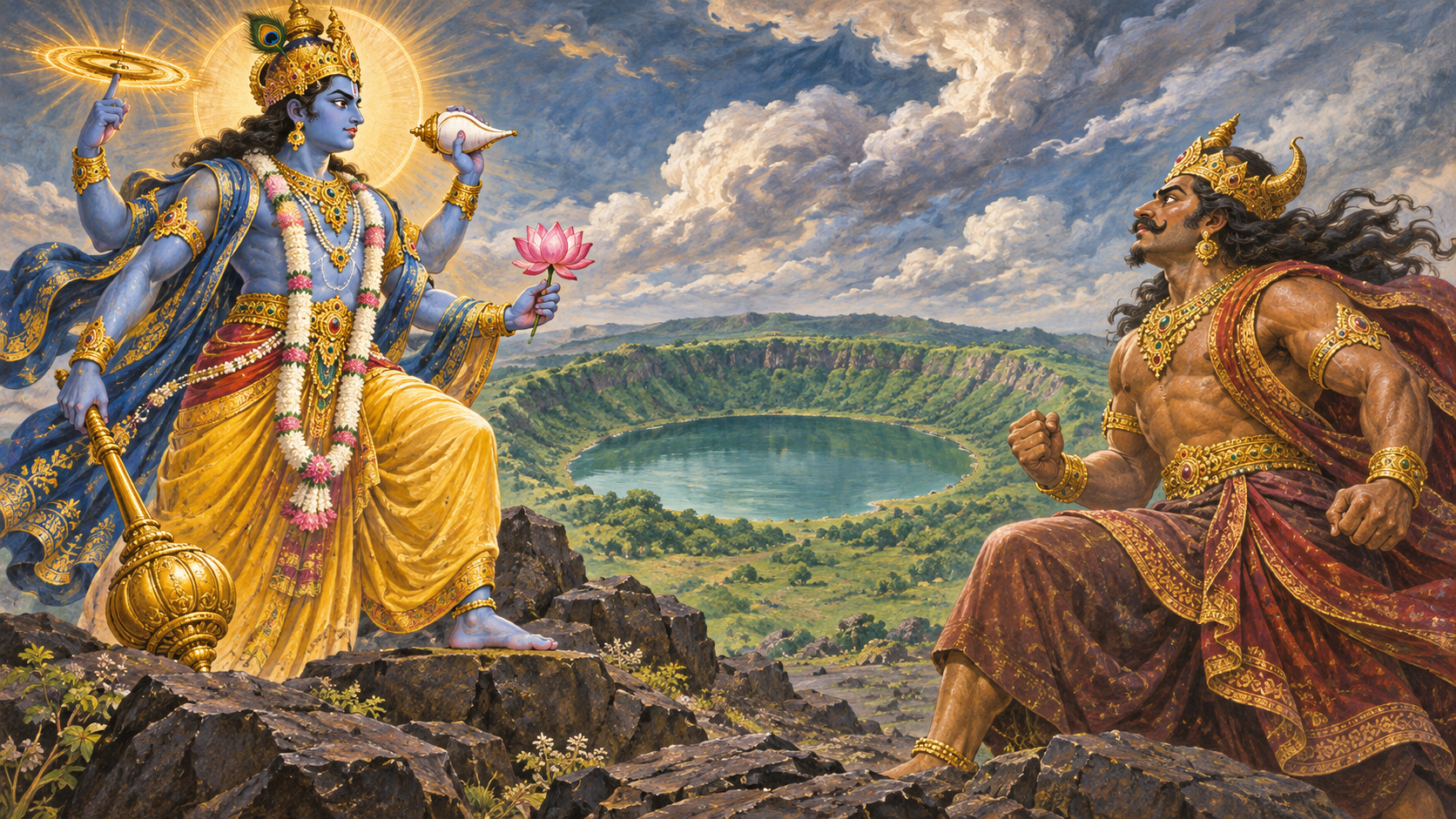
The reliable core is compact. The Daitya Sudan Temple stands beside Lonar Lake in Maharashtra’s Buldhana district, and its presiding Vishnu is remembered as the deity who defeated Lonasura. The shrine is therefore not simply a temple near a striking landscape. Its identity is inseparable from a local account of Bhagavan Vishnu overcoming a destructive adversary.
Do not fill gaps in that core narrative with invented weapons, speeches, battle sequences, or dates. A detail may belong to an oral version preserved by priests or residents, but it should be identified as such. If several versions are offered, record who tells each one and what remains constant across them. The stable elements are more important than forcing every narration into a single script.
The legend also should not be used by itself to date the temple building. Sacred narrative explains why a place matters; architectural chronology asks when particular walls, carvings, additions, or repairs were made. A firm historical date requires evidence such as an inscription, a documented architectural assessment, or an archaeological record. Respect for tradition does not require turning every theological claim into a construction date.
The black Vishnu murti is central to the experience
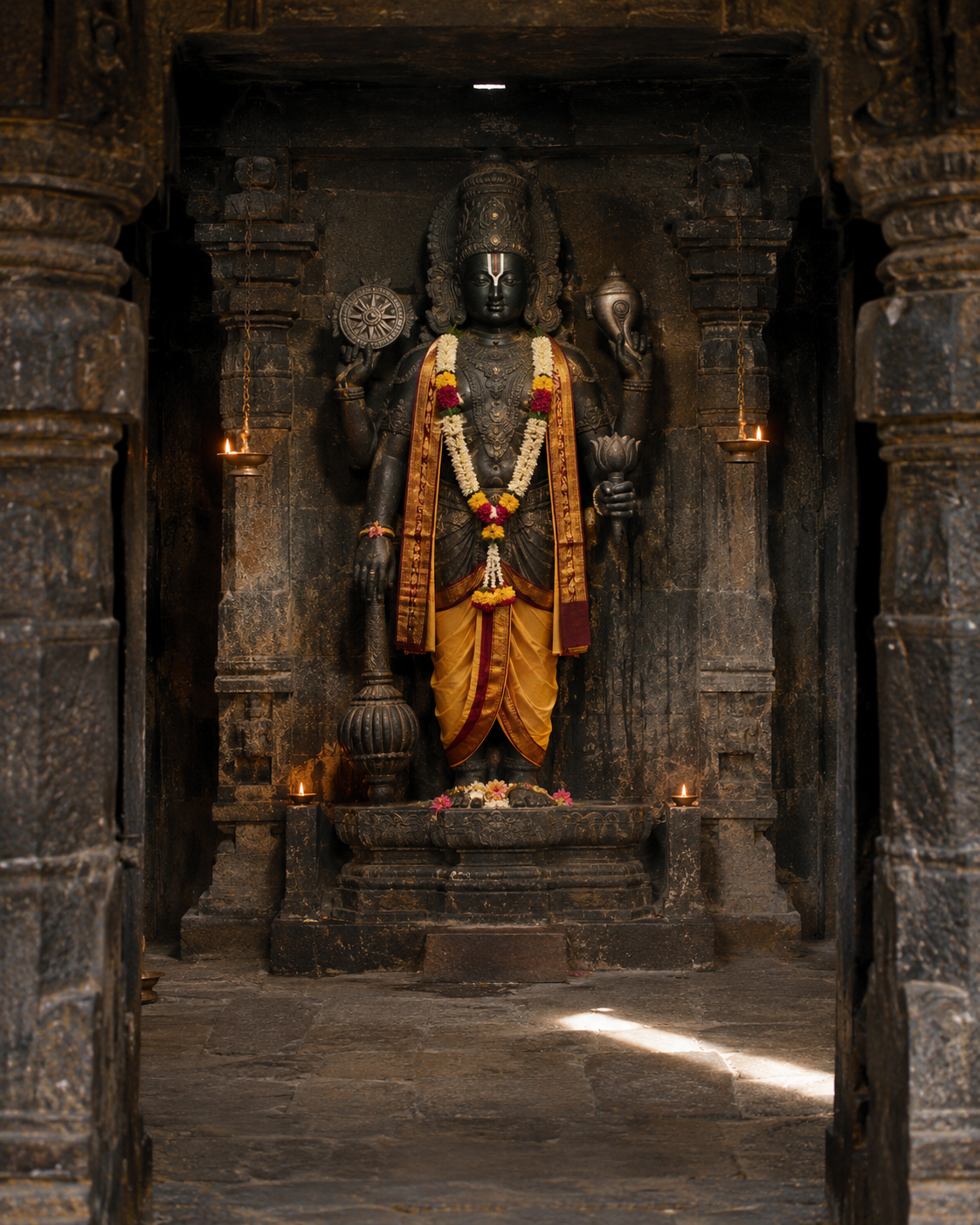
The temple is distinguished by a rare black murti of Bhagavan Vishnu. That is not a decorative footnote to the Lonasura story. The murti gives the remembered victory a continuing place in worship and darshan.
A murti in a functioning Hindu temple is not merely an illustration of a story or an object placed there for art-historical inspection. It is the focus of a living relationship between deity and devotee. Approach it first according to the temple’s worship conventions. If you want photographs, ask whether they are permitted rather than assuming that a publicly accessible shrine is a photography space.
Look carefully before assigning iconographic meanings. Notice the posture, the number and position of the hands, the attributes that are actually visible, and any attendant figures. Then ask how the temple identifies those features. Do not infer the murti’s material merely from its colour, and do not supply missing attributes from memory. Observation should precede interpretation.
The form also directs attention toward Vishnu as the defender of dharmic order. The point is not violence for its own sake. The daitya-slaying identity presents divine power as an answer to a force that has become destructive. That is why the title Daitya Sudan carries theological weight: it tells the devotee what kind of protection is being remembered at this particular place.
Read the temple and Lonar Lake as one sacred landscape
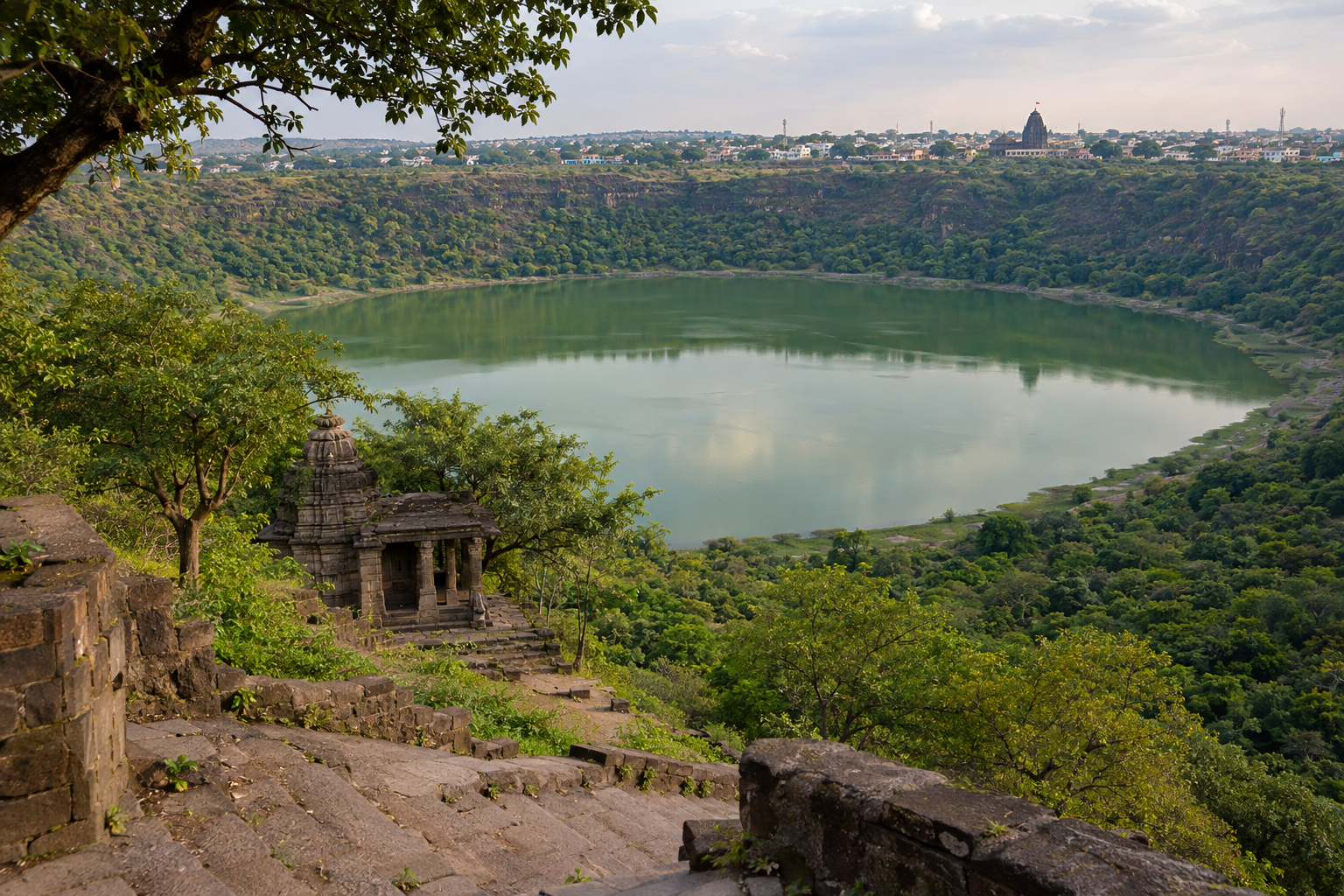
The temple’s position beside Lonar Lake should shape how you understand it. The lake is not interchangeable scenery behind a generic Vishnu shrine. The Lonasura narrative localizes a widely worshipped deity in a particular Maharashtrian landscape, giving that landscape a place within Vaishnava memory.
You do not have to choose between appreciating the physical landscape and taking the sacred narrative seriously. They answer different kinds of questions. The lake is a place you can observe; the legend tells you how a religious community has understood the moral and divine significance attached to that place. Reducing one to the other leaves the site poorer.
A useful visit begins before you enter the sanctum. Notice the shrine’s relationship to the lake and read its name as a compressed statement of the legend. During darshan, attend to the murti rather than treating the sanctum as a quick stop. Outside, examine the craftsmanship without guessing at dates or causes of damage. Afterwards, ask a priest or knowledgeable local how Lonasura is remembered there and whether any ritual, carving, or customary narration makes the connection explicit.
Apply the same discipline to the building. Weathering does not automatically prove extreme age, a repaired section is not necessarily part of the original structure, and damage should not be assigned a cause without evidence. Careful attention protects heritage more effectively than a dramatic but unsupported claim.
Key takeaways for understanding Daitya Sudan Temple
- Daitya Sudan identifies Bhagavan Vishnu through his defeat of the daitya Lonasura.
- The shrine is a Vaishnava temple beside Lonar Lake in Maharashtra’s Buldhana district.
- Its rare black Vishnu murti places the Lonasura narrative within living worship and darshan.
- The legend explains the temple’s sacred identity, but it does not by itself establish the construction date of the building.
- Keep locally narrated details distinct from the stable core of the tradition, especially when different versions are told.
- During a visit, observe first, ask permission before photography, and seek local explanations before assigning an iconographic or historical meaning.
If you visit Lonar, carry one disciplined habit with you: distinguish what the temple names, what your eyes can verify, and what local tradition narrates. Ask why this form of Vishnu is worshipped here, how Lonasura’s defeat is remembered, and how the lake enters that memory. Those questions will take you beyond a photograph of an old shrine and into the religious world the shrine continues to sustain.
References

Leave a Reply
You must be logged in to post a comment.