
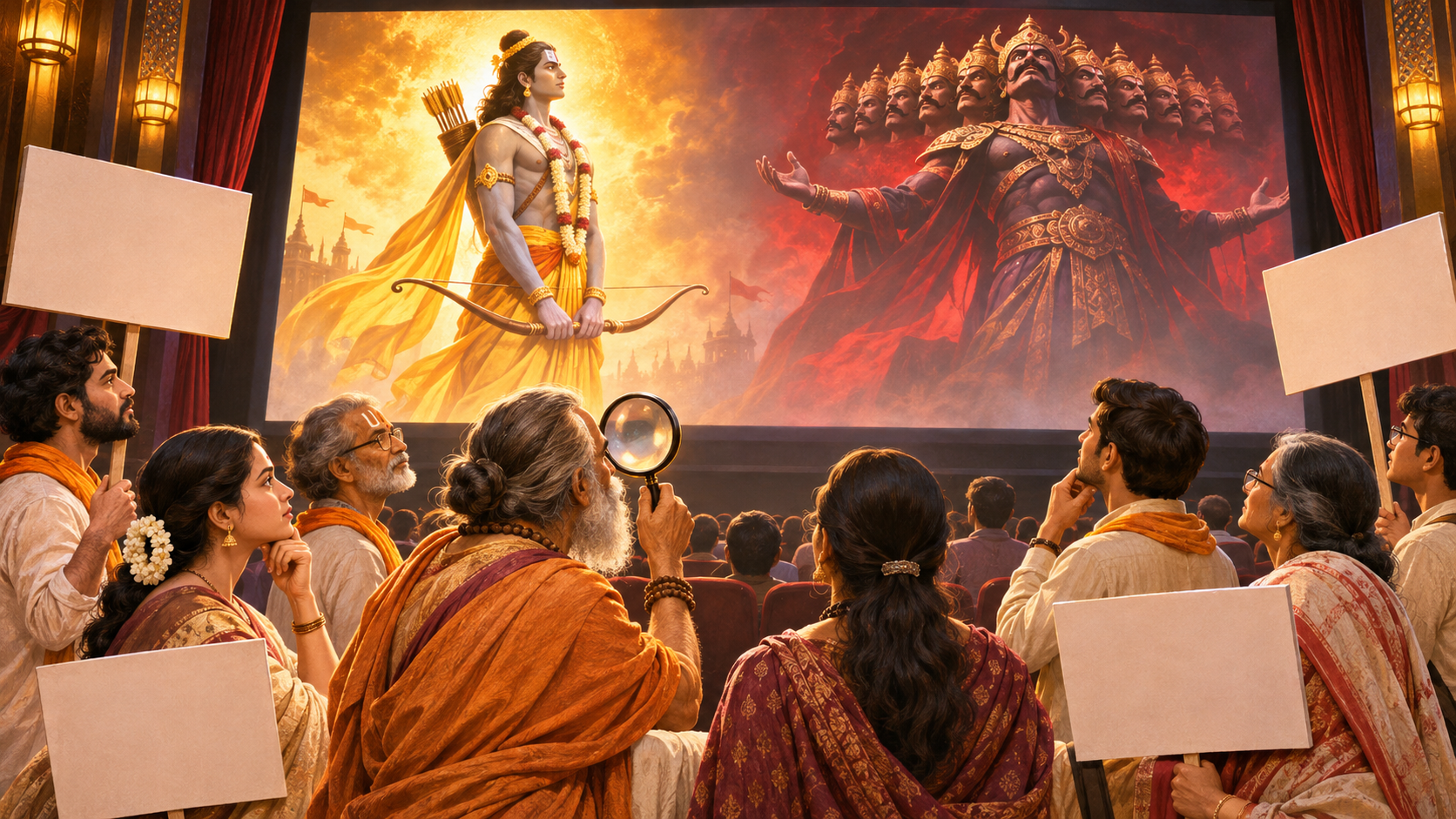
If you saw the protest headlines and are wondering whether the Ramayana film actually insults Prabhu Ram, do not let either outrage or dismissal make the decision for you. The protest is real; the charge about the film’s moral meaning still has to be demonstrated from the disputed scenes.
This distinction matters because Hindu cultural criticism is strongest when it is exact. You can defend the dignity of Ram, question a filmmaker’s choices and support peaceful protest without presenting an allegation as a settled fact.
Begin with the claim that can actually be established
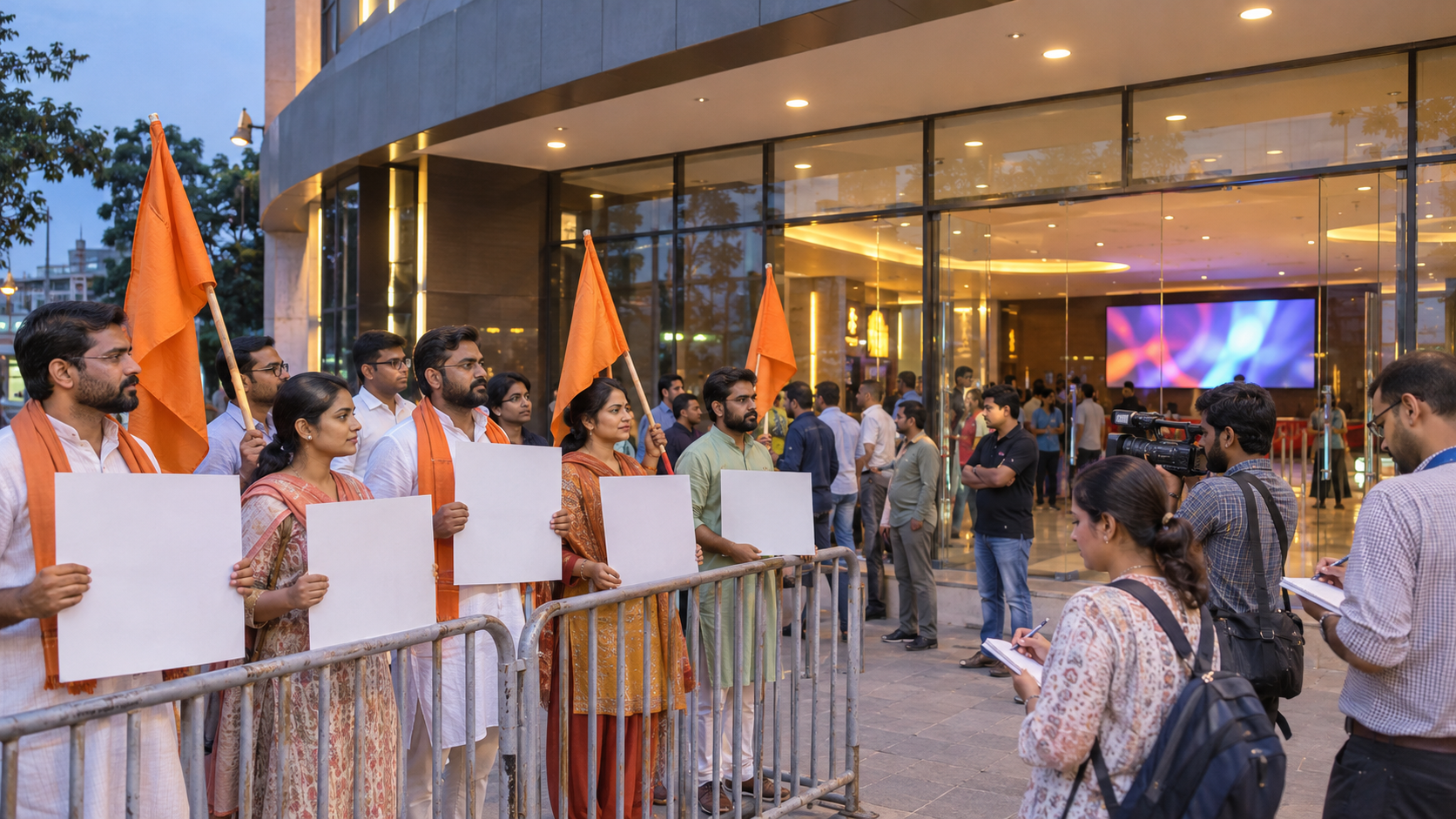
The immediate fact is narrow: the Hindu Janajagruti Samiti staged protests in Mumbai and Kolhapur, objecting to scenes it says glorify Ravana and undermine Prabhu Ram. That establishes the protest and HJS’s stated objection. It does not, by itself, prove that its interpretation of the scenes is the only reasonable one.
Keep four different things separate when you discuss the controversy:
- The event: HJS held protests in two cities.
- The allegation: HJS says the portrayal elevates Ravana while diminishing Ram.
- The evidence: the complete scenes, including dialogue, framing, surrounding events and consequences.
- The judgment: whether those choices merely make Ravana dramatically formidable or actually move the story’s moral centre away from dharma.
This separation prevents a common mistake. Repeating “the film glorifies Ravana” as an unqualified fact does not strengthen the objection. It makes the case easier to dismiss if the full scene later proves more complicated than a circulated clip or description.
Complexity is not the same as moral equivalence
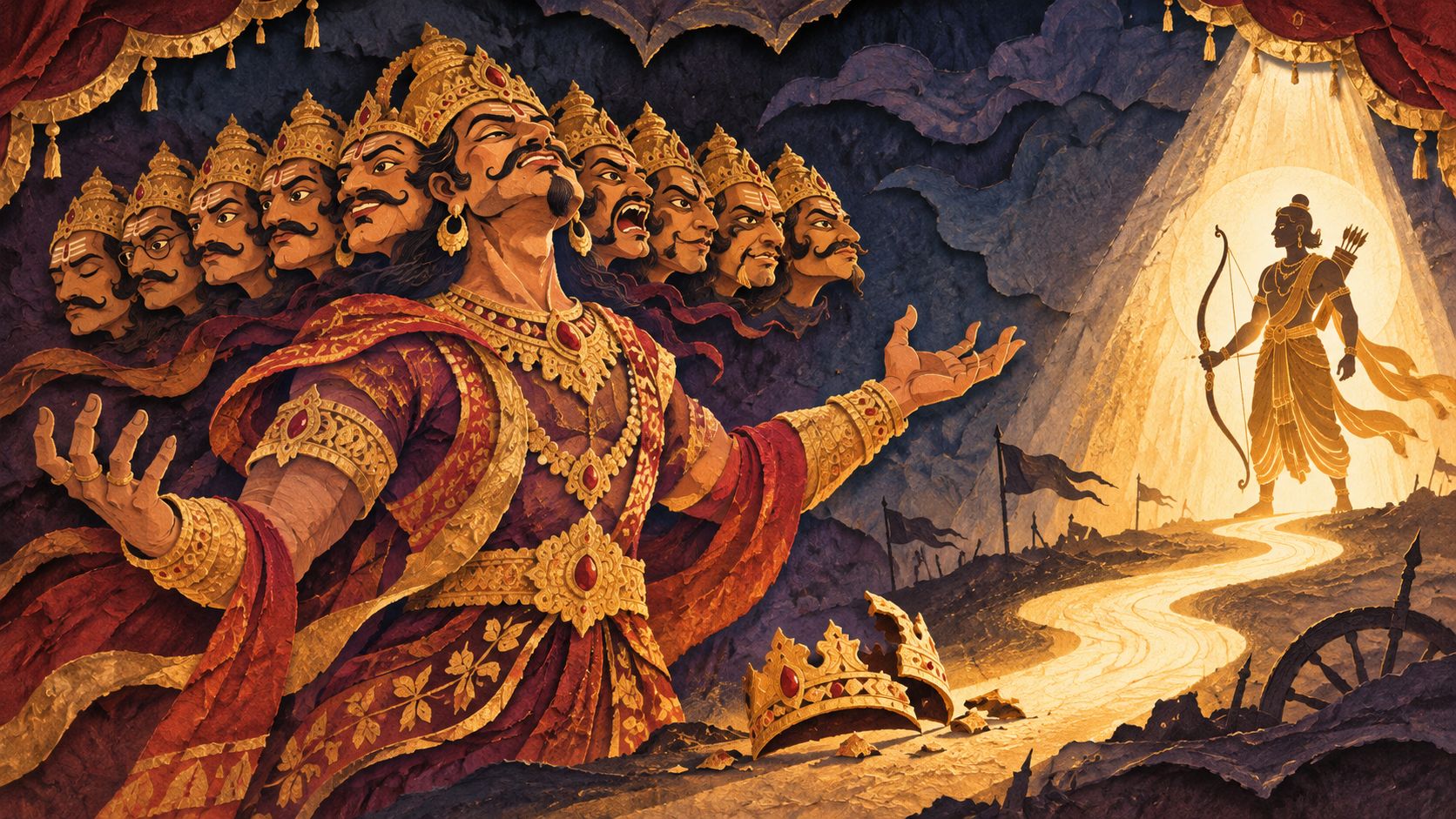
A serious antagonist need not be foolish, weak or visually unimpressive. A story may show an antagonist as learned, charismatic, powerful or capable of devotion and still judge his decisive conduct as adharma. Making evil intelligible is not automatically the same as making it admirable.
The relevant question is not whether Ravana receives dramatic attention. It is whether the narrative removes moral responsibility from him, turns wrongdoing into misunderstood virtue, or asks the audience to resent Ram for upholding dharma. Understanding a character’s motive explains a choice; glorification excuses the choice or recasts it as worthy of imitation.
The same care applies to Ram. Restraint, duty and self-command are not cinematic weakness merely because they are quieter than rage or spectacle. Yet a production can weaken Ram if it strips those qualities of their moral intelligence, leaves his decisions unexplained, or repeatedly gives Ravana persuasive arguments without allowing the dharmic answer to be heard.
So do not count heroic poses, lines of dialogue or minutes on screen as if they settle the issue. Ask what the film teaches you to admire. The moral architecture of the story matters more than the volume of any one character’s entrance.
Use four tests to locate the film’s moral centre

If you can view the disputed material in full, apply these tests before endorsing or rejecting the protest. Write down the exact moment that concerns you. Memory tends to preserve the emotional effect of a scene while losing the narrative details that produced it.
- Follow cause and consequence. Note what a character chooses, who bears the cost and whether the narrative treats the result as justice, tragedy, triumph or an inconvenience to be ignored. A film can give Ravana sympathy while still showing that his choices produce ruin. The stronger warning sign is a pattern in which adharma carries no meaningful responsibility.
- Listen for the moral vocabulary. Ask who is allowed to explain duty, freedom, honour and justice. If Ravana receives articulate justifications while Ram’s dharmic reasoning is removed or reduced to slogans, the imbalance may matter more than visual grandeur. Record the actual dialogue instead of paraphrasing it from memory.
- Watch the cinematic emphasis. Music, camera position, reaction shots and editing tell viewers how to feel before any character explains what happened. A grand composition does not prove endorsement, but repeated reverential framing of wrongdoing, combined with contemptuous framing of dharmic conduct, can establish a pattern. Judge the sequence, not a single screenshot.
- Examine the character contrast. Ask whether Ram’s restraint is presented as disciplined strength or merely as passivity, and whether Ravana’s force is presented as ability or as moral superiority. The issue is not that the characters must receive identical treatment. It is whether the contrast clarifies the conflict between dharma and adharma or reverses it without justification.
Context has boundaries. Include what happens immediately before the disputed moment, how other characters respond and what follows from it. A short clip may reveal a line or image, but it usually cannot establish the final moral judgment of an entire sequence.
Make a dharmic objection precise and peaceful
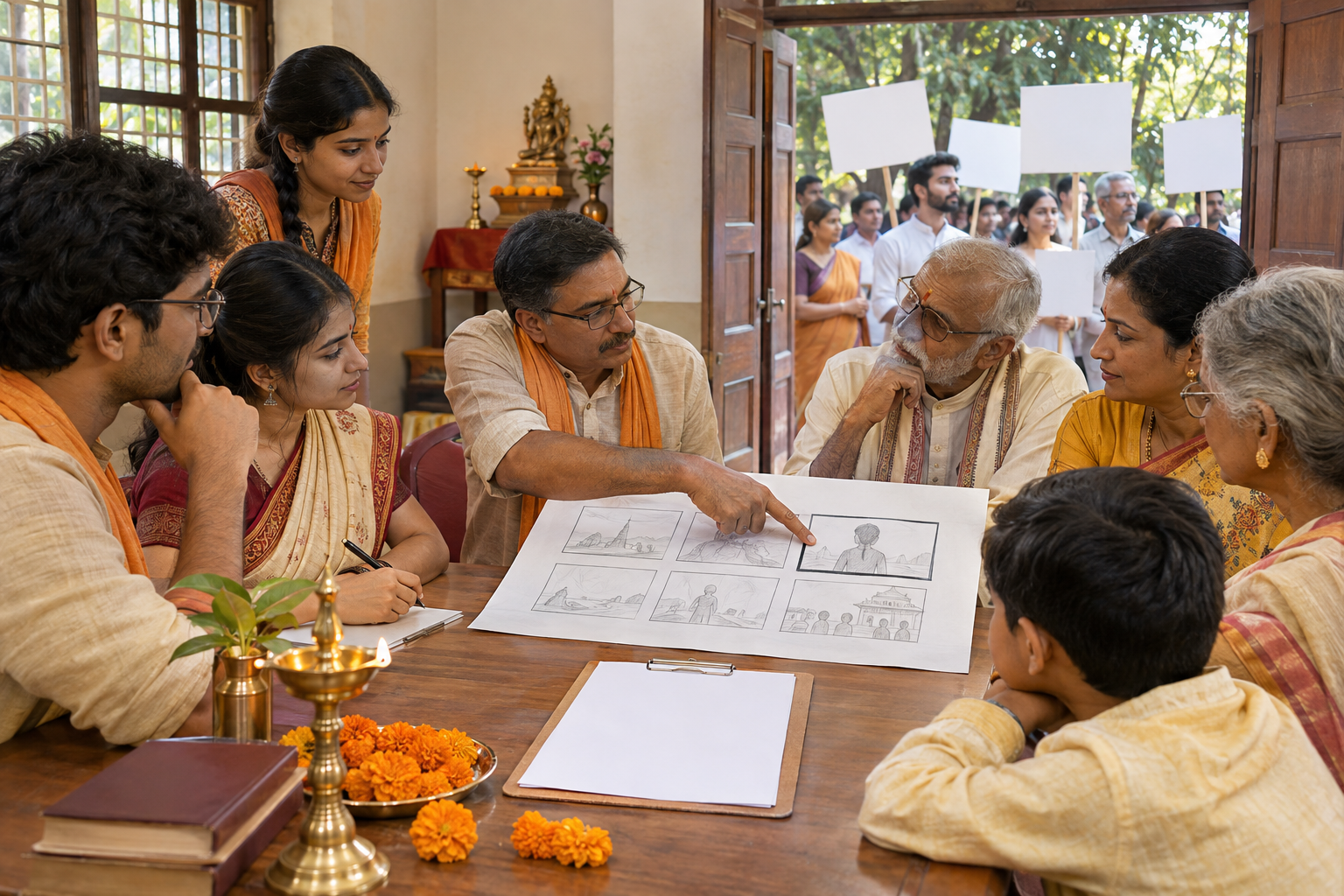
You do not have to accept every modern retelling as culturally neutral. Filmmakers make choices about sympathy, omission and moral emphasis, and audiences are entitled to scrutinise those choices. But a useful objection identifies the choice instead of assigning motives that cannot be proved.
A clear criticism can be built in five steps:
- Name the exact scene or sequence. Give enough context that another viewer can find and assess it.
- Describe the device being criticised. Is the problem altered dialogue, omitted moral context, reverential framing, ridicule, selective sympathy or a reversed consequence?
- State the dharmic principle at stake. Explain how the choice obscures responsibility, duty, self-mastery, justice or another relevant principle.
- Request a proportionate response. Depending on what the evidence supports, that may be full contextual footage, an explanation, a correction or a reconsideration of the disputed portrayal.
- Keep the action lawful, nonviolent and directed at the decision rather than at private individuals. Do not harass performers, workers or viewers who did not control the contested creative choice.
This format is harder to brush aside than a slogan. It also gives the makers a specific matter to answer. If fuller context changes your judgment, update the claim openly. Accuracy is not a retreat from cultural advocacy; it is what gives that advocacy credibility.
There is also a difference between disagreement and desecration. Reserve the strongest language for cases where the evidence supports it. If every adaptation choice is described as an attack on Hinduism, the public loses the vocabulary needed to recognise a genuine inversion or insult when one occurs.
Key takeaways
- HJS protested in Mumbai and Kolhapur, alleging that the film glorifies Ravana and undermines Prabhu Ram; the allegation should remain attributed until the disputed scenes establish it.
- A formidable or psychologically complex Ravana is not automatically a glorified Ravana. The decisive issue is whether the narrative excuses adharma or recasts it as virtue.
- Judge the portrayal through cause and consequence, moral vocabulary, cinematic emphasis and the contrast constructed between Ram and Ravana.
- Base criticism on complete sequences and exact creative choices, not isolated screenshots, second-hand summaries or assumptions about motive.
- Keep any protest peaceful, lawful, proportionate and open to correction when fuller context becomes available.
If you are deciding whether to share a protest call, use one gate: can you identify the complete scene and explain the dharmic objection without relying on a slogan? If you can, state the case precisely. If you cannot, seek the missing context first. That discipline protects both the dignity of Prabhu Ram and the integrity of Hindu cultural advocacy.
References

Leave a Reply
You must be logged in to post a comment.