
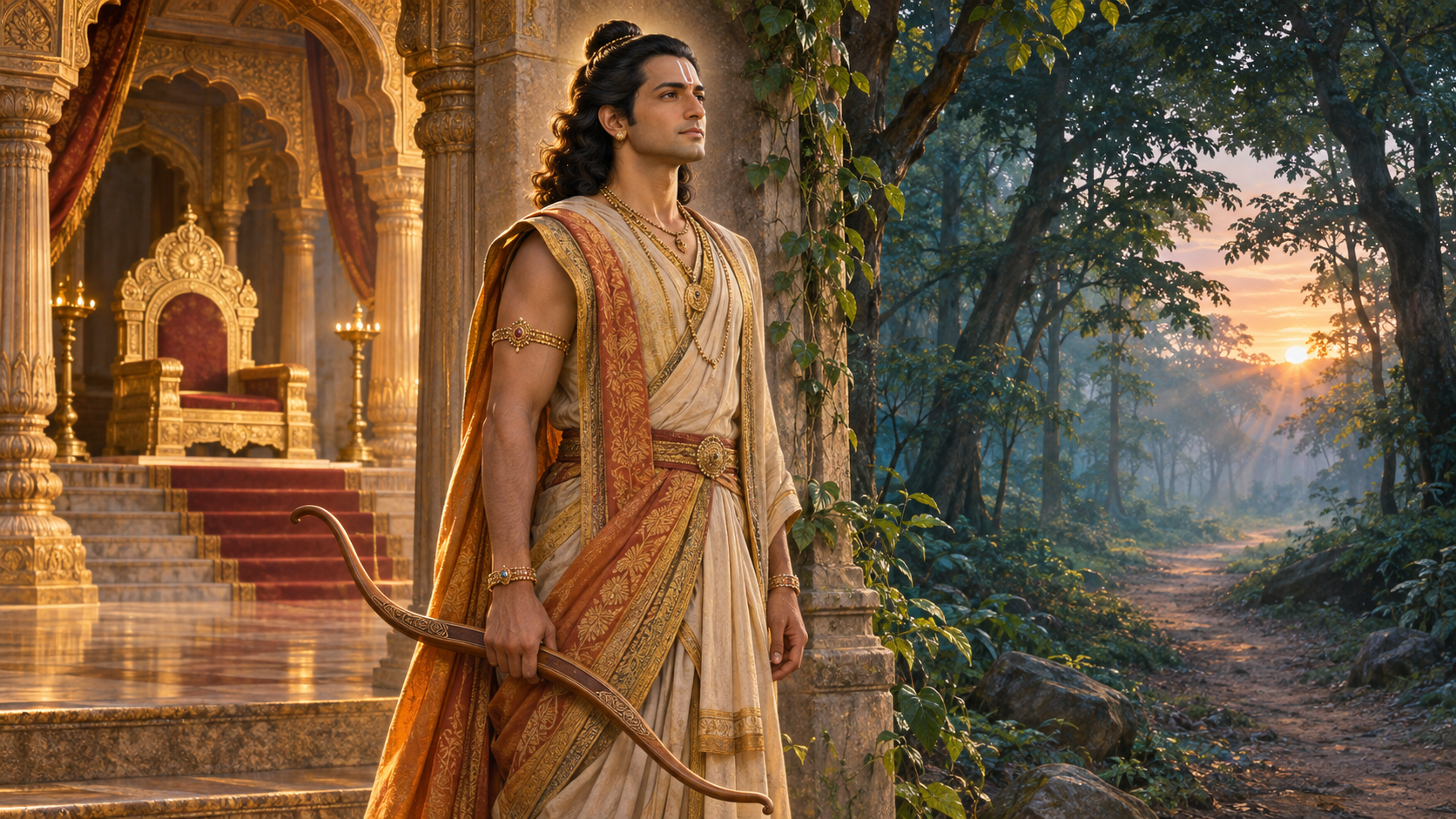
If you worry that a mainstream film will turn Rama into a celebrity vehicle, do not judge it by the casting announcement alone. A famous actor can disappear into a sacred role, while an unfamiliar actor can still play Rama as an ordinary action hero. The real test is whether the production makes power answer to dharma.
That distinction gives you a practical way to evaluate a proposed film. Look beyond resemblance, budget and visual effects. Examine what the performance, screenplay and publicity teach the audience to admire in Rama.
Fame is not the real casting test
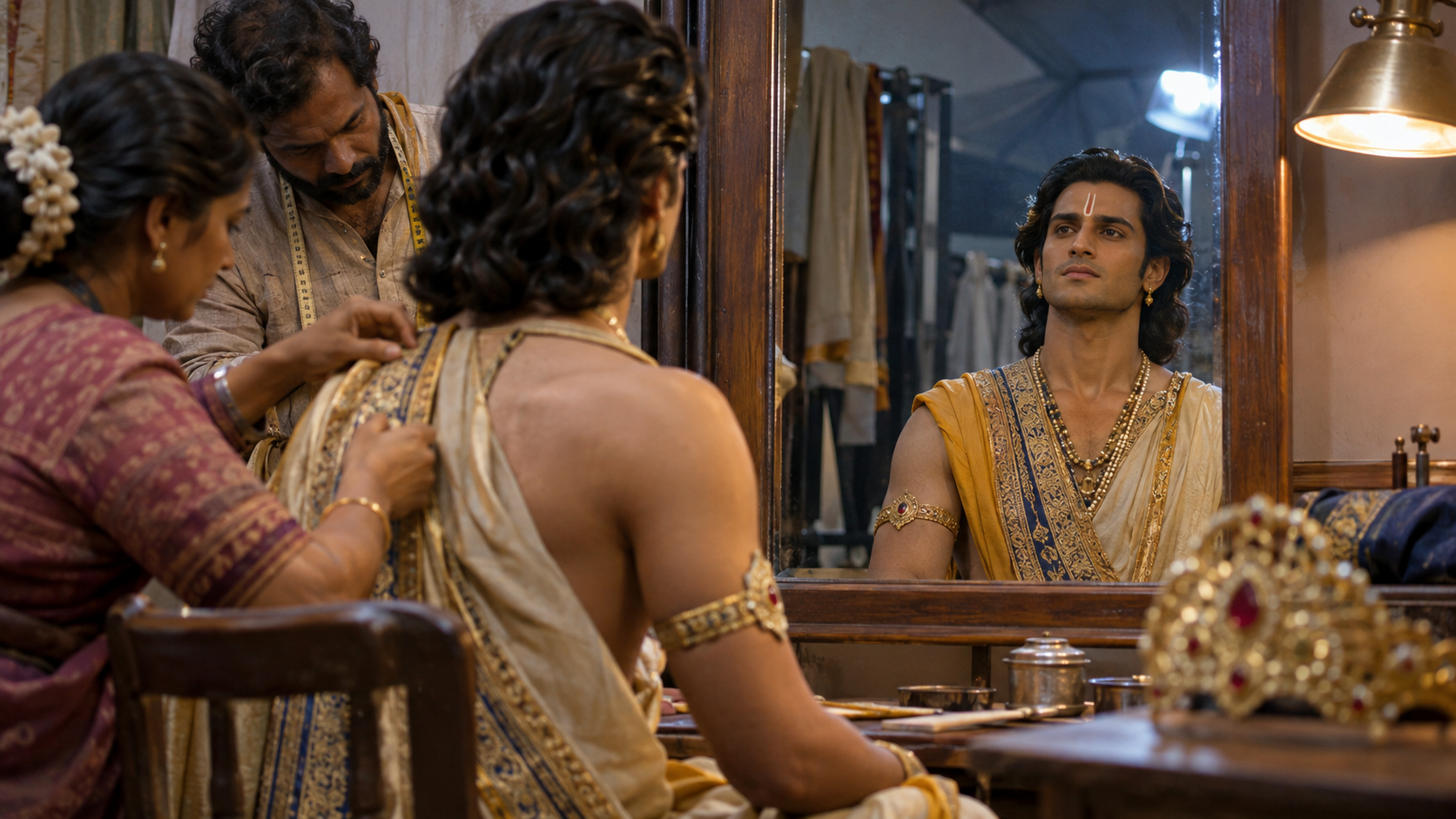
The question of whether a major star should play Rama is useful only if it leads to a better question: can this performer make his fame disappear inside the role?
A star arrives with accumulated mannerisms, publicity, previous characters and an established relationship with the camera. None of that automatically disqualifies him. It does, however, place a heavier burden on the direction. If the audience keeps seeing the celebrity displaying heroism, the film has not yet shown Rama.
Physical resemblance can help, but it cannot carry the portrayal. The actor must make command and humility feel equally natural. Rama should be able to occupy the centre of a scene without appearing hungry for attention. His strength should seem governed rather than advertised.
A serious casting process should test the performer in contrasting situations, not merely in costume or an action pose:
- Public duty: Can he exercise authority without swagger, impatience or self-display?
- Private affection: Can he convey tenderness without making Rama sound like a contemporary romantic lead?
- Loss and provocation: Can he show grief or anger without collapsing into self-pity or uncontrolled rage?
- Listening: Can he remain fully present while another character speaks, or does he perform only when the camera belongs to him?
- Restraint: Can he make a withheld reaction more meaningful than a theatrical outburst?
These tests should initially be performed without swelling music, divine light or visual effects. If the actor cannot communicate Rama’s moral presence in a quiet room, spectacle will only conceal the weakness.
Dharma must carry the drama
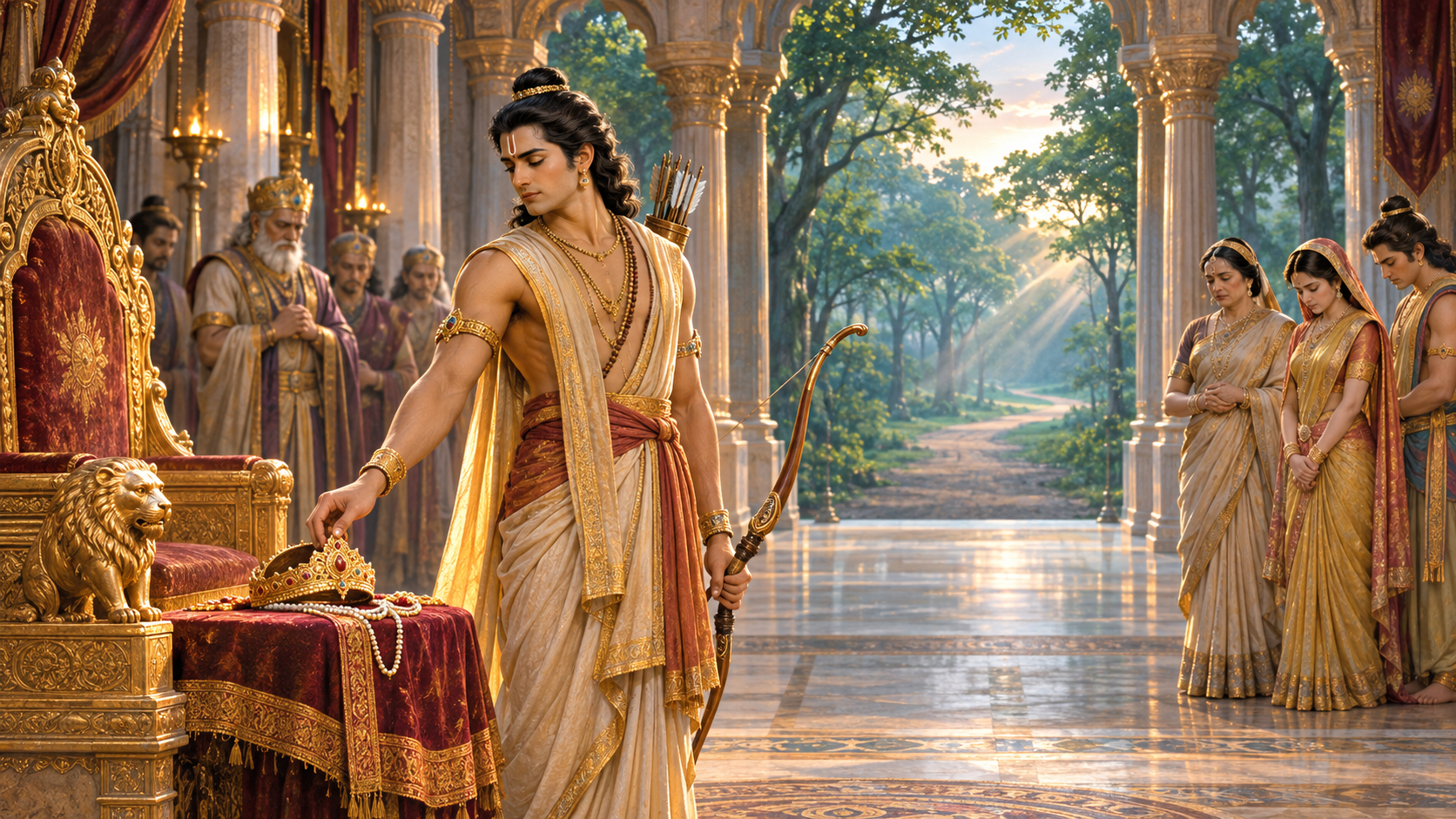
Rama should not be reduced to either of two familiar cinematic types: the invulnerable superhero or the troubled antihero. The first makes him dramatically empty; the second manufactures cynicism in the hope of appearing sophisticated. Neither captures a life in which power, affection, suffering and duty continually meet.
The film does not need to make Rama morally confused in order to make him dramatically compelling. Drama can arise from competing obligations, the cost of a rightful decision and the pain that remains even when a person does not abandon dharma. Moral clarity is not the absence of conflict. It is what allows conflict to reveal character.
For every major scene, the screenwriter should be able to answer four practical questions:
- What duty is Rama trying to uphold?
- What legitimate human attachment or competing obligation makes that duty difficult?
- What does his choice cost him or someone he loves?
- What does his conduct reveal that a speech about righteousness could not?
If those answers are missing, dialogue about dharma will sound like decoration. If they are present, the audience can understand Rama through action, silence and consequence rather than through repeated declarations of greatness.
Relationships must also disclose more than plot information. Sita cannot be treated as a decorative romantic interest. Lakshmana and Bharata cannot be reduced to supporting men whose only function is to praise the protagonist. Hanuman should not be used as comic relief between battles. Each relationship should reveal a different demand made upon Rama: reciprocity, kinship, responsibility, gratitude, leadership or care.
The same rule applies to action. A battle should not merely prove that Rama is stronger. It should show what his strength protects, why force has become necessary and what limits continue to govern him. Otherwise the film may produce an impressive warrior while losing the dharmic meaning of his power.
Choose an interpretive tradition before writing the screenplay
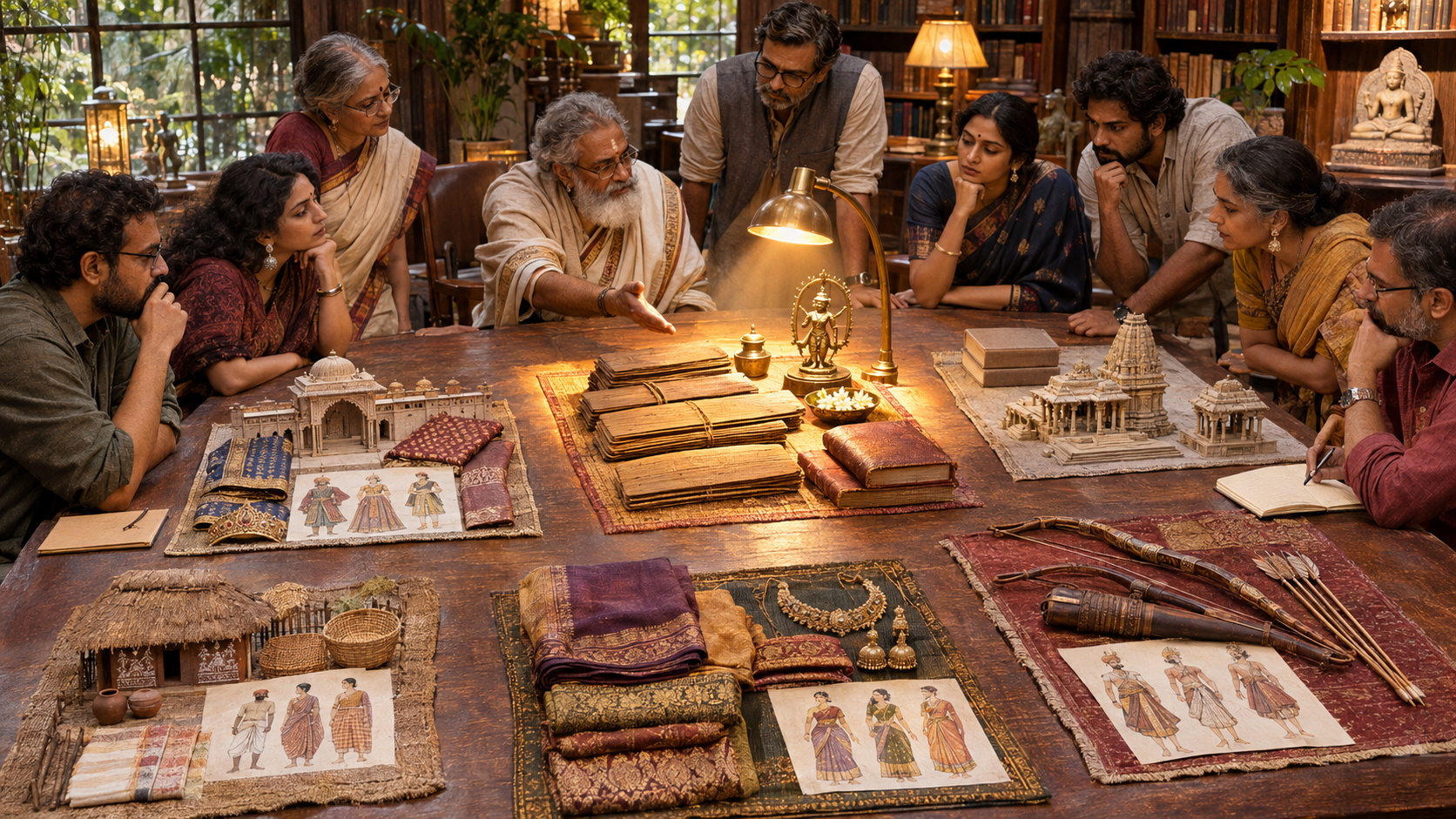
The Ramayana is a sacred inheritance expressed through different textual, regional, devotional and performance traditions. A mainstream adaptation therefore cannot be neutral simply by calling itself universal. Selecting events, motivations and dialogue is already an act of interpretation.
The production should decide early which tradition provides its narrative spine, what theological understanding of Rama it assumes and where cinematic invention will be allowed. A composite adaptation can be legitimate, but only when the combination is deliberate. Unexamined mixing can give one character incompatible motives or turn a meaningful variation into an apparent continuity error.
A useful screenplay ledger can separate the material into clear types:
- Inherited event: A scene or action taken from the production’s chosen tradition.
- Interpretive choice: A motive, emphasis or emotional reading selected from more than one plausible understanding.
- Cinematic bridge: An invented moment needed to connect events or make an interior decision visible on screen.
- Major departure: A change that alters a character’s conduct, the moral logic of an episode or the audience’s understanding of Rama.
This ledger does not forbid invention. It prevents invention from entering unnoticed. A cinematic bridge may be entirely appropriate when it clarifies an inherited event without reversing its meaning. A major departure requires a much stronger justification because it can change the very character the film claims to portray.
The audience should also be told what kind of adaptation it is receiving. A brief statement in the credits, official synopsis or production material can identify the principal tradition and acknowledge significant synthesis. That honesty helps viewers distinguish a considered interpretation from a claim that one film has exhausted the Ramayana.
Make reverence operational across the production
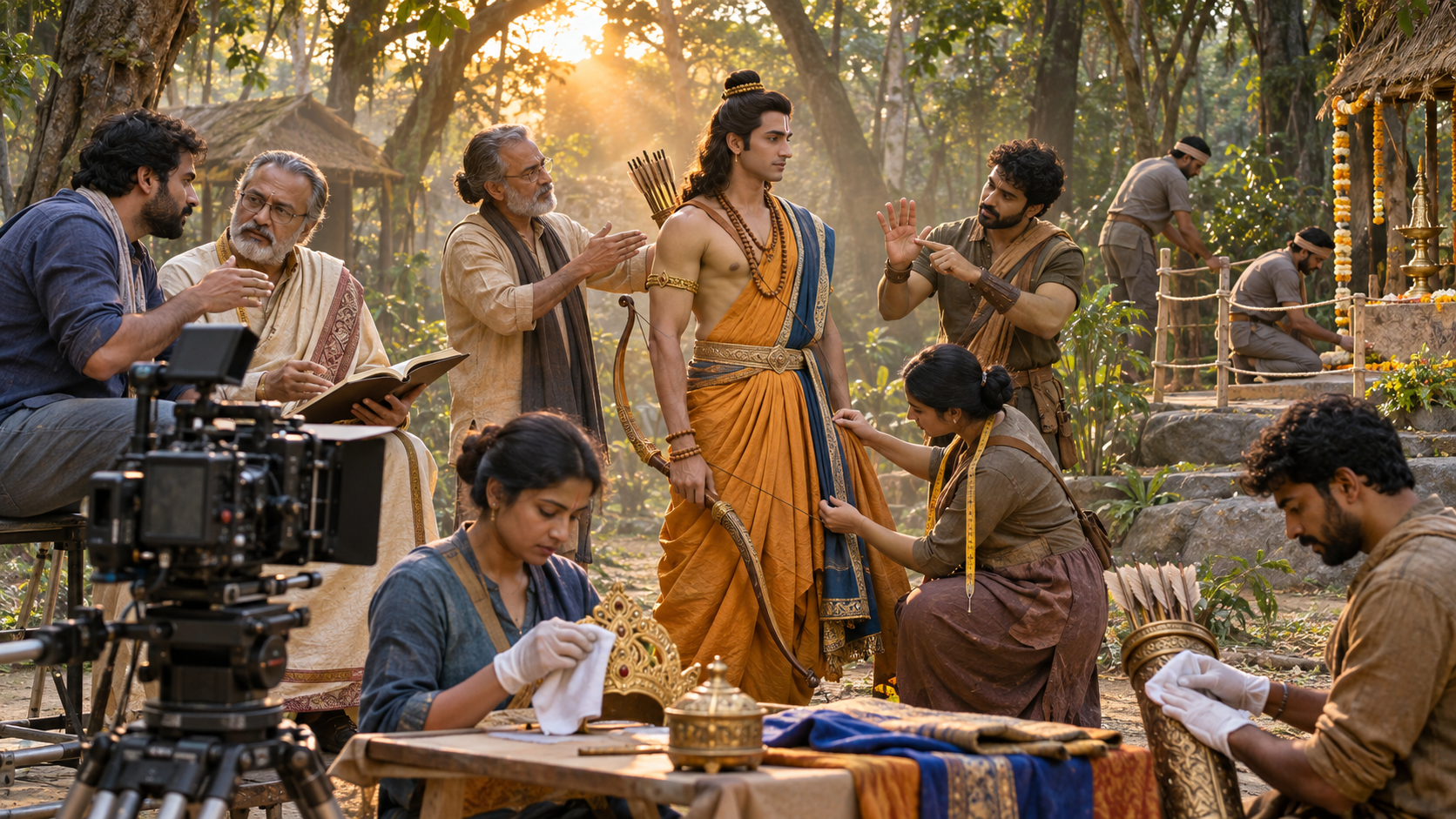
Reverence cannot be added at the end through devotional music and visual effects. It must govern the decisions of every department. Otherwise the screenplay may treat Rama carefully while the camera, publicity or merchandise turns him back into a celebrity product.
- Performance: Direct the actor toward attention, composure and moral presence. Do not rely on a fixed smile, a permanently solemn expression or exaggerated slowness as shorthand for divinity.
- Dialogue: Give Rama precise speech rather than continuous pronouncements. A character who explains the moral of every scene soon stops feeling wise and starts sounding like the screenwriter.
- Camera and editing: Let important decisions breathe. Constant cutting, slow motion and reaction shots demanding awe can make reverence feel manufactured.
- Production design: Treat sacred imagery, gesture, clothing and space as parts of a coherent world, not as interchangeable symbols gathered for visual richness.
- Visual effects: Use them to support sacred presence and narrative scale, not to measure divinity by the size of an energy display.
- Music: Leave room for silence. Unbroken grandeur tells the audience what to feel so insistently that it can weaken the performance it is meant to elevate.
- Publicity: Present the actor as serving the role. If every poster, interview and trailer treats the celebrity as larger than Rama, the public portrayal has already drifted off centre.
Consultation should be built into development rather than arranged as a ceremonial approval near release. The team needs people who can examine textual continuity, theology, language, performance convention and living devotional response. These are different forms of knowledge; one prominent adviser should not be expected to represent all of them.
Nor should consultation be decorative. Record the concerns raised, the changes accepted and the reasons for retaining disputed choices. Traditions can differ, so not every objection requires automatic removal. But a consequential disagreement should become a conscious editorial decision, not a surprise discovered after the trailer appears.
The best internal review asks different questions at different stages:
- During development: Is the film’s understanding of Rama coherent?
- During screenwriting: Can inherited material be distinguished from invention?
- During performance: Does reverence produce living character, or merely stiffness?
- During post-production: Are editing, music and effects amplifying the intended meaning or overwhelming it?
- During publicity: Would a devotee recognise the same Rama in the campaign that the filmmakers claim to honour in the film?
Key takeaways: a greenlight test for portraying Rama
Before defending or rejecting a casting choice, trailer or screenplay, ask these questions:
- Can the actor surrender his established persona instead of using Rama to enlarge it?
- Does the story reveal dharma through costly decisions rather than speeches and slogans?
- Does each important relationship disclose an obligation, not merely support the hero?
- Has the production identified its interpretive tradition and tracked its inventions honestly?
- Do performance, design, effects, music and publicity direct attention toward Rama rather than toward cinematic scale?
A negative answer does not always condemn the whole project, but it identifies the place where the portrayal is most likely to fail. That is more useful than treating star casting as either a guarantee of success or an act of disrespect in itself.
When the next poster or trailer appears, look first for the quality of greatness the film wants you to admire. If it is restraint, responsibility, sacrifice and power governed by dharma, the portrayal may have found its centre. If celebrity and spectacle are doing all the work, no costume can solve the deeper miscasting.
References

Leave a Reply
You must be logged in to post a comment.