
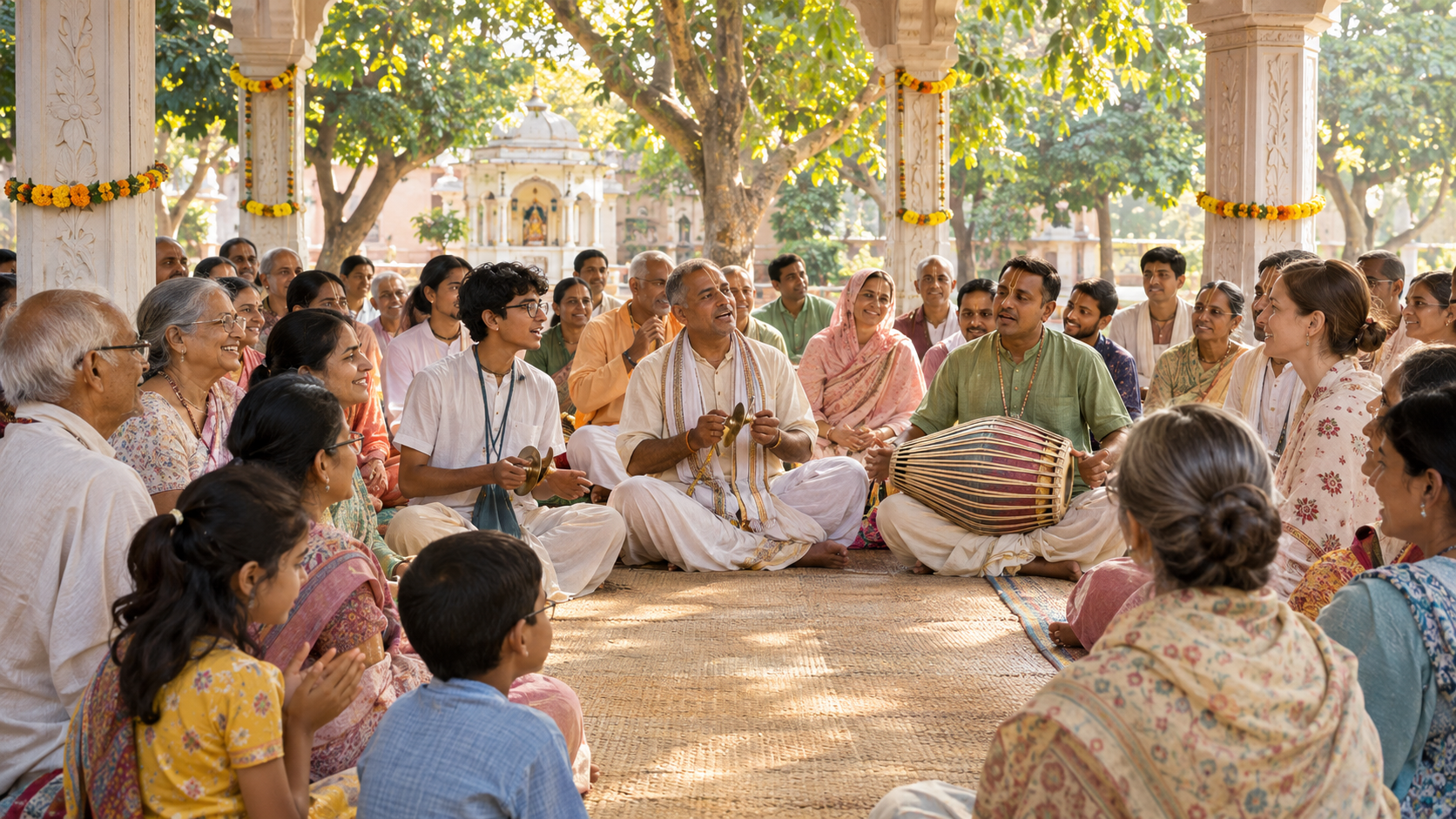
If Vaishnava Sanga 2026 has caught your attention, the important question is not simply whether you can attend. It is whether the gathering can deepen your sadhana, clarify your service, or connect you with devotees who will help you remember Bhagavan after everyone has gone home.
A large spiritual gathering can nourish you, but it can also leave you with a full notebook, a crowded camera roll, and no change in daily practice. The difference usually comes from how you approach the sanga. Here is how to decide, prepare, participate, and return home with something you can actually live.
Key takeaways
- Decide what you need from the sanga before committing time and money to it.
- Confirm the program, lineage context, language, registration requirements, accommodation, meals, and accessibility directly with the organisers.
- Bring a precise spiritual question, a service-minded attitude, and realistic limits on what you can undertake.
- Listen for teachings you can practise rather than trying to collect every talk, photograph, or contact.
- Do not make a rushed commitment involving initiation, mantra, vows, money, or spiritual allegiance.
- Carry the sanga home through a sustainable practice, a genuine devotional relationship, and a concrete act of seva.
Decide what you are seeking before you attend

Sanga means association, but physical proximity alone does not produce meaningful association. You can stand in a hall filled with devotees and remain preoccupied with status, schedules, photographs, or comparisons. You can also have a short conversation that changes how you understand your daily practice. The decisive factor is the quality of attention you bring.
Begin by naming the need that is drawing you. It may be a question about japa, kirtan, seva, scripture, family life, temple participation, or steadiness during a difficult period. Perhaps you are looking for regular local association rather than a single inspiring experience. Perhaps you want to serve instead of remaining a spectator. Write that need in a sentence before making your plans.
Your intention might be:
- to clarify a difficulty in your present sadhana;
- to hear Hari-katha with sustained attention;
- to learn how experienced devotees organise practice around work and family duties;
- to find trustworthy association near your home;
- to reconnect with devotees without reviving old disputes;
- to offer a form of seva that you can perform reliably.
Then examine the announced program. Does its language, format, devotional emphasis, and lineage context support what you are seeking? Vaishnava traditions share devotion to Vishnu and His forms, but they are not interchangeable in theology, discipline, initiation, or liturgical practice. Respecting another Vaishnava path does not require pretending that every instruction belongs inside your own sadhana.
If you already follow a guru, acharya, sampradaya, or established temple discipline, let that relationship guide your discernment. A gathering should help you become more sincere and responsible in dharma, not more restless in search of novelty. If you are still exploring, attend as a respectful learner and allow understanding to mature before making commitments.
Prepare for sanga as carefully as you prepare for travel
Do not build travel plans from assumptions. Confirm the official dates, venue, registration process, program language, accommodation arrangements, meal provisions, transport options, child access, accessibility, and recording rules with the organisers. If you have dietary, mobility, medical, or family requirements, ask direct questions before booking. Spiritual enthusiasm does not remove practical constraints.
Preparation also means protecting the sadhana you already have. Do not exhaust yourself before arrival by overloading the journey or trying to attend everything. Keep your regular japa, prayer, reading, sleep, and essential family duties as stable as circumstances permit. The gathering should enter an existing devotional life rather than temporarily replacing it.
Turn a vague concern into a useful question. Instead of asking, “How can I become more spiritual?”, ask what repeatedly interrupts your japa, how to serve without neglecting family obligations, or how to study a particular teaching without merely accumulating information. A precise question gives a senior devotee something concrete to address.
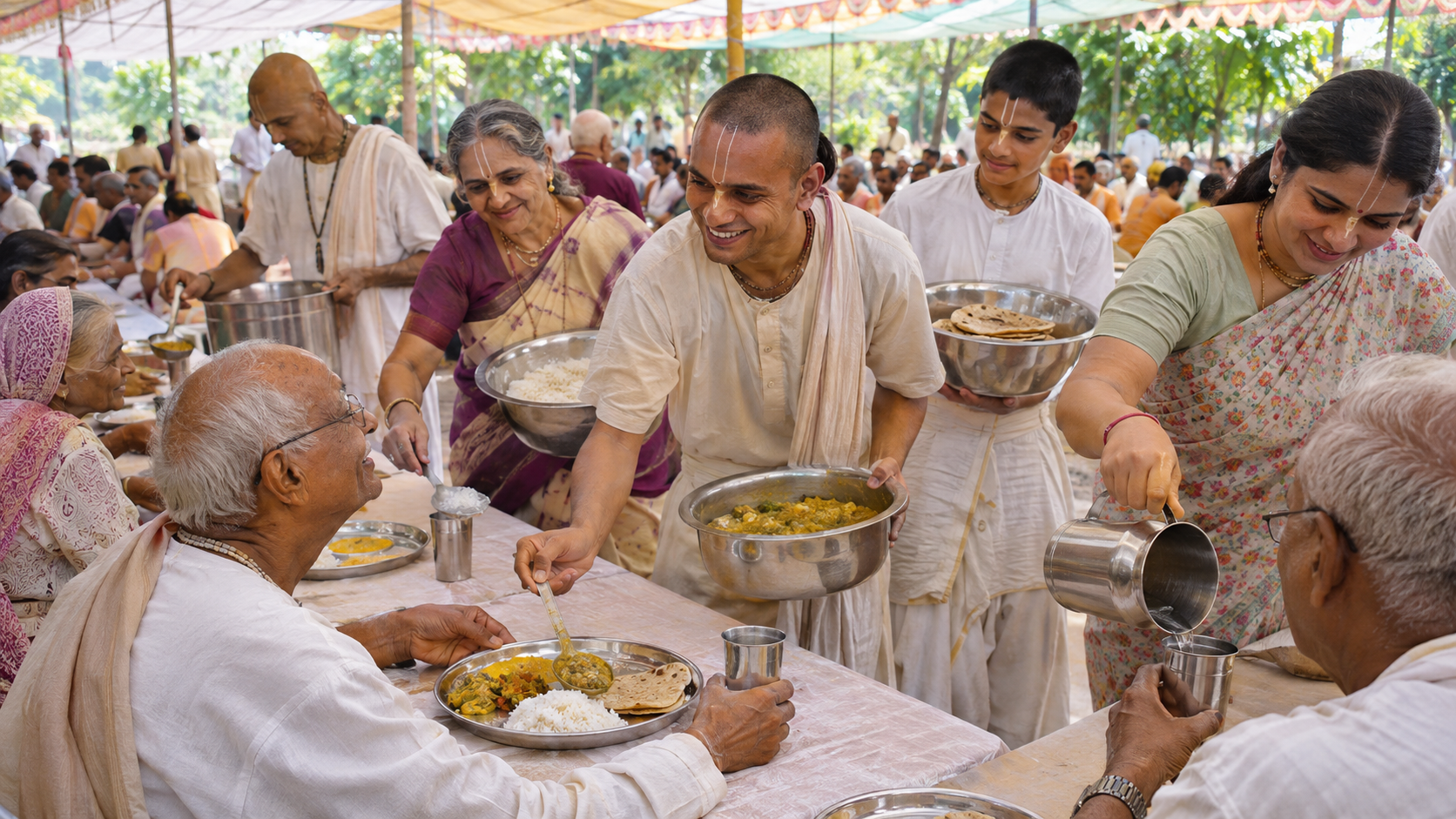
If you want to volunteer, state your actual capacity. Reliable seva is more valuable than an impressive promise that collapses under pressure. Tell the coordinators what you can do, when you are available, and what limitations they should know. Accept ordinary work without assuming that visible service is more spiritual than cleaning, carrying, serving prasada, guiding visitors, or helping someone who is lost.
Pack for attention as well as comfort. Bring a simple notebook, anything required for your established practice, and clothing appropriate to the devotional setting. Keep devices available for genuine needs, but decide beforehand when they will remain silent. If every sacred moment becomes material for posting, the desire to document the sanga can displace the experience of it.
Participate without turning devotion into consumption
At a sanga, more is not automatically better. Moving constantly between speakers, conversations, and activities can create the feeling of abundance while preventing any teaching from settling. Choose sessions that serve your intention, arrive with enough time to become attentive, and listen through the end before deciding what you think.
Organise your notes around three practical prompts: what you heard, what challenged you, and what you may need to practise. This separates a teacher’s words from your reaction and from the action you might take. Mark anything you need to verify later. Do not convert a brief remark into a universal rule, especially when you may be missing its scriptural, lineage, or personal context.
During kirtan, let participation take precedence over performance. Follow the lead, respect the congregation’s arrangement, and avoid making your voice, instrument, or camera the centre of the gathering. Before photographing devotees, children, worship, prasada service, or personal conversations, ask permission. A spiritually meaningful moment is not automatically public material.
Use informal time well. Ask another devotee what sustains their practice on an ordinary working day, what service they perform consistently, or how their community supports families and elders. These questions reveal more than testing someone with labels or beginning with a debate. If disagreement appears, seek the precise point of difference without ridiculing another sampradaya, acharya, custom, or form of worship.
Be equally careful around charisma. Vaishnava reverence for guru and sadhu is not permission to abandon discrimination. Warmth, eloquence, a large following, or an intense atmosphere does not by itself establish spiritual authority. Notice whether the teaching encourages humility, scriptural seriousness, responsible conduct, service, and steadiness rather than dependence on personality.
If someone presses you toward initiation, a new mantra, a vow, a substantial donation, private obedience, or rejection of your existing spiritual relationships, pause. Do not decide in the emotional current of a gathering. Ask for the teaching and expectations in clear terms, consult trusted authorities in your tradition, and give the decision the time it deserves. Genuine spiritual commitment can withstand careful examination.
Prasada and hospitality also require attention. Follow the serving arrangements, mention genuine dietary restrictions to the appropriate person, take only what you can honour, and help keep the space clean. Courtesy here is not peripheral etiquette. It is one of the clearest places where devotion becomes conduct.
Carry the association into ordinary life

The real test begins when the program no longer carries you. Before your notes disappear into a bag, review them and separate inspiration from instruction. Inspiration may uplift you without requiring a new commitment. Instruction asks for discernment: Is it compatible with your guru’s guidance, your vows, your family responsibilities, and the practice you can sustain?
Choose a modest next action. It could be restoring attention to an existing daily practice, reading a text that was directly recommended, contacting a devotee about local association, or offering a defined service in your community. Avoid bringing home a complicated devotional schedule created for the atmosphere of the event. A smaller practice that survives work, fatigue, and family duty will serve you better than a dramatic resolution that quickly disappears.
Follow up personally with someone whose association was meaningful. Refer to the actual conversation, thank them without flattery, and ask the question that remains. Do not immediately place every new contact into a broadcast list or treat access to a senior devotee as social capital. Relationship becomes sanga through sincerity, reciprocity, and respect for another person’s time.
Share what you learned with care. Speak about the teaching that helped you, not gossip from backstage or speculation about personalities. If you repeat an instruction, preserve its context and say when you are unsure. If a photograph or recording includes other people, obtain permission before publishing it. The wish to spread devotion does not cancel privacy or accuracy.
Finally, notice the fruit. Has the sanga made you more attentive in nama, more respectful toward devotees, more dependable in seva, and more patient at home? Or has it produced agitation, factional pride, spiritual shopping, and neglect of existing duties? That contrast tells you what to retain and what to release.
Open your calendar before the gathering and reserve space afterward for quiet review and a practical follow-up. Go to Vaishnava Sanga 2026 ready to hear, serve, and discern. Then let what is true become visible in the way you live when no program is holding your attention.
References

Leave a Reply
You must be logged in to post a comment.