

You may admire Prahlada and still be unsure what it means to follow him on an ordinary day. The test usually arrives outside the temple: authority becomes unjust, family conflict turns personal, or anger begins to feel righteous simply because you were wronged.
Srimad Bhagavatam 7.10.22 gives you a better question than whether you could survive Prahlada’s ordeal. What governed his heart under pressure, and what would that same inner order require from you in your next difficult response?
The blessing makes Prahlada a pattern, not an exception

Bhagavan’s declaration in this verse moves in two directions. It honours Prahlada as an exemplary devotee, but it also extends the blessing to people who follow him. Prahlada is therefore not placed at an unreachable distance. His conduct becomes a path along which other human beings can be formed into devotees.
That distinction matters. If Prahlada is only a miraculous child from a sacred history, you can admire him without changing. If he is an example meant to be followed, the narrative examines your motives, speech, loyalties, and use of power.
The benediction is not a promise that every follower will receive Prahlada’s external circumstances or be visibly rescued from every danger. Its promised direction is devotional: a person who follows his orientation becomes devoted to Bhagavan. The inheritance is not immunity from conflict. It is a heart that no longer takes its final shape from conflict.
This also explains why the verse speaks through an example rather than an abstract definition. Bhakti is easiest to praise when it costs nothing. Prahlada shows what it governs when fear, injury, family attachment, and power all pull in competing directions. The blessing confirms that this integrated way of living can be followed.
Following Prahlada means preserving bhakti under pressure
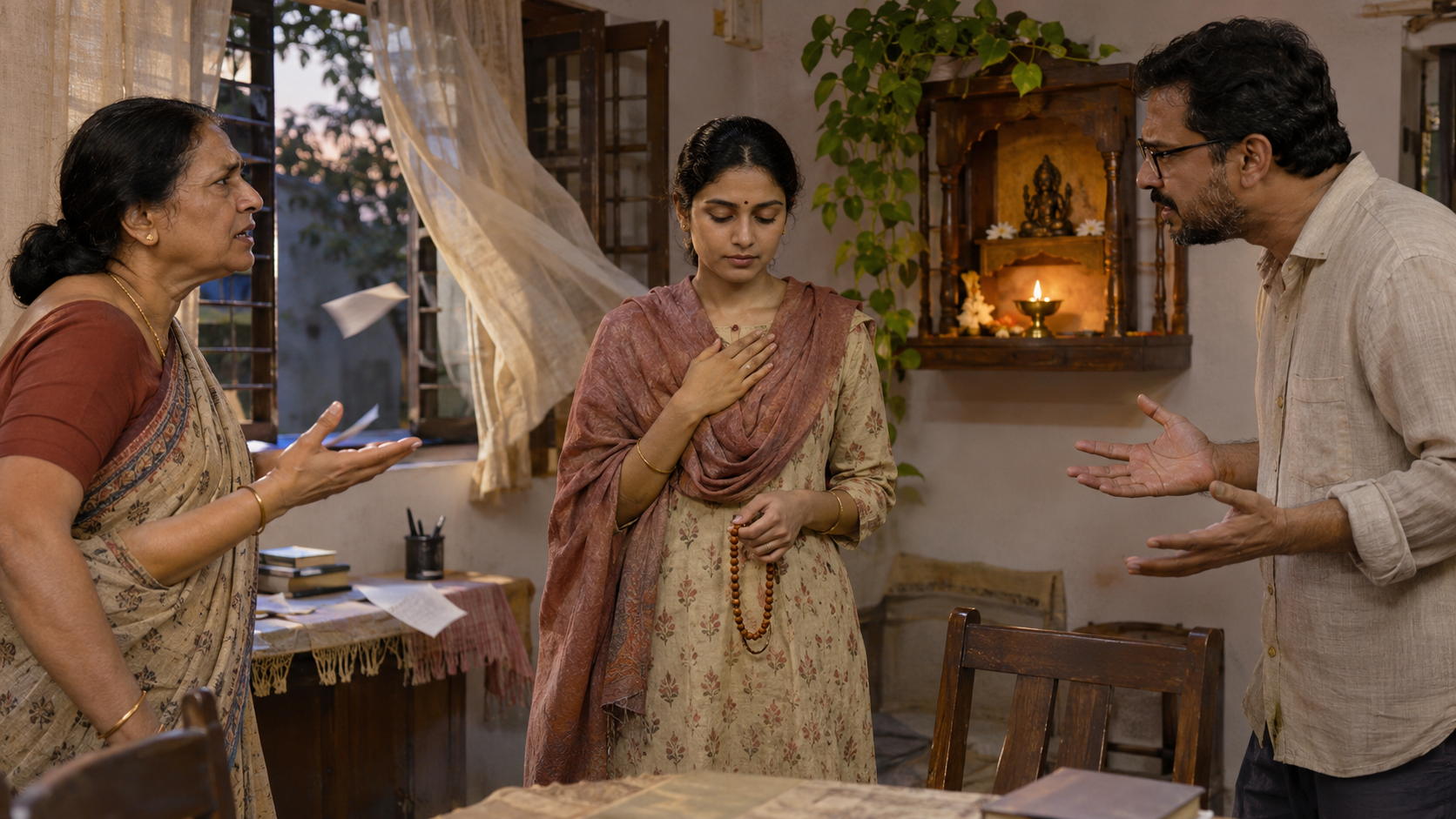
You do not follow Prahlada by trying to reproduce the dramatic details of his life. You follow him by observing the order within it: remembrance of Bhagavan remains central, adharma is not renamed as virtue, hatred does not become a duty, and responsibility is not abandoned after the crisis.
- Remember before reacting. Prahlada’s identity is grounded in Bhagavan rather than in his father’s approval or hostility. When you are provoked, notice whether the offender has become the centre of your mind. Bring attention back to Bhagavan before deciding what to say or do.
- Name wrong conduct without copying it. Prahlada does not treat Hiranyakashipu’s opposition as righteous. Yet he also does not let the persecutor dictate the moral quality of his own response. Your action can be firm without becoming vindictive.
- Desire correction and welfare, not humiliation. After everything done against him, Prahlada asks for his father’s spiritual good. This does not erase accountability. It reveals a devotee whose concern reaches beyond personal revenge.
- Return to dharmic responsibility. Prahlada’s path does not end in permanent withdrawal from the world. The larger episode returns him to duty. A genuine spiritual response must eventually answer the practical question: what responsibility is mine now?
The distinction between non-hatred and passivity is essential. Refusing hatred does not require you to deny danger, restore trust, remain available to an abuser, or surrender lawful protection. Inner goodwill and relational access are different decisions. You can pray for someone’s welfare while setting a boundary, documenting misconduct, leaving an unsafe situation, or seeking appropriate help.
Do not use Prahlada’s endurance to pressure another person into tolerating abuse. The lesson is addressed first to your own consciousness. It does not give you permission to demand suffering from somebody else. Forgiveness may release vengeance; it does not make an unsafe person safe or make unreformed conduct trustworthy.
Nor does compassion make truth optional. Prahlada’s example holds together truths that anger often separates: the deed can be condemned, the vulnerable can be protected, consequences can be accepted, and the offender need not be reduced to an object of hatred. That combination is harder than either sentimental indulgence or revenge. It is also closer to the discipline this benediction commends.
Use the verse as a self-audit during conflict

The most useful reading of Bhagavatam 7.10.22 begins before you judge whether somebody else resembles Hiranyakashipu. Let Prahlada’s example examine your own response. These questions make that examination concrete:
- What occupies my attention? If you repeatedly rehearse the insult, imagine retaliation, or monitor the other person’s downfall, the conflict has begun to govern your consciousness. State the facts once, then deliberately return the mind to Bhagavan and the duty in front of you.
- What am I trying to protect? Protection of life, dignity, truth, and legitimate responsibility can be dharmic. Protection of pride can disguise itself as principle. Ask what real harm your response is meant to prevent.
- Would I still choose this action without an audience? A necessary boundary remains necessary when nobody applauds it. A performative response often depends on public victory, embarrassment, or praise for being morally superior.
- Does my speech describe conduct or degrade a person? Say what happened, why it was wrong, and what must change. Avoid adding contempt merely to make the other person feel small.
- Can I want justice without enjoying suffering? Consequences may be necessary. Pleasure in another person’s pain is a different movement of the heart. Do not confuse it with courage.
- What duty remains after the confrontation? You may need to care for someone affected, correct a falsehood, complete neglected work, report misconduct, or repair your own excess. Conflict does not suspend the rest of dharma.
Use the questions in that order when a situation is urgent. Establish the facts and protect anyone in danger. Then examine motive, speech, and the next duty. You do not have to manufacture a peaceful feeling before taking necessary protective action. A person may be frightened and still act according to dharma; fearlessness is fidelity to the right act, not denial of fear.
The audit also prevents a common reversal. Prahlada’s story is not permission to imagine yourself as the saint in every dispute and your opponent as the asura. Sometimes the Prahlada-like act is admitting that your certainty, anger, or authority has made you unjust. An exemplar is useful precisely because it can correct you, not merely validate you.
Turn the benediction into a daily sadhana
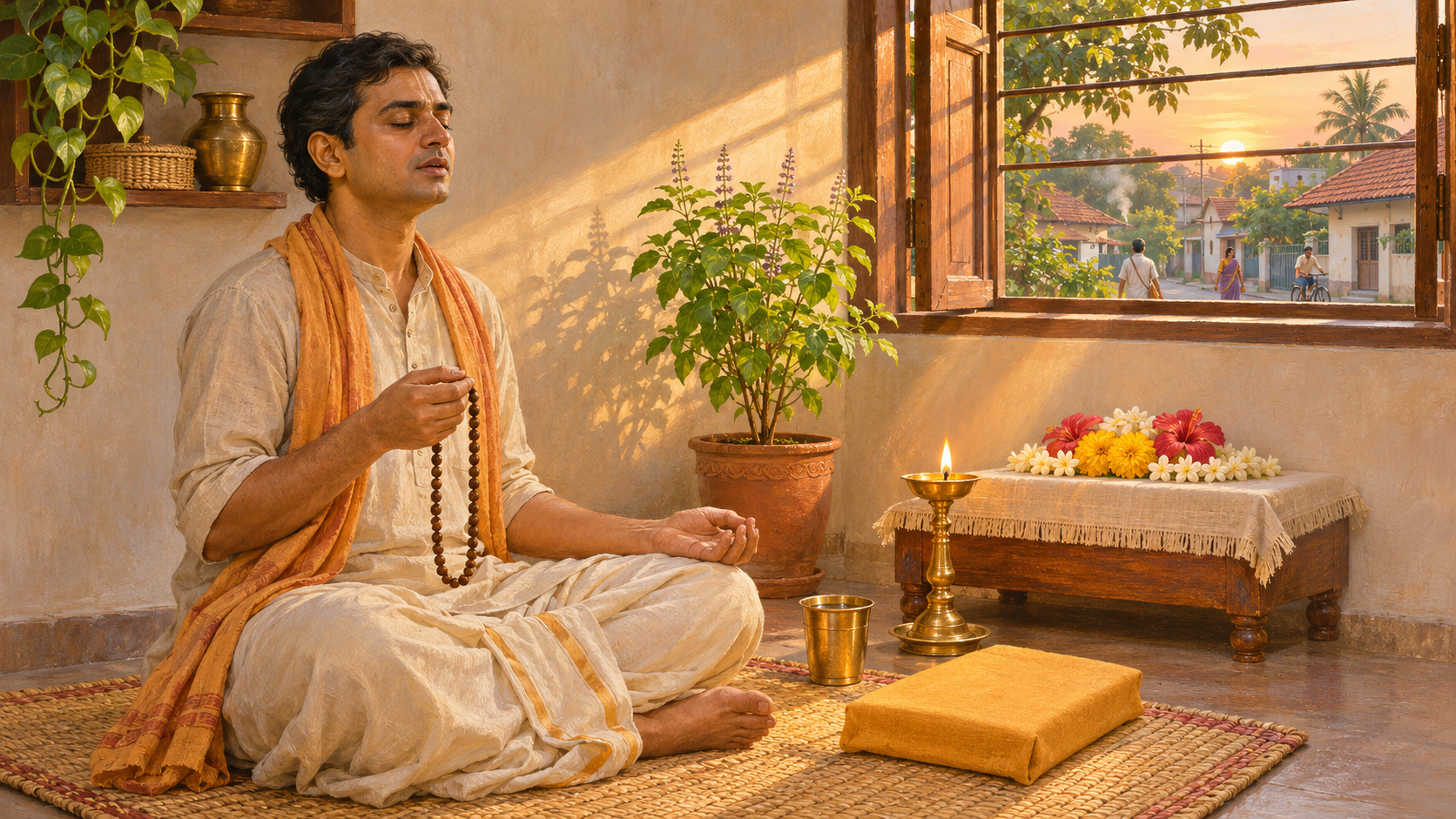
A verse becomes formative when it changes the small interval between provocation and response. You can work with Bhagavatam 7.10.22 through a compact daily discipline:
- Set the governing intention. At the beginning of the day, read or recall the verse’s central teaching: Prahlada is an example to be followed, and following him leads toward devotion. Identify one situation in which wounded pride is likely to compete with bhakti.
- Separate pressure from duty. Before a difficult interaction, write or state two things plainly: what is pressuring you, and what dharma requires. The pressure may be fear of embarrassment; the duty may be truthful speech, protection of another person, restraint, or completion of an obligation.
- Pause before choosing the instrument. A true concern can still be pursued through an adharmic method. Decide whether the appropriate instrument is a conversation, a boundary, silence, documentation, formal reporting, withdrawal, or patient service.
- Apply a speech filter. Keep what is true, necessary, and directed toward a legitimate outcome. Remove exaggeration, dehumanising labels, threats made for emotional effect, and details shared only to recruit an audience.
- Offer the result. Do the chosen duty without making another person’s reaction the measure of success. You control whether your action is truthful and proportionate; you do not control whether the other person understands, apologises, or changes.
- Repair the break in remembrance. At the end of the day, identify where anger displaced bhakti. Make the concrete repair required: apologise for excess, correct an inaccurate statement, restore a neglected duty, strengthen a boundary, or resume prayer without self-dramatisation.
The same method looks different in different settings. In a family dispute, you might say that discussion can continue only without insults, then leave if the boundary is ignored. At work, you might preserve records and use the proper channel instead of launching a campaign of personal humiliation. Online, you may discover that no response is required at all; declining an invitation to rage can be restraint rather than cowardice.
This practice exposes the difference between devotion as an identity and devotion as a governing motive. The question is not merely whether you call yourself a bhakta. It is whether remembrance of Bhagavan determines what you refuse to become when another person behaves badly.
Key takeaways
- Bhagavatam 7.10.22 presents Prahlada as a reproducible devotional example, not merely an exceptional figure to admire.
- The benediction concerns becoming devoted to Bhagavan; it is not a guarantee of freedom from conflict or pain.
- Following Prahlada means retaining remembrance, truthfulness, non-vindictiveness, and duty when you are under pressure.
- Compassion does not require restored access, suspended consequences, or continued exposure to danger.
- Use the verse first to examine your own attention, motive, speech, and responsibility rather than to label an opponent.
- The practical test of the teaching is the next response you choose when anger feels justified.
When pressure next arrives, do not wait to feel as fearless as Prahlada. Remember Bhagavan, tell the truth, protect what must be protected without cultivating hatred, and complete the duty that remains. That is where the benediction stops being admired and starts being inherited.
References

Leave a Reply
You must be logged in to post a comment.