
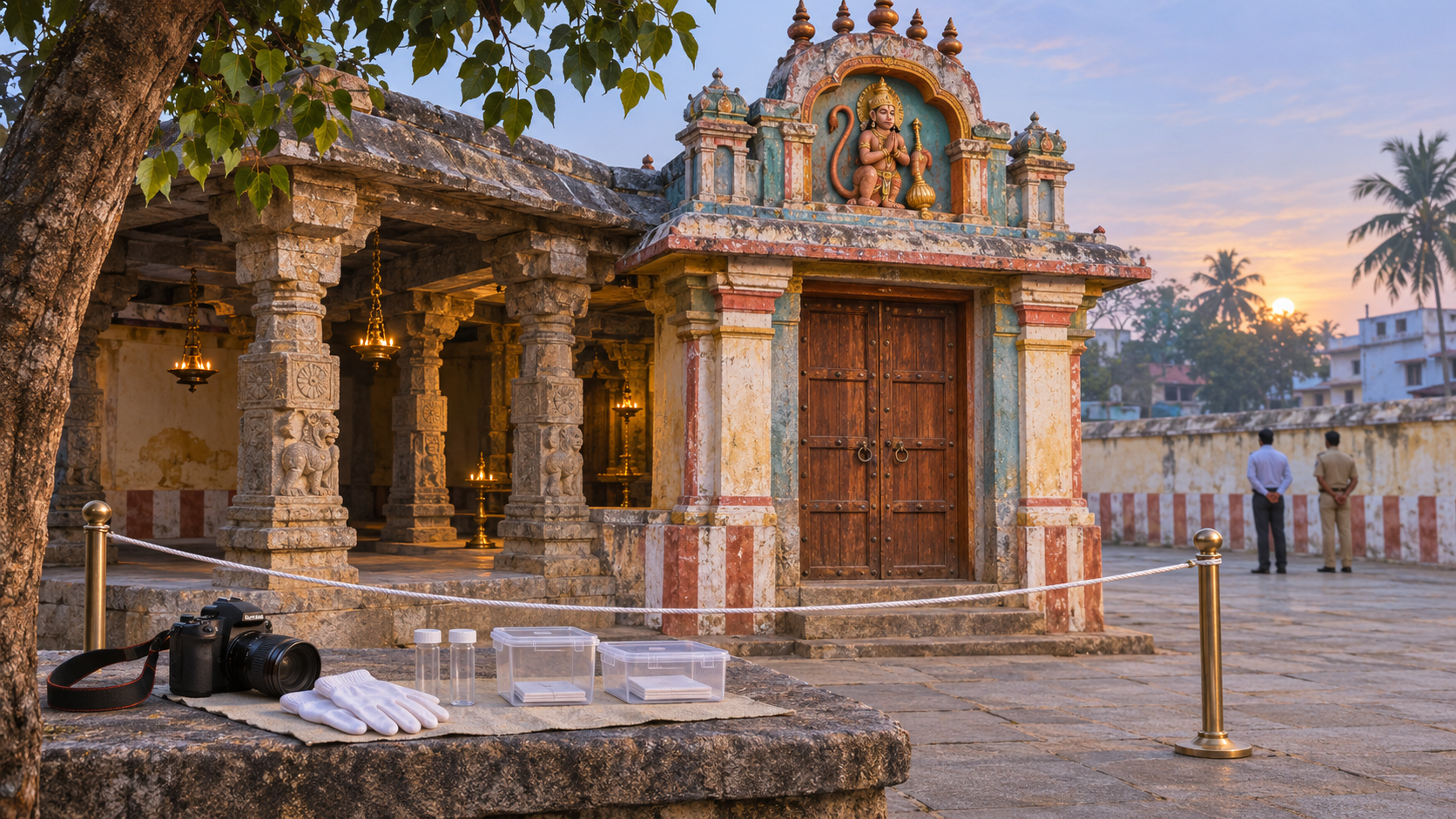
If the Gundlupet temple claim reached you through an alarming headline or social-media post, do not let its emotional force choose your words for you. A sacred site may have been deliberately targeted. That possibility demands urgency, but urgency without precision can turn a serious complaint into an argument driven by rumours.
You can defend the temple without prejudging the investigation. The responsible course is to preserve evidence, insist on answers from the authorities, distinguish allegations from established facts, and refuse to blame people who have not been connected to the incident.
State the Gundlupet allegation precisely
Meat waste, described in the allegation as cow-meat waste, was reportedly found directly in front of Sri Anjaneya Swamy Temple in Gundlupet town, Chamarajanagar district. The pujari discovered it after arriving early in the morning for the daily puja. Hindu organisations subsequently lodged a complaint at Gundlupet Police Station and asked investigators to examine CCTV recordings, identify those responsible, and investigate possible illegal cow slaughter and beef sales in the area.
That is enough to justify a prompt investigation. It is not enough to identify the animal species, the person who left the material, the person’s motive, or the source of the waste. No forensic identification, disclosed CCTV finding, named suspect, or established connection to an illegal trade accompanies the allegation as presented.
| Question | What can responsibly be said | What would establish more |
|---|---|---|
| What was found? | Meat waste was reportedly found outside the temple when the pujari arrived for puja. | Scene records, original photographs, witness accounts, and official collection records. |
| Was it cow meat? | It has been described as cow-meat waste, but that description is not a forensic result. | Examination of the recovered material by a competent laboratory or authority. |
| Was the temple deliberately targeted? | The location creates a serious and reasonable suspicion of deliberate provocation, not proof of intent. | CCTV footage, travel routes, conduct at the scene, communications, or other evidence connecting placement to intent. |
| Who was responsible? | No individual or organisation has been established as responsible. | Verified footage, witnesses, vehicle identification, physical evidence, and lawful police inquiry. |
| Was illegal slaughter or trade involved? | Hindu organisations have asked for that possibility to be investigated; a connection has not been demonstrated. | Species identification, origin and transport evidence, inspections, and findings under the applicable Karnataka law. |
This distinction is not semantic caution for its own sake. If you call the material cow meat before it is tested, identify a community without evidence, or declare a coordinated attack before investigators establish one, attention moves away from the scene and toward defending an exaggerated claim. Precision protects the demand for justice.
Preserve the evidence before cleaning or sharing
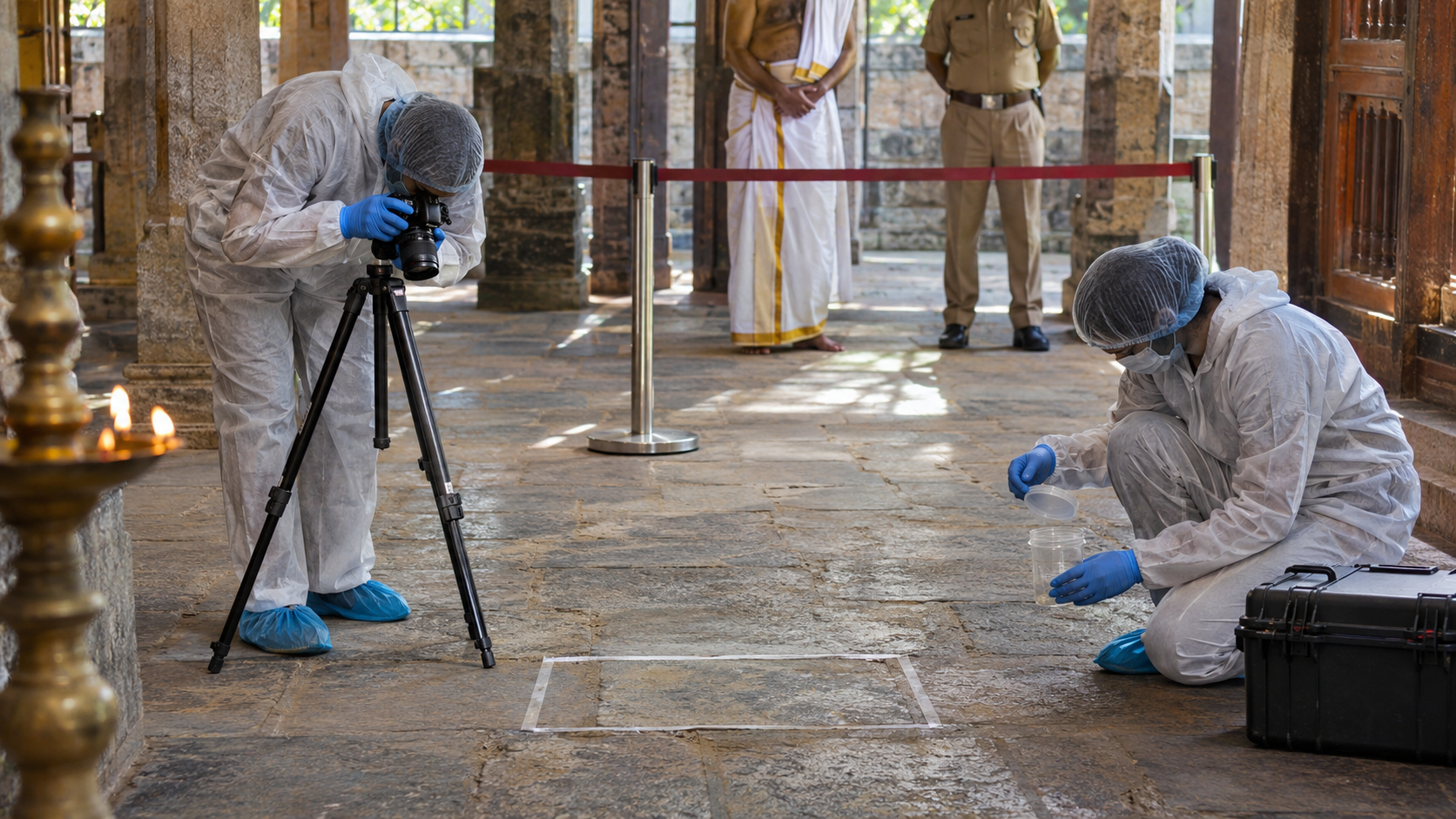
If you are a devotee, witness, pujari, or temple committee member dealing with a similar incident, the first hour matters. Suspected animal waste should not be touched, moved, or cleaned before the police have had an opportunity to document and collect it. It may be both evidence and a sanitation hazard. Keep devotees at a respectful distance and avoid allowing a crowd to alter the scene.
- Record the discovery time. Note who first saw the material, when the temple was last known to be clear, who entered afterward, and when the police were contacted.
- Preserve the original scene. Take clear, time-stamped photographs from a safe distance if doing so will not disturb anything. Keep the original files rather than relying on screenshots or compressed social-media copies.
- Map nearby cameras. Identify temple, shop, residence, traffic, and street-facing cameras that may cover the entrance or approach routes. Ask their custodians to preserve the relevant recordings and give the camera list to the police. Do not seize private recordings or publish unverified faces yourself.
- Create a written paper trail. Keep a copy of the complaint and its acknowledgement or reference details. Record when evidence was collected, which authority took it, and what follow-up was requested.
- Wait for release of the scene. Physical cleaning and any purification or reconsecration decided by the pujari and temple committee should begin after investigators confirm that they no longer need the area preserved.
CCTV is especially time-sensitive because many systems overwrite stored recordings. The useful request is not merely “check CCTV.” Police should be told which cameras exist, which direction each one faces, and who controls the recording. Investigators can then obtain complete footage through lawful channels rather than working from an edited clip circulating online.
Ask for two linked inquiries, not one merged accusation
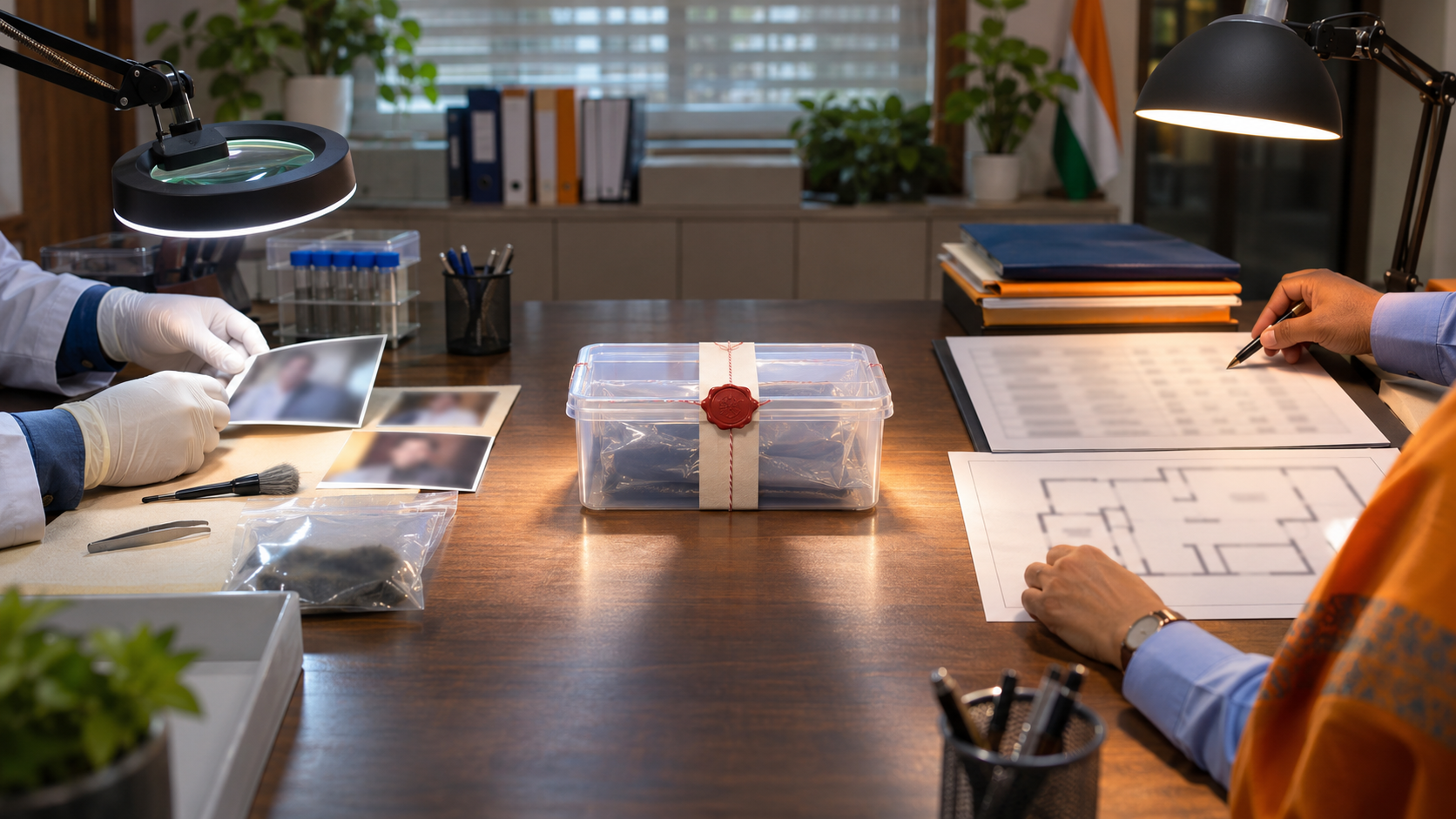
The temple placement and the origin of the material are connected questions, but they are not the same question. Combining them into a single conclusion makes it harder to see which facts have actually been proved.
- The temple-targeting inquiry: Who transported and deposited the material? Which route was used? Was the temple selected deliberately? Did anyone assist, record, or publicise the act? Are any earlier local incidents connected by evidence rather than resemblance?
- The animal and trade inquiry: What species did the material come from? Where did it originate? Was slaughter, possession, transport, sale, or disposal unlawful? Do inspections or records connect it to a trader, facility, vehicle, or disposal route?
Several propositions must therefore be tested separately: that the material came from a cow; that an animal was slaughtered unlawfully; that the waste came from a local commercial operation; that the same person who obtained it placed it outside the temple; and that the placement was intended as an anti-Hindu provocation. Proof of one does not automatically prove all the others.
This separation also prevents two opposite mistakes. If testing identified an animal covered by Karnataka’s cow-protection law, that result would not by itself prove where or how it was slaughtered. If the material came from another animal, deliberate targeting of the temple could still constitute a grave act requiring investigation.
Questions about enforcement of Karnataka’s cow-slaughter prohibition law are legitimate. Ask measurable questions: Have relevant premises been inspected? Were transport and disposal records checked? Have earlier complaints about dumped meat been recorded and connected through evidence? What enforcement action follows from verified violations? The Gundlupet allegation alone cannot establish a statewide failure of enforcement.
Campaigning to repeal a law is a political position, not evidence that a campaigner participated in an offence. You can oppose repeal, demand stronger enforcement, and still reject guilt by association. The incident should be solved through evidence; the law should be judged through its wording and enforcement record.
Speak publicly without weakening the case
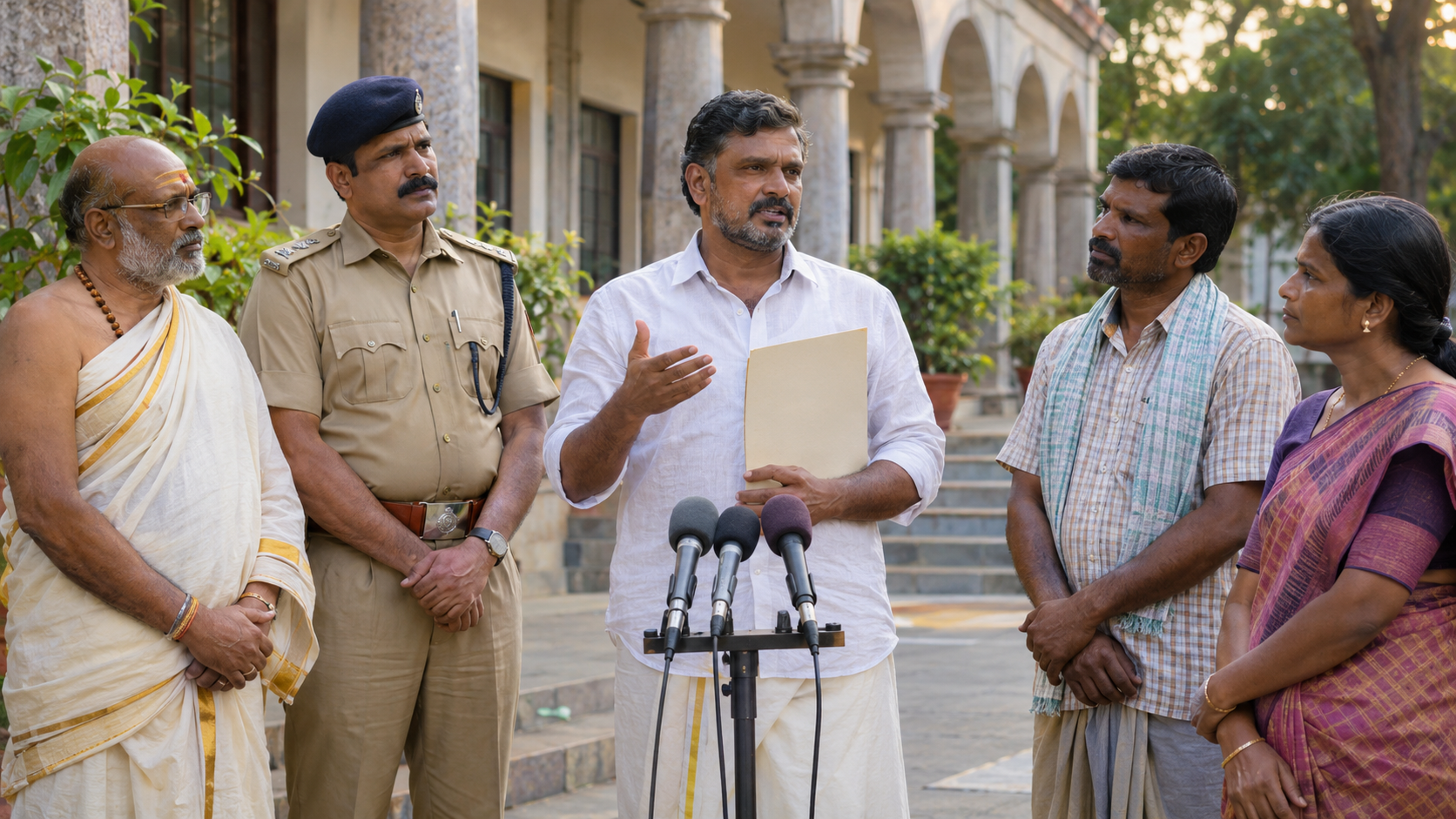
The language used during the first wave of attention often hardens into the public record. Use wording that remains true even if later findings change part of the story: “Meat waste, described by complainants as cow-meat waste, was reportedly found outside Sri Anjaneya Swamy Temple; police have been asked to investigate the material, CCTV footage, and those responsible.”
Until evidence establishes more, use “alleged desecration” rather than declaring that a particular person, organisation, or religious community committed it. “Unknown person or persons” is more accurate than ideological labels. A suspected motive may guide investigators, but it should not be presented to the public as an identified offender.
- Share the complete location, complaint status, and verified sequence of events rather than a cropped image with an accusatory caption.
- Do not publish a person’s name, face, address, vehicle number, or workplace merely because a clip appears suspicious. Give the original material to investigators.
- Do not treat nearby meat traders, Muslims, Christians, political activists, or any other broad group as collectively responsible. Responsibility attaches to the people the evidence identifies.
- Do not circulate graphic images repeatedly. Preserve originals for evidence, and use the least graphic image necessary when informing the public.
- Correct an earlier claim openly if testing, CCTV analysis, or police findings contradict it. A visible correction strengthens credibility.
- Have the temple committee or participating organisations designate one person to issue factual updates. This reduces contradictory claims and prevents speculation from becoming an unofficial narrative.
Restraint is not silence. Devotees can submit a memorandum, ask for acknowledgement of the complaint, request preservation of recordings, seek testing of the recovered material, and ask for a non-sensitive progress update. They can also support temple security and restoration. What they should not do is threaten suspects, obstruct investigators, retaliate against traders, or turn an unproved allegation into collective punishment.
A Dharmic response does not require indifference to sacrilege. It requires resolve governed by truth and proportion. Protecting the sanctity of an Anjaneya temple and protecting innocent people from unsupported blame are not competing duties. Both resist adharma.
Key takeaways
- Meat waste was reportedly found outside Sri Anjaneya Swamy Temple in Gundlupet, and Hindu organisations lodged a police complaint.
- The description “cow-meat waste,” a deliberate desecration motive, the identity of the offender, and any connection to illegal trade require separate proof.
- The immediate priorities are scene preservation, forensic examination, witness documentation, and rapid preservation of nearby CCTV recordings.
- The temple-targeting inquiry and the illegal slaughter or meat-trade inquiry should proceed as linked but distinct lines of investigation.
- Use “reported,” “alleged,” and “unknown person or persons” until evidence supports stronger wording. Do not assign communal guilt.
- Temple cleaning and any purification ritual should follow the investigators’ release of the scene, after which the committee can review cameras, lighting, and an incident-response protocol.
If you are in Gundlupet, the most useful contribution is one verifiable item: an exact witness time, preserved footage, a documented complaint follow-up, or practical help restoring the temple after evidence collection. If you are following from elsewhere, share precise updates and refuse unverified names. That is how legitimate anguish becomes durable accountability.
References

Leave a Reply
You must be logged in to post a comment.