

If you reached this page after seeing the Baghpat case described as “love jihad” or simply as a police encounter, first separate the events hidden inside those labels. A 15-year-old Hindu girl’s disappearance, an allegedly false identity, accusations of rape and conversion pressure, and police gunfire during an arrest are distinct matters. Each requires evidence, and each demands a proportionate response.
The responsible position is neither indifference nor instant conviction. Take the allegations seriously, protect the minor, preserve the evidence and insist on due process. You do not have to choose between concern for a Hindu child and procedural fairness. A durable pro-Dharmic response requires both.
What is alleged to have happened in Baghpat
The sequence begins in Baraut, in Uttar Pradesh’s Baghpat district. Police identified the accused as Sameer, a Delhi resident who reportedly visited his aunt in the city’s Nai Basti area. He is accused of creating an online identity under the name “Aman Malik,” presenting himself as Hindu and using that representation to establish contact with a 15-year-old Hindu girl. If established by digital and testimonial evidence, the relevant issue would be deliberate identity deception—not the mere fact of an interfaith interaction.
Police say that on 10 October, the accused persuaded the girl to leave and took her to Haryana. The accusations concerning what followed are grave: rape and pressure to convert to Islam. Those are police allegations at this stage, not judicial findings.
The girl was reportedly recovered four days before the accused was arrested. Hindu organisations had demanded action, and Swami Yashveer Maharaj had reportedly warned that he would begin a sit-in. Such public attention can press authorities to act promptly, but it does not prove any criminal allegation. Evidence must do that work.
On Sunday night, police located the accused near Kanshiram Colony. Their account says he fired at officers, retaliatory fire struck him in the leg, and he was then arrested. Police also reported recovering a country-made pistol. A reward of Rs 10,000 had been announced for his capture.
The word “encounter” describes the police account of how the arrest occurred. It does not establish the truth of the earlier accusations, and the earlier accusations do not automatically verify every detail of the encounter. The underlying case and the use of force during arrest require their own records and scrutiny.
How to distinguish known events from unproven claims

Fast-moving cases involving a minor, religion and police gunfire are especially vulnerable to exaggeration. One inaccurate claim can give critics a reason to dismiss well-supported concerns. Use precise language from the beginning.
- Attribute the accusations. Say that police accuse Sameer of using the name Aman Malik, representing himself as Hindu, taking the girl to Haryana, raping her and pressuring her to convert. Do not present those accusations as a conviction.
- Describe the girl as a minor. Her reported age is 15. That fact materially changes the safeguarding context. Describing the situation casually as an ordinary romance or elopement obscures the vulnerability at the centre of the case.
- Keep separate acts separate. False identity, taking a minor away, sexual violence and coercive religious pressure are different allegations. Proof of one would not automatically prove all the others.
- Qualify the encounter account. “Police say the accused fired first” is accurate attribution. “He attacked the police” states as settled something that still requires examination of records and forensic evidence.
- Use “accused,” not “convicted offender.” Arrest is a procedural event, not a verdict. Maintaining that distinction protects the credibility of everyone seeking justice for the child.
The public information available here does not include an FIR number, charge sheet, medical findings, authenticated platform records, forensic results, a judicial order or a response from the accused. It therefore cannot answer every factual question. That absence is not proof that the accusations are false; it is a reason to avoid claiming more than the present record establishes.
The most useful questions are concrete. Which account created the false profile? What phone number or device was linked to it? What do the messages show? How was the girl transported to Haryana? Where was she recovered? What evidence supports the accusations of rape and conversion pressure? What records support the police description of the exchange of fire? These questions move the discussion from slogans to facts capable of being tested.
What a family should do when a minor may be at risk
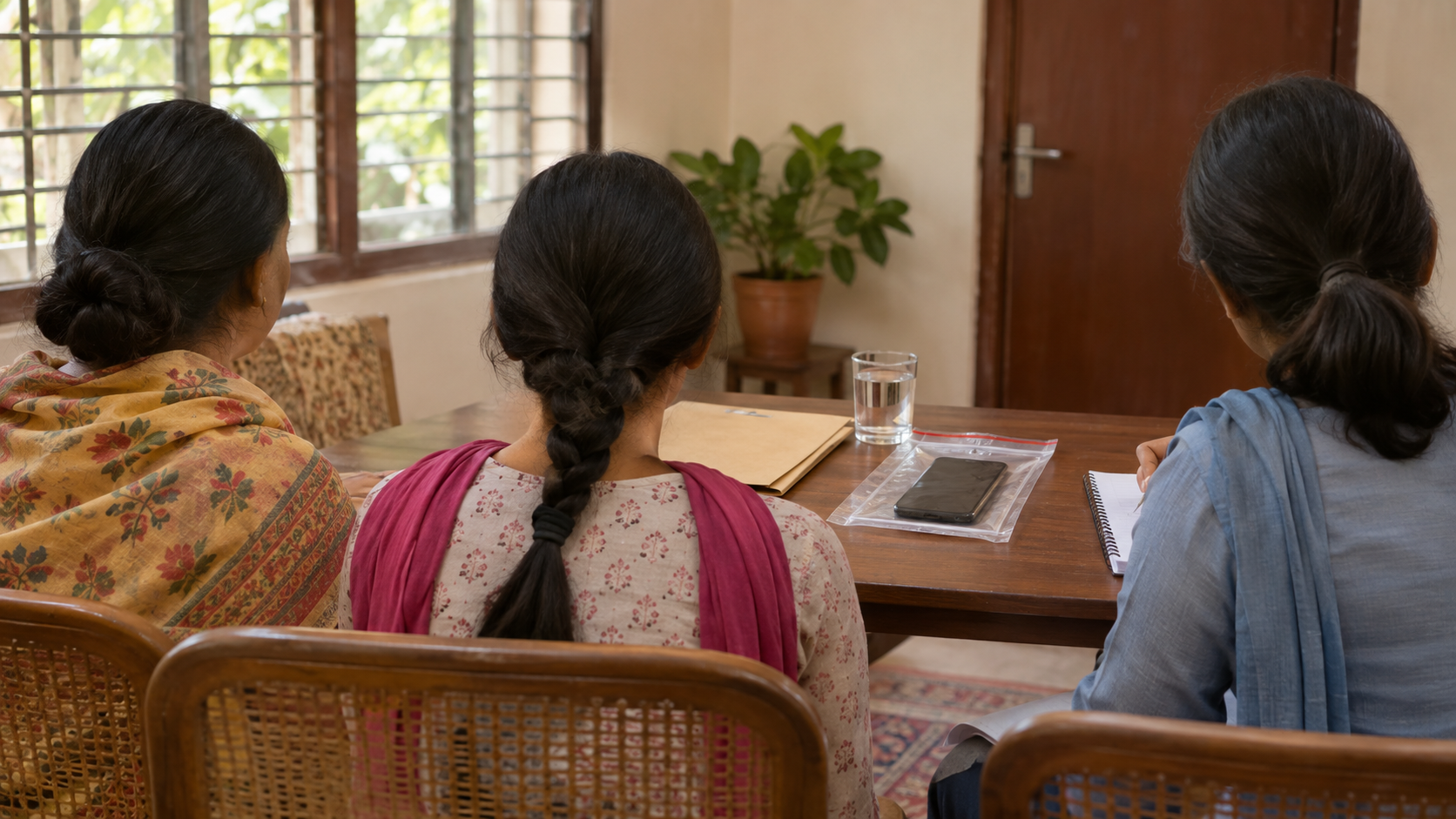
If a minor is missing, being threatened or being moved to another location, do not wait for an online dispute to resolve itself. Treat immediate safety as the first task. Contact the police, provide the last confirmed location and explain clearly that the person at risk is a minor. If there is an imminent threat, use the local emergency channel available to you.
- Write a chronology before details blur. Record the minor’s last confirmed location, the time of the last contact, the names or aliases used by the other person, known phone numbers, account handles, possible destinations and any mention of travel. Mark each item as observed, reported by the child or suspected.
- Preserve digital evidence in context. Within your lawful access, save full screenshots that show usernames, dates and timestamps. Retain profile links, phone numbers, call logs and original messages. A cropped sentence without its sender, date or surrounding conversation is easier to dispute.
- Do not provoke the suspected person online. Threatening messages, public challenges or attempts to impersonate the minor can escalate danger and may cause accounts or conversations to be deleted. Give identifying information to investigators rather than announcing every step publicly.
- Make the complaint specific. State the minor’s age, the last confirmed contact, any false identity, threats, travel plans and possible location. Ask for a written acknowledgement or other available record that the complaint was received.
- Protect the child’s identity. Do not publish the minor’s name, photograph, school, address, personal chats or intimate material. Share sensitive evidence only with the responsible investigator, a qualified lawyer or an appropriate child-protection professional.
- Do not organise a private confrontation. Travelling to retrieve a minor from a suspected offender can trigger violence, move the child farther away or destroy evidence. Give location information to police and request prompt action.
- After recovery, reduce the number of retellings. The child should not have to repeat the experience to crowds, cameras and groups of relatives. Prioritise safety, appropriate professional support and a properly documented statement to the responsible authorities.
Parents should also resist turning vigilance into indiscriminate surveillance. The relevant warning signs are functional: a secret identity, inconsistent personal details, demands for isolation, pressure to travel, threats, sexual coercion or religious ultimatums. A person’s community label alone does not establish any of these behaviours. Verification and calm communication are more useful than suspicion directed at everyone.
If officials fail to record or act on a complaint involving a missing or endangered minor, seek help promptly from a qualified local lawyer or the relevant child-protection authority. Do not rely solely on social-media circulation, which may expose the child without producing a usable legal record.
What Hindu organisations and responsible media should demand

Hindu organisations reportedly helped keep attention on the Baghpat case. That influence carries a responsibility: advocacy should strengthen the child’s case, not turn her ordeal into material that compromises her privacy or contaminates public understanding.
- Demand speed with documentation. Recovery of a missing minor is urgent, but the complaint, evidence trail, medical process, statements and investigative steps must also be recorded properly.
- Offer practical assistance to the family. Help with access to qualified legal advice, travel, communication with authorities and protection from unwanted publicity. Do not make support conditional on public appearances.
- Ask about digital evidence. A claimed false profile should be examined through account identifiers, associated devices, phone numbers, messages and platform records—not established through a viral screenshot alone.
- Insist on privacy. Blur or withhold the child’s face, name, school, address and identifying family details. The need to mobilise attention does not justify permanently exposing a minor.
- Reject vigilantism. Calls for private revenge can endanger the family, create new offences and distract from the evidence needed in court.
- Seek scrutiny of the encounter. The police claim of retaliatory fire should be assessed through the applicable legal records and forensic process. Supporting the arrest of an accused person does not require automatic acceptance of every operational claim.
A single case should not be used to declare a measured national prevalence without supporting data. It is already serious on its own terms. Inflating it into an unsupported statistic adds nothing to the protection of Hindu girls and makes legitimate concerns easier to dismiss.
At the same time, avoiding communal generalisation must not become an excuse to ignore a specific allegation of religious deception or conversion pressure. Calling every interfaith relationship grooming erases adult agency; refusing to investigate deception and coercion leaves minors exposed. The workable standard is behaviour and evidence: Was an identity deliberately falsified? Was a minor induced to leave? Were there threats, confinement, sexual violence or pressure to change religion? What supports each claim?
This standard is pro-Hindu in a meaningful sense. It protects Hindu families without treating rumour as proof, and it directs public energy toward conduct that authorities and courts can actually examine.
Key takeaways
- The case concerns a 15-year-old Hindu girl from Baraut and an accused man identified by police as Sameer.
- Police allege that he used the name “Aman Malik,” presented himself as Hindu and took the girl to Haryana on 10 October.
- Rape and pressure to convert to Islam are among the accusations. They remain allegations unless established through the legal process.
- The girl was recovered before the arrest. Police later said the accused fired at officers near Kanshiram Colony, was wounded in the leg by return fire and was arrested with a country-made pistol.
- Families facing a similar risk should act quickly, preserve complete digital records, make a factual police complaint, protect the minor’s identity and avoid private confrontation.
- Community advocates should demand both a rigorous investigation of the alleged offences and proper scrutiny of the police encounter.
Your next step depends on your role. If you are protecting a child, document the facts and contact the appropriate authorities without delay. If you are helping a family, provide legal and practical support without exposing the minor. If you are sharing the case, label allegations accurately and link to what can be checked. That discipline protects the child, preserves the possibility of justice and keeps Hindu advocacy credible.
References

Leave a Reply
You must be logged in to post a comment.