
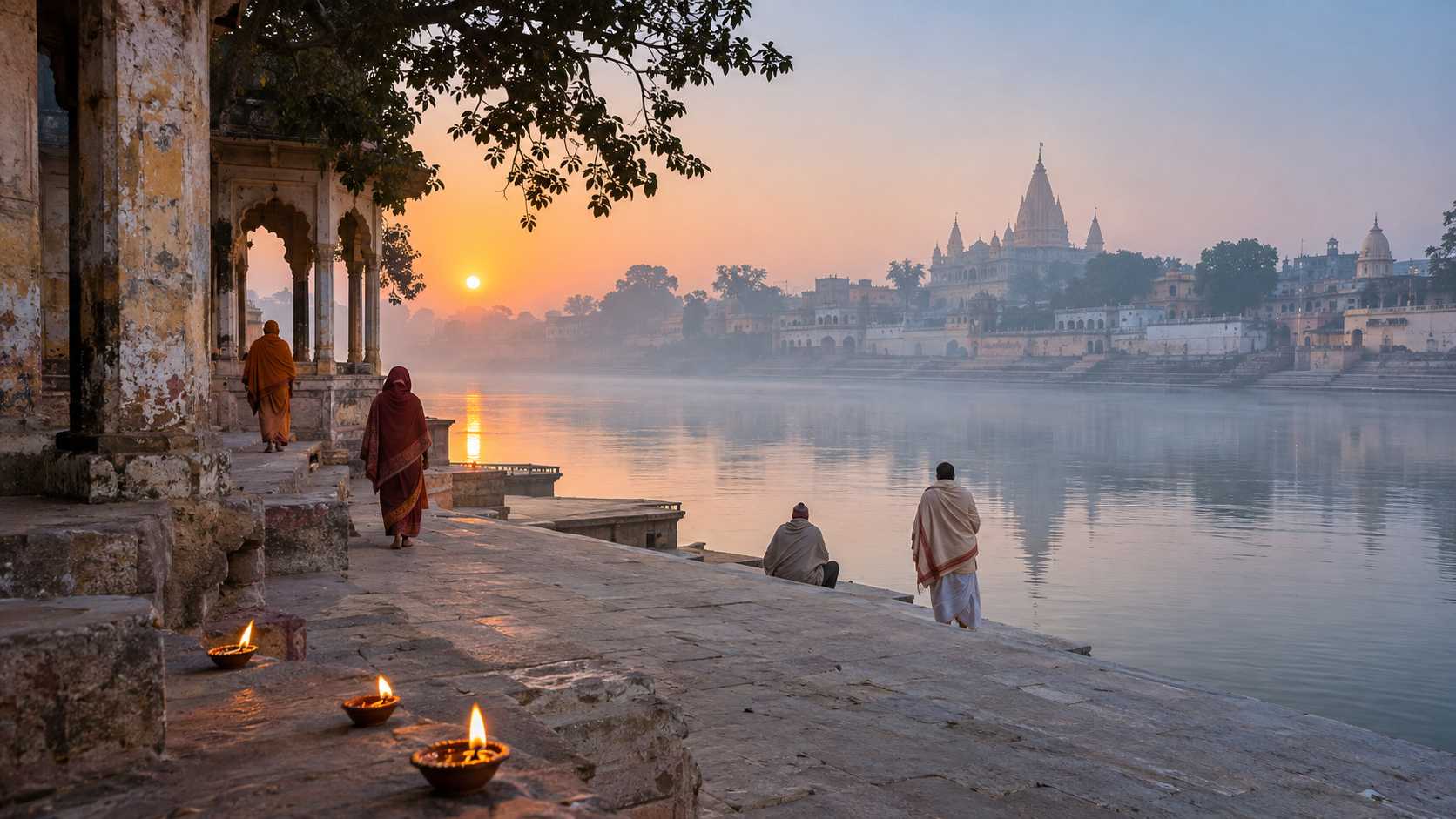
You may have arrived with one of two intentions: to join Ayodhya Dham Yatra 2026 in person, or to follow HH Radhanath Swami’s teachings from home. Do not treat those as the same decision. One requires verified travel information; the other can begin with the available spiritual presentation.
The safe starting point is precise. A Day 1 presentation of Ayodhya Dham Yatra 2026 identifies HH Radhanath Swami and names Radha Gopinath Media – ISKCON Desire Tree as the channel. That establishes a teaching presentation you can follow. It does not, by itself, establish a public itinerary, registration process, meeting point, accommodation plan, or permission to join a physical group.
Separate access to the teaching from physical attendance
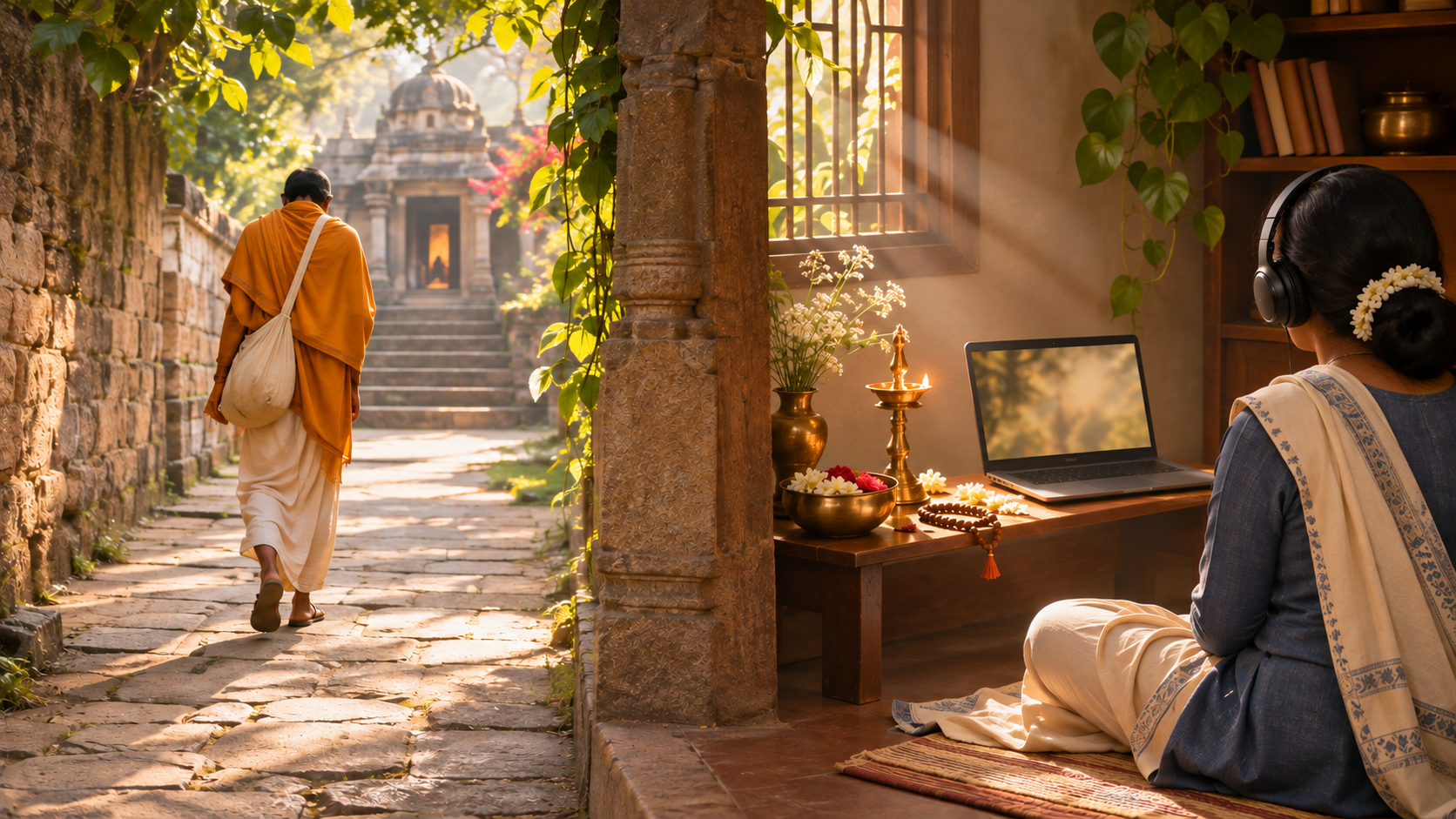
Begin by deciding what you actually need. If your aim is spiritual listening, the Day 1 presentation is your entry point. If your aim is travel, a video title is not a booking notice. A recording may represent an ongoing gathering, a completed gathering, or material published after the event; the label alone does not settle that question.
- If you want to listen: use the exact programme title and named channel to avoid similarly titled or unattributed uploads.
- If you want to travel: obtain organizer-issued details before reserving transport or accommodation.
- If you want both: begin the spiritual preparation now, but keep every travel decision provisional until the practical details are confirmed.
This distinction matters because devotional enthusiasm can make an incomplete announcement feel like an invitation. It is better to miss a speculative fare than to arrive without confirmed access, lodging, or a reliable point of contact. Do not spend non-refundable money merely because the year and destination appear in the programme title.
Verify the yatra details before making travel commitments

No public itinerary, price, registration method, or participation rules can be responsibly stated from the information presently established here. If you hope to attend in person, ask for a notice that answers each of the following questions in writing:
- Is the physical yatra still upcoming, already completed, or being released as a recorded series?
- Is attendance open to the public, limited to registered participants, or restricted to an invited group?
- What are the exact calendar dates, reporting time, assembly point, and dispersal point?
- Which organization is accepting registrations, and what official contact can verify your place?
- What do any charges include, and what remains the participant’s responsibility?
- Are accommodation, local transport, meals, and assistance for mobility or health needs available?
- What happens to a payment if the programme changes or the participant cannot attend?
Keep the roles clear. A media channel can publish a discourse without operating registration, transport, or accommodation. Use the named channel to identify the presentation, but use communications issued by the actual organizer for travel decisions. A forwarded message, an enthusiastic social-media comment, or a payment request from an unfamiliar account is not enough.
If a contact claims to represent the yatra, ask that person to connect the registration instructions to an established organizational channel. Confirm the recipient’s identity before sending money. Preserve the written itinerary, inclusions, cancellation terms, and payment record rather than relying on a telephone conversation alone.
Turn the Day 1 presentation into a deliberate sadhana
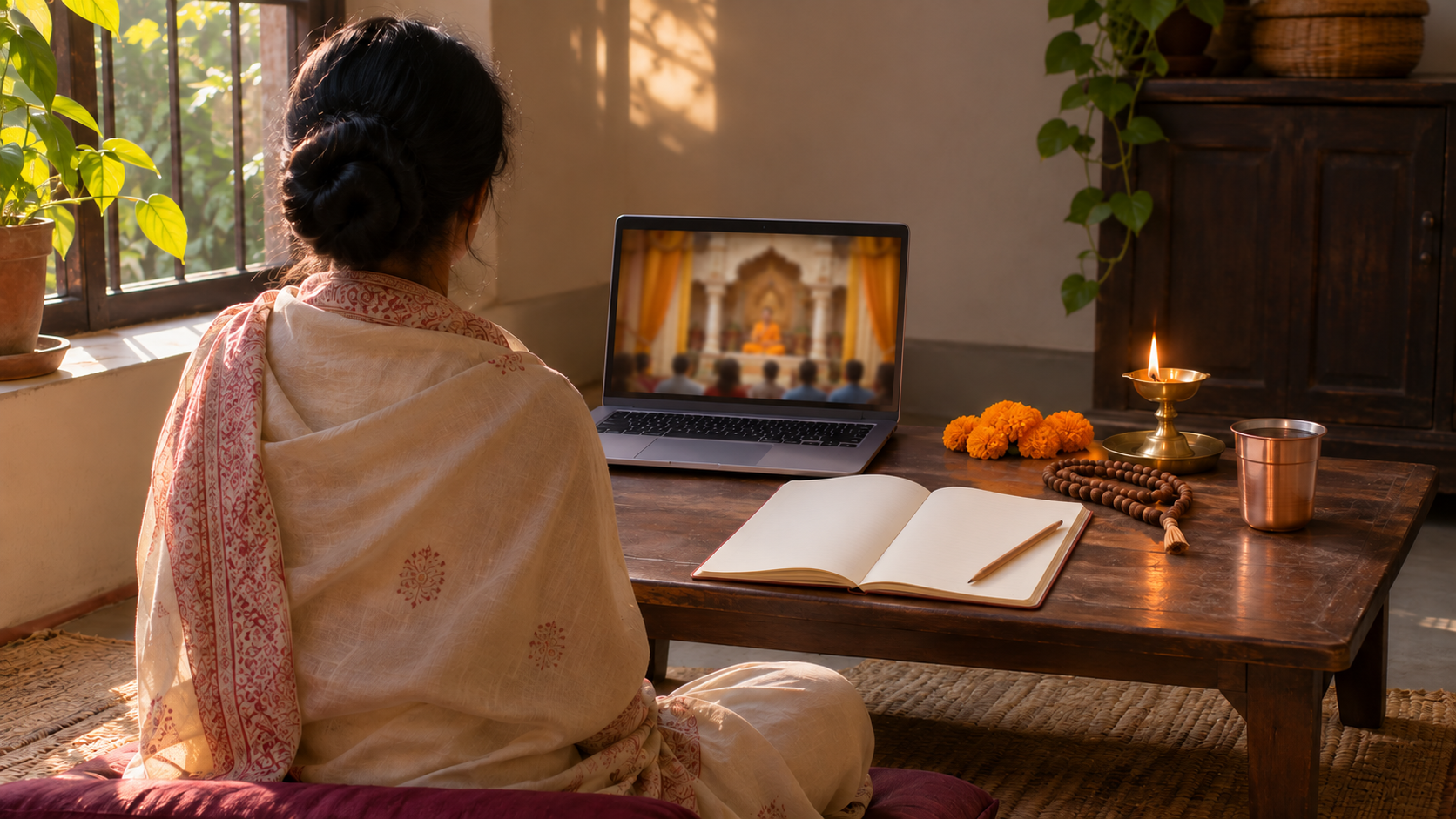
If you are following from home, resist the temptation to play the presentation as background audio. A dham yatra asks for attention. You can create that attention without pretending that a screen is the same as physically entering Ayodhya.
- State your intention. Before pressing play, write a brief sankalpa in plain language: what are you seeking to hear, remember, or change?
- Prepare a respectful setting. Silence notifications, close unrelated tabs, and sit where you can listen without repeatedly leaving. A simple, clean space is sufficient; elaborate arrangements are not a prerequisite.
- Listen for continuity. Do not stop at every striking sentence. First understand how the teaching develops. Use natural breaks to record what matters.
- Separate hearing from interpretation. Keep notes under headings such as “Heard,” “Reflection,” and “Practice.” This prevents your own deduction from later becoming something you mistakenly attribute to the speaker.
- End with application. Choose a concrete practice that genuinely follows from what you heard. Do not invent an austerity, vow, or instruction that was not given.
Useful notes do more than preserve memorable phrases. For each central teaching, write what was taught, why it matters in the context of Ayodhya, and what it asks of your conduct. If you cannot express the practical consequence, listen again before rushing to share the teaching with others.
Be especially careful with quotations. Replay the relevant passage, preserve its context, and link people to the full presentation when possible. A dramatic fragment detached from the surrounding explanation can turn spiritual instruction into social-media content that says something the speaker did not mean.
Keep Ayodhya and Sri Rama at the centre

Ayodhya is revered as the sacred city of Sri Rama. Approaching it as a dham therefore requires more than collecting images, names, or moments of association with a respected teacher. Receive guidance from HH Radhanath Swami while keeping the dham and the object of devotion at the centre of your contemplation.
As you listen, use questions that direct attention away from passive admiration and toward dharmic formation:
- What quality of Sri Rama’s character or rule of dharma am I being asked to notice?
- What makes remembrance of a sacred place different from ordinary interest in a destination?
- Does the teaching expose a habit in my speech, relationships, worship, or service that needs correction?
- What can I practise faithfully after the emotion of listening has passed?
If you are at home, honesty is part of the discipline. You can say that you followed the presentation remotely; do not imply that you attended the physical yatra or received darshan you did not receive. If you later visit Ayodhya, allow that journey to be its own encounter rather than treating the recording as a substitute for the place.
If you are physically present, the same principle works in the other direction. Reaching a sacred location is not the completion of the yatra if attention remains fixed on photographs, access, personalities, or group status. Let reverence show in patient conduct, truthful speech, restraint, and consideration for other pilgrims.
Key takeaways
- The confirmed starting point is a Day 1 presentation associated with HH Radhanath Swami and the named Radha Gopinath Media – ISKCON Desire Tree channel.
- A teaching presentation is not proof of open registration or a complete physical-yatra itinerary.
- Do not make non-refundable travel commitments until dates, eligibility, organizer identity, costs, accommodation, and meeting details are verified.
- For remote participation, listen in a prepared setting, distinguish the teaching from your interpretation, and finish with a practical application.
- Keep Ayodhya and Sri Rama central; the teacher guides the pilgrimage but does not replace its sacred purpose.
If your purpose is spiritual, begin with Day 1, a notebook, and undivided attention. If your purpose includes travel, leave the booking tabs closed until an identified organizer gives you the complete details in writing. That combination of shraddha and discernment is itself a sound beginning to the yatra.
References

Leave a Reply
You must be logged in to post a comment.