
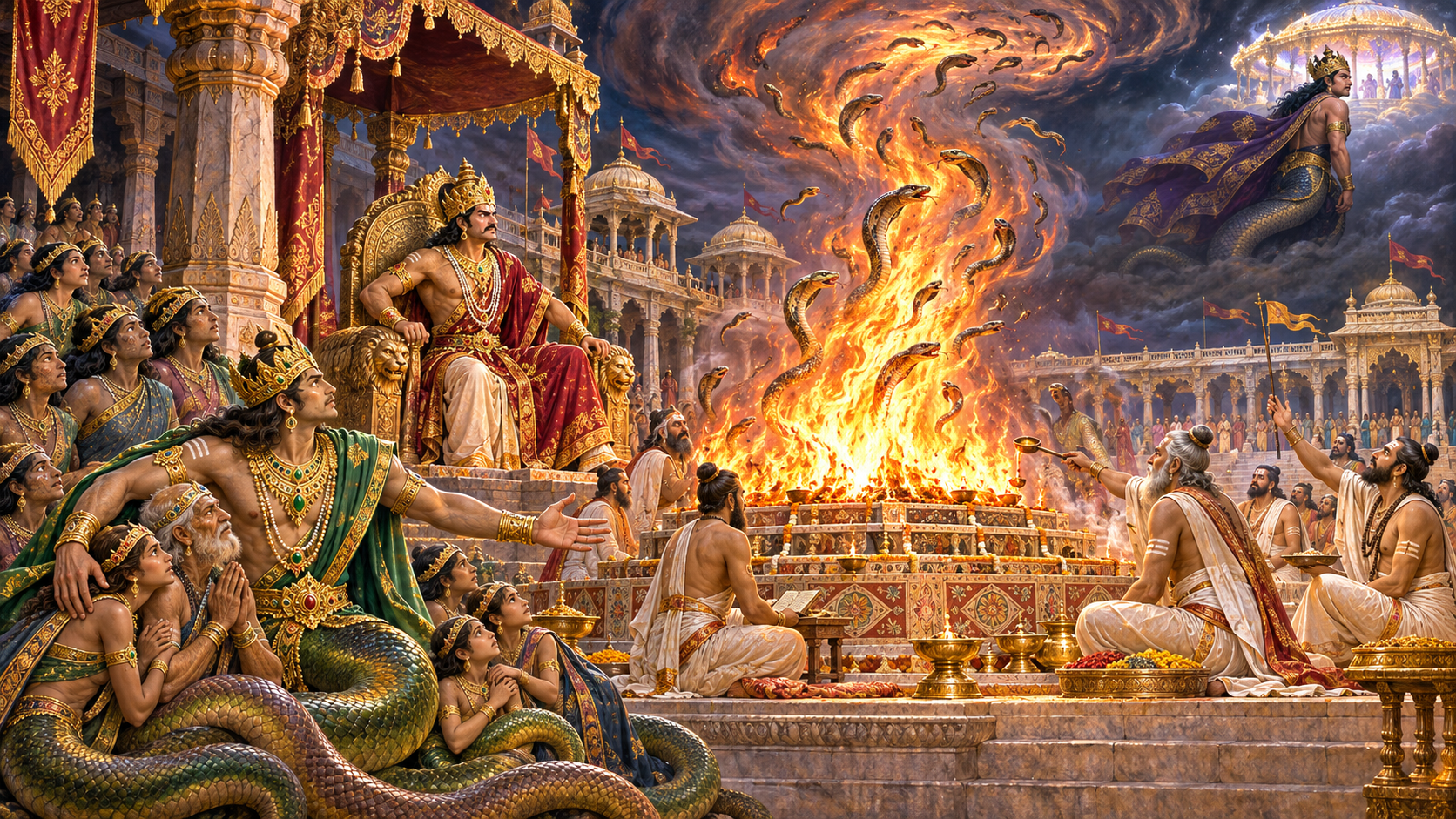
You may have reached Janamejaya’s sarpa satra with a straightforward question: why does Vasuki represent leadership while Takshaka appears as a fugitive, when both face the same consuming fire? The answer lies less in who feels fear and more in what each powerful figure does with the danger surrounding him.
Read this episode of the Mahabharata as a leadership diagnostic. It tests whether anger can keep guilt specific, whether the powerful share danger with those who depend on them, and whether a ruler can stop an act that began under his own authority.
First, see the Nagas as a moral community
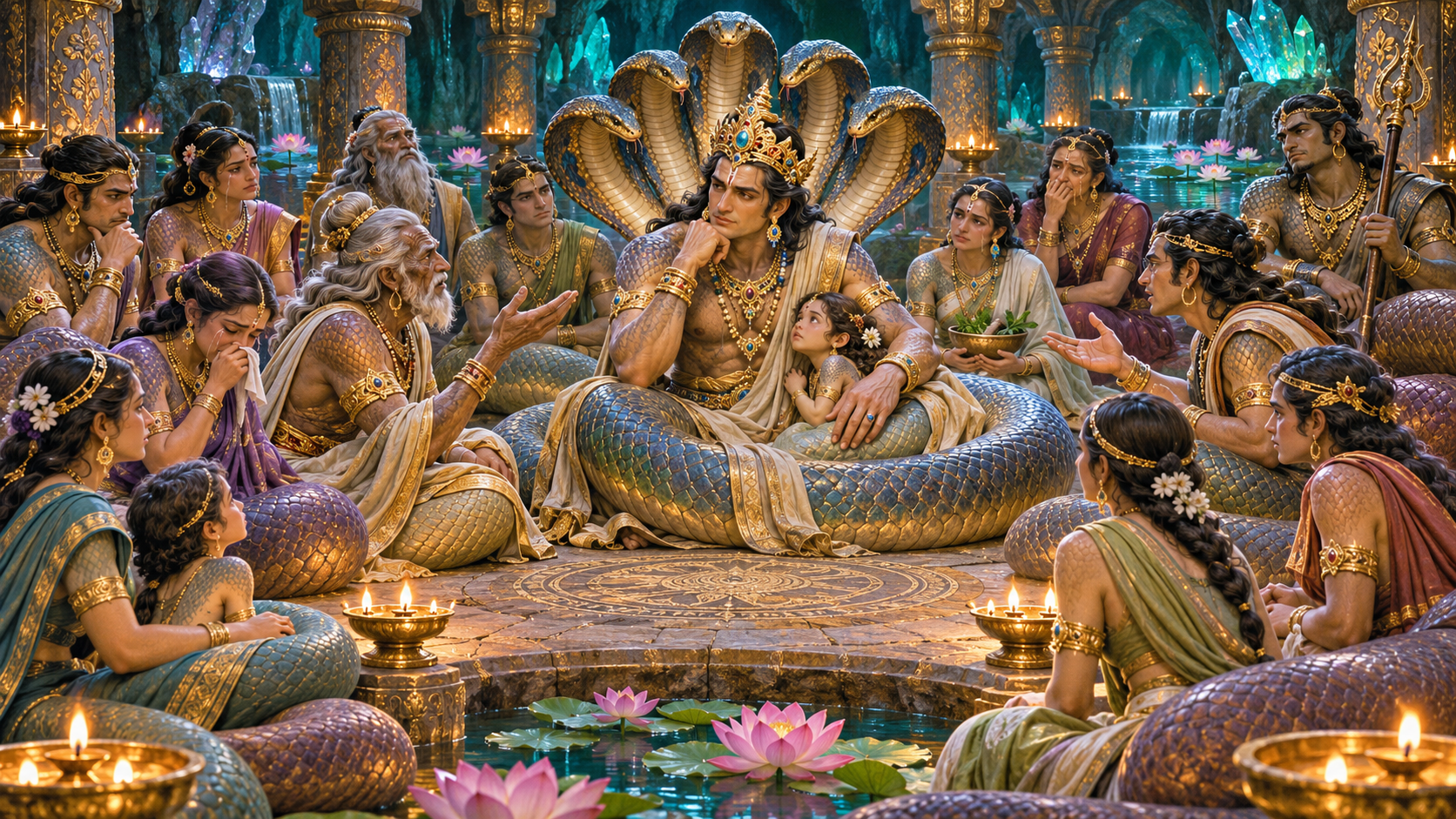
The sarpa satra becomes difficult to understand if the Nagas are reduced to ordinary snakes. Within the epic narrative, Takshaka and Vasuki are named agents belonging to an organised community. They make choices, possess relationships and exercise power. The sacrifice therefore raises a question about persons and collective responsibility, not merely one about dangerous animals.
The immediate chain is clear. Janamejaya is the son of Parikshit, and Parikshit dies from Takshaka’s bite. Janamejaya answers that death with a sacrifice directed against the Nagas. A deed associated with one named actor consequently becomes the basis for destroying an entire community.
Keep three levels separate as you read:
- Takshaka is the particular agent connected to Parikshit’s death.
- The Naga community is the much larger population placed in danger by Janamejaya’s response.
- Janamejaya and Vasuki hold responsibilities that come with rulership, even though they stand on opposing sides of the sacrifice.
Once those levels are collapsed, vengeance can masquerade as justice. Once they are distinguished, the central dharmic problem comes into view: punishment has escaped the boundary of individual responsibility.
The sacrifice turns one grievance into collective punishment
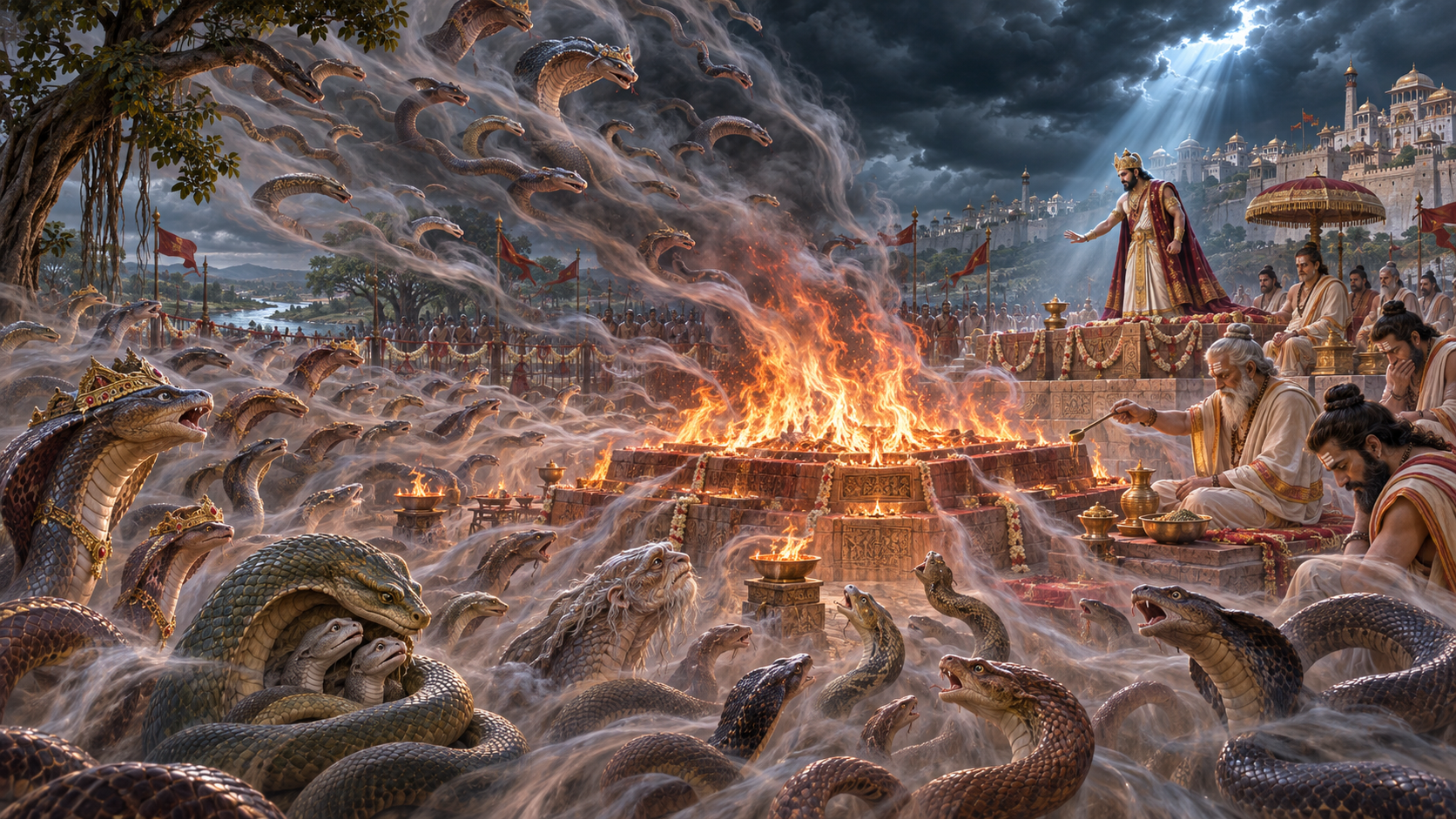
Janamejaya’s grief is not imaginary, and the story does not require you to treat the death of his father as insignificant. A real wrong stands behind his anger. The failure occurs when a response to Takshaka’s act expands into a threat against every Naga.
This distinction matters because sympathy for an injured person does not oblige you to approve every action taken in the name of that injury. Dharmic judgement must hold two truths at once: Parikshit’s death calls for moral reckoning, and indiscriminate destruction cannot become righteous merely because it began in grief.
The sarpa satra exposes a recurring pattern. Anger begins with a name, then replaces the name with a category. The alleged offender becomes his kin, his people or anyone who resembles him. The emotional movement feels seamless, but the moral movement is enormous. Responsibility has shifted from the person who acted to people whose guilt has not been established.
When you encounter a claim of justified retaliation, ask four questions in order:
<!– wp:list {
Leave a Reply
You must be logged in to post a comment.